Collectors love to talk about authenticity.
That makes sense. If a signature is fake, the whole purchase collapses.
But once authenticity is established, the next question is just as important:
What condition is it in?
Condition is not cosmetic. It is economic.
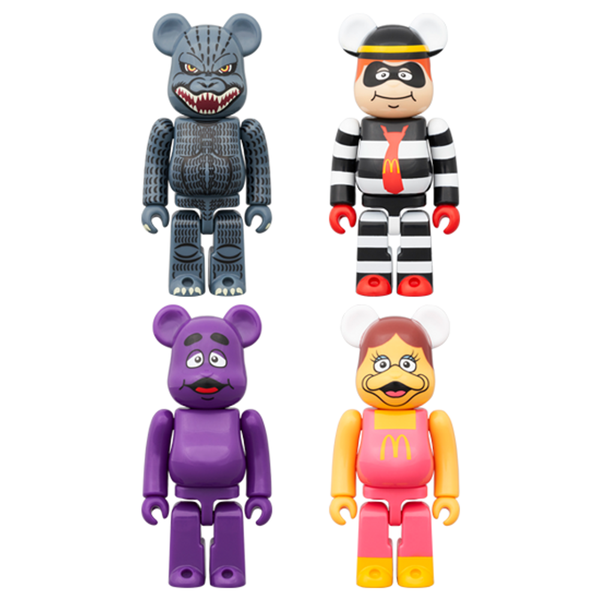
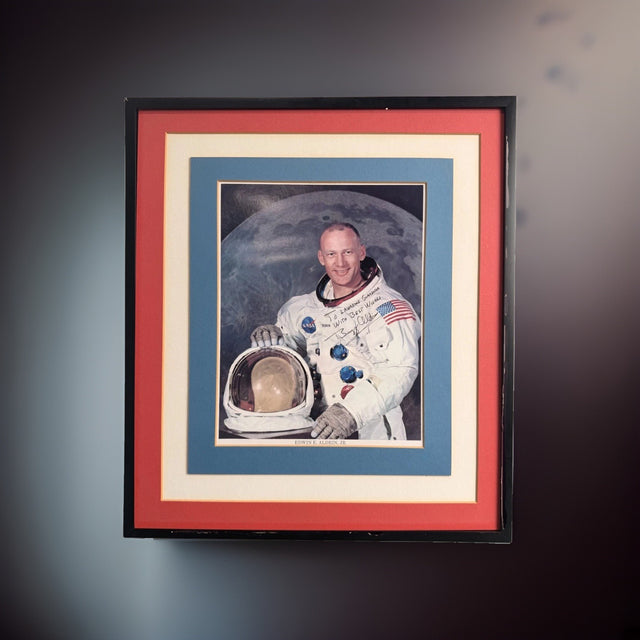
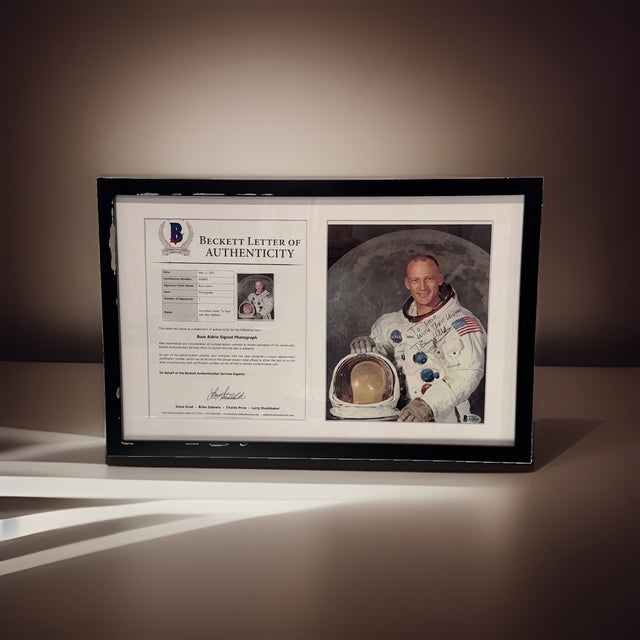
A signed Shepard Fairey print with sharp corners, rich color, clean margins, and no handling creases is not the same object as the same print with mat burn, rippling, fading, and tape residue. A KAWS figure with original packaging, clean paint, tight joints, and an undamaged box is not the same as one with scuffs, yellowing, loose joints, and a crushed box. A signed astronaut photograph with strong ink contrast and clean surface gloss is not the same as one with silvering, fading, and corner loss.
The artist may be the same. The signature may be real. The edition may be correct.
But the value can be very different.
This guide explains how condition affects pricing across collectible art, signed music memorabilia, designer figures, space collectibles, photographs, posters, and framed objects, and how serious collectors evaluate flaws before buying.
Because in collecting, small flaws rarely stay small once money enters the room.
The Condition Rule: Same Object, Different Market

Collectors often compare two pieces by title or signer alone.
That is a mistake.
A buyer might say, "This Shepard Fairey print sold for $1,500, so this one should be worth $1,500." Maybe. But only if the two examples are meaningfully comparable.
You need to compare:
- Same artist.
- Same title.
- Same year.
- Same edition.
- Same signature status.
- Same documentation.
- Same framing status.
- Same condition.
- Same provenance.
- Same market timing.
Miss condition, and the comparison breaks.
A clean example can command a premium because it gives the next buyer fewer reasons to hesitate. A flawed example may still be desirable, but the discount should reflect the flaw, the visibility of the flaw, whether it is stable, whether it is reversible, and whether it affects display or resale.
Condition does not just answer "how does it look?"
It answers "how much uncertainty am I buying?"
Why Mint Is Often Misused
The collectibles market loves the word mint. It should use it more carefully.
Gauntlet Gallery's condition policy makes the right distinction: condition grading is inconsistently applied across marketplaces, auctions, and gallery settings, so Gauntlet uses a fixed vocabulary tied to observable traits such as paper quality, surface condition, color fidelity, packaging, and signature integrity. Gauntlet defines Mint / Near Mint as having no visible flaws under standard lighting, flat and clean paper or substrate, sharp edges, vivid color, clean signatures, and intact packaging where applicable, while noting that this grade is rare on secondary-market works.
That last point matters.
Mint is rare.
A twenty-year-old print that has been rolled, stored, framed, shipped twice, handled by three owners, and photographed on someone's kitchen table is probably not mint. It may be very good. It may be excellent. It may be display-worthy. But mint? The burden of proof is high.
When sellers overuse mint, the word becomes less useful than a screen door on a submarine.
Serious collectors look past the adjective and inspect the evidence.
Condition Terms Should Be Observable
Good condition language should describe what can be seen.
Bad condition language tries to sell a feeling.
Useful condition terms include:
- Flat sheet.
- Sharp corners.
- Light edge wear.
- Minor handling crease.
- Visible mat burn.
- Surface scuff at lower right.
- Signature slightly faded.
- Box corner crushed.
- Paint rub on left hand.
- Paper toning at margins.
- Frame not examined outside mount.
Weak condition terms include:
- Great for age.
- Looks amazing.
- Very rare condition.
- Collector quality.
- Investment grade.
- Museum worthy.
- No issues that I can see.
- Perfect except for minor flaws.
A serious seller should be specific enough that the buyer can imagine the flaw before seeing the photo.
Condition descriptions should not be poetry. They should be evidence.
The Main Types of Condition Problems
Most collectible condition issues fall into a few broad categories.
1. Structural Damage
This includes tears, cracks, dents, breaks, missing pieces, punctures, separation, delamination, warping, crushed packaging, or loosened joints.
Structural damage usually affects value more heavily because it changes the physical integrity of the object.
2. Surface Damage
This includes scratches, scuffs, abrasions, rubs, smudges, fingerprints, gloss disruption, paint transfer, ink loss, or surface grime.
Surface damage can be minor or severe depending on visibility and location.
3. Environmental Damage
This includes fading, yellowing, foxing, moisture damage, mold, humidity rippling, brittleness, discoloration, and light exposure.
Environmental damage can be especially serious because it may be irreversible.
The Library of Congress explains that light damage can be permanent, cumulative, and irreversible, with common effects including fading, yellowing, darkening, bleaching, embrittlement, and color change.
4. Handling Damage
This includes corner dings, bends, thumb creases, edge wear, fingerprints, pressure marks, scratches, and minor dents.
Handling damage is common, but that does not mean it is meaningless.
5. Alteration Damage
This includes trimming, dry mounting, lamination, over-restoration, adhesive residue, added signatures, replaced packaging, repainted surfaces, or non-archival framing.
Alteration damage is often serious because it may be difficult or impossible to reverse.
6. Documentation and Packaging Issues
For collectibles, missing paperwork and missing packaging can function like condition flaws.
A BE@RBRICK without its original box may still be authentic, but it is a weaker resale package. A signed print without its COA may still be real, but the next buyer will ask harder questions. A framed object without back photos may carry hidden risk.
Condition is not always only the object. Sometimes it is the whole ownership package.
Works on Paper: The Battlefield Is the Sheet
Art prints, posters, photographs, documents, maps, setlists, album flats, signed lyrics, NASA photographs, and certificates all share the same basic vulnerability:
Paper remembers everything.
A crease, dent, tape stain, mat burn, light fade, or moisture ripple can become part of the object's future.
The Library of Congress advises that works on paper should be handled with clean hands and a clean work area, kept away from food and drink, and not marked with ink, paper clips, rubber bands, self-adhesive tape, or glue. For storage, it recommends a cool, relatively dry, clean, stable environment, minimal exposure to light, and protective enclosures such as acid- and lignin-free folders, mats, and boxes.
That guidance applies directly to collectible prints and signed paper objects.
For works on paper, inspect:
- Corners.
- Edges.
- Margins.
- Surface.
- Image area.
- Signature.
- Edition number.
- Back of sheet.
- Prior hinging.
- Tape residue.
- Frame history.
- Fading.
- Foxing.
- Rippling.
- Mat burn.
- Trimming.
- Moisture stains.
- Light exposure.
A perfect image area with damaged margins may still display well, but margins matter for value. A clean front with tape stains on the back may still be desirable, but the tape should be disclosed. A framed work that looks clean under glass may have hidden mat burn or adhesive damage.
The sheet is the asset.
Fading: The Quiet Value Killer
Fading is one of the most dangerous condition problems because it can be hard to notice unless you know what the colors should look like.
- A faded red may simply look soft.
- A faded black may look gray.
- A faded signature may still be visible but less desirable.
- A faded poster may still display nicely but lose market strength.
Light damage is cumulative. The Library of Congress explains that dim light over a long time can be as damaging as bright light over a short time, and that visible light can still damage collection items even when UV and infrared are reduced.
That is why collectors should be cautious with works that have been displayed for years in direct sun, bright rooms, storefronts, bars, offices, or music venues.
A framed concert poster hanging over a sunlit couch for ten years may have paid a price. So may a signed photograph displayed under bright light without UV-protective glazing.
Fading is usually not reversible. That means the discount should be real.
Foxing, Toning, and Paper Aging

Foxing usually appears as brownish or reddish spots on paper. Toning refers to overall darkening or discoloration. Both can affect value, especially when visible in the image area or margins.
Some vintage material can show age without becoming unattractive. A little age-consistent toning on a historic space document may be acceptable. Heavy foxing on a modern limited-edition print is another matter.
Collectors should ask:
- Is the discoloration stable?
- Is it in the margin or image area?
- Does it affect the signature?
- Is it visible when framed?
- Can it be treated by a conservator?
- Would treatment cost more than the value gain?
- Does the flaw fit the object's age and history?
Age is not automatically a defect. But age should not be used as an excuse for avoidable damage.
Creases, Dents, and Handling Marks
A crease is not just a line. It is a structural memory in the paper.
Some creases are light and only visible under raking light. Others break the paper fibers or ink surface. The difference matters.
Collectors should distinguish:
- Soft handling wave.
- Minor corner bump.
- Light pressure dent.
- Surface-only scuff.
- Hard crease.
- Color-breaking crease.
- Fold line.
- Crushed corner.
- Tear from bending.
A minor handling dent in a margin may have little impact. A color-breaking crease through the image area can materially reduce value.
The location of the flaw matters as much as the flaw itself.
A small corner ding on a print may be acceptable. The same ding through a signature or edition number is worse. A tiny scuff on the back of a framed display may be minor. A scuff across a dark glossy KAWS figure face is not minor.
Condition is geography. Where the flaw lives matters.
Mat Burn and Framing Damage
Framing can protect a work.
Bad framing can punish it.
The most important framing risks for collectors are:
- Mat burn.
- Tape stains.
- Dry mounting.
- Direct contact with glass.
- Non-archival backing.
- Acidic mats.
- Poor hinging.
- Sun exposure.
- Trapped moisture.
- Wood backing off-gassing.
- Insect debris.
- Frame pressure marks.
A frame is not automatically a value-add.
A frame can be a preservation system. A frame can be a disguise. A frame can be a problem wearing a gold border.
Ask for photos of the back. Ask whether the work has been examined outside the frame. Ask if the piece is hinged, floated, mounted, or dry mounted. Ask whether the sheet is attached to the backing. Ask whether the mat is archival.
Professionally framed is not enough.
Dry Mounting and Lamination
Dry mounting is a serious issue for many works on paper.
It can make a print look flat and clean, but it may permanently adhere the object to a backing board. That can reduce value because the sheet is no longer free, the back cannot be fully inspected, and future conservation options may be limited.
Lamination is usually worse for collectible paper objects.
For valuable collectible paper, the safest assumption is simple: do not permanently stick the object to something unless a qualified conservator says it is appropriate.
Flattening a wave by destroying reversibility is not a win.
Signature Condition: The Ink Is the Asset
For signed memorabilia, the signature often carries much of the value.
That means signature condition should be evaluated separately from object condition.
Gauntlet's condition policy makes this distinction directly: for signed memorabilia, signature condition is assessed separately from the item, including clarity, placement, smudging, fading, inscription, and date; the policy also notes that signature assessment is not an authenticity determination.
That is exactly right.
- A guitar can be clean while the signature is weak.
- A vinyl jacket can be damaged while the signature is bold.
- A photo can be faded while the autograph remains strong.
- A poster can be near mint while the ink is smudged.
For signatures, inspect:
- Contrast.
- Placement.
- Completeness.
- Ink flow.
- Smudging.
- Fading.
- Bleeding.
- Skipping.
- Surface absorption.
- Overlap with dark areas.
- Inscription.
- Date.
- Whether the signature touches a crease, tear, or glossy defect.
A perfectly authenticated signature can still be less valuable if it is faint, poorly placed, partially cut off, or written over a dark background.
Authentication answers "is it real?" Condition answers "how desirable is this example?"
Read our COA guide for collectors or learn how Gauntlet reviews authentication.
Signed Music Memorabilia: Display Piece vs. Instrument
Signed guitars deserve their own warning.
Most signed guitars sold as memorabilia are collectible display pieces, not performance instruments. Gauntlet's condition policy explicitly states that, unless specifically stated, signed guitars and music memorabilia sold by Gauntlet Gallery are collectible display pieces, not professionally serviced performance instruments.
That distinction protects buyers.
A signed guitar may have value because of the autograph, display quality, and association with an artist, not because it plays like a touring instrument.
For signed guitars, evaluate:
- Signature clarity.
- Ink contrast.
- Body scratches.
- Pickguard condition.
- Hardware corrosion.
- Frame or case condition.
- COA match.
- Whether the guitar is playable or display-only.
- Whether the signature is protected.
- Whether the frame allows inspection.
For signed vinyl, evaluate sleeve corners, ring wear, seam splits, surface scuffs, signature placement, ink contrast, album importance, whether the record itself is included, and whether the signature is on the jacket, insert, label, or disc.
For signed drumheads, inspect surface dents, smudging, cracking, stretching, ink contrast, frame pressure, and whether the drumhead is used, display-only, or signed-only.
In signed music, the object has to carry the autograph well.
A real signature on a poor substrate may still be real, but the market may not reward it.
Explore authenticated signed music memorabilia.
Designer Figures: Figure Condition and Box Condition Are Separate

KAWS figures, BE@RBRICKs, and designer toys require two condition grades:
The figure. The box.
Gauntlet's condition policy treats them separately, noting that vinyl figures such as KAWS and BE@RBRICK are examined for paint application, joint tightness, and box condition, and that Mint in Box requires the box to be undamaged and un-taped.
That is the right approach.
- A figure can be excellent while the box is poor.
- A box can be clean while the figure has paint rub.
- A sealed box can be desirable but may limit inspection.
- A displayed figure can still be strong if complete and carefully handled.
For designer figures, inspect:
- Paint rub.
- Surface scratches.
- Gloss disruption.
- Yellowing.
- Loose joints.
- Cracks.
- Dust in seams.
- Foot scuffs.
- Factory stamps.
- Box corners.
- Box crushing.
- Tape tears.
- Missing inserts.
- Outer shipper.
- Holograms or QR codes where applicable.
- Odor from smoke, storage, or moisture.
Original packaging matters because it supports completeness, authenticity review, and resale confidence.
Throwing away the box on a serious designer figure is like tossing the title to a car because the glove compartment looked cleaner without it.
Browse KAWS and BE@RBRICK designer figures.
Space Memorabilia: Age Can Be Honest, Damage Still Counts
Space collectibles require nuance.
Vintage NASA photographs, mission documents, flight-related papers, patches, covers, and astronaut-signed items may show age consistent with their era. That does not automatically make them weak. Gauntlet's condition policy specifically notes that vintage space memorabilia may show age consistent with history, and that photo surface condition, edge wear, discoloration, and authentication documentation are reviewed.
For space memorabilia, the key is distinguishing expected age from value-affecting damage.
Expected age might include:
- Light handling wear.
- Minor toning.
- Soft corner wear.
- Age-consistent paper feel.
- Vintage photo surface characteristics.
More serious damage might include:
- Heavy fading.
- Signature loss.
- Water stains.
- Mold.
- Torn mission documents.
- Trimmed photographs.
- Severe curling.
- Tape repairs.
- Unstable mounting.
- Missing provenance.
- Frame damage hiding the back.
A 1960s NASA photograph should not be judged exactly like a brand-new inkjet print. But a vintage object still needs clear disclosure.
History gives context. It does not give every flaw a free pass.
Browse authenticated space memorabilia.
Photographs: Surface, Process, and Gloss Matter
Photographs have their own condition language.
Silver gelatin, chromogenic, and inkjet prints age differently. Yellowing, silvering, and surface abrasion should be disclosed when present.
Collectors should inspect:
- Gloss.
- Silvering.
- Fading.
- Color shift.
- Surface scratches.
- Pressure marks.
- Corner bends.
- Edge wear.
- Mounting.
- Back stamps.
- Captions.
- Paper type.
- Signature ink.
- Adhesive residue.
- Frame contact.
For signed photographs, ink contrast is crucial. A bold signature on a clean light area is typically more desirable than a faint signature over a dark background.
Photographs can also be extremely light-sensitive. Library of Congress guidance identifies all color photographic processes and all digital photographic prints, including inkjet prints, as very light sensitive.
That means display history matters. If a photo has lived under bright light for years, ask harder questions.
Auction Condition Reports Are Not the Same as Guarantees
Auction condition language can be helpful. It can also be limited.
Auction terms commonly tell bidders to rely on their own inspection, ask questions before bidding, and accept that lots may be sold as-is. A condition report may help, but it may not protect you the way you think.
A framed work may not have been removed from the frame. A poster may not have been inspected under raking light. A signature may be authenticated but still faded. A box may be present but not mint.
Before bidding or buying, ask for:
- High-resolution photos.
- Close-ups of flaws.
- Front and back images.
- Corner images.
- Signature close-ups.
- Frame-back photos.
- Box photos.
- COA photos.
- Condition confirmation in writing.
- Whether the work has been examined outside the frame.
A condition report is useful. A condition report is not a force field.
Read our buyer's premium guide.
The Price Impact: How Flaws Change Value
Not every flaw affects price equally.
Use this practical hierarchy.
Minor Flaws
These may reduce value slightly or not at all if they are common for the category.
Examples:
- Tiny corner softness.
- Light handling mark visible only under close inspection.
- Minor box shelf wear.
- Small back-of-frame scuff.
- Slight age-consistent toning.
- Minor surface mark outside image area.
Moderate Flaws
These usually justify a visible discount.
Examples:
- Small crease in margin.
- Noticeable edge wear.
- Light mat burn.
- Minor fading.
- Signature slightly weak.
- Box corner crushed.
- Visible surface scuff.
- Minor moisture ripple.
- Small stain outside image.
Major Flaws
These can materially reduce value and resale confidence.
Examples:
- Tear into image area.
- Color-breaking crease.
- Heavy fading.
- Water damage.
- Mold or foxing in image area.
- Trimmed margins.
- Dry mounted print.
- Laminated document.
- Smudged signature.
- Missing box for high-value designer figure.
- Broken figure joint.
- Repainted surface.
- Missing COA or provenance on a documentation-heavy item.
Fatal or Near-Fatal Flaws
These can move an object into display-only, study-piece, or as-is territory unless the object is exceptionally rare.
Examples:
- Severe water damage.
- Large tear through signature.
- Major restoration not disclosed.
- Counterfeit packaging.
- Detached or missing parts.
- Unstable mold.
- Heavy sun bleaching.
- Cut-down print.
- Destroyed edition number.
- Object permanently altered in a way serious buyers reject.
The more common the object, the more harshly condition matters.
A rare, historically important object can survive flaws. A common object cannot.
Displayable Is Not the Same as High Grade
A flawed object can still look great on a wall.
That does not make it high grade.
Collectors should separate two questions:
- Does it display well?
- Is it condition-sensitive in the market?
A signed guitar with small body scratches may display beautifully but should not be described as mint. A BE@RBRICK with a damaged box may look perfect on a shelf but lose resale strength. Use dated completed sales for the same artist, release, format and condition, recording the venue, currency and fees. Asking prices and broad archive totals do not establish a realized sale price or future return.
Displayable is a useful category. It means the object can still be enjoyed visually.
But display value and market value are not identical.
A buyer can happily own a display-grade piece. The only problem is paying near-mint money for it.
Restoration and Conservation: Help or Harm?

Conservation can preserve value. Bad restoration can destroy it.
Before treating a collectible, ask:
- Is the treatment reversible?
- Is it being done by a qualified conservator?
- Will the treatment be documented?
- Will it alter the object?
- Will future buyers accept it?
- Does the value gain justify the cost?
- Could treatment reduce originality?
The Library of Congress notes that when condition problems cannot be addressed by basic preservation measures, treatment by a paper conservator may be necessary, and it points collectors toward the American Institute for Conservation as a resource for finding qualified conservators.
That is the right standard.
Use conservators for conservation. Use framers for framing. Use restorers carefully. Do not experiment on valuable objects because a tutorial looked easy.
Shipping Damage Is Condition Damage
Condition is not frozen at purchase.
A clean object can become a flawed object in transit.
Gauntlet's shipping policy states that Gauntlet ships with UPS or USPS based on the safest fit for the item, including size, weight, destination, value, framing, fragility, insurance, and signature confirmation. It also says flat works ship in rigid mailers or archival mailing tubes, boxed framed art receives protective wrap, corner protection, and a fitted outer box, and heavier or unusual items receive additional padding and handling based on the object.
That matters because shipping risk is real.
Collectors should care about:
- Flat vs. rolled shipping.
- Tube diameter.
- Corner protection.
- Glass vs. acrylic.
- Frame protection.
- Box-in-box packing.
- Insurance.
- Signature confirmation.
- Climate sensitivity.
- Documentation before shipment.
- Photos of packaging and item condition.
For valuable works on paper, poor shipping can create edge dents, roll bends, corner crush, moisture exposure, or surface abrasions.
For figures, poor shipping can crush boxes, snap joints, scuff paint, or damage packaging.
For framed objects, broken glass can damage the piece inside.
Condition protection does not end at checkout.
How Gauntlet Gallery Handles Condition
Gauntlet's condition model is built around observable disclosure.
The gallery states that each item is assessed against a defined standard before listing, and that it describes what it observes rather than inflating grades. Its category notes cover prints and posters, vinyl figures, signed memorabilia, space and astronaut items, signed music, photographs, and documents. For items graded Fine or below, Gauntlet says it photographs the specific flaws, and buyers may request additional photographs such as signature close-ups, corners, margins, and back-of-work details.
That is how condition should work.
Not as a sales tool. As a trust tool.
A proper condition note helps the buyer understand:
- What is strong.
- What is imperfect.
- What is visible.
- What is hidden.
- What matters for display.
- What matters for resale.
- What questions remain.
The best galleries do not pretend flaws do not exist. They show them before the buyer has to discover them.
The Buyer's Condition Checklist
Before buying a collectible, ask:
- What is the object's stated condition grade?
- What does that grade mean according to the seller?
- Are the flaws described specifically?
- Are the flaws photographed?
- Are there front, back, corner, edge, and close-up images?
- Has the object been framed?
- If framed, has it been examined outside the frame?
- Is there mat burn, tape, dry mounting, or adhesive residue?
- Is the signature bold, clean, and well placed?
- Is the image area clean?
- Are the margins intact?
- Is the edition number visible and undamaged?
- Is the box included for designer figures?
- Is packaging condition described separately from object condition?
- Is fading visible or suspected?
- Are there signs of moisture, mold, or odor?
- Is the flaw stable or likely to worsen?
- Is conservation possible or practical?
- Does the price reflect the condition honestly?
- Would another serious buyer accept this condition later?
That last question is the resale test.
Even if you never plan to sell, future market acceptance is a useful discipline.
The Seller's Condition Checklist
A serious seller should provide:
- Clear condition grade.
- Plain-language flaw description.
- Full-object photographs.
- Close-ups of signatures and edition numbers.
- Corner and edge photos.
- Back photos where relevant.
- Frame-back photos.
- Box and packaging photos.
- COA and documentation photos.
- Known framing history.
- Disclosure of mounting, trimming, restoration, fading, or moisture.
- Separate condition notes for object, signature, frame, and packaging.
The goal is not to make every object sound perfect. The goal is to make the buyer confident.
Trust is built faster by disclosing a small flaw than by hiding one.
When to Accept a Flaw
Not every flaw should scare you away.
Accept a flaw when:
- The object is rare.
- The flaw is disclosed.
- The flaw is stable.
- The flaw is not visually distracting.
- The price reflects it.
- The documentation is strong.
- The item still fits your collecting goal.
- The flaw is common for the category.
- The flaw does not affect authenticity or provenance.
Do not accept a flaw when:
- The seller hides it.
- The flaw affects the signature or edition number.
- The object is common and better examples exist.
- The flaw is unstable.
- The price ignores the issue.
- The flaw suggests poor storage or moisture.
- The frame may be hiding damage.
- The object has been permanently altered.
- The seller gets defensive when asked.
A flaw is not automatically a problem. An undisclosed flaw is a problem.
Bottom Line
Condition is value.
Not because collectors are picky for sport, but because condition affects display quality, preservation, confidence, resale, insurance, and long-term ownership.
A collectible does not need to be perfect to be worth owning. Some of the most meaningful objects in the world carry age, wear, travel, handling, and history. But flaws must be understood, documented, and priced honestly.
Buy the signed piece. Buy the print. Buy the figure. Buy the astronaut photograph. Buy the object that makes you stop scrolling.
Just know what condition you are buying.
Because in collectibles, authenticity tells you whether the object is real.
Condition tells you how much of its value survived.
FAQ
Why does condition matter so much in collectibles?
Condition affects display quality, resale confidence, preservation risk, and price. Two authentic examples of the same object can have very different values if one has fading, creases, mat burn, damaged packaging, or a weak signature.
What does mint condition mean?
Mint condition should mean no visible flaws under normal inspection, with clean surfaces, sharp edges, vivid color, and intact packaging where applicable. In secondary-market collectibles, true mint condition is uncommon.
Is a framed print safer to buy?
Not automatically. Framing can protect a print, but poor framing can cause mat burn, tape stains, pressure marks, fading, moisture damage, or adhesive problems. Buyers should ask whether the work has been examined outside the frame.
Does mat burn reduce value?
Yes, especially when visible in the margins or image area. Mat burn usually indicates contact with acidic or poor-quality framing materials and can affect both appearance and resale value.
Is fading reversible?
Usually not. Light damage is cumulative and often irreversible. The Library of Congress notes that light exposure can cause fading, yellowing, bleaching, embrittlement, and color change, and that this damage usually cannot be undone.
Does original packaging matter for KAWS and BE@RBRICK figures?
Yes. Original packaging is part of the ownership package and can affect value, completeness, authentication confidence, and resale. Figure condition and box condition should be described separately.
Is a smudged but authentic signature still valuable?
It can be, but usually less valuable than a clean, bold signature. Signature condition should be evaluated separately from object condition because the signature may be the main value driver.
Should I buy a dry-mounted print?
Only with caution. Dry mounting can permanently adhere a print to backing, reducing reversibility and potentially lowering value. For valuable works on paper, ask for clear disclosure and consider consulting a paper conservator.
Are auction condition reports guarantees?
Usually not. Auction terms often state that condition reports are opinions rather than warranties and that lots are sold as-is. Buyers should inspect carefully, request photos, and read the terms before bidding.
How does Gauntlet Gallery describe condition?
Gauntlet uses defined condition standards and category-specific notes for prints, posters, vinyl figures, signed memorabilia, space items, music memorabilia, photographs, and documents. It photographs notable flaws and allows buyers to request additional close-ups before purchase.
Shop Space memorabilia
Explore current pieces available from the gallery.
-
Buzz Aldrin Signed NASA 8x10 Color Photo Personalized Framed JSA LOA
$899.00 USD
-
Buzz Aldrin Signed Inscribed Astronaut Photo Framed Beckett LOA A42843
$999.00 USD
-
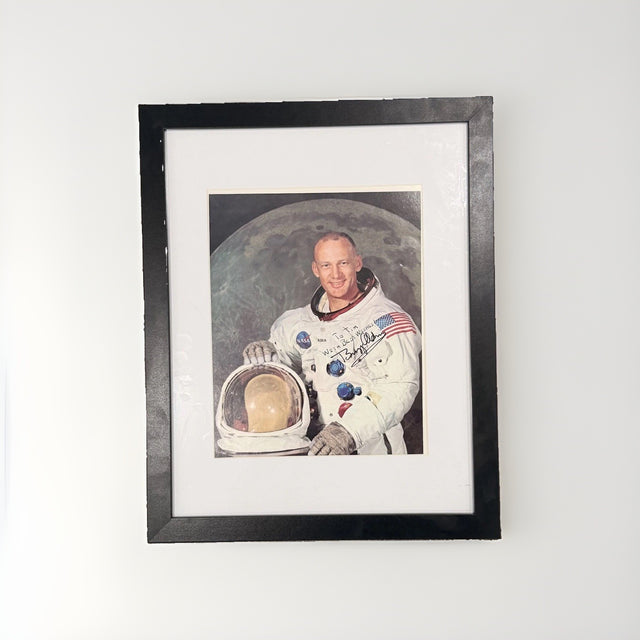
Buzz Aldrin Signed NASA Astronaut Portrait Inscribed To Tim Framed
$850.00 USD
-
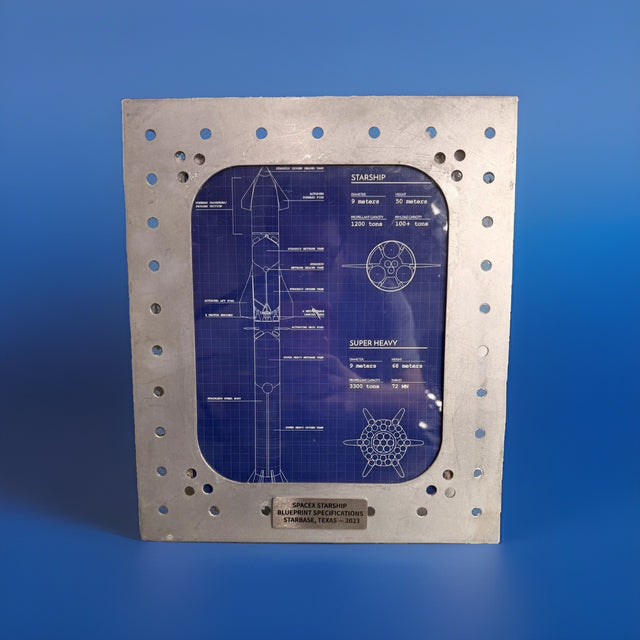
SpaceX Starship Super Heavy Blueprint Metal Display Panel Spacecraft Frame
$59.00 USD
-
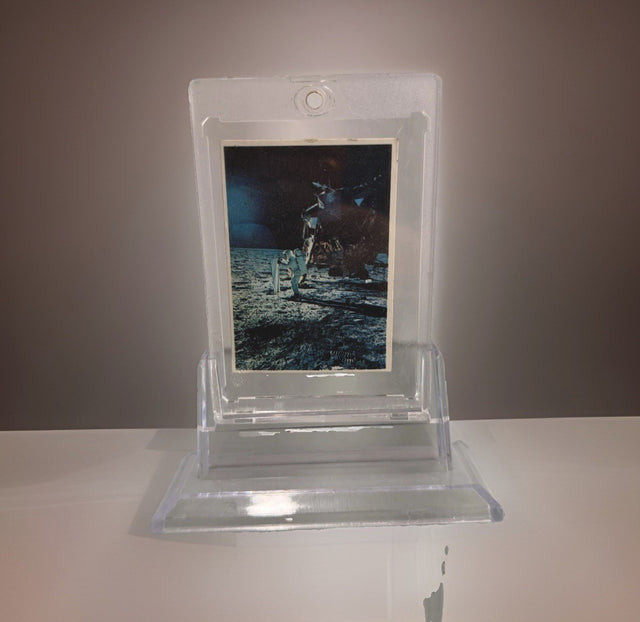
1969 Space Candy Buzz Aldrin Apollo 11 On The Moon Card #19 Taylor-Reed Display
$59.00 USD
-
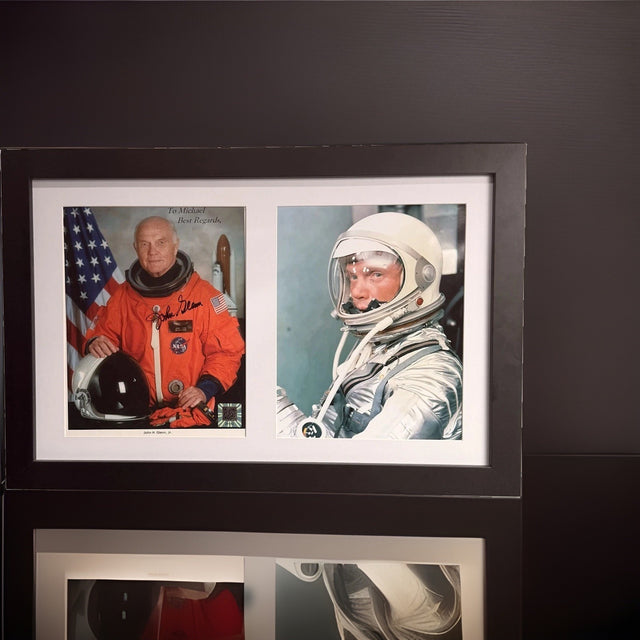
John Glenn Signed Autographed NASA Photo Display JSA Mercury Astronaut Framed
$199.00 USD
Browse the collection for current listings.