Signed Guitar Authentication: What to Examine Before You Buy
Signed guitars are among the most visually compelling music memorabilia items — and among the most forged. The large signing surface, the prevalence of "signed for charity" guitars that change hands without documentation, and the perception that guitar signing is casual create an environment with significant forgery exposure. Here is what to examine before any signed guitar purchase above $500.
The Signing Surface
Guitars are signed on several surfaces with different characteristics. Body signatures (on lacquer finish) show different ink behavior than headstock signatures (on sealed wood) or pick guard signatures (on plastic). Authentic signatures on lacquer tend to have slight surface tension at ink edges; forged signatures applied to recently refinished guitars may show different characteristics. Authentication services account for these surface-specific differences.
Pen Type and Ink Aging
Sharpie markers are the most common signing instrument for guitars. The ink aging of a 1990s Sharpie signature differs from a fresh Sharpie on an aged guitar — aging tests are part of authentication forensics. Silver and gold paint markers on dark-body guitars are also common and have their own aging characteristics.
Multi-Signature Guitars
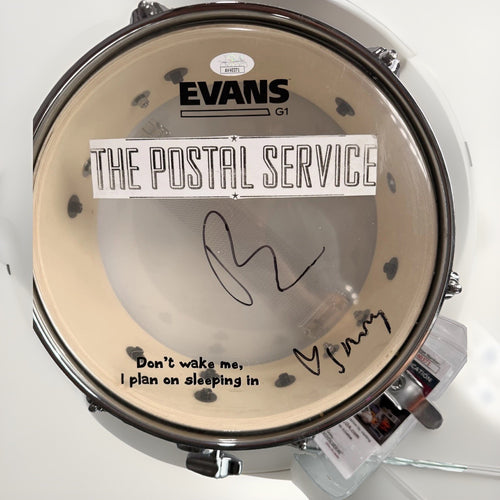
Full-band signed guitars command the highest premiums but also the highest forgery incentive. For any multi-signature guitar, require individual member authentication from PSA/DNA, JSA, or Beckett. Gauntlet Gallery carries signed guitars — Taylor Swift, Blink-182, Dave Matthews Band, Green Day, Oasis, Coldplay — with individual member authentication documentation on every piece.