Shepard Fairey HPM Prints: What Makes a Hand-Painted Multiple Worth More
You can buy original Shepard Fairey prints from the artist's own retail drops through Obey Giant, from established galleries that represent his work, and from vetted secondary-market dealers such as Gauntlet Gallery's Shepard Fairey collection. Within that universe, the pieces collectors chase hardest are HPMs — hand-painted multiples — where Fairey embellishes a base screen print by hand, turning a numbered edition into something closer to a unique work. Because each HPM carries the artist's physical brush, spray, and collage additions, it typically commands a meaningful premium over the plain signed-and-numbered version of the same image.
This guide explains exactly what an HPM is, why it is priced above a standard edition, how to read the hand-embellishment on a genuine example, and how Fairey pieces are authenticated — a process that relies on provenance, signature, edition numbering, and paper rather than any certificate issued by the artist. If you want to see live inventory as you read, keep the Shepard Fairey collection and the Fairey works index open in a second tab.
What "HPM" actually means
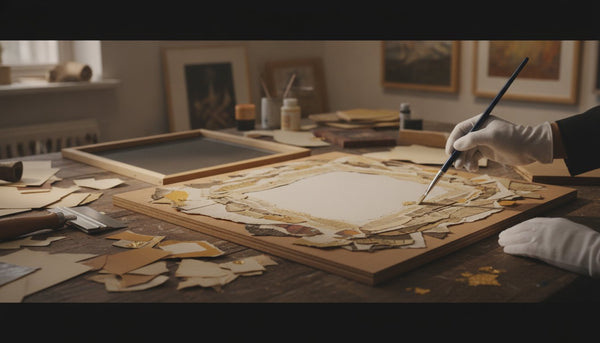
HPM stands for hand-painted multiple. It describes a print — usually a screen print (serigraph) on paper — that the artist has individually altered by hand after the base edition was pulled. The "multiple" part is the printed foundation: the same image printed in a run. The "hand-painted" part is what makes each one different: acrylic brushwork, spray-paint passes through stencils, hand-applied collage elements, stamped or stenciled overlays, and sometimes hand-torn or hand-placed paper. No two HPMs in a run are identical, which is the entire point.
Fairey has used the HPM format across many of his most collected images. A typical structure is a larger standard edition of the base print, plus a much smaller HPM edition in which each sheet receives unique hand treatment. The HPMs are still numbered — for example, as their own small run — but the numbering describes the size of the hand-embellished batch, not a promise that any two look alike. That combination of a recognizable image, a small run, and genuine hand-of-the-artist involvement is why HPMs behave more like originals than like open prints.
HPM versus other Fairey edition types
Collectors frequently confuse HPMs with artist proofs, printer's proofs, and standard signed-and-numbered sheets. They are not the same thing, and they are priced differently. The table below summarizes how each category behaves. For a deeper walk-through of every abbreviation, see our dedicated explainer on Shepard Fairey AP vs SN vs PP vs HPM.
| Type | What it is | Typical run size | Relative value driver |
|---|---|---|---|
| SN (Signed & Numbered) | The standard edition sheet, signed and numbered by the artist | Larger (the main run) | Image desirability, condition, edition size |
| AP (Artist Proof) | Proofs retained by the artist, marked "AP," outside the main numbering | Small | Scarcity relative to the SN run |
| PP (Printer's Proof) | Proofs reserved for the print shop, marked "PP" | Very small | Extreme scarcity; niche demand |
| HPM (Hand-Painted Multiple) | Base print uniquely embellished by hand by the artist | Smallest (often a fraction of the SN run) | Uniqueness + hand-of-the-artist + scarcity |
Read the table as a hierarchy of participation. An SN sheet is a signed multiple. An AP or PP is a scarcer version of that same multiple. An HPM is a multiple that the artist physically re-entered and altered — which is why it usually sits at the top of the price ladder for a given image.
Why HPMs command a premium
Three forces stack to lift HPM values above their standard-edition siblings: uniqueness, scarcity, and the presence of the artist's hand. Each one matters on its own; together they compound.
1. Uniqueness
Every HPM is a one-of-one. Two collectors can own the same underlying image, but each hand-embellished sheet is visually distinct — different brushstrokes, different spray density, different collage placement. That uniqueness pulls HPMs out of the "how many exist" conversation that governs standard prints and into the "this exact object" conversation that governs original works. When a buyer cannot simply find another identical copy, price discovery shifts in the seller's favor.
2. Scarcity
HPM runs are almost always the smallest slice of a release. Where a standard edition might number in the hundreds, the HPM count is frequently a small double- or single-digit figure. Fewer objects chasing steady demand is the classic recipe for a premium. It also makes condition and provenance disproportionately important: with so few examples, a clean, well-documented HPM stands out. For how run size interacts with a fraction like "12/25," see our primer on reading an edition number.
3. The artist's hand
Collectors pay for proximity to the artist. A signature in the margin is proximity; hand-applied paint across the image is far more of it. The embellishment is physical evidence that Fairey handled and altered that specific sheet, which is emotionally and financially closer to owning a painting than owning a print. This is the single largest reason HPMs outrun their SN counterparts.
How the premium tends to look
We avoid publishing hard multipliers because the gap between an SN and its HPM varies by image, run size, condition, and market conditions at the moment of sale. As a general principle, though, the HPM of a sought-after image typically clears at a substantial premium to the standard signed-and-numbered version of the same image, and the most iconic images widen that gap further. If you want current, image-specific figures rather than rules of thumb, work from live comparables — a dealer with sales data, the financial insights hub, and recent auction and marketplace results for the exact image and edition.
Which HPMs command the biggest premiums
Not all HPMs are created equal. Within Fairey's body of work, the premium a hand-painted multiple carries over its standard edition depends heavily on the desirability of the underlying image, the size of the HPM run, and how ambitious the embellishment is. Understanding these variables helps you tell a fairly priced HPM from an overreach.
Image desirability
The single largest lever is the image itself. Fairey's most recognizable and historically significant designs — the ones tied to defining moments in his career and in the culture — carry demand that flows straight into their HPMs. An HPM of a landmark image will outrun an HPM of a minor one by a wide margin, even if the hand treatment is comparable. If you are trying to gauge where an image sits in the hierarchy, our overview of the most important Shepard Fairey prints and the companion look at the rarest Shepard Fairey prints map the territory. As a rule, buy the best image you can afford before you optimize for edition type; a modest HPM of a great image tends to hold value better than an elaborate HPM of a forgettable one.
Run size and how "unique" the object really is
Two HPMs can both be one-of-ones and still differ enormously in scarcity. An HPM run of a handful of sheets is materially rarer than an HPM run of several dozen, and the market prices that difference. Smaller HPM runs also make provenance and condition more decisive, because there are simply fewer clean examples to compete with. When you evaluate an HPM, always ask how large the hand-painted batch was relative to the standard edition — it reframes what "rare" means for that specific piece.
Ambition of the embellishment
The depth of the hand treatment matters too. A sheet with a light accent pass reads differently from one with layered spray, collage, and multi-color brushwork that meaningfully transforms the base image. More ambitious embellishment generally supports a higher price, provided it is genuine and characteristic of Fairey's studio practice. That said, "more paint" is not automatically "more value" — coherence with the design and the artist's hand matter more than raw coverage. A restrained but confident embellishment on a great image will usually beat a busy one on a weak image.
How to read a genuine Fairey HPM
Because HPMs carry more value and more variation than plain prints, they also attract more misrepresentation — from honest confusion to deliberate fakery. The good news is that a genuine hand-embellished Fairey has physical characteristics you can inspect. None of these should be treated as a single silver-bullet test; authentication is always the weight of evidence, not one tell. For a broader inspection routine, pair this with reading a Shepard Fairey print: paper, deckle, signature and date.
Look at the embellishment itself
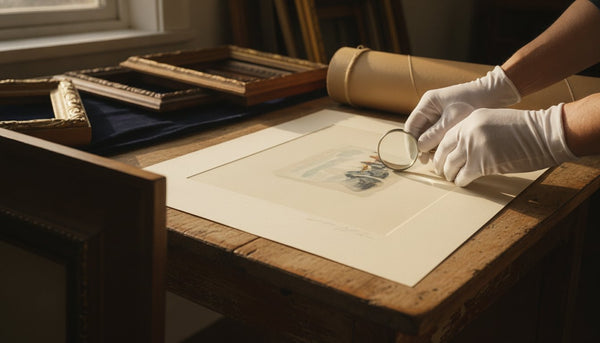
- Raised, physical media. Genuine hand embellishment sits on top of the printed layer. Under raking light you should see actual relief — the ridge of a brushstroke, the slight texture of acrylic, the soft edge of spray overspray. A flat image with "painterly" areas that are actually printed is not an HPM.
- Registration with, and departure from, the base print. Fairey's embellishment usually works with the underlying composition — reinforcing shapes, adding a stencil pass, layering collage — while deliberately breaking the mechanical perfection of the print. Expect intentional variation, not sloppiness.
- Consistent materials. The paints, sprays, and collage papers Fairey uses are consistent with his studio practice. Wildly out-of-character media is a reason to slow down and verify provenance.
Look at the signature, numbering, and inscriptions
- Hand signature in the margin, typically in pencil, consistent with Fairey's known signature. A printed signature within the image is part of many of his designs and is not the same as the autograph.
- HPM notation and numbering. Many HPMs are marked to distinguish them from the standard run and are numbered within the small HPM batch. Numbering conventions vary by release, so treat the specific format as something to verify against a trusted reference rather than assume.
- A date, often written near the signature, that should be consistent with the release year of that image.
Look at the paper and printing
- Substrate. Fairey's screen prints are pulled on specific fine-art papers with characteristic weight and surface. The base print under the embellishment should show the crisp, opaque ink layers of a real serigraph, not the dot pattern of an inkjet reproduction.
- Edges and size. Sheet dimensions and margins should match the known specifications for that image. A trimmed or oddly sized sheet is a flag.
If any of these fall outside what you would expect, stop and route the piece to authentication before money changes hands. Our Shepard Fairey buyer's guide lays out the full pre-purchase checklist.
How Shepard Fairey pieces are authenticated
This is the point most first-time buyers get wrong, so it is worth stating plainly: Shepard Fairey does not run an artist certificate-of-authenticity program. There is no central board or artist-issued COA that "certifies" a Fairey the way, for example, Pest Control certifies Banksy. Anyone selling you a Fairey on the strength of an "artist's certificate of authenticity from Shepard Fairey" is describing something that does not exist as an official program, and that claim itself is a red flag.
Instead, a Fairey — HPM or otherwise — is authenticated on the weight of several independent factors:
- Provenance: a documented chain of ownership, ideally tracing back toward the original release (an Obey Giant drop, a gallery, or a reputable early owner).
- Signature: a hand signature consistent with Fairey's known autograph, in the expected medium and location.
- Edition numbering: numbering and any HPM/AP/PP notation consistent with how that specific release was issued.
- Paper and printing: correct substrate, ink layering, and sheet specifications for the image.
- Reputable dealers: acquisition through, or verification by, sellers who stand behind the work and have the sales history to price and vouch for it.
At Gauntlet Gallery, our house standard for backing the pieces we sell is TrueCOA (truecoa.com), our own verification program, a blockchain certificate on applicable pieces so a buyer can confirm the record we hold. TrueCOA is our dealer-side assurance and documentation layer — it is not an artist-run authority, and we present it as our standard, not as an industry-wide certifying body. The combination of independent authentication factors plus a documented dealer program is what protects resale value over time. For the broader trust framework we apply across the gallery, see the collector trust hub.
Provenance is doing the heavy lifting
With no artist COA in the picture, provenance is the closest thing to a guarantee — and it matters even more for HPMs. Because each HPM is unique, a photo-documented history that shows the exact object over time is powerful evidence. Keep everything: the original receipt or drop confirmation, gallery paperwork, prior-sale records, exhibition history, and clear photographs of the specific sheet. A weak or absent paper trail does not automatically mean a piece is fake, but it caps what a careful buyer will pay and how quickly it resells.
Where to buy original Shepard Fairey prints and HPMs
There are three legitimate channels, each with trade-offs.
1. Retail drops (Obey Giant)
Fairey releases new editions directly, most visibly through Obey Giant's own store. This is the lowest-cost entry point and the cleanest possible provenance because you are the first owner. The catch is access: popular releases sell out in minutes, HPM allocations are tiny, and demand outstrips supply. If catching drops is your plan, understand the mechanics first — our explainer on how Obey Giant store drops work covers timing and what to expect.
2. Galleries
Established galleries that carry Fairey offer curated selection and expertise, usually at a premium to the original retail price, in exchange for vetting and service. This is a sensible route for a specific image you want now rather than gambling on a future drop.
3. Vetted secondary-market dealers
For sold-out editions and HPMs, the secondary market is where most collecting happens. The key is buying from a dealer who documents provenance, prices from real comparables, and backs the work. Browse Gauntlet Gallery's Shepard Fairey inventory for pieces we have vetted, cross-reference specific images and editions in the Fairey index, and use the buyer's guide to keep yourself disciplined. If you are still deciding which edition format fits your budget and goals, our comparison of Shepard Fairey AP vs numbered editions and our guide to Obey editions decoded are good next reads.
Condition, framing, and how they move HPM value
Because an HPM is both a print and a hand-painted object, it is vulnerable in two ways at once, and condition weighs heavily on price. On the print side, watch for the usual paper problems: foxing (small brown spots), light-staining or toning, cockling from humidity, soft creases, corner dings, and margin tears. On the embellishment side, hand-applied media can chip, flake, smudge, or lift if the sheet is mishandled — a risk that a flat print does not carry. A genuine HPM with paint loss or a smeared collage element loses more value than an equivalent condition issue on a plain print, precisely because the embellishment is what you are paying for.
Framing is not cosmetic housekeeping; it is preservation. For a valuable HPM, insist on archival, museum-grade framing: acid-free mounting with no adhesive touching the sheet, UV-filtering glazing to slow fading of both inks and hand media, and a spacer or mat so the glazing never rests directly on the paint surface. Never let anyone dry-mount or trim an HPM to fit a frame — both are effectively irreversible and can devastate value. If you buy an HPM that has been poorly framed, budget for a careful reframe by a conservator rather than living with the risk.
Storage between frames matters too. Keep unframed sheets flat, interleaved with acid-free tissue, away from direct light, heat sources, and humidity swings. Document condition with clear photographs when you acquire the piece so you have a baseline. Because HPM runs are small, a well-preserved, clean example genuinely stands out to the next buyer — condition discipline is one of the few value levers entirely within your control.
Common HPM red flags and pitfalls
The premium HPMs command is exactly what attracts misrepresentation. Watch for these patterns:
- A "painterly" print sold as an HPM. Some Fairey designs include printed textures that mimic brushwork. If the "hand" areas are perfectly flat under raking light, you are looking at a standard print, not a hand-painted multiple. Verify relief before paying an HPM premium.
- An invented artist COA. As covered above, Fairey issues no certificate. A confident "comes with the artist's certificate of authenticity" is a reason to walk, not to relax.
- A provenance gap on a unique object. For a one-of-one, the absence of any documented history is a real problem. Ask where it came from and when; vague answers should lower your price and raise your scrutiny.
- Numbering that does not match the release. HPM notation and counts should be consistent with how that image was actually issued. Numbering that implies an implausibly large HPM run — or that contradicts a trusted reference — is a flag.
- Wrong paper or a trimmed sheet. An inkjet reproduction under a coat of paint is still a fake. Confirm the base is a genuine screen print on the correct substrate, at the correct size.
- Prices with no comparable behind them. A seller who cannot point to recent sales of the same image and edition is guessing — and usually guessing high.
None of these, on its own, proves a fake. But each one is a reason to slow down, ask for more documentation, and route the piece through authentication before committing. Our Shepard Fairey buyer's guide and the collector trust hub both walk through how to structure that due diligence.
HPM buyer's checklist
- Confirm it is actually an HPM. Look for physical, raised hand embellishment under raking light — not printed "painterly" areas.
- Verify the signature, numbering, and date against known conventions for that specific image and release.
- Check the paper and printing for correct substrate, ink layering, and sheet size.
- Demand provenance. Ask for receipts, drop confirmations, gallery paperwork, and prior-sale history. For a unique object, documentation of the exact sheet is gold.
- Reject any "artist COA" claim. Fairey does not issue one; a seller who invents an artist certificate is telling you something important.
- Buy from a dealer who backs the work. A verification program such as TrueCOA plus a documented return policy protects you and your resale value.
- Price from comparables, not from wishful multipliers. Match the exact image and edition type, then adjust for condition and provenance.
Follow that sequence and you will avoid the two most common mistakes: overpaying for a standard print dressed up as an HPM, and buying a genuine HPM with a provenance gap that hurts you at resale. When in doubt, slow down and verify — the best Fairey HPMs reward patience, and the market for authenticated, well-documented examples is deep enough that a disciplined buyer rarely misses out for long.