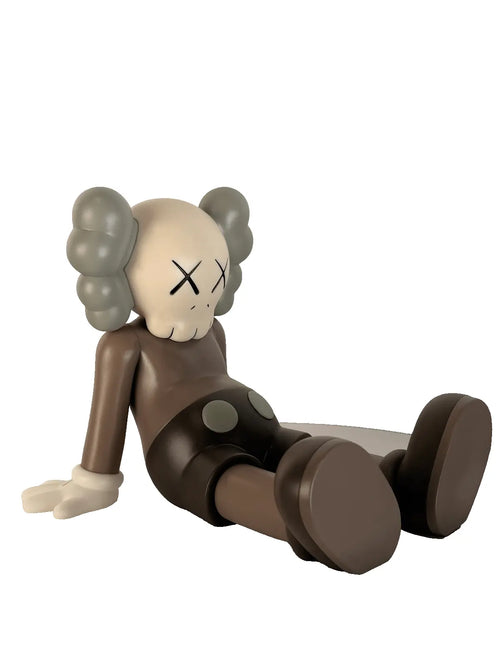
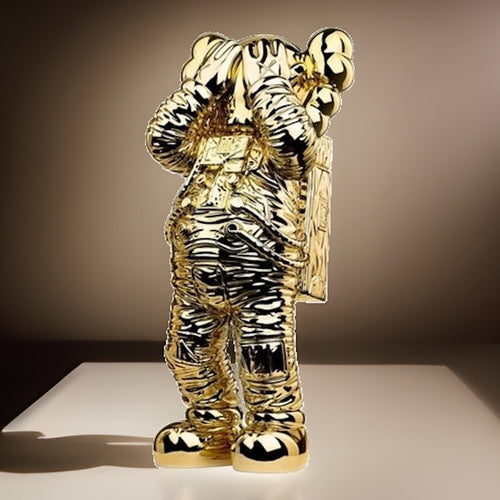
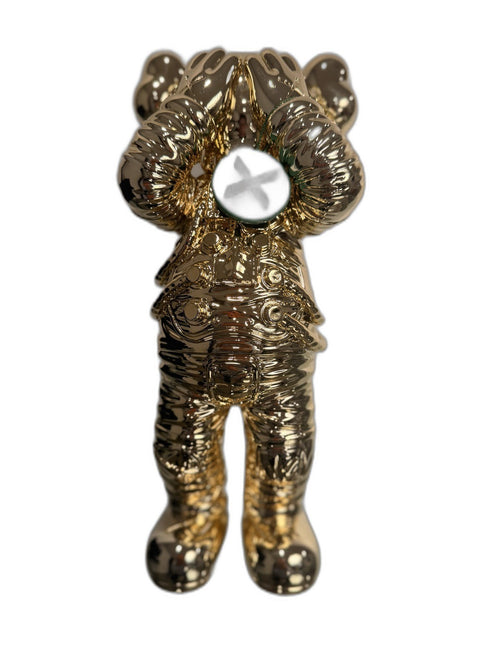
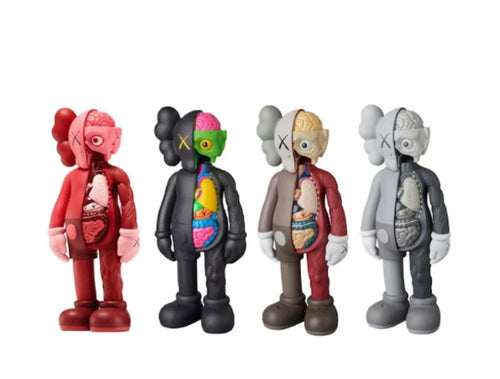
Why KAWS Authentication Matters

KAWS Companion figures rank among the most counterfeited designer toys on the secondary market. A 1000% Companion that retailed for under $200 now trades for thousands of dollars, making the economics of counterfeiting extremely attractive. We inspect every piece we carry, and we have built this guide so collectors can apply the same scrutiny before any purchase.
The Base Production Sticker: Your First Stop
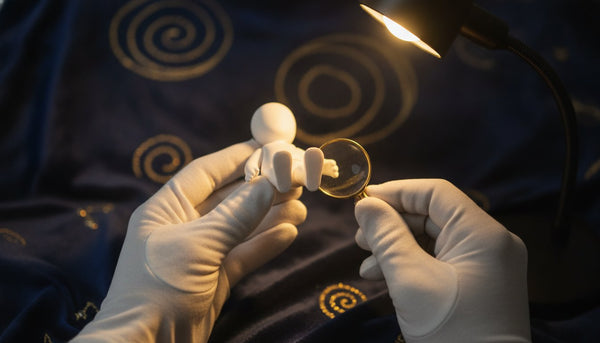
Every authentic KAWS Companion produced by Medicom Toy carries a production sticker on the base. This sticker includes the series number, colorway identifier, and production batch reference. Fakes frequently omit this sticker entirely, or reproduce it with incorrect fonts and smudged ink. Examine it under magnification: the text on genuine pieces is sharp and consistent. If the sticker is missing, blurry, or uses a different font weight than you see on verified examples from the same release, treat it as a red flag.
Seam Lines and Paint Precision

Run your finger along every seam. Authentic figures have clean, tight seams with no visible flashing (excess plastic) and no gaps. Counterfeit figures frequently show raised seam ridges, rough texture at joins, or misaligned halves. Paint precision is equally telling: the gloss-to-matte boundaries on genuine pieces are crisp. Look at the "XX" eyes specifically — the edges should be sharp with no bleed into surrounding vinyl. Any feathering or inconsistent coverage is a warning sign.
Medicom Toy Packaging Font Verification
The retail box is not proof of authenticity — counterfeiters replicate packaging — but it provides useful reference. The Medicom Toy wordmark uses a specific typeface with consistent kerning. Compare the spacing between letters on the box you hold against known authentic examples from collector databases or the Medicom Toy official archive. Fakes commonly use a slightly heavier or lighter weight font, and the registered trademark symbol is often positioned incorrectly.
OriginalFake Markings on Pre-2013 Pieces
KAWS operated the OriginalFake retail store in Tokyo from 2006 to 2013. Figures released through that channel carry distinct OriginalFake branding on packaging and sometimes on the figure base itself. If you are evaluating a pre-2013 piece claimed to be from OriginalFake, verify the specific branding conventions against documented releases. The OriginalFake logo typography is frequently misrepresented on fakes targeting this premium segment.
OneCOA NFC Chip Verification

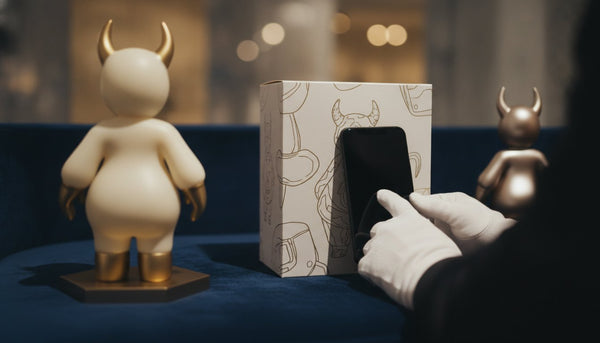
We authenticate all KAWS figures we carry using OneCOA, which embeds an NFC chip in the certificate of authenticity. Tap the chip with any NFC-enabled smartphone to pull the immutable blockchain record: figure details, authentication date, and chain of custody. If a seller cannot provide a verifiable OneCOA record, request documentation that explains the authentication chain. Unverified pieces should be priced accordingly and purchased only from sources with strong return policies.
Colorway Cross-Reference Against Known Release Records
KAWS releases are well-documented in the collector community. Every colorway has a corresponding documented retail price, release date, and distribution channel. Counterfeiters sometimes invent colorways that never existed, or combine colors from two separate releases into a single piece. Before purchasing any Companion, cross-reference the colorway against known release records from sources such as the KAWS community forums, Hypebeast archive, and auction house past-sale databases.
Price Red Flags

Secondary market pricing for authenticated KAWS figures tracks closely with auction results at Heritage Auctions, Christie's, and Sotheby's. If a piece is offered at 40% or more below documented comparable sales with no explanation — damage, unsigned, incomplete packaging — approach with serious skepticism. Counterfeiters rely on buyers who assume a bargain is simply a motivated seller. In practice, motivated sellers liquidate through established channels where prices are transparent.
Where Counterfeits Originate
The majority of KAWS counterfeits enter the market through platforms with limited authentication infrastructure, unverified third-party sellers on major marketplaces, and informal channels such as social media direct sales. Factory-direct counterfeits are sophisticated enough to deceive inexperienced buyers. Platform-level authentication programs vary widely in rigor; none substitute for physical inspection by an experienced authenticator.
How We Authenticate Every Piece
Every KAWS figure in our inventory goes through a multi-step authentication process before we list it. We physically inspect seam quality, base stickers, paint precision, and colorway accuracy. We verify OneCOA NFC chip records where applicable, and we cross-reference each piece against documented release data. We do not list pieces we cannot authenticate to this standard.
Browse our authenticated KAWS and designer toy collection at gauntlet.gallery/collections/figurines.