When Christie's, Sotheby's, or Phillips puts a street art work in a sale, they're not guessing on value—they're applying a rigorous framework that took decades to develop. Understanding how they think helps collectors buy and sell more strategically.
The Core Valuation Factors
1. Auction Record (The Anchor)
The most important single factor. Specialists look at every prior auction result for the artist and the specific work's series. Consistent above-estimate results signal demand strength. One outlier result doesn't establish a market—a pattern does.
2. Edition Size and Position
For prints: edition size matters enormously. Lower number positions (1/50, 2/50) don't carry the premium collectors often expect—the edition size is what matters, not the individual number. An artist’s-proof designation does not establish a fixed rarity ratio or price premium; check the artist or publisher’s release record and comparable examples.
3. Authentication Quality
Works with Pest Control, studio COA, or major gallery provenance carry a significant premium over works with only private sale history. Auction houses will pass on consignments with weak authentication regardless of the work's apparent value.
4. Condition
Condition grading for prints follows specific criteria: full margins (deckled or untrimmed), no fading, no foxing, no creases.
5. Cultural Moment
Works tied to a current cultural conversation (retrospectives, anniversaries, film releases, deaths) perform 15–30% above estimate. Timing a sale around a major artist event can meaningfully impact your return.
Our team tracks upcoming auction activity to help collectors time sales optimally. Contact us for a consultation.
Available at Gauntlet Gallery
Explore current pieces available from the gallery.
-

1963 Farquhar Earth in Space Transparent Celestial Globe 16" Compass VTG
$699.00 USD
-

1967 Beatles Richard Avedon STERN Original Posters Set of 4 Linen Backed Copy
$999.00 USD
-
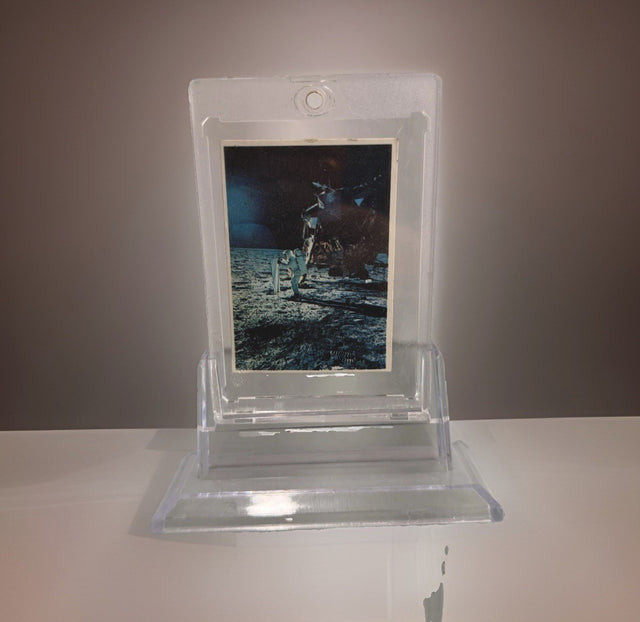
1969 Space Candy Buzz Aldrin Apollo 11 On The Moon Card #19 Taylor-Reed Display
$59.00 USD
-

1980 Polo Player Green Pink Chalk Pastel Bears Andy Warhol Signature AS-IS
$399.00 USD
-

After Andy Warhol Moon Landing Line Drawing 5/50 w/ Astronaut Autographs As-Is
$175.00 USD
-

After John Lennon "I Do" Framed Print, Marked A/P Unverified
$99.00 USD


Browse the collection for current listings.