

Featured image: AI-generated interior concept using product reference photography. Scale, setting, framing, and placement are illustrative.
Creating a home office that genuinely supports the rhythm of a working day is a distinct design challenge. It is not merely about placing a desk and a chair; it is about crafting an environment that fosters concentration, reduces visual fatigue, and projects a professional image during video calls. The art chosen for such a space plays a surprisingly central role in this balance. Unlike a living room or a bedroom, where art might primarily serve an aesthetic or emotional purpose, in a home office, it must also be a silent partner in productivity. It needs to provide a visual anchor without becoming a distraction, offer a compelling backdrop without overwhelming the frame, and endure the scrutiny of daily use without showing wear. This means rethinking traditional art placement and considering how light, viewing distance, and even the subtle hum of technology interact with the chosen pieces. The objective is to integrate art so seamlessly that it enhances the work experience, rather than merely decorating the walls.
A common pitfall is treating the home office as an afterthought, a space where leftover furniture and art pieces find a temporary home. This approach often leads to a disjointed, uninspiring environment that actively detracts from focus. The hybrid work model has solidified the home office as a permanent fixture for many, demanding a more intentional design strategy. We need to move beyond generic decor and instead consider art as a strategic element, capable of defining the room's character and influencing the user's state of mind. The right piece can offer a moment of visual respite, spark a creative thought, or simply provide a pleasant, consistent presence throughout long working hours. The wrong one can introduce glare, feel oppressive, or appear unprofessional on camera. Our task, then, is to select and place art with a clear understanding of these functional demands, ensuring it contributes positively to the daily grind.
Understanding the hybrid-work home office brief
Imagine a client, a tech professional, who splits their week between a corporate office and their home setup. Their home office is a dedicated room, roughly 10 x 12 feet, with a single window facing east. They primarily use a large L-shaped desk, positioned with one arm against the wall opposite the window, and the other extending into the room. Their main monitor sits at the corner of the 'L', facing the wall. The client requires a space that feels both professional and personally reflective, capable of supporting intense coding sessions, frequent video conferences, and occasional creative brainstorming. They specifically requested that the art not be overtly 'corporate' or 'stuffy' but rather visually engaging and contemporary. This brief immediately highlights several design considerations: the eastern window will bring direct morning light, potentially causing glare; the desk's orientation means a primary wall is directly in the user's line of sight; and the need for a professional video background dictates careful selection and placement. The client also mentioned a desire for something that offers a subtle visual 'puzzle' or complexity, something to engage the eye during brief mental breaks without being overly stimulating.
The wall directly in front of the primary monitor, measuring approximately 8 feet wide by 9 feet high, is the prime candidate for an art installation. This is the wall the client will stare at for hours each day, and it is also the backdrop for most video calls. Therefore, any art here must be carefully chosen for its visual impact, its ability to withstand prolonged viewing, and its photographic qualities. Artwork with highly reflective surfaces, intricate textures that might distort on camera, or overly busy patterns could prove problematic. Similarly, pieces that are too small might look insignificant, while those that are too large could overwhelm the space or appear cropped on video. The eastern window, while providing natural light, also presents a challenge. Direct sunlight can shift throughout the morning, creating moving shadows or harsh reflections on framed art. This necessitates considering the material and finish of the art itself, favoring options that diffuse light rather than mirroring it. The art must also be robust enough for a working environment, where accidental bumps or minor adjustments are more likely than in a formal gallery setting. This hypothetical scenario grounds our choices in practical application.
Choosing a visual anchor for focus and video calls
For the primary wall, the Invader Rubik Camouflage HENI Signed & Numbered Giclee Panel presents a compelling option. Its square format offers a clear graphic anchor. Confirm the panel’s actual outer dimensions before testing its relationship to an 8-foot wall; the listing contains conflicting size conversions. The piece features Invader's iconic pixelated character, rendered in a 'Rubikcubism' style with a camouflage colorway. This immediately addresses the client's desire for something contemporary and visually engaging, while avoiding a conventional corporate aesthetic. The pixelated nature, reminiscent of early video games, offers a nostalgic yet modern appeal that resonates with a tech professional. The 'Rubikcubism' aspect, with its arrangement of colored squares suggesting scrambled Rubik's Cube faces, provides that subtle puzzle-like complexity the client mentioned, allowing for brief, focused contemplation without demanding intense study. It is a piece that can be appreciated both from a distance and upon closer inspection, revealing new details and arrangements of color.
Crucially, the artwork is a Diasec-mounted giclée print on an aluminium composite panel. This construction offers several advantages for a home office. Diasec mounting involves bonding the print to a sheet of acrylic glass, which then protects the image while providing a sleek, frameless presentation. The acrylic surface, while glossy, tends to have less harsh reflectivity than traditional glass when properly lit, and the robust aluminium composite backing ensures durability. This panel format also sits relatively flush against the wall, minimizing the risk of accidental damage in a high-traffic work zone. The colors, red, blue, green, yellow, orange, and white, are vibrant but arranged in a structured, almost mathematical grid. This prevents the piece from feeling chaotic or overly stimulating, maintaining a sense of order that can be conducive to concentration. On video calls, the distinct pixel art will translate well, providing an interesting yet uncluttered background that communicates a personality without distracting from the speaker. The overall effect is one of playful intelligence, perfectly suited to a professional who values both rigor and creativity.
Managing daylight reflection and desk sightlines
The eastern window in our hypothetical office presents a significant challenge for art placement. Direct morning light can create specular reflections on glossy surfaces, making artwork difficult to view and potentially causing eye strain. For the Invader Rubik Camouflage panel, with its acrylic face, this is a particularly important consideration. While acrylic is generally less reflective than glass, it is not immune. The ideal placement for this piece, given the window, would be on the wall directly opposite the window or perpendicular to it. Since the client's desk already faces the wall opposite the window, this aligns perfectly. Positioning the art here minimizes direct reflection from the eastern light source throughout the morning. As the sun moves, any indirect light hitting the panel will be diffused, creating a more even illumination without harsh glare. If the art were placed on an adjacent wall that catches direct morning sun, the experience would be far less pleasant, with shifting patterns of light and shadow potentially disrupting focus.
Beyond reflections, the desk sightline is paramount. The artwork will be a constant presence in the client's peripheral vision, if not directly in their gaze, for much of the day. Test a full-size paper template against the proposed wall before deciding whether the panel suits this hypothetical 10 x 12 foot room. A good starting point for hanging height is to center the artwork at eye level when seated. The appropriate level depends on the actual seated eye line, furniture and viewing distance, so test it from the client’s working position. Given the client's L-shaped desk and monitor setup, we would want the top edge of the panel to sit comfortably above the monitor's height, ensuring it is fully visible and not partially obscured. This also prevents the art from feeling too low or 'on top of' the workspace. A structured, pixelated image may suit this client’s preferences better than a busier composition; that is a personal response to test, rather than a claim about productivity or visual fatigue. Its graphic quality offers a steady visual anchor, allowing the eye to rest without becoming bored, a crucial balance for a working environment.
Designing a video-call background that performs
The advent of hybrid work means that the home office is not just a personal workspace but also a public-facing stage for virtual meetings. The art on the wall behind the desk becomes a critical element of one's professional presentation. A cluttered background, a blank wall, or an overly distracting piece can all undermine credibility or simply create an unprofessional impression. The Invader Rubik Camouflage panel excels in this regard. Its bold, graphic nature translates exceptionally well through webcams, which often compress detail and flatten colors. The distinct pixelated image of the Space Invader character, rendered in the 'Rubikcubism' style, is instantly recognizable and visually interesting without being overwhelming. The strong color blocks of red, blue, green, yellow, orange, and white provide a vibrant but organized backdrop.
The square format can work behind the client’s chair, provided its confirmed size and position are tested in the actual camera view. This creates a cohesive and intentional look, rather than a sliver of an indistinct image. The frameless Diasec mounting contributes to a clean, modern aesthetic that reads well on screen. The face of a Diasec-mounted panel can still reflect light. Test window and lamp reflections in the camera view rather than assuming a frameless presentation will eliminate glare. This piece communicates a contemporary sensibility, a hint of playfulness, and an appreciation for graphic design, all without being overtly personal or potentially controversial. It strikes a perfect balance: it is memorable enough to spark a positive impression or an ice-breaker comment, yet subtle enough not to detract from the meeting's content. It says, 'I have an eye for design and a modern outlook,' without saying 'look at my art instead of me.' This thoughtful selection ensures the video background is an asset, not an afterthought.
Considering concentration preferences and visual breaks
Different individuals have varied preferences when it comes to visual stimulation in their workspace. Some thrive in minimalist environments, while others find inspiration in a curated collection of objects and art. Our hypothetical client, a tech professional, expressed a desire for a subtle visual 'puzzle' or complexity, suggesting they appreciate a degree of engagement during mental breaks, but not so much that it interferes with deep work. The Invader Rubik Camouflage panel is particularly well-suited to this specific need. The 'Rubikcubism' style, where the pixels appear as if they are scrambled Rubik's Cube faces, offers a dynamic yet structured visual. It is not a chaotic abstract piece, nor is it a hyper-realistic image demanding intense scrutiny. Instead, its patterns provide a gentle challenge to the eye, allowing for a brief mental shift without pulling the viewer into a rabbit hole of detail.
During long coding sessions or complex problem-solving, a brief glance away from the screen can offer a moment of cognitive reset. The Invader piece allows for this without introducing new information that needs processing. One can observe the interplay of colors, the illusion of depth created by the 'cubes', or simply appreciate the iconic pixel character. This type of visual engagement is distinct from a distraction; it is a controlled pause. The bright, distinct colors are invigorating without being jarring, providing a splash of energy against what might otherwise be a neutral wall. For individuals who find themselves staring blankly at a wall during moments of creative block, having something visually engaging, yet not demanding, can be a valuable asset. It offers a point of focus for diffuse thinking, helping to re-engage the mind without overstimulating it. This careful balance ensures the art supports, rather than hinders, the client's concentration and creative process.
Integrating desk surface objects with the overall aesthetic
While a large wall art piece anchors the room, the objects on the desk surface itself also contribute significantly to the home office aesthetic and functionality. Clutter can quickly erode focus and make a workspace feel oppressive. Therefore, any desk objects should be chosen for their aesthetic appeal, their ability to inspire, and their minimal footprint. For our tech professional, a piece that speaks to innovation and ambition, without adding visual noise, would be ideal. The Blue Origin New Glenn Rocket Display Model fits this requirement perfectly. This detailed desk model, presented on a stand, celebrates a modern heavy-lift launch vehicle. Its sleek, vertical form provides a strong counterpoint to the horizontal lines of a desk and the square format of the wall art. It occupies minimal desk space while offering a sculptural, aspirational presence.
The rocket model, likely rendered in a clean, metallic or white finish, would complement the vibrant colors of the Invader panel without competing for attention. It introduces a different kind of visual interest, a three-dimensional object with intricate engineering details, that can be appreciated from various angles. For someone in the tech industry, a symbol of space exploration and ambitious engineering can serve as a subtle source of inspiration, a reminder of grander projects and future possibilities. Placed strategically on a less-used corner of the L-shaped desk, or on a credenza adjacent to the main workspace, it can be admired without impeding daily tasks. Its presence is sophisticated and thoughtful, avoiding the generic desk trinkets that often accumulate. This combination of a bold wall piece and a refined desk object creates a cohesive narrative: a workspace that is both visually stimulating and intellectually inspiring, reflecting a modern professional's interests and aspirations without sacrificing order.
Practical tradeoffs: cable clutter and surface durability
No home office design is complete without confronting the practical realities of a working environment: cable clutter and surface durability. These seemingly mundane aspects can significantly impact the overall aesthetic and the longevity of the design. For our tech professional, multiple monitors, charging cables, peripherals, and network connections are an unavoidable part of the setup. While art pieces like the Invader panel are wall-mounted and thus largely immune to desk-level clutter, the visual impact of tangled wires can detract from even the most thoughtfully curated space. Investing in cable management solutions, such as adhesive clips, cable sleeves, under-desk trays, or even a built-in grommet system in the desk, is paramount. A clean cable run ensures that the eye is drawn to the art and intentional objects, not the mess of modern electronics. This also creates a safer, more organized workspace, reducing trip hazards and making cleaning easier.
Regarding surface durability, both the artwork and the desk objects require consideration. The Invader Rubik Camouflage panel, being a Diasec-mounted giclée on aluminium composite, is inherently robust. The acrylic face protects the print from dust, minor abrasions, and even some light splashes, making it suitable for a working environment where accidental contact might occur. Its frameless nature means there are no delicate edges to contend with. Similarly, the Blue Origin New Glenn Rocket Display Model, as a display piece, is designed to be handled occasionally for dusting or repositioning. Its stand ensures stability, reducing the risk of it being knocked over. The key is to choose materials and finishes that can withstand the daily realities of a home office. This means favoring pieces that are easy to clean, resistant to minor impacts, and do not show fingerprints or dust excessively. The selection of these specific products reflects an understanding of these practical tradeoffs, ensuring that the curated aesthetic is not just beautiful but also resilient and maintainable.
The enduring appeal of a well-designed home office
The home office, once a transient corner for many, has cemented its status as a critical zone in the modern home. It is a space where professional ambitions meet personal comfort, demanding a design approach that is both rigorous and empathetic. The choices made for this environment, from the desk itself to the art on the walls, directly influence focus, mood, and even professional perception. A truly successful home office art wall, as we have explored, is not simply decorative; it is a strategic element in fostering a productive and inspiring atmosphere that endures the demands of real working days.
The Invader Rubik Camouflage HENI Signed & Numbered Giclee Panel exemplifies this thoughtful integration. Its vibrant, pixelated design offers a compelling visual anchor, providing a subtle 'puzzle' for moments of mental respite without becoming a distraction. The robust Diasec-mounted aluminium composite construction ensures durability and minimizes glare, making it a practical choice for a room with varying light conditions and daily use. On video calls, its graphic clarity and contemporary aesthetic project a professional yet personable image, avoiding the pitfalls of a bland or overly busy background. It speaks to a discerning individual who values both innovation and a touch of playful nostalgia.
Complementing this, the Blue Origin New Glenn Rocket Display Model on the desk offers a three-dimensional counterpoint, a symbol of ambition and engineering prowess that inspires without cluttering. Together, these pieces create a cohesive narrative within the home office. They demonstrate that art in a workspace can be more than just an accent; it can be an active participant in creating an environment conducive to deep work, creative thinking, and effective communication. The careful consideration of sightlines, light management, video call aesthetics, and personal concentration preferences ensures that the chosen art enhances, rather than detracts from, the work experience.
Ultimately, a well-designed home office art wall contributes to a sense of permanence and intention. It transforms a functional space into one that feels considered, personal, and genuinely supportive of the professional who inhabits it. This deliberate approach to integrating art into the workspace reflects a broader understanding of how environment shapes performance and well-being. It is an investment not just in aesthetics, but in the quality of one's working life. For designers and clients alike, the lesson is clear: treat the home office with the same gravity and creativity as any other primary living space. The rewards, in terms of focus, inspiration, and sustained professional presence, are significant.
When planning your own home office design, consider how these principles can be applied to your unique space and work style. Confirm final framed dimensions, current availability, and condition before specifying any artwork. Explore these and other curated pieces to find the perfect blend of inspiration and practicality for your professional sanctuary.
Available at Gauntlet Gallery
Explore current pieces available from the gallery.
-

1963 Farquhar Earth in Space Transparent Celestial Globe 16" Compass VTG
$699.00 USD
-

1967 Beatles Richard Avedon STERN Original Posters Set of 4 Linen Backed Copy
$999.00 USD
-
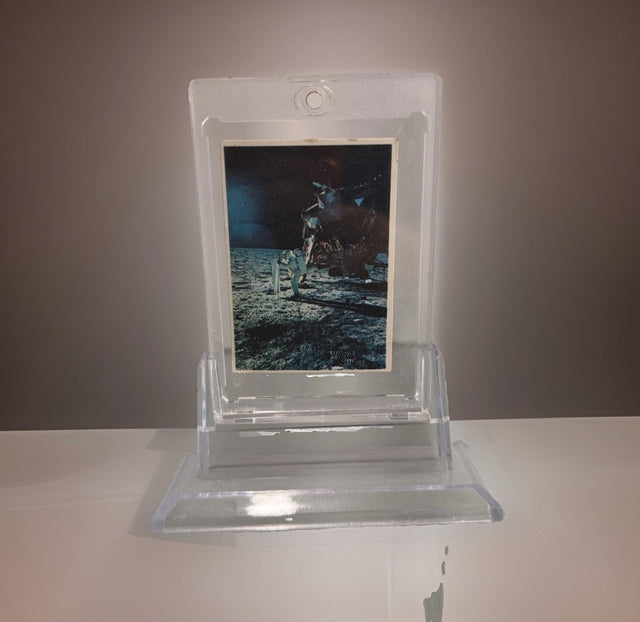
1969 Space Candy Buzz Aldrin Apollo 11 On The Moon Card #19 Taylor-Reed Display
$59.00 USD
-

1980 Polo Player Green Pink Chalk Pastel Bears Andy Warhol Signature AS-IS
$399.00 USD
-

After Andy Warhol Moon Landing Line Drawing 5/50 w/ Astronaut Autographs As-Is
$175.00 USD
-

After John Lennon "I Do" Framed Print, Marked A/P Unverified
$99.00 USD


Browse the collection for current listings.