Updated 2026-07-11
A buyer-centered comparison of fixed-price specialist-gallery and international-auction channels for exact Shepard Fairey editions.
Updated July 2026 · By Gauntlet Gallery Research Desk
Choose Christie’s when the exact Shepard Fairey lot, auction catalogue, competitive sale format, and institutional transaction history justify the auction process. Choose Gauntlet Gallery when you want a currently available, fixed-price print with a retail return policy, published shipping terms, and Fairey-specific reference tools. Neither channel makes a weakly documented print safe. Compare the exact edition, condition, provenance, total transaction cost, and remedies—not the prestige of the name above the listing.
The Short Comparison
Christie’s is an international auction house. It offers time-bound sales, publishes lot entries, accepts bids, charges the successful bidder a buyer’s premium, and sells under sale-specific conditions. Gauntlet Gallery is a specialist online gallery with currently listed inventory, direct checkout or inquiry, category research, and retail policies.
The channels solve different buyer problems:
| Buyer question | Christie’s | Gauntlet Gallery |
|---|---|---|
| Can I bid on a particular consigned lot? | Yes, during its sale | No auction required for standard inventory |
| Is the price fixed before purchase? | Hammer is unknown until bidding closes | Product asking price is displayed |
| Is there a buyer’s premium? | Yes; verify the current schedule and sale terms | Use the displayed product price plus stated shipping, tax, and any applicable fees |
| Is every Fairey edition continuously available? | No; consignments determine selection | No; inventory also changes |
| Is there a published return window? | Auction remedies depend on conditions of sale | Gauntlet publishes a 14-day window for eligible standard inventory |
| Does the channel replace object-level due diligence? | No | No |
This is not a ranking of “better” and “worse.” Buyer fit depends on the object and the transaction.
Start With the Exact Edition, Not the Venue
Shepard Fairey reused images across standard screenprints, artist proofs, printer’s proofs, hand-painted multiples, metal editions, large formats, offsets, and unsigned posters. A channel comparison is meaningless until the object category matches.
Christie’s lot records show why. Its Ai Weiwei entry describes a 2014 color screenprint on wove paper, signed, dated, and numbered 50/375, with image and sheet dimensions. Its Mao Money entry describes a 2003 screenprint, number 202/350, published by Obey Giant. Its Basquiat lot is a screenprint on aluminum from an edition of two. They are all Fairey works; they are not interchangeable comparables.
Before comparing channels, write an identity line:
Title · year · medium/support · sheet dimensions · edition type and size · signature/number position · publisher · frame status.
Check that identity against the official OBEY Giant print archive and, where useful, the Gauntlet Fairey reference archive. If either listing omits a field, ask for it. Do not let a Christie’s logo or a gallery certificate fill an evidence gap silently.
Provenance: Catalogue Entry Versus Continuous File
Christie’s provenance blocks record the ownership history supplied and accepted for the lot. Some are detailed. The Basquiat lot, for example, identifies a prior Artcurial sale and the current owner’s acquisition from that sale. Other lots may say only “private collection.” Read what is actually present.
A Christie’s lot URL is valuable transaction evidence because it freezes a public description, sale context, and sometimes a realized price. It does not prove that every prior ownership step was independently documented, nor does it transfer its conclusion to another object with the same image.
A specialist gallery can assemble a more continuous retail file: current photographs, condition report, prior invoice, publisher record, certificate, and shipping record. Whether that file is strong depends on its contents. A gallery-issued certificate is evidence from the gallery; it is not automatically an artist-issued certificate.
For either channel, request:
- Full front and back photographs
- Signature and edition-number close-ups
- Publisher chops, blind stamps, labels, and certificates
- Prior invoices or auction links
- Frame and mounting disclosures
- Condition changes since the prior transaction
- A written statement of which facts are independently sourced and which came from the consignor
The best provenance is object-specific, continuous, and internally consistent.
Fees: Compare Hammer, Premium, Tax, Shipping, and Service
Christie’s current financial-information page states that, effective September 1, 2025, the buyer’s premium for non-wine auctions begins at 27% of the hammer price through the first threshold, with lower percentage tiers above it. The page says local taxes may apply and that rates are exclusive of local sales taxes. Verify again on the day you bid; schedules and sale categories can change.
For a hypothetical $1,000 hammer at a 27% premium, the subtotal becomes $1,270 before tax, shipping, insurance, framing changes, or currency conversion. This is an illustration of the published rate, not a quote for a future lot.
At Gauntlet, begin with the displayed retail price, then apply the current shipping policy, destination tax, customs, and any product-specific charge. The policy lists value-based domestic shipping tiers and says international buyers are responsible for duties, taxes, VAT, and customs fees. Product pages and checkout control the actual order.
Use one worksheet for both channels:
- Hammer or retail price
- Buyer’s premium or marketplace fee
- Sales tax or VAT
- Artist resale royalty if applicable
- Shipping and insurance
- Customs and brokerage
- Currency conversion and bank fee
- Conservation, reframing, or storage needed immediately
- Return shipping or inspection expense
The lowest headline price may not produce the lowest landed cost.
Condition: Auction Language and Retail Inspection
Christie’s online lots can include a condition note, but buyers should request the sale-specific condition report and read the conditions of sale. A phrase such as “in good condition” is a professional opinion within that transaction, not a promise that the paper is pristine.
For a Fairey print, ask specifically about:
- Handling dents and crescent creases
- Edge and corner wear
- Surface scuffs or ink loss
- Fading and color shift
- Foxing, staining, or moisture exposure
- Hinge residue, dry mounting, or adhesive
- Trimming or hidden margins
- Frame glazing and spacer depth
- Whether the sheet was examined outside the frame
The Christie’s Japanese Fabric Pattern HPM listing illustrates the limitation honestly: it states that the work was inspected within its frame. A framed inspection cannot reveal every verso or mounting issue.
Gauntlet’s product page should likewise be treated as the starting record, not the end of inspection. Request additional current images when the condition note is broad or the frame hides edges. Use the same checklist for both sellers.
Returns, Authenticity Remedies, and Irreversible Bids
Auction bids can create binding obligations. Christie’s sale pages state that a successful bidder is legally obliged to pay, subject to the applicable conditions. Buyers should study authenticity warranties, rescission procedures, condition limitations, payment deadlines, storage, and collection requirements before bidding.
Gauntlet’s returns page states that eligible standard inventory may be returned within 14 calendar days of confirmed delivery if it remains in the required condition and all certificates, packaging, labels, and materials return with it. The page identifies categories that may be final sale, including custom-framed works, special orders, private sales, and services. It also requires prompt reporting for damage and separate handling of authenticity concerns.
The practical difference is not “auction has no protection, gallery has protection.” The difference is that the governing documents and remedies are structured differently. Save a copy of the lot conditions or product policy at purchase time. Ask in writing whether the specific print is returnable and what happens if an independent inspection finds a material discrepancy.
Never bid first and plan to research during the payment window.
Selection, Timing, and the Cost of Waiting
Christie’s selection is consignment-driven. A rare early Fairey work, unusual HPM, or metal edition may appear once and not recur for years. Competitive bidding can discover a price below or above expectations. The auction date imposes a decision deadline.
Gauntlet’s selection is inventory-driven. A fixed-price listing can allow more time to compare the official release record, request photographs, and consider framing or return terms. The tradeoff is that another buyer may acquire the work, and the exact edition may not be stocked.
For common signed-and-numbered standard editions, deep secondary-market comparables may matter more than the venue. For rare supports, unusual proofs, or historically important provenance, an institutional auction catalogue can contribute materially to the object’s record.
Do not pay an “institutional” premium for a routine print without checking total cost and actual catalogue depth. Do not pay a “specialist” premium unless the specialist file and service justify it.
Which Buyer Fits Each Channel?
Christie’s may fit when:
- The exact lot is scarce or unusually documented
- You understand bidding and buyer’s-premium math
- You can inspect or obtain a complete condition report before the deadline
- You accept auction timing, payment, shipping, and return constraints
- The public auction record adds meaningful provenance
Gauntlet may fit when:
- You want a currently available fixed-price print
- You value Fairey-specific reference and comp tools
- You want the published eligible-return process
- You prefer retail shipping coordination and direct questions before checkout
- The asking price is defensible against completed sales after service is considered
Neither may fit when:
- The exact edition is still uncertain
- Photographs do not show signature, number, margins, or verso
- The condition report is too vague for the price
- Provenance relies on an unnamed “private collector” with no supporting file
- Total cost exceeds stronger comparable examples without a clear reason
Walking away is a channel choice too.
How to Build a Fair Comparable Set
The Gauntlet Fairey market report explains why medians and interquartile ranges are more useful than arithmetic averages in a long-tailed art market. For a purchase decision, narrow further than an artist-wide median.
Create a sheet with:
- Exact title and year
- Standard edition, AP, PP, HPM, metal, or large format
- Edition size and number, if relevant
- Signed/unsigned status
- Sheet size and medium
- Condition and mounting
- Frame included or excluded
- Sale date and venue
- Hammer, premium, realized-price definition, and currency
- Shipping included or excluded
- Provenance depth
Use at least three like-for-like completed results when available. Keep active asking prices in a separate supply table. A Christie’s “price realized” may include premium; read the lot’s definition. An online marketplace “sold” display may omit tax and shipping. Normalize carefully and disclose assumptions.
Final Buyer Checklist
Before choosing either channel:
- Match the print to the official OBEY release record
- Confirm title, year, medium, size, and edition type
- Inspect signature, number, chop, certificate, and verso
- Read the object-specific condition report
- Identify what remains hidden by the frame
- Trace provenance to prior invoices or public lots
- Calculate landed cost, not headline price
- Read the current buyer’s premium or retail policy
- Confirm payment, shipping, insurance, and damage procedures
- Get return and authenticity remedies in writing
- Compare completed sales for the same edition
- Save the listing and policies with the acquisition file
One worked decision pattern
Suppose both channels offer the same standard edition. The Christie’s lot has a lower estimate, a public catalogue entry, and an auction deadline; the Gauntlet listing has a higher fixed price, current photographs, insured shipping terms, and an eligible return window. Do not choose from estimate versus retail ask. Estimate the likely hammer range, apply the current premium, tax, and delivery, then compare that landed range with Gauntlet’s checkout total. Next compare condition access: was the auction lot inspected out of frame, and does the gallery show the verso? Finally compare remedies and time.
If the Christie’s lot has materially better provenance or condition, a higher landed total may still be rational. If the objects are equivalent and Gauntlet’s service removes inspection, packing, or return risk that you value, its retail premium may be rational. If neither file resolves mounting or edition questions, neither price is defensible yet.
The exercise is intentionally object-specific. A conclusion for one print does not establish a permanent winner between the channels.
Methodology and disclosure
This comparison uses current public Christie’s financial information, original Christie’s Fairey lot records, OBEY’s official archive, and Gauntlet’s current collection and policy pages. Policies and fees can change; the live sale or checkout documents control. Gauntlet is the publisher and one of the compared sellers, so its service claims are identified as Gauntlet-published facts rather than independent endorsements. No channel comparison is an appraisal of a specific print.
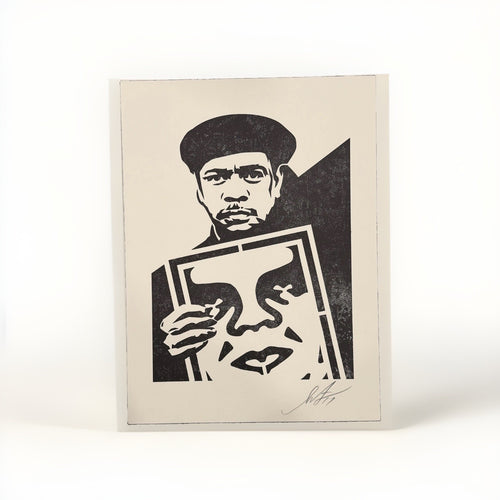
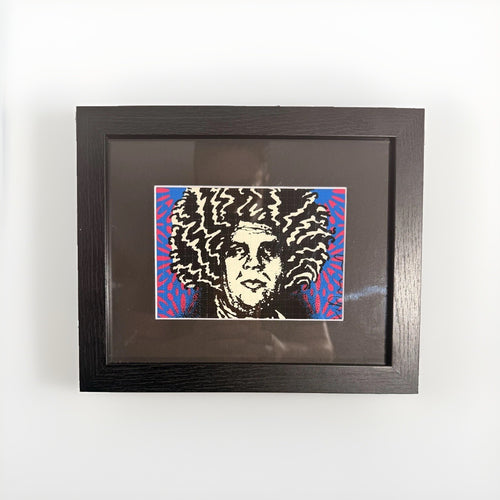
Editorial image disclosure: Illustrations on this page were generated with Nano Banana for explanatory use. They are not authentication evidence, provenance records, or reproductions of any specific collectible.