Signed music memorabilia should be accompanied by three layers of documentation: a third-party authentication certificate from one of the industry-standard services — Beckett Authentication Services, JSA (James Spence Authentication), or PSA/DNA — a provenance record that traces where and when the signature was obtained and who has owned the piece since, and an item-level condition and description record that ties the paperwork to the exact object in your hands. The authentication certificate answers "is the signature genuine?", the provenance file answers "where did this come from?", and the descriptive record answers "is this the same item the paperwork describes?" A signed album, guitar, poster, or photograph carrying all three travels through the market with confidence; a piece missing all three has to be evaluated from scratch every time it changes hands. In this guide we walk through each layer in detail — what it should contain, how to verify it, and how to build a documentation file that protects both the history and the value of your collection.
The Three Layers of Documentation, at a Glance
Collectors sometimes treat "documentation" as a single sheet of paper — usually a certificate of authenticity — but seasoned dealers and auction specialists think of it as a stack. Each layer does a different job, and each layer strengthens the others. Before we go deep on any one of them, here is the full stack in summary form:
- Layer 1 — Third-party authentication. A certificate or letter from Beckett, JSA, or PSA/DNA stating that a professional examiner has studied the signature and concluded it is genuine. This is the backbone of the modern signed-music market and the layer most buyers ask about first.
- Layer 2 — Provenance. The story of the item, told in documents: purchase receipts, auction invoices, prior sale records, signing-event details, correspondence, photographs from the moment of signing, and the chain of owners from the signing to today.
- Layer 3 — Item identity and condition. Descriptive records that make the paperwork inseparable from the object: detailed photographs, measurements, notes on pressing or edition details for albums, serial numbers for instruments, and condition reports made at the time of each sale.
None of these layers replaces the others. A pristine authentication letter attached to the wrong item is worth nothing; a beautiful provenance story with no professional signature examination still leaves the central question open. When we source signed music pieces for our signed music collection, we look for the strongest possible combination of all three, and where a layer is thin we say so plainly in the listing.
Layer 1: Third-Party Authentication — Beckett, JSA, and PSA/DNA
Music autographs occupy one of the most actively traded corners of the collectibles world, and the market long ago consolidated around a trio of independent authentication services: Beckett Authentication Services, JSA (James Spence Authentication), and PSA/DNA. These are the names auction houses, major dealers, and experienced collectors recognize on sight. When a signed Beatles album or a stage-played, band-signed guitar comes to market with certification from one of these three, buyers around the world can bid or buy without needing to be handwriting experts themselves.
What third-party authentication actually is
A third-party authenticator is an independent company — not the seller, not the buyer — whose examiners specialize in studying autographs. They compare the signature in question against extensive reference files of known genuine examples, looking at letter formation, pressure, rhythm, slant, spacing, ink flow, and how the signature interacts with the surface it is on. Music signatures present particular challenges: artists sign in chaotic settings, on unusual surfaces, across decades of evolving handwriting, and sometimes delegate signing to assistants or use mechanical means for mass mailings. Professional examiners build their opinions around those realities.
The result of a successful examination is typically one or more of the following, and any of them counts as legitimate third-party documentation:
- A certificate or letter of authenticity issued by the service, describing the item and the signature(s) examined and carrying a unique certification number.
- A tamper-evident label or sticker applied to the item or its case, bearing the same certification number.
- An entry in the authenticator's online verification database, where anyone can enter the certification number and confirm that the service really issued that certification and what it covers.
That last point deserves emphasis. The certification number is the working part of the document. A paper certificate can be copied; a database entry maintained by the authenticator cannot. Whenever you are offered a piece described as "Beckett certified," "JSA certified," or "PSA/DNA certified," the correct habit is to take the number, go to the service's own verification tool, and confirm that the record exists and that its description matches the item in front of you — same artist, same type of object, same general details. We explain this verification habit step by step in our signed music authentication guide.
Full letters versus certification cards
The major services issue documentation in more than one format, and the differences matter when you are comparing two otherwise similar pieces. A full letter of authenticity generally contains a written description of the item and signatures, and it is the format most often seen with high-value pieces — multi-signed albums, instruments, and historically significant items. A certification card or basic certificate is a more compact document that references the certification number and item type. Both are genuine documentation; the full letter simply carries more descriptive detail, which makes the match between paper and object easier to demonstrate. When two comparable items differ in documentation format, the one with the fuller, more descriptive paperwork typically enjoys stronger buyer confidence.
Witnessed signings versus after-the-fact examination
There are two roads to an authentication certificate. In an after-the-fact examination, the item is submitted to the service and an examiner renders an opinion based on the signature itself. In a witnessed or in-person program, a representative of the authentication service (or an authorized partner) is physically present when the artist signs, and the item is documented on the spot. Witnessed certification is the gold standard where it exists, because it removes opinion from the equation entirely — the signing was observed. Both forms are respected in the market; if a listing tells you which kind of certification a piece carries, that is a sign of a seller who understands documentation.
What third-party authentication does not do
It is worth being precise about scope, because good documentation practice means knowing what each paper covers. An autograph authentication certificate speaks to the signature. It does not certify that a guitar was played on stage, that a poster is a first printing, or that an album is a rare pressing variant. Those claims — often just as important to value — must be supported by the other layers of documentation: provenance records, photographs, and item-specific evidence. A well-documented piece keeps these claims separate and supports each one appropriately, a distinction we cover at length in our music memorabilia buyer's guide.
Layer 2: Provenance — The Paper Trail Behind the Signature
Provenance is the documented history of an object: where the signature was obtained, who has owned the piece, and how it moved from the artist's pen to your shelf. In fine art, provenance has always been central; in music memorabilia it has become steadily more important as the market has matured. Strong provenance does three things at once: it supports authenticity from a completely independent direction, it adds narrative and historical interest that collectors genuinely value, and it protects future resale by answering questions before they are asked.
Documents that build provenance
Provenance is cumulative — every genuine document helps, and no single one is required. The most useful records include:
- Original acquisition evidence. A ticket stub and backstage pass from the night the album was signed; a receipt from an official signing event; a letter from the original owner describing the encounter. First-person accounts, especially contemporaneous ones, are the roots of a provenance tree.
- Photographic evidence of the signing. A photograph of the artist signing the actual item is among the most persuasive documents in all of memorabilia collecting. Even a photo of the owner with the artist at the relevant event adds meaningful context.
- Auction records and invoices. If the piece previously sold through an auction house or established dealer, the catalog entry, lot description, and invoice document both the sale and how the item was described at that time. Keep them all.
- Prior certificates and dealer paperwork. Earlier COAs, dealer receipts, and appraisal documents each add a dated waypoint in the item's history, even when they come from smaller firms. They show the item has circulated openly rather than appearing from nowhere.
- Correspondence and estate records. Letters, emails, insurance schedules, and estate inventories that mention the piece all help establish continuous ownership.
What a strong provenance file looks like
The ideal provenance file reads like a relay race with no dropped batons: the item passes from the signing moment through each owner with a document marking every handoff. In practice, few pieces achieve that ideal, and that is fine — the goal is density, not perfection. A signed concert poster with a 1990s dealer receipt, a 2000s auction invoice, and a current third-party certificate has a far stronger file than one with a single undated certificate, even though neither file is "complete." When you buy, ask the seller for copies of everything they hold; when you sell, pass the entire file forward. Documentation compounds in value precisely because most owners fail to maintain it.
Our own approach reflects this. Provenance is not a marketing flourish for us — it is the raw material of honest pricing. Compare authenticated examples with the same signer, format, inscription, condition and documentation. Include fees and other acquisition costs rather than assuming a return rate.
Provenance claims that need their own support
Music memorabilia often carries claims beyond the autograph: "stage-played," "tour-used," "owned by the artist," "from the estate of." Each of these is a separate factual claim requiring its own documentation — photographs matching the specific instrument to stage use, estate paperwork, letters from management or crew, or auction records from a documented estate sale. A signature certificate does not substantiate a usage claim, and a usage claim does not substantiate a signature. The best-documented pieces in the market keep these threads distinct and support each independently. If you encounter unfamiliar terms while reading provenance paperwork, our authentication glossary defines the vocabulary collectors and authenticators actually use.
Layer 3: Item Identity and Condition Records
The third layer is the least glamorous and the most frequently neglected: documentation that binds the paperwork to the physical object and records its state over time.
Tying the paper to the piece
A certificate is only as good as its connection to the item it describes. Strong item-identity documentation includes:
- Detailed photographs of the item from multiple angles, including close-ups of the signature, any inscriptions, and any distinguishing marks — a scuff, a printing anomaly, a personalization. These make the item individually identifiable.
- Certification labels photographed in place, showing the tamper-evident sticker on the actual item, so the number on the certificate, the number in the database, and the number on the object can all be matched.
- Serial numbers and technical details for instruments — the headstock, the serial number, model details — photographed and noted in the file.
- Edition and pressing details for albums and posters: label variants, catalog numbers, printing details, and any numbering, described precisely rather than generically. Check the edition documentation for the specific release rather than assuming; when details are uncertain, record what is observable and say what is unverified.
Condition reports
Condition drives value in music memorabilia just as it does in prints and figures, and a written condition report — made at purchase and updated if anything changes — is a document worth keeping. Note the condition of the signature itself (ink strength, any fading or smearing), the substrate (ring wear on a jacket, edge wear on a poster, finish checking on a guitar), and any restoration or repairs. A dated condition report protects you at insurance time, at resale time, and in the unhappy event of damage in transit. It also demonstrates custodial care, which sophisticated buyers read as a proxy for everything else in the file being trustworthy.
Documentation Expectations by Item Type
Different categories of signed music memorabilia carry different documentation norms. The table below summarizes what a well-documented example of each major type typically includes, beyond the universal baseline of a Beckett, JSA, or PSA/DNA certification:
| Item type | Core documentation | Valuable extras |
|---|---|---|
| Signed albums & vinyl | Third-party certificate; photos of jacket, labels, and signature placement; pressing/catalog details recorded | Signing-event details; ticket stubs; photo of the signing; notes on whether the jacket or an insert was signed |
| Signed guitars & instruments | Third-party certificate identifying all signatures; serial number photographed and recorded; full photo set | Separate support for any "played" or "owned" claim; case and accessories documented; display history noted |
| Concert posters & flyers | Third-party certificate for the signature; printing details and dimensions recorded; edge-to-edge photographs | Venue and date context for the poster itself; framing and conservation records; prior auction descriptions |
| Signed photographs | Third-party certificate; details of the photographic print recorded; close-ups of ink over the image surface | Photographer or agency context; personalization explained; original mailing or event materials if signed by request |
| Setlists, lyrics & handwritten material | Third-party examination covering the handwriting, not just a signature; provenance from the venue, crew, or event | First-person account of recovery from the stage or session; corroborating photos or recordings of the show |
| Drumheads, tour gear & stage items | Third-party certificate for signatures; item photographed in detail; source of the gear documented | Tour or production paperwork; crew letters; photos matching the item to stage use |
Notice the pattern: the signature certificate is constant, while the supporting documents flex with the object. Handwritten material — setlists, lyrics, working notes — leans hardest on examination and provenance because the entire object is handwriting. Instruments lean hardest on serial-number identity and usage support. Albums and posters lean on precise edition description. The documentation stack is the same three layers every time; only the emphasis shifts.
Comparing Documentation Types: What Each One Proves
Not all paperwork carries equal weight, and part of collecting well is calibrating how much confidence each document deserves. Here is how we weigh the common documents when evaluating pieces for our own inventory:
| Document | What it establishes | Weight in the market |
|---|---|---|
| Beckett / JSA / PSA-DNA certification (verifiable number) | Professional opinion, or witnessed confirmation, that the signature is genuine | Very high — the market's baseline for signed music |
| Photo of the artist signing the actual item | Direct visual evidence of the signing moment | Very high, especially combined with certification |
| Auction house invoice / catalog entry | Documented public sale and contemporaneous description | High — adds provenance and a market waypoint |
| Established dealer receipt with item description | Chain of custody and the dealer's standing behind the sale | Moderate to high, depending on the dealer's reputation and guarantee |
| Original owner's written account, ticket stubs, passes | First-person provenance and context | Moderate — persuasive as corroboration, rarely sufficient alone |
| Generic COA from an unknown issuer | Only that someone printed a certificate | Low on its own — keep it in the file, but verify independently |
The last row deserves a constructive word. The memorabilia world is full of certificates from long-gone shops, hobbyist sellers, and unfamiliar names. A generic COA is not evidence of a problem — it is simply weak evidence of authenticity. The productive response is not to discard the piece but to upgrade its file: submit the item to Beckett, JSA, or PSA/DNA for a current examination, and keep the old paperwork as part of the provenance story. Many excellent pieces enter the market documented only by an enthusiastic 1980s hobby-shop certificate; professional certification is how they graduate. Our guide to spotting problem pieces in music memorabilia covers how to read weak documentation without either over-trusting or over-reacting to it.
Documentation and Value: Why the File Is Worth Real Money
Documentation is not just protective — it is directly priced into the market. Two copies of the same signed album, in comparable condition, will trade very differently when one carries a verifiable major-service certification and a provenance file and the other carries nothing. The documented piece is liquid: it can sell to any buyer, anywhere, including cautious buyers who would never purchase on trust. The undocumented piece can only sell to buyers willing to do their own authentication legwork, which shrinks its market and lengthens its time to sale.
We see this constantly in our comparable-sales research. Rather than quote figures that shift with every season, we would point you to our signed music price guide and our broader financial insights hub , where we track how verified sales actually behave. The practical takeaway is stable even as prices move: money spent building a proper documentation file is among the most reliable investments a collector can make in a piece they already own.
Documentation also protects value at the moments that matter most — insurance claims, estate transitions, and forced sales. An insurer settling a claim, an heir liquidating a collection, or an auction house evaluating a consignment will all reach for the file first. Collections with organized documentation get evaluated quickly and favorably; collections without it get conservative estimates and slow handling.
How We Handle Documentation at Gauntlet Gallery
Because this article carries our name, it is fair to say plainly how we practice what we are preaching. For signed music memorabilia, our gallery relies on the industry-standard trio — Beckett, JSA, and PSA/DNA — as the authentication backbone. We source from documented channels, we preserve every piece of paper that accompanies an item into our inventory, and we describe documentation precisely in listings: which service certified the piece, what format the certification takes, and what provenance travels with it. Where a piece's file is thinner than we would like, we say so rather than papering over it, and we price accordingly against verified comparable sales rather than against optimistic asking prices.
When a piece leaves our hands, the entire file leaves with it. Our view is that a dealer is a temporary custodian of an object's history, and the history belongs with the object. If you are earlier in your collecting journey and want a structured overview of how we think about buying across categories, The Collector's Hub gathers our guides, glossaries, and market resources in one place, and our authentication FAQ answers the questions we hear most often from first-time buyers.
Building and Maintaining Your Own Documentation File
Whether you own two signed records or two hundred, the mechanics of good documentation are the same. Here is the system we recommend:
- Create one file per item. Physical or digital — ideally both. Each file holds every document that touches that piece: certificates, receipts, photos, correspondence, condition notes.
- Photograph everything on arrival. The item from all sides, the signature close up, the certification label in place, and the documents themselves. Date the photos.
- Verify certifications immediately. Enter each certification number into the issuing service's online database while the purchase is fresh, and save a copy or screenshot of the verification result in the file.
- Write a short acquisition memo. A few sentences: where you bought the piece, when, from whom, and what documentation came with it. Ten minutes now saves an hour of reconstruction years later.
- Store paper archivally. Keep certificates and provenance documents flat, in acid-free sleeves, away from light and humidity — the same care you give the memorabilia itself. Never tape, glue, or staple a document to an item.
- Keep digital backups off-site. Scan everything and store copies in cloud storage. Fires and floods take paper files with the collection; digital copies preserve the evidentiary record even when originals are lost.
- Update the file at every event. New appraisal, reframing, conservation work, insurance schedule, loan to an exhibit — each generates a document; each document goes in the file.
- Transfer the file completely when you sell. The complete file is part of what the buyer is paying for, and a reputation for thorough documentation follows a collector from sale to sale.
The Pre-Purchase Documentation Checklist
Before buying any piece of signed music memorabilia, run through this checklist. It takes minutes and converts documentation from a vague comfort into verified fact:
- Does the piece carry certification from Beckett, JSA, or PSA/DNA? If it carries a certificate from another issuer, treat that as provenance, not authentication, and plan accordingly.
- Have you entered the certification number into the issuing service's own online verification tool — and does the database description match the item (artist, item type, signatures covered)?
- If there is a tamper-evident label, is it actually on the item, and does its number match the certificate and database entry?
- Has the seller provided provenance documents — receipts, auction records, signing details — and will copies (or originals) transfer with the sale?
- Are any extra claims ("stage-played," "tour-used," "artist-owned") supported by their own documentation, separate from the signature certification?
- Do the photographs in the listing match the item's documents — same distinguishing marks, same placement of signatures, same edition details?
- Have you compared the asking price against recent verified sales of comparable documented examples rather than against other asking prices? Our music memorabilia price guide is built for exactly this step.
- Does the seller offer a clear description of condition and a return policy that gives you time to inspect the piece and its paperwork in hand?
A seller who welcomes these questions is telling you something valuable about the piece; the professional end of the market treats documentation questions as routine, because they are. If any of the terminology in listings trips you up along the way — "LOA," "slabbed," "exemplar," "provenance" — our collector's glossary translates the trade language into plain English.
Frequently Asked Questions
Is a COA from the seller enough for signed music memorabilia?
A seller-issued certificate documents the seller's claim and belongs in the provenance file, but it is not independent evidence — the issuer has a stake in the sale. The market standard for signed music is certification from an independent third party: Beckett, JSA, or PSA/DNA. The strongest position is both: a reputable dealer standing behind the piece and an independent certification with a verifiable number.
Which authentication service should I look for?
Beckett, JSA, and PSA/DNA are the three services with broad, deep acceptance across the signed music market, and all three are respected by auction houses and dealers alike. In practice, any of the three is a strong foundation. What matters more than which of the three appears on the paperwork is that the certification number verifies in the issuer's own database and matches the item.
What if a great piece has no documentation at all?
Undocumented pieces are opportunities with homework attached. The path forward is to submit the item to one of the major services for examination and to reconstruct whatever provenance you can — prior owners, purchase records, event context. Many important pieces entered the market undocumented and were upgraded over time. Price the missing homework into what you pay, and let verified comparable sales — not hope — set your number.
Does a photo of the signing replace an authentication certificate?
A photograph of the artist signing the exact item is superb evidence — among the best there is — but the two documents do different jobs and are strongest together. The photo documents the moment; the certification provides an independent, database-verifiable record that future buyers can check in seconds without evaluating photographic evidence themselves. Pieces carrying both trade with exceptional confidence.
How should I store certificates and provenance papers?
Treat documents as part of the collection. Store them flat in acid-free sleeves, away from light, heat, and humidity, and never attach them physically to the item. Scan everything and keep digital copies backed up off-site. Keep one file per item so that when a piece sells, its complete history transfers cleanly to the next owner.
Do multiple certificates make an item more valuable?
Additional genuine documents strengthen the file, but the effect is about corroboration rather than arithmetic. A major-service certification plus auction invoices plus original signing evidence builds a dense, mutually reinforcing record. Stacking several generic certificates from unknown issuers, by contrast, adds little. Depth and verifiability beat quantity every time.
Shop Music memorabilia
Explore current pieces available from the gallery.
-
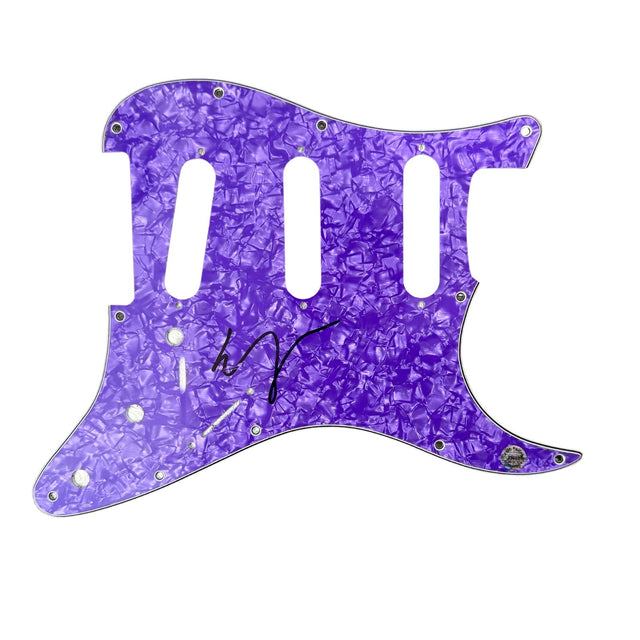
Vampire Weekend Ezra Koenig Signed Guitar Pickguard Autograph Hologram COA
$100.00 USD
-
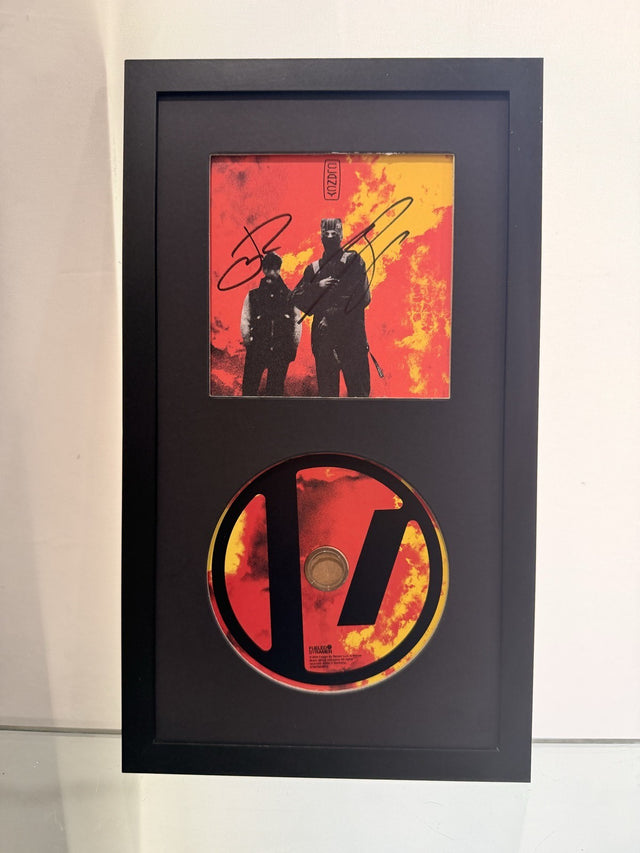
Twenty One Pilots Signed Clancy CD Framed Display Tyler Joseph Josh Dun Auto
$199.00 USD
-
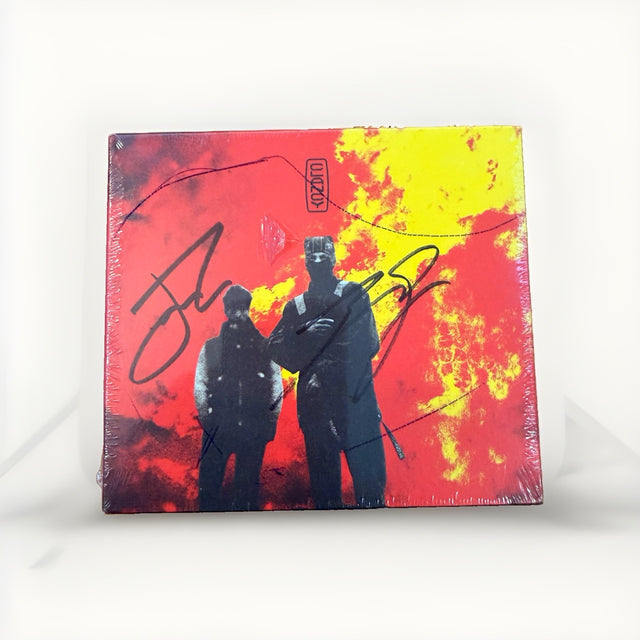
Twenty One Pilots Clancy Signed CD Tyler Joseph Josh Dun Sealed Unopened 2024
$189.00 USD
-
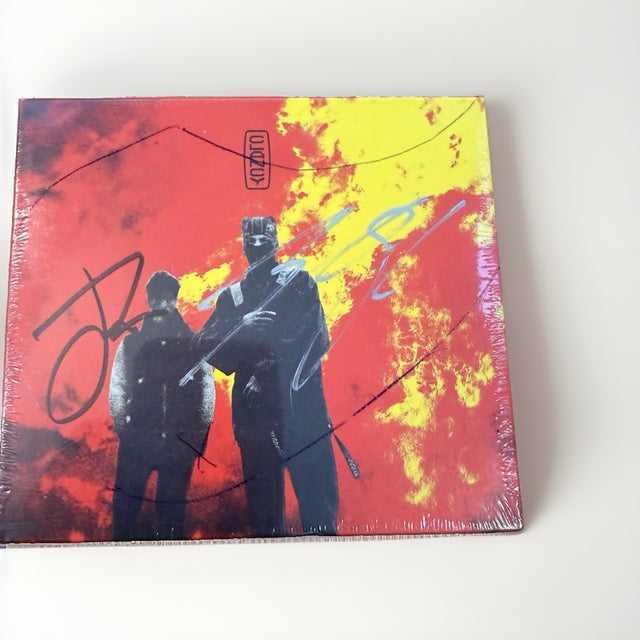
Twenty One Pilots Clancy Signed CD Sealed Tyler Joseph Josh Dun Silver Autograph
$189.00 USD
-
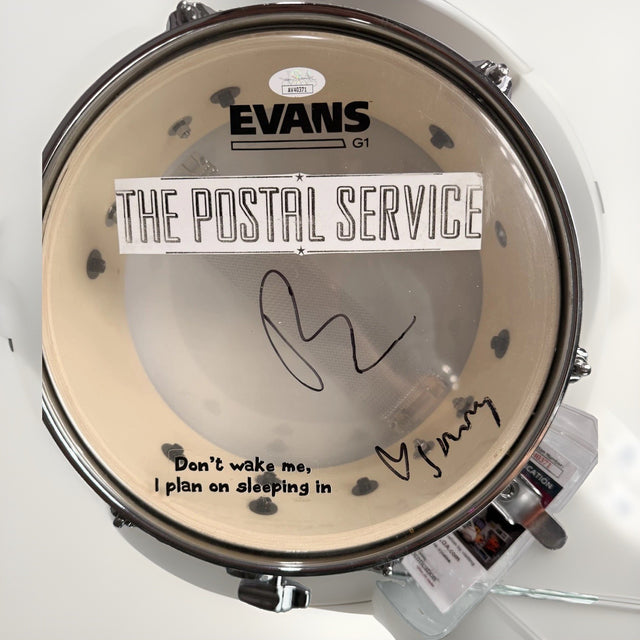
The Postal Service Dual Signed Evans M-80 Drumhead JSA A40371
$499.00 USD
-
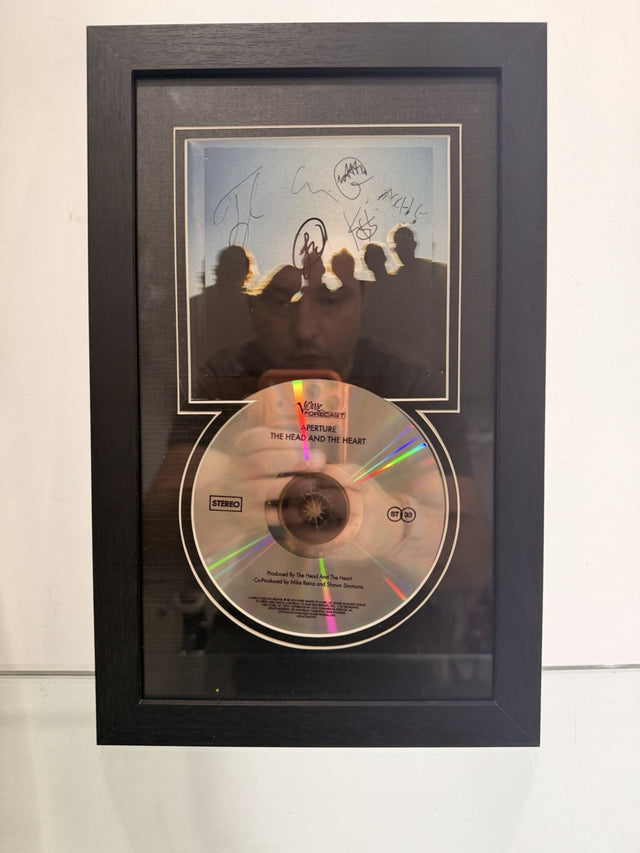
The Head and the Heart Band Signed Framed 'aperture' CD COVER ALBUM
$65.00 USD
Browse the collection for current listings.