When you buy a DEATH NYC piece, keep six core records: the certificate of authenticity signed by the artist, a clear photograph of the metal official gold seal affixed to the piece, your purchase receipt or invoice naming the seller and the work, a saved copy of the original listing or sales description, dated photographs of the front and back of the print at the moment it arrived, and a simple provenance note recording who you bought it from and when. Store digital copies of everything in one folder, keep the physical COA with the artwork but never taped to it, and add condition notes each time the piece moves. Those records protect your money on the day you buy — and multiply in value on the day you sell.
That is the short version, and it is genuinely most of the battle. But the collectors who get the best outcomes — smooth resales, fast insurance claims, confident answers when a buyer asks "how do you know it's real?" — go a little further. In this guide we walk through every record worth keeping for a DEATH NYC purchase, why each one matters, how to capture it properly, and how to organize the whole file so it works for you years from now. We are Gauntlet Gallery, an authenticated-source dealer, and this checklist reflects how we document the DEATH NYC works in our own DEATH NYC collection before a single piece is offered for sale.
Why records matter more for DEATH NYC than for most artists
DEATH NYC occupies an unusual position in the print market. The artist is prolific, the work trades constantly across online marketplaces, and the visual language — dense pop-culture collage, luxury-brand mashups, bold signatures — is instantly recognizable and therefore widely imitated. High trading volume plus high recognizability is exactly the combination that rewards disciplined paperwork. When hundreds of superficially similar prints change hands every month, the piece with a complete, coherent document trail stands apart from the piece that arrives with nothing but a story.
There is a second reason records matter here: DEATH NYC's own authentication system is document-based. Each authentic piece is accompanied by a certificate of authenticity signed by the artist, and carries the metal official gold seal affixed to the piece itself. That means the artist has already done half the record-keeping for you — the COA and seal are the anchor documents of your file. Your job as a buyer is to preserve those anchors, photograph them, and surround them with the supporting records (receipt, listing, provenance note, condition photos) that tie the documents to the specific print on your wall and to the specific transaction in which you acquired it.
Finally, records are what convert a purchase into an asset. A print with no paperwork is a decoration; a print with a complete file is something you can insure accurately, sell efficiently, pass to your heirs cleanly, and price against real market data. Documentation is not bureaucracy. It is stored value. Compare the exact image, edition, medium and presentation with dated completed sales, distinguishing hand-sprayed originals from editioned prints. Future resale value is uncertain.
The two anchor records: the signed COA and the gold seal
The certificate of authenticity signed by the artist
The COA that accompanies an authentic DEATH NYC piece, signed by the artist, is the single most important document you will receive. Treat it accordingly:
- Confirm you actually received it. Before you complete any DEATH NYC purchase, confirm in writing that the COA is included. "COA included" in the listing text is a representation you can hold the seller to; get it into the order record if it is not already there.
- Photograph it the day it arrives. Shoot the full certificate flat, in good light, at high resolution — front and back. If any element is embossed or textured, take an additional raking-light photo that shows the relief.
- Store it flat and separate from the print surface. An acid-free folder or polyester (Mylar) sleeve is ideal. Never tape, clip, or glue the COA to the artwork, and never store it pressed against the printed image where ink transfer could occur.
- Record where it lives. It sounds trivial, but a line in your collection file — "COA in blue archival folder, studio shelf 2" — has saved more than one resale from a frantic search years later.
If you are evaluating a piece offered without its certificate, slow down. Missing paperwork does not automatically condemn a print, but it changes the transaction: the price should reflect the gap, and your remaining records (seal photos, provenance, listing history) have to work harder. Our DEATH NYC authentication guide covers how to think through an incomplete-documentation purchase constructively.
The metal official gold seal on the piece
Authentic DEATH NYC pieces carry a metal official gold seal affixed to the work. Unlike the COA — a separate document that could theoretically drift away from its print — the seal travels with the piece itself. Your record-keeping job here is photographic:
- Macro photograph of the seal, sharp enough to show its surface detail, taken on the day of arrival.
- A wider contextual shot showing the seal's position on the piece, so the photo can never be mistaken for a photo of some other print's seal.
- A combined shot of the seal and the signed COA together in one frame. This single image — piece, seal, and certificate visibly belonging together — is the picture future buyers ask for first.
Together, the artist-signed COA and the gold seal form a matched pair of records: one documentary, one physical. Every other record in this guide exists to connect that pair to your specific transaction and to preserve their evidentiary weight over time.
Transaction records: proving what you bought, from whom, for how much
Authentication records prove the piece is genuine. Transaction records prove the piece is yours, legally and traceably. Capture these at the moment of purchase — several of them become difficult or impossible to reconstruct later.
The receipt or invoice
A proper invoice should name the seller (business name and contact details), the buyer (you), the date, the price paid, and — critically — a description specific enough to identify the exact piece: title or subject description, medium, dimensions, edition information as stated by the seller, and mention of the included COA. If a seller's default receipt is a bare payment confirmation, ask for a fuller invoice. Reputable dealers provide one without hesitation; our gallery issues a detailed invoice with every sale as a matter of course, because we know that document outlives the transaction.
The original listing, saved in full
Marketplace listings vanish. Auction pages expire. Gallery websites get redesigned. Yet the original listing is one of the most valuable records you can hold, because it captures the seller's representations at the moment of sale — the claimed edition details, the condition description, the photographs the seller published, the stated inclusion of the COA. Save it properly:
- Print the listing page to PDF (not just a screenshot of the top of the page — capture the full description and all photos).
- Save the seller's listing photos at full resolution where the platform allows it.
- Note the listing URL and the date you saved it, even though the link will eventually die.
Payment evidence
Keep the payment confirmation that matches the invoice: the card statement line, the payment-platform receipt, the wire confirmation. If a dispute ever arises — non-delivery, misdescription, a damaged arrival — the payment record is what activates your buyer protections, and those protections are time-limited. File it immediately.
Correspondence with the seller
Questions you asked before buying, and the answers you received, are records too. "Does this come with the signed COA?" — "Yes, pictured in image 7." That exchange, preserved, is a representation you can rely on. Export or screenshot the message thread and drop it in the purchase folder. On marketplaces, keep correspondence on-platform where it is timestamped and attributable, and save your own copy as well.
Shipping and delivery records
Tracking numbers, the delivery confirmation, and — if you are diligent — photos or video of the unboxing. An unboxing record dated the day of delivery does two jobs at once: it documents condition on arrival (essential if you need to claim transit damage) and it establishes that the piece, seal, and COA all arrived together in one shipment.
The condition record: photographs and notes
Condition is where value quietly lives or leaks in the print market, and a condition record is the only way to prove what condition your piece was in at any given moment. On the day the piece arrives, before framing, create the baseline record:
- Full front view, straight-on, even light, no glass or glare.
- Full back view. The verso often carries information the front does not, and back photos are routinely requested during resale.
- All four corners and all four edges in close-up. Corners and edges are where handling wear appears first.
- The signature and any numbering, in sharp macro.
- The gold seal, macro and contextual, as described above.
- Any flaw, however small — a soft corner, a faint ripple, a stray mark — photographed and noted in writing. Recording flaws honestly is not pessimism; it is what makes the rest of your record credible.
Alongside the photos, write a short condition note in plain language: "Arrived flat, clean, no visible handling marks; very slight softness to lower-left corner tip; unframed, shipped rolled in tube." Date it. Then repeat a lighter version of this exercise whenever the piece changes state — when it goes to the framer, when it comes back, when it moves house, when it is lent, when it is photographed for sale. A collection is a timeline, and each entry protects you across the gap since the last one.
The provenance note: your piece's biography
Provenance simply means the documented history of ownership, and for a contemporary print it can be refreshingly short: where the piece came from, who has owned it, and how it reached you. Write it as a dated note in your file:
- Seller name and type (artist's own channel, gallery, dealer, auction platform, private collector).
- Date of purchase and delivery.
- What the seller told you about the piece's prior history, if anything — including "seller stated purchased directly from the artist's online release," when that is what you were told, clearly marked as the seller's statement rather than your own knowledge.
- Every document that supports the chain: invoice, listing PDF, correspondence, COA.
Documented provenance is one of the pillars our gallery builds every listing on, and it compounds: when you eventually sell, your buyer inherits a chain that now includes you, your invoice, and your photographs. Each careful owner makes the piece easier to trust than the last. If terms like provenance, verso, or edition documentation are new to you, our authentication glossary defines the working vocabulary collectors actually use.
Every record at a glance
| Record | What it proves | When to capture it | Priority |
|---|---|---|---|
| COA signed by the artist | The artist's own authentication of the piece | Confirm before purchase; photograph on arrival | Essential |
| Photos of the metal gold seal | The physical mark of authenticity on the piece itself | Day of arrival, before framing | Essential |
| Receipt / invoice | Legal purchase: parties, date, price, item description | At purchase; request a full version if needed | Essential |
| Saved listing (PDF + photos) | The seller's representations at the moment of sale | Before the listing disappears — ideally before you pay | Essential |
| Arrival photos, front and back | Condition baseline; piece, seal, and COA together | Day of delivery, before framing | Essential |
| Provenance note | Chain of ownership and source of the piece | Within a week of purchase, while details are fresh | Essential |
| Payment evidence | That you paid, how much, and through what channel | At purchase | Strongly recommended |
| Seller correspondence | Questions asked, representations made | Export after the sale completes | Strongly recommended |
| Shipping / unboxing record | Condition and completeness on arrival | Day of delivery | Strongly recommended |
| Ongoing condition notes | Condition over time; framing and handling history | At every change of state or location | Recommended |
| Framing invoice and specs | That archival materials were used | When the piece is framed | Recommended |
| Insurance / valuation notes | Coverage and a defensible value estimate | Annually, or when the market moves | Recommended |
Records most buyers forget — and later wish they had
The framing record
If you frame the piece — and most DEATH NYC collectors do — keep the framer's invoice and a note of the materials used: acid-free mounting, UV-filtering glazing, whether the print was hinged with reversible archival tape or held in a manner that touches nothing but the margins. "Archivally framed with UV glazing, invoice on file" is a phrase that does real work in a resale listing, but only if you can back it up. Also photograph the piece immediately before it goes behind glass; that pre-framing photo becomes your last unobstructed condition record.
The storage and environment note
A one-line note — "hung in interior hallway, no direct sun, household humidity" or "stored flat in archival box, climate-controlled room" — costs you thirty seconds and answers a question every serious future buyer asks. Works on paper are sensitive to light and humidity, and a documented history of sensible keeping is a quiet but genuine selling point.
The valuation trail
You do not need formal appraisals for typical print-market purchases, but you should keep a dated note of what comparable pieces are actually selling for, refreshed once a year or so. A dated valuation note matters for insurance scheduling, estate planning, and knowing when an offer to buy your piece is worth taking seriously. Research references: DEATH NYC price guide, Financial Insights.
The insurance record
Check whether your homeowner's or renter's policy covers art at a meaningful level, and whether pieces above a threshold need to be individually scheduled. If you schedule the piece, keep the schedule confirmation with the collection file. Here is the satisfying part: the file you have built by following this guide — invoice, photos, condition notes, valuation note — is exactly the evidence package an insurer wants for scheduling, and exactly what a claim would require. Good records make insurance nearly effortless.
How to organize the file: a system that survives you
Records only help if you can find them. The system below takes an hour to set up and minutes per purchase to maintain.
Digital: one folder per piece
- Create a folder named by artist, short title, and purchase date — for example DEATH-NYC_SubjectDescription_2026-09.
- Inside it: the invoice PDF, the listing PDF, listing photos, your arrival photos, COA and seal photos, exported correspondence, shipping confirmation, and a single plain-text or document file called provenance-and-condition holding your dated notes.
- Back the folder up to cloud storage. A fire that takes the artwork should never also take the records — that is when you need them most.
- Keep a master spreadsheet with one row per piece: artist, title, purchase date, seller, price, location of the physical COA, insurance status. Ten columns is plenty.
Physical: one envelope per piece
- An acid-free folder or envelope holding the original COA, the printed invoice, and any physical papers that came with the shipment.
- Label it to match the digital folder name.
- Store envelopes flat, together, away from damp and heat — not inside the frame, and never in the same tube or package as an unframed print where papers can abrade the surface.
The succession note
Finally, tell someone the system exists. A single page — "the art records are in the grey box and in the cloud folder called Art; each piece has a file; the COAs are the important papers" — ensures that the value you have carefully documented survives a house move, a divorce, or your estate. Collections outlive systems that live only in one person's head.
The Gauntlet Gallery perspective: records are how trust travels
Everything above is advice we follow ourselves. When a DEATH NYC piece enters our inventory, it is documented before it is listed: the signed COA verified and photographed, the gold seal photographed in macro and in context, condition recorded front and back, and the source of the piece logged into a provenance record that travels with it to the next owner. And when it sells, the buyer receives the piece and the file, because in our experience the file is a meaningful part of what they are paying for.
That is the constructive way to think about authentication generally. It is not a gauntlet of suspicion; it is a relay of trust, and records are the baton. The artist starts the relay with the signed COA and the gold seal. The dealer carries it with documented sourcing and honest condition reporting. You carry it with the file this guide helps you build. For the fuller picture of buying well in this corner of the market, our DEATH NYC buyer's guide pairs naturally with this article, and the broader buyer's guides hub covers every category our gallery handles.
Special situations and how records handle them
Buying from a private collector
Private sales are where record-keeping discipline pays most. There is no platform holding funds, no seller rating, no dispute process — your protection is the paper. Insist on a written bill of sale (a simple signed one-page document with names, date, price, and description is fine), confirm the COA transfers with the piece, and save every message. If the seller cannot produce the COA, treat the purchase as an incomplete-documentation transaction and read our guide on how to spot a fake DEATH NYC before proceeding — not because private sellers are suspect, but because the burden of verification shifts to you.
Buying at auction
Save the full lot page (description, condition report, all photos), your winning-bid confirmation, the buyer's-premium invoice, and any condition report you requested. Auction paperwork is generally excellent — capture it while the lot page is still live.
Receiving a piece as a gift or inheritance
You cannot generate a receipt for a gift, but you can still build the record: photograph the piece, seal, and COA; write down everything the giver knows about where and when it was acquired; and hunt for the original purchase records while the person who made the purchase can still find them. A ten-minute conversation with the original buyer is worth more than hours of reconstruction later.
When your records have a gap
Perhaps you bought a piece years ago and kept nothing but the print and its COA. Start the file today: photograph everything now, write down what you remember of the purchase with honest dates ("purchased approximately 2023, online marketplace, seller name not recorded"), and search old email for the payment confirmation — it is usually still there. A reconstructed record honestly labeled as such is far better than none, and beginning the condition timeline today still protects every year from now on.
Your record-keeping checklist
Print this, or save it to your collection folder, and run it for every DEATH NYC purchase:
- Before paying: confirm in writing that the artist-signed COA is included; save the full listing to PDF with all photos; keep pre-sale questions and answers.
- At purchase: obtain a detailed invoice; file the payment confirmation; note the seller's name and channel.
- On delivery: photograph or film the unboxing; shoot front, back, corners, edges, signature, and the gold seal; shoot the piece, seal, and COA together in one frame; write the baseline condition note, dated.
- Within a week: write the provenance note; create the digital folder and the physical envelope; add the piece to your master spreadsheet; back everything up to the cloud.
- When framing: photograph the piece before glazing; keep the framer's invoice and materials note.
- Annually: refresh your valuation note against recent verified sales; review insurance coverage; confirm the COA is where your records say it is.
- Ongoing: add a dated condition note whenever the piece moves, travels, or changes hands within the family.
Seven steps, most of them minutes long, and the result is a collection that is safer, more insurable, and more valuable than the same prints without the paper. If you are earlier in your collecting journey and want the wider framework — how to evaluate sellers, read editions, and buy with confidence across categories — our Collector's Hub gathers everything in one place, and you can browse authenticated, fully documented works across our whole inventory in the complete collection.
Frequently asked questions
Is the COA alone enough, or do I really need all the other records?
The artist-signed COA is the anchor, but it answers only one question: is the piece authentic? The other records answer the rest — what you paid, whom you bought from, what condition it arrived in, and what the seller represented. Resale, insurance, and disputes all draw on those supporting records. Keep the COA carefully and surround it with the transaction file; together they do what neither can alone.
What if the seller cannot provide a COA?
Pause and reassess rather than walking away automatically. A missing COA shifts the burden of verification onto the physical piece — the gold seal, the signature, the print quality — and onto whatever provenance the seller can document. The price should reflect the documentation gap. Study the authentication guide and the spot-a-fake guide before committing, and get every claim the seller makes in writing.
Should I keep records digitally or physically?
Both, deliberately. Original physical documents — above all the signed COA — stay in acid-free storage with a known location. Everything is also photographed or scanned into one digital folder per piece, backed up to the cloud. The physical originals carry the authority; the digital copies carry the resilience. Losing either half is recoverable; losing both is not.
Do these records actually increase resale value?
In our experience as a dealer, documentation consistently improves outcomes on three fronts: pieces with complete files attract more serious buyers, close faster, and hold their asking level better in negotiation. Buyers pay for certainty. A complete record — COA, seal photos, invoice, provenance, condition timeline — removes nearly every reason a cautious buyer has to hesitate or discount.
How should I store the physical COA?
Flat, in an acid-free folder or polyester sleeve, in a dry, temperate place, and never attached to or pressed against the artwork itself. Do not laminate it, do not frame it against the print, and do not store it inside a shipping tube. Record its location in your collection file so it can be produced on demand — a COA you cannot find helps no one.
What should I photograph on the day a piece arrives?
Front and back in full, all corners and edges in close-up, the signature and numbering in macro, the metal gold seal both close-up and in context, and one frame showing the piece, seal, and certificate together. Date the photos, note any flaws honestly, and shoot before framing. This baseline set is your condition proof and your authenticity documentation in one session.
Shop Death NYC
Explore current pieces available from the gallery.
-
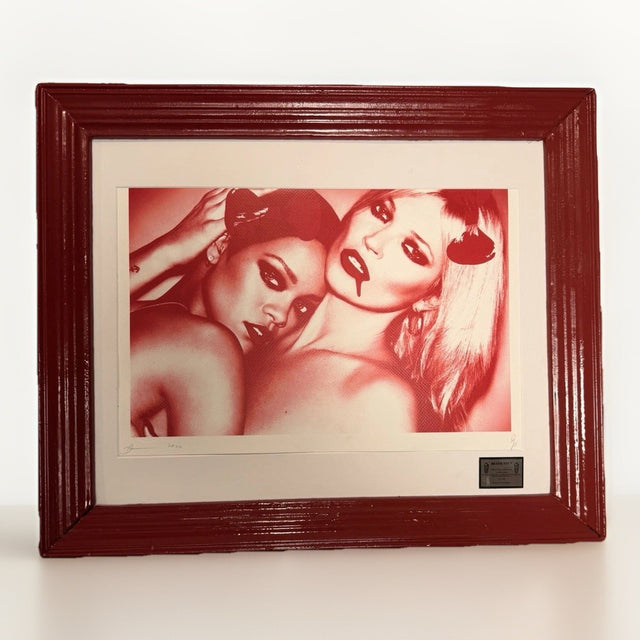
Death NYC — Kate Moss Rihanna Red Drip 2020 A/P Artist Proof Framed
$91.88 USD
-
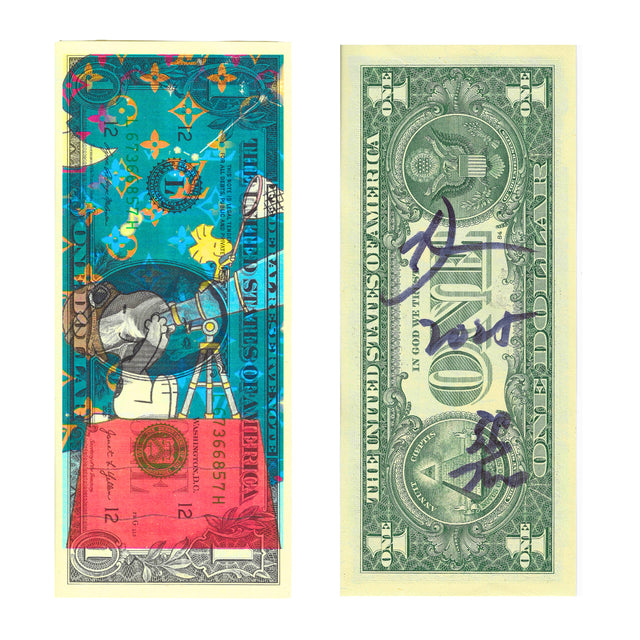
Death NYC Snoopy Woodstock Telescope LV Dollar Bill Art Signed Numbered COA
$55.00 USD
-
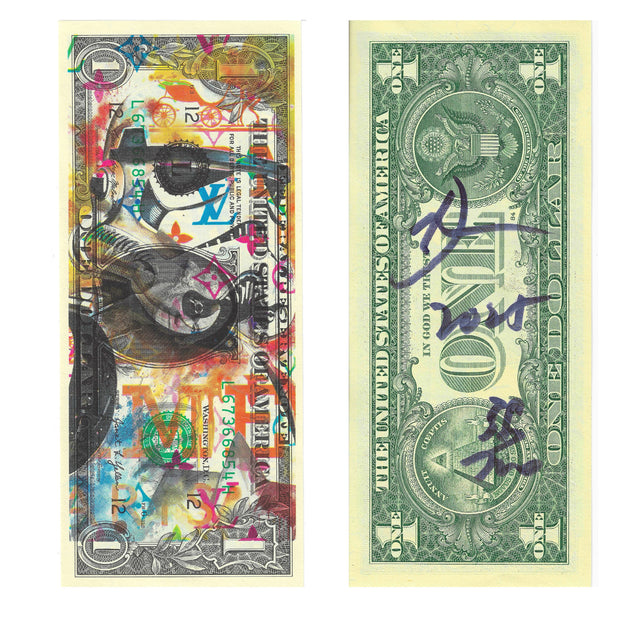
Death NYC Star Wars Stormtrooper LV Dollar Bill Art Signed Numbered COA
$55.00 USD
-
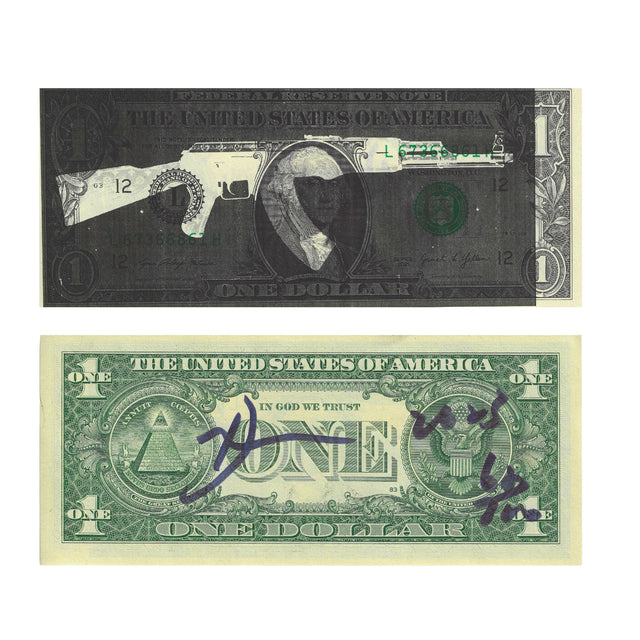
Death NYC Gun Dollar Bill Art Signed Numbered COA Black White Pop Street Art
$50.00 USD
-
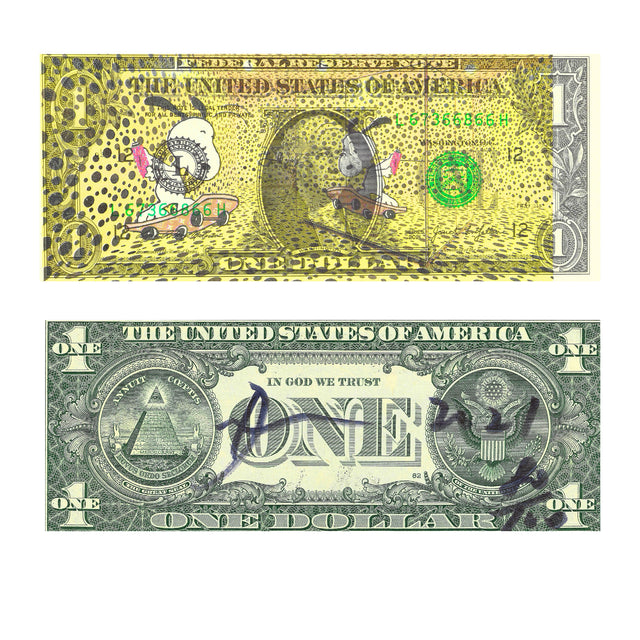
Death NYC Snoopy Skateboard Dollar Bill Art Signed Numbered COA Pop Street Art
$75.00 USD
-
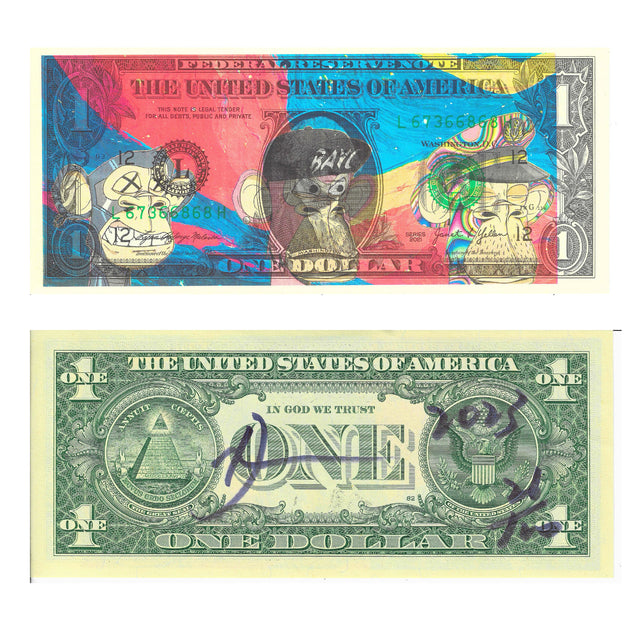
Death NYC Bored Ape Dollar Bill Art Signed Numbered COA Pop Street Art
$40.00 USD
Browse the collection for current listings.