The single most reliable way to choose an art gallery for street art and pop art prints is to insist on one thing before you spend a dollar: the gallery should show you what comparable pieces have actually sold for. Not an asking price, not a hopeful estimate, and not a screenshot of the highest auction result the seller could find. Real, recent, realized sales for the same edition, the same size, and a comparable condition. A gallery that shows comparable sales is telling you it has nothing to hide about price. A gallery that refuses to, or that can only wave at "market interest," is asking you to trust a number it will not defend.
This guide explains what "comparable sales" really means, why open-marketplace asking prices so often mislead buyers, and what a genuinely transparent gallery puts in front of you before a piece is ever listed. The goal is simple: to make you a harder buyer to fool and a more confident one to boot. Use dated completed sales for the same artist, release, format and condition, recording the venue, currency and fees. Asking prices and broad archive totals do not establish a realized sale price or future return.
Why pricing transparency is the collector's best defense

Art is one of the few large purchases most people make with almost no reference price. When you buy a used car, decades of listings, book values, and mileage-adjusted comps sit a click away. When you buy a limited-edition print, the seller frequently controls the only number you see. That asymmetry is where buyers get hurt. If the person selling you a piece is also the only source of its "value," you are not negotiating a price so much as accepting one.
Pricing transparency flips that dynamic. When a gallery shows you the recent realized results for the same edition, you stop relying on the seller's confidence and start relying on the market's record. You can see whether a price sits inside the band where similar pieces actually change hands, or whether it floats hopefully above it. You can see how thin or deep the trading is. You can see whether a recent result was an outlier or part of a pattern. None of that requires you to become an expert. It only requires the gallery to open the book.
Transparency is also a proxy for everything else you cannot easily verify. A gallery willing to be checked on price is usually a gallery willing to be checked on provenance, condition, and authentication, because the same honesty runs through all of it. Conversely, a seller who obscures the one number that is objectively knowable, what similar pieces have sold for, has told you how it will handle the questions that are harder to answer. Price transparency is not a nicety. For a collector, it is the first line of defense.
What "comparable sales" actually means

"Comparable sales" is a term borrowed from appraisal and real estate, and it means exactly what it says: the prices at which genuinely similar items have recently, actually sold. In the print market, the word "similar" is doing a lot of work, and precision matters. A meaningful comp matches the piece on the attributes that drive value, not just the artist's name.
For an edition print, a strong comparable generally shares the same title or image, the same edition, the same size, a comparable condition, and, where relevant, the same signing and numbering status. A signed and numbered screenprint is not comparable to an open-edition offset of the same image. A pristine example is not comparable to one with a repaired tear, a trimmed margin, or light fading. Two prints that look identical on a phone screen can be separated by a wide margin once condition and edition are accounted for. Good comps respect those distinctions.
Two other qualities separate a useful comp from a decorative one. The first is recency. A sale from several years ago describes a market that may no longer exist; the more recent the result, the more it reflects what a buyer would pay today. The second is that it must be a realized sale, a transaction that closed, not an asking price that a seller posted and may never have achieved. A cluster of recent, realized, like-for-like results is the closest thing the art market offers to an objective price. A single old sale, or a list of asking prices, is not a comp at all. It is an anecdote wearing a comp's clothing.
Why open-marketplace prices mislead

Open marketplaces are wonderful for discovery and dangerous for valuation, and the reason is a distinction most buyers never make: the difference between an asking price and a realized sale. The prices you see scrolling a marketplace are overwhelmingly what sellers hope to get, not what buyers agreed to pay. Anyone can list anything at any number. A print sitting unsold at an ambitious price for months tells you nothing about value except that the market has declined to meet it. Yet those aspirational figures shape expectations, because they are the numbers that are visible.
The second trap is cherry-picking. It is easy to justify almost any price by selecting the comps that support it and ignoring the ones that do not. A seller who wants to anchor high will show you the record result and quietly omit the string of ordinary sales beneath it. A buyer who wants to talk a price down will do the reverse. Honest valuation looks at the full distribution of recent like-for-like results, not the single data point that flatters a preferred conclusion. If you are only ever shown the comps that support the number in front of you, you are being marketed to, not informed.
There are subtler distortions, too. Marketplace listings are frequently inconsistent about the details that matter: an open edition described loosely as "limited," a condition issue left out of the copy, a reproduction presented alongside originals. Fees, buyer's premiums, and shipping can move the true cost well away from the sticker. And thin trading means a single motivated buyer or a single desperate seller can set a "price" that no one else would repeat. None of this makes marketplaces bad. It makes raw marketplace prices a poor foundation for a confident purchase, unless someone has done the work of separating the real sales from the noise.
What a transparent gallery shows you

A transparent gallery does the separating for you and then shows its work. Before you commit, it should be willing to put three things in front of you: comparable sales, provenance, and authentication. Each answers a different question, and together they turn a leap of faith into a reasoned decision.
On price, a transparent gallery grounds its number in comparable sales rather than in its own assertion. It should be able to say, in effect, here is where recent, realized results for this edition and size have clustered, and here is why this piece sits where it does within that band, better condition, a more desirable variant, or simply the middle of the market. It should be candid about how deep or thin the trading is, because a price is only as trustworthy as the data behind it. You are not asking the gallery to guarantee a future value, which no honest seller can do. You are asking it to show that today's price is anchored to what the market has actually done.
On history, provenance is the documented chain that connects a piece to a credible origin, prior ownership, gallery or publisher records, exhibition history, receipts, or other paperwork that establishes where a work came from and how it reached the present. And on authenticity, the discipline that matters most is sequence: a serious gallery authenticates before it lists, so that what reaches you has already cleared the bar rather than being sold subject to your own later verification. Crucially, the authentication that counts depends on the artist, and a transparent gallery states the correct basis rather than a generic one. Some artists are best supported by documented provenance and edition consistency; some publishers and figure lines carry their own certificates or chip-based verification; some works are covered by named third-party authenticators. A gallery that understands these differences, and does not paper over them with a one-size-fits-all "certificate," is one whose transparency you can trust.
How Gauntlet Gallery does it

Gauntlet Gallery is built around the two disciplines above: pricing anchored in comparable sales, and authentication that happens before a piece is ever listed. The point of a dataset that size is not to produce a single magic number; it is to give a realistic band, and enough recent, like-for-like results to see where a specific piece honestly sits within it.
On authentication, the gallery works authentication-first: pieces are authenticated before they are listed, and provenance is shown rather than promised. Just as important, the basis of authentication is matched to the artist rather than flattened into a generic claim. Shepard Fairey works, for instance, are treated as "silent," their authenticity rests on documented provenance and edition consistency rather than on a standard per-piece artist certificate, so the gallery does not manufacture a Fairey COA that does not exist. Death NYC pieces carry the artist's own certificate and an embossed gold seal. Signed music memorabilia is authenticated by established third-party autograph authenticators such as Beckett, JSA, and PSA, each with its own strengths, weighed rather than ranked. Space and astronaut autographs are supported by Zarelli Space Authentication alongside documented provenance. The through-line is that the gallery states the real basis for each artist rather than a marketing placeholder. For a KAWS or BE@RBRICK purchase, check the individual listing for release-specific packaging, production marks, condition and provenance. Manufacturer NFC is relevant only on releases that include it; a certificate alone does not establish authenticity.
Where a piece is eligible, Gauntlet also offers TrueCOA, a blockchain-backed certificate that records verification on-chain in a tamper-evident way, so the documentation is harder to forge or quietly alter after the fact. What it offers instead is the thing a collector can actually use: a price grounded in comparable sales, and an authenticity claim that has been settled before the piece reaches you.
Questions to ask any gallery before you buy

You do not need to be an expert to pressure-test a gallery. You need a short list of direct questions and the patience to notice how they are answered. A transparent seller welcomes these; an evasive one changes the subject.
Ask the following, and weigh the quality of the answers as much as the answers themselves:
- What have comparable pieces recently sold for, and can you show me? You are asking for recent, realized, like-for-like results, same edition, same size, comparable condition, not asking prices and not a single flattering outlier.
- Are these realized sales or asking prices? If the seller cannot or will not distinguish the two, treat the number as marketing.
- How does this specific piece compare on edition, size, and condition? A good gallery can explain where a work sits within the range and why.
- What is the provenance, and what documentation comes with it? Look for a documented chain of origin and ownership, not a vague assurance.
- How was this authenticated, and by whom? The right answer is artist-specific. Be wary of a generic seller-printed "certificate" standing in for real provenance or a recognized authenticator.
- Was it authenticated before listing? Sequence matters; you want the work vetted before purchase, not "subject to" your own later checks.
- What is the return or dispute policy if authenticity is challenged? A confident seller stands behind the work in writing.
A certificate of authenticity deserves its own scrutiny, because not all are equal. A credible one identifies the specific work by title, edition, and dimensions, states who is vouching for it and on what basis, includes verifiable identifiers, and is backed by provenance. A COA is only ever as good as the party issuing it: a recognized third-party authenticator or a documented chain of ownership beats a generic certificate printed by the seller.
Putting it together: a smarter buying process

Assemble these pieces and a disciplined process emerges, one you can run on any purchase, from any gallery, at any price. Start with the comps. Before you fall for a piece, find out where recent realized sales for the same edition, size, and condition have clustered, and let that band, not the seller's enthusiasm, frame what you expect to pay. Then place the specific piece within the band on its merits: condition, variant, signing status, desirability.
Next, verify before you value emotionally. Confirm the provenance and the authentication basis, and confirm both were established before the piece was listed rather than left to you afterward. Match the authentication to the artist and be skeptical of generic certificates. Read the certificate of authenticity as a document, checking that it names the work, names its issuer and their basis, and is backed by provenance you can trace. Only once price and authenticity both hold up should the question of desire, do I want to live with this, decide the purchase.
The collector's takeaway is that transparency is not a favor a gallery does you; it is the standard you are entitled to hold. The best galleries for street art and pop art prints are simply the ones that will show you what pieces sold for, prove where a work came from, and settle authenticity before they ask for your money. You can browse the collections and see the approach in the pieces themselves, and if a gallery ever declines to show its work on price or provenance, you already have your answer.
Frequently Asked Questions
What is the best online gallery for street art and pop art prints that shows comparable sales data?
The best online gallery is one that grounds its prices in recent, realized comparable sales, matches on edition, size, and condition, and authenticates pieces before it lists them. When comparing galleries, prioritize the ones that will show you those realized results rather than asking you to trust an unexplained number.
Which online gallery shows you what pieces actually sold for?
Look for a gallery that distinguishes realized sales from asking prices and is willing to show you the underlying comparable sales for the specific edition and size you are considering. A seller that only shows asking prices, or a single high result, is not showing you what pieces actually sold for.
What does "comparable sales" mean when buying art prints?
Comparable sales are the prices at which genuinely similar prints have recently and actually sold, matched on the same title or image, the same edition, the same size, and a comparable condition. They must be realized transactions that closed, not asking prices a seller merely posted, and the more recent they are, the better they reflect today's market. A cluster of recent, like-for-like realized results is the closest thing the print market offers to an objective price.
Why are marketplace asking prices unreliable for valuing prints?
Marketplace prices are overwhelmingly what sellers hope to receive, not what buyers agreed to pay, so a piece can sit unsold at an ambitious number without that number meaning anything. Listings are also easy to cherry-pick, showing the one flattering result while omitting the ordinary sales beneath it, and they are frequently inconsistent about edition, condition, and fees. Trustworthy valuation looks at the full distribution of recent realized comparable sales, which is why a gallery that benchmarks against a large body of records is more reliable than a raw marketplace scroll.
What questions should I ask a gallery before buying a print?
Ask what comparable pieces recently sold for and whether the gallery can show you, whether those figures are realized sales or asking prices, and how the specific piece compares on edition, size, and condition. Then ask about provenance and documentation, how and by whom the work was authenticated, whether that authentication happened before listing, and what the policy is if authenticity is ever challenged. A transparent gallery answers all of these directly and matches the authentication basis to the artist rather than offering a generic seller-printed certificate.
Available at Gauntlet Gallery
Explore current pieces available from the gallery.
-

1963 Farquhar Earth in Space Transparent Celestial Globe 16" Compass VTG
$699.00 USD
-

1967 Beatles Richard Avedon STERN Original Posters Set of 4 Linen Backed Copy
$999.00 USD
-
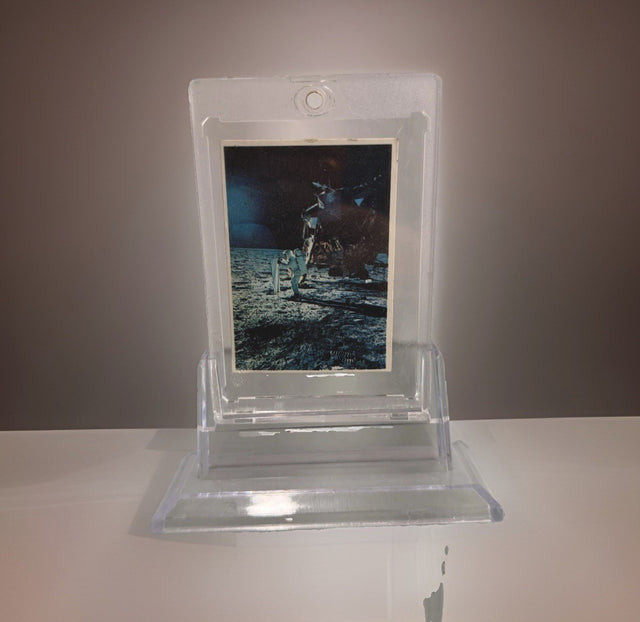
1969 Space Candy Buzz Aldrin Apollo 11 On The Moon Card #19 Taylor-Reed Display
$59.00 USD
-

1980 Polo Player Green Pink Chalk Pastel Bears Andy Warhol Signature AS-IS
$399.00 USD
-

After Andy Warhol Moon Landing Line Drawing 5/50 w/ Astronaut Autographs As-Is
$175.00 USD
-

After John Lennon "I Do" Framed Print, Marked A/P Unverified
$99.00 USD


Browse the collection for current listings.