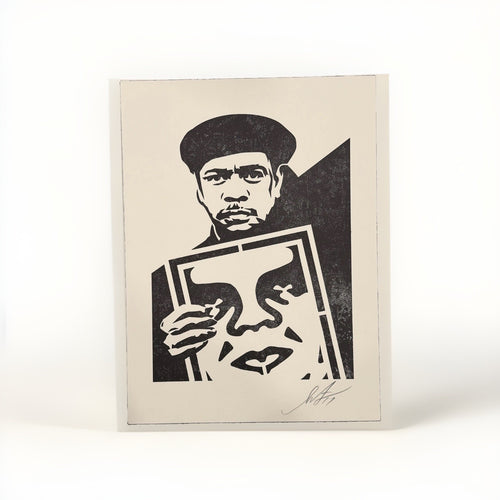
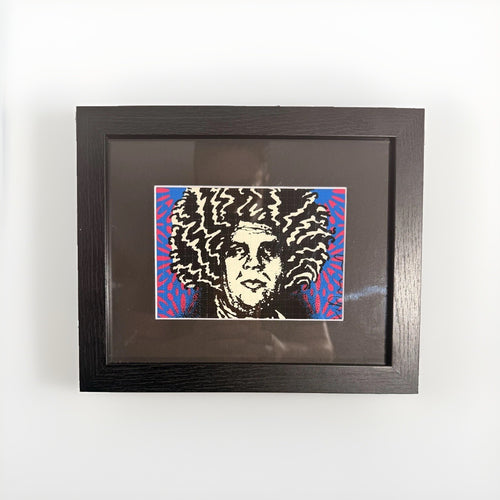
The Gauntlet Gallery Shepard Fairey Print Index serves as a vital cataloguing resource for collectors. Regarding the entry for Pixies Royal Albert Mauve, the index establishes its inclusion within the 2026 cataloguing year under the category of 'Music and counterculture,' further classified with the collection label '2026 · Contemporary.' It is imperative for any prospective buyer to understand that the '2026' index year denotes when this specific work was catalogued within our system, not necessarily its original release date. Furthermore, the index currently provides no quantified market reference for this particular entry. Before making any decision, a buyer must independently verify the exact title, variant, format, condition, provenance, and all accompanying documentation of the offered item to ensure it precisely matches this index record and to assess its authenticity and market value. The absence of a market reference in the index means collectors should conduct thorough independent research into recent sales of demonstrably authentic examples.
Understanding the Gauntlet Gallery Index Record
The Gauntlet Gallery Shepard Fairey Print Index is designed to be a comprehensive, evolving database for collectors. Its purpose is to document and categorize the vast output of Shepard Fairey, offering a structured framework for identifying specific works. Each entry, such as that for Pixies Royal Albert Mauve, provides a snapshot of key cataloguing information. The 'index year' is a critical piece of data, indicating the year the work was formally added to or updated within our index. It is not an indication of the print's creation or release year, which can often predate its index entry. Collectors frequently consult the Shepard Fairey Print Index to begin their research, using it as a foundational tool for initial identification. However, the index is a starting point, not an endpoint, for due diligence. It helps to narrow down the search and confirm the existence of a specific title within Fairey's oeuvre, but it does not authenticate individual pieces or guarantee their condition or market value. For a deeper dive into leveraging this resource, consider reviewing How to Use the Shepard Fairey Print Index: A Smarter Research Workflow.
The 'index category' and 'collection label' further refine the classification, placing the work within broader thematic and chronological contexts. For Pixies Royal Albert Mauve, its placement in 'Music and counterculture' highlights Fairey's enduring engagement with musical artists and subcultural movements, a recurring theme throughout his career. The '2026 · Contemporary' label simply reiterates its cataloguing within the contemporary section of our 2026 index. These labels assist in thematic collecting and understanding the broader context of Fairey's artistic output, but they do not provide specific details about the print's physical characteristics or its individual history.
The "Pixies Royal Albert Mauve" 2026 Entry: What It Means for Collectors
The specific entry for Pixies Royal Albert Mauve from the 2026 index year is a clear identifier for a particular work by Shepard Fairey. The exact title is crucial; Fairey often produces multiple variants or related works with similar names, making precise identification paramount. The 'Mauve' descriptor suggests a specific colorway or aesthetic, distinguishing it from other potential Pixies-related works. As the index currently provides no quantified market reference for this specific entry, collectors are advised to exercise heightened caution and conduct extensive independent market research. This means looking beyond general Fairey market trends and seeking out documented sales of this exact variant, if available. The absence of a market reference is not an indication of value or lack thereof, but rather a signal that the index has not yet aggregated sufficient data to provide a reliable reference range. It underscores the responsibility of the buyer to perform their own valuation based on current market conditions and verifiable sales data for identical items.
When encountering an item represented as Pixies Royal Albert Mauve, the collector's primary task is to confirm its identity against this precise index record. This involves meticulous comparison of the visual characteristics, dimensions, and any unique identifiers. Given the nuances of the art market, especially for prolific artists like Fairey, slight variations in title, color, or format can significantly impact desirability and value. Therefore, simply having a work with 'Pixies' and 'Royal Albert' in its title is insufficient. The 'Mauve' variant must be specifically confirmed. The index provides the framework for this confirmation, but the physical verification rests entirely with the buyer. This diligence is a cornerstone of responsible collecting, protecting against misidentification and potential misrepresentation.
Navigating the Market for "Pixies Royal Albert Mauve"
For a work like Pixies Royal Albert Mauve, where the Gauntlet Gallery index currently provides no quantified market reference, navigating the market requires a proactive and informed approach. Collectors should focus on establishing a clear understanding of the work's attributes and then seeking out comparable sales data. This process is distinct from relying on general market trends for Shepard Fairey prints, which can be found in resources like the Shepard Fairey 1H 2026 Release Scorecard for broader context, but not for specific valuation of this particular piece. The market for contemporary prints is dynamic, influenced by factors such as artist popularity, scarcity, condition, and provenance. Without a specific reference, the onus is on the buyer to construct a robust valuation argument.
Key steps in market navigation include:
- Researching Past Sales: Look for auction results or reputable gallery sales of the exact Pixies Royal Albert Mauve variant. Pay close attention to the condition of sold items and whether they were signed, numbered, or accompanied by Certificates of Authenticity (COAs).
- Consulting Experts: Engage with established art dealers or appraisers specializing in contemporary prints and Shepard Fairey's work. Their expertise can be invaluable in assessing authenticity and current market value.
- Condition Assessment: The physical condition of the print is paramount. Any damage, fading, creasing, or restoration will significantly impact its value. A professional condition report is highly recommended.
- Provenance Review: A clear and documented chain of ownership (provenance) adds significant value and confidence. Understanding the history of the piece, from its original acquisition to the current seller, is crucial.
The market for Shepard Fairey's work is broad, encompassing a wide array of prints, canvases, and unique works. While the overall market remains robust, individual pieces can fluctuate. The absence of a specific market reference in the index for Pixies Royal Albert Mauve means that its value is not pre-determined by our data. Instead, it will be shaped by the specific attributes of the piece in question and the prevailing supply and demand dynamics for this particular variant at the time of transaction. Collectors interested in the broader scope of Fairey's work might explore our collection of Shepard Fairey prints for context on the variety and range available.
Key Considerations for Collectors
Collecting Shepard Fairey's work, particularly a piece like Pixies Royal Albert Mauve, requires a methodical approach. Beyond the initial identification through the index, several critical factors demand a collector's attention. These considerations are not unique to this specific print but are fundamental to acquiring any significant piece of art. The goal is to minimize risk and ensure that the acquired work meets expectations regarding authenticity, condition, and long-term satisfaction.
"The true value in collecting lies not just in the acquisition, but in the diligent process of understanding, verifying, and preserving the art. Every piece tells a story, and a collector's responsibility is to ensure that story is accurate and complete." – A Discerning Collector's Maxim
One of the foremost considerations is the verification of authenticity. While the Gauntlet Gallery index confirms the existence of Pixies Royal Albert Mauve as a catalogued work, it does not, and cannot, authenticate any specific physical item offered for sale. Authentication requires a separate, rigorous process, often involving direct examination by experts, comparison with known authentic examples, and scrutiny of provenance. For comprehensive guidance on this, collectors should consult resources such as Shepard Fairey Prints: Authentication & Value Guide. This guide outlines the steps and considerations necessary to confidently assess the legitimacy of a Fairey print.
Another vital aspect is the condition of the print. Even a pristine print from a reputable source can suffer damage over time if not stored or handled correctly. Minor imperfections, such as subtle creasing, faint discoloration, or pinholes, can significantly reduce value. Always request high-resolution images, detailed condition reports, and, if possible, arrange for a personal inspection or an independent third-party assessment. Understanding the terminology used in condition reports (e.g., 'mint,' 'excellent,' 'good,' 'fair') is also crucial, as these terms can be subjective. A professional conservator can provide the most objective assessment.
Finally, the importance of provenance cannot be overstated. A clear, unbroken chain of ownership from the artist or original publisher to the current seller provides a strong layer of assurance regarding authenticity and history. Documentation such as original purchase receipts, gallery invoices, or previous auction records are invaluable. When provenance is incomplete or questionable, it introduces a degree of risk that must be carefully weighed against the potential acquisition. For a work like Pixies Royal Albert Mauve, where specific market data is not indexed, strong provenance becomes an even more critical factor in establishing confidence and value.
Gauntlet Gallery Index Record vs. Buyer Verification Checklist
To clarify the distinct roles of the Gauntlet Gallery Index and the buyer's due diligence, the following table outlines what the index provides and what a buyer must independently verify:
| Gauntlet Gallery Index Records | Buyer Verification Points |
|---|---|
| Exact Title: Pixies Royal Albert Mauve | Match exact title, including 'Mauve' variant. |
| Index Year: 2026 (Cataloguing Record) | Confirm actual release date (if known) and match to offered item. |
| Index Category: Music and counterculture | Assess thematic relevance and context of the physical work. |
| Index Collection Label: 2026 · Contemporary | Verify physical attributes align with contemporary print standards. |
| Market Reference: Currently provides no quantified market reference | Conduct independent market research for comparable sales. |
| Confidence Label: Null | Independently verify authenticity, condition, and provenance. |
| Verify medium, edition size, signature status, and publisher. | |
| Obtain and review Certificate of Authenticity (COA) if applicable. |
Frequently Asked Questions
What does the '2026' index year for Pixies Royal Albert Mauve signify?
The '2026' index year indicates the year this specific work, Pixies Royal Albert Mauve, was formally catalogued or updated within the Gauntlet Gallery Shepard Fairey Print Index. It is a cataloguing record for our database and should not be confused with the actual release or creation date of the print itself. The actual release date may be earlier or later than the index year, and this is a detail a buyer should independently verify if relevant to their collecting criteria.
Since there's no market reference, how do I determine the value of Pixies Royal Albert Mauve?
The absence of a quantified market reference in the index means that the Gauntlet Gallery has not yet aggregated sufficient sales data for this specific variant to provide a reliable reference range. To determine value, a buyer must conduct independent research. This involves seeking out documented sales of identical works from reputable sources (e.g., auction houses, established galleries), considering the print's exact condition, provenance, and any unique attributes (like signature or numbering), and consulting with art market professionals specializing in Shepard Fairey's work. The value will ultimately be determined by what a willing buyer and seller agree upon, informed by thorough market analysis.
What are the most critical steps for authenticating a Pixies Royal Albert Mauve print?
Authenticating a Pixies Royal Albert Mauve print involves several critical steps. First, compare the physical print meticulously against known authentic examples and high-resolution images of the exact variant. Pay close attention to details like paper type, printing technique, dimensions, and any unique markings. Second, scrutinize the provenance: a clear, unbroken chain of ownership from a reputable source significantly bolsters confidence. Third, if available, verify any Certificate of Authenticity (COA) with the issuing entity. Finally, consider seeking an independent expert opinion from a specialist in Shepard Fairey's work or a reputable art authenticator. Never assume authenticity based solely on a seller's claim or a general resemblance to the index entry.
Final Thoughts for the Discerning Collector
Acquiring a piece like Shepard Fairey's Pixies Royal Albert Mauve can be a rewarding experience, enriching a collection with a work that resonates with both artistic merit and cultural significance. However, the journey from identifying an index entry to making a confident purchase is paved with critical steps of verification and due diligence. The Gauntlet Gallery Index provides an invaluable starting point, offering a structured record of the work's existence and classification. Yet, it is the collector's responsibility to bridge the gap between this cataloguing information and the specific physical item being considered for purchase. By meticulously verifying every detail – from the exact title and variant to the condition, provenance, and authenticity – you ensure that your acquisition is not only a beautiful addition but also a sound and informed one. Embrace the process of research and verification; it is an integral part of the art of collecting.