A certificate of authenticity for a signed guitar is only worth as much as the party who issued it and whether you can independently verify it, so the short answer is this: a legit COA must identify the exact item, state who is vouching for the signature and on what basis, carry a unique certification number that also appears on a tamper-evident sticker on the guitar itself, and resolve to a live record in the issuer's own online verification database. The strongest certificates come from independent third-party autograph authenticators, and the most trusted names in signed music memorabilia are Beckett Authentication Services (BAS), JSA (James Spence Authentication), and PSA/PSA-DNA. A certificate printed by the seller alone, with no verifiable number and no online record, tells you almost nothing.
This guide explains what a certificate of authenticity actually is, the specific elements a credible COA or letter of authenticity should contain, how third-party authentication differs from a seller's own certificate, why provenance can outrank any piece of paper, what changes when the signed item is a guitar, the red flags of a weak or fake COA, and a plain verification checklist you can run before you buy. The music-autograph market is one of the most heavily forged categories in all of collecting, so the discipline below is not paranoia. It is the price of entry.
What a COA is, and what it is not

A certificate of authenticity is a document that states someone's opinion that a signature or item is genuine. That is all it is. It is not a legal guarantee, not a deed, and not proof in itself. The certificate is a container for an opinion, and the opinion is only as good as the person or company standing behind it. This is the single most important idea in the entire subject, and it is the reason two certificates that look almost identical can be worlds apart in value. A COA from an independent expert with a reputation to protect and an online database anyone can check is meaningful. A COA printed at home by an anonymous seller is decorative.
It helps to separate two things people lump together. A COA in the loose sense is any certificate asserting authenticity, and anyone can print one. A letter of authenticity, or LOA, is the fuller printed document that the major third-party authenticators issue: it typically carries the same certification number as a tamper-evident sticker placed on the item, includes an image of the exact piece that was examined, and describes how the signature was assessed. When collectors say a piece "has a Beckett" or "has a JSA," they usually mean this kind of third-party LOA tied to a verifiable number, not a generic seller certificate.
The distinction matters because the word "certificate" does no work on its own. What does the work is the answer to a single question: who is vouching, and can I check them? A credible certificate makes that answer easy. It names a contactable issuer, ties itself to the specific object, and points you to a live record you can confirm without taking anyone's word for it. If a certificate cannot survive that question, its authority is imaginary, no matter how official the seal looks.
The elements a credible COA or LOA should include

A credible certificate for a signed guitar, album, or other music item should contain five things, and the absence of any of them should lower your confidence rather than raise it. Each element exists to close a specific gap a forger would otherwise exploit.
First, a unique serial or certification number that also appears on a tamper-evident sticker applied to the item itself, so the paper and the object can be checked against each other. The whole design intent of these stickers is to make substitution and reuse impossible: the major authenticators use labels that fragment if peeled, so a genuine sticker cannot be lifted from one item and reapplied to another. A certificate whose number lives only on the paper, with nothing on the guitar to match it, has a broken link at its center.
Second, full and contactable issuer identity: a company name, a physical address, a phone number, and a website. A certificate from an anonymous or uncontactable issuer is effectively worthless, because you have no one to stand behind the opinion and no way to confirm the record. Third, a specific description of the exact item, naming the type of object and the signer and, ideally, distinguishing details, rather than boilerplate that could describe a thousand other pieces. Fourth, an image of the exact item examined; the major third-party LOAs include this, and it is what ties the paper to the particular guitar in front of you rather than to a category of guitars.
Fifth, and underpinning all of it, a statement of how the signature was verified, and a live online record you can check. The certificate should say whether the signature was examined and compared against known authentic exemplars, or whether it was witnessed being signed, and it should carry the security features, such as a hologram or seal, that its issuer uses. Above all, the number must resolve to a matching entry in the issuer's own online verification database. A recurring theme across every credible authenticator is that the certification is only as strong as the number being verifiable in a live database. A sticker or letter with no matching online record is a red flag regardless of whose logo is on it.
Third-party LOA versus seller COA versus artist or label COA

Certificates come from three broad sources, and the source is what determines how much weight the market gives the paper. Understanding the difference is what separates a confident buyer from a hopeful one.
A third-party letter of authenticity comes from an independent authentication company with no stake in the sale. In signed music memorabilia the three most widely recognized names are Beckett Authentication Services (BAS), JSA (James Spence Authentication), and PSA/PSA-DNA. All three operate the same basic model, which is precisely why their opinions carry weight: they are independent of the seller. Their shared process is an expert examination of the ink and the structure and flow of the signature, compared side by side against a database of known authentic exemplars; forensic tools such as a video spectral comparator or magnification when a signature needs a deeper look; a tamper-evident numbered sticker on the item; an online verification database; and an LOA option that adds a fuller printed document with an image of the piece. Each has its own texture within that model. BAS applies a small oval tamper-evident label that fragments if removed and cannot be reapplied, and offers an LOA bearing the same number and an image of the item. JSA offers a distinct higher-assurance tier, its Witnessed Protection Program, in which a JSA representative personally watches the pen touch the item rather than judging a signature after the fact. PSA/DNA is known for layered security including tamper-evident holographic stickers and embedded holograms, and it maintains an online cert-verification lookup. None of these three is universally "the best." Collector preference is genuinely split by signer, category, and the venue a buyer expects to resell through, and the sensible question is not which brand wins but which service is strongest and most accepted for your specific item and your resale plans.
A seller or dealer COA is issued by the very party who profits from the sale, which builds in an inherent conflict of interest. That does not make every seller certificate false; a reputable dealer's paperwork has value as a record and a promise. But a seller COA attests to authenticity from an interested party, and the market treats it accordingly. It should be a supplement to independent verification, not a substitute for it.
An artist or label COA, issued by the signer's own organization, an official fan club, or a record label tied to an official signing, can be meaningful when the chain is genuinely official and documented, because it can double as provenance for the signing event itself. The caution is the same as with any certificate: it is only as good as its verifiability and the credibility of the entity behind it. In practice, the strongest position for a signed music item combines verifiable third-party authentication with documented provenance, rather than relying on any single certificate alone.
Provenance: why it can outrank any certificate

Provenance is the documented history of an object: where it came from, who owned it, and, for a signed piece, how and when it was signed. It is not a certificate at all, and yet for high-value or stage-associated items it can carry as much weight as a signature opinion, sometimes more. The reason is straightforward. An after-the-fact authentication is an expert's judgment that a signature looks genuine. Provenance is evidence about the event itself. When the two agree, confidence compounds.
Good provenance takes concrete forms: receipts and invoices from tours, studios, or estates; letters from band members, family estates, venue staff, or road crew; and photographs or video of the item in use. A signed guitar accompanied by a dated photograph of the artist holding that specific instrument, plus a letter from the person who obtained the signature, is a fundamentally stronger proposition than an identical guitar with a certificate and no story. The certificate answers "is this signature genuine?" Provenance answers "where did this come from, and can that be corroborated?" Serious collecting wants both questions answered.
This is also why a certificate should never be treated as the end of due diligence. A verifiable third-party LOA and a documented chain of ownership are complementary, not redundant. The authenticator's opinion is independent and checkable; the provenance is specific and corroborating. The best-authenticated pieces on the market tend to combine the two, and a seller who can offer both is offering something meaningfully rarer, and safer, than a seller offering paperwork alone.
Signed guitars specifically

A guitar is not a flat photo, and that changes how a certificate should behave. The signature usually sits on the body, the pickguard, or the headstock, and it may be written in paint pen or marker rather than ballpoint, because those media adhere to lacquer and hold up on a curved, glossy surface. A credible certificate for a signed guitar should describe where the signature is and, ideally, what it was signed with, and its image should show that exact placement on that exact instrument, not a stock photo of the model. The tamper-evident certification sticker should be on the guitar itself, positioned where it can be checked against the number on the paper.
Two evidentiary layers matter more for instruments than for almost any other music item. The first is the witnessed signing. When an authenticator's representative personally watches the signature being applied, as in JSA's witnessed program, the guesswork of after-the-fact opinion is removed at the source. A witnessed certification is the strongest form of assurance available, because it certifies the event rather than inferring it. If a signed guitar carries a witnessed cert, that is a genuinely meaningful upgrade over an opinion-based one.
The second layer is photo-matching, and it applies above all to instruments and stage-used gear. Photo-matching means tying the specific guitar to photographs or video of the artist using it at a documented event, matching the grain of the wood, wear marks, hardware, and other unique features. This is a distinct and powerful form of evidence, separate from the signature question entirely, and it is what separates an actually-played, documented instrument from an identical model with an unknown history. In the market for signed and stage-used guitars, an instrument with matched, documented use sits at the apex and can command a large premium over a look-alike with no such history. When a guitar is presented as stage-played, ask specifically what the photo-match rests on and whether you can see the reference images yourself.
Red flags: what a weak or fake COA looks like

The failures cluster into a handful of recognizable patterns, and learning them is most of the battle. The first and most decisive is a number that returns nothing. A certificate whose serial does not resolve to a live record in the issuer's own database, or a certificate from an issuer with no database at all, should reduce your confidence rather than increase it. This is the fastest disqualifier there is, and it does not depend on any expertise beyond typing a number into a lookup.
The signature itself carries tells. Autopen and machine signatures look suspiciously perfect and, tellingly, are near-identical across multiple copies; genuine signatures show natural hand-motion variation, so mechanical uniformity is itself a warning sign. Preprints and stamped or printed signatures sold as hand-signed betray themselves under magnification through halftone dot patterns, a lack of ink relief, and identical placement across copies. Traced signatures show inconsistent line thickness, hesitation, or breaks and pen-lifts where a genuine hand would flow. On a guitar you are looking for ink that sits on the surface with real pressure variation, not a flat pattern that looks printed into the finish.
The paperwork and the story carry tells too. A COA from an unaccountable or unknown issuer, especially one you cannot phone or find online, is a warning rather than a comfort. A seller who cannot provide any credible detail about where, when, or how the item was signed has a provenance gap you should take seriously. And a price that seems too good to be true usually is: signed items priced well below the market for that signer are frequently autopen, printed, or paired with fake certificates. The forgery pressure here is not hypothetical. Music autographs are among the most heavily forged categories in the hobby, which is exactly why the checklist below leads with independent verification.
A buyer's verification checklist

Run these steps in order before you buy any signed guitar or music item. They move from the fastest disqualifiers to the deeper diligence, so you can often stop early when something fails.
One, verify the certification number directly in the issuer's official online database, and do not trust a sticker or letter on its own; confirm that the record on file matches the item, including its image where available. Two, prefer independent third-party authentication from BAS, JSA, or PSA/PSA-DNA over a seller-only COA, and prefer witnessed or well-documented-provenance items where you can get them. Three, demand and examine provenance, meaning receipts, estate or tour documentation, and dated photographs or video of the item in use, rather than accepting a certificate as the whole story. Four, inspect the signature medium closely, looking for genuine ink relief and pressure variation as opposed to flat printed dots, and be wary of unnatural uniformity across supposedly hand-signed copies. Five, for instruments and stage gear, ask specifically about photo-matching to documented performances or sessions, and ask to see the reference images. Six, cross-check the seller's reputation and confirm that the authenticator behind the certificate is one your intended resale venue will actually accept, because acceptance varies by category and venue.
None of these steps requires you to become a forensic examiner. They require you to insist that the paper be verifiable, that the object and the certificate be linked, and that the story be corroborated. A seller who welcomes that scrutiny is usually a seller with nothing to hide. A seller who resists it has told you how the rest of the transaction will go. When you value or price a signed music item, anchor your expectations to realized comparable sales for genuinely similar pieces rather than to asking prices, and treat authentication and provenance as the two things that make a comp comparable in the first place.
At Gauntlet Gallery, signed music memorabilia is handled in exactly this spirit: authentication before listing, provenance shown rather than asserted, and the credible third-party names in the field, Beckett, JSA, and PSA/PSA-DNA, treated as the standard rather than a seller's own certificate. The aim is not to sell you certainty, which no honest seller can promise, but to make every piece one you can check. Compare authenticated examples with the same signer, format, inscription, condition and documentation. Include fees and other acquisition costs rather than assuming a return rate.
Frequently Asked Questions
What does a certificate of authenticity for an autographed guitar need to include to be legit?
A legit COA for an autographed guitar should identify the exact instrument and signer, state who is vouching for the signature and on what basis, and carry a unique certification number that also appears on a tamper-evident sticker on the guitar itself. Critically, that number must resolve to a live record in the issuer's own online verification database, ideally with an image of the exact item examined. The strongest certificates come from independent third-party authenticators such as Beckett, JSA, or PSA/PSA-DNA, and are backed by documented provenance rather than standing alone.
Is a seller's own certificate of authenticity worth anything?
A seller or dealer COA is issued by the party who profits from the sale, so it carries an inherent conflict of interest and the market weighs it accordingly. It is not automatically false, and a reputable dealer's paperwork has value as a record and a promise, but it should supplement independent verification rather than replace it. For a signed guitar, prioritize a verifiable third-party letter of authenticity and documented provenance, and treat a seller-only certificate as a starting point, not the finish line.
How do I verify a Beckett, JSA, or PSA/DNA certification number?
Each of these authenticators maintains its own online verification database, and the reliable step is to enter the certification or serial number directly on the issuer's official site and confirm the record matches the item in front of you, including its image where shown. A number that returns nothing, or a certificate from an issuer with no database at all, is a serious red flag regardless of how official the paper looks. Verify the number yourself rather than trusting a photograph of a sticker or letter, since the certification is only as strong as its live, checkable record.
What is the difference between a witnessed signing and after-the-fact authentication?
After-the-fact authentication is an expert's opinion that a signature looks genuine, formed by examining the ink and structure and comparing it against known exemplars. A witnessed signing, such as JSA's Witnessed Protection Program, means an authenticator's representative personally watched the signature being applied, which removes the guesswork by certifying the event rather than inferring it. For instruments, a witnessed certification is the strongest form of assurance available, because it documents the moment the pen met the guitar.
Does provenance matter more than a COA for a signed guitar?
For high-value or stage-associated guitars, provenance can matter as much as a certificate, and sometimes more, because it is evidence about the signing and the instrument's history rather than an after-the-fact opinion. Receipts, estate or tour documentation, letters from people connected to the signing, and dated photographs or video of the item in use all corroborate the story a certificate cannot tell on its own. The strongest position combines verifiable third-party authentication with documented provenance, and for stage-used instruments, photo-matching to documented performances adds a further, powerful evidentiary layer.
Shop Music memorabilia
Explore current pieces available from the gallery.
-
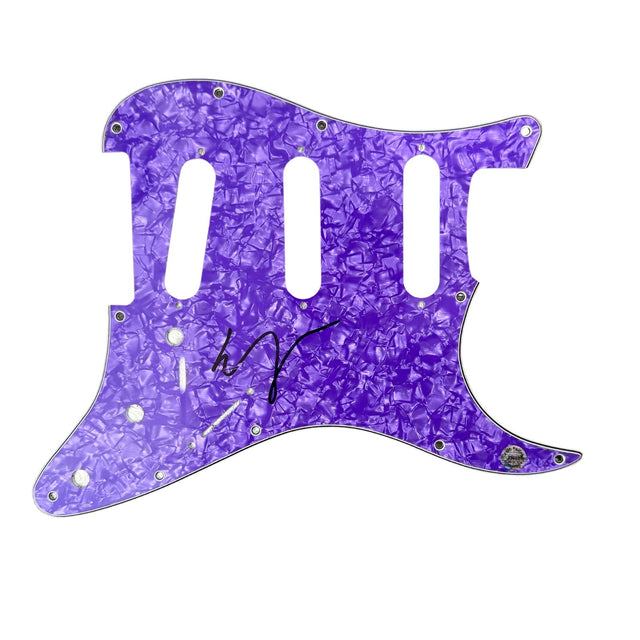
Vampire Weekend Ezra Koenig Signed Guitar Pickguard Autograph Hologram COA
$100.00 USD
-
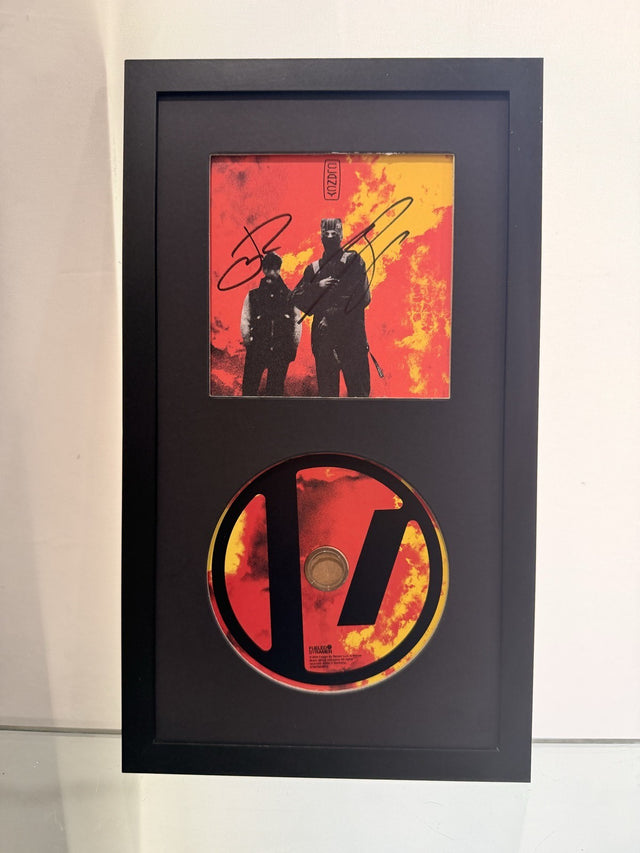
Twenty One Pilots Signed Clancy CD Framed Display Tyler Joseph Josh Dun Auto
$199.00 USD
-
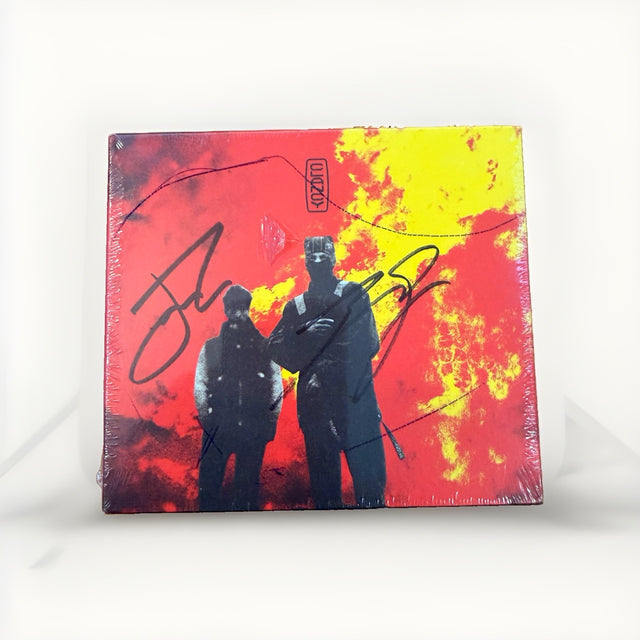
Twenty One Pilots Clancy Signed CD Tyler Joseph Josh Dun Sealed Unopened 2024
$189.00 USD
-
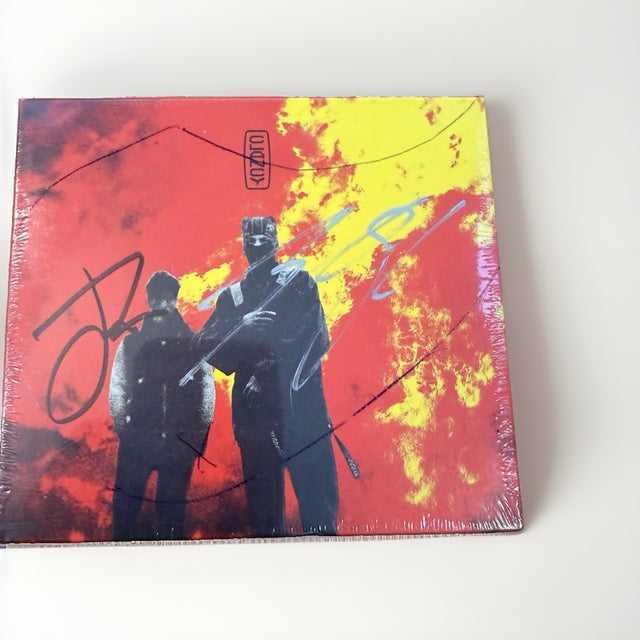
Twenty One Pilots Clancy Signed CD Sealed Tyler Joseph Josh Dun Silver Autograph
$189.00 USD
-
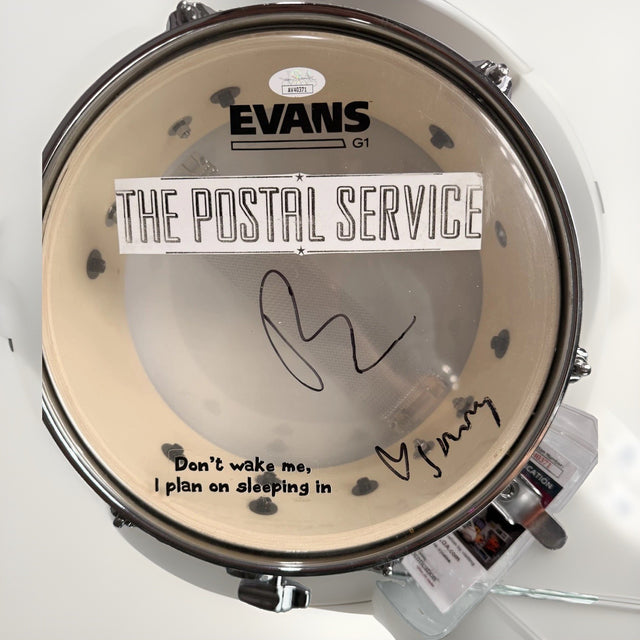
The Postal Service Dual Signed Evans M-80 Drumhead JSA A40371
$499.00 USD
-
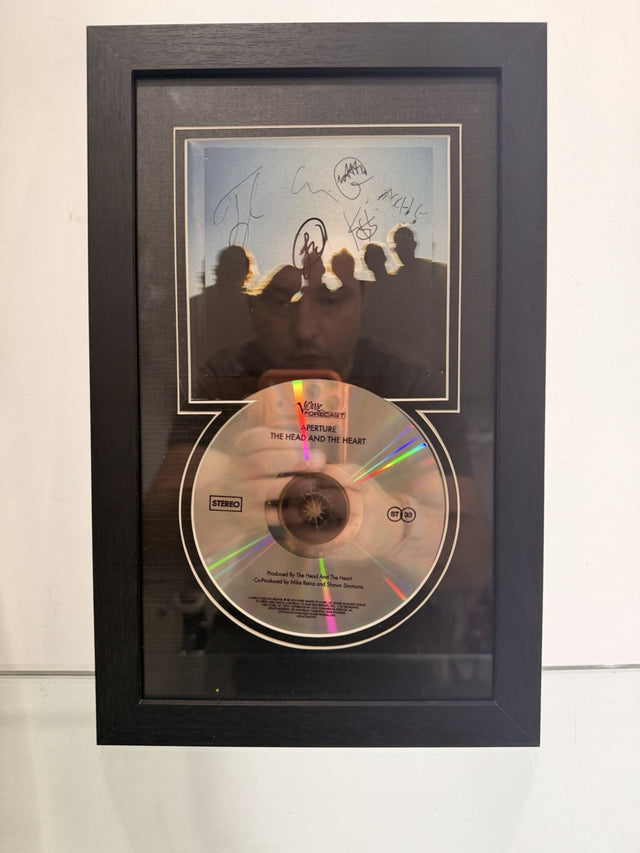
The Head and the Heart Band Signed Framed 'aperture' CD COVER ALBUM
$65.00 USD
Browse the collection for current listings.