Where to Buy Authentic Apollo and NASA Space Memorabilia
You can buy authentic Apollo and NASA space memorabilia from specialist space-memorabilia auction houses, established dealers who publish full provenance, and vetted galleries that stand behind a documented chain of custody. In this category, authenticity is decided by provenance and chain-of-custody — not by a certificate alone. The single most important question is not "does it have a COA?" but "can the seller trace where this object came from, and does a recognized specialist stand behind that history?" Flown artifacts in particular require documentation tying the specific item to a specific mission; a certificate on its own never proves an object flew in space.
At Gauntlet Gallery we treat space memorabilia the way serious collectors do: provenance first, condition second, and a clear, honest description of exactly what an item is and is not. Below is a complete guide to where to buy, how to read authenticity, and how to avoid the traps that catch new collectors.
Flown vs. unflown: the distinction that drives everything
Before you decide where to buy, you need to understand what you are buying. The space-memorabilia market divides into a few broad tiers, and price, rarity, and authentication burden all scale with how close an object was to an actual mission.
Flown artifacts
"Flown" means the object physically traveled to space — and often, for Apollo, to the lunar surface. Flown items include crew equipment, checklists, flags, medallions, patches, and small personal-preference-kit (PPK) items astronauts were permitted to carry. Because so few objects flew and returned, flown material is the rarest and most valuable tier. It is also where the authentication burden is highest: a flown claim is only as strong as the documentation that ties that specific object to a specific mission. Without that paper trail, a "flown" claim is just a story.
Unflown / mission-related artifacts
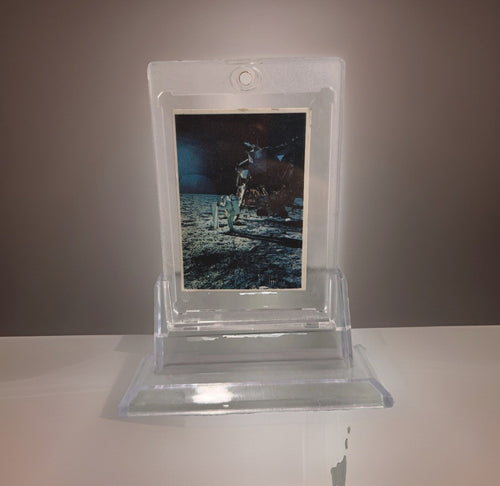
Unflown items never left Earth but are genuinely tied to the program: backup or training hardware, ground-used equipment, spare components, contractor presentation pieces, and period NASA lithographs and photographs. These are far more affordable and far more available, and for most new collectors they are the smartest place to start. A crisp period NASA photograph or an authentic mission patch delivers real history without the flown-item price or the flown-item risk.
Autographs and signed material
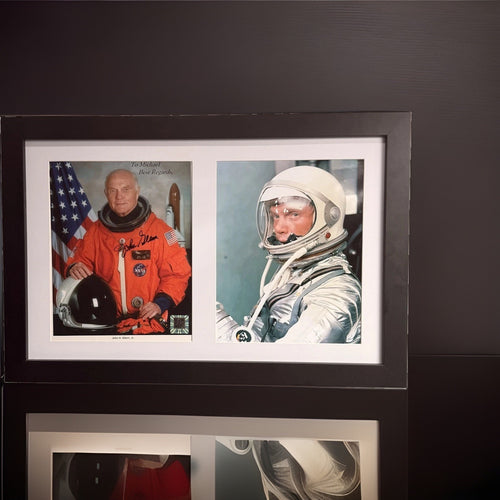
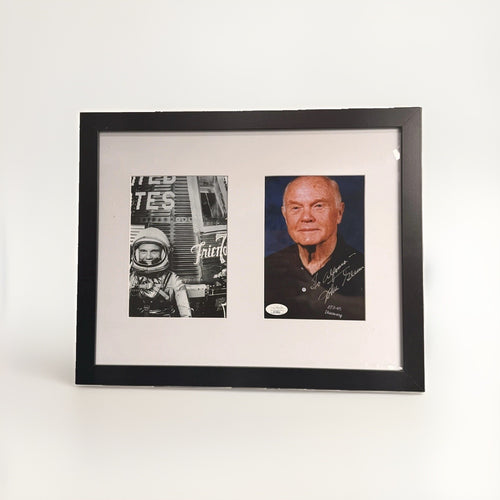
Astronaut autographs are their own collecting lane — signed photos, crew-signed lithographs, first-day covers, and books. Value here depends on the astronaut (moonwalkers command the strongest premiums), the item signed, condition, and — again — authentication. Because astronaut signatures are among the most forged in all of autograph collecting, signed material should be backed by reputable third-party authentication and, ideally, provenance showing how and where it was signed.
Souvenirs and reproductions
The largest and cheapest tier is commemorative and reproduction material: replica patches, modern medallion re-strikes, gift-shop lithographs, and mass-produced collectibles. There is nothing wrong with owning these — they are fun and decorative — but they are not investment-grade artifacts, and honest sellers label them clearly as reproductions or commemoratives.
| Tier | What it is | Relative price | Primary authentication lever |
|---|---|---|---|
| Flown | Traveled to space / lunar surface | Highest | Documented chain of custody to a specific mission |
| Unflown / mission-related | Training, ground, contractor, period NASA prints | Moderate | Provenance + period-correct manufacture |
| Autographs | Astronaut-signed photos, covers, books | Varies widely | Third-party authentication (Beckett/JSA/PSA) + provenance |
| Souvenir / reproduction | Replica patches, re-strikes, gift-shop items | Lowest | Honest labeling as reproduction |
Where to buy authentic Apollo and NASA memorabilia
Authentic material trades through a handful of trustworthy channels. The common thread across all of them is transparency: a real seller wants you to see the provenance, not to distract you from it.
Specialist space auctions
Dedicated space and aviation auctions are the backbone of the high end. They catalog provenance in detail, frequently sell material consigned directly by astronauts and their families, and stake their reputation on getting authenticity right. For flown items and important autographs, a specialist auction with a documented consignment history is often the safest source — and the catalog itself becomes part of the object's future provenance.
Established dealers and galleries
Reputable dealers and galleries curate, vet, and stand behind what they sell. The advantage over an open marketplace is accountability: a dealer's name is attached to the piece, they publish condition and provenance up front, and they are reachable if a question arises later. This is the lane Gauntlet Gallery operates in — we describe exactly what a piece is, disclose what is and isn't documented, and never inflate an unflown item into a flown one.
Direct estate and family provenance
Some of the strongest material comes with a documented line back to an astronaut, a NASA engineer, or a contractor's estate. When a chain of custody starts with the person who originally owned the object, authenticity is dramatically easier to establish. Look for letters, photographs, and paperwork that connect the object to a named source.
Open marketplaces — proceed with caution
General marketplaces do carry authentic pieces, but they also carry the most reproductions, misattributions, and outright fakes. If you buy from an open marketplace, treat every "flown" or "signed" claim as unproven until the seller can produce provenance and, where relevant, third-party authentication. Price that is too good for the claim is the reddest flag in the category.
Why provenance and chain-of-custody decide authenticity
In most collecting fields a certificate carries real weight. Space memorabilia is different, and it is the most common place new collectors get hurt. A certificate of authenticity is only as credible as the party that issued it — and a certificate can never, by itself, prove that an object flew in space. Flown status is established by documentation, not by a printed card.
What good provenance actually looks like
- A named, verifiable source — an astronaut, family estate, NASA employee, or contractor, not an anonymous "private collection."
- A continuous chain of custody — a line of ownership from origin to the present with as few unexplained gaps as possible.
- Mission-specific documentation for flown claims — paperwork tying this object to this flight, such as flight certification, crew statements, or original inventory references.
- Period-correct manufacture — materials, construction, and markings consistent with the era the object claims to be from.
- Corroboration by recognized specialists — the space-memorabilia field has established experts and researchers (for example, specialists such as Zarelli in the space-collectibles world) whose review adds meaningful weight, especially for flown and important items.
Where authentication chains differ by category
It helps to keep the authentication approaches distinct rather than assuming one system covers everything:
- Space artifacts (flown and mission-related): authenticated by provenance and chain-of-custody, corroborated by space-memorabilia specialists. A certificate supports the story; it does not replace the documentation.
- Astronaut autographs: best backed by reputable third-party authentication — the same graders collectors trust across signed material, such as Beckett, JSA, or PSA — alongside provenance about how the item was signed.
Do not mix these chains. A third-party autograph authentication tells you a signature is genuine; it says nothing about whether an object flew. Conversely, flown documentation says nothing about whether a later-added signature is real. Serious sellers keep these separate and tell you exactly which evidence supports which claim.
A collector's authentication checklist
Whether you are looking at a $75 period photograph or a five-figure flown artifact, the same discipline applies. Run every candidate through this list before you buy.
- Ask "flown or unflown?" and get it in writing. Make the seller state the claim explicitly. Ambiguity almost always favors the seller.
- Demand the provenance. Who owned it, and how did it get from origin to here? A reputable seller has this ready.
- For flown claims, require mission-specific documentation. No paperwork tying the object to a mission means treat it as unflown.
- For autographs, require third-party authentication. Beckett, JSA, or PSA — and confirm the certification matches the item in hand.
- Check period-correctness. Materials, printing, and construction should match the claimed era.
- Assess condition honestly. Toning, creases, and fading affect value; a good seller photographs and discloses flaws.
- Sanity-check the price. If the asking price is far below what the claim would command, the claim is probably wrong.
- Confirm return and guarantee terms. Sellers confident in authenticity stand behind it. Terms vary by seller and item, so read them.
What to collect: the most sought-after Apollo and NASA artifacts
Once you know how to read authenticity, the next question is what to actually buy. Different objects carry different histories, price points, and risk profiles. Here are the categories that draw the most collector interest, and what to watch for in each.
Mission patches and emblems
Embroidered mission patches are one of the most beloved and accessible entry points into the hobby. The challenge is that patches have been reproduced continuously for decades, so a modern replica and a period-correct example can look similar at a glance. Value comes from period manufacture and, ideally, provenance — a patch documented as crew-owned or issued through an official channel is worth far more than a decorative reproduction. When a patch claims to be flown, that claim needs the same mission-specific documentation as any other flown artifact.
Period NASA photographs and lithographs
Original period NASA photographs — including the famous "red number" and other era-marked prints — are a favorite because they combine genuine history with relative affordability. Focus on print type, era-correct paper and markings, and condition (toning and creasing matter). These make an ideal first authenticated purchase: real program history without flown-item pricing or flown-item documentation risk.
Medallions and Robbins medals
Commemorative medallions are widely collected, and some were struck from materials with mission connections. Because re-strikes and modern commemoratives are common, medallions demand careful attention to origin: what was it struck from, when, and can that be documented? Treat any "flown metal" claim as a flown claim requiring proof.
Crew equipment and flown small items
Checklists, flown flags, PPK items, and pieces of crew equipment are the blue-chip end of the market. They are also where forgery and inflated claims concentrate, precisely because the upside is so high. Never buy at this level without a documented chain of custody and, for important pieces, corroboration from a recognized space-memorabilia specialist.
Signed photographs, covers, and books
Astronaut-signed material spans a huge range, from affordable signed prints to premium crew-signed lithographs and flown-and-signed covers. Because signatures are heavily forged in this field, third-party authentication is non-negotiable, and provenance about the signing occasion adds meaningful confidence.
Common mistakes new collectors make
Most disappointments in this category trace back to a handful of avoidable errors. Knowing them in advance is the cheapest insurance you can buy.
- Trusting a certificate over documentation. A COA is not proof of flown status, and a certificate from an unknown issuer proves very little. Weight the provenance, not the paper.
- Confusing "mission-related" with "flown." Training hardware and contractor pieces are genuine and collectible, but they are not flown artifacts. Honest listings make the distinction; misleading ones blur it.
- Assuming one authentication system covers everything. Autograph authentication verifies a signature; it says nothing about flight. Flown documentation says nothing about a signature. Keep the chains separate.
- Ignoring condition. Toning, fading, creases, and restoration all affect value. A bargain in poor, undisclosed condition is rarely a bargain.
- Chasing the cheapest "flown" claim. In this category, an unusually low price attached to a big claim is a warning, not an opportunity.
- Skipping the seller's terms. Guarantee and return terms vary by seller and item. Read them before you buy, not after.
What things cost — and how to think about value
Prices in this category vary enormously by tier, mission, astronaut, and condition, so treat any figure as a range rather than a fixed number. Souvenir and reproduction items are entry-level and inexpensive. Authentic period NASA photographs and genuine mission patches occupy an accessible middle. Astronaut autographs range from modest to significant depending on who signed and what was signed, with the Apollo moonwalkers at the top. Flown artifacts — especially anything that reached the lunar surface — command the highest prices and the most rigorous documentation.
The most reliable way to calibrate value is to compare like-for-like recent sales and to weigh provenance strength alongside condition. For market context and how we think about pricing across our authenticated categories, see our Financial Insights resource, and start with our curated space memorabilia collection to see documented pieces with their provenance stated up front.
How Gauntlet Gallery approaches space memorabilia
Our promise in this category is simple: we tell you exactly what a piece is. If an item is unflown, we say so. If a flown claim rests on specific documentation, we show that documentation. We describe condition honestly, we keep authentication chains distinct — provenance and specialist corroboration for artifacts, recognized third-party authentication for signatures — and we never dress up a souvenir as an artifact.
If you are just getting started, our Apollo 11 buyer's guide walks through what to collect and why, our Apollo 11 authentication guide goes deeper on reading provenance and chain-of-custody, and our Apollo 11 price guide helps you calibrate what fair value looks like across tiers. For the broader collecting playbook that applies across every category we handle, visit The Collector's Hub.
Frequently asked questions
Where can I buy authentic Apollo and NASA space memorabilia?
Buy from specialist space-memorabilia auction houses, established dealers and galleries that publish full provenance, and sources with direct astronaut, family, or contractor estate history. These channels stake their reputation on documented authenticity. General marketplaces do carry genuine pieces, but they also carry the most reproductions and misattributions, so treat every "flown" or "signed" claim there as unproven until provenance and, where relevant, third-party authentication are shown.
Does a certificate of authenticity prove an item flew in space?
No. A certificate is only as credible as the party that issued it, and no certificate can prove flown status on its own. Flown status is established by mission-specific documentation and a continuous chain of custody that ties the specific object to a specific flight. Treat a "flown" claim without that documentation as unflown.
What is the difference between flown and unflown memorabilia?
Flown items physically traveled to space (and, for Apollo, sometimes to the lunar surface); they are the rarest and most valuable tier and carry the highest authentication burden. Unflown or mission-related items — training hardware, ground equipment, contractor pieces, and period NASA photographs and patches — never left Earth but are genuinely tied to the program. Unflown material is more affordable, more available, and usually the best starting point for new collectors.
How are astronaut autographs authenticated?
Astronaut signatures are among the most forged in autograph collecting, so signed material should be backed by reputable third-party authentication — graders such as Beckett, JSA, or PSA — alongside provenance about how and where the item was signed. Keep this separate from artifact provenance: autograph authentication verifies a signature, not whether an object flew.
Who are the specialists that authenticate space memorabilia?
The space-collectibles field relies on established researchers and specialists (for example, specialists such as Zarelli) whose review adds meaningful weight to flown and important items. Their corroboration works alongside documented provenance rather than replacing it. For signatures specifically, the recognized third-party autograph authenticators — Beckett, JSA, and PSA — are the standard.
Is Apollo and NASA memorabilia a good investment?
Authentic, well-documented material has proven collectible appeal, but value depends heavily on tier, mission, astronaut, condition, and — above all — the strength of provenance. Prices vary widely, so focus on documented authenticity and buy the best-provenanced example you can rather than chasing the cheapest "flown" or "signed" claim. For market context, see our Financial Insights resource.
Buy and authenticate with confidence
Apollo and NASA memorabilia rewards collectors who lead with provenance. Understand the flown-versus-unflown distinction, insist on a documented chain of custody, keep artifact and autograph authentication chains separate, and buy from sources willing to show their work. When you are ready, explore our authenticated space memorabilia collection, sharpen your eye with the Apollo 11 authentication guide and Apollo 11 buyer's guide, and calibrate value with the Apollo 11 price guide. Gauntlet Gallery is an authenticated source built on provenance-first honesty — the way this category is meant to be collected.