You can buy authentic Mr. Brainwash artwork online from four main types of sources: the artist's own studio releases, established galleries and dealers who document where each piece came from, major auction houses that vet consignments, and curated online platforms such as our own Mr. The key word is "authentic" — Mr. Brainwash works are typically signed and numbered, and the studio issues its own certificates of authenticity, so the safest online purchases are those where the seller can show you the paper trail from studio to sale. Below, we walk through each channel in depth, explain how to evaluate any seller, and give you a practical checklist before you commit. Use dated completed sales for the same artist, release, format and condition, recording the venue, currency and fees. Asking prices and broad archive totals do not establish a realized sale price or future return. Research references: Mr. Brainwash collection at Gauntlet Gallery.
Why "Where You Buy" Matters More Than Ever for Mr. Brainwash
Mr. Brainwash — the working name of French-born, Los Angeles-based artist Thierry Guetta — occupies a unique place in the contemporary art market. He rose to international fame through Banksy's Oscar-nominated 2010 documentary Exit Through the Gift Shop, and his 2008 Los Angeles debut show "Life Is Beautiful" drew enormous crowds before most of the art establishment knew his name. Since then, his exuberant blend of stencils, spray paint, splattered color, and remixed pop-culture imagery — always delivered with an unmistakable streak of optimism — has made him one of the most widely collected street-pop artists working today. His imagery even reached mainstream music audiences when he created the cover art for Madonna's 2009 Celebration compilation.
That popularity is exactly why sourcing matters. Artists with large, enthusiastic collector bases and highly recognizable styles attract two things in equal measure: legitimate secondary-market activity and opportunistic sellers hoping buyers won't ask questions. The good news is that the Mr. Brainwash market is very navigable for informed collectors. His works are typically signed, editions are numbered, and the studio issues its own certificates of authenticity — which means a legitimate piece almost always arrives with verifiable documentation. Your job as an online buyer is simply to choose channels where that documentation is present, checked, and passed on to you.
That framework is useful no matter where you ultimately buy, so we've built this guide around it.
The Main Places to Buy Authentic Mr. Brainwash Art Online
1. Official Studio and Artist Releases
The most direct route to a guaranteed-authentic Mr. Brainwash piece is a primary-market release from the artist's own studio. Mr. Brainwash periodically releases new limited-edition prints and originals in connection with exhibitions, pop-up shows, and special events. Buying at the source means you are the first owner, your purchase records become the foundation of the work's provenance, and the studio's own certificate of authenticity accompanies the piece from day one.
The trade-offs are availability and selection. Primary releases happen on the artist's schedule, not yours. If you want a specific older image — an early "Life Is Beautiful" era print, for example, or a particular remix of a pop icon — you will almost certainly be shopping the secondary market. Primary releases also tend to sell through quickly when demand is high, which is precisely when the secondary market becomes the practical option for most collectors.
Best for: collectors who want first-owner provenance and are flexible about which image they acquire.
2. Established Galleries and Specialist Dealers
Brick-and-mortar galleries and specialist online dealers form the backbone of the secondary market for Mr. Brainwash. A good dealer does three things you cannot easily do yourself: they source works through vetted channels, they verify the documentation before the piece ever reaches their inventory, and they stand behind the sale with a real business reputation. When a dealer has handled dozens or hundreds of works by an artist, they develop pattern recognition — for the paper, the signatures, the numbering conventions, the studio COAs — that a casual buyer simply cannot replicate from photos.
This is the category Gauntlet Gallery operates in. Every Mr. Brainwash piece in our collection is sourced with documented provenance, and we price against verified comparable sales rather than wishful asking prices. We also publish our research openly — our Mr. Brainwash buyer's guide covers formats, edition conventions, and what documentation to expect, and our full library of buyer's guides applies the same standard across every artist we handle.
When evaluating any dealer, ask three questions: Where did this specific piece come from? What documentation accompanies it? And will you put that in writing on the invoice? A confident dealer answers all three without hesitation.
Best for: collectors who want curated selection, verified documentation, and a knowledgeable counterparty — especially for their first few purchases.
3. Major Auction Houses
International and regional auction houses regularly offer Mr. Brainwash works in their prints, urban art, and contemporary sales, and most now run fully online bidding. Auction houses employ specialists who catalogue each lot, note signatures, numbering, and accompanying documentation, and publish condition reports on request. Auction results also have a second life: they become the public price record that anchors valuations across the whole market — the same kind of data that feeds our own comparable-sales database.
The considerations: auctions add a buyer's premium on top of the hammer price, timelines are fixed by the sale calendar, and cataloguing standards vary between houses. Read the lot description carefully — the specific wording about signatures, edition numbering, and included documentation matters. And always request the condition report before bidding, because auction purchases are typically final.
Best for: experienced collectors comfortable with auction mechanics who are hunting specific works and can wait for the right lot.
4. Online Marketplaces and Peer-to-Peer Platforms
General marketplaces — the big auction-style sites, social-media selling groups, classifieds — host the largest volume of Mr. Brainwash listings online, at every price point. Genuine works absolutely trade here, often from private collectors selling directly. But these platforms are also where the least documentation changes hands and where buyer diligence matters most, because the platform itself typically verifies nothing about the artwork.
If you shop this channel, apply dealer-grade scrutiny yourself: insist on photos of the signature, the numbering, the certificate of authenticity, and any labels or receipts; ask directly where the seller acquired the piece; and compare the asking price against recent verified sales rather than other asking prices. Our guide on how to spot a fake walks through the general red flags that apply across every marketplace.
Best for: patient, experienced buyers who know exactly what documentation to demand — and who are willing to walk away when it isn't provided.
Comparing Your Options at a Glance
| Channel | Authentication Confidence | Selection | Pricing Transparency | Best For |
|---|---|---|---|---|
| Studio / primary releases | Highest — direct from source with studio COA | Limited to current releases | Fixed release pricing | First-owner provenance |
| Established galleries & dealers | High — documentation verified before sale | Curated, spans eras and formats | High when comps-based | Most collectors, especially first purchases |
| Auction houses | High — specialist-catalogued lots | Varies by sale calendar | Public results, plus premium | Targeted hunting, price discovery |
| General marketplaces | Variable — buyer must verify everything | Largest volume | Asking prices often untethered from sales | Experienced, patient buyers |
The Formats You'll Encounter When Shopping Online
Part of choosing where to buy is knowing what you're buying. Mr. Brainwash works across a wide range of formats, and each behaves a little differently in the online market.
Limited-edition prints
Screen prints and other editioned works on paper are the heart of the Mr. Brainwash collecting market and the most common format you'll see online. Because editions are produced in stated quantities and numbered by hand, they generate the richest body of comparable sales — which makes them the easiest format to research, price, and verify. For most collectors entering the market, an editioned print from a documented source is the natural first purchase. Edition sizes vary from release to release, so always confirm the specific edition details against the documentation the seller provides rather than assuming a convention.
Unique works and embellished pieces
Beyond standard editions, Mr. Brainwash produces original paintings, mixed-media works, and pieces with hand-applied embellishment that make each example one of a kind. These carry higher price points and thinner comparable data, which shifts the weight of the buying decision onto provenance: who owned it, where it was first sold, and what documentation travels with it. This is the format where buying from a specialist dealer or a catalogued auction lot earns its keep, because a professional intermediary has both the incentive and the experience to verify the history before the sale.
Objects, sculpture, and exhibition ephemera
The artist's exuberant output extends beyond the wall: sculptural pieces, painted objects, and material associated with his famously theatrical exhibitions all circulate among collectors. Ephemera can be a charming, affordable entry point, but be clear-eyed about what a listing actually offers — a signed exhibition poster, a mass-produced show item, and an editioned artwork are three different things with three different value profiles. A trustworthy seller will describe exactly which one you're looking at.
Whatever the format, the constant is documentation. The channel you buy through determines how much verification has been done for you before you ever see the listing — which is why the next question matters so much.
What "Authentic" Actually Means for a Mr. Brainwash Work
Authenticity in the Mr. Brainwash market rests on a straightforward foundation: the works are typically signed, limited editions are numbered, and the artist's studio issues its own certificates of authenticity. That means a legitimate secondary-market purchase should come with a coherent package — the work itself, its signature and numbering consistent with the edition, the studio documentation, and a traceable ownership history connecting it back to a legitimate first sale.
A few practical points collectors should understand:
- Signature and numbering. Limited-edition prints are conventionally signed and numbered by hand. The numbering (for example, a fraction indicating the print's position within the edition) should match whatever edition documentation accompanies the work. If a seller cannot tell you the edition details, treat that as a gap to resolve before buying, not after.
- Studio certificates of authenticity. The studio's own COA is the standard accompanying document for Mr. Brainwash editions. A COA is strongest when it travels with the rest of the paper trail — original receipts, gallery invoices, auction records. A certificate in isolation, from an unknown third party rather than the studio, carries far less weight. Our authentication glossary explains the difference between the various document types you'll encounter.
- Provenance is the backbone. Documentation of where a work has been — who bought it, from whom, and when — is what turns a claim of authenticity into a verifiable fact pattern. This is why we build documented provenance into every acquisition at Gauntlet Gallery: it protects the buyer today and preserves the work's marketability tomorrow.
- Mixed media and originals require extra care. Beyond editioned prints, Mr. Brainwash produces unique works and heavily embellished pieces. Unique works live or die on provenance, because there is no edition documentation to cross-reference. For these, buy only from sellers who can document the chain of ownership.
For a broader grounding in how street-art authentication works across artists and formats, our street art authentication guide is a good companion read, and our authentication FAQ answers the most common documentation questions we hear from collectors.
How to Evaluate Any Online Seller: A Six-Point Framework
Whichever channel and format you choose, the same evaluation framework applies. We use a version of this internally when we source inventory, and it works just as well for a collector assessing a listing.
- Provenance disclosure. Does the seller state where the work came from? "From a private collection" is a starting point, not an answer. Look for specifics: purchased from the studio release, acquired at a named exhibition, bought through a documented dealer or auction sale. The more specific and verifiable the history, the stronger the listing.
- Documentation photographed and itemized. A serious listing shows the signature, the numbering, the studio COA, and any labels or stamps — not just a flattering front-on shot. If the photos stop at the image itself, request the rest before discussing price.
- Condition honesty. Works on paper live hard lives. Handling creases, light-staining, and edge wear are common and manageable if disclosed. A seller who describes condition precisely — and photographs flaws rather than hiding them — is signaling trustworthiness about everything else too.
- Price grounded in real sales. Asking prices are marketing; sale prices are data. Compare any listing against recent verified sales of the same or closely comparable works. Be equally wary of prices dramatically below the market — in art, a "bargain" with no documentation is usually expensive. Research references: financial insights hub.
- Return policy and written guarantees. Reputable sellers put authenticity in writing on the invoice and offer a meaningful recourse if a work is ever shown to be other than described. Marketplace sellers who refuse returns on high-value art are asking you to carry all the risk.
- Track record. How long has the seller operated? Do they specialize in this market or is this a one-off listing? Specialists have reputations to protect; anonymous accounts do not. Check feedback, reviews, and how the seller handles questions — evasiveness during the sale predicts evasiveness after it.
The Gauntlet Gallery Approach
We built our gallery around a simple observation: most problems in the online art market are information problems. Buyers can't see the documentation, can't verify the history, and can't tell whether an asking price reflects reality. So we structured everything to close those gaps.
Every Mr. Brainwash work we offer is sourced through vetted channels with documented provenance — we record where each piece came from and pass that history to the buyer. We describe condition plainly and photograph works honestly. When the data says a work should be priced below where the broader market is asking, we price it there.
We also believe an informed buyer is a better buyer, which is why we publish our research rather than guarding it. Start with the Mr. Brainwash buyer's guide for artist-specific detail, browse the Collector's Hub for our full library of collecting resources, and use the collector glossary whenever a term in a listing or auction catalogue is unfamiliar.
After You Buy: Protecting Your Purchase and Its Provenance
Buying well is half the job; owning well is the other half. A Mr. Brainwash work you acquire today will one day be resold, gifted, insured, or bequeathed — and in every one of those scenarios, the records you keep now determine how smooth that future transaction is.
Build a provenance file immediately
- Keep the invoice, the studio COA, all correspondence with the seller, and the original listing (screenshot it — listings disappear).
- Photograph the work front and back on arrival, including the signature, numbering, and any labels or stamps, alongside the packaging if it carries shipping labels that corroborate the transaction.
- Store digital copies in at least two places, and keep the physical documents flat, dry, and separate from the artwork itself.
Care for the work like the asset it is
- Works on paper should be framed with UV-filtering glazing and acid-free, archival materials, and hung away from direct sunlight and humidity swings.
- If a print arrives rolled, let a professional framer handle the flattening — impatience causes more damage to prints than shipping ever does.
- For unique and mixed-media works, ask the seller about any material-specific care considerations before the piece ships.
Track the market even when you're not selling
Knowing what comparable works are actually selling for helps you insure accurately and time any future sale intelligently. Our financial insights resources exist for exactly this — qualitative market context grounded in verified sales rather than headline anecdotes.
Your Pre-Purchase Checklist
Before you buy any Mr. Brainwash work online, run through this list. If you can tick every box, you're buying the way professionals buy.
- The seller states specifically where the work came from, and the history is plausible and checkable.
- You have clear photos of the signature, the edition numbering, and the studio certificate of authenticity.
- The edition details in the listing match the documentation shown.
- Condition is described precisely, with photos of any flaws.
- The price is consistent with recent verified sales of comparable works — not just other asking prices.
- Authenticity and description are guaranteed in writing on the invoice.
- There is meaningful recourse — a return window or a written guarantee — if the work is ever shown to be other than described.
- The seller answered your questions directly and completely. Hesitation on any of the above is your cue to keep shopping.
The Mr. Brainwash market rewards exactly this kind of diligence. His work is joyful, accessible, and abundant enough that no collector ever needs to compromise on documentation to own a piece. Buy from sources that show their work — whether that's the studio, a specialist auction, or a dealer like us — and the buying experience is as positive as the art itself. When you're ready, our Mr. Brainwash collection is open, documented, and priced against the evidence.
Frequently Asked Questions
Is it safe to buy Mr. Brainwash art online?
Yes — provided you choose the channel carefully. Studio releases, established dealers, and major auction houses all provide vetted, documented paths to ownership. General marketplaces can be safe too, but the verification burden shifts entirely to you. The deciding factor is documentation: a legitimate Mr. Brainwash purchase should come with the signature, edition numbering, studio COA, and a traceable ownership history, whoever the seller is.
Do Mr. Brainwash works come with a certificate of authenticity?
Mr. Brainwash's studio issues its own certificates of authenticity, and his works are typically signed, with limited editions numbered by hand. On the secondary market, the COA should accompany the work along with the rest of its paper trail. Treat a missing COA as a question to resolve with the seller before purchase — and treat certificates from unknown third parties as carrying far less weight than studio documentation combined with solid provenance.
How do I know if a price is fair?
Compare it against recent verified sales of the same or closely comparable works — actual transactions, not other asking prices. Edition works give you the most comparables to work with.
What's the difference between buying a print and an original?
Editioned prints are produced in stated quantities, signed and numbered, which makes them easier to research, compare, and price. Originals and heavily embellished unique works have no edition to cross-reference, so their value case rests almost entirely on provenance and documentation. Both are legitimate ways to collect — prints are the natural entry point, while originals demand more diligence and typically more budget.
Should I buy from a marketplace listing without documentation if the price is low?
No. In the art market, an undocumented "bargain" usually costs more than it saves. Ask the seller for photos of the signature, numbering, and studio COA, plus the acquisition history. A legitimate seller can provide these; a reluctant one has answered your question. There are enough well-documented Mr. Brainwash works trading at fair prices that you never need to gamble.
Continue Your Research
Where you buy is one decision in a longer collecting journey. For the full picture — formats, edition conventions, condition factors, and market context — read our Mr. Brainwash buyer's guide, then explore the wider resources in the Collector's Hub. And when a listing raises a question this article didn't answer, our authentication FAQ is the fastest place to find it.
Shop Mr. Brainwash
Explore current pieces available from the gallery.
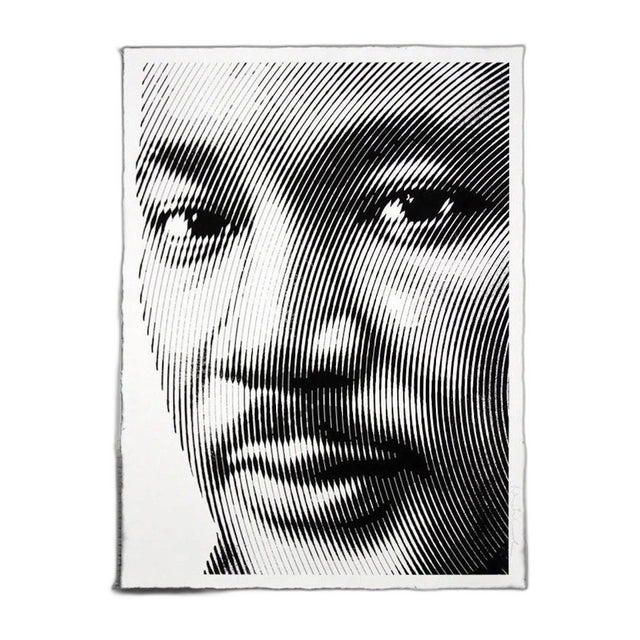
Browse the collection for current listings.