The 2026 Collector's Guide to Authenticated Contemporary Art
To collect authenticated contemporary art in 2026, buy from a reputable dealer, insist on the right proof of authenticity for each category, and verify provenance before you pay. Every collectible category has its own authentication system: Shepard Fairey prints are bought on provenance and dealer trust (there is no artist-issued certificate), Banksy prints require Pest Control authentication, KAWS and BE@RBRICK collectibles are backed by third-party COAs and factory packaging checks, DEATH NYC pieces ship with a COA and gold seal, signed music is authenticated by Beckett, JSA, or PSA, and space memorabilia relies on provenance and recognized specialists. Match the proof to the category, confirm condition and edition transparency, and you can build a serious collection with confidence.
This is the master guide. It explains why authentication matters, walks through every collectible category Gauntlet Gallery covers, gives you a category-by-category authentication comparison table, and lays out how to start, how to budget, and how to care for and insure what you buy. Wherever a category deserves its own deep dive, we link you straight to the relevant buyer's guide so you can go as deep as you like.
Why authentication matters more than anything else
In contemporary art and collectibles, authenticity is the entire ballgame. A signed Shepard Fairey screenprint and a high-quality poster reproduction can look nearly identical on a wall, yet one is a collectible asset and the other is decoration. The difference is not the image — it is the chain of proof behind it. When you collect authenticated work, you are really buying two things: the object and the evidence that the object is what the seller says it is.
That evidence protects you in three ways. It protects your enjoyment, because you never have to wonder whether the piece on your wall is genuine. It protects your resale value, because the next buyer will ask the same questions you should be asking now, and a clean paper trail is what lets a piece trade at full market price. And it protects your downside, because the single fastest way to lose money in this market is to overpay for something that cannot be authenticated later.
The good news: authentication in 2026 is more accessible than it has ever been. Third-party grading, blockchain-anchored certificates, and searchable dealer provenance have all matured. The challenge is that the system is different for every category. There is no single universal "certificate of authenticity" that works across a Fairey print, a Banksy, a BE@RBRICK figure, and an Apollo-era artifact. Understanding those differences is the core skill of a modern collector, and it is exactly what this guide is built to teach.
The three pillars of authenticity
- Provenance — the documented ownership history of a piece: where it came from, who has owned it, and how it reached the current seller. For some categories (notably Shepard Fairey and space memorabilia), provenance is the authentication.
- Certification — a certificate, seal, tag, or third-party grade tied to the specific object. DEATH NYC's gold-sealed COA, a Beckett-authenticated signature, or a blockchain-certified figure all live here.
- Condition and edition transparency — an honest description of the piece's physical state and, for editions, exactly which number it is and how large the run was. A genuine piece with hidden damage or a fuzzy edition story is still a problem.
Strong collecting means all three pillars line up. When one is missing, you slow down and ask why. You can explore how we apply these principles across the store on the Collector hub, and see current market context on the Financial Insights page rather than relying on guesswork.
What changed in 2026
Authentication tooling has advanced meaningfully in recent years, and 2026 collectors benefit from it. Third-party certification services have expanded their coverage and made records easier to look up. Blockchain-anchored certificates have made some COAs harder to forge and simpler to transfer. And searchable dealer indexes let you cross-reference an edition, an image, or a release before you commit. None of this replaces the fundamentals — provenance, condition, and edition transparency still rule — but it does mean that verifying a piece is faster and more reliable than it was even a few years ago. The collectors who win are the ones who use these tools and keep the old-fashioned discipline of buying from people they trust.
The major collectible categories — and how each is authenticated
Gauntlet Gallery specializes in a focused set of contemporary artists and collectible categories. Each one carries a distinct authentication expectation. Below is the working knowledge you need for each, with links to the dedicated collection and buyer's guide so you can go deeper on any single artist.
Shepard Fairey (OBEY)
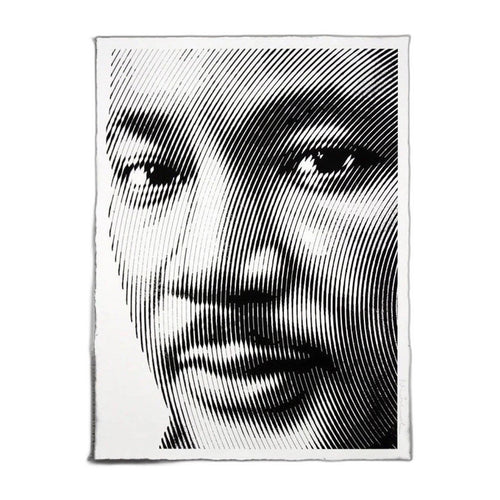
Shepard Fairey is one of the most collected street artists in the world, and one of the most misunderstood from an authentication standpoint. Fairey does not issue certificates of authenticity for his prints, and there is no artist-run authentication board. This is often called a "silent" authentication model: you are buying on the strength of provenance and dealer trust, not on a certificate. A signed and numbered Fairey screenprint from a documented source is the standard; the signature, the edition numbering in pencil, and the seller's track record are your evidence.
Because there is no COA to lean on, the reputation and transparency of your source matters more here than almost anywhere else. Buy from dealers who show the piece honestly, describe condition candidly, and can speak to where a print came from. Explore current inventory in the Shepard Fairey collection, learn the category deeply in the Shepard Fairey buyer's guide, and use the Fairey print index to cross-reference releases, editions, and imagery before you buy.
KAWS
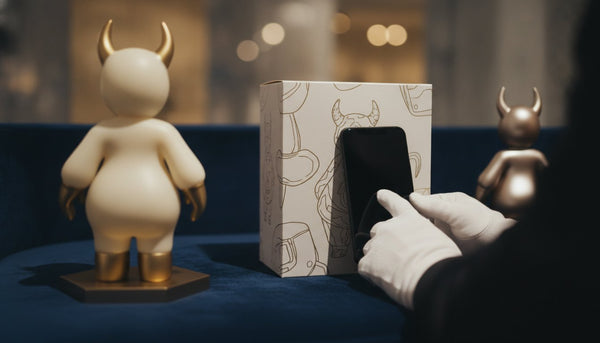
KAWS (Brian Donnelly) spans fine-art prints and, more famously for many collectors, vinyl and resin figures such as the COMPANION series. Authentication here centers on third-party certification (TrueCOA), alongside original packaging and correct edition details. For figures, the box, the print quality, the base stamp, and matching edition information all form part of the story — but the certificate and, where present, a scannable tag are what let you and a future buyer verify quickly.
KAWS is a category where original packaging genuinely matters to value, so condition transparency is central. Browse the KAWS collection, read the KAWS buyer's guide for how to evaluate a piece, study the KAWS authentication guide for the verification specifics, and use the KAWS figurine index to place a release in context.
BE@RBRICK (Medicom Toy)
BE@RBRICK, produced by Medicom Toy, is a collectible art-figure platform with countless collaborations across artists and brands. Like KAWS figures, BE@RBRICKs are authenticated through third-party COA (TrueCOA), combined with correct packaging, size designation (100%, 400%, 1000%, and so on), and edition accuracy. The most common mistakes new collectors make involve size confusion and packaging condition, both of which affect value.
See the current lineup in the BE@RBRICK collection and learn how to evaluate size, series, and condition in the BE@RBRICK buyer's guide.
Banksy
Banksy is the category with the most formalized authentication system of any artist here. Banksy prints are authenticated by Pest Control, the artist's official handling service, which issues certificates of authenticity for eligible works. A Pest Control COA is the gold standard for a Banksy print, and its presence or absence materially changes what a piece is worth and how easily it trades. Importantly, Pest Control authenticates only Banksy — never assume any other artist uses a comparable board.
Because Banksy attracts an enormous volume of unofficial reproductions and open-edition prints marketed ambiguously, provenance and certification discipline are essential. Explore available work in the Banksy collection and study the market and release history through Banksy prints resources before committing.
Invader
Invader, the French street artist known for pixelated mosaic works and related editions, has an active and knowledgeable collector base. Authentication centers on provenance and, for many editions, the artist's own certification and documentation systems, alongside condition and edition transparency. As with all street-art editions, buying from sources that can document where a piece originated is the safeguard against the reproductions that inevitably follow a popular artist.
Browse the Invader collection, learn the category in the Invader buyer's guide, and reference releases in the Invader index.
Mr. Brainwash
Mr. Brainwash (Thierry Guetta) rose to prominence in the street-art world and produces prints and editions that are actively collected. Authentication relies on provenance, hand-finishing details, signatures, and edition documentation from reputable sources. Because his work is often hand-embellished, condition and the specifics of each piece matter, and a trustworthy dealer description is your best tool.
See current inventory in the Mr. Brainwash collection and learn how to evaluate a piece in the Mr. Brainwash buyer's guide.
DEATH NYC
DEATH NYC produces small-edition, pop-culture-mashup prints that are widely collected as an accessible entry point. Genuine DEATH NYC pieces ship with a certificate of authenticity and a gold seal, and are typically hand-signed and numbered within small editions. That COA-plus-gold-seal combination is the category's signature authentication marker, and its presence is what you verify.
Explore the DEATH NYC collection, read the DEATH NYC buyer's guide, and study the specifics in the DEATH NYC authentication guide so you know exactly what a genuine piece includes.
Apollo / space memorabilia
Space memorabilia — flown artifacts, mission materials, patches, and related items from the Apollo era and beyond — is authenticated almost entirely on provenance and recognized specialists. There is no single certificate that covers the field; instead, documented chains of custody, mission association, and evaluation by respected authorities (for example, well-known space-memorabilia specialists such as Zarelli) are what establish authenticity. This is arguably the most provenance-dependent category of all, and also one of the most rewarding for collectors who value documentation.
Browse the space memorabilia collection and learn how flown status, mission association, and specialist evaluation work in the Apollo 11 buyer's guide.
Signed music
Signed music — autographed albums, instruments, photos, and memorabilia — is authenticated through the major third-party autograph authenticators: Beckett (BAS), JSA, and PSA. A signature accompanied by a letter or sticker from one of these services carries far more weight than an unauthenticated "signed" claim, because signature forgery is common and third-party experts are the industry-accepted safeguard. Look for the authenticator's certification and matching serial, and treat unverified signatures with caution. You can browse signed pieces and the wider catalog through the full collection.
Authentication systems at a glance — the master comparison
This is the table to bookmark. It summarizes, category by category, the primary authentication method you should expect and what to look for. Notice how different they are — that difference is the whole point.
| Category | Primary authentication | What to verify | Learn more |
|---|---|---|---|
| Shepard Fairey | "Silent" — no artist COA; provenance + dealer trust | Signature, pencil edition number, documented source | Fairey guide |
| KAWS | Third-party COA (TrueCOA) | Certificate, packaging, edition/base details | KAWS auth guide |
| BE@RBRICK | Third-party COA (TrueCOA) | Certificate, size (%), series, packaging condition | BE@RBRICK guide |
| Banksy | Pest Control COA (official, Banksy only) | Pest Control certificate, provenance, edition | Banksy prints |
| Invader | Provenance + artist certification/documentation | Documented source, condition, edition transparency | Invader guide |
| Mr. Brainwash | Provenance + signature + edition documentation | Signature, hand-finishing, reputable source | Mr. Brainwash guide |
| DEATH NYC | COA + gold seal, hand-signed/numbered | COA present, gold seal, signature, edition number | DEATH NYC auth guide |
| Apollo / space | Provenance + recognized specialists | Chain of custody, mission association, specialist review | Apollo 11 guide |
| Signed music | Beckett (BAS) / JSA / PSA authentication | Third-party letter/sticker, matching serial | Browse all |
Two rules follow directly from this table. First, never transplant one category's authentication onto another — a "certificate of authenticity" means something very different for DEATH NYC than the silent, provenance-based model for Fairey, and Pest Control authenticates Banksy and only Banksy. Second, the absence of the expected proof is a signal, not a formality to wave away. A Banksy without a Pest Control COA, a DEATH NYC without its gold seal, or a signed guitar without Beckett/JSA/PSA backing should each prompt more questions before you buy.
Building a collection with a point of view
The collectors who do best over time are not the ones who buy the most — they are the ones who buy with a thesis. A collection with a point of view is easier to build, easier to authenticate, and easier to appreciate, because every decision is measured against a clear idea rather than chased on impulse. Some collectors organize around a single artist and go deep, learning every release; others organize around a movement (street art and its offshoots), a medium (screenprints, art figures, flown artifacts), or a theme (political imagery, pop-culture mashups, space history).
Whatever your organizing idea, three habits separate durable collections from scattered ones:
- Depth over breadth in your core lane. A focused Shepard Fairey or KAWS holding, built from documented pieces, compounds knowledge and value faster than one-of-everything buying. Use the art index to browse the full landscape of what we cover and see where your interests concentrate.
- Consistency in your authentication standard. Decide up front that you will only own pieces that carry the proof their category requires. That single rule filters out most mistakes before they happen.
- Documentation as a first-class asset. Treat the COA, the provenance file, the certificate record, and the receipt as part of the piece — because to the next buyer, they are. A collection with clean paperwork trades at a premium to one without.
This mindset is what turns buying into collecting. It also makes the rest of this guide actionable: once you know your lane and your standard, matching the right authentication to each acquisition becomes second nature. When you are ready to browse by category, the art index and full collection are the fastest way to see the whole field at once.
How to start collecting in 2026
You do not need a large budget or an art-history degree to start well. You need a method. Here is the sequence we recommend to new and intermediate collectors.
- Pick a lane you actually love. Collections that last are built around genuine interest. Whether it is Fairey's political screenprints, KAWS figures, or Apollo-era artifacts, start where your curiosity already lives. Browse broadly on the full collection to see what pulls you in.
- Learn that category's authentication before you spend. Read the relevant buyer's guide so you know exactly what proof to expect. Knowing that Fairey is silent-authenticated or that Banksy needs Pest Control changes how you read every listing.
- Buy the best example you can afford, from a source you trust. One well-documented piece beats three questionable ones. Condition, edition transparency, and provenance compound over time.
- Keep your paperwork from day one. Save the COA, the receipt, any certificate or serial records, and photos. Your future self — and your future buyer — will thank you.
- Study the market, don't chase it. Use the Financial Insights page for context on where categories sit rather than reacting to hype.
Budget tiers: where different collectors begin
These are broad, illustrative ranges to help you orient — actual prices vary widely by artist, edition, size, condition, and demand. Treat them as starting points, not quotes, and confirm current pricing against live inventory and the market context on Financial Insights.
| Tier | Typical entry points | What you're buying |
|---|---|---|
| Entry / first piece | Accessible signed editions such as DEATH NYC, smaller open or timed releases, entry BE@RBRICK sizes | An authenticated, documented piece that teaches you the category |
| Core collector | Signed & numbered Fairey screenprints, mid-tier KAWS figures, established Invader and Mr. Brainwash editions | Recognizable works with clear provenance and healthier resale demand |
| Blue-chip / trophy | Pest Control-authenticated Banksy prints, flagship KAWS releases, significant flown space artifacts, marquee signed music | Scarce, heavily documented pieces where authentication rigor is highest |
Wherever you begin, the discipline is the same: match the proof to the category, insist on transparency, and buy documented examples. A modest, well-authenticated collection is worth more — in enjoyment and resale — than an expensive but murky one.
Care, storage, and insurance basics
Authentication gets a piece into your collection. Care keeps it worth collecting. None of this is complicated, but skipping it quietly erodes value.
Works on paper (prints)
- Frame with archival, acid-free materials and UV-protective glazing to guard against fading and paper degradation.
- Keep prints out of direct sunlight and away from high humidity and heat, which cause fading, warping, and foxing.
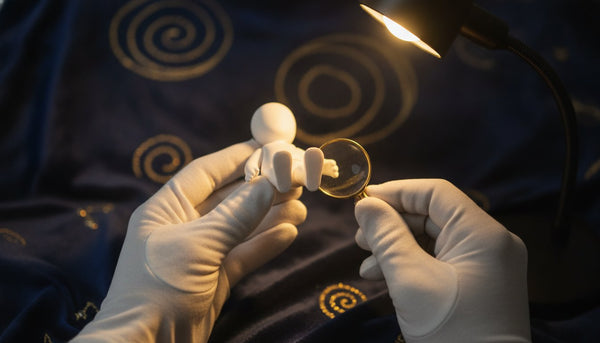
- Handle by the edges, ideally with clean hands or cotton gloves, and store unframed works flat in archival sleeves.
Figures and collectibles (KAWS, BE@RBRICK)
- Retain original packaging — for these categories the box is part of the value and part of the story.
- Display away from direct sunlight and heat to prevent discoloration of vinyl and resin.
- Keep inserts and certificates together with the piece so verification stays easy.
Memorabilia and signed pieces
- Preserve the certification with the object — a Beckett/JSA/PSA letter or a space-memorabilia provenance file is inseparable from the item's value.
- Use archival display cases for patches, documents, and signed materials, and avoid adhesives or handling that could damage signatures or fragile artifacts.
Insurance and records
- Photograph every piece and keep a simple inventory with purchase source, price, date, and authentication details.
- Insure meaningful pieces through a homeowner's rider or a dedicated fine-art/collectibles policy once your collection carries real value.
- Store documentation digitally and physically, so a COA or provenance file is never lost to a single mishap.
How to buy with confidence
Confidence comes from a repeatable checklist, not a gut feeling. Before any purchase, run through these questions:
- Does the piece have the authentication this category expects? (Pest Control for Banksy; COA + gold seal for DEATH NYC; TrueCOA for KAWS and BE@RBRICK; Beckett/JSA/PSA for signed music; documented provenance for Fairey and space memorabilia.)
- Is the provenance documented, and can the seller speak to where the piece came from?
- Is condition described honestly and specifically, including any flaws, restoration, or packaging wear?
- Is the edition transparent — exact number, edition size, signed status?
- Is the seller reputable, with a track record, clear policies, and a willingness to answer questions?
If the answers line up, you can buy with confidence. If any answer is fuzzy, slow down. A good dealer welcomes these questions; that willingness is itself a sign of trust. Start from the Collector hub, use the buyer's guides for the specific category, and lean on Financial Insights for market context.
Frequently asked questions
How do I collect authenticated contemporary art in 2026?
Start by choosing a category you love, then learn its specific authentication system before you spend. Buy the best-documented example you can afford from a reputable dealer, insist on the proof that category requires — a Pest Control COA for Banksy, a COA and gold seal for DEATH NYC, TrueCOA for KAWS and BE@RBRICK, Beckett/JSA/PSA for signed music, or documented provenance for Shepard Fairey and space memorabilia — and keep all paperwork from day one.
Does every contemporary artist use a certificate of authenticity?
No, and this is the most important thing to understand. Authentication differs by category. Some artists, like Shepard Fairey, issue no certificate at all — you authenticate on provenance and dealer trust. Others rely on official boards (Pest Control for Banksy), third-party certification (TrueCOA for KAWS and BE@RBRICK), in-house COAs with seals (DEATH NYC), or third-party authenticators (Beckett, JSA, PSA for signed music). Never assume one system applies everywhere.
What is the safest way to authenticate a Banksy print?
For a Banksy print, the recognized standard is a certificate of authenticity from Pest Control, the artist's official handling service, which authenticates Banksy works only. Pair that with documented provenance and clear edition details. Because unofficial reproductions and ambiguously marketed open editions are common, the presence of proper Pest Control authentication and a reputable source is what lets a Banksy trade at full value.
How is space memorabilia authenticated?
Space memorabilia is authenticated primarily through provenance and recognized specialists rather than a single certificate. Documented chains of custody, mission association, and evaluation by respected authorities in the field establish authenticity. It is one of the most provenance-dependent categories, so buying from sources that can supply thorough documentation is essential.
What budget do I need to start collecting?
You can start at accessible price points with authenticated, signed editions and grow from there. The priority is not spending more — it is buying documented pieces from trustworthy sources. A modest, well-authenticated collection outperforms an expensive but poorly documented one in both enjoyment and resale. Check live inventory and the Financial Insights page for current market context before setting a budget.
How do I make sure a signed piece of music memorabilia is real?
Look for third-party authentication from Beckett (BAS), JSA, or PSA — a letter or sticker with a matching serial number. Signature forgery is common, so an unverified "signed" claim carries little weight. Genuine, third-party-authenticated signatures are the industry standard and are what protect resale value.
Buy & authenticate with confidence
Collecting authenticated contemporary art in 2026 comes down to one discipline repeated across every category: match the right proof to the right piece, verify provenance, and buy from a source that welcomes your questions. Use this guide as your map — then go deep where your interest leads. Explore the full range on the complete collection, orient yourself at the Collector hub, learn any category in detail through the buyer's guides, and ground your decisions in market reality with Financial Insights. Whether you begin with a signed Shepard Fairey screenprint, a KAWS figure, a Pest Control-authenticated Banksy, or a piece of space history, the path is the same — collect authenticated, collect documented, collect with confidence.