Street art is frequently discussed as an investment category. The reality is more nuanced: some street art appreciates reliably, some holds value modestly, and some depreciates. Here is what actually drives value versus what collectors commonly assume.
What Reliably Appreciates
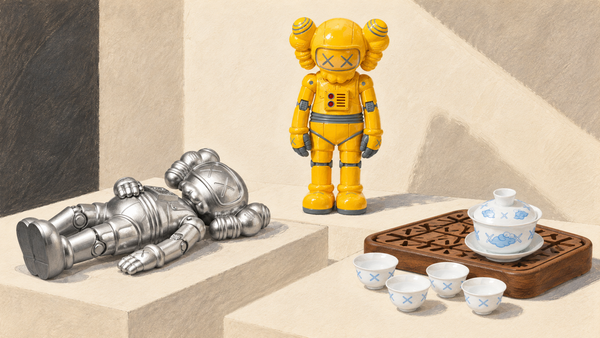
Documented editions from artists with institutional recognition. Banksy works at major auction houses (Sotheby's, Christie's, Phillips) have sustained price appreciation over two decades. KAWS Companion figures and select BE@RBRICK collaborations have shown consistent secondary market growth. Shepard Fairey prints from important campaigns hold value reliably because the authentication chain is clear and the cultural significance is documented.
Fixed supply categories: a deceased artist's work is permanently capped in supply. A living artist's work can always expand. Artists who were actively producing in the 1980s and 1990s and are no longer here have closed catalogues.
What Holds Value Modestly
Open-edition prints, unsigned works from secondary artists, and pieces with unclear authentication chains tend to hold value close to retail but rarely appreciate significantly. These are purchases for aesthetic enjoyment, not investment theses.
What Depreciates
Works purchased without authentication, at above-market prices from non-specialist sellers, or in formats the secondary market does not actively trade (non-archival prints, poorly stored canvases with condition issues) tend to depreciate. The collectibles market penalizes condition damage and authentication gaps severely.
The Failure Mode
Most collectors who buy street art as investment and lose money made the same mistake: they bought on aesthetics without authentication, paid at or above retail, and discovered the secondary market requires documentation they do not have. Authentication is not optional — it is the mechanism by which value transfers from one owner to the next.
At Gauntlet Gallery, every piece we sell has documentation. Browse at gauntlet.gallery.