Pop Art on a Budget: Accessible Prints & Editions
You can absolutely start collecting pop art on a modest budget. The most practical path is to buy authenticated prints and editions rather than originals: open-edition and offset prints for your first pieces, signed-and-numbered works from accessible names like DEATH NYC, and smaller editions from established artists such as Shepard Fairey as you grow. Prioritize three things on every purchase regardless of price — verifiable authentication, honest condition, and clear provenance — and let those fundamentals, not the lowest sticker price, guide you. Do that consistently and a beginner budget can become a considered, well-documented collection over time.
Below is a practical framework for where to begin, what to look for, where to find authenticated pieces at accessible prices, and how to grow deliberately from your first purchase onward.
Why prints and editions are the smart entry point
Pop art has always been intertwined with reproduction. Andy Warhol built an entire practice around the screenprint; the movement embraced mass-media imagery and multiples as a feature, not a compromise. That history is good news for a budget-conscious collector: prints and editions are a legitimate, celebrated form of the work — not a lesser substitute for a painting.
Originals — unique paintings and one-of-a-kind works — sit at the top of the market and are generally out of reach for a first-time buyer. Prints and editions bring the same artists, imagery, and visual language into an accessible range. You get to live with real, hand-pulled or artist-authorized work while you learn the market, refine your eye, and build the habits that protect you on larger purchases later.
Originals vs. prints vs. open editions
- Originals: unique works, highest cost, most complex to authenticate and insure. Not a beginner's first buy.
- Limited-edition prints: signed and numbered in a fixed run (for example, 24/150). Scarcity plus artist involvement makes these the collector's sweet spot.
- Open editions and offset prints: not numbered, produced in larger quantities. The most affordable way to hang real imagery on your wall and start learning.
A sensible progression is to move from open editions to signed-and-numbered editions to, eventually, more sought-after limited runs — trading up as your knowledge and budget expand.
Accessible entry points, tier by tier
Think of your first year of collecting in tiers. Each tier teaches you something and prepares you for the next. The table below is a general framework for how accessible categories tend to stack up — it describes relative accessibility, not fixed prices, which vary widely by artist, edition size, condition, and market conditions.
| Tier | What it is | Relative accessibility | What you're paying for |
|---|---|---|---|
| Entry | Open-edition & offset prints from pop and street-art names | Most accessible | The image and the experience of collecting; minimal scarcity |
| Starter+ | Signed and/or numbered editions from accessible artists (e.g., DEATH NYC) | Accessible | Artist involvement, a documented edition, a certificate |
| Step-up | Smaller or later editions from established artists (e.g., Shepard Fairey) | Moderate | A blue-chip name, hand-finishing or signature, real scarcity |
| Growth | Sought-after limited editions and early releases | Least accessible of the four | Established demand, provenance depth, edition prestige |
Open editions and offset prints
These are your training wheels — and there is no shame in that. An open-edition print lets you experience framing, display, and living with a piece without a significant outlay. Use this tier to figure out what imagery you actually love, how a work reads on your wall, and which artists keep pulling you back. Because these are produced in larger numbers, buy them for the joy of the image first and foremost.
DEATH NYC signed and numbered
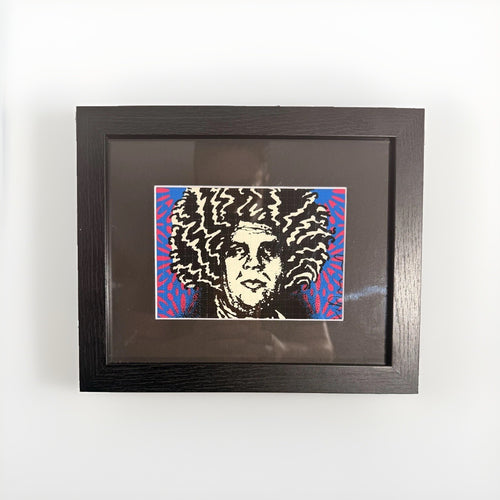
DEATH NYC is a widely collected anonymous street-pop artist whose small-format signed and numbered works are a popular on-ramp for new collectors. The appeal is straightforward: you get a physically signed, numbered piece — often with a certificate — at an accessible entry point, which is a meaningful step up from an unsigned open edition. When you buy DEATH NYC, treat the signature, the numbering, and the accompanying documentation as part of the value, and hold them to the same authentication standard you would any signed work. You can browse an authenticated selection in the Gauntlet Gallery DEATH NYC collection.
Smaller Shepard Fairey editions
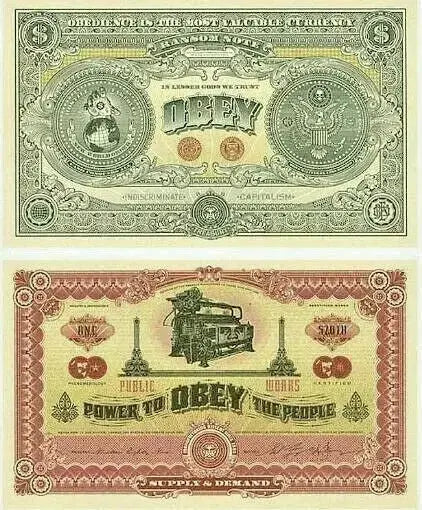
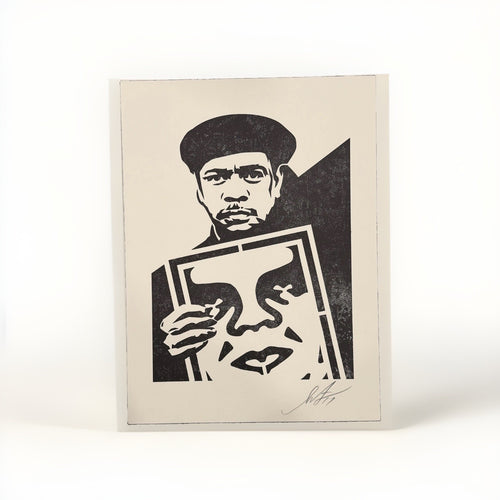
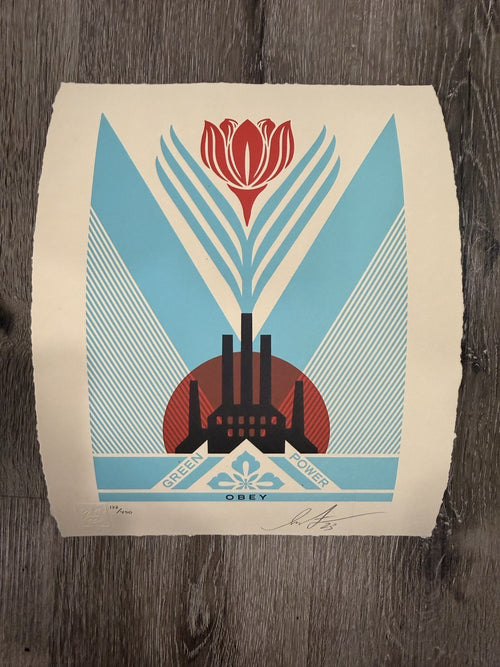
Shepard Fairey (OBEY) is an established, blue-chip pop and street artist — and not every Fairey is out of reach. His catalog spans a wide range of editions and formats, and smaller or more recent signed editions can be a realistic step-up purchase once you've cut your teeth on the entry tiers. Fairey is a strong example of how to trade up within a single artist you admire: start where you can, learn the catalog, and move toward the pieces that resonate as your budget grows. A word of discipline here — accessible does not mean unsigned mass-market giclées dressed up as investments; focus on genuine signed editions with clear documentation.
Prints over originals as a strategy
Choosing prints over originals is not just a budget decision; it's a portfolio decision. Prints let you own more artists, spread your learning across more of the market, and keep individual pieces at a scale that's easy to store, frame, insure, and eventually resell. For a beginner, breadth-plus-authentication beats a single stretch purchase almost every time.
Where to find authenticated pieces at accessible prices
Access is only half the equation. The other half is buying from sources that stand behind authenticity. A cheap piece with no verifiable authentication isn't a bargain — it's a risk.
Buy from dealers who authenticate
The single best move a new collector can make is to buy from a dealer who authenticates what they sell and documents it clearly. A reputable dealer curates, verifies, and provides paperwork — so you're not left guessing about a signature or an edition number. At Gauntlet Gallery, that verification discipline runs through the catalog; you can start with the curated pop art collection or browse the full catalog of available works to see the range of accessible, authenticated pieces in one place.
Use the gallery's collector resources
Before you spend, learn. Gauntlet Gallery's collector hub and the art index are built to help you understand artists, editions, and what separates a solid buy from a shaky one. Reading first is free, and it consistently pays for itself on your first real purchase.
Watch releases and set a budget
Accessible pieces move. Follow the artists and categories you like, decide in advance what you're willing to spend, and buy deliberately rather than impulsively. A predefined budget per tier keeps you from overpaying in the moment and helps you build a coherent collection instead of a random pile.
What to prioritize on a budget: authentication, condition, provenance
Here's the core discipline of budget collecting: the fundamentals matter more when money is tight, not less. An inexpensive mistake is still a mistake, and the same three checks protect you at every price point.
Authentication comes first — always
Authentication is non-negotiable. Before you buy, understand how a given piece is verified and never mix authentication systems or assume one artist's paperwork applies to another. Different artists and categories rely on different, specific chains of authentication:
- Shepard Fairey: verified through documentation and expertise appropriate to his catalog; do not expect or invent a third-party certificate that doesn't belong to the work.
- DEATH NYC: signed and numbered works accompanied by their own certificate of authenticity and documentation.
- Other categories (for example, certain designer collectibles or memorabilia) each have their own distinct, established authentication path.
The rule that keeps you safe: each artist and category has its own authentication chain, and those chains are never interchangeable. If a seller blurs the lines — waving a generic certificate at a work that doesn't use one — treat it as a red flag. When you buy from a dealer who authenticates, this verification is handled and documented for you, which is a large part of what you're paying for.
Condition is value
Condition drives both enjoyment and resale. On paper works, look for issues that materially affect value: fading, foxing (small brown spots), creases, tears, trimming, water damage, and light-staining. Ask for detailed photos and a candid condition description before you commit. A modestly priced print in excellent, honest condition is a better long-term hold than a "name" piece with hidden damage. Proper framing with acid-free materials and UV-protective glazing then preserves what you bought.
Provenance and documentation
Provenance is the piece's paper trail — where it came from and how ownership can be traced. Keep every receipt, certificate, and record you receive, and store them with the work. Good documentation protects your ability to resell, supports insurance, and simply makes you a more credible collector. On a budget, provenance is one of the cheapest forms of value protection available: it costs nothing extra to demand it and to keep it organized.
How to grow from your first piece
The goal isn't a single lucky buy — it's a collection that deepens as your knowledge does. A few durable habits make that happen.
Trade up deliberately
Start in the entry tier, then move up as your eye and budget mature: open edition to signed-and-numbered to smaller limited editions to more sought-after runs. Let each purchase teach you something you carry into the next. You don't need to own everything at once; you need to keep getting better at what you buy.
Focus your collection
Random accumulation rarely satisfies. Pick a lane — a favorite artist, a movement, a recurring motif or palette — and let it give your collection a point of view. A focused collection is more enjoyable to live with, easier to research, and generally more compelling if you ever choose to sell.
Learn the market before you scale
As your budget grows, so should your homework. Understand how demand, edition size, and condition interact before you make larger commitments. Gauntlet Gallery's financial insights resources can help you think about the market side with a level head, and our beginner-friendly guide on how to start a street-art collection on a budget is a natural companion to this article. Approach value language conservatively: buy what you love first, treat any long-term appreciation as a possibility rather than a promise, and never overpay today on the assumption of tomorrow's gains.
Framing, display, and care that protect a budget collection
How you house a piece matters almost as much as which piece you buy. Poor framing can quietly erode both the enjoyment and the long-term value of an otherwise excellent print, and it is one of the most common — and most avoidable — mistakes new collectors make. The good news: doing it right is not expensive, it just requires knowing what to ask for.
Use archival materials
Insist on acid-free, archival mats and backing boards. Standard craft-store matting can contain acids that, over years, leach into paper and cause yellowing and brittleness. The paper should be hinged with archival tape or held with acid-free corners rather than glued or dry-mounted, because reversibility preserves value — a print that has been permanently mounted is worth less than the same print floated correctly. When you commission framing, say the words "archival" and "reversible" explicitly and confirm the framer understands them.
Protect against light and humidity
Light is the enemy of works on paper. UV-protective glazing — either conservation glass or UV-filtering acrylic — dramatically slows fading, and it is worth the modest premium over plain glass. Beyond the frame, hang your pieces away from direct sunlight and away from sources of heat and moisture: not above a radiator, not on a bathroom wall, not opposite a window that gets hours of afternoon sun. These are free decisions that meaningfully extend the life of what you own.
Store and handle with care
Unframed prints should be stored flat in acid-free folders or a portfolio, never rolled tightly for long periods and never left loose where corners can bump and crease. When you handle a print, hold it by the edges with clean, dry hands. These habits sound fussy, but they are exactly what separates a print that holds its condition grade from one that slowly slides from excellent to merely good — and condition, as covered above, is value.
Smart-buying tactics for accessible pieces
Budget collecting rewards patience and preparation. A few concrete tactics will stretch your money further and steer you away from the impulse purchases that new collectors most often regret.
Buy the best condition you can afford
Given a choice between a bigger name in compromised condition and a slightly less prominent piece in excellent condition, the excellent piece is usually the better buy on a budget. Condition is far easier to protect than to restore, and a clean, well-kept print is both more pleasant to live with and easier to resell. Let condition, not name recognition alone, break ties.
Prefer signed and numbered over unsigned when you can
As your budget allows, a signed and numbered edition is generally a stronger hold than an unsigned open edition of the same image. The signature and edition number add documentation and scarcity — two of the things the market rewards. This is precisely why signed-and-numbered works from accessible artists like DEATH NYC make such a natural second step after your first open editions.
Ask questions before you buy, not after
A reputable dealer expects questions and answers them plainly. Ask how the piece is authenticated, what documentation comes with it, what the exact condition is, and what the edition details are. If answers are vague, evasive, or inconsistent, that tells you something important. Doing this diligence up front is free and it is the single most reliable way to avoid a regretful purchase.
Be patient and let the right piece come to you
There will always be another release. You do not need to chase every drop or stretch your budget on a piece that is merely available rather than genuinely loved. Set your criteria, watch the categories you care about, and act decisively when something meets them. Patience is a budget collector's greatest advantage — it keeps you from overpaying and lets your collection cohere around real conviction rather than momentary fear of missing out.
Frequently asked questions
Can I really start collecting pop art on a small budget?
Yes. The accessible path is authenticated prints and editions rather than originals. Begin with open-edition or offset prints to learn, then move to signed and numbered works from accessible artists like DEATH NYC, and step up to smaller editions from established names such as Shepard Fairey as your budget grows. The key is buying verified pieces from a dealer who authenticates, not chasing the lowest possible price.
Are prints a "real" way to collect pop art, or just a compromise?
Prints and editions are a legitimate, celebrated form of pop art, not a compromise. The movement was built around reproduction and multiples — screenprints and offset prints are central to its history. For a beginner, prints let you own real work from real artists, spread your learning across the market, and keep pieces at a manageable scale for storage, framing, and resale.
What should I check before buying an inexpensive print?
Check the same three fundamentals you'd check at any price: authentication, condition, and provenance. Confirm how the specific artist's work is verified (each artist and category has its own authentication chain — never mix them), request honest condition details and photos to spot fading, foxing, creases, or trimming, and keep all certificates and receipts as your provenance record.
What is DEATH NYC, and why is it a good starting point?
DEATH NYC is a widely collected anonymous street-pop artist known for small-format signed and numbered works, often accompanied by a certificate of authenticity. It's a popular on-ramp because you get a physically signed, numbered, documented piece at an accessible entry point — a meaningful step up from an unsigned open edition while still being budget-friendly.
How do I avoid overpaying or buying a fake on a budget?
Buy from a dealer who authenticates and documents what they sell, so verification and paperwork are handled for you. Set a budget per tier in advance and buy deliberately rather than impulsively. Be wary of sellers who blur authentication lines or present mass-market giclées as investments, and treat any promise of guaranteed future gains as a red flag.
How should I grow my collection over time?
Trade up deliberately — from open editions to signed-and-numbered to smaller limited editions — letting each purchase teach you something. Focus your collection around an artist, movement, or motif to give it a point of view, and deepen your market knowledge before making larger commitments. Buy what you love first and treat appreciation as a possibility, not a guarantee.