

Featured image: AI-generated interior concept using product reference photography. Scale, setting, framing, and placement are illustrative.
When music memorabilia enters a primary living room, it immediately triggers a quiet architectural tension. The living room is usually designed around shared comfort, light, conversation, and visual cohesion. Music memorabilia, by contrast, carries an intensely personal narrative. It is rooted in late nights, specific concerts, youth, subcultures, and individual listening histories. The central challenge for an interior designer or an observant homeowner is integrating these artifacts so that they feel authentic, personal, and visually disciplined, rather than turning the living room into a commercial theme bar, a hard rock venue, or a sentimental shrine. The room should read as a residence designed for living, where remarkable cultural objects happen to reside with dignity.
Achieving this balance requires an understanding of scale, visual rhythm, framing precision, and spatial context. Too often, collectors fall into the trap of grouping every ticket stub, signed album, backstage pass, and guitar pick into a single dense wall layout. That approach flattens the distinction between a true work of art and a disposable souvenir. By treating music memorabilia with the same curatorial rigor applied to fine art prints, studio pottery, or vintage furniture, you can weave listening history into the architecture of the room. The goal is to let these objects speak as compelling design elements while preserving the tranquility and function of your living space.
Understanding listening history and the client story elicitation process
Designers rarely succeed when they ask a client a generic question such as what artwork do you like. To uncover the music artifacts that genuinely belong in a living room, the conversation must go deeper into the client's listening history. A practical story elicitation process focuses on emotional milestones, physical formats, and personal rituals rather than simple genre preferences. You might ask what records were playing during specific eras of their life, what concert venues formed their understanding of live performance, or what physical media they held while discovering their favorite albums. The intent is not to collect a list of famous bands, but to discover which items carry genuine personal weight and visual merit.
During this elicitation process, it helps to separate visual preferences from sentimental attachments. A client might deeply love a particular band but possess only a low-resolution photocopied tour flyer from a rainy outdoor festival. That flyer might be priceless to them emotionally, but hanging it full-scale over a mantelpiece could distort the proportions and tone of the room. Conversely, a client might own an exceptional vintage graphic piece, like a Richard Avedon Paul McCartney poster, that combines mid-century pop culture history with master-level photography. By asking structured questions about how they want to feel when sitting in the room, you can determine whether an item belongs in a prominent primary display, a subtle secondary alcove, or a dedicated private portfolio folder.
Distinguishing format tiers: From promotional editions to performance artifacts
To integrate music items successfully, you must categorize them by format, physical presence, and historical nature. Not all music memorabilia functions the same way in a room layout. Broadly, these objects fall into three distinct tiers: graphic promotional media, authenticated signed editions, and performance-used artifacts. Understanding where an object sits across these categories prevents confusing a piece of printed graphic history with a personal autograph or a stage-used tool.
Graphic promotional media includes items such as original vintage concert posters, magazine inserts, and promotional lithographs. These are primarily visual works where the composition, typography, and paper quality take center stage. For example, the Richard Avedon Paul McCartney poster represents a vintage 1967 Stern magazine printing. It is an unsigned graphic poster printed on paper and backed on linen for long-term stabilization. It is vital to clarify to clients that this piece is an original period print from a magazine publication rather than a limited-edition fine art photograph signed directly by Avedon, or a hand-signed autograph from McCartney himself. Its visual authority in a interior stems from its striking psychedelic portraiture, period printing heritage, and vivid color composition. Displaying it requires the same careful spatial planning as a mid-century art print, using custom framing with archival mats that honor the linen-backed margins while protecting the paper from environmental wear.
Authenticated signed editions represent a second tier, where the hand-applied signature of the artist serves as the primary connection to the piece. Consider a Coldplay signed Moon Music display. This item features an official album cover insert bearing all four signatures from Chris Martin, Jonny Buckland, Guy Berryman, and Will Champion in black marker, presented alongside the official EcoCD pressing inside double-window matting. Interior designers must distinguish a band-signed CD release from a concert-played artifact like a stage-used guitar, a plectrum, a setlist taped to a monitor, or a tour-worn jacket. A signed CD insert is a clean, modern edition created to mark an album launch. It provides neat geometric boundaries, structured typography, and vibrant disc graphics, making it suitable for precise matting within built-in cabinetry, picture ledges, or structured wall grids.
Uncovering how a client connects to music requires a gentle elicitation process during initial consultation meetings. Rather than asking what artists they like, ask them to describe their listening history and physical media habits. Inquire about the first concert they attended, whether they actively collect physical albums, or if their music collection represents quiet evening routines rather than loud concert memories. A client who treasures a vintage McCartney poster often responds to the graphic legacy of mid-century design, whereas a client holding a band-signed contemporary album usually values direct contact with the modern artist. Uncovering these distinctions prevents placing a high-energy pop artifact in a quiet reading corner where a subtle vintage print belongs.
Designing for these distinct tiers requires careful attention to spatial rhythm and cabinet details. High-impact graphic media like large posters need wide plaster margins, dark painted accent walls, or high-ceiling sightlines where their scale can breathe without overwhelming nearby furniture. Small signed editions require closer inspection and belong at eye level near seating groups, desk alcoves, or integrated shelving. When detailing custom millwork, consider dark walnut or painted charcoal cabinet interiors to frame small items. Inset LED ribbon lighting with a high color rendering index reveals line art and signature ink without casting direct heat on delicate paper inserts.
To evaluate these tradeoffs, consider a hypothetical living room layout measuring 18 feet by 24 feet with 10-foot ceilings. The client possesses a vintage poster and a fully signed CD insert, but wants to avoid visual clutter above the fireplace mantel. Option A mounts the large linen-backed poster directly above the fireplace as the central focal point, while setting the signed CD insert on a side table tray. The tradeoff with Option A is that the bold, colorful poster commands the entire room, turning the mantel into a loud visual anchor that risks feeling like a theme venue. Option B leaves the space above the fireplace open for a neutral architectural mirror or textural canvas, placing the vintage poster on an adjacent wall flanked by low armchairs. The signed CD display is then integrated into a custom recessed oak bookshelf at eye level, paired with stoneware ceramics and design books. Option B establishes visual rhythm across the room. The large poster anchors a secondary conversation area, while the signed CD serves as an intimate detail discovered upon approaching the bookcase, successfully balancing personal history with refined interior design.
| Memorabilia Category | Typical Physical Formats | Primary Visual Role | Best Architectural Placement |
|---|---|---|---|
| Graphic Promotional Media | Linen-backed vintage posters, concert flyers | Bold graphic focal point, color anchor | Primary walls, high-ceiling entryways |
| Signed Editions | Autographed CD inserts, vinyl sleeves, signed cuts | Intimate visual detail, geometric accent | Cabinet displays, picture ledges, alcoves |
| Stage & Performance Artifacts | Flown plectrums, stage-used setlists, worn gear | Tactile history, sculptural interest | Shadowboxes, integrated shelving niches |
Establishing display rhythm and avoiding the shrine effect
The shrine effect occurs when too many objects competing for attention are packed into a single zone without architectural breathing room. When every wall in a living room displays signed framed guitars, framed concert tickets, tour laminates, and band posters, the eye loses all sense of priority. The room feels chaotic, loud, and visually claustrophobic. To counteract this, establish a clear display rhythm that alternates between high-impact artwork, quiet negative space, and functional architectural finishes.
Display rhythm relies on controlling visual density and sightlines. If you choose to place a large, vibrant piece like an Avedon poster on a central feature wall, the surrounding walls should remain comparatively open, featuring clean plaster, subtle drapery, or restrained fine art photography. Memorabilia should never compete with itself. Instead of clustering multiple signed album displays on the same wall, distribute them thoughtfully through the home. Let a large graphic poster command a grand view across a room, while a compact, precisely matted item like the Coldplay signed CD sits inside a custom media unit where it can be appreciated up close during quiet listening sessions.
Cabinetry design and incorporating music objects into custom joinery
Integrating music memorabilia into custom cabinetry and architectural joinery is one of the most effective ways to make personal items feel built-in rather than tacked on. When a framed album display or collectible object is placed directly onto drywall without structural integration, it can look like an afterthought. Custom joinery provides a physical structure that anchors these objects into the room's woodwork.
When designing open shelving, library cabinets, or media units for music lovers, incorporate specific display niches with precise dimensions. A custom white oak or dark walnut bookcase can feature shallow, lit bays intended for framed items, alongside deep lower cabinets for housing vinyl records, turntables, and high-fidelity audio equipment. By placing a compact framed piece like the Coldplay signed Moon Music display within a dedicated cabinet niche, you frame the frame itself. The rich matte black frame and double-window mat of the display create a tight contrast against warm wood tones, transforming a modest eight-by-thirteen-inch item into a refined architectural detail.
Lighting within cabinetry requires careful consideration. High-heat halogen puck lights can damage paper, compromise signatures, and alter original inks over time. Low-voltage LED strip lighting concealed behind front face frames provides warm, even illumination across shelves without exposing sensitive autographs or vintage paper to high heat levels. Keep lighting temperatures around 2700K to 3000K to maintain a cozy residential ambiance that complements rich wood veneers and dark mats.
Material selections and framing strategies for long-term preservation
Preserving music memorabilia requires rigorous material selection. Whether dealing with a 1960s vintage poster or a modern signed album insert, paper and ink are inherently vulnerable to environmental factors like ambient light, relative humidity, atmospheric pollution, and improper mounting adhesives. Framing choices must protect these objects while enhancing their appearance within the space.
For vintage paper items such as the 1967 Stern Avedon poster, professional conservation measures are essential. The linen-backing process stabilizes fragile newsprint or poster paper by mounting it to acid-free backing paper attached to fine cotton canvas. This process smooths out fold lines, prevents tearing, and creates a flat backing for framing. When choosing glass, specify conservation-grade acrylic or museum glass. Light filtering reduces some risks to inks and paper, but it does not make organic materials immune to degradation over time. Direct sunlight, steam, heat sources, and unstable environments must be avoided regardless of the framing glass used.
For signed items like the Coldplay signed CD display, layout precision is crucial. Double-window matting cut from acid-free, 8-ply rag board creates a clean separation between the signed artwork and the disc, while preventing the glass from touching the marker ink. Never allow signed inserts to press directly against the frame glass, as changes in humidity can cause the ink to adhere to the inner surface, resulting in permanent damage. Choosing matte black or micro-textured wood frames creates a continuous border that pulls attention directly into the colors of the disc art and signatures.
Hypothetical worked example: Renovation of a modern mid-century living room
To understand how these concepts apply in practice, let us walk through a hypothetical planning exercise for a living room in a 1960s post-and-beam mid-century modern residence. The space features original redwood ceiling beams, a floor-to-ceiling brick fireplace, warm oak flooring, and large glass sliding doors facing an outdoor garden. The hypothetical client is an avid music lover who owns a collection of vintage mid-century psychedelic prints, a curated vinyl collection, and modern band-signed CD editions. The design challenge is integrating these items into the main living space without clashing with the home's historic architecture.
The planning assumptions for this room establish three main display zones: the primary fireplace wall, a custom library and listening wall, and a low credenza alcove near the entry. On the main wall opposite the brick fireplace, we specify a vintage Richard Avedon Paul McCartney poster. Using a hypothetical framed footprint of thirty-six by forty-eight inches solely to test this room plan, with the actual finished size still to be confirmed, the poster's bold solarized colors and graphic profile bridge the gap between mid-century pop art and contemporary graphic design. For this hypothetical scheme, a conservation framer would assess a thin matte black frame and suitable protective glazing for the linen-backed poster, hung so its centerline sits at roughly fifty-eight inches off the floor for comfortable viewing from both standing and seated positions.
Across the room, along the library wall, custom rift-sawn oak cabinetry houses the client's high-fidelity audio equipment and vinyl records. Within a recessed display bay positioned above the turntable, we place the Coldplay signed Moon Music display. The black wood frame and dark mat of the eight-by-thirteen-inch display provide a rich, grounded contrast against the warm oak shelf backboard. The circular rainbow disc art echoes the circular forms of spinning vinyl records nearby, while the four black-marker autographs from Chris Martin, Jonny Buckland, Guy Berryman, and Will Champion remain legible and distinct within the recessed bay's indirect LED glow.
By separating these two objects, the room maintains a clear visual hierarchy. The large Avedon poster acts as a dynamic visual anchor for the entire living area, while the signed Coldplay CD display provides a detailed point of interest within the intimate listening nook. Neither object competes for attention, and the room retains its relaxed, architectural atmosphere.
Curating color schemes around bold music artwork
Music art frequently features saturated neon tones, high-contrast monochrome portraits, or psychedelic color palettes that can easily clash with traditional interior color schemes. Integrating these vivid pieces requires designing a thoughtful surrounding color palette that either absorbs or highlights those bold choices.
When working with vibrant graphic prints like Avedon's 1967 Beatles portraits, surround the artwork with grounded, neutral wall colors. Off-white, soft chalky grays, muted olive tones, or rich charcoal plaster finishes allow the vivid colors of the print to pop without overwhelming the space. Pull accent colors directly from the artwork to select surrounding textiles. For example, if a framed piece features electric blues, warm purples, or fiery oranges, select toss pillows, throw blankets, or ceramic vases in muted, desaturated versions of those shades. This subtle repetition creates a cohesive visual bridge between the artwork and the rest of the room.
Monochrome photography or black-and-white promotional graphics afford more flexibility with color, but benefit from textured warm backdrops to avoid feeling overly cold. A crisp black-and-white portrait framed in dark timber looks elevated when hung against a warm plaster wall, limewash paint finish, or deep wool wallcovering. The tactile surface of the wall adds depth, softening the sharp graphic contrast of the print.
Spatial placement, light levels, and hanging geometry
Hanging music memorabilia demands careful attention to sightlines, hanging height, and room layout. Standard gallery installation practices recommend placing the vertical center of an artwork around fifty-seven to sixty inches above the finished floor level. However, in a residential living room, this starting point must adapt to surrounding furniture, ceiling heights, and seating configurations.
Above a low-profile sofa, the bottom edge of a large frame should clear the back cushions by approximately eight to twelve inches to prevent accidental contact when seated. For smaller display items positioned near seating areas, such as a framed CD display placed above a side table, lower the hanging height so the artwork sits naturally within eye level for a seated viewer. Always confirm final framed dimensions, current availability, and physical condition before finalizing wall layouts or specifying custom millwork cutouts with your trades.
Illumination levels must balance visual clarity with conservation needs. Direct sunlight streaming through unshaded windows will rapidly fade colored inks, turn paper yellow, and degrade signatures. Position valuable paper objects on walls that receive indirect natural light. Accent light fixtures, such as adjustable surface-mounted ceiling spots or picture lights, should use LED modules with high color rendering index values (CRI 95+) to present the artwork's true colors without emitting harmful ultraviolet radiation or high heat levels.
Creating cohesive narratives through varied art mediums
A living room feels richer and more dynamic when music memorabilia is mixed with other artistic mediums rather than displayed in isolation. Juxtaposing a signed album or vintage concert poster against oil paintings, abstract sculptures, studio ceramics, or fine art photography builds an eclectic narrative that feels lived-in and organic.
Consider pairing a mid-century graphic poster with a textured ceramic vessel on a console table below it, or hanging a framed signed insert alongside a geometric abstract print. The contrast in textures, scales, and mediums elevates every item in the arrangement. The vintage poster feels less like commercial merchandise when offset by a studio sculpture, while the abstract art gains a grounded sense of pop-culture context from the nearby music piece.
This cross-medium approach prevents the living room from looking like a uniform museum installation or a theme-driven space. It shows that the occupants appreciate visual culture across many forms, celebrating music history alongside fine craftsmanship, contemporary art, and functional design objects.
Transforming personal passion into timeless design
Integrating music memorabilia into a living room is ultimately an exercise in personal storytelling and visual discipline. By treating these objects with care, selecting appropriate conservation materials, using tailored framing strategies, and respecting architectural proportions, you can showcase your favorite artists and listening memories without compromising the beauty of your home. Whether featuring a large vintage graphic poster or an autographed contemporary edition, thoughtful placement allows music history to live comfortably within a refined residential interior.
If you are ready to refine your home's artwork collection with authenticated pieces, explore our curated selection of Coldplay fully signed memorabilia and rare vintage prints like the Richard Avedon Beatles poster at Gauntlet Gallery. Find the perfect balance of visual history and fine design for your living space.
Shop Music memorabilia
Explore current pieces available from the gallery.
-
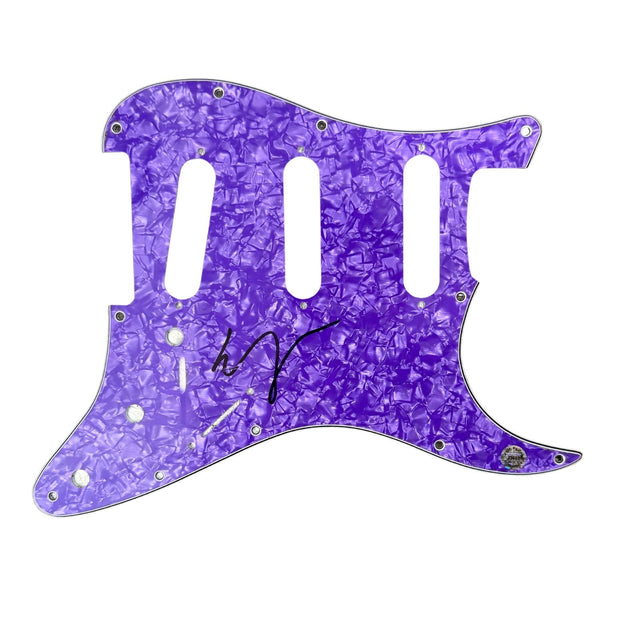
Vampire Weekend Ezra Koenig Signed Guitar Pickguard Autograph Hologram COA
$100.00 USD
-
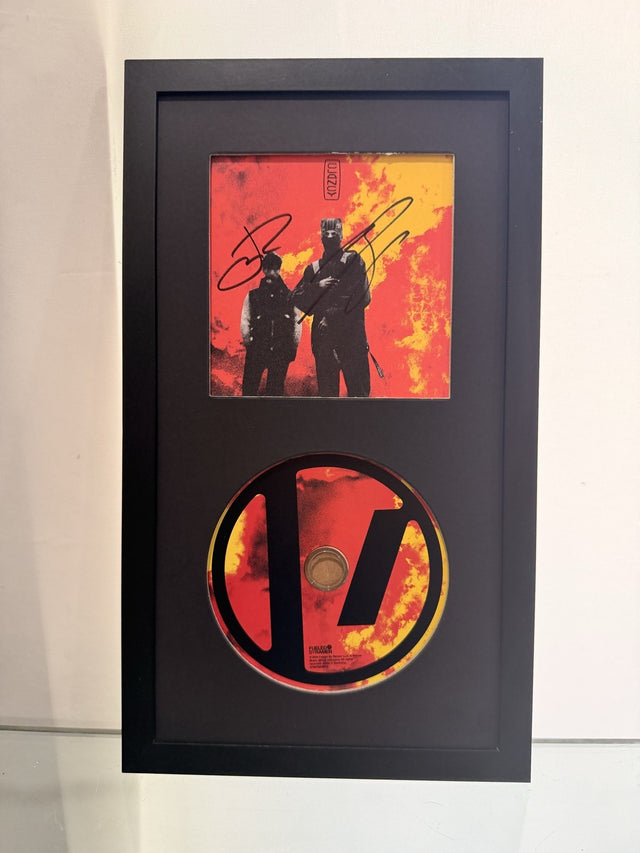
Twenty One Pilots Signed Clancy CD Framed Display Tyler Joseph Josh Dun Auto
$199.00 USD
-
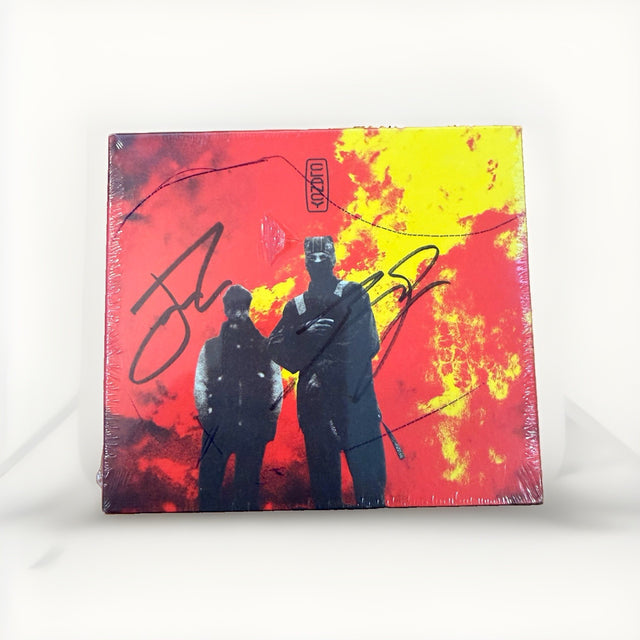
Twenty One Pilots Clancy Signed CD Tyler Joseph Josh Dun Sealed Unopened 2024
$189.00 USD
-
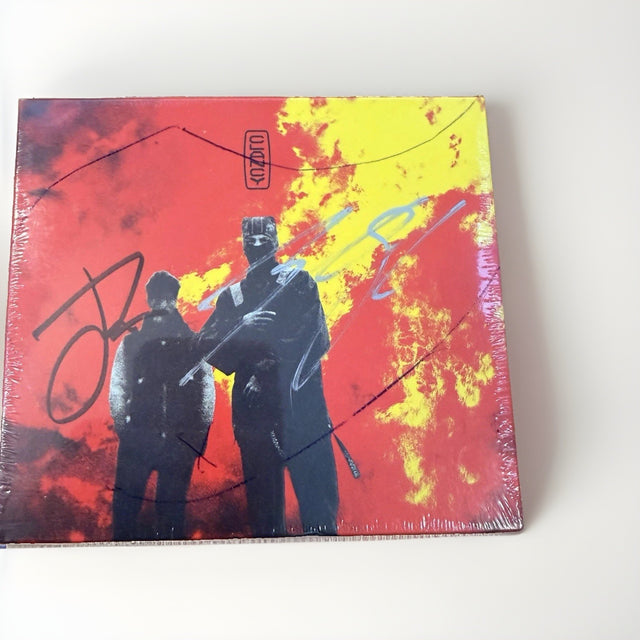
Twenty One Pilots Clancy Signed CD Sealed Tyler Joseph Josh Dun Silver Autograph
$189.00 USD
-
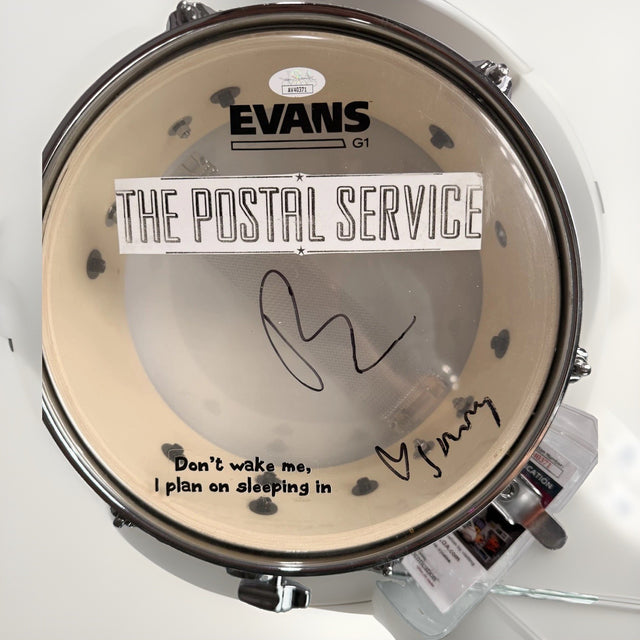
The Postal Service Dual Signed Evans M-80 Drumhead JSA A40371
$499.00 USD
-
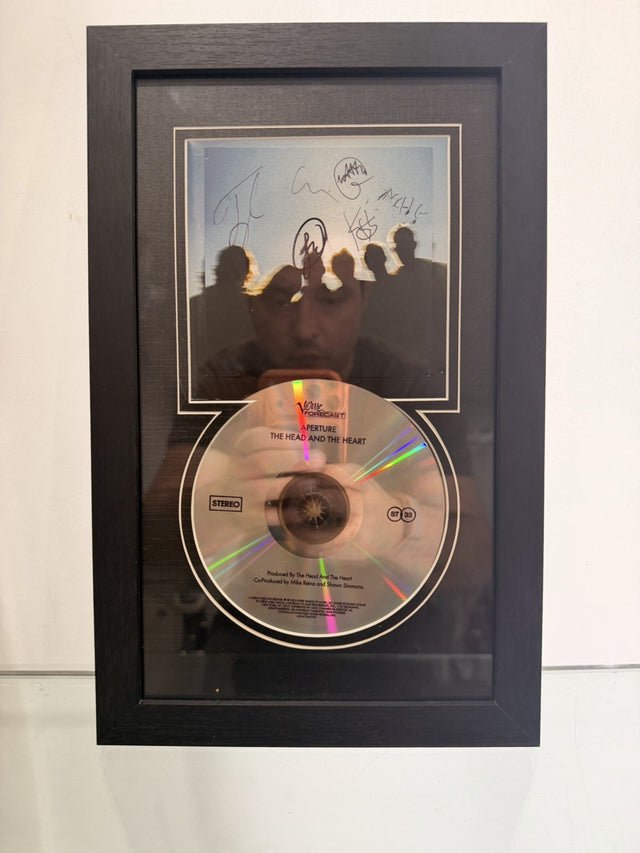
The Head and the Heart Band Signed Framed 'aperture' CD COVER ALBUM
$65.00 USD
Browse the collection for current listings.