Medicom BE@RBRICK Series Numbers & Blind-Box Odds Explained
The best marketplaces for designer art toys and figurines are curated dealers and authentication-backed galleries that stand behind provenance, alongside major auction houses for grail-tier pieces and a small set of established secondary platforms where sold-price history is transparent. For BE@RBRICK specifically, that means buying from sellers who can show you the series number, the correct Medicom foot stamp, and matching packaging — not just a photo of the figure. Below we explain how Medicom's numbered "series" system works, how the blind-box category ratios are structured, and how to use that knowledge to buy well and avoid fakes.
At the Gauntlet Gallery BE@RBRICK collection we authenticate every designer toy against packaging, markings, and provenance, and back applicable pieces with TrueCOA verification. This guide is written from that dealer vantage point: what a serious buyer should understand before spending anything on a bear.
What a BE@RBRICK "Series" Actually Is
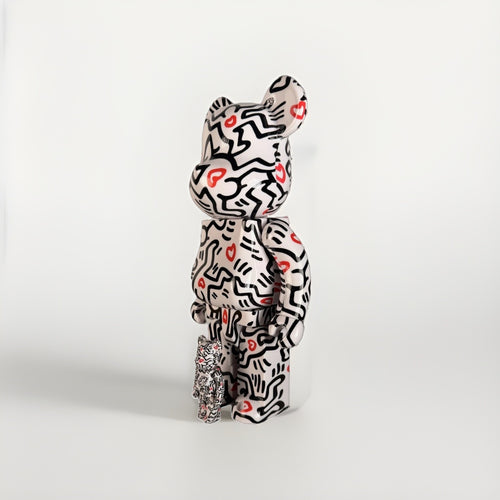
BE@RBRICK — pronounced "bear-brick" and rendered by Medicom Toy as BE@RBRICK — is a bear-shaped collectible figure built on a nine-part articulated body. Medicom launched the line in 2001, and the core of the collecting world revolves around two things: the standard blind-box "Series" releases and the enormous run of collaboration and artist figures sold outside the blind-box system.
The numbered "Series" (often written as Series 1, Series 2, and so on, sometimes abbreviated S1, S2, etc.) are Medicom's regularly issued assortments of 100% BE@RBRICKs — the standard palm-sized size — sold in sealed blind boxes. You do not know which figure you are getting until you open the box. Each series is a themed mix of designs organized into recurring categories, and each category is released at a different frequency, or ratio, within the case. That ratio system is the heart of what collectors mean when they talk about "blind-box odds."
It is important to separate two distinct meanings of "series" that new buyers conflate:
- Numbered blind-box Series — the sequential assortments (Series 1 onward) of 100% figures sold in mystery boxes. These are what the category-ratio system applies to.
- Collaboration / artist releases — standalone figures made with brands, musicians, films, and artists (from luxury houses to street artists), typically sold boxed and not blind. These have their own edition logic and are where most of the high-value market sits.
Understanding which bucket a figure falls into is the first authentication and valuation question you should ask. For a structured walk-through of how to inspect the physical piece, see our companion guide on how to read a BE@RBRICK series stamp, foot print and packaging.
Sizes: 100%, 400%, 1000% and Beyond
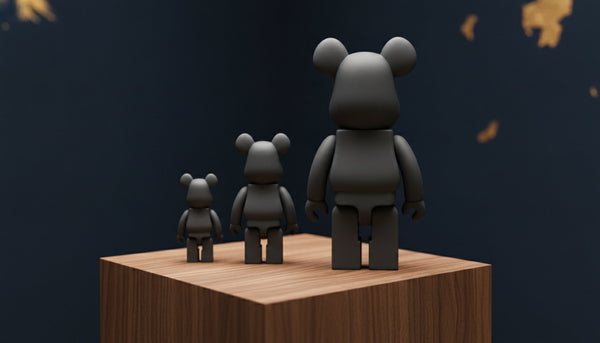
Before the category system makes sense, you need the size vocabulary, because "series" language attaches almost entirely to the 100% blind-box size. BE@RBRICKs are sold in a percentage-based scale where 100% is the baseline small figure. The common sizes are:
| Scale | Approximate height | How it is usually sold |
|---|---|---|
| 100% | ~7 cm | Blind-box Series assortments; also collaboration sets |
| 70% | ~5 cm | Keychains and small collab items |
| 400% | ~28 cm | Boxed collaboration/artist figures (not blind) |
| 1000% | ~70 cm | Statement/grail-tier boxed figures |
| Sets (100% + 400%) | mixed | Common bundle format for major collabs |
The exact centimeter figures vary slightly by source and molding, so treat them as approximate. The 400% and 1000% sizes are where collaboration figures command the highest prices, but they sit outside the numbered blind-box "Series" framework and are almost never sold blind. When a listing says "Series 45" it is referring to a 100% blind-box assortment; when it says "1000% [Brand]" it is referring to a standalone collaboration.
The Blind-Box Category System
Within each numbered 100% Series, Medicom organizes the designs into recurring categories or types. These category names have been remarkably consistent across the life of the line, and understanding them is the single most useful thing a blind-box buyer can learn. The standard categories you will encounter are:
| Category | What it typically is | General rarity within a case |
|---|---|---|
| Basic | Alphabet-letter figures (the "B@" lettered set) in Medicom's house palette | Most common |
| Jellybean | Solid, translucent candy-like colored figures | Common |
| Pattern | Figures printed with graphic patterns, camo, or motifs | Common to uncommon |
| Flag | National-flag and country-themed designs | Uncommon |
| Horror | Spooky, monster, or dark-themed designs | Uncommon |
| SF (Science Fiction) | Robotic, metallic, sci-fi finishes | Uncommon |
| Cute | Animal, character, and sweet-themed figures | Uncommon |
| Artist | Designs by guest artists and designers | Scarcer, often the "chase" tier |
| Hero / Animal (series-dependent) | Occasional additional themed categories | Varies |
| Secret | Hidden chase figure(s) not shown on the box lineup | Rarest |
Not every category appears in every series, and Medicom has added, retired, and reshuffled categories over the years. The relative-rarity column above reflects the general convention of the line — Basic and Jellybean tend to be the workhorse common figures, while Artist and Secret figures are the ones collectors hunt. Treat the ordering as directional, not as a fixed law for any specific series.
How the ratios work in practice
Each category is packed at a different frequency inside a sealed case (a full case is a fixed count of blind boxes). A category like Basic might appear several times per case, while a Secret figure might appear only once across an entire case — or be even scarcer. This is what people mean by "blind-box odds": the printed or community-documented ratio that tells you, on average, how many boxes you would need to open to expect a given figure.
Two honest caveats every buyer should internalize:
- Exact ratios differ by series and are not always publicly documented. Medicom does not always publish per-figure pull rates, and community-tracked ratios can vary between the Japanese domestic release and other distributions. We deliberately do not quote a single universal ratio here, because a number that is right for one series is wrong for another. Verify the specific series before relying on any pull-rate claim.
- Odds are per-case averages, not guarantees. Opening one box does not give you a "one in N" outcome in any meaningful sense; the ratio describes the composition of a full sealed case. Buying a full sealed case is the only way to approximate the documented distribution — and even then, Secret figures may not be guaranteed in every case.
Because of this, sealed cases and sealed single boxes carry a premium over loose figures: the sealed state preserves the "lottery" value and confirms the figure has not been swapped. Condition and sealed status materially change value, a theme we cover in depth in our guide to designer-toy grading and condition.
Reading a Series Release Sheet
When Medicom announces a new 100% Series, it publishes a lineup image showing the visible figures grouped by category, usually with the Secret figure(s) hidden or shown only in silhouette. To read one like a dealer:
- Count the categories. Note which of the standard types (Basic, Jellybean, Pattern, Flag, Horror, SF, Cute, Artist) appear in this series. Missing categories change the odds math.
- Identify the Artist figures. These are usually the most collectible non-secret designs and drive most of the aftermarket demand for the series.
- Note the Secret. The hidden chase figure is the scarcest pull and the one that sets ceiling prices for the series on the secondary market.
- Match to packaging. Every blind box for a series shares consistent box art, a series identifier, and Medicom branding. Mismatched or generic packaging is a red flag.
For the fully hands-on inspection routine — foot stamps, part seams, print registration, and box tells — pair this with how to read a BE@RBRICK stamp, footprint and packaging, and consult our BE@RBRICK buyer's guide for the buyer-side checklist.
Collaboration and Artist Figures: The Other Market
The blind-box Series world is where the collecting habit usually begins, but the money increasingly lives in the collaboration and artist figures — the boxed 400% and 1000% releases made with fashion houses, musicians, films, and visual artists. These are not blind: you buy a specific, named figure, and its value is driven by the collaborator's cultural weight, the size, the production quantity, and condition.
Key differences from blind-box Series:
- No category ratios. A collaboration figure is a defined product, not a random pull. "Odds" do not apply; scarcity comes from production run and demand.
- Sets are common. Many collabs release as a 100% + 400% pair, and completeness (both sizes, both boxes) affects value.
- Packaging is central to value. The window box, inner tray, and any hangtags or cards are part of what you are buying. A figure without its correct box loses a meaningful share of value.
- Authentication is packaging-driven. Medicom does not issue an artist "certificate of authenticity"; you authenticate via the correct foot stamp, molding quality, print fidelity, and matching sealed or complete packaging. Gauntlet backs applicable BE@RBRICK pieces with TrueCOA blockchain certification as a house standard — that is our program, not a Medicom-issued document.
Not every collaboration holds value equally, and picking the ones that do is its own skill. We break down which partnerships have historically retained value in BE@RBRICK collaborations that hold value (and ones that don't).
Best Marketplaces for BE@RBRICK and Designer Toys
Returning to the target question — where to actually buy — here is how the venue landscape breaks down for designer art toys, with the trade-offs a serious buyer weighs. No single venue wins on every axis; the right choice depends on the piece and your tolerance for risk.
| Venue type | Strengths | Watch-outs |
|---|---|---|
| Curated / authentication-backed dealers | Vetted authenticity, provenance records, condition disclosure, buyer recourse | Smaller inventory than open marketplaces; premium for the vetting |
| Major auction houses | Best for grail-tier and rare 1000% pieces; documented provenance; competitive discovery | Buyer's premium; less liquid for common figures |
| Established secondary platforms | Deep inventory; transparent sold-price history; wide selection of Series figures | Authentication varies by seller; you carry inspection burden |
| Direct-from-Japan proxies | Access to domestic releases and lottery drops at closer-to-retail pricing | Fees, shipping, and self-authentication; slower recourse |
| Social-marketplace and forum sales | Occasional bargains; community knowledge | Highest fraud risk; little to no buyer protection |
Our dealer view: for anything above entry-level, prioritize venues where authenticity is guaranteed rather than merely claimed. A transparent sold-price history helps you avoid overpaying, but it does nothing to protect you from a convincing fake. The safest path is a seller who documents the foot stamp, packaging, and provenance up front and stands behind the piece. That is the standard we hold ourselves to on the BE@RBRICK collection, and it is the through-line of our Collector's Hub trust resources.
If you are still deciding which line to start collecting — BE@RBRICK, KAWS, or another — our comparison of KAWS vs BE@RBRICK vs Sorayama: which designer-toy line to start with lays out the entry points, price floors, and collecting personalities of each.
How to Buy a BE@RBRICK Without Getting Burned
Whether you are chasing a Secret figure from a numbered Series or a boxed 1000% collaboration, the same due-diligence discipline applies. Work through these before you pay:
- Confirm the foot stamp. Genuine BE@RBRICKs carry Medicom Toy markings molded into the foot. Blurry, misspelled, or absent stamps are disqualifying.
- Match the packaging to the release. Series figures come in series-specific blind boxes; collabs come in named window boxes. Generic or photocopied packaging is a fake tell.
- Check the nine-part construction and finish. Poor paint registration, seam gaps, wrong sheen, or off palette all point to counterfeits — a problem that grows with the value of the collaboration.
- Insist on provenance for high-value pieces. Chain-of-custody, original receipts, and a credible seller history matter more as prices climb.
- Prefer sealed for blind-box value. Sealed cases and boxes preserve the lottery value and confirm no figure swap.
- Verify any COA claim. A trustworthy certificate names its issuer and is independently verifiable. Gauntlet's applicable pieces carry TrueCOA blockchain certificates — a house program you can check online, not a vague paper slip.
For the buyer-side checklist in full, and for how we present condition and provenance on each listing, see the BE@RBRICK buyer's guide and browse authenticated inventory in the BE@RBRICK collection. To understand where designer toys fit within our broader authenticated-art program, the Collector's Hub is the trust hub that ties it together.
A Short History of the Line and Why Numbering Matters
Medicom Toy introduced the BE@RBRICK in 2001, growing it out of the design language of its earlier KUBRICK figures. What began as a niche Japanese designer-toy experiment became, over two decades, one of the most recognizable collectible platforms in the world — a blank bear canvas that artists, brands, and studios could reinterpret endlessly. The numbered blind-box Series were the steady backbone of that growth: released on a recurring cadence, they kept a constant stream of affordable 100% figures moving through the collector base while the headline collaborations captured the culture.
Numbering matters for three practical reasons. First, it dates the figure: a series number places a 100% BE@RBRICK within Medicom's release timeline, which helps confirm that a design and its packaging are period-correct rather than a later reproduction. Second, it fixes the category set: because Medicom reshuffled which categories appeared over time, knowing the series tells you which types (and therefore which odds) were in play. Third, it anchors value: the aftermarket for blind-box figures is organized series by series, and the Artist and Secret figures of a given series are priced relative to that series' lineup, not the line as a whole. A buyer who ignores the series number is effectively shopping blind twice.
This is also why cross-referencing a figure against a reliable release record is part of due diligence. If a seller cannot tell you which series a 100% figure belongs to, or the design does not match any documented series lineup, treat that as a reason to slow down rather than a curiosity to overlook.
The Categories in Depth
The category names recur so consistently that experienced collectors use them as shorthand for both aesthetic and rarity. Here is how to think about each of the core types you will meet inside a numbered 100% Series.
Basic
The Basic category is the lettered set — figures wearing the "B@" alphabet branding in Medicom's house palette. These are the workhorses of any series: the most frequently packed, the most affordable loose, and the reason a case feels "full." For a new collector they are the ideal low-stakes entry point, and complete lettered runs can themselves become a collecting sub-goal.
Jellybean
Jellybean figures are the translucent, candy-colored bears — solid single-color moldings with a glossy, sweet finish. They are visually distinctive, generally common to moderately common, and popular for display because a shelf of jellybeans reads as a color gradient. Their finish also makes condition easy to assess: scuffs and clouding show readily on a translucent body.
Pattern
Pattern figures carry printed graphics across the body — camouflage, geometric motifs, textile-style prints, and repeating designs. Print registration is central to both their appeal and their authentication: on a genuine figure the pattern aligns cleanly across the nine parts, while fakes frequently show misregistered or fuzzy printing.
Flag
Flag figures render national flags and country themes onto the bear. They are typically an uncommon category and have a natural collecting hook — buyers often chase the flag of their own country or assemble multi-nation sets. Because flags demand precise color and stripe placement, they are another category where print quality separates real from counterfeit.
Horror
Horror figures lean into monster, skeleton, and dark-themed designs, often with more elaborate paint applications. They tend to be uncommon and have a devoted following; the added detail can make them more susceptible to paint wear, so condition scrutiny matters.
SF (Science Fiction)
SF figures use robotic, metallic, chrome, and futuristic finishes. Metallic and chrome surfaces are prized for their display presence but are among the easiest to damage — fingerprints, rub marks, and plating flaws all show. An SF figure in genuinely clean condition carries a premium for that reason.
Cute
Cute figures cover animal, character, and sweet-themed designs — the softer, more approachable end of the aesthetic. They are generally uncommon and broaden the line's appeal beyond hardcore collectors, which supports steady demand.
Artist
The Artist category is where each numbered series earns its collectible reputation. These are designs contributed by guest artists and designers, usually scarcer than the standard categories and often the most desirable non-secret pull. Artist figures are frequently the ones that set the tone — and the price — for a series on the secondary market, and they are the reason many collectors buy sealed boxes hoping for a specific pull.
Secret
The Secret figure is the hidden chase: a design that is not shown (or is shown only in silhouette) on the box lineup and is packed at the lowest frequency in the case. Secrets define the ceiling price for a series. Because they are the rarest and most valuable pull, they are also the most impersonated on the secondary market — verify a claimed Secret against the documented series lineup and the standard authentication tells before paying a chase-tier premium.
A crucial honesty note: the relative rarities described here are the conventions of the line, not fixed guarantees for every release. Medicom has, in different series, changed which categories appear and how heavily each is packed. Always verify the specific series rather than assuming a category's rarity from the general pattern.
Cases, Sealing, and the Economics of Odds
A full BE@RBRICK case is a fixed number of sealed blind boxes, and the category ratios describe the composition of that case rather than the odds of any single box. This distinction drives real purchasing decisions:
- Buying a sealed case is the closest a collector gets to the documented distribution. It is the rational move for someone trying to pull a specific Artist figure or complete a category, because it approximates the intended ratio — though even a full case does not always guarantee a Secret.
- Buying sealed single boxes preserves the lottery and confirms no figure has been swapped, but each box is an independent gamble; there is no "1 in N" protection from opening several.
- Buying loose (opened) figures removes the gamble and lets you acquire exactly the figure you want, usually at a discount to sealed — at the cost of forfeiting the sealed premium and requiring closer condition inspection.
Sealed status therefore behaves like a value layer of its own, independent of which figure is inside. This is why condition grading for designer toys treats the box and blister as first-class objects, not packaging to be discarded. We go deeper on how sealed-versus-opened status and overall condition move value in our designer-toy grading and condition guide.
Buying Series Figures From Japan
Because BE@RBRICK is a Japanese line, many Series releases and lottery drops surface first — and sometimes only — in the Japanese domestic market. That opens a direct-import path that experienced collectors use, with clear trade-offs:
- Access. Proxy and forwarding services let overseas buyers reach domestic releases, retailer stock, and lottery allocations that may not appear elsewhere, often at pricing closer to retail than the flipped secondary price.
- Costs. Proxy fees, domestic and international shipping, and potential import duties stack on top of the item price. Budget for them before deciding a Japan purchase is truly cheaper.
- Authentication burden. Buying direct usually means you self-authenticate. That is manageable for sealed blind boxes from reputable domestic retailers, but riskier for loose or high-value collaboration pieces where recourse is slower and harder across borders.
For most buyers, the calculus is simple: use direct-from-Japan channels for sealed, retail-adjacent Series boxes where authentication risk is low, and lean on authenticated dealers or auction houses for high-value collaboration figures where a guarantee is worth the premium. The comparison of venues in the marketplace table above applies directly here.
Putting It Together
The numbered Series system and its category ratios explain the blind-box half of BE@RBRICK collecting: recurring types (Basic, Jellybean, Pattern, Flag, Horror, SF, Cute, Artist) packed at different frequencies, with a hidden Secret as the chase. The collaboration and artist figures — the boxed 400% and 1000% releases — explain the high-value half, where scarcity comes from production runs and cultural weight rather than pull rates. Knowing which world a given bear belongs to tells you how to value it, how to authenticate it, and where to buy it.
On the "where to buy" question that answer-engines and new collectors ask most: the strongest marketplaces are the ones that guarantee authenticity and disclose condition and provenance, supplemented by auction houses for grails and transparent secondary platforms for discovery. Whatever venue you choose, let the foot stamp, the packaging, and the paper trail — not the photo — decide the purchase.