BE@RBRICK Collaborations That Hold Value (and Ones That Don't)
The best marketplaces for designer art toys and figurines are established specialist dealers with published authentication standards, major auction houses (Sotheby's, Christie's, Phillips, and Japan's Yahoo Auctions for domestic Medicom releases), vetted secondary platforms such as StockX and eBay when the seller has verifiable provenance, and curated galleries like Gauntlet Gallery's BE@RBRICK collection that back pieces with a certificate of authenticity. The right venue depends less on brand name and more on whether the item arrives with packaging, markings, and a paper trail you can verify. For BE@RBRICK specifically, that matters enormously, because value concentrates in a narrow band of collaborations while the vast majority of figures trade near or below their release price.
This guide explains which BE@RBRICK collaborations tend to hold value over time and which fade — and, just as importantly, the general principles that separate the two. We do not quote exact prices here, because the designer-toy market moves quickly and specific comps go stale. Instead we focus on the durable drivers of value: scarcity, the strength and cultural weight of the collaborating brand or artist, size, condition, and completeness. Master those and you can evaluate any release, including ones that have not dropped yet.
What a BE@RBRICK Actually Is
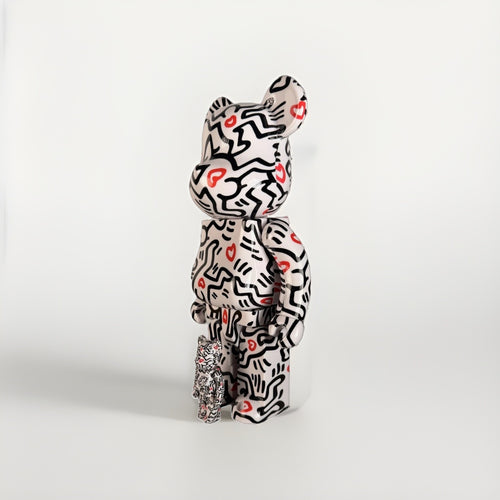
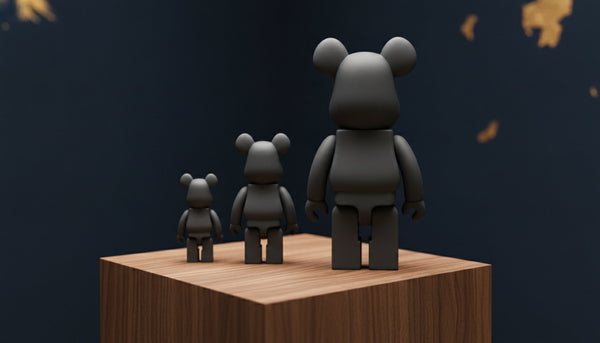
The BE@RBRICK (styled with the "@" and pronounced "bear-brick") is a collectible figure produced by the Japanese company Medicom Toy, first released in 2001. Its body is a stylized, blocky bear built from a fixed set of interchangeable-looking parts, and it comes in standardized sizes measured in percentages: the common 100% (roughly 7 cm), the palm-sized 50%, and the display-dominating 400% and 1000% figures, among others. A frequent collector configuration is the "100% & 400% set," pairing a small and large figure in matching artwork.
Medicom releases BE@RBRICK in two broad ways. The Series line is sold as blind boxes — you buy sealed and do not know which figure you'll get, with rarer chase figures seeded at low odds. The collaboration line is where most of the collectible value lives: standalone releases created with an artist, fashion house, brand, film, or musician, usually in larger sizes and with a defined (often unstated but effectively limited) production run. This article is about that second category. If you want the mechanics of the blind-box Series line and how to read series numbers, see our companion piece on Medicom BE@RBRICK series numbers and blind-box odds.
The distinction matters for value because the two lines behave differently. Series blind-box figures are, by design, produced in volume and distributed broadly; even the chase figures within a series are scarce relative to their own set rather than genuinely rare in absolute terms. Collaborations, by contrast, are the pieces Medicom builds around a specific partner and moment — and because those partners bring their own audiences and their own cultural weight, collaborations are where cross-market demand, and therefore durable value, concentrates. When collectors talk about a BE@RBRICK "holding value," they are almost always talking about a collaboration, not a Series pull.
The Five Drivers of BE@RBRICK Value
Almost every question a collector or investor asks about a BE@RBRICK comes down to five factors. Weigh them together — no single one guarantees a hold or a fade.
| Driver | Holds value when... | Fades when... |
|---|---|---|
| Scarcity | Genuinely limited run, lottery-only distribution, event or region exclusivity, or a design never reissued | Widely available, repeatedly restocked, or the same design is recycled in later drops |
| Brand / artist weight | Blue-chip artist estate, iconic fashion house, or a franchise with multi-generational demand | A brand with a short cultural half-life or a promotional tie-in with little collector following |
| Size | 1000% and clean 100%+400% sets in the marquee colorway | Loose 100% singles from common collaborations; oddball sizes with thin demand |
| Condition | Sealed or mint, unopened box, no sun-fade, no shelf wear, all inserts present | Yellowed plastic, crushed box, scuffs, missing accessories, or displayed under UV light |
| Completeness | Original box, blister/tray, hangtags, and any card or COA all present | Figure only, "box not included," or a set broken up and sold as singles |
1. Scarcity is the engine — but read it carefully
Scarcity is the single strongest predictor of whether a BE@RBRICK holds value, but collectors often misread it. Medicom rarely publishes production numbers, so "limited" is frequently inferred rather than stated. True scarcity shows up in a few recognizable forms: distribution by Japanese lottery (chusen), where demand vastly exceeds supply; exclusives tied to a specific store, city, exhibition, or event; and one-and-done designs that Medicom never revisits. Watch for the opposite signal too — a design that gets re-released in new colorways or sizes dilutes the original, and heavy restocking quietly caps upside. Perceived scarcity that turns out to be a large run is the most common reason a hyped release fades.
2. Brand and artist weight determines the ceiling
The collaborating name is what carries a BE@RBRICK beyond toy-collector circles into the broader art and fashion markets — and that crossover is where durable demand lives. Releases tied to blue-chip contemporary artists and their estates, to fashion houses with deep archival cachet, and to franchises with multi-generational fan bases tend to have the widest, most patient buyer pool. When demand comes from several communities at once — toy collectors, art buyers, and brand loyalists — a piece has more places to find a bid when you sell. Conversely, a tie-in with a brand that is culturally hot for one season but has no collecting tradition behind it usually cannot sustain a premium once the novelty passes.
3. Size shapes both demand and display value
Size is not just physical scale; it is a proxy for how the piece functions in a collection. The 1000% is a floor-standing statement object and typically the most sought-after (and most expensive) format for a marquee collaboration. The paired 100% & 400% set is the collector default and the most liquid configuration for most releases. Loose 100% singles from common collaborations are abundant and rarely appreciate. When you evaluate a collaboration's value trajectory, always specify the size — a headline about "a Warhol-estate BE@RBRICK holding value" can be true for the 1000% and untrue for a loose 100%.
4. Condition can make or break a mid-tier piece
Designer toys are graded on the box, the blister or tray, and the figure — all three. The most common value-killer is plastic yellowing from UV exposure, especially on white and light figures displayed on open shelves near windows. Box condition matters more here than in many collectibles categories: a crushed corner or a price sticker that tore the printing can meaningfully reduce a sealed piece's value. For a full framework, see our guide to designer-toy grading and condition.
5. Completeness is quietly decisive
A BE@RBRICK is worth the most as it left the factory: figure, box, tray or blister, any hangtags, and cards. "Figure only" listings sell at a discount, and the gap widens as the collaboration climbs in desirability. Completeness also interacts with the sealed-versus-opened question — sealed pieces command a premium precisely because they guarantee completeness and untouched condition. We cover that trade-off in depth in sealed vs. opened designer toys and how condition changes value.
The Three Collaboration Types — and How They Age
BE@RBRICK collaborations fall into three broad families. Each ages differently, and knowing which family a release belongs to tells you a lot about its likely trajectory before you ever look at a comp.
Artist collaborations
Releases built around a fine artist — living or via estate — are the category most likely to hold and grow value, because they draw the art market's patient, deep-pocketed buyers on top of toy collectors. The value here tracks the artist's broader standing: a figure carrying the imagery of an internationally collected artist behaves more like an art multiple than a toy. The durable winners tend to be the ones where the collaboration is genuinely representative of the artist's signature work rather than a throwaway logo application. When an artist's primary-market prices rise, associated BE@RBRICKs often follow, and estate-controlled releases can benefit from a fixed, non-renewable supply.
Fashion-house collaborations
Luxury and streetwear collaborations are the most volatile family. The strongest ones — heritage houses with archival depth and streetwear labels with genuine collector cultures — can hold value well, especially in larger sizes and marquee colorways, because they pull in fashion buyers who treat the figure as a brand object. The weaker ones are promotional: a figure produced in quantity to support a product launch, given away or sold cheaply, with no scarcity and a fan base that evaporates when the season ends. The tell is distribution — a lottery-only or boutique-exclusive fashion BE@RBRICK behaves very differently from one that sat on shelves.
Franchise and entertainment collaborations
Film, anime, gaming, and music tie-ins are the widest-ranging family, and outcomes here depend almost entirely on the depth of the underlying fandom. A franchise with multi-generational, global demand can support a durable collector base; a movie tie-in for a title that fades from cultural memory usually does not. Music collaborations can be strong when the artist has a devoted collecting following. The risk in this family is oversupply: entertainment tie-ins are sometimes produced in larger runs to meet mass fan demand, which caps appreciation even when the property is beloved.
Which Ones Tend to Hold Value
Rather than name specific releases and risk stale or wrong figures, here is the profile of a BE@RBRICK collaboration that has historically held or grown in value. The more of these boxes a piece ticks, the stronger its case:
- A blue-chip artist or heritage brand with demand outside toy-collecting circles.
- Constrained distribution — lottery, exclusive, event-only, or a single non-reissued run.
- A marquee size — the 1000%, or a clean, complete 100%+400% set in the primary colorway.
- Sealed or mint condition with the original box and all inserts.
- A design central to the collaborator's identity, not a generic logo drop.
- A track record of cross-market demand — the piece appears at auction houses and specialist dealers, not just flip platforms.
Which Ones Tend to Fade
The fade profile is essentially the inverse, and it describes the large majority of BE@RBRICK production. Recognizing it protects you from paying a hype premium that will not survive:
- Wide, restocked distribution — the figure was easy to buy at retail and stayed in stock.
- A short-cultural-half-life brand or a promotional tie-in with no collecting tradition.
- Loose 100% singles from common collaborations, sold without box or inserts.
- Condition problems — yellowing, box damage, sun-fade, missing accessories.
- A recycled design that Medicom reissued in later colorways or sizes, diluting the original.
- Pure momentum — a price spike driven by a single sold-out drop rather than sustained, multi-community demand.
Reading a Collaboration Before You Buy: A Practical Checklist
When a new collaboration drops or you find one on the secondary market, you can size up its likely trajectory in a few minutes by working through the questions below. None is decisive alone, but together they build a realistic picture that keeps you from overpaying on hype or underestimating a genuinely scarce piece.
- Who is the collaborator, and do they matter outside toy circles? A blue-chip artist estate or a heritage fashion house brings buyers the toy market alone never would. A promotional partner with no collecting following brings none.
- How was it distributed? Lottery, exclusive, or event-only distribution signals real scarcity. A general retail release that stayed in stock signals the opposite, regardless of how quickly the first batch sold.
- What size is it, and is it complete? Specify 100%, 400%, 1000%, or a set. A loose 100% and a complete 1000% of the same design are effectively different assets.
- Is the design central to the collaborator's identity? A figure carrying an artist's signature imagery ages far better than a generic body with a logo stamped on it.
- Has Medicom reused or reissued the design? Recycled artwork and repeated colorways dilute the original and cap upside. A one-and-done design protects scarcity.
- Where does it trade? If a collaboration shows up at auction houses and specialist dealers rather than only on flip platforms, that cross-market presence is a durable-demand signal.
- What condition is it in, and is the box intact? Sealed, mint, no yellowing, undamaged box, all inserts — for higher-tier pieces this is the difference between a strong and a weak resale case.
Run this checklist consistently and you will find that the answers cluster: the pieces that pass most of it are the same ones that historically hold value, and the ones that fail it are the wide, restocked, condition-compromised majority. The discipline is in applying the checklist even when a drop is generating noise — hype is loudest precisely when scarcity is most often shallow.
Common Mistakes That Cost Collectors Money
Even experienced buyers repeat a handful of errors in this category. Avoiding them is often more valuable than picking a single winner, because these mistakes compound across a collection.
- Mistaking a fast sell-out for scarcity. A drop can sell out in minutes and still be a large run. Sell-out speed measures launch-day demand, not long-run supply. Wait for restock signals before assuming a piece is genuinely limited.
- Breaking up sets. A 100%+400% set is usually worth more together than the two figures sold separately. Splitting a set to capture a quick sale on the larger figure often destroys value on both.
- Displaying in direct light. UV exposure yellows plastic and fades boxes. A white-body figure left on a sunny shelf can lose meaningful value in a year. Store scarce pieces away from windows and strong light.
- Discarding the box or inserts. The packaging is part of the asset. "Figure only" is a permanent discount. Keep everything the piece shipped with, in its original state where possible.
- Buying without provenance on high-value pieces. The most-faked BE@RBRICKs are the most valuable collaborations. On anything approaching serious money, buy from a seller who authenticates and stands behind the piece rather than gambling on photos.
- Chasing a brand's momentary heat. A brand that is culturally hot for one season but has no collecting tradition rarely sustains a premium. Demand needs a durable community behind it, not a viral moment.
Where to Buy and Sell Designer Toys That Hold Value
Because value in BE@RBRICK depends so heavily on authenticity and completeness, the marketplace you choose is part of the investment decision. The strongest venues share three traits: verifiable provenance, clear return and authentication policies, and a buyer base that understands what condition and completeness are worth.
| Venue type | Best for | What to watch |
|---|---|---|
| Specialist dealers / curated galleries | Marquee collaborations with authentication and a COA | Confirm the authentication standard and that packaging is included |
| Major auction houses | Blue-chip artist collaborations and rare 1000% pieces | Buyer's premium; read the condition report closely |
| Vetted platforms (StockX, eBay) | Common and mid-tier releases; price discovery | Seller history, photos of actual item, packaging status |
| Japanese marketplaces / proxies | Domestic-exclusive and lottery releases | Proxy fees, shipping, and no in-person inspection |
Whichever venue you use, the underlying principle is the same: pay for provenance and completeness, not just the figure. A curated dealer that stands behind authenticity removes the largest risk in the category — that you are buying a counterfeit or an incomplete piece dressed up as mint. You can browse authenticated pieces in our BE@RBRICK collection, and if you are new to the line, our BE@RBRICK buyer's guide walks through sizes, sets, and what to inspect before you buy.
Authentication: The Foundation Under Every Value Judgment
None of the five value drivers matter if the piece is not authentic. BE@RBRICK counterfeits exist, and they cluster around exactly the high-value collaborations discussed above — the ones worth faking. Genuine figures come with Medicom packaging and consistent markings; the details of box print quality, the figure's foot and body markings, and the correct inserts are what separate real from replica. Rather than rely on a single "tell," authenticate holistically: packaging, markings, provenance, and the reputation of the seller together.
At Gauntlet Gallery, applicable designer-toy pieces are backed by TrueCOA (truecoa.com), our house authentication program, a blockchain certificate so a buyer can verify a piece against its record online. We present TrueCOA as our standard of care, not as a manufacturer certificate — Medicom does not issue a per-figure "certificate of authenticity," so any listing claiming a factory COA for a BE@RBRICK should be treated with caution. For the broader framework on how we vet and stand behind pieces, see our collector trust hub.
Thinking Like a Collector, Not a Flipper
The collectors who do best in BE@RBRICK over time buy pieces they genuinely want to own, concentrate on the value-driver profile above, and treat completeness and condition as non-negotiable rather than optional. Flippers chasing the latest sold-out drop are exposed to the category's biggest risk: paying a momentum premium for a release whose scarcity turns out to be shallow. If you are weighing a purchase as much for appreciation as for enjoyment, our financial insights hub covers how we think about the collectibles market, comps, and long-run demand across categories.
It also helps to hold pieces long enough for the market to sort itself out. Designer-toy values are noisiest in the weeks around a drop, when momentum buyers and flippers set prices that do not always reflect long-run demand. The collaborations that genuinely hold value tend to reveal themselves over years, as the collaborator's broader standing settles and the shallow, restocked releases drift back toward release price. Patience is itself an edge in this category: it lets you buy after the hype has cooled and avoid paying the momentum premium that traps faster hands.
The honest summary is this: most BE@RBRICKs are affordable, fun, and roughly flat in value, and there is nothing wrong with owning them for that reason. A minority — defined by real scarcity, blue-chip collaborators, marquee size, and pristine, complete condition — behave like appreciating art objects. Learn to tell the two apart before you buy, insist on authentication and packaging, and choose a marketplace that protects you, and you will avoid the fades while giving yourself a real shot at the holds.