KAWS BFF vs Holiday vs Share: Which Companion Series Actually Matters to Your Collection?

Three series. Dozens of colorways. Hundreds of millions in secondary market movement. And a collector base that ranges from first-time buyers who just want something from the drop to serious institutional players building decade-long positions.
The KAWS Companion universe is not simple. It rewards people who understand the architecture.
BFF, Holiday, and Share are the three series that define the modern KAWS secondary market. They are related but distinct. They perform differently at auction, authenticate differently, and signal different things about a collection. Treating them as interchangeable is the fastest way to overpay for the wrong piece or undersell the right one.
Here is exactly how they differ, what to look for, and how to protect yourself on both sides of a transaction.
A Brief on the Companion Figure Lineage
KAWS — Brian Donnelly — introduced the Companion figure in 1999 as a limited vinyl toy, a reimagined Mickey Mouse silhouette with X-ed out eyes and a skull-like face. It was a graffiti-adjacent provocation that became a collectible, then a market category, then a cultural institution.
The original Companion went through multiple iterations before the ecosystem split into specialized sub-series. BFF emerged as a distinct character. Holiday and Share arrived as thematic frameworks applied across multiple figure types.
So are these really separate series, or just marketing names for the same product in different boxes?
That question is worth taking seriously. The answer matters enormously for how you think about authentication, secondary market pricing, and long-term positioning.
The BFF Series: Character First, Collectible Second

What BFF Actually Is
BFF is a character, not a release format. Donnelly introduced BFF in 2017 as a distinct figure — rounder, more childlike than the classic Companion, with a larger head, simplified limbs, and that familiar XX eyes treatment. The character reads as companion-to-the-Companion. Smaller. More vulnerable. More immediately appealing to a broader demographic.
That was strategic. BFF opened the KAWS collecting universe to people who found the original Companion slightly menacing. It arrived as KAWS was scaling from toy-collector niche to mainstream luxury collectible, and BFF was the entry point designed for that expansion.
BFF Release Architecture
BFF releases have followed a consistent pattern: limited colorway drops through KAWS:HOLIDAY collaborations, standalone vinyl releases, plush variants, and occasional large-format pieces. The plush versions — particularly the oversized variants — became one of the most-discussed collectible categories of their era.
The release mechanism matters here. Most BFF pieces came through the KAWS:HOLIDAY app-based drops or through specific retail partners. Understanding which channel a piece came from is the first authentication variable you need to establish.
BFF Colorway Hierarchy
Not all BFF colorways are equal. The market assigns significant premiums to early colorways and to releases tied to specific geographic or cultural events. Within the BFF line:
- Original launch colorways carry historical premium
- Compare the exact KAWS release, colorway, pose, edition and condition using dated completed sales. Broad archive totals and another edition’s performance do not establish an item’s resale value.
- Plush variants trade differently than vinyl — condition matters far more for plush
- Size variants within the same colorway often reflect a 2x-4x price differential based on scale alone
Does colorway preference drive your buying, or does release scarcity?
Those are two different collecting logics. One is aesthetic. One is market-structural. The strongest positions usually reflect both.
The Holiday Series: Location as Provenance
The Holiday Framework
KAWS:HOLIDAY is the release framework, not a single product. Starting with the inflatable Companion installation in Hong Kong's Victoria Harbour in 2019, Holiday became the umbrella under which KAWS staged large-scale public art events in specific cities, paired with limited collectible releases tied to each location.
Seoul. Taipei. Singapore. New York. Each event produced location-specific editions. The collectible and the event are inseparable — which is the entire point of Holiday's market positioning.
You are not just buying a figure. You are buying a timestamp and a geography. That specificity is what Holiday editions carry that standard Companion releases do not.
Holiday Vinyl vs Holiday Plush
Holiday releases span multiple formats. The vinyl figures follow standard KAWS edition architecture: specific colorways, numbered editions where applicable, original packaging with hologram sticker and Medicom release documentation for pieces where Medicom was the production partner.
The plush versions — particularly the large-format Holiday Companions — operate on different market dynamics. Condition grading for plush is brutal. Tags must be intact. The inner bag must be present. Any compression marks, tag folds, or storage damage will crater secondary market value regardless of how limited the release was.
Vinyl is more forgiving. Plush is not.
Why Holiday Editions Hold a Structural Premium
The geographic specificity creates artificial scarcity that goes beyond edition limits. A collector in Seoul who attended the Holiday event has a provenance story attached to their piece that a secondary market buyer simply cannot replicate. That narrative premium is real, and it survives in the secondary market as long as provenance documentation accompanies the piece.
Original purchase receipts from the event, original packaging, and any event-specific collateral (bags, cards, inserts) should travel with a Holiday piece. The moment that documentation separates from the figure, you lose the provenance premium and retain only the edition premium. Those are not the same number.
The Share Series: The Most Misunderstood KAWS Release Category

What Share Actually Represents
Share is the most recent major series architecture in the KAWS collectible ecosystem, and it is the most frequently misread by buyers entering the market.
Share figures revisit the Companion form with a specific visual modification: the figures are presented as holding or interacting with the BFF character in a pose that suggests protection or connection. The series title is not incidental — it signals a thematic statement about relationship and care that Donnelly has made explicit in the work's context.
Is Share just a marketing refresh, or does it represent a genuine expansion of the Companion character vocabulary?
The secondary market has already voted. Share editions command meaningful premiums over comparably sized standard Companion releases from the same period, which suggests the market is treating Share as a distinct character event rather than a colorway variant.
Share Release Mechanics
Share releases came through the KAWS app drop system primarily, with some retail partner allocations. The app-based drop record is part of the piece's provenance chain. When a Share figure cannot be traced to an app drop or authorized retail release, that absence is a red flag — not a dealbreaker by itself, but a verification trigger.
Share pieces produced in partnership with Medicom carry the standard Medicom release authentication architecture: original packaging, hologram sticker, and release record cross-reference. The molded foot stamp and copyright markings should also match the documented release exactly.
Authentication: Where the Three Series Diverge Most Sharply
The Medicom Authentication Stack
KAWS authentication is a stack of physical checks, not a single document. Packaging quality, the hologram sticker, the molded foot stamp (© KAWS plus year), paint application and crisp detailing, and weight and density all have to agree with the documented release. There is no gray area. A soft or misplaced foot stamp, an off-weight figure, or a hologram that does not match the release — any one of these is disqualifying.
Beyond the figure itself, the authentication framework relies on:
- Original packaging integrity — box condition, sticker placement, factory seal where applicable
- Hologram sticker verification — placement, holographic qualities under light, tamper evidence
- Medicom release record cross-reference — the specific edition should appear in Medicom's production records for that release
- Provenance chain documentation — original receipt, app drop record, or verifiable chain of ownership
The absence of original packaging is not automatically disqualifying, but it does shift the authentication burden substantially onto the remaining three elements. If packaging is missing and provenance documentation is thin, you are buying on faith. That is a position you want to price accordingly.
BFF-Specific Authentication Notes
BFF plush releases have a specific authentication vulnerability: the sewn-in tag. The original BFF plush tags have specific font, printing quality, and stitching characteristics that counterfeit versions get wrong. The tag should not be removable without visible damage to the stitching. Any tag that appears to have been reattached, or that shows clean edges where cutting and re-sewing occurred, is a significant red flag.
For vinyl BFF figures, the base plug and the figure's seam quality are primary physical authentication indicators. Counterfeit BFF vinyl consistently fails on base plug fit and seam precision.
Holiday-Specific Authentication Notes
Holiday pieces with location-specific packaging have additional authentication layers: the packaging itself contains location-specific design elements that are difficult to replicate accurately. Know the specific packaging design for the city edition you are evaluating. Regional variations in packaging are documented and verifiable.
Holiday plush figures have the same tag authentication requirements as BFF plush, with the addition of inner bag verification. The inner polybag for Holiday plush releases has specific printing and material characteristics.
Share-Specific Authentication Notes
Share figures are newer, which cuts both ways. The counterfeit market has had less time to mature, which means fakes are currently easier to identify. However, newer pieces also have thinner provenance chains and fewer established references for verification. The hologram sticker, foot stamp, and release record cross-reference are your primary authentication tools for Share. Do not waive them.
Secondary Market Performance: A Structural Comparison

How Each Series Trades
These three series trade differently on the secondary market, and understanding the structural differences will prevent you from applying the wrong pricing model to a transaction.
| Series | Primary Market Driver | Condition Sensitivity | Documentation Weight |
|---|---|---|---|
| BFF (Vinyl) | Colorway scarcity | Moderate | Moderate |
| BFF (Plush) | Size / colorway | Very High | High |
| Holiday | Geographic edition | High | Very High |
| Share | Edition scarcity | High | Very High |
The Plush Problem
Worth addressing directly: KAWS plush — across all three series — has become one of the most volatile segments of the collectible market. Condition collapse is severe and rapid. A plush figure that stored compressed, that was displayed out of its bag, or that experienced any humidity exposure will see secondary market value drop substantially compared to a mint-in-bag equivalent.
Vinyl is forgiving of light display time in stable conditions. Plush is not. If you are buying plush as a long-term position, it needs to be stored correctly from the moment it enters your possession.
Edition Limits and What They Actually Mean
KAWS releases have ranged from open editions to extremely tight limited runs. Within each series, the edition structure varies by release. Do not assume all Holiday editions are limited just because Holiday carries a premium connotation. Some Holiday releases were broader open editions that drove the visual brand of the event without functioning as scarce collectibles.
Know the specific edition structure of the specific release you are evaluating. This is non-negotiable research before any significant purchase.
Building a Position Across Series
The Case for Series Diversification
A collection that holds only one series is an undiversified position. Not because diversification is academically correct, but because the three series have different demand structures. BFF draws from a broader, more casual collector base. Holiday draws from geographic collector communities and event-driven buyers. Share draws from core Companion collectors who track the character's conceptual evolution.
When one demand segment softens, the others often hold or strengthen. That is not guaranteed — a broad KAWS market correction would affect all three — but it is a real structural cushion.
Entry Points by Collector Profile
For collectors entering the KAWS secondary market for the first time:
- Start with a BFF vinyl piece in a documented colorway — lower entry cost, established secondary market, authentication is relatively straightforward
- Avoid BFF plush as a first purchase unless you can verify storage history completely — condition risk is too high for an inexperienced buyer to evaluate accurately
- Holiday editions are strong second purchases once you understand the provenance documentation requirements
- Share should be purchased with full physical verification as a non-negotiable condition — do not pay Share premiums for a piece that cannot be matched to its documented release
For established collectors looking to upgrade positions:
- Focus on Holiday editions with full event provenance documentation — this is the category where documentation creates the largest value differential
- Evaluate Share colorway scarcity against comparable Companion releases — the premium should be justified by edition limits, not just series designation
- BFF plush in verified mint-in-bag condition from documented original purchase represents one of the stronger asymmetric positions in the current market
Red Flags
Across all three series, these are the signals that should stop a transaction until resolved.
-
NFC chip absent on pieces where chip deployment is documented
Not missing — absent. Recent KAWS:HOLIDAY releases (roughly 2022 onward) ship with an NFC authentication chip. If one of those releases comes without its chip, the explanation matters. "I removed it for safe keeping" is not a valid explanation. Chips are paired to pieces. Removing them destroys the authentication link.
-
Hologram sticker placement inconsistency
Know where the hologram should sit on the packaging for the specific release you are evaluating. Misplacement, size variation, or a hologram that does not exhibit proper light-shift characteristics is disqualifying.
-
BFF plush tags with any evidence of removal and reattachment
Original stitching should be continuous and consistent. Any variation, thread color change, or edge that reads as cut-and-resewn should be treated as a counterfeit indicator until proven otherwise.
-
Holiday editions without location-specific packaging, explained as "display removed"
Holiday provenance premium lives partly in the packaging. A Holiday edition separated from its location-specific packaging is not a complete piece for the purposes of secondary market valuation. Price it accordingly or decline.
-
Prices significantly below established secondary market comparables
The KAWS market has deep price visibility. There is no version of a genuine, well-documented Share or Holiday piece that should be trading at 40-50% below market comparables. Significant underpricing is a fraud indicator, not a deal indicator.
-
Provenance chain that begins with "I bought it from a reseller who got it from the drop"
That sentence describes a completely unverifiable provenance chain. App drop records exist. Original purchase confirmations exist. "A reseller" is not documentation. Push for the actual chain or price the opacity into your offer.
-
PSA certification without corresponding physical authentication of the piece itself
PSA certification-verification warnings are real and relevant here. A certification number that cannot be verified through PSA's online verification system, or that returns information inconsistent with the piece being offered, is a serious problem. Always verify certification numbers directly through the issuing authority's system, not through the seller's documentation.
-
Counterfeit base plugs on vinyl BFF
The base plug on original KAWS vinyl is precision-fit. It should not rattle, rock, or show visible gap between plug and figure base. Any of these conditions on a vinyl BFF warrants physical examination against verified authentic reference examples before proceeding.
Bottom Line
BFF, Holiday, and Share are not interchangeable product lines with different names. They are distinct market categories with different authentication requirements, different provenance structures, and different demand drivers.
BFF is the broadest entry point and the most accessible secondary market. Holiday carries geographic and event-based provenance premium that only survives if the documentation chain is intact. Share is the most authentication-sensitive of the three, and the full verification stack — hologram, foot stamp, release record — is not optional.
The collectors who build strong positions in the KAWS secondary market do not buy series names. They buy documented, verified, condition-appropriate pieces at prices that reflect what the documentation actually supports.
The collectors who get burned buy the story. The ones who win buy the evidence.
Know which one you are doing before the transaction closes.
Frequently Asked Questions
Q: Is BFF considered a Companion figure, or is it a completely separate character?
BFF is a distinct character within the KAWS universe, not a Companion variant. Companion predates BFF by nearly two decades, and while they share visual DNA — XX eyes, rounded forms — BFF has a different proportional structure and a different narrative role in Donnelly's work. The secondary market treats them as related but separate, and you should price and authenticate them accordingly. Do not conflate edition data from Companion releases to justify pricing for BFF pieces.
Q: Do all KAWS Holiday pieces require NFC chip authentication?
No. NFC chips were not in place for the earliest Holiday releases — they appear on releases from roughly 2022 onward. Earlier Holiday pieces authenticate through original packaging integrity, release record cross-reference, hologram sticker verification, and provenance chain documentation. For Holiday releases that ship with an NFC chip, the chip is required for full authentication. Know the release date of the specific piece you are evaluating and determine which authentication framework applies.
Q: Why does Holiday plush command such different prices from Holiday vinyl within the same release?
Format and condition dynamics. Vinyl holds condition more reliably across time and storage variations. Plush is highly condition-sensitive — tag integrity, bag integrity, storage history, and absence of any compression or humidity exposure all affect secondary market value significantly. Within the same Holiday release, mint-in-bag plush in verified original condition can command substantial premiums over comparably documented vinyl pieces, but the variance in the plush market is also much wider because condition collapse is so severe. You are essentially buying a narrow band of perfect-condition pieces when you buy plush at premium prices.
Q: Can I authenticate a Share figure on the original box and hologram alone?
No. Original packaging and hologram are necessary but not sufficient. The foot stamp, paint quality, weight, and release record cross-reference complete the stack, and provenance documentation anchors it. A Share figure with intact original packaging and hologram but no verifiable provenance should not be purchased at full authenticated value. The gaps in its history need a compelling, independently verified explanation before you proceed, and even then, you are accepting authentication risk that should be reflected in your offer price.
Q: How do I verify a Medicom release record for a KAWS piece?
Medicom's production records for KAWS releases are not publicly searchable in real-time by end collectors. Verification typically happens through established dealers with Medicom relationships, through auction house specialist desks, or through direct inquiry with documented provenance. What you can verify independently: whether the specific colorway and edition structure you are being offered aligns with documented release information from verifiable secondary sources — auction records, established collector community databases, and gallery documentation. If the piece being offered does not appear in any documented release record, that is a significant red flag regardless of what the seller tells you about its origin.
Q: Are there geographic edition Holiday pieces that are definitionally more valuable than others?
The secondary market has expressed clear preferences, though these shift over time with collector demand. Generally speaking, earlier Holiday locations that established the series carry historical premium. Locations with smaller event attendance and correspondingly tighter local allocation tend to perform well. The key variable is not just geography — it is the intersection of geographic specificity, edition limit, and intact provenance documentation.
Q: What is the most common authentication mistake buyers make with BFF plush?
Accepting tag presence as evidence of tag authenticity. Counterfeit BFF plush operations have become sophisticated enough to include tags that pass casual inspection. The errors appear under close examination: font inconsistencies, printing quality variations, stitching that differs from original factory attachment, and tag dimensions that are slightly off. The solution is comparison against a verified authentic reference example, not assumption. If you are purchasing a high-value BFF plush without a reference comparison, you are accepting authentication risk that the market will price against you if you ever need to resell.
Q: Should I buy KAWS pieces that have been graded and encapsulated by a third-party service?
Encapsulation grading for KAWS vinyl and figures is a relatively recent development, and the market has not fully standardized around it the way the sports card market has around PSA grading. The relevant caution here tracks the PSA certification-verification warnings that apply broadly to collectible markets: always verify the certification number directly through the grading service's online system before transacting. A graded, encapsulated KAWS piece at a premium price is only worth that premium if the grade and certification are verifiable and the underlying piece's provenance chain survives encapsulation documentation. Grading does not replace provenance — it supplements it. Make sure you have both.
Shop KAWS
Explore current pieces available from the gallery.
-
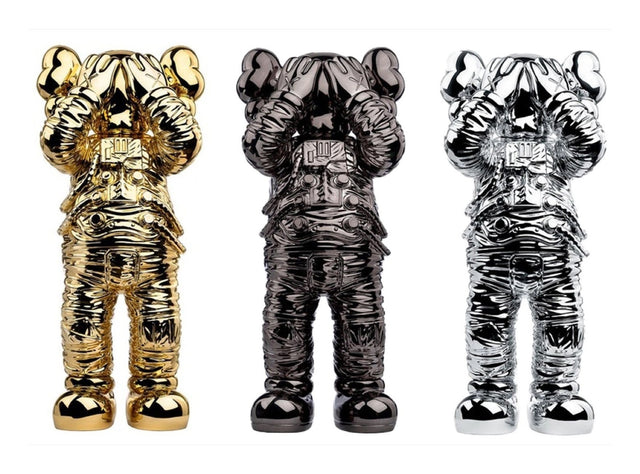
KAWS Holiday Space Set of 3 Gold Black Silver Companion Astronaut Figure Rare
$2,900.00 USD
-
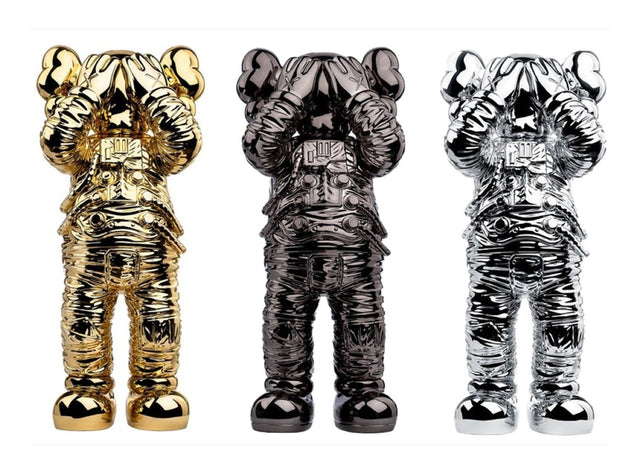
KAWS Holiday Space Set of 3 Gold Black Silver Companion Astronaut Figure
$2,900.00 USD
-
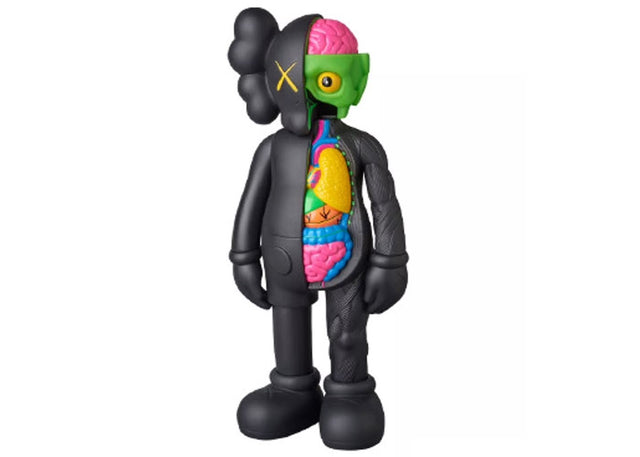
KAWS Companion Flayed Open Edition Black Medicom Toy Dissected Sealed New Figure
$599.00 USD
-
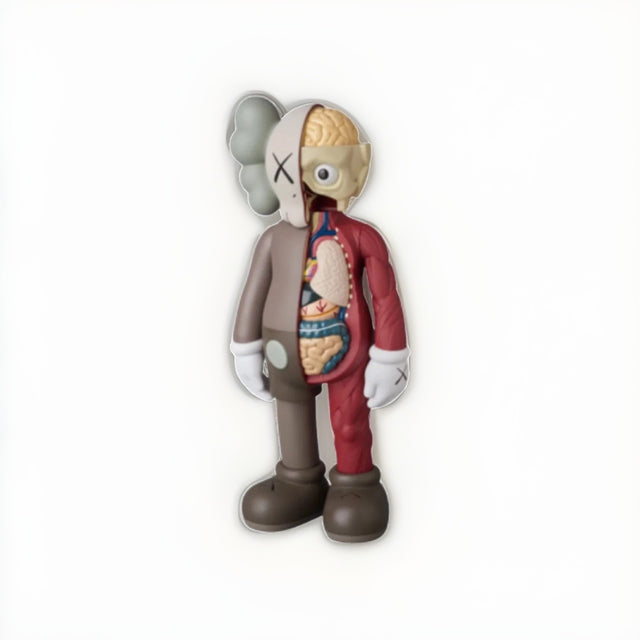
KAWS Companion Flayed Open Edition Brown Medicom Toy Dissected Sealed New Figure
$349.00 USD
-
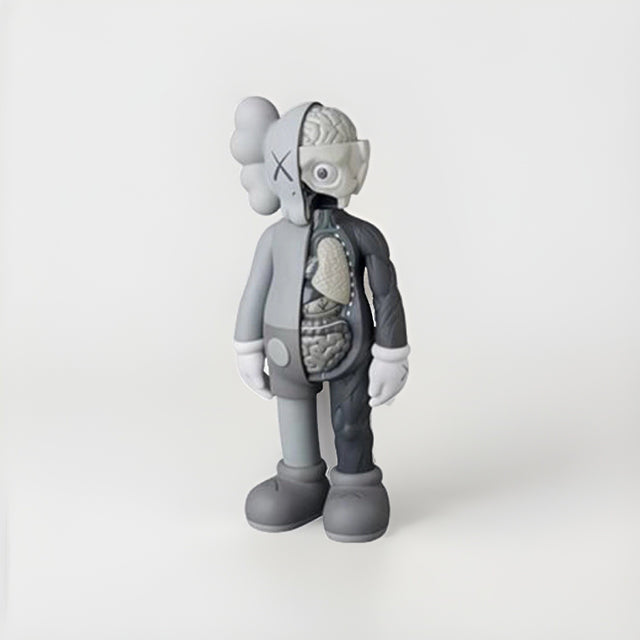
KAWS Companion Flayed Open Edition Grey Medicom Toy Dissected Sealed New Figure
$349.00 USD
Browse the collection for current listings.