The Price You See Is Not the Price You Pay

You found it. The print you've been hunting for six months. The estimate looks right. The opening bid is reasonable. You set your max, you win, and then the invoice arrives.
And it's nothing like what you expected.
Welcome to the real cost of buying at online-only auctions — a subject the platforms would rather you figure out after the hammer drops.
This isn't a hit piece on auction platforms. LiveAuctioneers, Invaluable, Bidsquare, Auction Ninja — they serve a real function in the secondary market. They aggregate inventory from thousands of regional houses and give collectors access to material that would otherwise never surface outside a local saleroom. That's genuinely useful.
But the fee structures at these platforms are layered in ways that experienced dealers understand and first-time buyers almost never do. The gap between hammer price and what actually leaves your bank account can be staggering — 35%, 40%, occasionally more, before you've even thought about shipping.
If you're building a collection on a budget, does it matter where an extra 30% goes?
It matters enormously. Let's break it down.
How the Fee Stack Actually Works
Every online auction transaction involves at least two parties charging you a buyer's premium: the platform and the selling house. Sometimes there's a third layer. Most buyers only account for one.
Layer One: The Selling House Buyer's Premium
The selling house — the regional auction company, estate liquidator, or specialty house running the sale — charges its own buyer's premium on top of hammer. This is standard practice everywhere, online or off. Major salerooms like Christie's and Sotheby's publish their premium schedules openly. Regional houses vary widely.
Use dated completed sales for the same artist, release, format and condition, recording the venue, currency and fees. Asking prices and broad archive totals do not establish a realized sale price or future return.
That's the baseline. Most buyers know to expect this. What they miss is everything else.
Layer Two: The Platform Fee
LiveAuctioneers, Invaluable, and their competitors are not neutral pipes. They're businesses, and bidding through their interface costs money — your money, added to the selling house's buyer's premium.
LiveAuctioneers has historically charged a separate online bidding fee of around 5% on top of whatever the house charges. Invaluable has operated similarly. These percentages shift; the platforms update their terms with some frequency, and the disclosed fee at the moment you register may not be the fee that applies to every category of sale.
When did you last read a platform's full terms before bidding?
This layered structure means a buyer's premium advertised as "20%" by the selling house can land in your invoice as 25% or 26% total, because the platform fee is calculated and added separately. Sometimes it's itemized clearly. Sometimes it's folded into a single line that reads "buyer's premium" without further explanation.
Layer Three: Payment Processing
Credit card transactions at many houses carry a surcharge — commonly 3% to 3.5%. Some houses waive this for ACH or wire transfer. Some don't disclose it prominently until checkout.
If you're buying across multiple lots in a single session, these surcharges compound.
The Tax Question
Sales tax application in online auction purchases is inconsistent and often misunderstood. Post-South Dakota v. Wayfair, online sellers have nexus obligations in states where they meet certain economic thresholds. How individual auction platforms and their partner houses handle this varies considerably.
Some collect and remit correctly. Some don't. Some apply sales tax to the hammer plus premium. Some apply it only to hammer. Some apply it to shipping as well.
If you're in a state with meaningful sales tax and buying a lot priced in the thousands, this is not a rounding error.
The Shipping Variable: Where Estimates Go to Die

Online auction listings almost universally post "buyer is responsible for shipping and handling." What that actually means in practice is wildly inconsistent.
Some houses use preferred shippers with negotiated rates and reasonable packing standards. Some use whoever's cheapest that week. Some have no internal shipping capability and require you to arrange a third-party art shipper, which in practice means reaching out to multiple vendors for quotes, waiting days for responses, and coordinating pickup windows with the house — all while your lot sits in a warehouse.
For large-format prints, framed works, or anything fragile, professional art shipping quotes routinely exceed what buyers anticipate. A print that hammers at a modest price can cost more to ship safely than the lot itself.
Have you ever had a work arrive damaged because the house used packing tape and a single sheet of bubble wrap?
Some buyers have. The claims process at that point is its own ordeal.
Storage fees are another exposure point that most buyers don't price in. Many houses impose daily or weekly storage charges if you don't arrange pickup or shipping within a defined window — sometimes as short as five to seven business days. These fees can accumulate quickly, particularly if you're coordinating shipping for multiple lots across multiple houses simultaneously.
The Authentication Gap No One Talks About
This is where online-only auction buying gets genuinely dangerous for collectors of contemporary and street art, sports memorabilia, and vintage entertainment pieces.
Regional auction houses operating through LiveAuctioneers or Invaluable are selling volume. They're moving estate contents, liquidating collections, processing consignments from sources they may not have fully vetted. Their cataloguing standards vary enormously. Their ability to authenticate what they're selling often varies even more.
A listing that reads "signed print, attributed to [artist name]" carries almost no evidentiary weight. An included COA from a source you don't recognize carries even less.
What Proper Authentication Actually Requires
The authentication standards that matter are specific to the artist or category:
- Banksy: Pest Control only. Full stop. There is no other recognized authentication body for Banksy's work. A COA from any other source — gallery, auction house, previous owner — is not authentication. Gauntlet Gallery does not claim Pest Control authentication for works we haven't sourced accordingly.
- Shepard Fairey: No artist-issued COA exists. Authentication relies on the signature itself, correct edition numbering, cross-referencing with documented Obey Giant drop records, and a clean provenance chain back to a verifiable release. If a regional house is selling a "signed Fairey" with a COA from an unknown third party, that COA is decoration.
- KAWS: The documentation standard is original packaging, Medicom hologram presence, and traceable release record. An online auction listing a KAWS figure with a "certificate of authenticity" and no mention of these specifics is listing something you cannot properly verify through the listing alone.
- Warhol: The former Authentication Board no longer exists. Check provenance, catalogue and publisher records, and any historical opinion; a recent claim of a new Board submission is inconsistent with the Board’s closure. A supplied TrueCOA record is item-specific documentation, not a new Board opinion.
- Music memorabilia: The tier that carries weight in the secondary market is Beckett Authentication Services (BAS) — specifically Roger Epperson REAL for music-specific items — plus JSA (James Spence Authentication) and PSA/DNA. Within BAS and JSA, note the distinction between a basic letter and a full Letter of Authenticity (LOA); JSA Basic and JSA LOA are not equivalent, and the difference matters when you go to resell. PSA itself has issued certification-verification warnings about counterfeit PSA labels appearing in the market; always verify through PSA's online lookup, not the physical certificate alone.
- Space memorabilia: Same three authenticators (BAS, JSA, PSA/DNA) plus a Zarelli specialist letter for significant pieces. A regional house selling "astronaut-signed" material without any of these is selling something you are taking on faith.
- Death NYC: Artist-signed COA plus studio gold seal. Both required. One without the other is insufficient.
The relevant FBI context here: Operation Bullpen, the multi-year federal investigation that dismantled a large-scale sports memorabilia forgery ring, demonstrated how deeply fake authentication documents had penetrated the secondary market. The investigators found not just forged signatures but entire ecosystems of supporting paperwork — fake COAs, fake provenance letters, fake auction records — all designed to make forgeries look legitimate.
That operation is over twenty years old. The lesson it taught has not fully landed across the regional auction sector.
If a lot comes with a COA from an authenticator you've never heard of, who authenticated the authenticator?
The Condition Reporting Problem

Condition reporting standards in online auction cataloguing are inconsistent to the point of being unreliable as a decision-making tool.
Major houses have standardized condition report language, trained specialists, and established liability frameworks. Many regional houses operating through online platforms do not. "Good condition for age" is not a condition report. "Minor wear consistent with display" can mean anything from trivial surface marks to significant structural issues that aren't visible in the listing photos.
Photos in online listings are frequently inadequate — shot in poor lighting, at angles that obscure problem areas, at resolutions that hide detail. Some houses upload four images for a work that needs twelve to assess properly.
The ability to request condition reports, additional photos, or in-person preview varies by house. Some are responsive and thorough. Many are not, particularly in the days immediately before a sale when staff attention is elsewhere.
Buying "sight unseen" at online auction isn't inherently reckless, but it requires a level of due diligence that the platform interfaces don't actively encourage. The interface is designed for speed and volume, not deliberation.
The Reserve and Estimate Game
Online auction estimates are marketing tools as much as they are analytical assessments.
A low estimate drives traffic and creates excitement. A work estimated at a fraction of its plausible secondary market value generates more bids, more competition, and often — but not always — a higher hammer. For the house and the consignor, this can be a smart strategy. For the buyer who researches comparables at estimate level and bids accordingly, it can be disorienting.
Conversely, some regional houses set estimates based on optimistic replacement value rather than realistic secondary market data. The estimate looks compelling but the reserve sits at a number the market won't support, the lot passes, and the buyer who was prepared to bid at estimate has wasted their research time.
Reserve disclosure varies. Some houses disclose reserves; many don't. The platform interfaces generally don't surface this information at the lot level.
Is an estimate from a regional house that catalogues primarily furniture and silver a reliable guide to market value for a contemporary print?
Frequently, no.
When Things Go Wrong: Dispute Resolution

Dispute resolution in the online auction context is complicated by the fact that you're often dealing with two parties simultaneously — the platform and the selling house — who may point at each other when problems arise.
Platform terms generally place responsibility for lot condition, authenticity, and title on the selling house. The platform's liability is typically limited to facilitating the transaction. If the lot you received is materially different from its description, you're pursuing a dispute with a regional auction house, not with the well-resourced technology platform that processed your payment.
Regional houses vary enormously in how they handle legitimate disputes. Some are professional and responsive. Others are difficult to reach, slow to respond, and inclined to point to "all sales final" language in their terms.
Chargeback through your credit card issuer is a recourse that buyers sometimes pursue, but it's not guaranteed to succeed, it damages your ability to bid with that house going forward, and it still doesn't resolve the underlying authentication or condition question — it just potentially gets your money back.
If you won a lot on a platform like LiveAuctioneers using their buyer guarantee program, understand exactly what that guarantee covers before you need it, not after.
Red Flags
Before you bid, these should give you pause:
-
Buyer's premium not clearly disclosed before registration. If you have to hunt for the fee schedule, that's deliberate.
- Look for total cost calculators on the listing page. Not all houses provide them.
- Calculate the full stack yourself: hammer + house premium + platform fee + payment surcharge + tax + shipping estimate.
-
COA from an unrecognizable source.
- Cross-reference against the authentication standards above for the specific artist or category.
- A COA from an unknown "authentication service" is not better than no COA; it may actively obscure the absence of legitimate authentication.
-
Listing photos that are insufficient for condition assessment.
- Request additional images before bidding. If the house doesn't respond before the sale closes, treat that as meaningful information.
-
No preview option disclosed and no condition report available.
- For any lot above a threshold you'd be uncomfortable losing, absence of either should be a hard stop.
-
Estimate dramatically below secondary market comparables.
- This is sometimes genuine opportunity. It's also sometimes an error in attribution, condition issues not disclosed, or title problems.
- Do the comparable research yourself, not in the listing's framing.
-
Vague provenance language.
- "From a private collection" is not provenance. "From a private New England collection" is not provenance. Provenance means a documentable ownership chain.
- For high-value lots, ask for documentation of prior ownership. If the house can't or won't provide it, price that risk into your bid ceiling — or don't bid.
-
No stated shipping policy or storage fee schedule.
- If the listing says "buyer responsible for all shipping arrangements" without further guidance, contact the house before bidding and get the specifics in writing.
-
Dispute resolution terms that are entirely one-sided.
- Read the terms. "All sales final" combined with a non-responsive dispute process is a meaningful risk for anything requiring authentication verification.
How to Protect Yourself Without Abandoning Online Auctions
The point isn't to avoid these platforms. The point is to use them with eyes open.
Build Your Total Cost Calculator Before You Bid
Before you place any bid, write out the full cost stack. Hammer estimate at your max bid. House buyer's premium. Platform fee. Payment surcharge if applicable. Estimated sales tax for your jurisdiction. Shipping estimate based on a direct inquiry to the house or a known art shipper for the lot dimensions and weight. Storage fee exposure if you can't arrange pickup quickly.
That number is your real ceiling. If it's not a price you'd pay for the lot with full knowledge, don't bid at the number that produces it.
Verify Authentication Standards Before the Lot Goes Live
Do this research on your timeline, not the auction clock's. Know what authentication you need for the specific category before you're staring at a lot that closes in four hours.
Use Platform Guarantee Programs Correctly
Understand what LiveAuctioneers' buyer guarantee actually covers and what its exclusions are before you rely on it. Platform guarantees are tools with specific parameters, not blanket protection.
Build Relationships With Houses You Trust
The online auction ecosystem contains excellent specialized houses that happen to use these platforms to extend their reach. Over time, identifying which houses have strong cataloguing, responsive staff, and fair dispute practices is more valuable than any single lot opportunity.
Know When to Buy Through a Dealer Instead
A dealer who specializes in the category you're buying has done the authentication work, the condition assessment, and the market comparables research that you'd otherwise have to do yourself — and carries professional liability for the representations they make. The margin built into dealer pricing often reflects real services that online auction platforms don't provide.
What's the cost of a 10% dealer margin versus the cost of a misattributed or damaged lot from a house that won't return your calls?
Bottom Line
Online auction platforms have democratized access to the secondary market in ways that genuinely benefit collectors. That's real.
But the fee structures are layered, the authentication standards are inconsistent, the condition reporting is unreliable, and the dispute resolution process is complicated by the two-party structure of platform-plus-house. None of this is hidden exactly — it's all disclosed somewhere in terms that almost no one reads before their first bid.
The collector who wins consistently in this environment is the one who does the math before the hammer drops, knows the authentication standards cold, and treats the platform interface as a discovery tool rather than a vetting mechanism.
The price you see is never the price you pay. Build that into every bid you make.
Frequently Asked Questions
What is a typical total buyer's premium when bidding through LiveAuctioneers or Invaluable?
The stack varies by house and platform, but buyers should routinely budget for a combined buyer's premium of 25% to 30% on hammer before sales tax, payment processing fees, and shipping. Some transactions land lower; some land higher. The safest approach is to pull up the specific house's premium schedule and the platform's current fee disclosure, add them together, and run your own calculation at your maximum bid before you register to participate.
Are buyer's premium fees negotiable on online auction platforms?
On the platform side, generally no — the platform fee is structural and applies uniformly to online bidders using their interface. On the house side, there is occasionally flexibility for high-value lots or established relationships, but this is the exception. If you're buying regularly from a specific house and the relationship has developed, it's worth a conversation. Don't expect it going in.
What's the difference between bidding online through a platform and bidding directly with a house?
If a house has its own online bidding portal independent of LiveAuctioneers or Invaluable, you may be able to avoid the platform layer of fees while still bidding remotely. Some houses run their own bidding infrastructure. Others use the platforms exclusively for online participants. It's worth asking the house directly whether there's a lower-fee participation pathway for serious buyers. Some houses also offer absentee and phone bidding options that carry different fee structures than live online bidding through a third-party platform.
How do I verify that a COA included with an online auction lot is legitimate?
Start with the authentication standard for the specific artist or category. Match what's being offered against what actually constitutes proper authentication for that work. A COA from an unrecognized source for a Banksy, for example, is irrelevant — only Pest Control authentication carries weight. For sports and music memorabilia, verify the specific authenticator's certification number through PSA's online verification tool, BAS's lookup system, or JSA's database. Remember the PSA-specific warning: counterfeit PSA labels have appeared in the market, so physical certificate inspection is not sufficient — verify the number online. For anything where the authentication documentation doesn't match the known standard for that category, treat the lot as unauthenticated regardless of what paperwork accompanies it.
What should I do if a lot I won arrives damaged or significantly different from its description?
Document everything immediately and thoroughly — photograph the outer packaging before opening, photograph the opening process, photograph the damage in context. Contact the selling house in writing within whatever timeframe their terms specify (this is often very short). Contact the platform's buyer support simultaneously if the platform offers a buyer guarantee that might apply. If the house is unresponsive, your next options are a credit card chargeback (if you paid by card) or, for significant amounts, formal dispute channels or legal recourse. The reality is that disputes resolved fastest are the ones where the buyer has complete contemporaneous documentation and contacted all parties immediately. Do not wait.
Is the estimate shown in an online auction listing a reliable guide to market value?
It's a data point, not an authority. Regional houses often estimate based on local market experience, replacement value, or comparable lot results from their own sales — none of which may reflect current secondary market values for specialized categories. For any category where you're spending meaningfully, do your own comparable research through relevant auction databases and dealer pricing. The estimate should inform your research starting point, not substitute for it. Be especially cautious of estimates that seem dramatically low — they may reflect genuine opportunity, undisclosed condition issues, or incorrect attribution.
Do I owe sales tax on online auction purchases?
In most cases in the United States, yes. Post-South Dakota v. Wayfair, economic nexus rules mean that online auction platforms and their partner houses generally have sales tax obligations in states where they meet activity thresholds. How individual houses and platforms apply this varies, and there are inconsistencies in practice. If you're buying from an out-of-state house and no sales tax appears at checkout, that doesn't mean you have no tax obligation — it may mean the house isn't collecting it, in which case use tax obligations in your home state may apply. For significant purchases, consult a tax advisor familiar with your jurisdiction's treatment of auction transactions.
When does buying through a dealer make more sense than bidding at online auction?
When the authentication requirements for a category are complex and the auction listing doesn't demonstrate proper compliance. When condition assessment requires in-person examination and the house offers no meaningful condition report. When the total cost stack at auction — premium, platform fee, tax, shipping, storage risk — closes the price gap between auction and dealer pricing. When you need recourse certainty: a reputable dealer's professional liability for the representations they make is a different standard than an auction house's "all sales final" terms. And when your time has real value — the research, verification, and logistics work of a complex online auction purchase is significant, and specialist dealers have already done much of it.
Available at Gauntlet Gallery
Explore current pieces available from the gallery.
-

1963 Farquhar Earth in Space Transparent Celestial Globe 16" Compass VTG
$699.00 USD
-

1967 Beatles Richard Avedon STERN Original Posters Set of 4 Linen Backed Copy
$999.00 USD
-
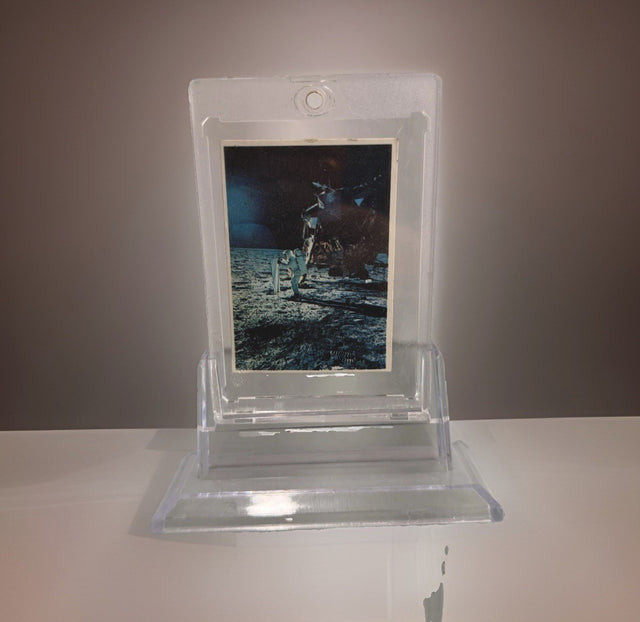
1969 Space Candy Buzz Aldrin Apollo 11 On The Moon Card #19 Taylor-Reed Display
$59.00 USD
-

1980 Polo Player Green Pink Chalk Pastel Bears Andy Warhol Signature AS-IS
$399.00 USD
-

After Andy Warhol Moon Landing Line Drawing 5/50 w/ Astronaut Autographs As-Is
$175.00 USD
-

After John Lennon "I Do" Framed Print, Marked A/P Unverified
$99.00 USD


Browse the collection for current listings.