The Real Cost of Selling at Auction: A Consignor's Walkthrough

Everyone talks about the buyer's premium. That's the number plastered across catalogues, announced at podiums, debated on collector forums. What almost nobody talks about — at least not clearly — is what the seller actually pays.
If you're thinking about consigning a piece, this walkthrough is for you.
Not the version the auction house's consignment specialist gives you over lunch. The real version. The one that explains why a hammer price that makes you feel good can still result in a net return that makes you feel sick.
We've walked clients through this process enough times that we can tell you exactly where the money disappears. Let's do that now.
First, Understand Who the Auction House Actually Works For
This is the foundational thing most consignors never fully internalize before signing a contract.
The auction house is a marketplace operator. It collects fees from both sides of a transaction. It is not your agent in the fiduciary sense. It is not a dealer working to maximize your return. It is a platform, and platforms extract value from transactions.
That's not a criticism. It's just the structure. Understanding it changes how you read every line of a consignment agreement.
The auction house has a relationship with the buyer too. The buyer pays a premium on the hammer price — typically ranging from the mid-teens to over twenty-five percent depending on the tier of sale and the house. That money goes to the house, not to you. You don't see any of it. It doesn't factor into your net. The hammer price is the ceiling of what you receive, not the floor of what someone paid.
So when a bidder wins a lot at a strong hammer, who actually won?
Now add the seller's side. Because there's a seller's side too.
The Seller's Commission: What It Is and How It's Structured

Most consignors focus on the hammer price. The auction house focuses on the spread between what the buyer pays and what the seller nets. That spread is where the house lives.
The Seller's Premium (Also Called the Vendor's Commission)
Yes, you pay a commission too. In traditional auction terminology this is the seller's premium or vendor's commission. It's separate from the buyer's premium. It comes out of your hammer price before you receive a cent.
At major houses, this rate is negotiable. At regional houses and online platforms, it often isn't. The listed rate can run anywhere from five percent to fifteen percent of the hammer price depending on the category, the estimated value, the consignor's relationship with the house, and how badly the house wants the lot.
High-value lots with strong provenance get more favorable terms. Low-to-mid-value lots from first-time consignors get standard rates. Often higher than you'd expect.
Some houses have moved to what they call a "no seller's commission" model. Read that contract carefully. In many cases, the buyer's premium has simply been increased to compensate, or other fees have been restructured. The house is not suddenly a charity. The economics have to clear somewhere.
Tiered vs. Flat Rate Commissions
Some houses apply a flat percentage to the hammer. Others use a tiered structure where the commission rate decreases as the hammer price increases. A piece that hammers in the mid-range might face a higher effective commission rate than a piece that hammers at the top of its estimate.
Ask for the tier structure in writing before you sign anything.
The Fees Nobody Volunteers to Explain
Commission is only the start. Here's where the walkthrough gets uncomfortable.
1. Photography and Catalogue Production
The auction house needs to photograph your piece for the catalogue, the website, and the marketing materials. At many houses, this fee is charged to the consignor. It can range from a modest flat fee to a meaningful percentage for high-profile or oversized works requiring specialist photography.
At top-tier houses, catalogue production fees for significant lots can reach into the hundreds. For a lower-value piece, that cost represents a real percentage of your net.
2. Insurance and Handling
While your piece is in the auction house's care — from intake through sale and settlement — it needs to be insured. Guess who pays for that insurance. In most standard agreements, the consignor bears the insurance cost, calculated as a percentage of the low estimate or the hammer price, depending on the house.
Handling fees for intake, condition reporting, and packing can add additional line items depending on the category and the house's operational model.
3. Withdrawal Fees
You sign the consignment agreement, the marketing goes out, the catalogue is printed, and then you change your mind or receive a private offer that makes more sense. You want to pull the lot.
There's a fee for that. Sometimes a significant one. Withdrawal fees are typically structured as a percentage of the low estimate and exist to compensate the house for marketing spend and opportunity cost. They are not symbolic. They are real deterrents.
Read this clause before you sign. Not after.
4. Buy-In Fees (Passed-In Lots)
If your lot doesn't sell — if the bidding doesn't reach the reserve — the lot is "bought in" or "passed." The piece comes back to you unsold. You might assume that means the whole experience was free. It wasn't.
Buy-in fees vary by house and agreement, but a standard structure charges the consignor a percentage of the reserve price when a lot fails to sell. You paid marketing costs, insurance, handling, and now a buy-in fee, and you still have the piece. This is one of the most painful outcomes in the secondary market, especially on a piece with a narrow audience.
What's the real cost of a lot that hammers below estimate versus one that doesn't sell at all?
5. Reserve-Setting Negotiations
Reserves are typically set at or below the low estimate at major houses. The auction house will often push for a lower reserve than you want, because a low reserve increases the likelihood of a competitive sale and a public result — which is good for the house's optics and bad for your floor.
If the hammer hits exactly at reserve, you netted reserve minus all fees. That number can look very different from what you imagined when you walked in with a high estimate in your head.
6. Settlement Timeline
You sell at auction. When do you get paid? Most major houses run a thirty-five-day settlement cycle after the auction date. Some run longer. If the buyer defaults or pays late, your settlement can extend further.
That's not a fee. But it's a real cost of capital you should factor into your decision between auction and private sale.
Building the Real Numbers: A Hypothetical Walkthrough

Let's walk through a realistic scenario without inventing specific figures. We'll use structure and percentages so you can plug in your own numbers.
Assume a piece estimated at a mid-range value. The house has quoted you a seller's commission of ten percent, which you've negotiated down from twelve. Standard photography and handling fees apply. Insurance is calculated on the low estimate. There's no withdrawal or buy-in scenario here — the piece sells at mid-estimate.
- Hammer Price: Your starting point.
- Less Seller's Commission (10%): First deduction off the top.
- Less Photography / Catalogue Fee: Flat fee deducted. Small in absolute terms, significant as a percentage on lower-value lots.
- Less Insurance (charged as % of low estimate): Another deduction.
- Less Any Handling / Intake Fees: Depending on the house's fee schedule.
- Net to Consignor: What actually arrives in your account five weeks after the gavel falls.
Now run the same math on a piece that sells at the low estimate. Then at reserve. The net erodes faster than most consignors expect because several of the fees are flat or calculated on estimate rather than hammer.
The buyer, meanwhile, paid the hammer price plus their buyer's premium. The auction house collected both the buyer's premium and your seller's commission. Two revenue streams from a single transaction.
When you see it laid out like that, does the auction house feel like a neutral platform?
What's Actually Negotiable (And What Isn't)
The good news: the seller's commission is often negotiable at established houses, particularly for high-value lots, consignors with history at the house, or lots that round out a thematic sale the house is building.
The leverage points are real.
What You Can Push On
- Seller's commission rate — this is the primary negotiation. Know the standard rate, have competitive context from other houses, and be willing to walk.
- Photography fees — on larger consignments or high-value lots, these are sometimes waived or capped.
- Reserve level — push for a reserve that protects your floor, but understand the house's counterargument about sale viability.
- Guarantee structures — for significant lots, some houses will offer a minimum guarantee irrespective of hammer. These come with their own complexity (third-party guarantors, profit-sharing arrangements above the guarantee level) but they fundamentally change your risk profile.
- Withdrawal terms — if there's a scenario where you might want the option to pull the lot, negotiate the withdrawal fee before you sign, not after.
What You Generally Can't Change
- The buyer's premium structure (that's the house's primary revenue mechanism and it's public)
- The settlement timeline for standard consignments
- The sale date and catalogue placement (though you can advocate for positioning)
- The condition report and provenance language (the house controls catalogue copy)
The Provenance and Authentication Factor

This is where auction economics intersect with something we care deeply about at Gauntlet Gallery: the documentation behind the work.
A lot that arrives with clear, verifiable provenance and proper authentication commands better estimates, better reserves, and more serious bidder interest. That directly affects your net. Not as a soft benefit — as a hard financial outcome.
Conversely, a lot with authentication gaps or provenance questions doesn't just estimate lower. It can fail to sell entirely, landing you with buy-in fees and a damaged market history for the piece.
The auction house's specialist will note authentication issues in their intake assessment. If they raise concerns, take them seriously. Resolving those issues before consignment — getting proper documentation in place — is almost always worth the time and cost.
The standards here are specific to category:
- Music memorabilia: Beckett Authentication Services (BAS) with the Roger Epperson REAL designation for music-specific items, JSA (distinguishing between the JSA Basic sticker and a full JSA Letter of Authenticity, which carry different weight), and PSA/DNA. All three are recognized. A lot with BAS LOA plus PSA/DNA travels better through auction than one with a single opinion letter from an unknown source.
- Street art and contemporary prints: Category-specific. Banksy requires Pest Control authentication — nothing else is accepted at serious houses. Shepard Fairey authentication relies on signature, edition numbering against known Obey Giant drop records, and provenance chain from original drop to present. There is no artist-issued COA for Fairey works. Death NYC works require the artist-signed COA plus the studio gold seal — both, not one or the other.
- Space memorabilia: BAS, JSA, and PSA/DNA are the baseline. For significant items, a Zarelli specialist letter adds a meaningful layer of provenance support that auction houses in this category increasingly expect.
- Andy Warhol works: The former Authentication Board no longer exists. Before consigning or buying, examine the actual work’s provenance, publisher and catalogue references and any historical opinion. An item-specific TrueCOA record does not replace that research or confer official Board authority.
FBI Operation Bullpen — the federal investigation into forged sports memorabilia that resulted in multiple convictions — established how catastrophically authentication failures propagate through the secondary market. Pieces with compromised or fraudulent certification history carry that taint forward. Auction houses know this. So do serious collectors. PSA has issued its own certification-verification warnings about counterfeit PSA slabs entering the market. The authentication layer is not administrative formality. It's the foundation your price is built on.
What's the cost of selling a piece at auction with a documentation gap versus spending six weeks resolving it first?
Auction vs. Private Sale: Running the Comparison Honestly
Auction has real advantages. Competitive bidding can push a price beyond what any private negotiation would reach. The public result creates a market record. The house's database of bidders reaches collectors you might never find on your own.
But private sale has advantages too. Lower transaction costs. Faster settlement. No public failure if the piece doesn't sell. No reserve pressure. No buy-in risk.
The honest comparison looks like this:
| Factor | Auction | Private Sale |
|---|---|---|
| Potential upside | High — competitive bidding can exceed expectations | Capped at negotiated price |
| Seller's cost | Commission + fees (significant) | Dealer margin or flat fee |
| Settlement speed | Typically 35+ days post-sale | Negotiable, often faster |
| Downside risk | Buy-in fees + market stigma on unsold lots | Deal doesn't close, no fees |
| Market record | Public result, positive or negative | Private, no public record created |
| Authentication pressure | High — house vets everything | Varies by buyer sophistication |
There's no universal right answer. The decision depends on the piece, the market moment, your timeline, and your risk tolerance. But it should be an informed decision, not one made because the auction house's consignment specialist had a compelling pitch over a good lunch.
Red Flags
These are the warning signs that a consignment arrangement is likely to work against you.
- The house won't provide fee structure in writing before you commit. Any house worth working with will give you a written fee schedule. Verbal assurances about "very competitive terms" with no written follow-through is a red flag at any tier.
- The estimate range is dramatically wide. A low estimate that's half the high estimate gives the house maximum flexibility to call the sale a success regardless of where the hammer lands. Push for a tighter range and understand what drives it.
- They're pushing you to sign quickly because the consignment deadline is imminent. Urgency is a sales tactic. A good lot can go into the next relevant sale. If the pressure to sign today is high, the question is who benefits from that speed.
- No mention of the buy-in fee until you ask specifically. If a house doesn't volunteer the buy-in structure during the consignment conversation, ask directly. If they're evasive, that's information.
- Authentication gaps the specialist is willing to overlook "for now." If the house is willing to proceed with documentation questions unresolved, they're betting on a hammer price that compensates for the risk. You're carrying that risk, not them.
- Guarantee offers with opaque third-party terms. Guarantees can be legitimate risk management tools. But third-party guarantee arrangements, where an outside investor backstops your reserve in exchange for a share of upside, can be complex. Make sure you understand exactly how the economics work above and below the guarantee level before accepting.
- Online platforms representing themselves as equivalent to established houses. Online auction platforms have expanded access to the market in real ways. But fee structures, buyer quality, and settlement reliability vary enormously. A "no seller's commission" platform may be recovering its costs through higher buyer's premiums that suppress competitive bidding — which affects your hammer.
Bottom Line
Auction is a powerful tool. It's not always the right tool, and it's almost never as straightforward as the hammer price suggests.
The real cost of consigning at auction is the seller's commission, plus photography, plus insurance, plus handling, plus the time-cost of a five-week settlement cycle, plus the downside scenario of a buy-in fee if the lot passes. On a piece that sells at mid-estimate, those costs can represent a meaningful percentage of what you walk away with.
The pieces that perform best at auction are the ones with tight provenance, clean authentication, and a genuine collector audience. Everything else is negotiation and risk management.
Know your fees before you sign. Know your reserve before you commit. Know your authentication before you hand the piece over. And know what private sale would net you, so you're making a real comparison, not a flattering one.
The auction house knows exactly what it costs to sell your piece. You should too.
Frequently Asked Questions
What is the typical seller's commission at a major auction house?
Standard seller's commission rates at established houses typically range from five to fifteen percent of the hammer price, depending on the category, the lot's estimated value, and the consignor's negotiating position. High-value lots from strong consignors often attract lower rates. First-time consignors with lower-value lots often face the high end of the range. Always ask for the rate in writing and treat the first number offered as an opening position, not a fixed price.
Does "no seller's commission" mean I pay nothing to consign?
Not necessarily. Houses offering zero-commission consignment models typically recover their costs through an elevated buyer's premium, adjusted fee structures, or both. A higher buyer's premium can affect bidder behavior and suppress the hammer price. The economics have to clear somewhere. Read the full fee schedule, not just the commission headline, before deciding whether the "no seller's commission" structure actually benefits you.
What happens if my lot doesn't sell?
If bidding fails to reach your reserve, the lot is bought in (passed unsold) and returned to you. This is not cost-free. Most houses charge a buy-in fee calculated as a percentage of the reserve price. You will also have incurred photography, insurance, and handling costs during the consignment period. Additionally, a publicly recorded unsold result can complicate future sales of the same piece, as buyers and their advisors track auction histories. Knowing your buy-in terms before you commit is essential.
How do I know if my reserve is set at the right level?
Reserves are typically negotiated between the consignor and the house specialist and are usually set at or below the low estimate. The house will advocate for a lower reserve because an unsold lot is bad for everyone, and a competitive sale creates a positive market record. You want a reserve that protects your minimum acceptable net after all fees. Work backwards from your net target: add fees back to the reserve to see what hammer price you actually need to reach your number.
Can I withdraw my piece after signing the consignment agreement?
Yes, but it will cost you. Withdrawal fees are standard in consignment contracts and are usually calculated as a percentage of the low estimate. The fee compensates the house for marketing spend, catalogue production, and opportunity cost. The size of the fee varies by house. If there's any scenario where you might want to pull the lot — such as if a private offer emerges — negotiate the withdrawal terms before signing, not after.
How important is authentication documentation when consigning at auction?
It's not just important — it's often the difference between a strong result and no result at all. Auction house specialists vet authentication during intake. Lots with documentation gaps estimate lower, attract less serious bidder interest, and are at greater risk of failing to sell. The standards are category-specific: music memorabilia should carry BAS (with Roger Epperson REAL for music items), JSA LOA (distinguished from the lower-tier JSA Basic sticker), and PSA/DNA. Street art categories have their own requirements — Banksy requires Pest Control, full stop. Resolving authentication questions before consignment nearly always produces a better financial outcome than hoping the house overlooks them.
How long does it take to receive payment after a sale?
Standard settlement at major houses runs approximately thirty-five days after the auction date. This cycle exists because the house collects payment from the buyer before disbursing to the seller. If the buyer pays late or defaults, settlement can extend. Factor this timeline into your planning, especially if you're selling to fund another acquisition or have a time-sensitive liquidity need. Private sale typically offers faster and more flexible settlement terms, which is a real advantage in certain situations.
How does auction compare to selling through a dealer or gallery?
The honest answer is that it depends on the piece and the market. Auction creates competitive bidding dynamics that can push prices above what private negotiation achieves, and it generates a public market record that has long-term value for the artist's market. But auction also carries meaningful transaction costs, settlement delays, and the risk of a damaging unsold result. Private sale through a reputable dealer or gallery typically offers lower transaction costs, faster settlement, and no downside market record if the piece doesn't move immediately. For pieces with strong collector demand and clean documentation, auction upside is real. For pieces with a narrow audience or documentation questions, private sale may produce a better net outcome with less risk.
Available at Gauntlet Gallery
Explore current pieces available from the gallery.
-

1963 Farquhar Earth in Space Transparent Celestial Globe 16" Compass VTG
$699.00 USD
-

1967 Beatles Richard Avedon STERN Original Posters Set of 4 Linen Backed Copy
$999.00 USD
-
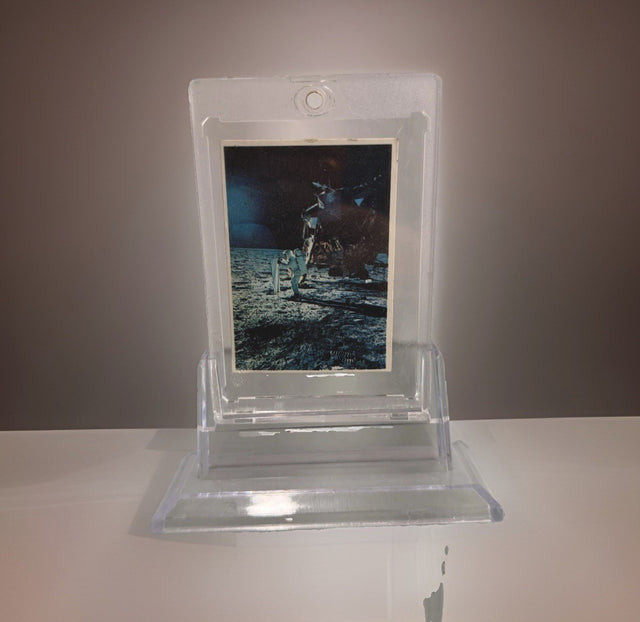
1969 Space Candy Buzz Aldrin Apollo 11 On The Moon Card #19 Taylor-Reed Display
$59.00 USD
-

1980 Polo Player Green Pink Chalk Pastel Bears Andy Warhol Signature AS-IS
$399.00 USD
-

After Andy Warhol Moon Landing Line Drawing 5/50 w/ Astronaut Autographs As-Is
$175.00 USD
-

After John Lennon "I Do" Framed Print, Marked A/P Unverified
$99.00 USD


Browse the collection for current listings.