Print Conservation Is Worth the Cost. Here's Why Collectors Keep Learning This the Hard Way.

You bought the piece. You framed it. You hung it somewhere you love.
Then five years later you notice the paper has gone amber at the edges. Or the colors have shifted. Or there's a soft brown spot blooming near the lower margin that wasn't there when you bought it.
Now you're Googling "print restoration" at midnight wondering if you made an irreversible mistake.
Most collectors reach this moment eventually. The ones who've been around long enough know that conservation isn't a luxury add-on for museum pieces. It's the basic cost of keeping something you care about intact across time.
This article is for the collector who's on the fence about whether the expense is justified. The answer is yes. But you deserve to understand exactly why — and what happens when you skip it.
What "Conservation" Actually Means (And What It Doesn't)
People use the words conservation and restoration interchangeably. They shouldn't.
Conservation is preventive and stabilizing. It's about stopping damage from progressing. Controlling the environment. Using archival materials. Reversible treatments that don't alter the original work.
Restoration is interventive. It's about reversing damage that's already happened — filling losses, reducing staining, inpainting areas of color loss. More complex. Higher stakes. More expensive.
Ideally, you never need restoration. Proper conservation from the beginning is what makes that possible.
So why do collectors keep skipping the conservation step and ending up in the restoration conversation instead?
Because conservation feels abstract. You're paying to prevent a problem you can't see yet. That's a hard sell compared to a new frame or a spotlight installation.
But the math is brutal. Prevention costs a fraction of intervention. And some damage — fading, certain types of foxing, paper embrittlement — is genuinely irreversible. You can mitigate it. You can't undo it.
The Enemies of Works on Paper

Prints live on paper. Paper is a cellulose-based organic material. Organic materials degrade. That's not pessimism — it's chemistry.
Understanding what's attacking your work helps you understand what conservation is actually defending against.
Light
Ultraviolet radiation is the primary driver of color fading and paper yellowing. Visible light contributes too. Both are cumulative and irreversible.
This applies to streetwear-adjacent prints, screen prints, giclées, lithographs — all of them. The dye sets used in high-end street art prints can be especially vulnerable to UV. Vibrant colors in pieces by artists like KAWS or Shepard Fairey can shift measurably over years of exposure.
The conservation response: UV-filtering glazing in framing. Low-lux display environments. Rotation schedules if you have the inventory to support it.
Humidity and Moisture
Paper expands and contracts with humidity changes. Repeated cycling causes cockling, warping, and eventually structural fatigue. Sustained high humidity encourages mold. A single moisture event — a pipe, a flood, condensation behind a frame — can introduce foxing and tideline staining that takes significant restoration work to address.
The conservation response: Stable relative humidity, ideally between 45-55%. Climate control. Proper framing with a mat that creates an air gap between glazing and paper surface.
Acidic Materials
Acid migration is quiet and slow and devastating. Wood pulp backings, non-archival mats, cheap framing tapes, even certain types of paper used in packing — all of them off-gas acids that transfer into your print over time. The result is progressive yellowing and embrittlement that starts at the edges and works inward.
The conservation response: Archival, acid-free, lignin-free materials throughout. This is not a suggestion. It's a baseline.
Handling and Physical Damage
Fingerprints introduce oils and acids. Pressure creates indentations. Folding creates creases that cannot be fully reversed. Rolled storage for extended periods can cause permanent curl and stress fractures in the paper.
The conservation response: Cotton gloves or edge-handling only. Flat storage in archival enclosures. Climate-stable storage rooms, not attics or basements.
Pollutants
Gaseous pollutants — sulfur dioxide, nitrogen oxides, ozone — react with paper and inks. Particulate matter embeds in paper fibers. Urban collectors face higher exposure. Tobacco smoke is particularly aggressive.
The conservation response: Sealed frames. Air filtration. Awareness that hanging a print in a kitchen or near a fireplace is a slow-motion damage event.
What Conservation Actually Costs — And How to Think About It
Collectors avoid asking about conservation costs because they're afraid of the answer. Let's make this practical.
Conservation exists on a spectrum. Not everything requires a museum conservator billing by the hour.
Tier 1: Preventive Conservation Through Proper Framing
This is the entry point. And it's where the highest ROI lives.
A proper archival frame job for a fine art print includes:
- UV-filtering glazing — either museum glass or UV-filtering acrylic (Tru Vue Optium Museum Acrylic is a common professional standard)
- 100% cotton rag or archival alpha-cellulose mat board, acid-free and lignin-free throughout
- Archival backing board — not foamcore, not cardboard
- Proper mat window that keeps glazing off the print surface
- Hinges or mounts using archival Japanese tissue and starch paste — reversible mounting only. No dry mounting. No tape directly on the print.
- Dust seal on the back to limit particulate intrusion
This kind of framing costs more than what you'd pay at a big-box frame shop. It costs significantly less than addressing the damage that accumulates over a decade inside a bad frame.
How many collectors have we seen come in with a piece that's been face-mounted to cardboard with brown packing tape since the early 2000s?
More than we'd like to count.
Tier 2: Examination and Stabilization by a Conservator
If you've acquired a significant piece — or inherited one, or purchased something with unknown storage history — a professional examination is worth the cost.
A paper conservator can assess condition under raking light and ultraviolet examination, identify existing damage and risk factors, and recommend targeted stabilization treatments. This might include deacidification treatment, flattening, mending tears with Japanese tissue, or addressing previous bad repairs.
The cost scales with the complexity of treatment required. Simple examination and consultation is at the lower end. Complex restoration of significant damage is substantially more. The variable that matters most is whether the work justifies the expense — emotionally, historically, and financially.
For editions by artists with strong secondary market value, the answer is almost always yes. For a mass-market poster you paid very little for, the calculus is different. Honest collectors know which category they're in.
Tier 3: Full Conservation Treatment
This is the full intervention scenario: cleaning, stain reduction, filling losses, inpainting, lining a fragile sheet. Museum-level work for pieces that warrant it.
The key credential to look for is the American Institute for Conservation (AIC). Fellows and Professional Associates with paper conservation specialization are who you want. This is not a field where you shop for the lowest price.
Ask any conservator you engage about their treatment approach, their reversibility standards, and whether they'll provide written condition reports before and after treatment. Those reports have value beyond the treatment itself — they become part of your provenance documentation.
Conservation and Resale Value: The Connection Dealers Don't Always Explain
Let's be direct about something.
Condition is the single largest variable in secondary market pricing for prints, after artist and edition identity.
Two copies of the same edition. Same artist. Same numbering range. One has been archivally framed and stored since acquisition. One has light foxing, slight toning at the margins, and a soft crease in the lower right corner from years in a non-archival frame.
The price difference between those two copies at auction or in a dealer transaction can be significant — not marginal. We're talking about a difference that in many cases far exceeds the cost of proper conservation from day one.
At what point does "saving money" on framing actually cost you money?
Almost immediately, if the piece has any secondary market significance.
This is especially true for works where edition size is small, artist market is active, and collector scrutiny is high. In the street art and contemporary print market, condition grading is rigorous among serious buyers. Sophisticated collectors ask about framing history. They ask about storage. They notice.
Conservation documentation — records of archival framing, conservator condition reports, treatment records — adds to provenance. It signals that you are the kind of collector who takes the work seriously. That signal has real value in the secondary market.
Artist-Specific Considerations

Different print types and different artist markets come with different conservation considerations.
Screen Prints
Screen prints use opaque inks that sit on the paper surface rather than being absorbed into it. This gives them a characteristic texture and luminosity but also means the ink layer is physically vulnerable to abrasion and flaking if the paper substrate moves significantly. Humidity stability is critical. Avoid glazing that contacts the print surface.
For Shepard Fairey editions: authentication for Fairey works flows through signature, edition numbering, and Obey Giant drop record plus provenance chain — there's no artist-issued COA program. Conservation documentation becomes an even more important part of provenance building for these pieces.
Giclée Prints
Archival inkjet prints vary enormously in longevity depending on the paper and ink combinations used. High-quality giclées on cotton rag paper with pigment inks have excellent projected lifespans under proper conditions. But "proper conditions" is doing a lot of work in that sentence. Light exposure remains the primary threat. UV protection is non-negotiable.
Lithographs and Etchings
Traditional printmaking media tend to have excellent archival stability when printed on quality rag paper. The vulnerabilities are environmental — acid migration from poor framing, humidity damage, light exposure — rather than inherent to the medium. The conservation approach is largely preventive.
Offset and Commercial Printing Processes
Many street art editions use commercial offset printing. Paper quality varies. Ink stability varies. Some editions from the 2000s and 2010s used papers that have shown unexpected toning or brittleness at earlier ages than anticipated. If you hold significant offset-printed editions, periodic examination is worthwhile.
The DIY Trap
Collectors in research mode will find a lot of information online about home conservation techniques. Some of it is reasonable. Most of the interventive advice is dangerous in untrained hands.
Here is what you can safely do yourself:
- Invest in proper archival framing through a qualified framer who understands conservation standards
- Control the display environment: light levels, UV exposure, humidity stability
- Store unframed works flat in archival enclosures in a climate-stable space
- Handle with clean cotton gloves or from the edges only
- Document your pieces with condition photographs at acquisition
Here is what you should not attempt yourself:
- Washing or humidifying paper to reduce staining or flatten cockling
- Applying any adhesive to a print for any reason
- Attempting to remove old tape or previous repairs
- Any kind of inpainting or retouching
- Chemical cleaning of any kind
How many pieces have been damaged worse by a collector's well-intentioned intervention than by the original problem?
This is not a rhetorical question. Conservation professionals have a term for it: "collector damage." It's its own category in condition reports.
The Documentation Habit That Protects Everything

Here's a practice that costs almost nothing and pays dividends indefinitely.
When you acquire a piece, photograph it in detail before it goes into a frame. Raking light photographs that reveal any surface texture, damage, or condition issues. Transmitted light if you can manage it. A flat, even shot of the full image. Close-ups of the signature, edition number, any stamps or blind embossing.
Keep these photographs with your purchase documentation, any certificates of authenticity, and any correspondence with the gallery or dealer. Note the framing materials and framer used. Note storage conditions.
If you ever engage a conservator, request written condition reports. Keep them. They are provenance documents.
This habit does several things simultaneously:
- Creates a baseline record that lets you identify new damage over time
- Supports insurance valuation and claims
- Contributes to provenance documentation that supports resale
- Creates a paper trail that demonstrates responsible stewardship to future buyers
Collectors who do this consistently are the ones dealers trust. They're the ones who get access to significant pieces because their track record with works is demonstrably careful.
Insurance: The Conservation Adjacent Conversation
Conservation and insurance are connected in ways that aren't always obvious.
Standard homeowner's policies are generally inadequate for fine art collections. Coverage limits, exclusions, and valuation methods create gaps that matter when something goes wrong. A specialized fine art floater or dedicated art insurance policy is worth serious consideration for any collection of real value.
But insurance works better when you've done the conservation work. Insurers want documentation. They want condition records. They want evidence of proper storage and display. Some carriers factor collection care practices into their underwriting.
And there's a harder truth: insurance replaces financial value. It does not replace the work. For pieces that matter to you beyond their market price, there is no policy that makes good on the loss of something irreplaceable.
That's what conservation is actually protecting.
Red Flags
When you're evaluating framing services, conservation proposals, or inherited pieces coming into your collection, watch for these:
- Non-reversible mounting. Any framer or conservator who recommends dry mounting a fine art print to a backing board is telling you they don't understand or don't care about conservation standards. Dry mounting is permanent. It eliminates future treatment options and damages resale value.
- Tape directly on the print. Including "archival" or "acid-free" tape. Acceptable mounting methods for fine art prints use hinges of Japanese tissue and reversible adhesives. Nothing pressure-sensitive belongs on a print.
- Non-UV glazing. Regular glass or acrylic provides minimal UV protection. Any framer handling fine art who doesn't default to UV-filtering glazing is cutting corners you'll pay for later.
- Foamcore or cardboard backing. Both off-gas acids over time. Archival backing boards only.
- Conservators without AIC credentials or verifiable specialization in works on paper. Conservation is a skilled technical field. Verify credentials. Ask for references and portfolio of comparable work.
- Vague treatment proposals without written documentation. Any conservator proposing treatment should provide a written condition report and treatment proposal before work begins. If they won't, walk away.
- Framers who conflate "conservation framing" with standard framing. The terms get used interchangeably in retail contexts. Ask specifically: what glazing, what mat board, what mounting method, what backing material. Get specifics.
- Pieces from estate sales or unknown provenance showing dark toning at edges, soft brown spots, or brittleness. These are active damage signatures. Have the piece examined by a conservator before framing. Don't seal problems into a frame.
Bottom Line
Conservation isn't about being precious. It's about being rational.
You made a financial and emotional investment when you acquired something. Conservation is the cost of protecting that investment across time. The framing. The environment. The storage. The documentation. Occasionally, the professional examination or treatment.
The collectors who consistently realize strong resale values, who have the best pieces at any given moment, who are taken seriously by galleries and dealers — they're almost always the ones who treat conservation as a baseline expectation rather than an optional extra.
Damage that hasn't happened yet is infinitely cheaper to prevent than damage you're trying to undo.
The piece you bought matters enough to hang on your wall. It matters enough to protect.
FAQ
How do I know if my current framing is archival quality?
Open the frame and look at the materials. The mat board should be labeled or identifiable as 100% cotton rag or archival alpha-cellulose — not wood pulp board, which yellows and off-gasses acid. The backing should be a rigid archival board, not foamcore or cardboard. The glazing should be UV-filtering glass or acrylic. The mounting should use reversible hinges on the back of the print — nothing adhesive directly on the print surface. If you're unsure, take it to a conservator or a framer with demonstrable fine art conservation experience for an evaluation.
Is UV-filtering glass worth the extra cost over standard glass?
Yes. Without qualification. UV radiation is the primary driver of fading and paper yellowing, and standard glass blocks minimal UV. The cost difference between standard glazing and UV-filtering glazing is small relative to the value of what it's protecting. Consider it non-negotiable for any print you care about. Museum-grade options like Tru Vue Optium also offer anti-reflection properties that improve the viewing experience significantly.
My print has some foxing — small brown spots. Is that serious?
Foxing is caused by a combination of factors including localized acidic degradation and in some cases fungal activity, though the exact mechanisms are still debated among conservators. What matters practically: foxing can progress, and early stabilization is significantly easier than addressing advanced foxing. If the spots are small and few, proper environmental control and archival framing may slow or stop progression. If there are many spots or they're significant in size, a paper conservator can evaluate whether reduction treatment is warranted. Document the condition now so you have a baseline.
Can I store unframed prints rolled up?
Short term, with the right technique, rolling is acceptable for transport. Long-term rolled storage is a problem. Extended rolling creates curl that can be difficult to fully reverse and can cause stress fractures in the paper over time. Flat storage in archival folders or clamshell boxes in a climate-stable environment is strongly preferred for anything you're holding. If a print must be rolled, use a large-diameter acid-free tube, roll with the image facing inward on most prints, interleave with glassine, and store horizontally.
How often should I have a significant piece examined by a conservator?
There's no single universal schedule. A reasonable approach is an examination at acquisition if provenance or storage history is unknown, and then a periodic check every several years for pieces of significant value — either market value or personal importance. Certain events should trigger an immediate examination: any evidence of moisture exposure, visible new damage, acquisition from long-term unknown storage, or before a major sale. Between formal examinations, your own regular observation matters. Know what your pieces looked like at acquisition and look at them critically once a year.
Does conservation work affect a print's authenticity or value?
Properly documented, reversible conservation treatment performed by a credentialed conservator does not negatively affect authenticity or value. In fact, for pieces that have experienced damage, professional treatment with documentation can preserve or restore market value that would otherwise be lost to ongoing deterioration. What negatively affects value is undisclosed damage, botched amateur intervention, and irreversible treatments like dry mounting. Condition transparency with documented conservation history is a positive factor in serious secondary market transactions.
I bought a piece that I later found out was framed with acidic materials for years. Is the damage permanent?
It depends on the extent of the damage. Surface toning from acid migration can sometimes be significantly reduced through professional conservation treatment. Deacidification can stabilize the paper chemistry and slow future degradation. Structural damage from severe embrittlement is harder to address. The first step is a professional condition examination to understand what you're actually dealing with. Don't assume the worst until you've had it assessed — but also don't delay, because acid migration is ongoing until the source is removed and the chemistry is stabilized.
Is conservation worth it on a print that isn't particularly valuable on the secondary market?
This comes down to what you value and why. Market value is one metric. Personal significance is another. If a piece matters to you — emotionally, historically, because of who gave it to you or what it represents — that's sufficient reason to protect it properly. The baseline of archival framing and proper environmental conditions is not prohibitively expensive for most collectors, and it applies the same logic regardless of market price. What changes at higher market values is whether professional conservation treatment costs are justified. At the baseline level of prevention, the answer is yes for anything you intend to keep.
Available at Gauntlet Gallery
Explore current pieces available from the gallery.
-

1963 Farquhar Earth in Space Transparent Celestial Globe 16" Compass VTG
$699.00 USD
-

1967 Beatles Richard Avedon STERN Original Posters Set of 4 Linen Backed Copy
$999.00 USD
-
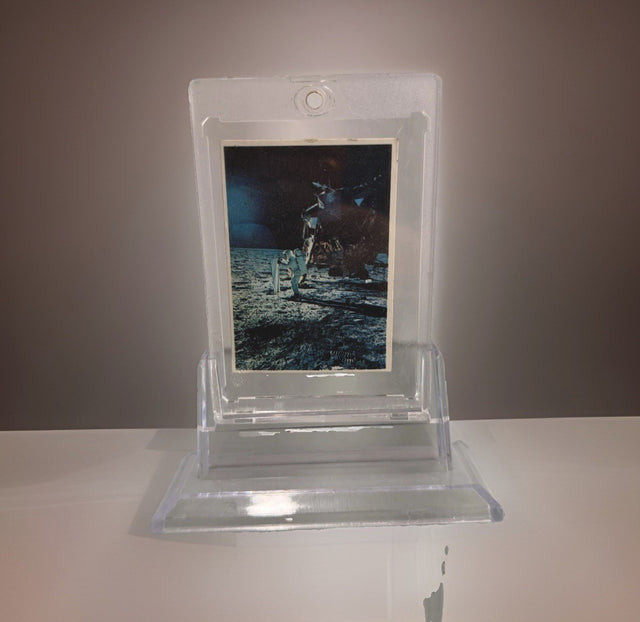
1969 Space Candy Buzz Aldrin Apollo 11 On The Moon Card #19 Taylor-Reed Display
$59.00 USD
-

1980 Polo Player Green Pink Chalk Pastel Bears Andy Warhol Signature AS-IS
$399.00 USD
-

After Andy Warhol Moon Landing Line Drawing 5/50 w/ Astronaut Autographs As-Is
$175.00 USD
-

After John Lennon "I Do" Framed Print, Marked A/P Unverified
$99.00 USD


Browse the collection for current listings.