The Chip Changes Everything

For decades, the designer toy market ran on trust, reputation, and a handshake-level understanding of provenance. You bought from the right people. You knew the release. You kept the box.
That worked when the market was small.
It stopped working when a single KAWS COMPANION sold for enough money to fund a serious art collection. When that happened, the fakers arrived. And the old system — original packaging, hologram sticker, receipt from the original drop — wasn't built to stop a motivated counterfeiter with access to a good printer and a factory in Shenzhen.
OneCOA is the answer the market built for itself. Not perfect. But the most serious attempt yet to solve authentication at the object level.
So what exactly is OneCOA, how does the NFC pairing work, and what does it mean for your collection?
Let's get into it.
Why the Designer Toy Market Needed a New System
The traditional authentication chain for high-value designer toys — KAWS, MEDICOM BE@RBRICK, Futura, Takashi Murakami releases — was always fragile. It depended on a sequence of analog checkpoints that a determined bad actor could defeat piece by piece.
Original packaging? Reproducible.
Hologram sticker? Cloneable with enough volume.
Purchase receipt? Screenshot, Photoshop, done.
Medicom release record? Only useful if you already know how to cross-reference it — and most buyers don't.
The FBI's Operation Bullpen, which dismantled a massive sports memorabilia forgery ring, demonstrated something the whole collectibles world needed to hear: a convincing fake doesn't need to defeat every checkpoint. It only needs to look convincing enough that buyers don't ask hard questions. The designer toy space had been running the same risk for years without a Bullpen-level wake-up call to force reform.
PSA certification-verification warnings have long flagged that a certification label is only as good as the object it's attached to — a slabbed card can be cracked, swapped, and re-sealed. The same logic applies to a box with a hologram. The container isn't the authentication. The container is just a container.
What the market needed was authentication embedded in the object itself.
That's the OneCOA thesis.
What OneCOA Actually Is

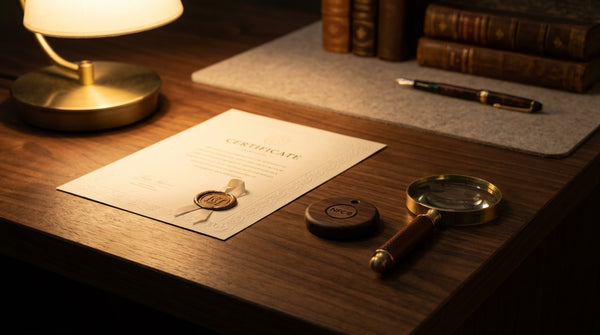
OneCOA is a digital certification platform built specifically for high-value collectibles — with particular early adoption in the designer toy and limited-edition art toy space. The core mechanism is straightforward: a tamper-evident NFC chip is physically bonded to the piece or its certified packaging, linked to a unique digital record on the OneCOA platform that contains provenance data, ownership history, edition information, and authentication details.
Scan the chip with a smartphone. Confirm the record. Confirm the object.
The key phrase there is tamper-evident. The chip isn't just stuck on with a label. It's integrated in a way that attempting to remove or transfer it destroys it. Which means you can't peel the authentication off one piece and transfer it to a fake. The chip and the record are married to the specific object they were assigned to at the point of certification.
For newer KAWS releases where OneCOA has been deployed, this changes the verification workflow entirely. You're no longer reading packaging and hoping. You're reading a chip and confirming a live record.
The Digital Certificate Record
When a piece enters the OneCOA system, the digital certificate typically captures:
- Edition identity — edition number, total edition size, variant colorway, release name
- Object-level identifiers — photographs, dimensions, notable markings
- Provenance chain — where it originated, transfer history as ownership changes
- Chip ID — the unique NFC identifier that pairs to this specific record and no other
- Certification authority — who issued the certification and when
That's a fundamentally richer record than a paper COA, which is static, transferable, and easily duplicated. The OneCOA record can be queried in real time. It doesn't live in a filing cabinet. It lives in a system that can flag anomalies — like two scan events from different continents hours apart on the same chip ID.
NFC Authentication: The Technology Behind the Chip
NFC stands for Near Field Communication. The same technology that lets you tap your phone to pay for coffee is now doing authentication work in the collectibles market. But the application here is more sophisticated than a payment transaction.
A standard NFC chip has a globally unique identifier. What OneCOA and similar platforms do is bind that identifier to a cryptographically secured record. The chip doesn't just say "I exist." It says "I am chip ID X, and here is the signed record that proves what I'm attached to."
Why does the cryptographic layer matter?
Because without it, an NFC chip is just a number. You could theoretically clone the number. What you cannot do is clone the cryptographic signature that proves the chip is authentic to the platform. That's the security layer that separates a genuine OneCOA chip from a copied sticker with a programmed generic NFC tag underneath it.
How the Scan Verification Works in Practice
The workflow for a collector or buyer is intentionally simple:
- Open the OneCOA app or use a compatible NFC reader on your smartphone
- Tap or hold the phone near the chip location on the piece or its packaging
- The app communicates with the chip and queries the platform database
- The platform returns the certificate record: edition info, ownership chain, authentication status
-
Confirm the physical piece matches the record
- Compare the colorway, edition number, and any visible markings to what the record describes
- If anything doesn't match, stop. That's a red flag, not a clerical error.
- If ownership transfer is being recorded, that transaction updates the chain in the platform
The last point matters more than most buyers realize. A piece with a full OneCOA ownership chain — from original release through every subsequent transfer — is materially more verifiable than one where the current owner is the first person to have logged it. The chain is the story. The story is the provenance. Provenance is a significant portion of value in this market.
KAWS and BE@RBRICK: How the Authentication Canon Applies

The authentication canon for this category is layered, and understanding how OneCOA fits into it requires knowing what came before it.
KAWS
For KAWS pieces, the verification framework is OneCOA plus NFC chip pairing where those have been deployed. For pre-OneCOA pieces, the standard remains original packaging plus hologram plus Medicom release record cross-reference. Those two frameworks cover different eras of the KAWS secondary market, and you need to know which era a piece belongs to before you know which checklist to run.
What happens when someone tries to sell a pre-OneCOA piece with a retroactively applied chip?
That's a significant concern. The platform integrity depends on certification happening at a verifiable point in the object's chain of custody — ideally at release or through a recognized authentication event. A chip slapped on after the fact by a private seller, with no documented certification event in the record, is not authentication. It's a chip. Those are very different things.
For pre-OneCOA KAWS: original packaging integrity, hologram authenticity, and Medicom release record remain your primary tools. Experienced dealers will cross-reference edition numbers against known release data. The secondary market has built a substantial body of knowledge around KAWS release specifics — colorways, quantities, distribution channels — and that knowledge is part of what you're paying for when you buy from a serious dealer versus a random reseller.
MEDICOM BE@RBRICK
The BE@RBRICK authentication framework has similar layers. For releases where OneCOA and NFC chip pairing have been deployed, the chip is your primary verification tool. For the significant volume of pre-OneCOA BE@RBRICK on the secondary market, you're back to original packaging, hologram, and Medicom release record.
The BE@RBRICK market is particularly susceptible to packaging-level fakery because the figures themselves can be difficult to distinguish at glance for non-specialists. The packaging and its associated documentation have historically carried more authentication weight than the object alone — which is precisely why the move to object-level NFC authentication is meaningful for this category.
What OneCOA Does Not Do
This is the section that separates informed collectors from ones who will eventually get burned.
OneCOA is a platform. It is not a guarantee. The platform is only as reliable as the integrity of the certification events that have been recorded in it. If bad information went in at any point in the chain, the chip will faithfully return that bad information when scanned.
Garbage in, garbage out — with a satisfying tap sound.
Does a clean chip scan mean you're holding a genuine piece?
It means the chip has a valid record in the OneCOA system. It means the record hasn't been flagged. It does not mean the physical piece in your hand was properly examined and matched to that record at every point in the chain. For that, you need human expertise applied to the physical object — which is exactly what serious dealers and authenticators provide.
The NFC layer answers one question: is this chip registered to this record? It cannot independently answer: is this physical object actually the one this record was created for?
That gap is where the remaining authentication work lives. And it's why the OneCOA system is most powerful when combined with expert physical examination, not as a replacement for it.
Comparing the Frameworks: Digital vs. Traditional

| Authentication Element | Traditional (Pre-OneCOA) | OneCOA + NFC |
|---|---|---|
| Primary verification tool | Packaging, hologram, receipt | NFC chip + platform record |
| Transferability of authentication | Paper COA transfers with piece; can be separated or duplicated | Chip is bonded to piece; record updates with ownership transfer |
| Provenance chain | Assembled from receipts, declarations, dealer statements | Logged in platform at each transfer event |
| Tamper evidence | Limited — packaging can be carefully resealed | Chip destruction on removal attempt |
| Real-time queryability | No — static document | Yes — live platform query |
| Vulnerability | Packaging forgery, documentation fraud | Fraudulent certification at entry point; chip-record mismatch |
| Applicability | All eras of the market | Releases where OneCOA was deployed at point of certification |
Neither system is invulnerable. The traditional framework has more surface area for attack. The OneCOA framework concentrates risk at the certification entry point and chip-record pairing integrity. Understanding which vulnerabilities you're managing is how you buy smart.
The Broader Implications for the Collectibles Market
OneCOA and its NFC architecture didn't emerge in isolation. They're part of a larger movement toward object-level digital authentication that is reshaping how provenance works across multiple collecting categories.
The music memorabilia market still relies heavily on Beckett (BAS) — with Roger Epperson REAL functioning as the specialist tier within BAS for music items — alongside JSA and PSA/DNA. Those are human-expert-led, document-centric systems that have been refined over decades. They work. But they're slow, they require physical submission, and they produce static certificates that don't update when ownership changes.
The space memorabilia market adds Zarelli specialist letters to the BAS/JSA/PSA stack for the most significant pieces. Again: expert-led, document-centric, static.
The JSA Basic vs. LOA distinction — where a basic authentication sticker carries meaningfully less evidentiary weight than a full Letter of Authenticity with detailed examination notes — illustrates exactly why document-centric systems require careful parsing. Not all paper authentication is equal.
What OneCOA is attempting is a different model: authentication that travels with the object, updates in real time, and is physically bonded to the piece in a way that paper never can be. The designer toy market, with its digital-native collector base and its reliance on documented limited editions, was a natural early adopter.
If it works — and the integrity of the certification chain holds — it could inform how the broader collectibles market thinks about authentication architecture going forward.
Could NFC-based authentication eventually supplement the paper-heavy systems in music or sports memorabilia?
The technical barrier is low. The institutional adoption barrier is significant. But the designer toy market is showing what's possible.
Red Flags
These are the warning signs that should stop a transaction in its tracks, regardless of what the chip says.
-
Chip present, certification record incomplete or missing key fields
- A chip that scans but returns a thin record — no edition detail, no certification event log, no provenance entries — is not functioning as authentication. It's a chip with a partial record. Those are not the same thing.
-
Chip was applied after an undocumented custody gap
- If the seller cannot account for where the piece was between original release and the moment it entered the OneCOA system, that gap is a vulnerability. A well-documented chain with a certification event traceable to release or a recognized authentication event is what you're looking for.
-
Physical piece doesn't match the chip record on examination
- Colorway, edition number, dimensions, markings — any discrepancy between the object in your hand and the record on the platform is a hard stop. This is the exact scenario where chip-record mismatch fraud operates.
-
Pre-OneCOA piece being sold with chip and no explanation of when/how certification happened
- Retroactive certification happens legitimately, but it requires documentation. "It has a chip" is not an explanation. Ask for the certification event record.
-
Packaging shows signs of resealing or tampering
- For pre-OneCOA pieces where packaging remains the primary evidence, any sign that the box has been opened and resealed invalidates the packaging's evidentiary value. You're now relying on the object alone.
-
Hologram sticker appears inconsistent with known Medicom production standards
- Hologram quality, placement, and design details are category knowledge. If it doesn't look right to an experienced eye, it probably isn't. Trust that instinct and verify before proceeding.
-
Seller cannot provide Medicom release record cross-reference for high-value pre-OneCOA pieces
- This isn't obscure information for anyone genuinely operating in this market. Inability to provide it is a marker of either inexperience or evasiveness. Neither is a good sign.
-
Price is significantly below secondary market range for that edition
- This one is ancient and still true. The market prices genuine authenticated pieces at levels that reflect their scarcity and demand. A significant discount on a high-value piece is a question, not a deal.
Bottom Line
OneCOA and NFC chip authentication represent the most meaningful structural advance in designer toy provenance since the market became serious money. The combination of tamper-evident physical bonding, cryptographically secured chip identity, and a live queryable platform record closes gaps that the traditional packaging-and-hologram system was never designed to handle.
But the system is only as strong as its certification chain.
A chip is evidence. It is not proof. The physical examination still matters. The provenance chain still matters. The expertise of the people who handled the piece before it reached you still matters. OneCOA gives you a powerful tool — a real-time, object-level authentication record that travels with the piece and updates as it changes hands. What it doesn't give you is the ability to skip the work of understanding what you're buying.
For KAWS and BE@RBRICK, the canon is clear: OneCOA plus NFC chip pairing where deployed, original packaging plus hologram plus Medicom release record for pre-OneCOA pieces. Run the full checklist. Ask the hard questions. And if a chip scans clean but something about the physical piece feels wrong, trust the physical evidence.
The chip is a starting point for confidence, not a destination.
Buy accordingly.
FAQ
What is OneCOA and why does it matter for designer toy collecting?
OneCOA is a digital certification platform that pairs a tamper-evident NFC chip physically bonded to a piece with a live queryable record in a secure database. It matters because it moves authentication from static paper documentation — which can be forged, separated from the piece, or duplicated — to an object-level digital record that travels with the piece and updates as it changes hands. For a market that has seen significant counterfeiting pressure as valuations have risen, that's a meaningful structural improvement.
Does every KAWS piece have an OneCOA chip?
No. OneCOA has been deployed for specific releases where the platform was used at or near point of manufacture or certified release. A substantial portion of the KAWS secondary market consists of pre-OneCOA pieces. For those, the authentication framework is original packaging plus hologram plus Medicom release record cross-reference. Knowing which era a piece belongs to is the first question to answer before deciding which authentication checklist applies.
Can an NFC chip be faked or cloned?
A generic NFC chip can be programmed with a copied ID, but the OneCOA system uses cryptographic signing that a cloned tag cannot replicate. The platform verifies not just the chip ID but the cryptographic signature proving the chip is authentic to the platform. A fake chip would fail that verification layer. However, a genuine chip removed from one piece and affixed to another is a different attack vector — which is precisely why tamper-evident bonding (chip destruction on removal) is a critical design element of the system.
What should I do if a chip scans clean but the physical piece looks wrong?
Stop the transaction. A clean chip scan tells you the chip has a valid record in the OneCOA system. It does not independently confirm that the physical piece in your hand is the one the record was created for. Any discrepancy between the physical object and the record — colorway, edition number, markings, dimensions — is a hard stop. Seek expert physical examination before proceeding. The chip answers one question. Human expertise answers the others.
How does OneCOA compare to how authentication works in other collecting categories?
Most established collecting categories use human-expert-led, document-centric systems. Music memorabilia relies on Beckett (BAS) — with Roger Epperson REAL as the specialist music tier within BAS — alongside JSA and PSA/DNA. Space memorabilia adds Zarelli specialist letters for significant pieces. Those systems produce static certificates that don't update with ownership transfers. OneCOA's live queryable platform with real-time ownership chain logging is architecturally different. The trade-off is that those legacy systems have decades of institutional trust and known examiner quality, while OneCOA's integrity depends on the quality of certification events entered into the platform.
What's the difference between a OneCOA chip and a standard COA for a KAWS piece?
A standard paper COA is a static document that can be separated from the piece it relates to, reproduced, or simply claimed for a different piece. It has no mechanism to update as the piece changes hands. A OneCOA chip is physically bonded to the piece, cryptographically tied to a specific platform record, and designed to self-invalidate if removal is attempted. The record it links to can be queried in real time and logs ownership transfers. They are not equivalent forms of documentation — the NFC-based system is materially more robust against the most common forms of authentication fraud.
If I'm buying a pre-OneCOA KAWS piece, what authentication should I insist on?
Original packaging in intact condition, hologram sticker authentic to Medicom production standards for that release, and the ability to cross-reference the edition number against Medicom release records. For high-value pieces, you also want a documented provenance chain — receipts, dealer history, prior sale records — tracing the piece as far back toward the original release as possible. The further back the documented chain goes, the stronger the provenance. Buying from dealers with demonstrated category knowledge and a track record in the market adds a layer of professional accountability that private reseller transactions typically lack.
Should I register a OneCOA ownership transfer every time I buy or sell a piece?
Yes, without question. The ownership chain in the OneCOA record is part of the piece's verifiable provenance. Every transfer event that gets logged strengthens the chain. Every transfer that happens off-platform creates a gap that a future buyer will have to evaluate and accept. Pieces with complete, unbroken OneCOA chain-of-custody records command stronger market confidence than those with undocumented transfers — and in a market where provenance directly influences value, that confidence has real monetary expression.