BE@RBRICK 1000% Display: Wall, Floor, or Furniture — Here's How to Get It Right

You spent serious money on a 1000% BE@RBRICK. Maybe it's a KAWS companion colorway. Maybe it's a Medicom x Hajime Sorayama. Maybe it's a collaboration piece that took you two years to source at a price you could live with.
And now it's sitting on the floor in the corner of your living room because you haven't figured out where it actually goes.
That's not a storage problem. That's a display problem. And it's more common than most collectors want to admit.
The 1000% format — standing at roughly 70 centimeters tall and weighing several kilograms depending on materials — sits in an awkward zone between sculpture and collectible. It's too large to treat like a shelf piece. Too valuable to treat like furniture. Too visually dominant to hide.
Get the display right and a 1000% BE@RBRICK anchors an entire room. Get it wrong and it looks like a novelty item that wandered in from a trade show booth.
This guide covers the three primary display approaches — wall, floor, and furniture — along with the structural, environmental, and authentication considerations every serious collector needs to understand before committing to a setup.
Understanding What You're Actually Displaying
Before you choose a display method, you need to understand the object itself.
A 1000% BE@RBRICK is not a poster. It is not a canvas print. It is a three-dimensional vinyl (or in premium editions, die-cast metal, painted resin, or mixed-media) figure that interacts with light, space, and viewing angle in ways that fundamentally change how it reads in a room.
The weight matters. Standard vinyl 1000% pieces are lighter than they look, but metal-finish and special material editions can be considerably heavier. If you're placing it on furniture, that furniture needs to handle the load without flex or vibration.
The surface finish matters. High-gloss editions like chrome or metallic Sorayama pieces catch ambient light and reflect their surroundings. Flat or matte finishes read differently at distance. A poorly lit gloss edition in a dark corner looks like a lump. The same piece in the right light becomes the focal point of the room.
The edition documentation matters. BE@RBRICK authentication relies on original packaging integrity, Medicom release records, and hologram verification. Do you know exactly what documentation your specific piece carries? Because your display setup should protect that documentation just as carefully as it protects the figure itself.
We'll come back to documentation protection throughout. It's not a footnote. It's central to the value of what you own.
Option One: Floor Display

The Case For It
Floor display is the most honest format for a 1000% BE@RBRICK. The piece is designed at a scale that approaches human proportion — particularly when viewed from a seated position. On the floor, it commands presence the way a piece of sculpture commands presence. It doesn't compete with wall art. It anchors the room from the ground up.
Galleries and serious private collectors frequently display 1000% pieces directly on the floor, often on a low platform or plinth, for exactly this reason. The object reads as sculpture. The viewer's relationship to it shifts accordingly.
Platform and Plinth Considerations
A bare floor is rarely the right answer. Even a low platform — five to ten centimeters of elevation — separates the piece from foot traffic, vacuums, pets, and the general entropy of a lived-in space.
What to look for in a platform:
- Surface stability — no give, no wobble. Solid wood, stone, or heavy MDF with a hard finish. Avoid hollow platforms that introduce vibration.
- Base footprint — the platform should extend at least ten centimeters beyond the figure's foot width on all sides. A 1000% BE@RBRICK is top-heavy relative to its base. You do not want it tipping on a pedestal that's barely wider than its feet.
- Surface texture — smooth but with enough grip that the figure doesn't migrate. Some collectors use museum-grade non-slip pads. This is not excessive caution. This is standard practice for objects of this value.
- Height — a plinth that brings the figure's eye level to roughly your standing eye level creates a peer-to-peer viewing experience. A plinth that positions it at knee height reads as a prop. Know which effect you want.
Traffic and Environmental Risk
Floor display puts your piece in the highest-risk zone in any room. Consider:
- Foot traffic patterns — where do people naturally walk? Is the piece in that path?
- Pet access — a large dog brushing against a 1000% figure on a plinth is a genuine threat
- Children — the scale of a 1000% BE@RBRICK is deeply appealing to small humans who want to interact with it
- Cleaning equipment — robotic vacuums and the figure's foot area do not coexist peacefully
Floor display done right is the most impressive display method. Floor display done carelessly is how a high-five-figure collectible ends up with a hairline crack in the torso.
Option Two: Furniture Display
The Case For It
Most collectors default to furniture display because it's the most familiar frame of reference. You own expensive things. You put expensive things on shelves or tables. This is not wrong.
Furniture display at the right height — roughly chest to eye level when standing — positions the piece within the collector's natural sightline without requiring the viewer to look down or up to engage with it. It integrates the figure into a living or office space without the room needing to be reorganized around it.
The challenge is that most furniture is not designed for objects of this weight, size, or value.
What Furniture Actually Works
Let's be direct about this.
IKEA Kallax units are not appropriate display furniture for a 1000% BE@RBRICK. They flex. They vibrate. The surface finish scratches. And they signal a mismatch between the value of the object and the care being given to it.
What works:
- Solid hardwood consoles and sideboards — mass and stability. Look for pieces with no flex in the top surface under load. Test by pressing down firmly in the center before you commit to placement.
- Custom-built display furniture with dedicated shelving — ideal for collectors with multiple large pieces. A furniture maker who understands load distribution can design shelving that places each 1000% at the correct viewing height with appropriate depth clearance.
- Museum-style low plinths integrated into a shelving system — used by serious gallery collectors to create visual hierarchy between pieces. The 1000% gets its own horizontal territory; smaller pieces occupy vertical space around it.
- Steel and glass display cases with reinforced shelving — appropriate where dust and UV protection are priorities. Verify the shelf weight rating before use. Tempered glass shelves rated for static loads look the same as inadequate ones until they fail.
Depth and Clearance
A 1000% BE@RBRICK has a body depth — front to back — that most standard shelving doesn't accommodate comfortably. You want clearance behind the figure so it isn't pushed to the shelf edge, and you want clearance above so the figure's ears don't contact the shelf above it.
Minimum recommended shelf depth: 45 centimeters. Minimum recommended vertical clearance above the figure: 15 centimeters above the top of the ears.
Does your current shelf actually give you that? Measure before you place. Cramming a 1000% into a space that barely fits it looks exactly as bad as it sounds.
Furniture and Documentation Storage
This is where a lot of collectors make a mistake they don't realize they're making.
The original box for a 1000% BE@RBRICK is not just packaging. It is part of the provenance chain. The Medicom hologram, the box condition, the original wrapping — these are authentication components. Many collectors display the figure and store the box under a bed or in a closet without climate control.
Your box deserves better than that.
Store original packaging in a climate-controlled space, away from direct light, with low humidity. If your display case has integrated storage, use it. If not, a dedicated archival box stored in the same room as the figure — same temperature, same humidity — is the minimum standard.
Option Three: Wall Display
The Case For It
Wall display for a 1000% BE@RBRICK is less common than floor or furniture, but when executed correctly, it is the most gallery-forward approach. It removes the piece from the domestic object register entirely and places it firmly in the art context.
A 1000% mounted at the correct height on a clean wall, properly lit, reads as sculpture. It commands the room. And because the floor beneath it is clear, the visual weight of the piece is entirely concentrated in the figure itself — no competing furniture, no clutter.
Structural Requirements
This is where wall display requires serious homework.
You cannot mount a 1000% BE@RBRICK on drywall with standard hardware. The combination of weight and the piece's center of gravity — which sits higher in the torso than in most objects of similar height — requires wall studs and appropriate load-rated hardware.
- Locate studs before you do anything else — use an electronic stud finder, not the knock-and-guess method. Verify with a secondary pass.
- Use a custom display bracket or cradle — there is no off-the-shelf wall mount designed for 1000% BE@RBRICK figures. You are either commissioning custom fabrication or adapting heavy-duty sculpture mounts. Both are valid. Neither is cheap.
- Distribute the load across multiple mount points — a single mounting point creates a lever arm. Two or more points, properly engineered, distribute the load and reduce the risk of wall failure under the piece's weight.
- Account for seismic activity if you're in a relevant zone — collectors in earthquake-prone regions displaying valuable pieces on walls need to factor in dynamic load, not just static load. This is not paranoia. It is physics.
Height and Viewing Angle
Gallery standard for three-dimensional wall-mounted objects positions the visual center of the piece at standing eye level — approximately 145 to 160 centimeters from floor to figure centerline, adjusted for the ceiling height and room proportions of your specific space.
A 1000% BE@RBRICK mounted too high reads as decorative rather than significant. Too low and it loses the spatial authority that makes wall display worth the effort.
If you have high ceilings — three meters or more — you have room to mount slightly higher and let the piece's scale read against the vertical space of the room. In a standard ceiling height room, keep the centerline closer to standing eye level.
Lighting for Wall Display
Wall display without intentional lighting is a missed opportunity.
Track lighting with adjustable heads gives you directional control. A single source creating raking light across the figure's surface catches texture and dimension. Two sources from slightly different angles eliminate harsh shadows without flattening the form.
Avoid warm incandescent bulbs for chrome or metallic-finish editions. They push the color temperature of reflective surfaces in unflattering directions. Neutral to cool LED at the correct CRI (aim for 90+) renders these finishes accurately.
For matte or painted finishes, warmer lighting creates a more intimate, gallery-like atmosphere. The right light for your specific piece depends on its surface finish. Have you actually tested lighting against your figure before committing to a placement?
Environmental Factors All Three Methods Share

UV Exposure
Vinyl degrades under prolonged UV exposure. The surface oxidizes, colors shift, and the material can become brittle over time. This is true of all three display methods.
Position your piece away from direct sunlight regardless of display method. South and west-facing windows are the primary threat in most Northern Hemisphere settings. UV-filtering window film is a reasonable investment if your display location has unavoidable sun exposure.
Temperature and Humidity
Significant temperature swings cause expansion and contraction cycles in vinyl. Over time, this degrades joints and surface finish. Humidity extremes cause their own set of problems — too dry and vinyl can crack; too humid and box materials, printed inserts, and paper documentation degrade.
A consistent interior climate — the kind maintained by modern HVAC systems in well-insulated spaces — is sufficient for most collectors. You don't need a climate-controlled vault. You need to avoid garages, basements with moisture issues, and spaces with dramatic seasonal temperature swings.
Dust Management
A 1000% BE@RBRICK in open display collects dust. This is a fact, not a complaint.
Regular light dusting with a soft microfiber cloth keeps the surface clean without risking abrasion. For pieces with intricate surface detailing, a soft natural-bristle brush at low speed gets into recesses that a cloth won't reach cleanly.
What you don't want to do is let dust accumulate and then try to clean it with any solvent or cleaning product not specifically verified as safe for vinyl. Certain cleaning products will dull gloss finishes permanently. Is the risk of chemical damage to a five-figure collectible worth the convenience of whatever you have under the sink?
Display cases with filtered ventilation — available from specialist display case manufacturers — reduce dust accumulation significantly for collectors who prefer not to incorporate regular cleaning into their routine.
Authentication Documentation and Your Display Setup
This section is not optional reading.
The authentication status of your 1000% BE@RBRICK is as important to its value as its physical condition. Display decisions that compromise documentation integrity compromise the piece's resale and legacy value.
For a KAWS or BE@RBRICK purchase, check the individual listing for release-specific packaging, production marks, condition and provenance. Manufacturer NFC is relevant only on releases that include it; a certificate alone does not establish authenticity.
The Medicom hologram on the original box, the original packaging inserts, and any supplementary authentication cards are physical documents that need proper storage. As noted above: climate control, away from light, with low humidity.
Buyers at resale will ask about documentation condition. The difference between a complete, well-preserved documentation package and a partially degraded one is a real and significant market discount. Display your piece thoughtfully. Store your documentation as carefully as you store the piece itself.
Red Flags

These are the signs that a display setup — your own or one you're inheriting when buying a displayed piece — has compromised the object or its documentation.
- Surface stress marks at the joints — particularly at the torso-to-hip and arm attachment points. These indicate the figure has been moved carelessly, mounted improperly, or subjected to vibration. Once present, stress marks don't reverse.
- Color fade or oxidation on the surface — the clear indicator of UV damage. Check the figure's back and underside against the front and top. Uneven color between sun-exposed and shadowed areas tells you exactly how the piece was displayed.
- Box stored in conditions inconsistent with the figure — if the seller is displaying the figure in a climate-controlled space but the box "is in storage somewhere," that box has likely been in conditions that have degraded the hologram, collapsed the structure, or introduced moisture damage. Ask to see it before purchase.
- Magnetic display hardware near the figure — strong magnets close to a collectible with metallic surface elements or hardware can cause issues. Ask what hardware was used in the display mount before completing a purchase.
- Adhesive residue on the base or body — some collectors have glued or tacked down figures to prevent falls. Any adhesive contact with the original vinyl surface is a condition issue. It is also a sign that the display setup was inadequate for the piece's safety.
- Improper cleaning product residue — a dull or streaky area on a gloss-finish piece where the rest of the surface is sharp and reflective. This indicates spot cleaning with something that shouldn't have been used. The damage is typically permanent.
- Figure displayed without original packaging for an extended period — not automatically disqualifying, but the seller should be able to account for where the box has been and in what condition. If they can't, treat the documentation as unverified.
Comparing Display Methods: A Reference Table
| Display Method | Visual Impact | Risk Level | Setup Complexity | Best For |
|---|---|---|---|---|
| Floor / Plinth | Sculpture-grade presence | High (traffic, pets, tipping) | Low to Medium | Dedicated gallery or display spaces |
| Furniture | Integrated, elevated | Medium (furniture stability) | Low | Living spaces, home offices |
| Wall Mounted | Gallery-forward, commanding | Medium (if properly engineered) | High | Collectors treating the piece as fine art |
The Combination Approach
The most sophisticated collectors don't commit to a single method in isolation. They build display environments.
A 1000% BE@RBRICK on a low plinth in the corner of a room anchored by a gallery wall of prints and a single well-chosen piece of statement furniture creates a visual ecosystem where each element enhances the others. The figure isn't competing with the wall art. It's in dialogue with it.
If you own multiple 1000% pieces, hierarchy matters. Not every piece can be the focal point. Decide which figures are anchor pieces and which are supporting elements, and design your display around that hierarchy. Two 1000% figures competing for the same sightline creates visual noise, not impact.
Lighting design that serves all the pieces in a room without being designed for any single one usually serves none of them well. If you're building a serious display environment, invest in adjustable track lighting that lets you optimize for each piece independently.
Bottom Line
A 1000% BE@RBRICK is not a decoration. It is a significant collectible object with real market value, authentication requirements, and physical needs that go beyond what most off-the-shelf display solutions provide.
Floor display gives you sculptural authority but demands a controlled environment and traffic management. Furniture display is the most practical approach for most collectors but only works when the furniture is genuinely up to the task. Wall display is the highest-commitment option with the highest potential visual reward — but only when the structural work is done properly.
All three methods require attention to UV exposure, climate stability, dust management, and documentation preservation. None of these are afterthoughts. They are the difference between a collection that holds its value and a collection that doesn't.
The piece you spent years hunting for and real money acquiring deserves a display setup that matches that commitment.
Get it right the first time.
Frequently Asked Questions
What is the minimum shelf depth for displaying a 1000% BE@RBRICK on furniture?
Plan for at least 45 centimeters of shelf depth. The figure has meaningful front-to-back body depth, and you want the piece sitting securely back from the shelf edge rather than perched at the front. Shelves shallower than this force the figure forward, create tipping risk, and look cramped.
Can I display a 1000% BE@RBRICK in direct sunlight if I rotate it regularly?
No. Rotation distributes UV exposure across the figure's surface, which means you're degrading the entire surface uniformly rather than one side more than the other. You're not solving the problem. You're making it symmetrical. Keep the piece out of direct sunlight entirely. UV-filtering window film is a better solution than rotation if your space has unavoidable sun exposure.
Is the original box necessary for display, or just for resale?
Both. The original box carries authentication elements including the Medicom hologram that form part of the provenance chain. For all pieces, the original packaging in good condition contributes positively to resale value. Buyers discount pieces with missing, damaged, or poorly stored original packaging. Display the figure. Store the box properly. They are not in competition.
What's the best way to clean a 1000% BE@RBRICK on regular display?
Light regular dusting with a clean, soft microfiber cloth. For recessed areas and joint lines, a soft natural-bristle brush. Do not use household cleaning products, spray cleaners, or alcohol-based wipes on the vinyl surface. For stubborn marks, a very slightly damp cloth — water only — followed immediately by a dry cloth to prevent any moisture sitting on the surface. When in doubt, do less. The damage from inappropriate cleaning products is permanent and visible.
How do I safely move a 1000% BE@RBRICK I have on floor display when I clean the room?
Two hands, supporting the body from beneath rather than gripping by protruding elements like ears or arms. The ears and arm joints are not designed as handles. Move the plinth separately. Do not slide the figure across a surface — lift it clear. If you're moving it to a significantly different location, repack it in the original box for transport rather than carrying it loose across the house.
Do magnetic display mounts affect 1000% BE@RBRICK figures?
Strong magnets in close proximity to any collectible with metallic surface elements or hardware can cause issues. The conservative position is to avoid magnetic mounting hardware for all pieces regardless of era.
I've seen collectors display 1000% BE@RBRICK figures still in their boxes. Is that legitimate?
It's a collector preference, not a display standard. Some collectors keep figures in original packaging to preserve condition and documentation integrity as a unified object. The tradeoff is that in-box display communicates almost nothing visually — you're displaying the box, not the figure. For figures where the visual impact of the piece itself is the point, in-box display defeats the purpose. For particularly rare or investment-grade pieces where condition preservation is the primary goal, it's a defensible choice. Know which category your piece falls into and make the decision accordingly.
Shop BE@RBRICK
Explore current pieces available from the gallery.
-
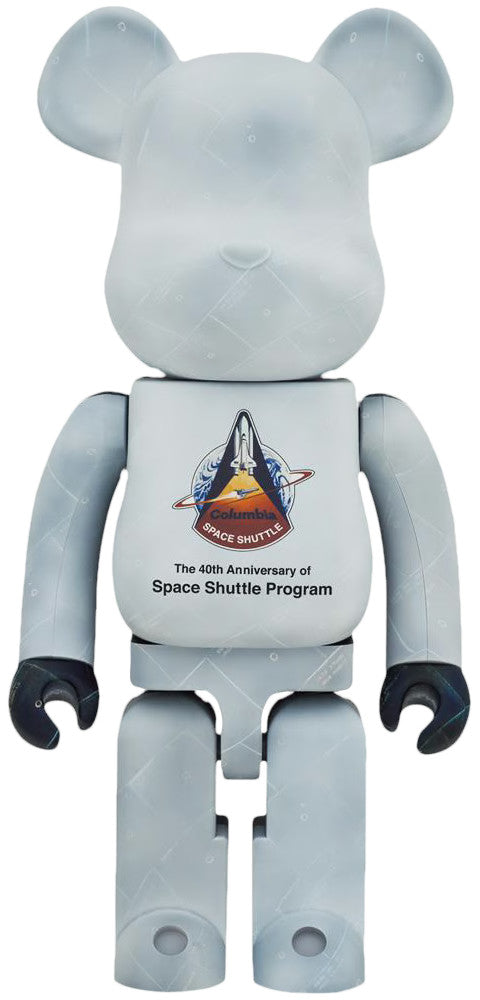
BE@RBRICK NASA Space Shuttle 40th Anniversary 1000% Medicom Toy Bearbrick
$600.00 USD
-
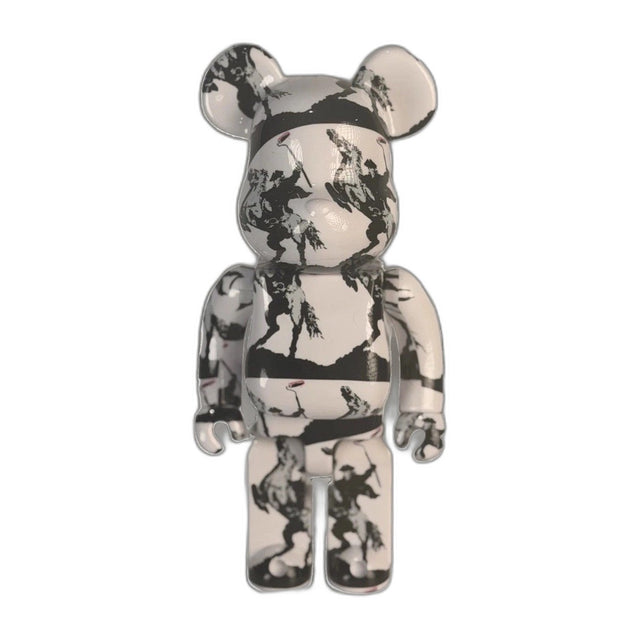
BE@RBRICK Brandalism Sync Banksy Medicom Toy Art Figure du-al.io Authenticated
$199.00 USD
-
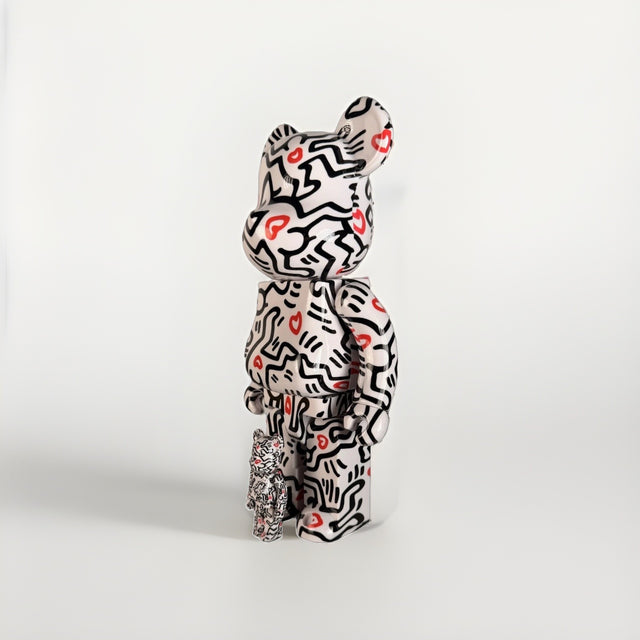
BE@RBRICK Keith Haring 400% + 100% Set Medicom Toy Bearbrick Foundation Art New
$199.00 USD
-
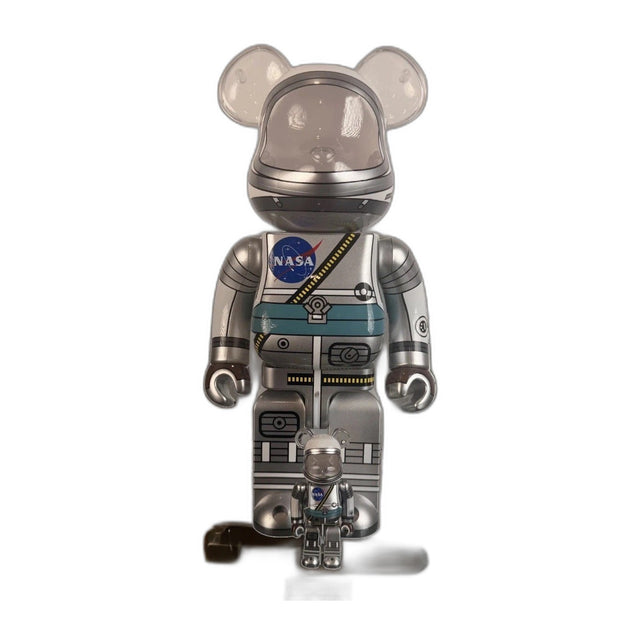
Bearbrick BE@RBRICK Mercury Astronaut 400% 100% Set NASA Medicom Toy Sealed New
$225.00 USD
-
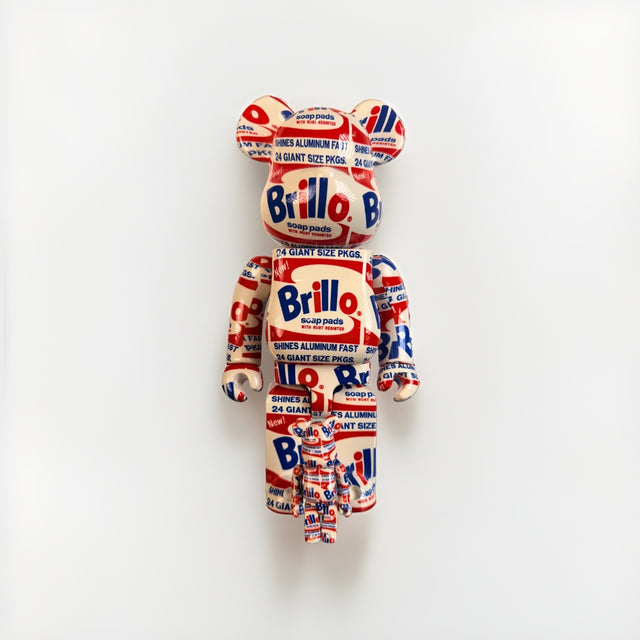
Bearbrick BE@RBRICK Andy Warhol Brillo 400% 100% Set Original 2020 Medicom New
$275.00 USD
Browse the collection for current listings.