The Three Music Memorabilia Auctioneers That Actually Move the Market

Most auction houses will take your guitar.
Three of them will actually sell it for what it's worth.
The music memorabilia secondary market has consolidated around a short list of operators who have the buyer pools, the specialist depth, and the authentication infrastructure to produce results that matter. If you're consigning a significant piece — a stage-used instrument, a handwritten lyric, a contract with signatures — or you're buying at the level where provenance errors cost real money, this is the tier you need to understand.
Heritage Auctions. Julien's Auctions. RR Auction.
That's the list. Everything else is noise, or at minimum a secondary consideration for secondary material.
Here's how each one operates, what they do well, where they have gaps, and how to read their authentication standards before you bid or consign.
Why These Three and Not the Others
The music memorabilia auction space looks crowded from the outside. It isn't, once you filter by specialist depth and realized price history.
What separates this tier isn't just volume — it's the combination of a dedicated music specialist team, a cultivated buyer pool that includes serious institutional and private collectors, and transparent provenance standards that have been tested under scrutiny. These houses have each been operating long enough to have made mistakes publicly, corrected course publicly, and built reputations that are now load-bearing for their consignors.
They also set the comparable sales record. When an appraiser, estate attorney, or insurance underwriter needs a defensible market value for a music artifact, they're looking at results from Heritage, Julien's, and RR. That's not opinion. That's how the pipeline works.
So if these three define the market, what exactly are they each doing?
Heritage Auctions: Scale, Depth, and the Institutional Buyer Pool

The House
Heritage is the largest collectibles auction house in the world by volume. Full stop. That scale is both their greatest asset and the thing that occasionally works against music specialists who want boutique-level curation. But for major pieces, Heritage's reach is unmatched.
Their Dallas headquarters runs category-specific sales that are genuinely deep. Music memorabilia doesn't get folded into a general entertainment lot here — it has its own specialists, its own catalog structure, and its own bidder development team.
The buyer pool is what matters most at Heritage. They've spent decades cultivating relationships with institutional collectors, museum acquisition programs, and the kind of high-net-worth individual who funds a collection the way a hedge fund manager runs a portfolio. When Heritage puts a landmark piece up, the room — or more precisely, the internet bidder portal — is populated by people with real capital and a mandate to acquire.
Authentication Standards at Heritage
Heritage does not operate its own in-house grading lab for music memorabilia. They rely on third-party authentication, and for music, the standard they reference most consistently is the Beckett Authentication Services (BAS) tier, with particular weight given to Roger Epperson REAL letters when the material is vintage music-related. Epperson is the music specialist within the Beckett ecosystem and his letters carry additional market credibility for Beatles, Stones, Elvis, and similar golden-era material.
PSA/DNA and JSA are also accepted and appear regularly in Heritage catalog descriptions. The distinction matters: a JSA Basic certification (the witnessed-signing sticker) carries less analytical weight than a JSA LOA (Letter of Opinion from a full examination). Heritage catalogs will typically specify which tier of JSA authentication accompanies a lot. Read that language carefully.
Heritage's catalog descriptions tend to be thorough on paper provenance — prior auction appearances, estate documentation, purchase receipts. This is where their scale pays off: their specialists have access to a deep internal database of prior sales that helps them flag pieces with documented histories and, importantly, flag pieces that don't match.
What Heritage Does Best
- High-value single items and landmark collections that need maximum bidder exposure
- Estate sales where provenance documentation is strong and the material spans categories
- Vintage rock and roll, country, and American roots music where their collector base is strongest
- Crossover pieces — a guitar that's also a cultural artifact, a poster that's also graphic design history
The Trade-off
Scale means your item competes for catalog real estate. A strong but not landmark piece can get lost in a Heritage sale. Their commission structures also reflect their market position. Know your consignment terms before you sign anything.
Julien's Auctions: The Celebrity Provenance Specialists
The House
Julien's built their reputation on direct-from-the-artist and direct-from-the-estate consignments. That's their differentiator and it's a real one.
When Kurt Cobain's guitar, Michael Jackson's stage costumes, or Freddie Mercury's personal items come to market, Julien's has consistently been the house that secures those relationships. That's not accident — it's a business development approach that prioritizes relationships with estates, family members, former bandmates, and personal associates of major artists. The result is a catalog that often leads with material that cannot be questioned on origin because the origin is the artist's own circle.
Julien's operates out of Beverly Hills and runs major themed music sales multiple times per year. Their media presence is aggressive by auction house standards, and they understand that press coverage of their sales directly serves their consignors' interests. The Freddie Mercury sale, to cite one landmark event, generated a level of international media attention that put consignor results significantly above pre-sale estimates.
Authentication Standards at Julien's
For signed material, Julien's relies on the same third-party authentication ecosystem: BAS/Epperson for vintage music signatures, PSA/DNA, and JSA LOA for items where a full letter-of-opinion is warranted. Their catalog descriptions typically lead with provenance — specifically who the item came from and what documented chain exists between the artist and the current consignor.
This is worth understanding as a buyer: Julien's catalog authority often rests on provenance chain rather than signature analysis alone. A guitar that came directly from the estate, with photographs of the artist using it, supported by estate documentation, may carry stronger authentication validity than the same guitar with only a third-party signature letter. Both elements together is the gold standard. Provenance alone without signature authentication, or vice versa, should prompt questions.
The PSA/DNA certification-verification warning is relevant here for any buyer doing due diligence: PSA certifications can be verified directly through PSA's online registry. Any Julien's lot with PSA/DNA authentication should be verified through that registry before bidding at significant levels. This is not a criticism of Julien's — it's standard practice the house itself would recommend.
What Julien's Does Best
- Stage-worn clothing, instruments, and personal effects from directly-sourced estate and family consignments
- Pop and rock from the classic rock era through contemporary
- High-profile single-owner collections where the story of ownership is itself part of the value proposition
- Media-driven sales where the publicity cycle amplifies collector demand
The Trade-off
The media engine that drives Julien's pre-sale coverage can cut both ways. Pieces that generate press attention can see bidding climb beyond rational comparable value in the heat of a high-profile sale. That's great for consignors. Buyers need to set their limits before the gavel falls, not in the room.
RR Auction: The Specialist's House
The House
RR Auction out of Boston is the one music memorabilia specialists talk about when they talk about process. They are smaller than Heritage by volume. They are less media-visible than Julien's. What they have is a reputation for specialist depth and catalog rigor that the serious collector community respects.
RR runs dedicated music sales alongside entertainment, space, and historical memorabilia. Their research team is known for going deep on provenance chains, and their lot descriptions tend to be the most granular in the market on technical detail — handwriting analysis citations, specific comparison examples, manufacturing date context for instruments.
The space memorabilia category is worth noting as a point of comparison: RR's approach to space artifacts (which requires BAS/JSA/PSA plus a Zarelli specialist letter for significant items) reflects a house culture that treats specialist authentication as layered, not singular. That same philosophy applies to their music material.
Authentication Standards at RR
RR runs their own in-house research and authentication review before consigning items to catalog. They are one of the few auction houses that will decline to catalog material that doesn't meet their internal provenance standards, regardless of what third-party paper might accompany it. That is not a universal practice in this industry.
For signed music material, RR references BAS, PSA/DNA, and JSA, with the same LOA-vs-Basic distinction applicable. Their catalog language around authentication is typically specific — they name the authenticator, the type of certification, and in many cases describe the methodology used.
FBI Operation Bullpen, which ran in the late 1990s and early 2000s and resulted in convictions of major memorabilia forgers and corrupt authenticators, is part of the institutional memory of this industry. RR's approach to authentication feels shaped by that history — they treat the authentication layer as genuinely meaningful rather than a liability-covering formality.
What RR Does Best
- Material where research and catalog rigor are the primary value-add
- Handwritten documents — lyrics, letters, contracts — where forensic analysis of handwriting and paper are critical
- Historical music material where the artifact crosses into cultural history (think early 20th century, pre-rock era)
- Buyers who want to read a lot description and actually learn something before they bid
The Trade-off
RR's selectivity means they decline material that other houses would take. That's good for buyers, occasionally frustrating for consignors with material that doesn't clear their bar. Their buyer pool, while serious, is smaller than Heritage's. Peak realized prices on landmark items will often favor Heritage or Julien's when media-driven demand is a factor.
How the Authentication Layer Actually Works Across All Three

Understanding how these houses use third-party authentication is not optional for anyone operating at a serious collector level. The certificate attached to a lot is only as strong as your understanding of what that certificate means.
Beckett Authentication Services (BAS) and Roger Epperson REAL
BAS is the largest sports autograph authenticator and has expanded significantly into entertainment and music. Within BAS, Roger Epperson's REAL (Roger Epperson Authentication Letters) designation is the specialist music tier. Epperson has been examining music signatures for decades and his letters carry particular weight for vintage British Invasion and classic rock material. A BAS sticker and an Epperson REAL letter are not the same document — understand which one you have.
JSA: Basic vs. LOA
James Spence Authentication (JSA) issues multiple certification types. The JSA Witnessed certification means a JSA representative was present when the item was signed. The JSA Basic certification is an examination of an item submitted after signing. The JSA LOA (Letter of Authenticity/Opinion) is a full written opinion from a JSA examiner. For music memorabilia at significant price points, a JSA LOA carries substantially more analytical weight than a Basic sticker. When auction catalogs describe JSA authentication, find out which tier.
PSA/DNA
Professional Sports Authenticator's DNA division handles music and entertainment signatures. PSA issues a registry number for each certified item that can be verified through their online database. This verification step is non-negotiable due diligence for any PSA-certified lot. PSA's certification-verification warnings are explicit on their platform: counterfeits of PSA holders and labels have been documented. Verify the cert number against the registry. Every time.
The Stacking Principle
For material above a meaningful price threshold, the market expectation is that authentication is layered, not singular. One third-party letter is a data point. Two independent opinions that agree is a position. Strong provenance documentation plus third-party authentication plus photographic evidence of use is a defensible purchase.
All three auction houses understand this. Their catalog language will often reflect it. Read the lot descriptions the way a lawyer reads a contract — notice what's present, and notice what's absent.
A Practical Comparison
| Factor | Heritage Auctions | Julien's Auctions | RR Auction |
|---|---|---|---|
| Scale / Buyer Pool | Largest in category | Strong, media-driven | Specialist-focused, selective |
| Authentication Approach | Third-party (BAS/PSA/JSA) + paper provenance | Provenance-first + third-party | In-house review + third-party layering |
| Catalog Rigor | Strong, deep internal database | Story-driven, estate-sourced | Highest technical detail |
| Best Material Type | Landmark items, crossover pieces | Stage-worn, personal effects, estate | Documents, handwritten, historical |
| Media Profile | High | Very High | Moderate |
| Specialist Music Tier | Dedicated specialists | Celebrity / estate relationships | Research-depth specialists |
Consigning to These Houses: What You Should Know First

The decision of which house to consign with is not just about who gets the highest price. It's about which house's buyer pool aligns with your material, and which house's catalog positioning will tell the right story about what you're selling.
-
Get your authentication in order before you approach any house.
- A BAS/Epperson REAL letter for vintage signed material, or a JSA LOA, not a Basic sticker.
- PSA/DNA certification with the registry number documented.
- Any photographic provenance — concert photographs, backstage passes, receipts — organized and copied.
-
Know your comparable sales before you discuss estimates.
- All three houses publish realized price archives. Use them.
- Comparables from the same house within the past two to three sale cycles are most relevant.
- Don't anchor to realized prices from anomalous high-profile sales. Those are outliers, not baselines.
-
Understand the consignment fee structure fully.
- Seller's premium percentages, photography fees, insurance during sale period, and any marketing fees should all be clarified in writing before you consign.
- Negotiation on fees is more possible at Heritage and RR for significant single items than it is at Julien's, where the media package is part of the proposition.
- Ask about the specific sale your item will appear in. A strong piece in a weak sale underperforms. Compare authenticated examples with the same signer, format, inscription, condition and documentation. Include fees and other acquisition costs rather than assuming a return rate.
- Heritage and Julien's both run themed music sales. Ask which one your item is being considered for and why.
Buying at These Houses: The Due Diligence Checklist
-
Read the full lot description, not the headline.
- Catalog headlines are marketing. The body text is where the authentication specifics and provenance chain live.
- Note exactly which authentication is cited, which tier (LOA vs. Basic for JSA, REAL letter vs. BAS sticker for Beckett), and what the provenance documentation consists of.
-
Verify PSA certifications independently.
- Go to the PSA registry and confirm the certificate number matches the described item.
- This takes five minutes and has saved collectors from expensive mistakes.
-
Request additional images and condition reports.
- All three houses will provide additional photographs and condition detail to registered bidders upon request.
- For instruments and stage-used items, ask specifically about any repairs, replaced components, or refinishing. These materially affect value.
-
Understand the buyer's premium before you set your max bid.
- The buyer's premium at major auction houses means your actual cost is meaningfully above the hammer price. Structure your bidding around the all-in number, not the hammer.
-
For high-value lots, consider an independent specialist consultation.
- A pre-bid consultation with an independent music memorabilia specialist costs far less than the downside of a significant authentication error.
- This is particularly relevant for handwritten documents, where forensic analysis of ink and paper adds a layer the standard certificate doesn't cover.
-
Set your limit before the sale, not during it.
- Auction rooms — and their online equivalents — are designed to generate competitive energy. That energy is not your friend when it's pushing you past your researched valuation.
- A Julien's high-profile sale in particular can create bidding dynamics that bear limited relationship to cold comparable analysis. Know your number.
Red Flags
Watch for these regardless of which house you're working with.
- Authentication language that is vague about which tier of certification is present. "JSA authenticated" without specifying LOA, Basic, or Witnessed is incomplete information. Ask.
- Provenance chains that skip key links. "Previously in a private collection" without naming the collection or providing a purchase record is not a provenance chain. It's a gap.
- Third-party authentication from names outside the established ecosystem. A letter from an authenticator not operating within BAS/PSA/JSA frameworks, without additional supporting documentation, should prompt significant caution. FBI Operation Bullpen demonstrated that corrupt authentication was systemic enough to result in federal prosecution. The industry tightened after that, but the lesson is standing.
- Instruments with replaced components sold as "stage-used" without condition disclosure. A guitar with a replaced neck, tuners, or frets has been materially altered. This is disclosable and should be disclosed.
- Pre-sale estimates that look like they're priced for media coverage rather than market comparables. At Julien's in particular, headline estimates on celebrity-estate material sometimes reflect the PR value of the announcement as much as cold market analysis. Do your own comparable work.
- Any seller, online or at auction, who resists independent verification before purchase. Legitimate material survives scrutiny. Resistance to scrutiny is its own data point.
- A hologram or COA from an unverifiable issuer warrants further investigation. For signed music memorabilia, verify the named specialist’s opinion and identifier and review signing provenance. Do not present a private Warhol documentation service as an artist-backed authority comparable to Pest Control.
Bottom Line
Heritage, Julien's, and RR Auction are not interchangeable options. They are three distinct propositions with different strengths, different buyer pools, and different approaches to the authentication and provenance question.
Heritage gives you scale. Julien's gives you the estate relationship and the media amplification. RR gives you the research depth and specialist rigor.
A sophisticated seller picks the house whose strengths align with what their piece needs. A sophisticated buyer understands what each house's catalog language actually represents before they bid.
The authentication ecosystem underlying all three — BAS with Epperson REAL at the top for vintage music signatures, JSA LOA for examined material, PSA/DNA with verified registry numbers — is the connective tissue. Understanding that ecosystem isn't advanced knowledge. It's baseline competency for anyone operating seriously in this market.
The market is smaller than it looks and more transparent than it used to be. The three houses that move it are the ones that figured out that reputation is the product. Everything else they sell is secondary.
Frequently Asked Questions
Which auction house gets the highest prices for music memorabilia?
It depends entirely on the material. Julien's tends to generate the highest results for celebrity-estate items from artists with massive mainstream cultural profiles, particularly where the pre-sale media cycle is strong. Heritage produces strong results across a broader range of material due to the scale of their buyer pool. RR's realized prices on historical and document material often lead the market in those specific categories. There is no single answer. The right house is the one whose buyer pool wants what you're selling.
Do I need authentication before I consign to any of these houses?
Yes, in practice. These houses will often assist with the authentication process for consigned material, but arriving with established BAS/Epperson, JSA LOA, or PSA/DNA documentation significantly strengthens your consignment position and, for the buyer, adds material catalog value. Consigning without authentication is possible but disadvantageous.
What is Roger Epperson REAL and why does it matter for music?
Roger Epperson Authentication Letters, operating within the Beckett Authentication Services ecosystem, represents the specialist tier for vintage music autographs. Epperson has decades of focused examination experience in British Invasion, classic rock, and related genres. His letters carry additional market credibility in those categories beyond a standard BAS certification. When evaluating a lot with Beatles, Stones, Led Zeppelin, or similar vintage signatures, the presence of an Epperson REAL letter is a meaningfully stronger indicator than a standard BAS sticker alone.
What was FBI Operation Bullpen and why does it still matter?
Operation Bullpen was an FBI investigation running in the late 1990s and early 2000s that uncovered a widespread network of forged sports and entertainment memorabilia. The operation resulted in convictions of forgers and authenticators who were certifying fraudulent material. It demonstrated that the authentication layer itself could be corrupted. The aftermath drove the industry toward more rigorous third-party standards, independent verification, and the emphasis on provenance chains as supporting documentation. The lesson is still relevant: authentication is not infallible, which is why stacking multiple independent verification sources and maintaining provenance documentation matters.
What is the JSA LOA and how is it different from a JSA sticker?
JSA issues multiple certification types. A JSA sticker or Basic certification indicates examination and positive opinion from a JSA reviewer but provides limited written documentation of methodology. A JSA LOA is a full written Letter of Authenticity or Letter of Opinion that documents the examination process, the specific characteristics evaluated, and the examiner's conclusion. For music memorabilia at significant price points, a JSA LOA is the appropriate standard. A sticker alone is insufficient due diligence for major purchases.
Can I buy music memorabilia from these houses with confidence that it's genuine?
Confidence, yes. Certainty, no. These houses represent the highest-integrity tier of the market and their authentication and provenance standards are more rigorous than most alternatives. But the music memorabilia market has no artist-backed verification body analogous to Pest Control in the street art world. Third-party authentication can be wrong. Provenance documentation can have gaps. The correct posture is informed, layered due diligence: verify PSA numbers through the registry, understand which tier of JSA certification is present, read the provenance chain for missing links, and for significant purchases, consider an independent specialist consultation before bidding.
Are there other auction houses worth considering for music memorabilia?
For general and secondary material, yes, there are regional and category-adjacent houses that handle music memorabilia competently. For landmark pieces and serious collecting, the three covered here set the standard. Christie's and Sotheby's occasionally handle significant music material, typically in the context of broader entertainment or cultural property sales, and their provenance standards are comparable. But their music specialist depth is generally thinner than Heritage, Julien's, or RR, and their primary focus lies elsewhere. For dedicated music memorabilia markets, these three remain the reference tier.
How do I verify a PSA/DNA certification on a lot I'm considering?
PSA maintains an online registry at their website. Every PSA-certified item has a certification number associated with the holder. Enter that number into the registry and confirm that the description of the certified item matches what is being offered at auction. Discrepancies between the registry entry and the lot description — different item description, different signer, numbers that don't return results — are red flags requiring immediate clarification before bidding. PSA's own platform publishes certification-verification warnings acknowledging that counterfeit PSA holders and labels have been documented in the market. The verification step is not optional.
Shop Music memorabilia
Explore current pieces available from the gallery.
-
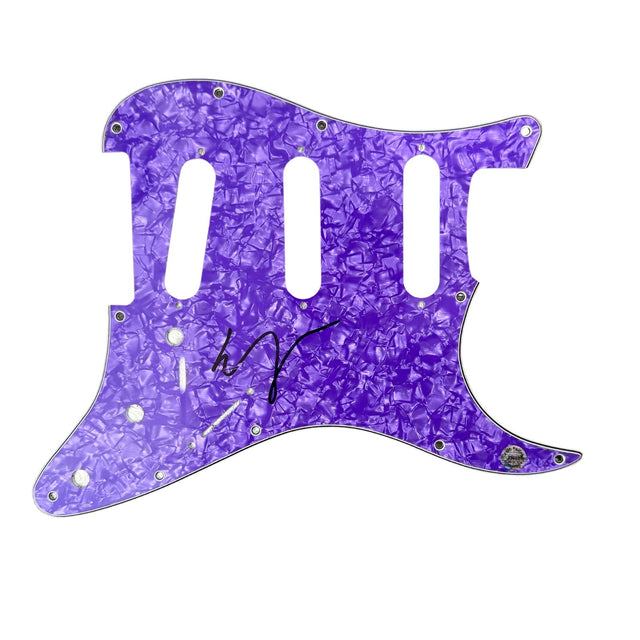
Vampire Weekend Ezra Koenig Signed Guitar Pickguard Autograph Hologram COA
$100.00 USD
-
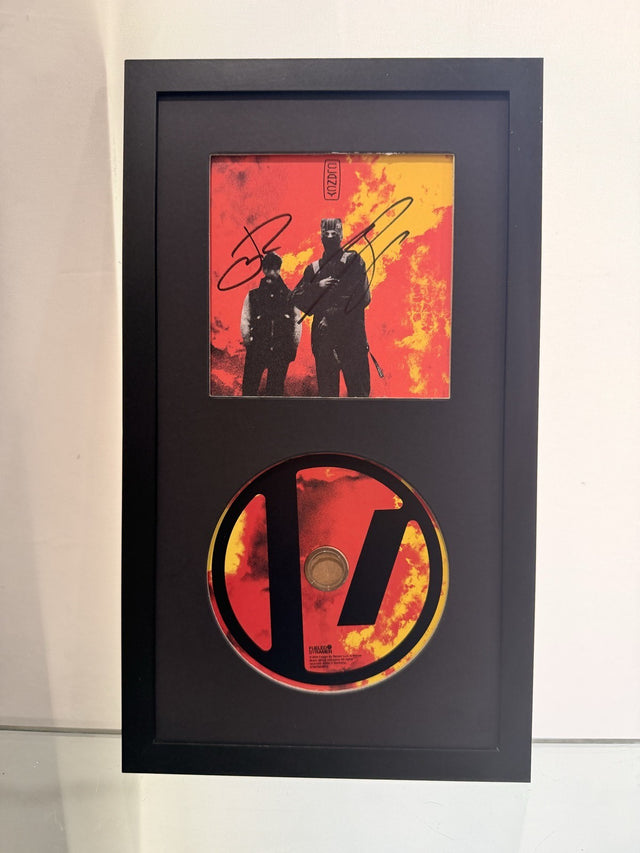
Twenty One Pilots Signed Clancy CD Framed Display Tyler Joseph Josh Dun Auto
$199.00 USD
-
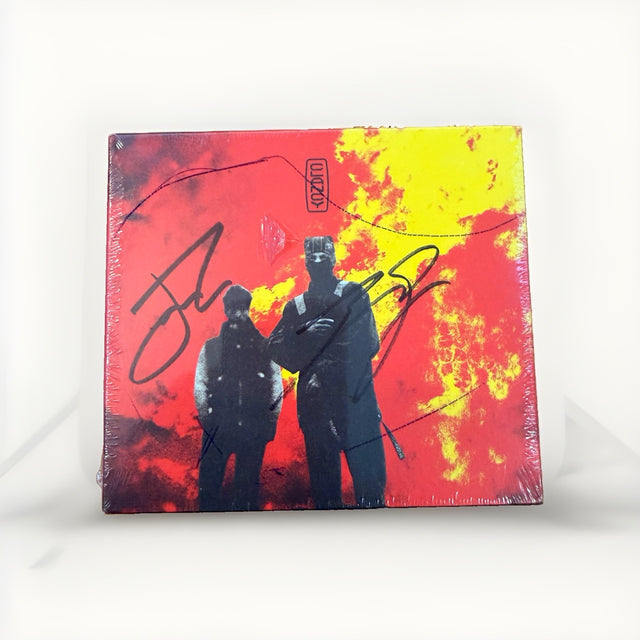
Twenty One Pilots Clancy Signed CD Tyler Joseph Josh Dun Sealed Unopened 2024
$189.00 USD
-
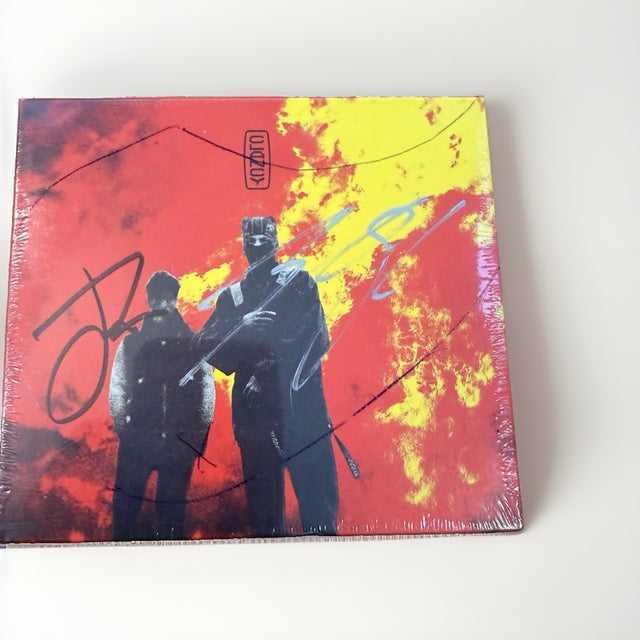
Twenty One Pilots Clancy Signed CD Sealed Tyler Joseph Josh Dun Silver Autograph
$189.00 USD
-
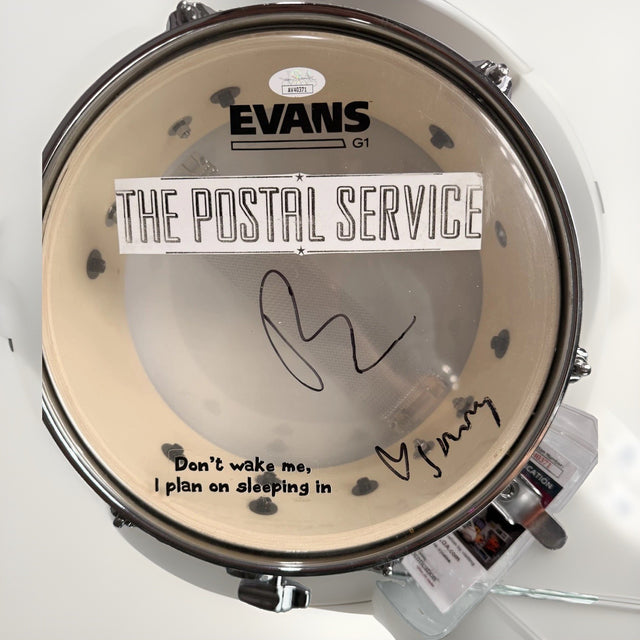
The Postal Service Dual Signed Evans M-80 Drumhead JSA A40371
$499.00 USD
-
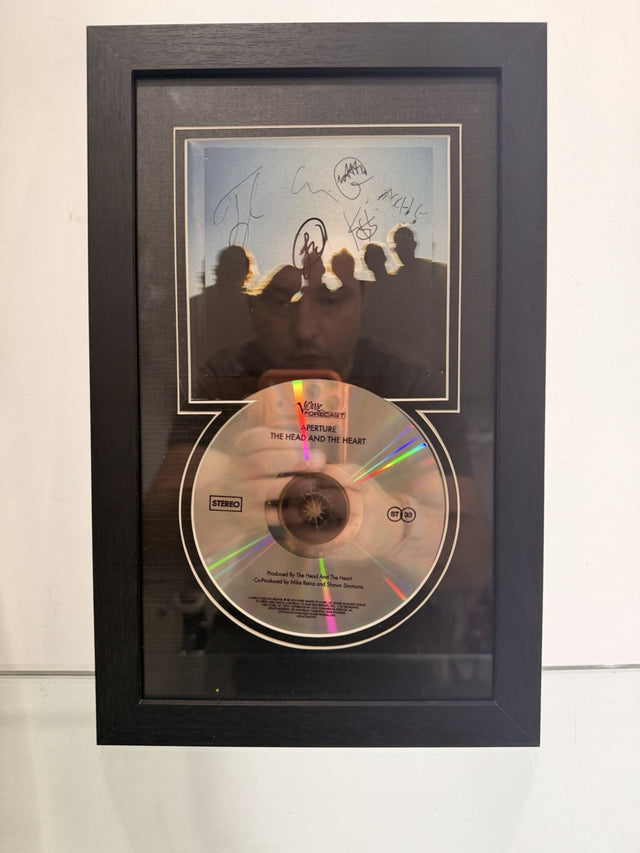
The Head and the Heart Band Signed Framed 'aperture' CD COVER ALBUM
$65.00 USD
Browse the collection for current listings.