The Numbers Behind the Numbers: Why AP, HC, and PP Aren't Just Alphabet Soup

Most collectors learn the edition number. They see 47/200 and they understand it. Two hundred prints exist. They own the forty-seventh.
Then they start seeing things like AP 12/30 or HC 4/10 or a single stamp that just says PP with no number at all. And the questions start.
Good. Those questions mean you're paying attention.
Because here's what the market doesn't explain clearly enough: the numbered edition is just the main run. Around it exists a constellation of sub-editions — artist proofs, hors commerce copies, printer's proofs, bon à tirer impressions — each with its own logic, its own scarcity, and its own price behavior. Understanding that constellation isn't optional anymore. It's the difference between buying smart and buying blind.
This is the sub-edition math serious collectors need to run before they spend serious money.
Where Sub-Editions Come From: A Brief History of the Proof
Before digital print files and edition contracts, printmaking was a craft with physical tolerances. You pulled test impressions before you committed ink to the full run. You set aside copies for the workshop. You gave the publisher their due. You kept a few back for yourself.
These weren't loopholes. They were functional categories with real distinctions.
The art market formalized those distinctions — imperfectly, inconsistently, but deliberately. The International Fine Print Dealers Association and various printmaking councils established terminology. Auction houses adopted the language. Galleries followed. And somewhere in that process, the original functional logic of proof categories got tangled up with market strategy, artist reputation, and collector desire.
What you're left with today is a system that is simultaneously standardized and chaotic. The terminology is consistent. The application is not.
That gap is where collectors get hurt.
Breaking Down the Terminology, One Category at a Time

AP: Artist Proof
The AP designation originates from the printmaker's tradition of pulling a small number of impressions outside the main edition for the artist's personal use and approval. Historically, these were working proofs — the artist checking color, registration, ink density before signing off on the main run.
Standard industry practice puts APs at roughly ten percent of the main edition. A 200-piece edition might carry 20 APs. A 100-piece edition, 10 APs. This is convention, not law.
In contemporary street art and urban art markets, that convention gets stretched aggressively. You'll see editions with AP runs that exceed the ratio significantly. You'll see artists who treat the AP series as its own premium product line, often with slight variations — different colorways, heavier paper stock, hand-finishing — that justify a separate market position.
Is an AP automatically more valuable than a numbered edition copy?
Not automatically. But often, yes. Here's why:
- Relative scarcity: If the main edition is 200 and the AP run is 20, the AP is ten times rarer. Scarcity logic applies.
- Perceived proximity to the artist: The narrative that APs represent the artist's personal copies holds real market weight, even when the practical reality is more complicated.
- Auction performance: In secondary market trading, APs from established artists consistently trade at premiums over numbered edition equivalents. That premium varies by artist and by how well the collector base understands the sub-edition structure.
What you need to verify: the AP number itself. AP 12/30 means thirty artist proofs exist. That's material information. An unnumbered AP stamp with no fraction is a red flag we'll return to.
HC: Hors Commerce
Hors commerce translates directly from French as "outside commerce" — meaning these copies were designated for non-sale purposes. Traditionally, HC copies went to galleries, publishers, dealers, and collaborators as working copies, presentation pieces, or contractual deliverables.
The intended implication: these copies were never meant to hit the market. They existed outside the commercial transaction.
The practical reality in today's market: HC copies do trade, regularly, and they command a distinct premium in many cases. The "outside commerce" designation has become something of an irony — these pieces are very much in commerce. They're just rare enough that when they appear, buyers take notice.
HC runs are typically smaller than AP runs. Seeing HC 4/10 is common. Seeing HC 1/5 isn't unusual. That extreme scarcity, combined with the mystique of the designation, creates strong price pressure when these pieces surface.
But here's the question collectors often don't ask: who received the HC copies, and can you trace them?
Provenance on HC pieces matters more than on standard editions precisely because the chain of custody is supposed to be traceable — these went to specific parties for specific reasons. When an HC copy appears with no documentation of where it came from, that's worth examining carefully.
PP: Printer's Proof
The printer's proof is the copy retained by the print shop, atelier, or master printer who executed the edition. This is the workshop's record copy — their evidence of what the finished piece looked like, their quality benchmark, their archive.
PP designation typically runs very small. One to five copies is standard. Sometimes a single PP exists.
In terms of market behavior, PPs occupy an interesting position. They're often among the rarest copies of a given edition. But they also carry a narrative complication: the printer, not the artist, holds the historical claim to them. For some collectors, that's a distinction without a difference. For others, it matters significantly.
The quality argument for PPs is real. Master printers keep the best impressions. When a shop pulls a PP, they're pulling it from optimal print conditions — fresh ink, calibrated pressure, peak registration. If you want the best physical example of a print, there's a reasonable argument the PP is it.
BAT: Bon à Tirer
The BAT — French for "good to pull" — is the artist's final approval proof. This is the single impression the artist signs off on as the quality standard against which the entire edition will be measured. Every copy in the main run is pulled to match this one.
Typically, only one BAT exists per edition. Occasionally two, for bilateral approval between artist and printer.
A BAT is not commercially sold in standard practice. It stays with the printer as the authoritative reference. When a BAT surfaces on the market, it's an event — and it raises immediate questions about how it got there. Legitimate BAT sales happen. Estate liquidations, atelier closures, long-standing collection disposals. But a BAT appearing without clear documentation of how it left its original context deserves scrutiny.
EP and SP: Exhibition Proof and Studio Proof
These designations are used less consistently but appear often enough to warrant attention.
Exhibition Proofs (EP) are designated for gallery and museum display. They're not sold during the original exhibition — in theory. Whether they eventually enter commerce varies by artist and by gallery practice.
Studio Proofs (SP) are retained by the artist's studio. They function similarly to APs but with an explicit studio-retention designation. In practice, the distinction between an AP and an SP can be thin, and you'll see artists use them interchangeably without formal separation.
The Math You Need to Run
Here's where collectors stop reading, which is exactly why they get caught out. The math is not complicated. It is, however, necessary.
When you're evaluating a print, don't just look at the edition number. Calculate the total universe of copies.
Total Print Universe Formula
Take the main edition number. Add the AP run. Add the HC run. Add any PP copies. Add any EP or SP copies. That total is the actual number of impressions from that edition that exist in the world.
Consider what that math produces. A print sold as a "limited edition of 100" with 10 APs, 5 HCs, 2 PPs, and 2 EPs is actually an edition of 119 impressions. Your 1-of-100 is actually 1-of-119. That's not a scam — sub-editions are legitimate and disclosed in the documentation of a properly handled edition. But if you didn't know to look, you didn't know what you actually owned.
For well-documented editions from established publishers and artists, all of this information appears in the edition documentation. You can run the math precisely. For less formally documented editions, particularly in the street art space where practices are sometimes more fluid, you may need to ask harder questions.
How Sub-Edition Scarcity Affects Value Tiers
| Designation | Typical Volume | Provenance Requirement |
|---|---|---|
| Main Edition | Full run (50–500+ typical) | Standard COA + edition documentation |
| AP | ~10% of main edition | COA specifying AP fraction |
| HC | Typically 5–15 copies | COA + origin documentation preferred |
| PP | 1–5 copies | Atelier/printer documentation |
| BAT | 1–2 copies | Atelier records, estate documentation |
These are not fixed multipliers. The premium logic holds in well-functioning markets with informed buyers. In thin markets or with artists whose collector bases don't understand sub-edition distinctions, the premium can collapse. That creates buying opportunities. It also creates traps.
How Street Art and Urban Art Markets Handle This Differently

Traditional printmaking operates in a world with established ateliers, formal documentation practices, and buyers who grew up understanding these categories. Contemporary street art and urban art markets are younger, faster, and far less standardized.
That creates specific issues.
Banksy
Pest Control is the sole authentication body for Banksy's work. Full stop. There is no other legitimate authenticating authority for Banksy, and Gauntlet Gallery does not claim Pest Control authentication status — we work with pieces that carry it or don't handle them.
For Banksy prints, sub-edition documentation flows through Pest Control's records. The AP and HC designations on authenticated Banksy prints are traceable. What you're watching for in the secondary market is documentation that aligns: the Pest Control certificate should specify the sub-edition category and fraction explicitly. A Banksy "AP" without a Pest Control certificate that confirms the AP designation is not an AP you can sell confidently.
Shepard Fairey
Fairey does not issue artist COAs. Authentication in this market relies on signature characteristics, edition numbering conventions established across his career, Obey Giant drop records where documented, and provenance chain quality.
For Fairey sub-editions, the AP and HC designations need to be traceable back to the original release. Drop records from documented releases — particularly the earlier Obey Giant catalog — are your primary reference. The further the documentation drifts from those original release records, the more carefully you need to evaluate.
KAWS
KAWS's edition documentation — particularly for Original Fake and later releases — has become increasingly formalized. Across eras, verification rests on original packaging integrity, hologram verification, and Medicom release records for BE@RBRICK items.
In the KAWS market, sub-edition math applies to print editions specifically. For sculpture and figure editions, the equivalent question is variant colorway documentation — which follows similar logic of total universe calculation.
What Proper Documentation Actually Looks Like
Talking about sub-editions in the abstract is one thing. Knowing what to demand from a seller is another.
The Certificate of Authenticity Standard
A COA for a sub-edition piece should, at minimum, specify:
- The artist's name — obviously, but spelled correctly and matching published documentation
- The title of the work
- The year of production
- The medium and substrate — silkscreen on paper, archival inkjet, lithograph, etc.
-
The edition type and fraction:
- For AP: "Artist Proof, numbered X/Y" where Y is the total AP run
- For HC: "Hors Commerce, numbered X/Y"
- For PP: "Printer's Proof" with atelier name if applicable
- The publisher or issuing entity where applicable
- The authentication body where applicable (Pest Control, etc.)
A COA that says "Artist Proof" without specifying the total number of APs is incomplete. It's not necessarily fraudulent, but it's not complete either. You don't know if you're holding AP 1/5 or AP 1/50. That distinction matters.
Third-Party Authentication for Sub-Editions
For works where third-party authentication is the standard, the sub-edition designation needs to appear in the authentication documentation, not just on a gallery-issued COA.
In the music memorabilia space, Beckett Authentication Services (BAS), JSA, and PSA/DNA are the recognized authentication tiers. The Roger Epperson REAL designation within BAS is the specialist tier for music memorabilia. For space memorabilia, BAS, JSA, and PSA alongside a Zarelli specialist letter form the documentation standard. In these categories, if the sub-edition or variant designation isn't reflected in the third-party documentation, the designation is only as strong as the dealer who wrote it on a COA.
For visual art prints, the former Warhol Authentication Board illustrates why an issuer’s operating dates matter. A historical opinion can be relevant evidence, but the Board no longer accepts submissions. Check the actual work’s provenance and catalogue records rather than assuming a later certificate provider inherited official authority.
When Sub-Editions Are Used as Market Manipulation

Let's be direct about something the market doesn't like saying out loud.
Sub-edition categories can be, and are, manipulated.
Not by everyone. Not even by most. But the structure of sub-editions creates opportunities for bad actors that collectors need to understand.
The Unnumbered AP Problem
An AP stamp without a fraction is a significant red flag. If you can't verify how many APs were designated, you can't verify scarcity. You're trusting a designation with no backstop. Legitimate editions number their APs. The whole point of the fraction is to establish the universe.
Retroactive Sub-Edition Assignment
This is a more sophisticated problem. A numbered edition copy is re-designated as an AP or HC after the fact, usually with a new or altered COA, to capture the premium those designations command. The physical object hasn't changed. The paper trail has.
This is fraud. It's also hard to catch without access to original edition documentation. Cross-referencing COAs against publisher records, numbered edition documentation from the original release, and known AP/HC distribution lists is the only protection.
Inflated AP Runs
This isn't retroactive fraud — it's upfront misrepresentation of the scarcity implied by "artist proof." An AP run that represents forty percent of the main edition isn't functioning as a proof category in any meaningful sense. It's a price-tier product created to capture premium buyers without genuine scarcity backing the premium.
This isn't always disclosed clearly. Ask directly: what is the total AP run as a percentage of the main edition? The answer tells you something about how the artist or publisher is managing the sub-edition structure.
Red Flags
- Unnumbered AP designation. "AP" without a fraction means you can't verify the total AP run. Demand the full fraction or walk away.
- COA that names the sub-edition without specifying the issuing documentation standard. Who is asserting this is an HC? A gallery? The artist directly? An authentication body? The hierarchy matters.
- Sub-edition premium pricing with no documentary support beyond the seller's word. If the AP premium is baked into the ask price and the documentation doesn't specify the AP fraction and total run, you're paying a premium for an unverified claim.
- HC copies with no provenance story. Hors commerce copies were designated for specific recipients. If one surfaces with no account of where it came from, ask why.
- BAT copies appearing in normal secondary market channels without extraordinary documentation. A BAT has one legitimate home: with the printer. Its appearance in commerce should come with a compelling and verifiable explanation.
- Publisher documentation that lists the edition as fully numbered with no sub-editions, contradicted by a COA claiming AP or HC status. Edition records and COA claims that don't align are a serious problem.
- Sub-edition designations on works from artists whose editions were never formally documented. For some artists, particularly in early urban art periods, formal edition documentation didn't exist at all. Sub-edition claims on these works can't be verified and shouldn't carry premium pricing without serious additional support.
- PSA certification warnings apply here too. PSA has issued guidance on the importance of verification against their online database rather than relying on physical certificates alone, which can be counterfeited. For any authentication certificate presented with a sub-edition claim, verify the certificate number against the authenticator's live database.
Bottom Line
Sub-editions are not obscure technicalities for print nerds. They're the structural underpinning of how limited editions actually work, and they have direct, material consequences for value, scarcity, and authenticity.
The collector who understands AP, HC, and PP math is operating with information the undereducated buyer doesn't have. That means better buying decisions, better negotiating positions, and far better protection against the fraud and misrepresentation that exists at every level of this market.
Run the total universe math before you buy. Demand specific fractions, not just designations. Verify documentation against original edition records wherever possible. And when something in the paper trail doesn't add up, trust that instinct — because in this market, documentation that doesn't cohere is almost always telling you something true.
The print is only as real as the numbers behind it.
FAQ: AP, HC, and PP Sub-Edition Questions Answered
Is an AP always worth more than a numbered edition copy of the same print?
Not always, but often. The premium depends on the AP run size relative to the main edition, how well the collector market for that artist understands sub-edition distinctions, and current secondary market conditions. An AP from an artist with a sophisticated, informed collector base will trade at a real premium. An AP from an artist whose buyers don't know what an AP is may trade at par or even below — because the buyer doesn't understand what they're paying for and the seller has priced it as a mainstream edition copy.
What's the difference between a JSA Basic and a JSA LOA, and does it matter for sub-edition documentation?
In the JSA system, the JSA Basic is a witnessed-signature sticker certification. The JSA Letter of Authenticity (LOA) is a more thorough examination with full written documentation. For print sub-edition purposes, the LOA carries more weight because it includes written analysis — if the sub-edition designation is material to the authentication claim, a Basic sticker doesn't give you the evidentiary depth an LOA provides. For anything where the sub-edition designation is driving significant premium, you want the more comprehensive documentation.
How do I verify that a Banksy AP is legitimate and not a re-designated numbered edition copy?
Pest Control documentation is your only reliable reference point for Banksy authentication. The Pest Control certificate for a legitimate AP should explicitly identify it as such, including the AP fraction. Cross-reference that certificate against Pest Control's own verification process. If the certificate number doesn't verify through Pest Control directly, or if the certificate describes a numbered edition while the physical work has been stamped or marked differently, that's a critical discrepancy to flag immediately.
Can a printer's proof be legitimately sold by the print shop without the artist's consent?
In most cases, the disposition of PPs is governed by the agreement between the artist and the atelier at the time of production. In some contracts, the printer retains full rights to their PPs. In others, the artist retains control over all proof categories. Without seeing the production agreement, you can't assume either position. When purchasing a PP from a print shop or atelier source, ask to see or review the contractual basis under which the shop holds and can sell that PP. Legitimate shops should be able to speak to this.
What does it mean when a print is labeled "HC" but comes from an auction house rather than an original gallery or publisher source?
It means the HC copy has entered the secondary market, which happens legitimately — estate sales, collection dispersals, original recipient resales. The auction house's cataloguing should include provenance documentation tracing how the HC copy got from its original recipient to the auction. If the provenance section of the auction lot description is thin or absent for an HC piece, that's a question worth putting to the specialist handling the sale before you bid.
How does the Death NYC authentication process apply to their sub-editions?
Death NYC requires both an artist-signed COA and the studio gold seal for authentication. For sub-edition pieces — APs in particular — both documentation elements should specify the sub-edition category and fraction. If you have a Death NYC piece with one element but not the other, or where the documentation doesn't align on the sub-edition designation, you don't have a complete authentication under the Death NYC standard regardless of what the seller claims.
Is there a practical way to calculate whether an AP premium is justified before buying?
Yes, and it's straightforward. Take the total AP run number and divide it by the total print universe (main edition plus all sub-editions). That gives you the AP's actual scarcity fraction. Then compare that fraction to the premium being asked over the main edition market value. If the AP represents five percent of total impressions, a twenty to thirty percent premium over the numbered edition price is a reasonable market position. If the AP represents twenty-five percent of total impressions, a twenty to thirty percent premium is arguably unjustified on scarcity grounds alone — at that point you're paying for designation, not rarity. Whether the designation itself carries independent value depends on the specific artist and market context.
Does the FBI's Operation Bullpen investigation have any lessons relevant to sub-edition fraud today?
Very directly. Operation Bullpen exposed the systematic production and sale of forged sports memorabilia with fabricated authentication documents, demonstrating how completely the authentication infrastructure could be faked end to end — not just the objects but the certificates, the databases, the entire paper trail. The lesson for sub-edition collectors is identical: a COA is only as trustworthy as the institution behind it. Fabricating a COA that claims AP status for a numbered edition copy requires exactly the kind of document production Bullpen prosecuted at scale. The defense is always verification against primary records — not the certificate itself, but what the issuing institution's live records actually say about that certificate number and that piece.
Shop KAWS
Explore current pieces available from the gallery.
-
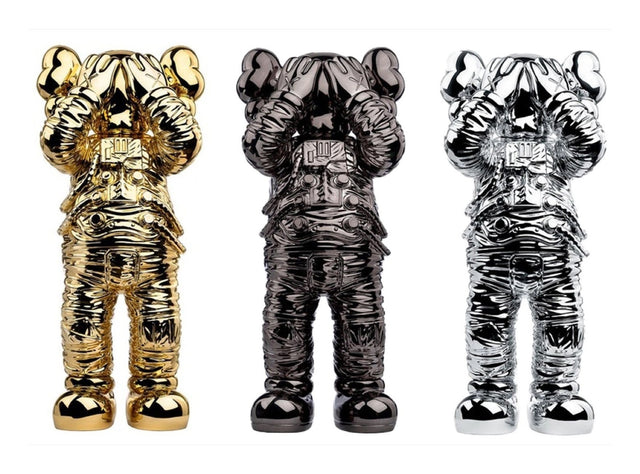
KAWS Holiday Space Set of 3 Gold Black Silver Companion Astronaut Figure Rare
$2,900.00 USD
-
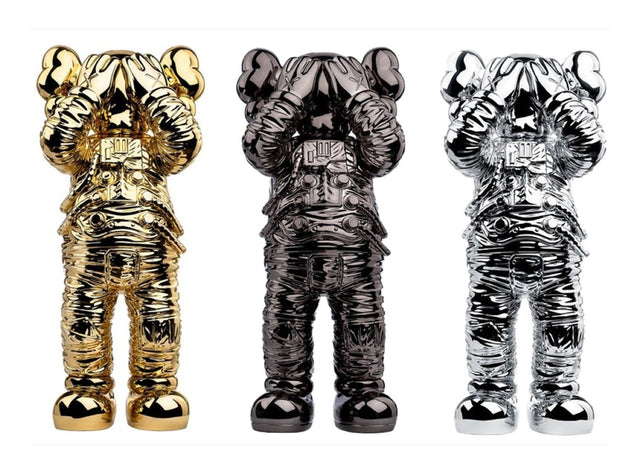
KAWS Holiday Space Set of 3 Gold Black Silver Companion Astronaut Figure
$2,900.00 USD
-

KAWS Companion Flayed Open Edition Black Medicom Toy Dissected Sealed New Figure
$599.00 USD
-
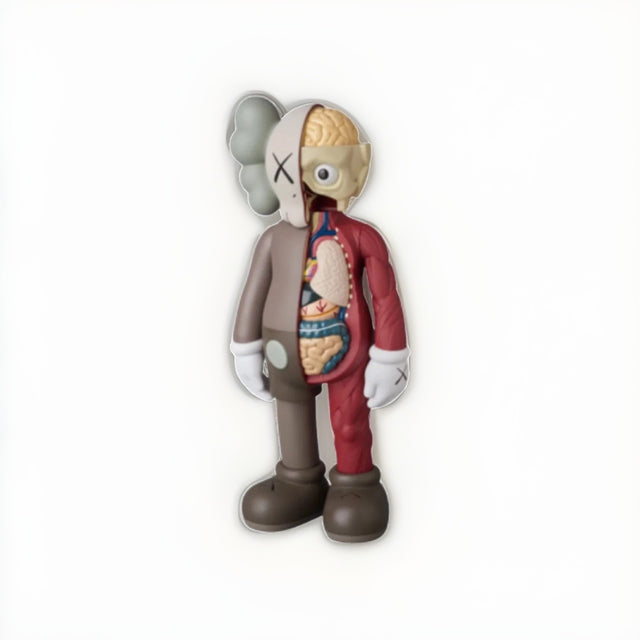
KAWS Companion Flayed Open Edition Brown Medicom Toy Dissected Sealed New Figure
$349.00 USD
-
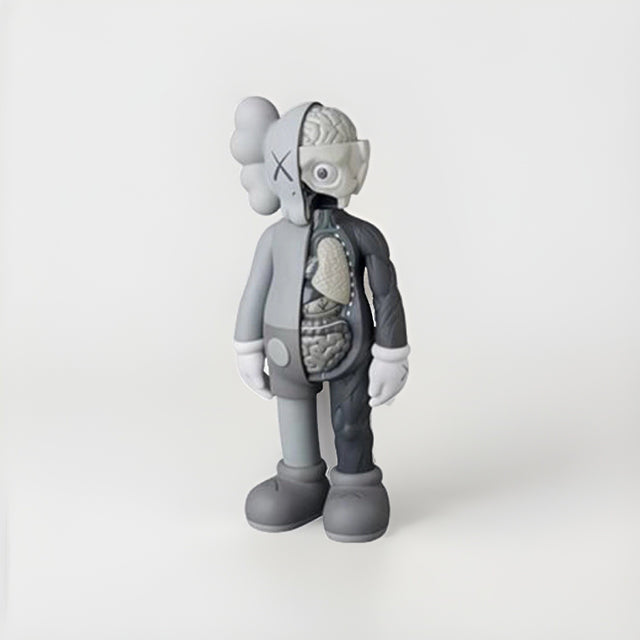
KAWS Companion Flayed Open Edition Grey Medicom Toy Dissected Sealed New Figure
$349.00 USD
Browse the collection for current listings.