One LOA Is Good. Two LOAs Is a Different Conversation.

Most collectors never think about pairing authentication letters. They get their piece certified, it comes back clean, they put it in the frame and move on.
That works fine for a signed 8x10 of a regional act. It does not work when you're holding a Hendrix contract, a Beatles drum head, or a Tupac-signed album cover with a six-figure ask.
At a certain threshold, a single LOA is no longer the finish line. It's the starting point.
The secondary market has internalized this. Major auction houses running serious music consignments increasingly expect dual authentication on tier-one pieces. Private dealers operating at the top of the market treat a lone third-party letter with quiet skepticism when the price is high enough. Sophisticated buyers ask the question before their attorney does.
So when exactly does one letter stop being enough, and what does a defensible dual-LOA strategy actually look like?
That's the whole conversation. Let's have it.
The Anatomy of an LOA: What You're Actually Buying
An LOA — Letter of Authenticity — is an opinion. A professional, documented, commercially accountable opinion, but an opinion nonetheless. It represents one authenticator's judgment based on the exemplars, database comparisons, provenance materials, and physical examination available to them at the time of review.
Different houses do this differently.
JSA: Basic vs. Full LOA
JSA — James Spence Authentication — issues two distinct products that collectors routinely conflate. The JSA Basic is a sticker-and-certificate confirmation. It's fast, it's relatively inexpensive, and it carries less weight in high-stakes transactions. A JSA Basic on a premium piece is not the same as a JSA Full LOA.
The Full LOA involves a written letter with examiner commentary. That's the document that belongs in a serious provenance file. When dealers and auction specialists say "JSA," they typically mean the Full LOA. If someone offers you a JSA Basic as the sole authentication on a five-figure piece, that's a conversation worth slowing down.
BAS: Beckett and the Roger Epperson Layer
Beckett Authentication Services operates one of the most recognized grading and authentication platforms in the hobby market. Their standard BAS LOA carries genuine weight, particularly for sports crossover items and mainstream entertainment signatures.
But for music memorabilia specifically, the tier that matters is Roger Epperson REAL — Epperson's specialist music authentication operating within the Beckett framework. Epperson has spent decades building the comparative exemplar database that serious music authentication requires. A BAS letter with Epperson's direct involvement is categorically different from a standard BAS entertainment review.
When you're talking about vintage rock, soul, hip-hop, or jazz signatures, that distinction matters enormously.
PSA: Platform Strength and Known Limitations
PSA/DNA is the dominant name in autograph authentication by volume. Their encapsulation infrastructure, population reporting, and collector familiarity make PSA certs immediately legible in the market. PSA stickers move product.
But PSA has also been a target. The FBI's Operation Bullpen — a multi-year investigation into forged sports and entertainment memorabilia that resulted in dozens of convictions — exposed the degree to which bad actors had successfully seeded fraudulent items with legitimate-looking certifications. PSA has rebuilt and tightened processes since that era, but the lesson embedded in Bullpen was structural: no single certification layer is immune to a determined forgery operation.
PSA itself has posted guidance acknowledging the existence of counterfeit PSA certificates in the market. Their certificate verification tool exists precisely because holders of fake PSA stickers are a real documented phenomenon, not a theoretical risk.
That context matters when you're deciding whether one letter closes the conversation.
Why Dual LOAs Exist: The Market Logic

Here's the core argument for pairing two letters.
No single authenticator has seen every exemplar in existence. Comparative databases are deep but not complete. Handwriting characteristics shift across a career, under different conditions, across different signing instruments. An authenticator working from a strong 1970s sample set may have limited exposure to late-career examples of the same signature. The reverse is equally true.
Two independent opinions, from two separate processes, using separate exemplar libraries, create a corroborating record that's structurally harder to dismiss.
This is not an accusation against any single house. It's an acknowledgment that authentication is probabilistic, not absolute.
If a single LOA can be wrong in theory, why would you leave that uncorroborated when the stakes are high enough?
The answer from serious collectors is: you wouldn't.
The Insurance and Estate Angle
Dual LOAs aren't just a buyer's due diligence tool. They matter downstream.
High-value memorabilia insurance policies frequently require formal authentication documentation. When a claim is filed, underwriters look for corroboration. A single LOA from one house, with no independent confirmation, is a thinner file than two independent letters from recognized specialists.
Estate planning is the same story. When a collection transfers to heirs or goes to auction post-estate, the authentication record becomes the foundation of every value conversation. Heirs who inherit well-documented pieces — multiple letters, provenance chain, acquisition records — are in a materially stronger position than heirs inheriting a piece with one sticker and a receipt from a dealer who's since closed.
Build the file now. Let it work for you later.
When to Actually Pull the Trigger on a Second LOA
Not every signed piece needs two letters. The calculus involves several intersecting factors.
-
Value threshold
- At lower price points, the cost of a second authentication can represent a meaningful percentage of the item's value. That math doesn't pencil for a signed concert poster in the hundreds.
- Once you're operating at a level where the item commands serious attention — particularly anything approaching five figures and well above — the proportional cost of a second LOA becomes negligible against the value protection it provides.
- Use your own risk tolerance to set the floor, but most experienced operators run dual LOAs on anything they'd be uncomfortable explaining without one.
-
Deceased signers
- Once the signer cannot be consulted, the authentication record becomes the permanent foundation. There is no correction mechanism. There is no "we can get the artist to verify." What you have is what you have.
- Vintage Beatles signatures. Kurt Cobain. Johnny Cash. Tupac. Notorious B.I.G. Jimi Hendrix. Jim Morrison. The list of deceased artists whose signatures command serious market premiums is long, and the forgery incentive for each name on that list is correspondingly high.
- A second independent LOA on a deceased-signer piece is not paranoia. It is basic stewardship.
-
Unusual provenance or acquisition circumstances
- Estate sales, overseas acquisitions, inherited collections, and pieces with documentation gaps all carry elevated scrutiny in a serious transaction.
- Dual LOAs help paper over provenance questions by layering independent expert confirmation on top of whatever the chain-of-custody record can and can't demonstrate.
-
Secondary market resale intent
- If you're buying to hold and sell, you're building for a buyer you haven't met yet. That buyer may have different authentication expectations than you do. Build to the highest reasonable standard now.
- Auction houses placing serious estimates on music memorabilia lots will ask about the authentication record. Walking in with two letters from recognized specialists is a stronger position than walking in with one.
-
High-forgery-risk signatures
- Some signatures have been forged at industrial volume because demand outstrips authenticated supply by orders of magnitude. This is a well-documented market reality for certain legacy artists.
- Where the forgery density in the market is known to be high, the standard for what constitutes a defensible authentication record should be correspondingly higher.
Which Combinations Actually Work

Not all pairings are equal. The goal is independent corroboration from two credibly distinct processes. Pairing two letters that used the same source exemplars, or two letters from houses that share staff or methodology, does not give you meaningful independence.
BAS/Epperson REAL + JSA Full LOA
This is the strongest standard pairing for music memorabilia. You're getting the depth of Epperson's dedicated music exemplar library alongside JSA's independent full-letter opinion. These are genuinely separate processes, separate examiners, and separate databases.
When both come back clean and consistent, that corroborating record is about as solid as the market currently offers without moving into specialist forensic territory.
PSA/DNA + BAS/Epperson REAL
A valid pairing, particularly for items where PSA's encapsulation or population data adds market legibility. PSA's brand recognition in the broader collector market means their cert travels well. Adding Epperson's music-specific depth creates a complementary stack.
Be aware that PSA and BAS have both examined the same exemplar pools for major artists over the years. This is an inherent limitation of the field — the universe of documented exemplars for any given artist is finite. But organizational independence and separate examiner review still provide meaningful corroboration.
PSA/DNA + JSA Full LOA
The high-volume standard pairing in the broader autograph market. Widely recognized, widely accepted. For music specifically, if you have the option to substitute BAS/Epperson for one of these slots, take it. The music-specific depth is worth it.
What Doesn't Count as a Second LOA
A COA issued by the original seller is not an independent LOA. A letter from an individual private authenticator with no institutional affiliation and no public accountability record is not a substitute for a recognized house LOA. A grading encapsulation without an accompanying written letter is not a full LOA.
Two LOAs means two independent letters from two recognized third-party authentication houses operating with separate processes. Full stop.
The Space Memorabilia Note (and Why It Matters for Method)
A brief parallel worth drawing: the space memorabilia market operates with a similar dual-LOA logic, but adds a fourth variable. BAS, JSA, and PSA are the recognized standard houses, and for items where technical provenance matters — flown items, mission documentation, astronaut contracts — a Zarelli specialist letter is considered the additional layer of expert confirmation that moves a piece from well-documented to definitively sourced.
The principle translates directly to music: for items where the specific event context matters as much as the signature itself — a contract signed at a specific session, a set list from a documented tour date, an instrument with verifiable touring history — the authentication stack may benefit from a specialist letter that speaks to the item's context, not just the signature's legitimacy.
Dual LOAs cover the signature. The provenance story requires its own documentation layer.
Practical Process: How to Actually Do This

Running dual authentication isn't complicated. It requires patience and a systematic approach.
-
Submit to your primary house first
- Choose the house whose opinion you weight most heavily for the specific item type. For music, that typically means BAS/Epperson as the anchor.
- Wait for return before submitting elsewhere. Submitting simultaneously is logistically messier and creates potential chain-of-custody questions if physical submission is required.
-
Document the submission chain
- Keep every submission receipt, tracking number, submission form, and return envelope. This becomes part of the provenance record.
- Photograph the item before every submission. Front, back, details, any unusual characteristics. Date-stamped photographs at each stage create a timeline that matters.
-
Submit the first returned item (with its LOA) to the second house
- Some collectors submit the item with the first LOA enclosed. Others submit the item alone. Both approaches work. Including the first LOA gives the second examiner additional context; excluding it keeps the second review maximally independent. Either approach is defensible — decide based on what matters more for your specific situation.
-
Consolidate the record
- Both LOAs, all submission documentation, provenance materials, acquisition records, and photographs should live together in a single file for the piece. Digital backup is not optional.
-
Register where applicable
- PSA certificates can be registered and verified through their online portal. JSA maintains verification infrastructure. Use it. A certificate that can't be verified against the issuing house's database is a liability.
The Cost Reality
Dual authentication has a cost. LOA fees at recognized houses are not trivial, and for music memorabilia, specialist review commands premium pricing relative to standard submissions.
Frame this correctly: authentication fees are acquisition costs. They belong in the total cost basis of the piece, not in a separate mental accounting bucket where they feel like an optional expense. A piece purchased at one price with two strong LOAs is worth more, sells more easily, and carries less counterparty risk than the same piece purchased at a slightly lower price with no authentication or single authentication.
The question isn't whether you can afford the second LOA. The question is whether you can afford to skip it.
For anything at the tier of the market where dual authentication matters, the answer is almost always that skipping it costs more than getting it.
Red Flags
Before you finalize any dual-LOA strategy on a piece you're considering, watch for these signals.
- The seller resists dual authentication. A seller of a legitimate piece at a legitimate price has no rational reason to object to your authentication process. Resistance, urgency, or pressure to close before you can complete your review are disqualifying behaviors.
- The existing LOA is from an unverifiable or no-longer-operating house. Letters from defunct authentication operations, private individuals presenting as expert witnesses, or houses that have no verifiable public accountability record are not a foundation to build on. They are noise.
- The certificate number doesn't verify against the issuing house's database. As documented in PSA's own published guidance, counterfeit certificates exist. If a certificate number returns no result or an inconsistent result against the issuing house's verification system, stop the transaction.
- Both existing LOAs came from the same submission agent or the same seller-recommended authenticator. Independent means independent. If someone is offering you a piece pre-loaded with two letters that both traveled through the same hands before they reached the recognized houses, that independence is compromised regardless of what the letters say.
- The provenance story is vague in proportion to the price being asked. Authentication letters speak to the signature. They don't validate the provenance chain. A piece can carry two clean LOAs and still have a murky acquisition history. At elite price points, the story of how the item got from the signer to you matters, and gaps in that story should be disclosed and explored, not glossed over.
- Pressure to accept a JSA Basic as equivalent to a JSA Full LOA. They are not the same product. For high-value pieces, the distinction matters. Don't let anyone collapse it.
- The second LOA was obtained by the same party trying to sell you the piece. Sellers building the authentication file for their own listing creates an inherent conflict of interest, even when the houses involved are legitimate. Your second LOA should be obtained by you, through your own submission, for your own piece.
Bottom Line
One strong LOA from a recognized specialist house is the floor, not the ceiling.
For deceased signers, elite-tier price points, intended resale, insurance purposes, or any piece where the stakes of being wrong are genuinely consequential, dual LOAs from independent recognized houses aren't overcaution. They're market-standard practice at the level where the market is playing seriously.
BAS/Epperson REAL paired with JSA Full LOA is the strongest standard combination for music memorabilia. PSA stacks with either in ways that add market legibility. Use the combination that fits the specific piece and the specific market you're working in.
Document every step. Verify every certificate. Build the file like someone's going to scrutinize it in a dispute someday — because at high enough values, someone probably will.
The authentication record is the asset. Treat it that way.
Frequently Asked Questions
Does having two LOAs guarantee a piece is authentic?
No. Two LOAs represent two independent professional opinions that the signature is genuine. They are strong corroborating evidence, not a guarantee. Authentication — by any house, at any level — is a probabilistic judgment based on available exemplars and expertise. Two clean independent opinions from recognized specialists substantially raise the confidence level, but the word "guarantee" doesn't belong in any honest authentication conversation.
What's the difference between a JSA Basic and a JSA Full LOA for this purpose?
A JSA Basic is a sticker-and-cert confirmation product. A JSA Full LOA is a written letter with examiner commentary. For high-value music memorabilia transactions, auction house consignments, insurance documentation, and estate purposes, the Full LOA is the applicable product. If someone is presenting a JSA Basic as equivalent to a Full LOA in a significant transaction, push back on that framing.
I already have one LOA on a piece I bought years ago. Can I get a second one now?
Yes. Authentication houses accept items for review regardless of prior certification status. Submit the piece with whatever documentation you have — including the existing LOA — and request a full review. The second house will conduct their independent examination. Getting a second LOA after purchase is common practice for collectors upgrading their documentation on pieces they've held for years.
Does dual authentication change what I can ask for the piece when I sell?
It changes the quality of the conversation you can have with a serious buyer. Two independent LOAs from recognized specialists narrow the authentication risk for the buyer, which translates to less friction in the transaction and a stronger negotiating position at premium price points. Whether it changes the number depends on the specific piece, the market, and the buyer. What it consistently changes is the buyer's confidence level — and confident buyers close.
Are there artists where dual LOAs are essentially mandatory rather than optional?
The market has functionally made dual authentication the operating expectation for certain legacy artists where forgery volume has historically been high and authenticated examples command significant premiums. Without naming specific auction price results, it's accurate to say that for tier-one deceased artists in rock, soul, and hip-hop history, single-LOA pieces attract more scrutiny from serious buyers and auction specialists than dual-LOA pieces do. The expectation of dual authentication scales with how much the market has historically suffered from forgeries of a given signature.
Does the order I submit to the two houses matter?
Logistically, not significantly. The practical recommendation is to submit to your primary house first, wait for return, then submit to the second house. Submitting simultaneously is possible but creates chain-of-custody complexity if both houses require physical submission. For online or photographic submissions, simultaneous review is operationally cleaner. The more important question is independence: make sure your two submissions travel through separate hands and separate processes.
What about Banksy prints or Shepard Fairey pieces — does the dual LOA framework apply?
Different framework entirely. For Banksy, Pest Control is the only recognized authentication body, and nothing else substitutes for or stacks with it. For Shepard Fairey, there is no artist-issued COA; authentication relies on signature examination, edition numbering, verification against Obey Giant drop records, and the provenance chain. The dual-LOA framework as described in this article applies specifically to autograph and signature authentication, which is the operational domain of BAS, JSA, and PSA. Street art authentication operates under entirely different mechanics.
What if one LOA comes back positive and a second comes back rejected or inconclusive?
This is the scenario that dual authentication is specifically designed to surface. A split result — one clean, one rejected or inconclusive — does not average out to "probably fine." It is a significant finding that requires resolution before you proceed with any transaction. Investigate the basis for each opinion. Understand what exemplars each house used. Consider whether a third specialist opinion is warranted. A split result on a high-value piece is not a paperwork problem. It is a material question about the piece itself, and it deserves to be treated as exactly that.
Shop Music memorabilia
Explore current pieces available from the gallery.
-
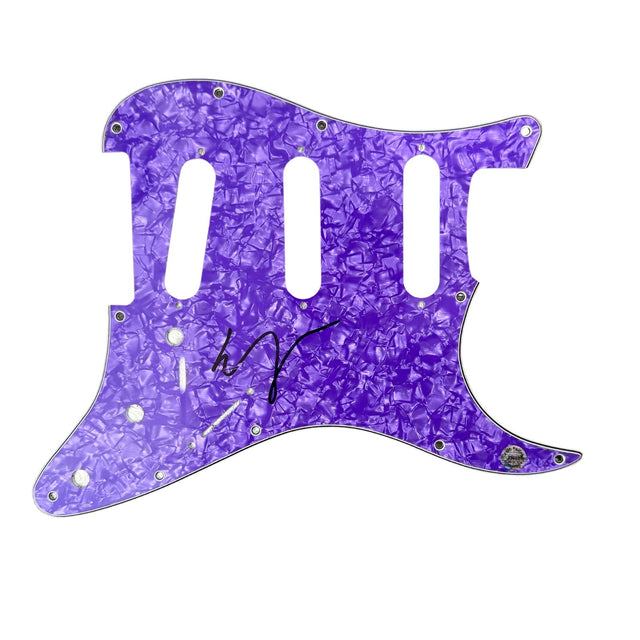
Vampire Weekend Ezra Koenig Signed Guitar Pickguard Autograph Hologram COA
$100.00 USD
-
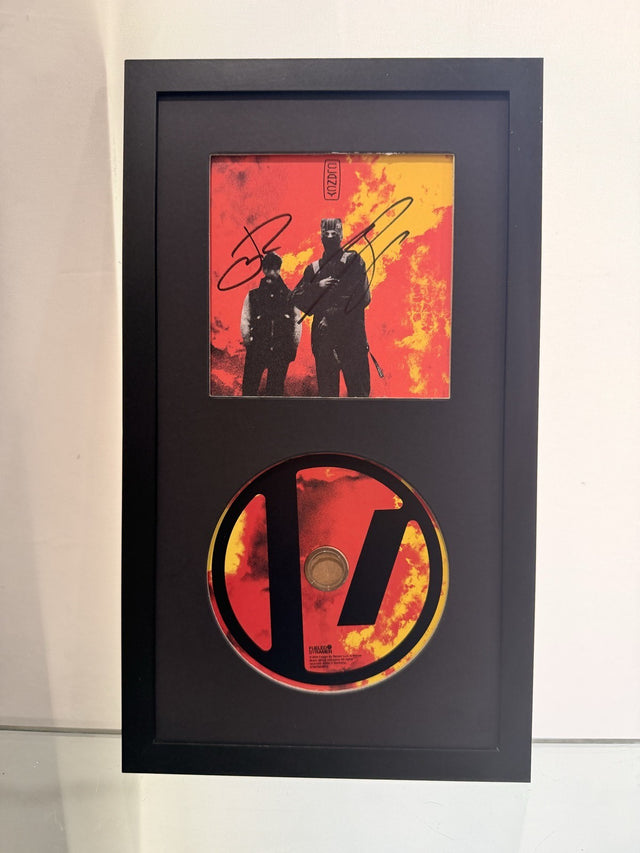
Twenty One Pilots Signed Clancy CD Framed Display Tyler Joseph Josh Dun Auto
$199.00 USD
-
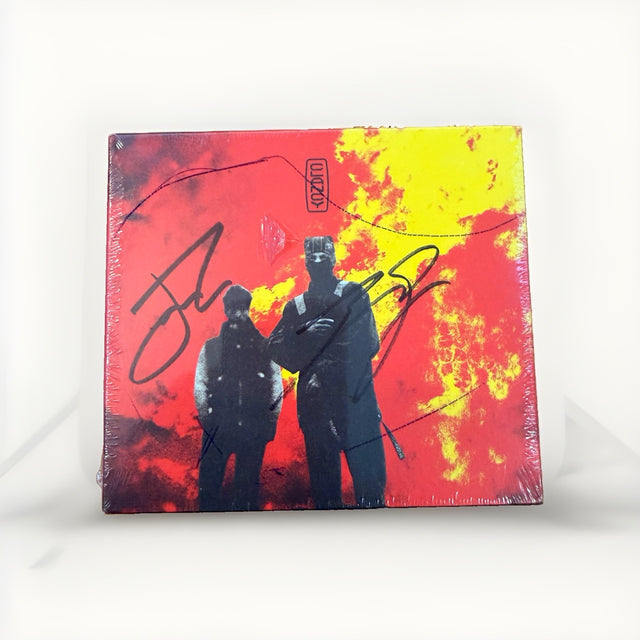
Twenty One Pilots Clancy Signed CD Tyler Joseph Josh Dun Sealed Unopened 2024
$189.00 USD
-
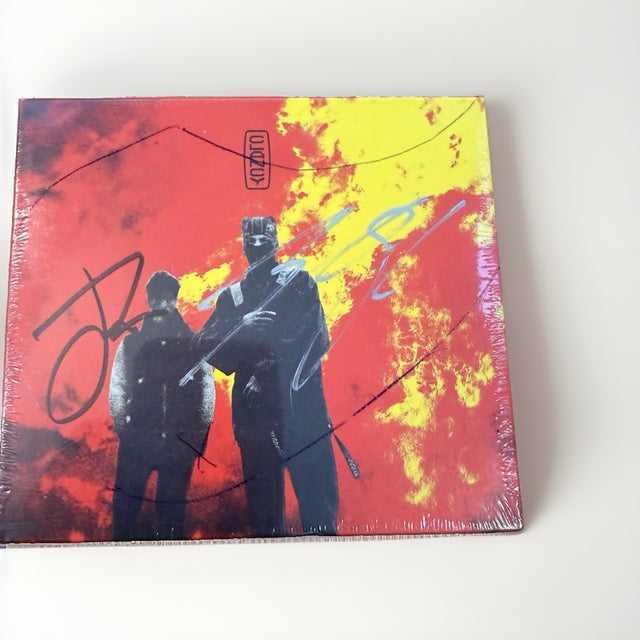
Twenty One Pilots Clancy Signed CD Sealed Tyler Joseph Josh Dun Silver Autograph
$189.00 USD
-
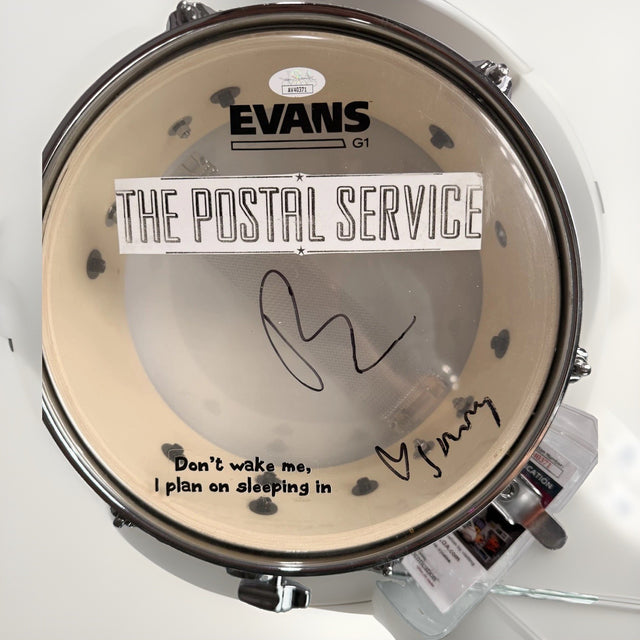
The Postal Service Dual Signed Evans M-80 Drumhead JSA A40371
$499.00 USD
-
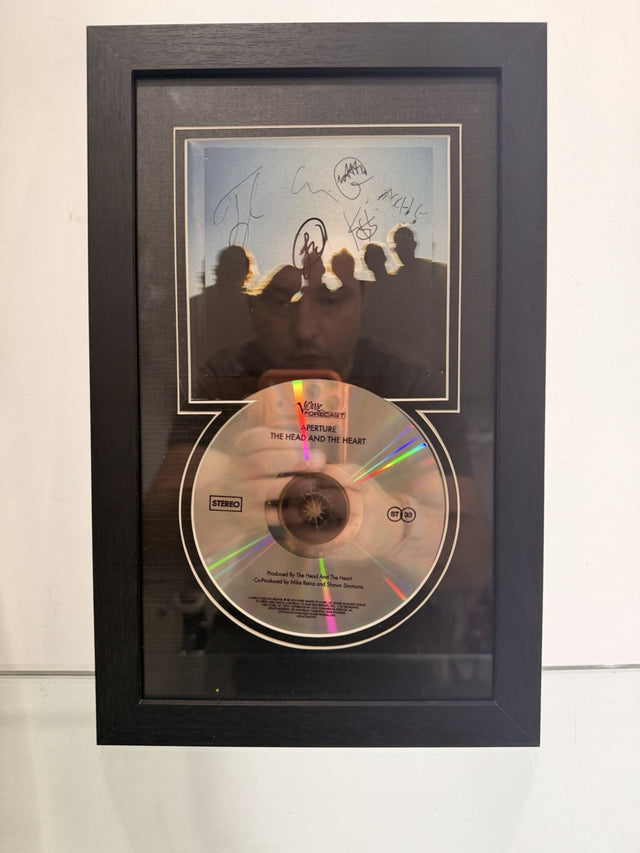
The Head and the Heart Band Signed Framed 'aperture' CD COVER ALBUM
$65.00 USD
Browse the collection for current listings.