How to Start Collecting Apollo-Era Space Memorabilia
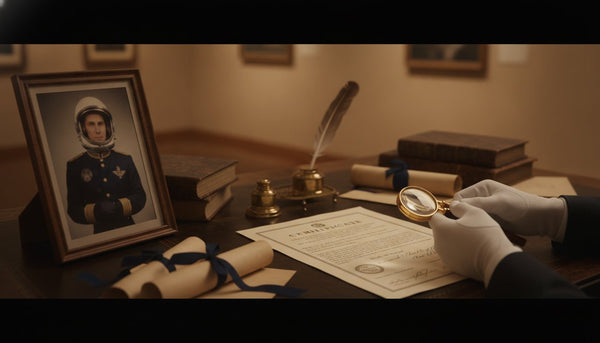
To start collecting Apollo-era space memorabilia, focus first on provenance and chain-of-custody rather than the object itself. Decide which category fits your budget and interests — flown vs. unflown artifacts, astronaut autographs, mission patches, NASA photographs, press kits, or hardware — then buy only pieces whose ownership history you can trace back toward the mission or a credible source. Authenticate autographs through established third-party services such as Beckett, JSA, or PSA, and rely on specialist provenance research (for example, from recognized space-history experts) for flown artifacts and hardware. Remember one rule above all: a certificate of authenticity alone does not prove that an item flew in space.
What "Apollo-era space memorabilia" actually means
The Apollo program (roughly 1961–1972, with Apollo 11's first crewed lunar landing in July 1969) sits at the center of a much broader collecting field that also touches Mercury, Gemini, Skylab, and Apollo-Soyuz. "Apollo-era memorabilia" is an umbrella term for the objects, documents, and images connected to that period of American human spaceflight. Some pieces physically traveled to space or the Moon; most did not. Both can be legitimate and collectible — the key is knowing exactly which you are buying and paying accordingly.
New collectors often assume everything in this space is rare and astronomically priced. In reality, the field spans a huge range: an unflown mission patch or a period NASA photograph can be an affordable entry point, while a flown artifact carried on a lunar mission and documented by the astronaut who owned it can command a significant premium. Understanding the categories is the foundation for collecting wisely.
It also helps to understand why this material exists in private hands at all. During the program, NASA distributed vast quantities of photographs, press kits, and documents to the media, contractors, and the public, and astronauts were permitted to carry small personal items in their preference kits. Over the decades, some flown items entered the market through the astronauts themselves or their estates, while training articles, spares, and surplus equipment dispersed through various channels. That mixed history is exactly why careful description matters: two superficially identical objects can have completely different stories, and only documentation tells them apart.
The core categories: flown vs. unflown, and everything in between
Flown vs. unflown artifacts
The single most important distinction in this hobby is flown versus unflown. A flown artifact physically traveled on a spaceflight — carried in the command module, lunar module, or a crew member's personal preference kit (PPK). An unflown artifact is an authentic period item of the same type that stayed on Earth. Flown status typically commands a substantial premium, which is precisely why it is the most misrepresented claim in the market.
Flown status is only as strong as the documentation and testimony behind it — ideally a clear line of custody from the astronaut or a NASA source, supported by contemporaneous records. Because "flown" carries such a price premium, treat any flown claim as something to be proven, not assumed. If a seller cannot substantiate how an item left Earth and returned, treat it as unflown regardless of what a certificate says.
Astronaut autographs
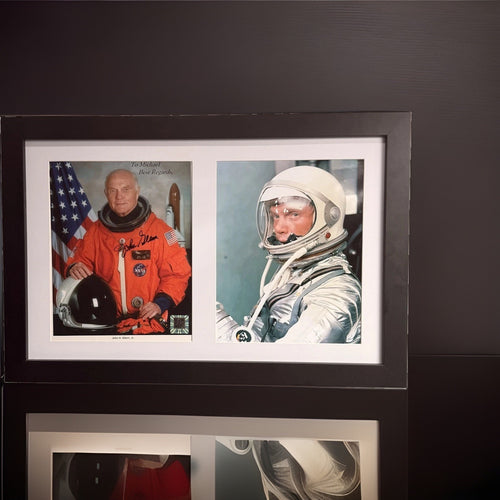
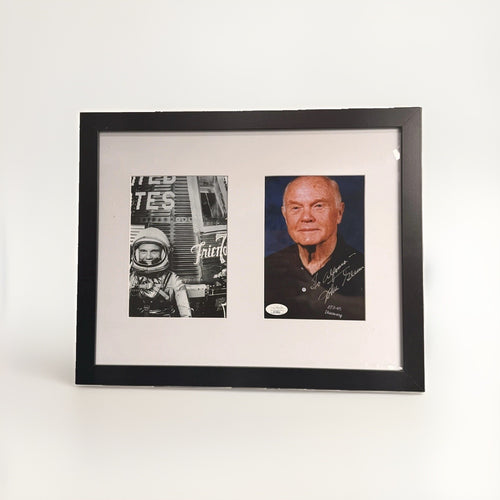
Signed photographs, covers (envelopes), documents, and books are among the most accessible ways into the hobby. Demand and price vary widely by astronaut — signatures from the small group who walked on the Moon are far scarcer and more valuable than those of astronauts who signed prolifically for decades. Autopen signatures (machine-produced), secretarial signatures, and outright forgeries are longstanding problems in this category, which is exactly why third-party authentication matters here (more below).
Within autographs, small details drive value: whether the item is a personally signed photograph versus a printed facsimile, whether it is inscribed to a specific person or "flat-signed," the era in which it was signed, and the condition of both the signature and the underlying item. Flown, signed covers — envelopes that traveled on a mission and were later signed by the crew — sit at the intersection of two categories and require both provenance for the flown claim and authentication for the signatures. As a beginner, the safest path is to buy signed material that already carries recognized third-party authentication, rather than hoping to authenticate a raw signature yourself.
Mission patches
Embroidered mission patches are popular, visually appealing, and available at many price points. Collectors distinguish between patches actually flown on a mission, contemporary "period" patches made at the time, and later reproductions or souvenir versions. All can be collectible, but the value gap between a documented flown patch and a modern reproduction is enormous, so accurate description and provenance are essential.
Photographs
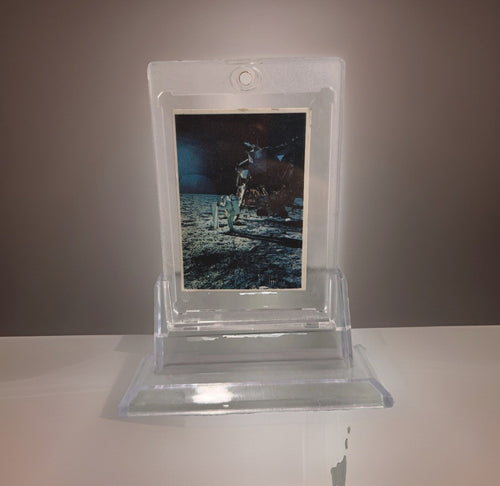
Vintage NASA photographs — particularly period prints with the correct paper, markings, and characteristics of the era — are a rich and often affordable area. Distinguishing an original period print from a later reprint requires attention to the print itself, not just the image. Photographs are a great learning category because they reward research and let you build knowledge before committing larger sums.
Press kits and documents
NASA and contractor press kits, flight plans, checklists, technical documents, and mission reports offer a paper trail into the program's history. Many are relatively inexpensive and give collectors a tangible connection to how missions were planned and communicated. Condition and completeness drive value, and — as with everything — documented association with a specific mission or individual increases desirability.
Hardware
Flight and ground hardware — from components and tools to training articles — is the most technical and provenance-dependent category. Genuine flown hardware is scarce and heavily documented; much of what circulates is training, test, or spare hardware, which is still collectible but must be described accurately. Because hardware is complex and expensive to authenticate, it is generally a category to grow into rather than start with.
Provenance and chain-of-custody: the heart of the hobby
If you remember one principle from this guide, make it this: in space memorabilia, provenance is the asset. Provenance is the documented history of an object's ownership and, where relevant, its journey to space and back. Chain-of-custody is the unbroken record connecting the item you are holding to a credible origin — an astronaut, a NASA source, a mission contractor, or a documented estate.
Strong provenance often includes several of the following, and the more independent, verifiable strands you can assemble, the stronger the case:
- A signed statement or letter from the astronaut or original owner describing the item and its history.
- Documented sale history from a reputable auction house or specialist dealer, with catalog references.
- Contemporaneous records, photographs, or NASA documentation tying the item to a mission or program.
- A clear ownership trail (estate, collection, or gift) that can be independently checked.
Conversely, red flags include vague origin stories, provenance that "will be provided later," documentation that only references itself, or claims that rest entirely on a single certificate. Provenance should be a web of mutually reinforcing evidence — not a single sheet of paper.
A useful habit is to ask, for any piece: "If I had to prove this item's story to a skeptical expert, what would I show them?" If the honest answer is "just the seller's word" or "just this certificate," the provenance is weak, and the item should be priced as if its best claim cannot be substantiated. Strong provenance also travels with the object — when you eventually sell, the same documentation that protected you protects the next collector and preserves the piece's value. Keep every letter, catalog reference, and photograph together with the item, and record where and when you acquired it.
Authentication: autographs vs. artifacts are different disciplines
One of the most common mistakes new collectors make is treating all authentication as the same process. It is not. Autographs and physical artifacts are authenticated through different channels, and conflating them leads to costly errors.
Authenticating autographs (Beckett, JSA, PSA)
Signed items are best authenticated by established third-party autograph authentication services — most notably Beckett Authentication Services (BAS), James Spence Authentication (JSA), and PSA/DNA. These firms examine signatures against known exemplars to distinguish genuine hand-signed items from autopen, secretarial, and forged signatures, and they issue their own certification. For autographed Apollo-era material, a signature backed by one of these recognized services carries far more weight than an unsupported seller claim or a generic in-house certificate.
Authenticating artifacts and flown status (specialists and provenance)
Physical artifacts — flown items, hardware, patches, and documents — are a different matter. There is no single "grading company" that can certify that an object flew in space. Instead, flown and artifact authenticity rests on provenance research and the assessment of recognized space-history specialists and reputable auction houses that have handled comparable material. Well-known experts in the field (for example, space-history specialists who research and vet Soviet and American flown material) build the documented case that supports a flown claim. This is why the same object can be worth vastly different amounts depending on the strength — and independence — of its paperwork.
A COA alone does not prove flown status
This deserves its own emphasis: a certificate of authenticity, on its own, does not prove that an item flew in space. A COA is only as credible as the person or organization issuing it and the evidence behind it. Anyone can print a certificate. What matters is whether that certificate is backed by verifiable provenance, credible testimony, and independent corroboration. Treat a COA as one supporting document within a larger evidence file — never as the sole proof of a flown or high-value claim.
What to collect on different budgets
Space memorabilia is welcoming to a wide range of budgets. The table below offers general guidance on where different collectors often begin. Treat these as broad, illustrative ranges — actual prices vary significantly by astronaut, mission, condition, edition, and the strength of provenance. For current market context, see the store's Financial Insights and the Apollo 11 price guide.
| Budget level | Sensible starting points | What to prioritize |
|---|---|---|
| Entry | Unflown/reproduction mission patches, period NASA photographs, press kits and documents | Learning the field, accurate descriptions, condition |
| Mid-range | Authenticated astronaut autographs (Beckett/JSA/PSA), original period photographs, signed covers | Third-party autograph authentication, desirable signers |
| Advanced | Documented flown artifacts, flown patches, training or flight hardware | Deep provenance, specialist vetting, chain-of-custody |
A practical approach for most new collectors: start in the entry tier, use those purchases to build knowledge and relationships with reputable sellers, then move up as your confidence and provenance-reading skills grow. There is no need to chase a flown artifact on day one — the affordable end of the hobby is genuinely rewarding and historically rich.
Building a focused collection over time
The collectors who enjoy this hobby most — and tend to end up with the most coherent, valuable collections — usually pick a focus rather than buying a little of everything. A focus gives you a framework for saying "yes" and "no," and it deepens your expertise in a defined area, which in turn makes you a sharper buyer and a more credible seller.
Common ways to focus include:
- A single mission — for example, assembling patches, photographs, press kits, and documents connected to one Apollo flight.
- A category across missions — such as period NASA photographs, or authenticated autographs of the Moonwalkers.
- A theme — the lunar landings, the early Mercury and Gemini groundwork, or the engineering story told through documents and hardware.
Whatever you choose, let quality lead quantity. One well-documented, correctly authenticated piece will almost always outperform several thin or questionable ones — in enjoyment, in resale, and in the confidence you have that what you own is exactly what it claims to be. As your collection grows, revisit our Collector's Hub and Financial Insights to keep your buying grounded in market context rather than impulse.
How to buy safely
Buying safely in this field is mostly about discipline and patience. The following checklist distills the principles that protect collectors at every budget level:
- Buy the provenance, not just the object. Ask for the complete ownership history in writing before you buy, and be willing to walk away if it is thin.
- Match the authentication to the item. Autographs → Beckett, JSA, or PSA. Flown artifacts and hardware → specialist provenance research and reputable auction pedigree.
- Treat every COA skeptically. Ask who issued it, on what evidence, and whether it is independently corroborated. Remember it does not, by itself, prove flown status.
- Prefer reputable sources. Established auction houses, specialist dealers, and vetted galleries offer accountability, clear return policies, and accurate descriptions.
- Verify the specifics. Confirm the astronaut, mission, and whether an item is flown or unflown — and make sure the listing says so explicitly rather than implying it.
- Scrutinize condition. For photographs and documents, understand period characteristics; for patches, distinguish flown, period, and reproduction; for hardware, insist on documentation.
- Be patient with pricing. Use comparable sales and market context rather than a single asking price, and let unrealistic "flown" bargains raise your suspicion, not your excitement.
For a deeper, category-by-category walkthrough, our Apollo 11 buyer's guide and Apollo 11 authentication guide expand on these principles, and the Collector's Hub gathers our broader collecting resources in one place.
Frequently asked questions
How do I start collecting Apollo-era space memorabilia?
Start by choosing a category that fits your budget — unflown patches, period photographs, and press kits are affordable, well-documented entry points — and make provenance your first filter on every purchase. Learn to read chain-of-custody, buy from reputable sources, authenticate autographs through Beckett, JSA, or PSA, and rely on specialists for flown artifacts. Build knowledge with lower-cost pieces before pursuing flown material or hardware.
Does a certificate of authenticity prove an item flew in space?
No. A COA alone does not prove flown status. A certificate is only as credible as its issuer and the evidence behind it, and anyone can print one. Flown claims must be supported by verifiable provenance, credible testimony, and independent corroboration — treat a COA as one supporting document within a larger evidence file, never as standalone proof.
What is the difference between flown and unflown memorabilia?
A flown artifact physically traveled on a spaceflight — often carried in a crew member's personal preference kit — while an unflown item is an authentic period object of the same type that stayed on Earth. Flown status commands a significant premium and is the most misrepresented claim in the market, so it should always be proven with documentation rather than assumed.
How do I authenticate an astronaut autograph?
Use an established third-party autograph authentication service — Beckett Authentication Services (BAS), James Spence Authentication (JSA), or PSA/DNA. These firms compare a signature against known exemplars to rule out autopen, secretarial, and forged signatures. A signature backed by one of these services is far more trustworthy than an unsupported seller claim or a generic in-house certificate.
Who authenticates flown artifacts and hardware?
Unlike autographs, there is no single grading company that certifies flown status. Flown artifacts and hardware are validated through provenance research and the assessment of recognized space-history specialists and reputable auction houses that have handled comparable material. The strength and independence of that documentation is what supports — or undermines — a flown claim.
Is Apollo memorabilia a good field for a beginner on a modest budget?
Yes. The hobby spans a wide range of prices, and the entry tier — unflown or reproduction patches, period NASA photographs, and press kits — is historically rich and genuinely rewarding. Starting there lets you build expertise and relationships with trustworthy sellers before moving up to authenticated autographs and, eventually, documented flown material.
Buy & authenticate with confidence
Apollo-era collecting rewards patience, research, and a provenance-first mindset. Browse our curated space memorabilia collection, and lean on the Apollo 11 buyer's guide, the authentication guide, and the price guide to buy accurately described, well-documented pieces. Whether you begin with a single period photograph or work toward a documented flown artifact, let chain-of-custody — not a lone certificate — be your guide.