Medicom Toy releases its products — most famously the BE@RBRICK — through a layered system of channels: direct sales via its own online and physical stores, randomized lottery draws for high-demand releases, blind-box assortments for its themed series figures, partner-brand exclusives sold through collaborators' own channels, and event or region-limited drops. For the most sought-after items, Medicom typically opens a timed lottery entry window rather than selling first-come, first-served: collectors register an account, submit one entry during the window, and winners are selected at random and given a deadline to complete payment. Everything else — the mechanics of blind boxes, secret chase figures, regional exclusives, and collaboration allocations — flows from this same philosophy of controlled scarcity. Below, we break down how each release method works and what it means for collectors buying on the secondary market.
Who Is Medicom Toy, and Why Do Its Release Methods Matter?
Medicom Toy is a Tokyo-based collectible toy company best known for the BE@RBRICK, a stylized bear-shaped figure produced in a standard body shape that becomes a canvas for artists, fashion houses, musicians, anime franchises, and global brands. The BE@RBRICK platform debuted in the early 2000s and has since grown into one of the most collected designer toy lines in the world, produced in multiple scale sizes — commonly referenced as 100%, 400%, and 1000% — where the percentage describes the figure's size relative to the standard small figure.
Understanding how Medicom releases product is not trivia. It is the foundation of the entire collecting hobby, for three reasons:
- Release method determines scarcity. A blind-boxed series figure, a lottery-only collaboration, and an open-retail release have completely different supply dynamics, and those dynamics drive secondary-market behavior for years afterward.
- Release method shapes provenance. Where and how a figure was originally sold tells you what documentation should exist — order confirmations, lottery win notifications, receipts from an authorized retailer — and that paper trail matters enormously when a piece changes hands later.
- Release method is an authentication clue. Knowing that a particular figure was only ever sold through a specific channel helps a knowledgeable buyer evaluate whether a secondary-market listing's story makes sense. A listing that contradicts the known release path deserves closer scrutiny.
At our gallery, we track these dynamics closely because they show up directly in the data. Use dated completed sales for the same artist, release, format and condition, recording the venue, currency and fees. Asking prices and broad archive totals do not establish a realized sale price or future return. Research references: BE@RBRICK collection.
The Main Medicom Toy Release Channels
Medicom does not use a single release model. Instead, each product is routed through one or more of the following channels depending on demand expectations, licensing arrangements, and the nature of the collaboration.
1. Direct Retail Through Medicom's Own Stores
The most straightforward channel is direct sale. Medicom operates its own retail presence in Japan and its own online storefronts, where many releases are simply listed for sale at retail price on an announced date and time. For lower-demand items, this works like any online shop: the product goes live, collectors add it to a cart, and it sells until stock runs out.
In practice, though, "first-come, first-served" has become rarer for hyped releases. When demand visibly outstrips supply — as it does for major artist collaborations and popular licensed characters — instant sellouts, bot activity, and site congestion make open sales frustrating for genuine collectors. That is precisely why the lottery system exists.
2. The Lottery (Raffle) System
For high-demand releases, Medicom and its official sales channels typically use a lottery — often called a raffle by Western collectors. Rather than rewarding whoever clicks fastest, the lottery gives every registered entrant an equal chance during a fixed entry window. We cover the step-by-step mechanics in detail in the next section, but the key point is this: the lottery is Medicom's primary tool for allocating scarce product fairly, and a lottery win notification is one of the strongest provenance documents a first owner can retain.
3. Blind-Box Series Releases
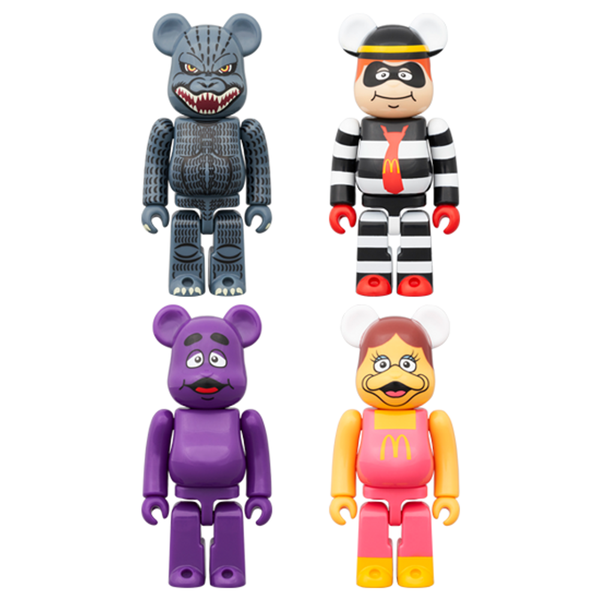
Medicom's numbered BE@RBRICK series — the recurring themed assortments that long-time collectors buy by the case — use a blind-box model. Each sealed box contains one small-scale figure, and the buyer does not know which design is inside until it is opened. Series assortments traditionally span recurring themed categories (such as basic, pattern, flag, horror, science fiction, cute, animal, and artist designs), plus low-ratio "secret" figures inserted at undisclosed or rarely disclosed rates. The randomness itself is the release method: scarcity is created not by limiting the total production run alone, but by controlling the ratio at which each design appears within sealed cases.
4. Collaboration and Partner-Brand Channels
Many of the most famous BE@RBRICKs are collaborations, and in those cases the partner often controls distribution. A fashion house may sell its BE@RBRICK exclusively through its own boutiques or web store; a musician's team may sell theirs through tour merchandise or an official artist shop; a streetwear brand may run its own raffle through its own app. In these arrangements, Medicom manufactures the figure, but the release mechanics — timing, quantity, region, and sales method — follow the partner's playbook. This is why two collaborations of similar fame can have wildly different availability profiles.
5. Event and Convention Exclusives
Medicom has a long tradition of releasing exclusive figures at toy fairs, pop-culture conventions, and its own promotional events. Event exclusives are typically limited to attendees, sometimes with per-person purchase limits, and occasionally allocated by on-site lottery when lines would otherwise be unmanageable. Because these figures never pass through general retail, they tend to reach the secondary market quickly — attendees buy them knowing that collectors elsewhere in the world had no direct access.
6. Regional Exclusives
Some releases are limited to a specific market — most often Japan, where Medicom is headquartered and where much of its retail footprint lives. Regional exclusivity may reflect licensing restrictions (a character licensed only for one territory), a partnership with a regional retailer, or simply a marketing decision. For international collectors, regional exclusives are usually obtainable only through proxy buying services at release or through the secondary market afterward, which is why they often carry persistent premiums in resale data.
How a Medicom-Style Lottery Actually Works, Step by Step
While exact interfaces and rules vary by storefront and by release, the lottery process that Medicom's official channels and many of its partners use follows a consistent general pattern. Here is the typical lifecycle of a lottery release:
- Announcement. The release is announced on official channels — Medicom's website, social media accounts, or the collaborating brand's channels — along with the product details, price, entry window, and eligibility rules.
- Account registration. Entrants generally need a registered account on the selling platform, often with a verified email address, shipping address, and payment method on file. Some lotteries restrict entries to accounts created before a cutoff, a measure aimed at reducing bulk bot registrations.
- Entry window. A fixed window opens — commonly lasting several days rather than minutes, which removes the speed advantage entirely. During this window, a collector submits an entry for the item, usually selecting size or variant where applicable.
- One entry per person. Rules typically limit each person, account, or household to a single entry per item. Duplicate entries can be disqualified. This is central to the fairness rationale of the lottery format.
- Random selection. After the window closes, winners are drawn at random from the entry pool. There is no visible queue and no advantage to entering early or late within the window.
- Winner notification. Winners are notified — typically by email or through the account dashboard — and given a defined period to complete payment, or are charged automatically to the payment method on file, depending on the platform.
- Forfeiture and redraws. If a winner fails to pay within the deadline, the allocation is generally forfeited. Some platforms redraw from the remaining pool; others simply absorb the unclaimed stock.
- Fulfillment. Won items ship to the address on the account. Many lotteries prohibit address changes after winning, another anti-reseller measure designed to keep one person from consolidating multiple wins.
Two practical implications follow. First, for collectors, patience and eligibility hygiene matter more than speed: an established account with accurate details, entered correctly during the window, is all anyone can do. Second, for provenance, the lottery paper trail — the entry confirmation, the win notification, the payment receipt, the shipping confirmation — forms a documented chain from Medicom's official channel to the first owner. When we evaluate consignments and sourcing opportunities, that kind of first-owner documentation is exactly what we look for, and it is a habit we encourage in our BE@RBRICK buyer's guide.
Blind Boxes and Secret Figures: Randomness as a Release Method
The blind-box model deserves its own examination because it works so differently from a lottery, even though both are randomized.
In a lottery, randomness determines who gets to buy. In a blind box, randomness determines what you bought. Every small-scale series figure ships in identical sealed packaging, and the assortment ratios — how many of each design appear per sealed case — control effective rarity. Common designs may appear multiple times per case; rare designs may appear once across several cases; secret figures appear at very low ratios that reward case-buying and fuel the trading economy among collectors.
A few structural points collectors should understand:
- Case purchasing is a strategy, not a guarantee. Buying a full sealed case improves the odds of pulling rarer figures but does not guarantee any specific design, and secret ratios are typically low enough that even case buyers routinely miss them.
- The trading market is a designed outcome. Blind-box economics intentionally produce duplicates, which is why series collectors trade so actively. Complete sets assembled from openings, and sealed unopened boxes or cases, each occupy their own niche on the secondary market.
- Sealed versus opened is a permanent fork. Once a blind box is opened, its "sealed" status is gone forever. Sealed product carries the mystery premium; opened product carries certainty. Neither is wrong, but they are different assets, and verified sales data treats them differently.
- Ratios are part of the literature. Serious series collectors study published assortment information where Medicom discloses it. When ratio information is not officially disclosed, treat third-party rarity claims with healthy skepticism and check the documentation rather than taking a listing's word for it.
Our BE@RBRICK index catalogs releases across series and collaborations, which makes it easier to place any individual figure in its proper context before you evaluate a purchase.
Comparing Medicom's Release Methods at a Glance
| Release method | How access works | Scarcity mechanism | Typical provenance documents | Secondary-market tendency |
|---|---|---|---|---|
| Open direct retail | Buy on site/in store while stock lasts | Production quantity | Order confirmation, receipt | Closest to retail pricing; premiums develop only if demand persists |
| Official lottery | Timed entry window, random winner selection | Allocation smaller than entry pool | Entry confirmation, win notice, payment receipt | Immediate premiums common; strongest paper trail |
| Blind-box series | Buy sealed boxes/cases openly | Assortment ratios and secret inserts | Retail receipt; sealed case documentation | Wide value spread across designs in one series |
| Partner-brand exclusive | Via collaborator's own store, app, or raffle | Partner-controlled quantity and channel | Partner's order confirmation | Highly variable; depends on partner's audience |
| Event exclusive | In-person at a convention or event | Attendance plus purchase limits | Event receipt, sometimes wristband/ticket records | Fast flip cycle; geography-driven premiums |
| Regional exclusive | Only in a specific market | Territorial restriction | Regional retailer receipt, proxy-service records | Persistent premiums outside home region |
No single method is "best" for collectors. Each creates a different balance of access, documentation, and long-term market behavior — and each demands slightly different diligence when you buy the piece secondhand years later.
Why Release Methods Drive Secondary-Market Value
When collectors ask us why two figures of similar visual appeal trade so differently, the answer very often traces back to the original release method. Several forces are at work:
Supply Certainty Versus Supply Mystery
Open retail releases have relatively knowable supply: the market saw how long the product remained available. Lottery releases obscure supply behind an unpublished allocation, and blind-box secrets obscure it behind undisclosed ratios. Markets tend to price uncertainty as scarcity, which is one reason lottery-only and chase items command attention out of proportion to their production numbers — whatever those numbers actually were. We deliberately avoid repeating unverified edition figures; when a production quantity is not officially documented, the honest answer is "limited, quantity undisclosed," and pricing should lean on verified comparable sales rather than folklore.
The First-Owner Filter
Lotteries and event exclusives filter the first-owner population. A lottery win requires an account, correct details, and luck; an event exclusive requires physical attendance. These filters mean early secondary-market supply comes from a small, identifiable pool, which concentrates listings and makes early price discovery volatile. Over time, prices settle as more first owners release inventory — a pattern we see repeatedly in our comparable-sales data, and one reason we counsel patience around release-week pricing. For a data-grounded view of how designer toy values develop, our financial insights hub and the BE@RBRICK price guide are the right starting points.
Channel Legitimacy and the Counterfeit Problem
Here is the uncomfortable truth every designer toy collector eventually learns: popular BE@RBRICK releases are counterfeited, and the counterfeiting risk correlates with exactly the release methods that create the most desire. A figure that was only ever sold through a lottery or a partner boutique has an inherently thin legitimate supply — which means the secondary market attracts imitations to fill the gap. Understanding the original release path is therefore a frontline authentication tool: it tells you what the legitimate supply chain looked like and what documentation a genuine example should plausibly carry. Our guide on how to spot a fake BE@RBRICK goes deeper on packaging and figure-level inspection points.
The Gauntlet Gallery Perspective: Authenticated Sourcing After the Drop
Release methods govern the primary market, but most collecting activity happens afterward, on the secondary market — and that is where we operate. Our approach is built around three pillars that respond directly to the dynamics described above.
First, authenticated sourcing. Every designer figure we offer is vetted before it is listed. This gives buyers a verification layer that survives future resale: the certificate travels with the piece, and any future owner can confirm the record online independently. You can read more about how our certification works in our authentication FAQ . For a KAWS or BE@RBRICK purchase, check the individual listing for release-specific packaging, production marks, condition and provenance. Manufacturer NFC is relevant only on releases that include it; a certificate alone does not establish authenticity.
Second, data-grounded pricing. Verified sold prices — filtered for condition, packaging status, and sale venue — are the only reliable signal in a market where listing prices can be aspirational. When you evaluate any figure, compare recent verified sales rather than trusting a single data point.
Third, documented provenance. We record and preserve the ownership story of the pieces we handle. When a consignor can supply the original lottery win email or partner-store order confirmation, that documentation is retained with the piece. It is not always available — plenty of genuine figures have passed through hands that kept nothing — but when it exists, it materially strengthens the piece's record.
This is the same standard we apply across our designer figurines collection, and it reflects a broader philosophy: scarcity created by release mechanics is only worth paying for when the object's authenticity and history are verifiable.
Provenance and Record-Keeping for Lottery-Era Collectibles
Because so much of the modern designer toy market flows through digital lotteries and online exclusives, the provenance record for these objects is largely digital — and digital records are easy to lose. Whether you buy at release or on the secondary market, we recommend building a simple archive for every significant piece:
- Save the original purchase evidence. Export lottery win notifications, order confirmations, and payment receipts as PDFs. Screenshots are better than nothing, but full emails with headers are stronger.
- Photograph the piece on arrival. Capture the sealed packaging, hologram, box condition, and any authentication elements from multiple angles, with date-stamped files.
- Preserve the packaging itself. For BE@RBRICKs, original boxes and inserts are integral to value. Store boxes away from sunlight, humidity, and pressure; never discard shipping cartons for larger-scale figures if you can avoid it.
- Log the chain of ownership. If you buy secondhand, record who you bought from, when, where, and what documentation transferred with the piece. A one-page provenance sheet per figure takes minutes and pays for itself at resale.
- Keep authentication records current. If your piece carries a blockchain certificate, verify the record after purchase and store the certificate details with your archive.
Terminology in this area can get dense — provenance, chain of custody, chase figures, secret ratios — and our collector glossary defines the vocabulary you will encounter throughout the hobby.
A Practical Buying Checklist for Lottery and Exclusive Releases
Whether you are entering primary-market lotteries yourself or buying lottery-era pieces on the secondary market, this checklist will keep you disciplined:
If You Are Entering a Lottery
- Follow only official announcement channels for the release — Medicom's own accounts or the collaborating brand's verified channels — and confirm the entry window and platform before acting.
- Register your account early, verify your email, and confirm your shipping and payment details are current before the window opens.
- Read the entry rules: one entry per person, size selection, regional eligibility, and payment timing all vary by release.
- Enter once, correctly, anywhere within the window — speed does not matter in a true lottery.
- Watch for the winner notification and pay before the deadline; forfeited wins are rarely recoverable.
- Archive every email in the process, win or lose. Even losing entries document the release's demand context.
If You Are Buying on the Secondary Market
- Identify the original release method. Was this figure open retail, lottery-only, a partner exclusive, or an event item? The answer frames every other question.
- Ask what documentation accompanies the piece — original receipts, win notifications, or an existing authentication certificate.
- Inspect packaging status honestly: sealed with hologram intact, opened-complete, or loose are three different products at three different value tiers.
- Compare recent verified sales for the exact figure, size, and condition rather than relying on asking prices.
- Buy from sources that stand behind authenticity with real verification infrastructure, not just reassuring language.
- After purchase, fold the piece into your own provenance archive immediately.
For a broader framework that applies across artists and categories, our Collector's Hub gathers our buyer's guides, authentication resources, and market references in one place — and collectors moving between BE@RBRICK and related designer toy lanes will find the KAWS packaging guide a useful companion, since packaging literacy transfers across the KAWS and BE@RBRICK worlds alike.
Frequently Asked Questions
Why does Medicom Toy use lotteries instead of first-come, first-served sales?
Lotteries neutralize the advantages of bots, fast connections, and time-zone luck. When demand vastly exceeds supply, an open sale rewards automation; a lottery gives every eligible entrant an equal chance during a multi-day window. It also produces cleaner demand data for the seller and a calmer release experience for collectors, which is why the format has become standard for high-demand designer toy releases.
Does winning a lottery guarantee the figure at retail price?
A lottery win is the right to purchase at the announced retail price within a payment deadline, subject to the release's rules. If payment is not completed in time, the allocation is typically forfeited. Winners generally cannot transfer the win to another person or change the shipping address after selection, as these restrictions deter organized reselling.
What are secret or chase BE@RBRICK figures?
In blind-box series assortments, secret (chase) figures are designs inserted at very low ratios that are not always disclosed. They are the rarest pulls in a series and drive much of the case-buying and trading activity among collectors. Because rarity claims around secrets attract exaggeration, verify any secret figure against documented series information and comparable verified sales before paying a premium.
Are regional exclusives ever re-released internationally?
Occasionally a design will reappear in a different colorway, size, or collaboration context, but a true regional exclusive is generally a one-time release for its market. International collectors typically acquire them via proxy services at release or through the secondary market later. Persistent scarcity outside the home region is why regional exclusives often hold premiums in long-run resale data.
How should I verify a lottery-only BE@RBRICK bought secondhand?
Start with the release path: confirm how the figure was originally sold and whether the seller's story fits it. Ask for original purchase documentation, inspect the packaging and hologram, and compare the piece against known authentic examples. Buying from a dealer that provides blockchain-certificate verification adds a durable authentication layer that survives future resale.
Is a sealed blind box worth more than an opened figure?
They are different assets. A sealed box preserves the mystery and the unopened-product premium, but you cannot confirm which design is inside. An opened figure offers certainty and displayability but permanently gives up sealed status. Neither is universally worth more; value depends on the series, the specific design (once known), condition, and what recent verified sales show for each state.
Shop BE@RBRICK
Explore current pieces available from the gallery.
-
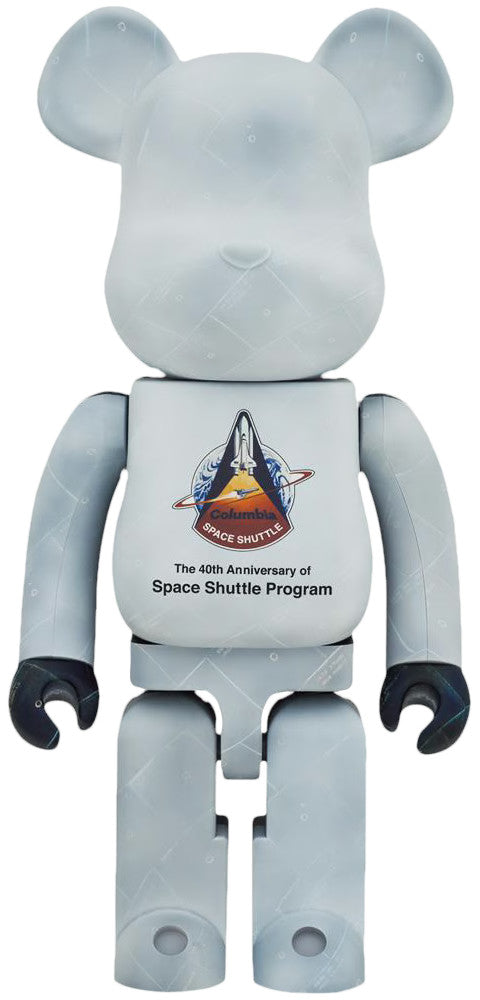
BE@RBRICK NASA Space Shuttle 40th Anniversary 1000% Medicom Toy Bearbrick
$600.00 USD
-
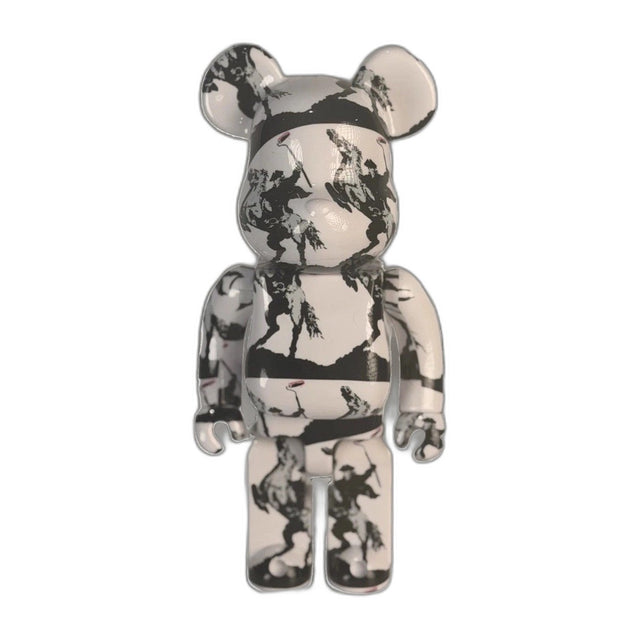
BE@RBRICK Brandalism Sync Banksy Medicom Toy Art Figure du-al.io Authenticated
$199.00 USD
-
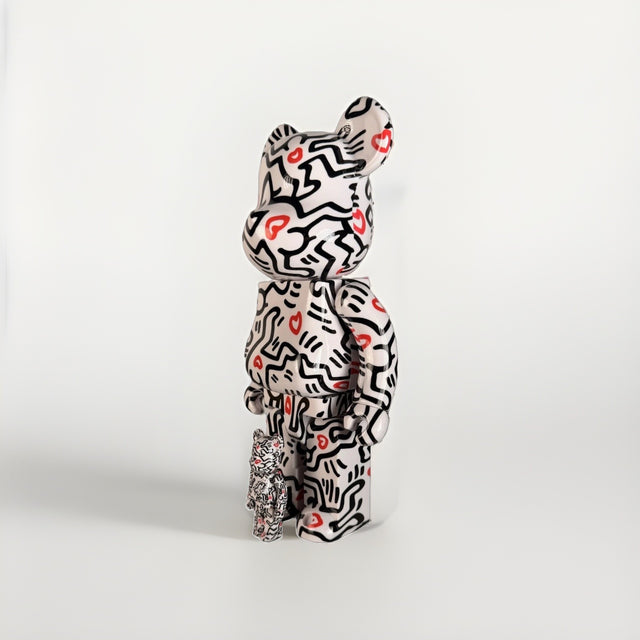
BE@RBRICK Keith Haring 400% + 100% Set Medicom Toy Bearbrick Foundation Art New
$199.00 USD
-
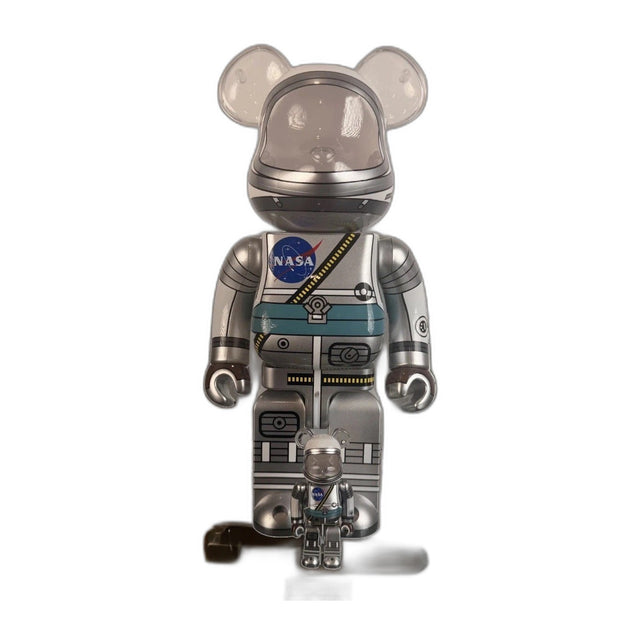
Bearbrick BE@RBRICK Mercury Astronaut 400% 100% Set NASA Medicom Toy Sealed New
$225.00 USD
-
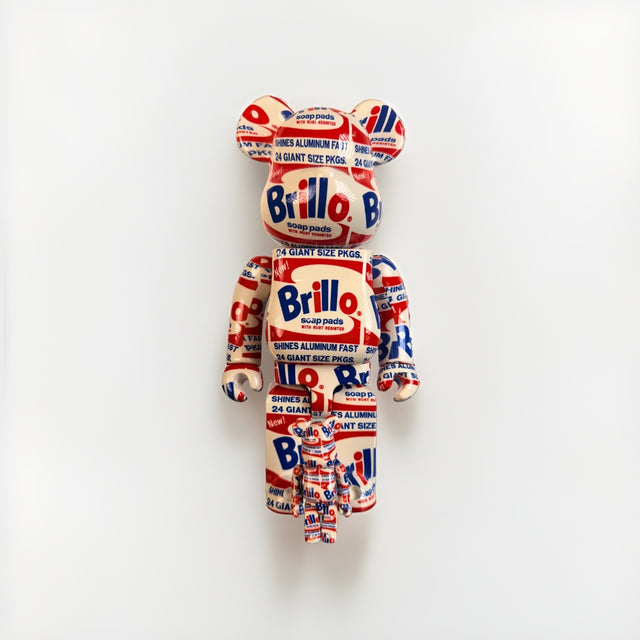
Bearbrick BE@RBRICK Andy Warhol Brillo 400% 100% Set Original 2020 Medicom New
$275.00 USD
Browse the collection for current listings.