Yes — sealed original packaging generally adds meaningful value to a BE@RBRICK, and in some segments of the market it is the single most important condition factor after authenticity itself. A sealed figure signals untouched, factory-fresh condition; it preserves every insert, tray, and printed element Medicom Toy shipped with the piece; and for blind-boxed series it preserves the mystery that drives an entire collecting subculture. That said, "sealed" is not a magic word. The premium varies by size, series, and buyer intent, an unverifiable sealed box carries its own risks, and a well-documented opened example with complete packaging can absolutely hold its own. This guide explains where the sealed premium is strongest, where it is weakest, and how to make the sealed-or-opened decision like a professional.
Why packaging is central to BE@RBRICK collecting
To understand why the sealed question matters so much, it helps to understand what a BE@RBRICK actually is as a collectible object. Medicom Toy's bear-shaped figure platform, introduced in the early 2000s, became one of the defining canvases of designer toy culture precisely because the object and its presentation were conceived together. The packaging is not an afterthought — it is part of the release. Collaboration boxes are designed with the partner brand, artist, or license in mind; the graphics, the window (or deliberate lack of one), the inner tray, and any accompanying cards or inserts are all part of what the collector is buying.
This is different from, say, a print, where the shipping tube is disposable. In the designer figurine world, the box is closer to a book's dust jacket or a vinyl record's sleeve: an integral component of the complete collectible. Serious collectors describe pieces as "MIB" (mint in box), "sealed," "opened but complete," or "loose," and each of those descriptions maps to a different tier of desirability. When our gallery evaluates BE@RBRICK pieces for acquisition, packaging completeness and condition are among the first things we assess, right alongside the figure itself.
There is also a cultural dimension. BE@RBRICK's smallest standard format has historically been distributed through blind-box series, where the buyer does not know which design is inside until the box is opened. That mechanic — the sealed box as a sealed possibility — trained an entire generation of collectors to treat unopened packaging as a category of its own. Even outside blind-box releases, the instinct carried over: a sealed box means the story of the object has not yet been disturbed.
Where the sealed premium is strongest
Not all sealed boxes are rewarded equally. Compare the same BE@RBRICK release, size and collaboration using dated completed sales, including packaging, condition and provenance. A format-wide growth rate does not value an individual figure.
Blind-box series and chase figures
For blind-boxed releases, a sealed box is a fundamentally different product from an opened one. Sealed, it is a lottery ticket; opened, it is a known quantity. Sealed cases and unopened blind boxes appeal to collectors who enjoy the reveal, to resellers who value the optionality, and to completists chasing rare "secret" designs. Once a blind box is opened, its value converges on the value of the specific figure inside — which can be higher or lower than the sealed average depending on what was revealed. This is the one corner of the market where opening the box can literally change the price in either direction in a single moment.
Larger formats in untouched condition
For the larger display formats — the mid-size and flagship-scale figures that anchor most serious collections — a sealed example represents the top of the condition pyramid. These pieces are usually bought to be displayed, so genuinely sealed survivors become scarcer over time as collectors open them. Years after a release, the sealed population of a popular collaboration can be a small fraction of the original run, and scarcity of sealed examples relative to opened ones is exactly the kind of dynamic that produces a durable premium. Our BE@RBRICK price guide walks through how condition tiers interact with rarity across formats.
High-demand collaborations
The premium is also amplified on releases where demand vastly exceeded supply on day one. When a collaboration sells out instantly and trades actively on the secondary market, buyers competing at the top of the market want the best available example — and "sealed, from a documented source" is the best available example. On slower releases with ample supply, the gap between sealed and opened narrows, because buyers are not competing hard enough to pay up for perfection.
Matched sets and full cases
Complete sealed cases of blind-box series, or sealed matched sets of multi-figure releases, carry value beyond the sum of their parts. A sealed case is verifiable as complete in a way that a hand-assembled set never quite is, and case-fresh provenance is attractive to buyers who intend to keep the set intact.
Where the sealed premium is weaker — and when opened makes sense
It would be misleading to tell you sealed is always better, because the market is more nuanced than that, and honest dealers should say so.
First, a sealed box hides its contents. You cannot inspect the figure for factory flaws, paint issues, or — in the worst case — verify that the correct figure is actually inside. A sealed box is a claim, and the strength of that claim depends entirely on the credibility of the chain of custody behind it. This is why provenance matters more for sealed pieces, not less: the less you can see, the more the documentation has to carry. We cover the inspection side in depth in our guide to spotting a fake BE@RBRICK.
Second, display collectors are a huge share of the market. Many of the most passionate BE@RBRICK collectors buy to display, full stop. For them, an opened figure in excellent condition with complete packaging — box, tray, inserts all retained — is functionally ideal: they can enjoy the piece and still preserve most of its collectible integrity. "Opened but complete" is a perfectly respectable tier, and pieces in that tier trade actively and well.
Third, condition of the packaging itself matters as much as the seal. A sealed box with crushed corners, sun-faded graphics, or torn shrink wrap can be less desirable than a carefully opened box in crisp condition. "Sealed" describes the state of the closure, not the state of the box, and buyers weigh both.
Finally, vintage and early releases follow different rules. For the earliest series and long-retired collaborations, truly sealed examples may be so scarce that the practical market standard is "complete with box." In those segments, an opened example with everything present is the expected condition, and buyers do not penalize it the way they would on a recent release.
Sealed vs. opened: a practical comparison
| Factor | Sealed | Opened, complete | Loose (no packaging) |
|---|---|---|---|
| Market position | Top condition tier; strongest for blind boxes and hot collaborations | Strong, widely traded tier; standard for display collectors | Entry tier; primarily for display or budget buyers |
| Contents verifiable? | No — relies on chain of custody and documentation | Yes — figure can be fully inspected | Yes — but originality of the figure is harder to anchor |
| Condition risk | Hidden factory flaws possible; box condition still visible | Handling wear possible; fully assessable | Highest wear risk; hardest to grade |
| Blind-box dynamics | Preserves the reveal; value is the series average plus optionality | Value tracks the specific figure revealed | Value tracks the figure, minus the packaging component |
| Best suited for | Long-hold collectors, set builders, resale flexibility | Display collectors who still want collectible integrity | Casual display, gifts, budget collecting |
The takeaway from the table is not "sealed wins" — it is that sealed, opened-complete, and loose are three different products serving three different buyers. Knowing which buyer you are is half the decision.
How to evaluate packaging condition like a dealer
Whether a piece is sealed or opened, the packaging itself deserves a structured inspection. Here is the checklist our gallery works through when grading a box.
- Corners and edges. Corners take the first damage in shipping and storage. Look for crushing, whitening, and delamination. Sharp corners on an older release are a genuinely strong signal of careful ownership.
- Surface and graphics. Check for sun fading (compare the display-facing side against the back), scuffs, sticker residue, price tags, and writing. Fading is permanent and disproportionately hurts value on graphics-driven collaboration boxes.
- Shrink wrap and closures. If the piece is described as sealed, examine how it is sealed. Factory wrap and closures have a consistent, machine-applied character. Loose, bubbled, or re-taped wrap deserves questions — resealing is a known practice, which is another reason documented sourcing matters.
- Window condition. On windowed boxes, check for scratches, clouding, or crushing of the window film.
- Inserts and inner trays. For opened pieces, confirm the inner tray, any protective sheeting, and all printed inserts or cards are present. "Complete" should mean complete.
- Odor and moisture history. Smoke and damp leave lasting traces on cardboard. A musty box often indicates storage conditions that may also have affected the figure.
Document what you find. Photographing the box from all six sides at purchase creates a condition baseline that protects you at resale time — a habit we recommend throughout our BE@RBRICK buyer's guide.
Authentication and the sealed box
Sealed packaging and authentication are deeply intertwined, and this is where a constructive, modern approach makes all the difference. A sealed box is powerful evidence when it comes from a documented chain — and weak evidence when it does not, because packaging alone can be imitated. The professional standard is to anchor the object, not just the box.
That combination addresses the core weakness of a sealed collectible — the fact that you cannot look inside — by making the chain of custody itself checkable. The buyer is no longer being asked to trust shrink wrap; they are given a certificate they can verify independently, tied to a specific object, backed by a dealer who documented the piece at intake. For a KAWS or BE@RBRICK purchase, check the individual listing for release-specific packaging, production marks, condition and provenance. Manufacturer NFC is relevant only on releases that include it; a certificate alone does not establish authenticity.
This layered approach also resolves the old dilemma of "opening it destroys the value." What actually protects value is not the wrap itself but the credibility of the piece's story. A carefully opened figure that was documented, photographed, certified, and repackaged with all original components retains a strong market position, because the documentation does the work the seal used to do. Conversely, a sealed box with no history, no source, and no certification asks the buyer to take a lot on faith. For a broader look at how modern authentication works across our categories, see our designer collectibles authentication guide and the wider library on our buyer's guides hub.
Provenance: the multiplier on top of packaging
If packaging is worth a premium, packaging plus provenance is worth more. Provenance in this category is refreshingly practical — it is not about aristocratic collection histories, it is about paperwork:
- Original purchase receipts or order confirmations from the retailer or drop.
- Dated photographs of the piece and packaging at acquisition.
- Certificates and digital records that identify the specific object, not just the model.
- A clean, explainable chain of ownership from release to today.
A sealed figure with its original receipt from the release date is a materially stronger asset than the same sealed figure with no history. The receipt corroborates the seal: it tells the buyer this box has plausibly been sitting in one careful place since day one. When we source pieces for our figurines collection, this is exactly the corroboration we look for, and it is why documented provenance is one of the pillars of how we present every piece.
Keep the records with the piece — a simple folder, physical or digital, per figure. When you eventually sell, that folder converts directly into buyer confidence, faster sales, and stronger realized prices. Our Collector's Hub has more on building a records system that scales with a growing collection.
Caring for sealed packaging over the long term
A sealed BE@RBRICK is only as good as its storage. Cardboard, printed graphics, and shrink film are all vulnerable materials, and the goal is to freeze the piece in time.
- Keep it out of direct sunlight — entirely. UV exposure fades box graphics and can discolor vinyl through windowed packaging. Even indirect bright light does slow damage. Display shelves near windows are the most common source of regret we see.
- Control temperature and humidity. Aim for stable, moderate conditions. Heat can soften and distort shrink wrap and accelerate vinyl discoloration; humidity swells and warps cardboard and invites mold. Avoid attics, garages, and basements.
- Store boxes upright and unstacked where possible. Weight crushes corners. If you must stack, keep stacks short and put the heaviest boxes at the bottom.
- Use outer protection. Acid-free tissue, box protectors, or simply a clean outer carton shields the retail box from dust, scuffs, and light. The retail box protecting the figure deserves its own protector.
- Handle with clean, dry hands. Skin oils mark matte-printed boxes permanently. It sounds fussy; it is also the difference between grades a decade later.
- Insure and inventory. As a collection grows, photograph everything, keep your inventory list current, and make sure your insurance actually covers collectibles at replacement value.
None of this is expensive, and all of it compounds. The sealed pieces that command the strongest premiums years from now will be the ones that were stored deliberately, not incidentally.
Should you open it? A decision framework
Collectors ask us this constantly, and the honest answer is: it depends on what the piece is for. Work through these questions:
- Is it a blind box? If yes, understand that opening converts optionality into a known outcome. Open it for the joy of the reveal, keep it sealed for the flexibility — but decide consciously.
- Did you buy it to live with it? If the piece was bought for display and you will see it every day, open it carefully, keep every component, and enjoy it. A collection you cannot look at is a storage unit.
- Is it a long-hold or set-completion piece? If the piece exists in your collection primarily as a store of value or as part of a matched set, the case for keeping it sealed is stronger — sealed populations shrink over time, and you would be joining the scarcer side of the ledger.
- Is the sealed claim well-supported? If you are buying sealed, weight the seller's documentation heavily. A sealed piece from a documented, certified source is a different asset from an anonymous sealed box.
- If you open it, do it right. Photograph the sealed box first, open along factory seams without cutting graphics, retain every insert and the wrap if it comes off cleanly, and store the packaging as carefully as the figure.
There is no morally correct answer here. The market rewards sealed pieces, but it also rewards well-kept opened pieces, and it always rewards good documentation. What it punishes is carelessness — torn boxes, missing trays, and unverifiable claims.
The Gauntlet Gallery perspective
Our position, built on watching this market across hundreds of thousands of comparable sales, is that packaging is a genuine value driver but never a substitute for verification. We have seen sealed pieces command decisive premiums in competitive segments, and we have seen "sealed" used as a shield by sellers hoping nobody asks harder questions. The difference between those two situations is always the same thing: documentation.
If you want to understand how sealed and opened examples of a given release have actually been trading, our Financial Insights hub explains how we read the comp data, and our BE@RBRICK index is the fastest way to orient yourself across series and collaborations before you buy.
How the sealed premium evolves over time
One of the most useful mental models for this question is to think of the sealed premium as a living number rather than a fixed one. On release day, nearly every example of a new BE@RBRICK is sealed, so the premium for sealed condition is close to zero — buyers are paying for the release itself, not the wrap. As months and years pass, collectors open their pieces to display them, boxes get damaged in moves, inserts go missing, and the sealed population steadily erodes while the opened population grows. The scarcer sealed examples become relative to demand, the more the market is willing to pay for them.
This is why the sealed-versus-opened gap on a decade-old collaboration often looks very different from the gap on last quarter's drop, and why blanket rules like "sealed is always worth more" or "the box only adds a little" both fail in practice. The premium is release-specific, time-specific, and demand-specific — three variables that can only be read from actual transaction data.
It also explains a pattern experienced collectors know well: the pieces that reward patience most are the ones where display appeal is strongest, because strong display appeal is precisely what shrinks the sealed population fastest. A figure everyone wants to open becomes a figure few people still own sealed. When you are deciding whether to preserve a seal, you are effectively making a forecast about how many other collectors will resist the same temptation. Verified comparable sales — not asking prices, which routinely overstate what sealed pieces actually achieve — are the only honest way to track where that ratio stands today, and re-checking the data before you buy or sell keeps your expectations anchored to the real market rather than to folklore.
Buying checklist: sealed BE@RBRICK edition
- Confirm the release: series, size format, collaboration, and what a complete example includes.
- Ask how the seller knows it is sealed and unopened — provenance, receipts, source of acquisition.
- Inspect (or request photos of) all six sides of the box: corners, edges, graphics, window, and wrap.
- Compare the packaging against verified reference examples of the same release.
- Check for signs of resealing: irregular wrap, non-factory tape, disturbed closures.
- Prefer sellers who offer object-level certification and stand behind authenticity in writing.
- Compare recent verified sales for both sealed and opened examples before settling on a price — the gap between the two tiers tells you exactly what the seal is worth on that specific release.
- Plan storage before the piece arrives: out of sunlight, stable climate, protected corners.
- Start the piece's provenance folder the day it arrives: photos, receipt, certificate, correspondence.
Frequently asked questions
How much more is a sealed BE@RBRICK worth than an opened one?
There is no universal percentage — the gap depends on the release, the size format, and demand. It is widest on blind boxes, hot collaborations, and recent releases where sealed examples are the competitive standard, and narrowest on vintage pieces where sealed survivors barely exist. The reliable method is to compare recent verified sales of the same release in both conditions, which is exactly how we price using our comparable-sales database.
Does opening the box ruin the value?
No. Opening moves a piece from the sealed tier to the opened-complete tier, which remains a strong, actively traded condition level — provided you keep the box, tray, and all inserts in excellent shape and document the piece. Careless opening, discarded components, and damaged packaging are what genuinely hurt value.
Can you authenticate a BE@RBRICK without opening the packaging?
The exterior can be assessed against verified reference examples — printing quality, construction, labeling, and the character of the factory seal — and the chain of custody can be verified through documentation. What a sealed box cannot give you is interior inspection, which is why documentation carries extra weight on sealed pieces.
Are sealed blind boxes a good way to collect?
They are a legitimate and fun lane, as long as you understand the mechanics: a sealed blind box is priced around the average outcome of the series plus the entertainment of the reveal, while opened figures trade on their specific identity. Buy sealed blind boxes from documented sources — resealing is a known risk in this corner of the market.
What counts as "complete" for an opened BE@RBRICK?
The figure, the retail box, the inner tray, any protective sheeting, and all printed inserts or cards that shipped with the release. Completeness standards vary slightly by release, so check what your specific piece originally included — our buyer's guide and index pages are built for exactly that kind of verification.
How should I store a sealed BE@RBRICK long term?
Out of direct sunlight, in stable moderate temperature and humidity, upright, unstacked or lightly stacked, and ideally inside an outer protector or clean carton. Avoid attics, garages, and basements. Photograph the box at intake and keep receipts and certificates together with your inventory records.
Shop BE@RBRICK
Explore current pieces available from the gallery.
-
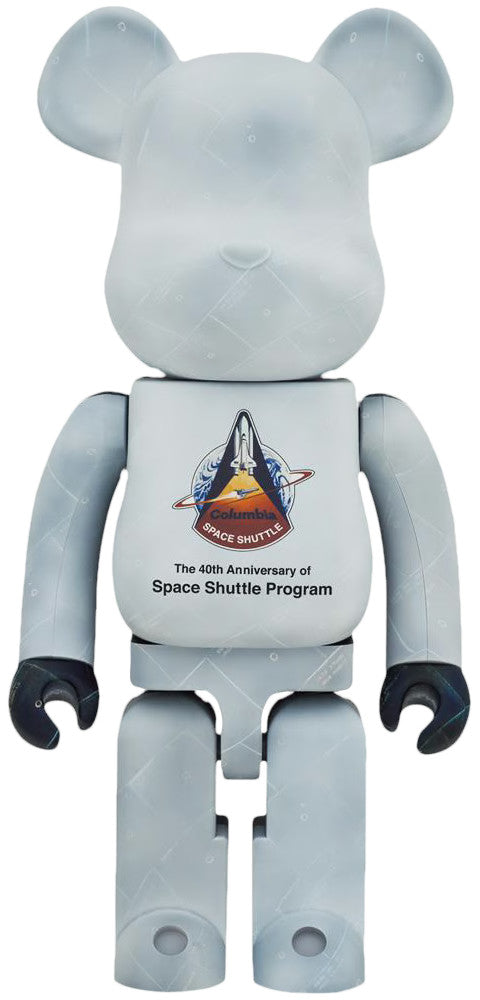
BE@RBRICK NASA Space Shuttle 40th Anniversary 1000% Medicom Toy Bearbrick
$600.00 USD
-
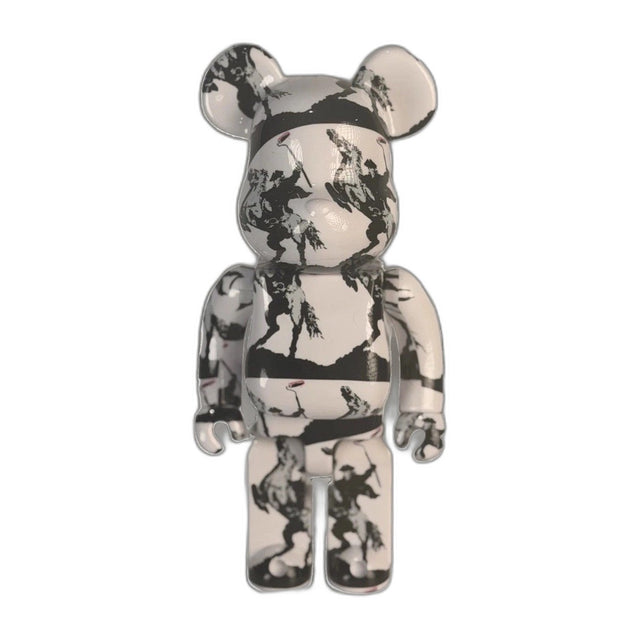
BE@RBRICK Brandalism Sync Banksy Medicom Toy Art Figure du-al.io Authenticated
$199.00 USD
-
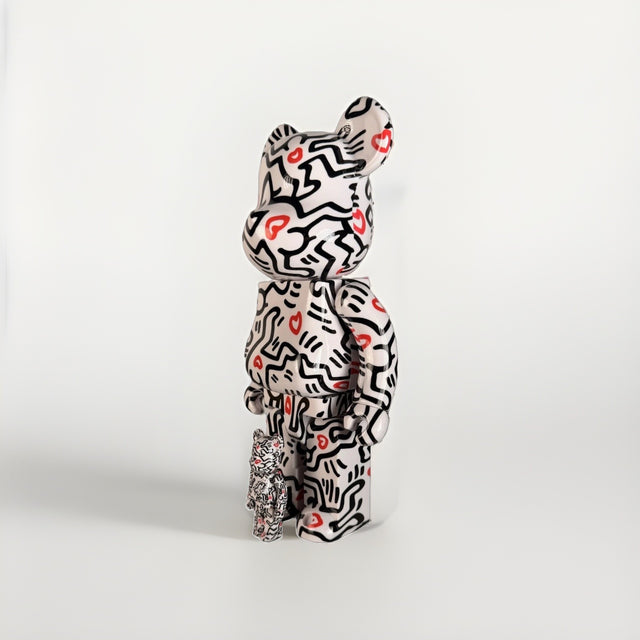
BE@RBRICK Keith Haring 400% + 100% Set Medicom Toy Bearbrick Foundation Art New
$199.00 USD
-
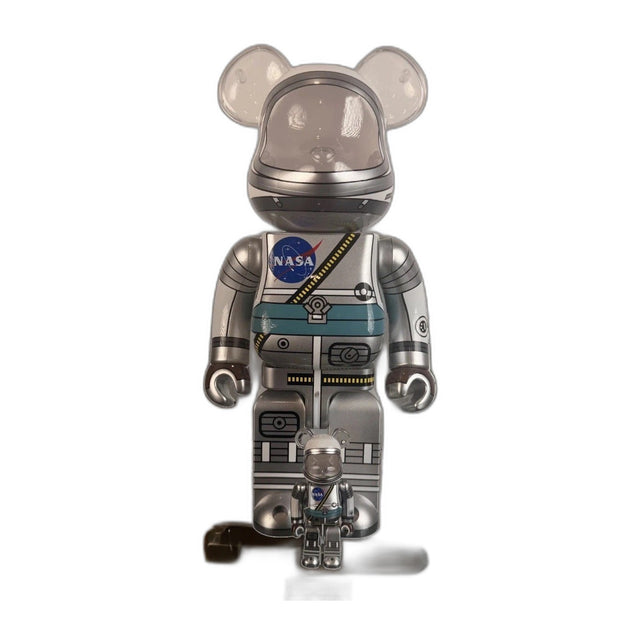
Bearbrick BE@RBRICK Mercury Astronaut 400% 100% Set NASA Medicom Toy Sealed New
$225.00 USD
-
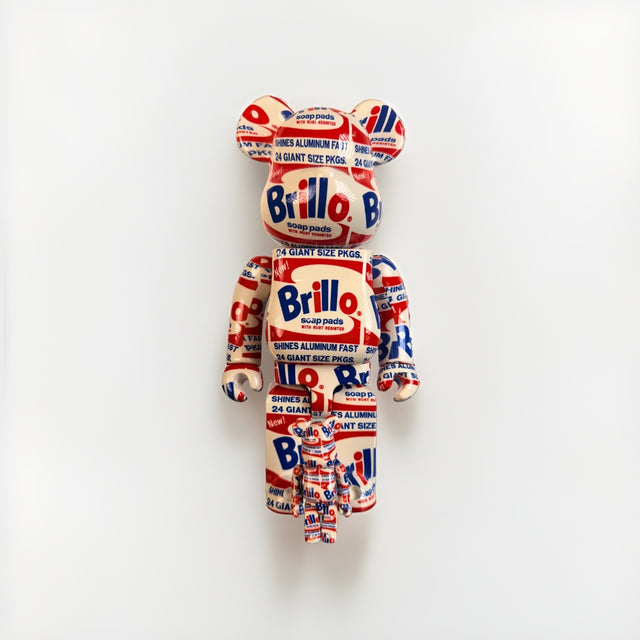
Bearbrick BE@RBRICK Andy Warhol Brillo 400% 100% Set Original 2020 Medicom New
$275.00 USD
Browse the collection for current listings.