Yes — original packaging has a real, measurable effect on the resale value of KAWS figures. In the KAWS market, the box is not an accessory; it is part of the collectible. Packaging also does double duty as authentication evidence: the box, inserts, and seals carry production details that help verify a figure is genuine. If you are deciding whether to keep, open, or discard a KAWS box, the short answer is simple — keep everything, in the best condition you can manage. Compare the exact KAWS release, colorway, pose, edition and condition using dated completed sales. Broad archive totals and another edition’s performance do not establish an item’s resale value.
That is the quick answer. The longer answer is more interesting, because the relationship between packaging and price in the KAWS market reveals a great deal about how designer collectibles are valued, how condition tiers work, and how serious collectors protect their positions. In this guide, we will walk through why packaging matters so much for KAWS specifically, how the market prices each packaging state, how packaging functions as an authentication tool, and what a disciplined collector should do at the moment of purchase and in the years afterward.
Why packaging matters more for KAWS than for most art
In many corners of the art market, packaging is disposable. Nobody asks whether a lithograph still has the cardboard tube it shipped in, and a painting's crate has no bearing on its value. Designer collectibles operate under a completely different set of rules — rules inherited from the broader world of toys, sneakers, and limited-production consumer objects, where the factory-sealed state is treated as the purest possible condition.
KAWS sits at the intersection of contemporary art and collectible product design. Brian Donnelly's vinyl figures are produced as manufactured editions, released through official channels, and delivered to buyers in purpose-designed retail packaging. That packaging is part of the designed object. The graphics, the structural design of the box, the fitted inserts that cradle the figure — these were all approved as part of the release. Collectors treat the complete package as the complete artwork, and the market prices it accordingly.
There are three practical reasons the box carries so much weight in this category:
- Condition signaling. A sealed box is the strongest available evidence that a figure has never been handled, displayed, sun-exposed, or damaged. Vinyl is durable but not invulnerable — it can scuff, take on paint rubs, yellow with UV exposure, and pick up nicotine or odor from its environment. A factory-sealed example bypasses all of those questions at once.
- Authentication support. Original packaging carries production markings, printing quality, and construction details that counterfeiters frequently get wrong. The box is one more surface on which a fake can reveal itself — and one more layer of confidence for a genuine piece. Our KAWS authentication guide covers this dimension in depth.
- Scarcity of complete examples. Every year, some percentage of surviving figures becomes separated from its packaging — boxes get damaged in moves, discarded by inheritors, or worn out by repeated opening and closing. The population of truly complete, well-preserved examples shrinks over time, while the population of loose figures grows relative to it. Completeness becomes scarcer, and scarcity is priced.
Put simply: in the KAWS market, two physically identical figures are not identical products. One is a figure; the other is a figure plus its original, condition-verifying, authenticity-supporting, increasingly scarce packaging. Buyers pay more for the second one, and our comparable-sales data shows they do so consistently across release types and price tiers.
What counts as "original packaging" for a KAWS figure
Before we talk about premiums and discounts, it helps to define terms, because "comes with box" can mean very different things from one listing to the next. When we describe a KAWS figure as complete at Gauntlet Gallery, we are talking about the full set of factory-issued components, which — depending on the release — can include:
- The outer retail box with its printed graphics, edition information, and official markings. This is the component most buyers picture, and its corners, edges, and print surfaces are where condition is judged.
- Interior inserts — fitted trays, foam, or molded supports designed to hold the figure securely. Original inserts matter more than many sellers realize; a box without its insert is an incomplete box, and experienced buyers will ask.
- Protective wrapping around the figure itself, such as plastic sleeves or tissue that prevents paint transfer between the figure and its packaging.
- Factory seals, where the release used them. A release that shipped sealed and remains sealed occupies the top condition tier for that edition.
- Any accompanying printed material issued with the release. Where a release included inserts or cards, their presence supports completeness; their absence is a small but real deduction.
Not every KAWS release used the same packaging format, and formats have evolved across the span of his production. What has stayed constant is the principle: whatever the factory shipped is the complete unit, and the market rewards sellers who can deliver that complete unit intact. Our KAWS packaging guide walks through packaging conventions in far more visual detail, and our KAWS figurine index catalogs releases so you can research what a given edition originally included before you buy or sell.
The packaging condition ladder: how the market tiers value
Across the thousands of KAWS transactions in our comparable-sales database, packaging state functions like a condition grade. Rather than quote dollar figures — realized prices vary enormously by release, colorway, size, and market timing — it is more useful to understand the ladder itself, because the ordering holds remarkably steady even as absolute prices move.
| Packaging state | What it means | Typical market position | Buyer scrutiny level |
|---|---|---|---|
| Factory sealed | Never opened; original seals intact | Top of the range for the edition; the benchmark condition | Focused on seal integrity and box condition rather than the figure itself |
| Opened, complete, excellent box | Figure inspected or displayed carefully; all components present; box crisp | Strong; modest discount to sealed, often the most liquid tier | Figure condition and completeness both examined |
| Opened, complete, worn box | All components present but box shows shelf wear, crushing, fading, or tears | Noticeable discount; box wear is priced in | Buyers weigh whether wear suggests rough handling of the figure too |
| Figure with partial packaging | Box present but missing inserts, sleeves, or printed components | Discounted below complete examples; treated as incomplete | Questions about what else may be missing or swapped |
| Loose figure, no packaging | Figure only | Deepest discount tier; hardest to sell at strong prices | Highest scrutiny — authentication burden falls entirely on the figure |
A few observations from working with this data every day:
The sealed premium is real but not always the best value for buyers. Sealed examples earn the top of the range because they eliminate condition risk on the figure. The trade-off is that a sealed buyer cannot inspect the figure inside. For collectors who intend to display, an opened example with a verified-perfect figure and an excellent box is often the smarter purchase — it delivers nearly all the completeness value while letting you confirm exactly what you own. We discuss this trade-off with clients constantly, and there is no single right answer; it depends on whether you are collecting to hold sealed or collecting to live with the work.
The steepest cliff on the ladder is between "complete" and "no box." The discount from sealed to opened-complete is typically modest. The discount from complete to loose is not. A loose figure does not just lose the packaging's share of the value — it also inherits a liquidity penalty, because a large portion of serious buyers simply filter out boxless examples. Fewer bidders means softer realized prices, independent of the figure's own condition. When we run comps for loose figures against complete examples of the same release in our database, the gap is consistently wider than sellers expect.
Box condition is graded almost as carefully as figure condition. Among complete examples, the difference between a crisp box and a crushed one shows up in realized prices. Corners, edge wear, print fading, tape pulls, sticker residue, and moisture damage all register. Collectors in this category came up through toy and streetwear culture, where box grading is second nature, and they bring that discipline to KAWS.
Packaging as authentication evidence
The value conversation and the authenticity conversation are not separate — they reinforce each other. One of the reasons complete examples command premiums is that packaging materially strengthens the case that a figure is genuine.
Counterfeit KAWS figures are a well-documented reality of this market, and packaging is one of the places where fakes most often fall short. Reproducing a vinyl figure convincingly is hard; reproducing the figure and its box, inserts, printing quality, and construction details to the same standard is harder. Print registration, cardstock quality, color accuracy, structural fit, and finishing details all have to be right simultaneously. Genuine packaging that presents correctly across all of these dimensions raises confidence in the whole package. We maintain a detailed walkthrough of what to examine in our how to spot a fake KAWS guide, written from the constructive perspective of helping you recognize what right looks like.
To be clear about the limits: a box is supporting evidence, not proof. Boxes can be separated from their original figures and paired with counterfeits, which is precisely why experienced buyers evaluate the figure, the packaging, and the fit between them — does this figure sit correctly in this insert, does the edition information match the piece, does everything about the pairing cohere? Authentication is a chain of evidence, and packaging is one strong link in it.
This is also why our own standard at Gauntlet Gallery treats packaging as part of the authentication story rather than an afterthought. You can read more about how we approach this across categories in our authentication FAQ . For a KAWS or BE@RBRICK purchase, check the individual listing for release-specific packaging, production marks, condition and provenance. Manufacturer NFC is relevant only on releases that include it; a certificate alone does not establish authenticity.
What our comparable-sales database shows
A few patterns worth sharing, described qualitatively because specific realized prices shift with the market:
- The ordering never inverts. Across release after release, sealed outsells opened-complete, which outsells worn-box, which outsells loose. We have yet to find a sustained exception. Individual outlier sales happen — an exceptional loose figure can beat a mediocre complete one in a thin market week — but the tier structure reasserts itself across any reasonable sample.
- The completeness gap widens as editions age. For recent releases, most surviving examples are still complete, so the discount for a missing box is comparatively contained. For older releases, complete survivors are scarcer, and the premium for completeness stretches accordingly. Time is kind to the collector who kept the box.
- Liquidity tracks completeness. Complete examples do not just sell for more; they sell faster and with fewer failed listings. Loose figures linger, get relisted, and are more likely to sell only after price cuts. If your exit strategy matters to you, completeness is a liquidity asset, not just a price asset.
- Packaging condition premiums are strongest at the top of the market. The more significant the piece, the more the marginal dollar of value depends on presentation. Buyers spending seriously want the complete, well-preserved package, and they will pay for the difference between a good example and the best available example.
When you are evaluating a specific piece — buying or selling — the right move is always to compare recent verified sales of the same release in the same packaging state, not to apply a generic rule of thumb. Our KAWS price guide is built for exactly this, and our broader financial insights hub puts individual releases in the context of the wider market. Comparing a complete example against loose comps, or vice versa, is one of the most common valuation errors we see sellers make, and it can distort expectations badly in either direction.
To open or not to open: a collector's decision framework
The question behind the question, for many collectors, is whether to open a sealed piece. There is no universally correct answer, but there is a correct way to think about it. Consider four factors:
1. Your purpose for owning the piece
If you bought the work to live with it — to see it on a shelf every day — then opening it carefully is a legitimate choice, and the value difference between sealed and opened-complete is the reasonable cost of actually enjoying what you own. Art is meant to be experienced, and an opened-but-pristine example with its complete packaging preserved remains a strong, liquid asset. If you bought primarily as a store of value, the sealed state is your asset's top condition grade, and opening it is an irreversible step down the ladder.
2. The irreversibility asymmetry
You can always open a sealed piece later. You can never reseal an opened one — and the market treats attempted reseals harshly, because a compromised seal raises more questions than an honestly opened box. When in doubt, defer the decision. Optionality has value.
3. The inspection trade-off
Sealed means uninspected. Factory flaws — paint issues, molding imperfections — do occur in manufactured editions, and a sealed buyer accepts that risk. Some collectors open specifically to verify condition, accepting the tier change in exchange for certainty. This is a rational trade, particularly for pieces intended as long-term display anchors of a collection.
4. Display without opening
Remember that packaging itself can be displayed. Many collectors showcase sealed boxes as designed objects — which they are — or display an opened figure alongside its box. The either/or framing is often false.
Whichever path you choose, choose it deliberately. The collectors who regret their decisions are almost always the ones who opened casually, discarded components, or stored the box carelessly, then discovered years later what completeness would have been worth. For a fuller treatment of collecting strategy across scenarios like this, our KAWS buyer's guide is the natural next read.
Caring for KAWS packaging: preservation that pays
If packaging is part of the asset, it deserves the same care as the figure. The good news is that preserving a box well is neither difficult nor expensive. The essentials:
- Control light. UV exposure fades printed graphics and can discolor both box and figure. Keep packaging out of direct sunlight entirely, and away from strong artificial light for extended periods. Fading is gradual, cumulative, and irreversible.
- Control humidity and temperature. Cardstock warps, delaminates, and grows mold in damp conditions; extreme dryness makes it brittle. Stable, moderate indoor conditions — the same environment you would want for works on paper — are ideal. Avoid attics, basements, and garages.
- Protect the surfaces. Clear archival box protectors or simple careful shelving prevent shelf wear, dust embedding, and accidental scuffs. Never stack heavy items on boxes; crushed corners are among the most common and most avoidable value deductions we see.
- Keep components together. If you open a piece, store the inserts, sleeves, and any printed material inside the box, and keep the box with the figure or clearly associated with it. Separated components have a way of never reuniting — especially across moves or estate transitions.
- Handle minimally and cleanly. Oils from hands mark printed surfaces over time. Handle boxes by their structural edges, with clean dry hands, and as infrequently as practical.
- Do not "improve" the box. Resist the urge to remove original stickers, tape over worn spots, or clean printed surfaces with solvents. Original state — even imperfect original state — reads as honest. Amateur restoration reads as tampering.
One more note for the long-term holder: photograph everything now. Clear photos of the box, seals, inserts, and figure at the time of acquisition create a condition record that supports both insurance and future resale. Buyers trust sellers who can document that a piece has been complete and cared for across their entire period of ownership.
Provenance, records, and the paper trail
Packaging is one form of completeness; documentation is another, and the two compound each other. A complete figure with a documented history is the strongest possible offering. Build and keep a file for each significant piece containing:
- Purchase records — receipts, order confirmations, invoices from the original sale or from each subsequent transaction. These anchor the piece's chain of custody.
- Condition photography — dated images at acquisition and periodically thereafter.
- Correspondence — any communication relevant to the piece's history, prior ownership, or condition.
When the day comes to sell, this file converts directly into buyer confidence, and buyer confidence converts directly into realized price and speed of sale. It is also, frankly, one of the pleasures of collecting seriously — a well-kept file is the biography of the object. New collectors who want to build these habits from the start will find our Collector's Hub a useful home base, and our collector glossary decodes the terminology you will encounter along the way.
Buying checklist: evaluating packaging before you commit
Whether you are buying from a gallery, an auction, or a private seller, run through this checklist before committing to any KAWS purchase where packaging is part of the offer:
- Confirm what "complete" means for this release. Research the edition first — know what components it originally shipped with, so you can verify all of them are present rather than taking "with box" at face value.
- Ask for photos of every component. All six faces of the box, the interior inserts, any seals, and the figure from multiple angles. A seller who resists documenting the packaging is telling you something.
- Inspect box condition specifically. Corners, edges, print surfaces, crush marks, fading, moisture staining, sticker residue, tape pulls. Grade the box in your own notes as carefully as you grade the figure.
- Check coherence between figure and packaging. Does the edition information on the box match the figure? Does the figure fit its insert correctly? Mismatches deserve explanation before money moves.
- Scrutinize seals honestly. If a piece is offered as sealed, examine the seal closely and ask direct questions. An honestly opened piece is a fine purchase; a resealed piece misrepresented as factory sealed is not.
- Verify authenticity holistically. Use the packaging as one layer of evidence alongside the figure itself, the seller's reputation, and documentation — never rely on any single element in isolation.
- Price against like-for-like comps. Compare the asking price against recent verified sales of the same release in the same packaging state. Sealed comps for a sealed piece, complete comps for a complete piece, loose comps for a loose one.
- Factor packaging into shipping. Insist that the box itself be protected in transit — double-boxed, with the retail packaging treated as part of the artwork. Transit damage to a pristine box is a genuine financial loss.
Buyers who work through this list systematically end up owning better examples at fairer prices, and they end up with pieces that are easier to sell well later. It takes fifteen extra minutes per purchase and repays itself many times over. When you are ready to look at authenticated, complete examples with documented provenance, our KAWS collection and wider figurines collection show exactly what disciplined sourcing looks like in practice.
The bottom line for sellers
Everything above has a mirror image for the seller. If you are preparing to sell a KAWS figure:
- Sell it complete if you possibly can. Reunite the figure with its box and every surviving component before listing. If components are missing, say so plainly — transparency costs less than a buyer's discovery.
- Photograph the packaging as thoroughly as the figure. Sellers routinely under-document boxes and leave money on the table by making cautious buyers assume the worst.
- Describe packaging state precisely. "Sealed," "opened but complete," and "box included" are three different claims with three different values. Use the accurate one.
- Comp against the right tier. Price a complete example against complete comps. Pricing against sealed comps invites failure; pricing against loose comps gives away value.
- Lead with provenance. Documentation, certificates, and a clean chain of custody let you sell at the strong end of the range for your piece's condition tier.
And if you are years away from selling: keep the box, keep it well, and keep the paperwork. Few decisions in collecting cost so little and preserve so much value.
Frequently asked questions
How much more is a sealed KAWS figure worth than an opened one?
There is no fixed percentage — the premium varies by release, scarcity, and market conditions. What holds consistently in our comparable-sales data is the ordering: sealed examples top the range for an edition, opened-complete examples follow at a modest discount, and the gap widens for older releases where sealed survivors are scarce. Always compare recent verified sales of the same release in the same packaging state rather than applying a universal rule.
Does a damaged box hurt the value of a mint figure?
Yes, though less than a missing box. Among complete examples, box condition is graded and priced: crushed corners, fading, tears, and moisture damage all register as deductions. A mint figure in a rough box still outsells a loose figure, but it will not reach the prices of an equally mint figure in a crisp box. Protecting the box is protecting the asset.
Should I open my sealed KAWS figure to check its condition?
Only if you have decided the certainty is worth the tier change. Opening is irreversible — you can open later, but you can never restore factory-sealed status. Collectors who intend to display often open carefully and preserve every component; collectors holding for value usually leave seals intact and accept the uninspected-condition risk that sealed status implies.
Is a KAWS figure without a box worth buying?
It can be, at the right price and with the right diligence. Loose figures sell at the deepest discounts and demand the most careful authentication, since the packaging's supporting evidence is absent. If the figure itself checks out, a loose example can be an affordable way to own a release — just buy it priced against loose comps and understand it will carry the same discount when you sell.
Can original packaging help prove a KAWS figure is authentic?
It is strong supporting evidence, not standalone proof. Genuine packaging exhibits printing, construction, and fit that counterfeits frequently fail to replicate, so a coherent figure-and-box pairing raises confidence considerably. But boxes can be separated and re-paired, so authentication should always weigh the figure, the packaging, the documentation, and the seller's track record together as a chain of evidence.
How should I store KAWS boxes to protect their value?
Keep them out of direct sunlight, in stable moderate humidity and temperature, protected from crushing and shelf wear. Store inserts and any printed components inside the box, handle with clean dry hands by the structural edges, and never attempt amateur repairs or sticker removal. Photograph everything at acquisition so you can document completeness and condition over your entire period of ownership.
Do collectors care about inserts and inner packaging, or just the outer box?
They care about all of it. A box missing its fitted insert, protective sleeves, or issued printed material is an incomplete box, and experienced buyers ask about these components specifically. Completeness means everything the factory shipped. Sellers who preserve and photograph the full contents consistently achieve stronger results than those offering an empty outer box alone.
Shop KAWS
Explore current pieces available from the gallery.
-
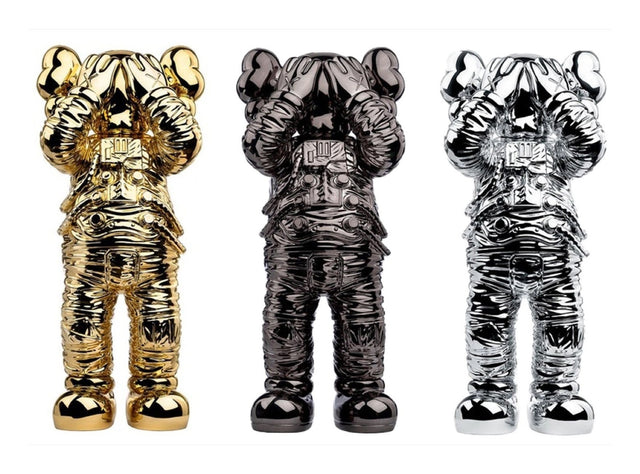
KAWS Holiday Space Set of 3 Gold Black Silver Companion Astronaut Figure Rare
$2,900.00 USD
-
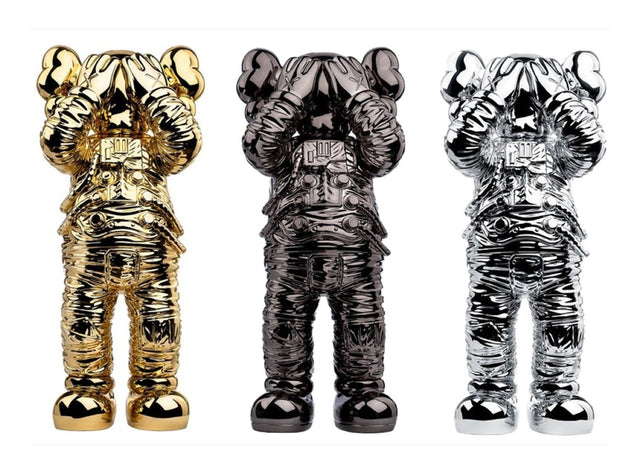
KAWS Holiday Space Set of 3 Gold Black Silver Companion Astronaut Figure
$2,900.00 USD
-
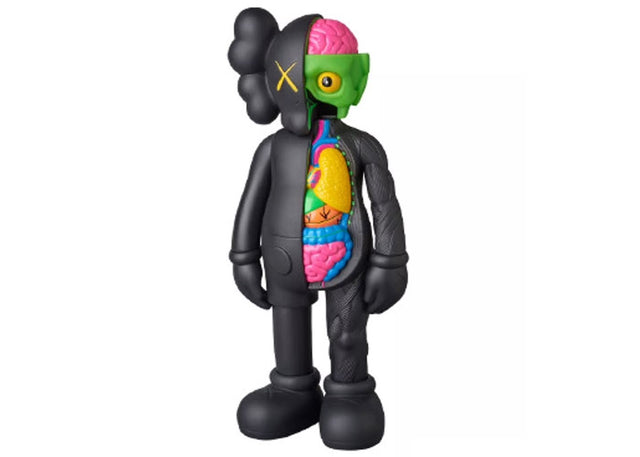
KAWS Companion Flayed Open Edition Black Medicom Toy Dissected Sealed New Figure
$599.00 USD
-
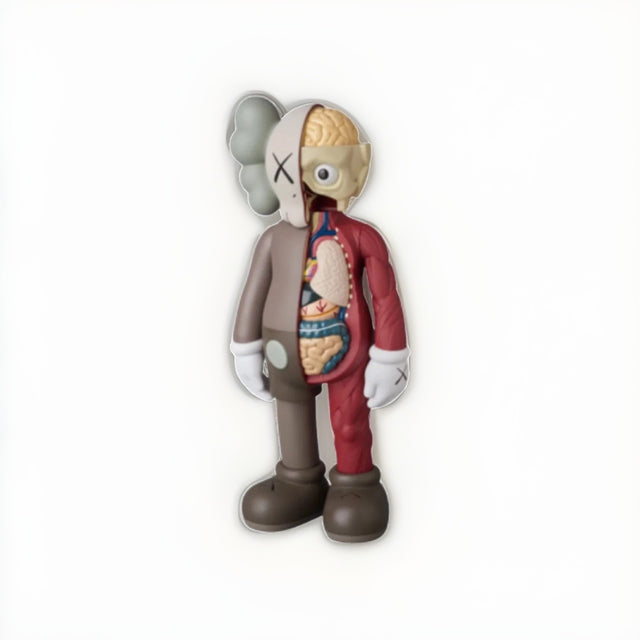
KAWS Companion Flayed Open Edition Brown Medicom Toy Dissected Sealed New Figure
$349.00 USD
-
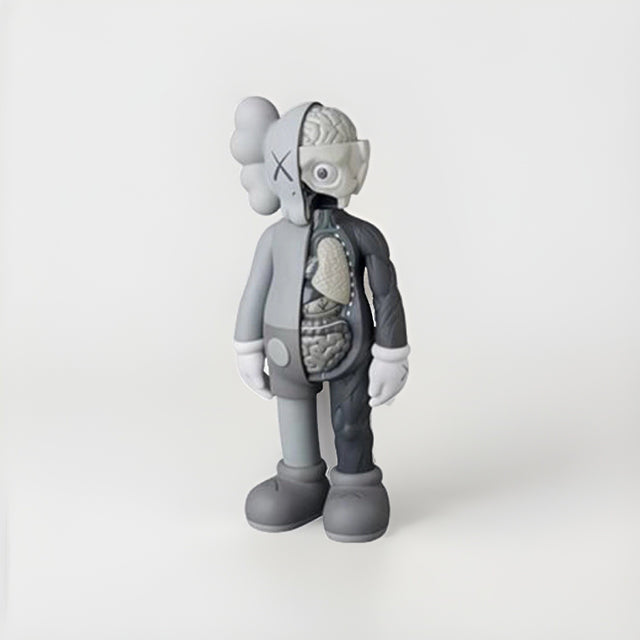
KAWS Companion Flayed Open Edition Grey Medicom Toy Dissected Sealed New Figure
$349.00 USD
Browse the collection for current listings.