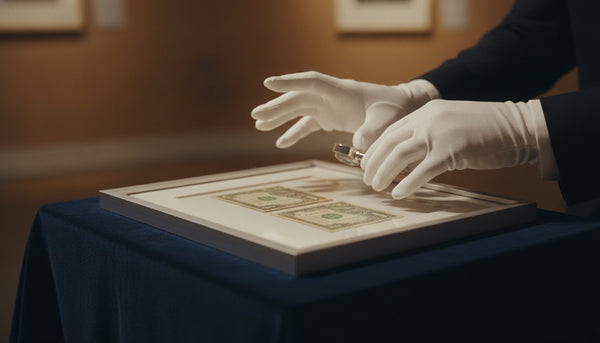
Art print condition grading follows conventions borrowed from music record collecting, comic book grading, and professional sports card markets — with some important art-specific modifications. Understanding condition terminology is essential for buying and selling prints at fair prices, and for understanding why two otherwise identical prints can sell for dramatically different amounts.
The Standard Grading Scale for Art Prints
| Grade | Abbreviation | Description | % of Mint Value |
|---|---|---|---|
| Mint | M | Flawless; as printed; no handling evidence | 100% |
| Near Mint | NM | Near perfect; trivial flaws only; no image impact | 80–90% |
| Very Good Plus | VG+ | Minor edge/corner wear; no image area damage | 65–80% |
| Very Good | VG | Moderate handling wear; minor stains or light folds | 40–60% |
| Good | G | Significant wear; folds, stains, writing; image mostly intact | 20–35% |
| Poor / Fair | P/F | Heavy damage; tears, major stains, image affected | 5–15% |
What Inspectors Look For: The Condition Checklist
Professional condition evaluators examine prints in a specific sequence. Here's what they're looking for:
Paper/Support Assessment
- Foxing: Brown spots caused by mold or oxidation. Common in older prints stored in humid environments. Small isolated foxing in margins: VG+; foxing in image area: VG or lower.
- Tanning/Yellowing: Overall yellowing of white areas due to acid content in paper or prolonged light exposure. Slight: NM; moderate: VG+; significant: VG.
- Tears: Any tear, even margin tears, drops condition significantly. Repaired tears with tissue backing: G or lower.
- Creases and Folds: A single light fold in a margin: VG+. A fold through the image: VG or lower. Crease across entire print: G.
Image Area Specific Defects
- Fading: Color prints with faded inks due to UV exposure. Subtle: NM. Noticeable: VG. Significant: G.
- Abrasion: Rubbing that removes ink or surface texture. Any abrasion in the image area: VG+ at best.
- Stains: Water stains (tideline), oil, or unknown substances. Margin-only tiny stains: NM. Any image-area staining: VG+.
- Previous backing or lining: Conservation practice of mounting print to a backing board. Can be reversible; affects condition depending on execution.
Signature Assessment (If Applicable)
- Faded signature doesn't affect print condition grade but significantly affects value
- Smeared or incompletely formed signature: note separately from condition
- Correct pen type and ink consistent with artist's known practice
UV Inspection: The Essential Tool
A UV (ultraviolet) lamp reveals defects invisible under normal light. Every serious print buyer should inspect under UV before purchasing at $500+. UV reveals:
- Repaired tears or fills (repairs fluoresce differently from original paper)
- Previous water damage (shows as darker patches under UV)
- Over-printing or touched-up areas
- Foxing in early stages before visible to naked eye
- Bleached areas where stains have been removed but paper structure changed
Condition Impact by Artist: The Scarcity Factor
For very rare prints (edition of 10 or fewer, or unique works), collectors accept lower condition grades more readily because there's no better example to find. For common prints (edition of 500+), Mint or NM is essentially required for investment-grade pricing. The rule of thumb: as edition number grows, condition requirements tighten.
Conservation vs. Restoration
Conservation (reversible stabilization) is generally acceptable and doesn't greatly affect value. Restoration (permanent alterations to improve appearance) is controversial and must be disclosed. A print described as "conserved" has been stabilized; a print described as "restored" has been altered — know the difference.
Buyer Checklist: Evaluating Print Condition
- ☐ UV inspection completed (lamp required, not just visual)
- ☐ Raking light inspection (hold at angle to reveal creases and texture)
- ☐ Margin integrity checked (full margins vs. trimmed vs. neatly cut)
- ☐ Any restoration or conservation work disclosed and documented
- ☐ Professional condition report for items over $2,000
- ☐ Framing (if any) inspected: original vs. later; mat acid-free
Citations: [1] Print Collector's Newsletter, "Condition Standards for Works on Paper," 2023. [2] International Fine Print Dealers Association (IFPDA), Condition Grading Guidelines. [3] Christie's, Print and Multiples department condition reporting standards, 2024.