

Cleon Peterson Buyer's Guide
A collector's roadmap to buying Cleon Peterson with confidence — how his black, white and fluorescent-red work is made across each format, what it is worth, and how to authenticate it on the evidence rather than on enthusiasm.
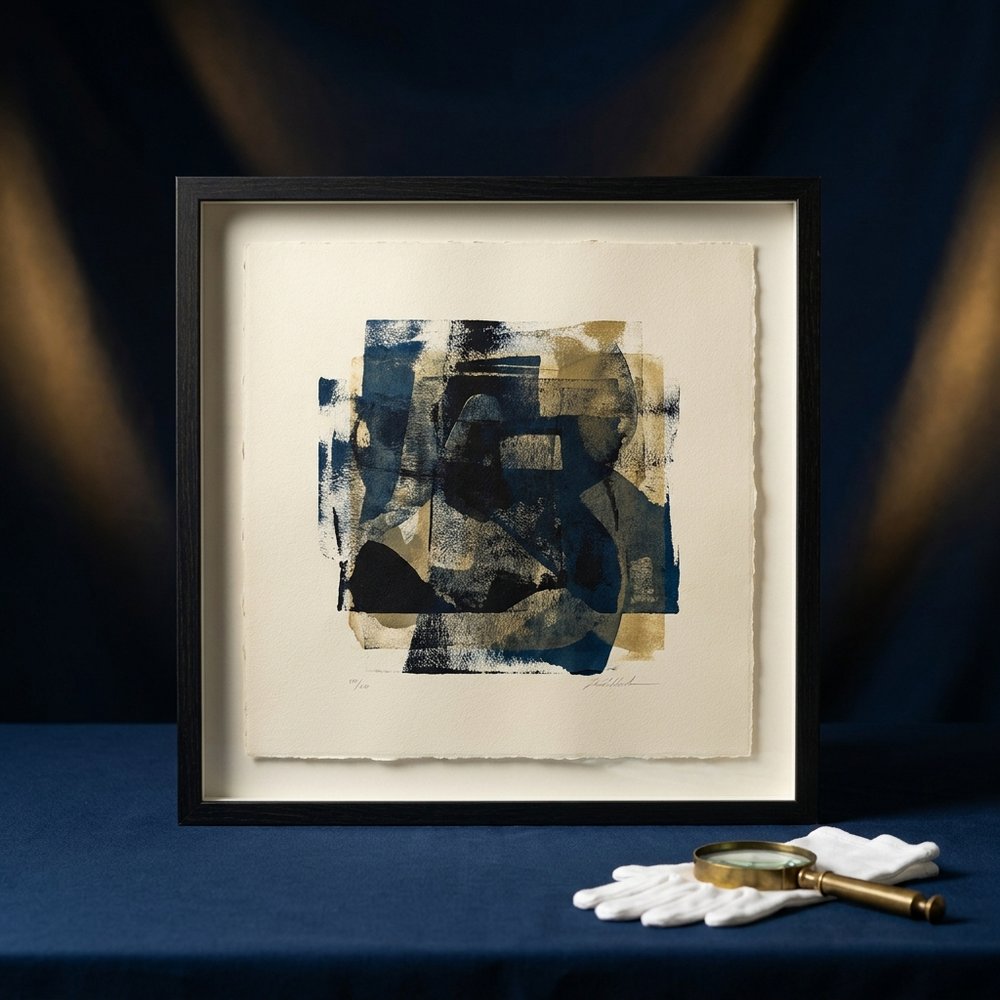
Hand-Pulled Screenprints
Recto pencil signature & number · Coventry Rag, often deckled Where the majority of collectors begin — and rightly so.
Peterson is a serious and prolific printmaker who works almost exclusively in hand-pulled screenprints. These are not reproductions of paintings; they are conceived as prints, exploiting the medium's flatness and its capacity for saturated, uninflected color — the flat, opaque fields of black, white and a single fluorescent red that are his signature. Screenprinting is the natural vehicle for that vocabulary, laying down solid, deliberate layers of ink exactly as the design demands.
Editions are modest, often on heavy Coventry Rag paper in the roughly 290–320gsm range with deckled edges — substantial, tactile objects that feel like the serious editions they are. Because editions are typically small and often sell out quickly, availability on the primary market tends to be fleeting, which is exactly why secondary-market discipline matters. Primary-release prices have historically clustered around $150–$175, rising to roughly $300–$750 for sets or special gallery editions, with recent secondary print results averaging in the low hundreds of dollars over a trailing-twelve-month view.
- Standard Signed Editions Editions commonly of 125 or 150, with smaller and larger runs documented (50, 75, 90, 100, 175) plus artist's proofs.
- Per-Color / Per-Colorway Releases Some images are issued in an edition per color, so the effective population is larger than the headline number — understand this before assuming scarcity.
- Sets & Special Gallery Editions Multi-sheet sets and publisher editions sit above single-sheet releases on primary price.
- Fluorescent-Red Signature Works The red works are the signature and tend to be the most sought after; blue, pink or gold variants can be more affordable and livable.
- Primary Release $150 – $175 The historical primary-release band for single-sheet editions direct from publishers and the artist's store.
- Sets & Gallery Editions $300 – $750 Multi-sheet sets and special gallery editions on primary release.
- Secondary Market Low hundreds (avg.) Recent print results at auction have trailed at a few hundred dollars on average. Context, not a forecast.

Verified releases give concrete anchors. When a seller's dimensions, paper weight and edition size match a documented release, that is corroborating evidence; when they don't, the mismatch is a prompt to ask questions.
Peterson's prints carry consistent, documented physical characteristics. Hold every print to the same standard.
- Confirm the pencil signature and date at lower right — his first name plus a two-digit year, such as “Cleon 15” — and the pencil edition number at lower left, both on the recto.
- Use a loupe: a graphite signature has a faint sheen and tooth and reads as handwriting, not halftone dots or ink.
- Check the ink surface — hand-pulled screenprint layers are opaque and sit fractionally proud of the paper with crisp edges; no CMYK rosette dots under magnification.
- Feel the paper: heavy, rag-like Coventry Rag (~290–320gsm), often with a soft deckled edge, not thin or coated poster stock.
- Match the exact title, dimensions, paper weight and edition size against the documented release.
- Obtain the original invoice or publisher documentation and read the provenance for internal consistency.

Most problems are not elaborate forgeries — they are ordinary transactions gone wrong through carelessness, optimism, or misdescription.
- A printed-looking signature, or a signature only on the back of the sheet.
- Reliance on an embossed stamp, chop or foil seal as “proof” — none of these is part of the documented practice.
- Regular CMYK rosette dots visible under a loupe, indicating offset reproduction rather than a hand-pulled screenprint.
- Thin, glossy or coated poster stock inconsistent with heavy rag paper and deckled edges.
- Stated dimensions, paper weight or edition size that contradict a documented release, with no explanation.
- No provenance and no willingness to provide any, plus pressure and artificial urgency (“another buyer is waiting”).
Favor the strongest image over the smallest edition — a resolved, characteristic composition in an edition of 150 will generally outperform a weaker image in an edition of 50, because demand ultimately follows the picture. Buy the image you cannot stop thinking about, in honest condition, and insist on documentation from day one: the invoice, the publisher or channel, high-resolution photos of the recto signature and number, and a coherent chain of ownership. This is the most efficient way to own an authentic, hand-resolved Peterson image, and the discipline you build here is the foundation under any larger acquisition later.
How is a genuine Cleon Peterson print signed?
In pencil on the front of the sheet: signature and date at the lower right in the short form “Cleon 15” (first name plus two-digit year), and the edition number in pencil at the lower left. Both marks are graphite and both are on the recto.
Do the prints have a blindstamp or embossed seal?
No. Verso signatures, blindstamps, embossing, chops and foil seals are not established features of Peterson's prints. The documented mark is the recto pencil signature and edition number — their presence should prompt questions rather than confidence.
How do I tell a screenprint from a reproduction?
Hand-pulled screenprint ink is opaque and sits fractionally proud of the sheet with crisp edges. Under a loupe you will not see the regular CMYK rosette pattern of four-color offset. If a print reveals tidy dot patterns under magnification, it is a reproduction.
What does “edition of 150 per color” actually mean?
When a release is issued in an edition of 150 per color across several colorways, the effective population of that image is larger than the headline number suggests. It is a useful thing to understand before you assume scarcity.

Sculpture & Editioned Objects
Bronzes, porcelain, fiberglass & ceramic · Case Studyo and Avant Arte The clearest documented authentication in Peterson's entire output.Sculpture is a smaller but significant part of the practice, translating Peterson's flat figures into three dimensions with surprising force. The work is produced largely in collaboration with the Belgian editioner Case Studyo and, separately, with Avant Arte, ranging from small bronzes to large fiberglass works. Peterson has said his sculptures “intentionally reference the classical because it enforces the idea that the issues we're dealing with today also existed in the past” — these are considered editions with a coherent program, not one-off decorative castings.
Sculpture occupies an interesting middle tier: more scarce and more physically imposing than a print, more accessible than a major painting. It also comes with the clearest documented certificate-of-authenticity practice in Peterson's oeuvre — and because those producers make his three-dimensional work rather than his paper prints, a “certificate from the sculpture publisher” attached to a paper print is a category error worth catching.
- Small Editioned Bronzes Patinated bronzes in very small editions — the scarcest, most collectible tier of the three-dimensional work.
- Glazed Porcelain & Ceramic Surface-durable but brittle; edition sizes range widely, from tens to several hundred.
- Unique Monumental Fiberglass Singular, large-scale objects that exist as 1/1 works rather than editions.
- Accessible Object Editions Larger-run objects such as glazed ceramic vases bring the silhouettes into physical space at a lower entry point.
- The Light Bearer (2017) Black-patina bronze, edition of 8 plus 4 artist's proofs, ~31 cm — Case Studyo.
- Balance of Power (2016) Glazed white porcelain, edition of 25 — Case Studyo.
- The Judgement (2016) Fiberglass, unique 1/1 work, 240 × 174 × 206 cm — Case Studyo.
- The Return / in Aeternum Blackened bronze and resin — Avant Arte.
- Shame Sculpture in an edition of 283 — Avant Arte.
- Live to Kill hand vase (2021) Glazed ceramic, edition of 500 — a Beyond the Streets × NTWRK release.
Edition size is one of the clearest value drivers in the three-dimensional work, and it is also a factual anchor.
- Confirm the original screen-printed wooden box and the signed, numbered certificate are present for Case Studyo works, and request photographs of both.
- Match the medium and stated edition size against the documented release — a bronze Light Bearer offered as “one of 50” contradicts the documented edition of 8 plus 4 proofs.
- Confirm the producer is correct (Case Studyo or Avant Arte for sculpture) and that no print-style certificate has been mismatched to the object.
- Inspect the surface: bronzes with applied patinas should be free of abrasive damage; porcelain and ceramic for chips from knocks.
- Obtain the purchase record tying the object back to a known release, and keep the box and certificate with the piece permanently.
- Where a certificate or box should exist, confirm it does before money changes hands.
- A Case Studyo work offered without its signed, numbered certificate and screen-printed box — a documentation gap to price in and question.
- A stated edition size that contradicts the documented edition (for example, a Light Bearer “one of 50”).
- A “certificate from the sculpture publisher” attached to a paper print — a category error.
- No provenance and refusal to supply detailed photographs of the object, box and certificate.
- Pressure and artificial urgency, or a price far below the documented market with no explanation.
- An inflated or unverifiable story used to add mystique in place of documentation.
Sculpture is the logical next step for a collector ready to go deeper than prints — and the box-and-certificate pairing makes it close to an ideal arrangement. Treat that documentation as part of what you are buying: a Case Studyo Peterson that arrives complete with its bespoke box and hand-signed, numbered certificate is a materially stronger proposition than one without. The range within sculpture alone — from a unique monumental fiberglass work to a bronze in an edition of a dozen to a ceramic vase in an edition of five hundred — means you can enter the three-dimensional side of the practice at very different levels of commitment. Buy on the documented edition, keep the paperwork with the object, and store it safely.
How are Cleon Peterson sculptures authenticated?
Case Studyo works ship in a screen-printed wooden box accompanied by a certificate signed and numbered by Cleon Peterson himself. The object, its bespoke box, and the hand-signed certificate travel together as a single documented unit and should stay with the work permanently.
Is a Case Studyo sculpture without its box still authentic?
Not necessarily inauthentic, but incompletely documented. A Case Studyo Peterson that arrives without its box and signed, numbered certificate is a more questionable proposition than one with the documentation intact, and that gap should be reflected in price and due diligence.
Why do the sculptures reference classical forms?
Peterson has said his sculptures “intentionally reference the classical because it enforces the idea that the issues we're dealing with today also existed in the past.” That intentionality signals considered editions with a coherent conceptual program, not decorative castings.
How should I care for a bronze or ceramic piece?
Keep patinated bronzes away from abrasive cleaning and harsh chemicals — dust gently and let a conservator handle anything more. Glazed porcelain and ceramic are surface-durable but brittle, so display them where they will not be jostled, and keep the box and certificate stored safely.
Collaborations
Co-signed editions · OBEY / Shepard Fairey and publisher series A distinct and collectible thread within the print market.Peterson's collaborations are a distinct and collectible thread, and his work with Shepard Fairey and OBEY is the most storied — the two have been friends since the late-1990s San Diego skate scene, and Peterson spent time working at Fairey's Studio Number One. Joint editions such as Scales of Injustice (2016), a letterpress edition of 300 signed by both artists, and Pattern of Corruption (2015) sit alongside the Power & Glory Wynwood mural and an OBEY artist series that included the Practice of Masters print (2013, edition of 125, 18 × 18 inches). A print co-signed by two artists of this stature carries a particular appeal and is worth seeking out when it appears.
Beyond prints, Peterson has extended his imagery into furniture with Modernica, towels with Slowtide, skate decks with The Skateroom, and editorial work for outlets including The New Yorker and The New York Times, plus a Penguin Classics cover for Philip K. Dick's The Man in the High Castle. These are legitimate, artist-sanctioned objects, but they are not the same asset class as a signed, numbered screenprint or a documented sculpture edition — category discipline is the collector's first act of authentication.
- Scales of Injustice (2016) With Shepard Fairey · letterpress · edition of 300 · signed by both artists.
- Pattern of Corruption (2015) A Peterson × Fairey / OBEY collaborative print.
- Practice of Masters (2013) OBEY artist series · edition of 125 · 18 × 18 inches.
- Power & Glory (2014) Four-wall mural for Wynwood Walls during Art Basel Miami, with Shepard Fairey — reputation, not a collectible object.
- The Skateroom Decks Artist-sanctioned skate decks bearing Peterson's art — not a signed fine-art edition.
- Slowtide Towels Branded merchandise carrying the imagery; price and insure as product, not editions.
- Modernica Furniture Design collaboration extending the imagery into objects for daily life.
- Editorial & Book Covers The New Yorker, The New York Times, and a Penguin Classics cover — reach, not collectible fine-art editions.
- Confirm the category first: is this a signed, numbered co-edition print, or a licensed merchandise item bearing the art?
- For co-signed prints, confirm both signatures where the documented release calls for them (for example, Scales of Injustice is signed by both artists).
- Match dimensions, medium and edition size against the documented release (Practice of Masters: edition of 125, 18 × 18 in; Scales of Injustice: letterpress, edition of 300).
- Apply the same recto pencil-signature and number standard to Peterson's side of any signed collaborative print.
- Know the publisher or channel — the artist's store, The Jaunt, The Hole, Louis Buhl with Cranbrook, OBEY Clothing, Subliminal Projects — to frame what a release should look like.
- Never price or insure a licensed product as though it were a signed edition.
- A licensed deck, towel or book cover being sold at signed-edition prices.
- A “co-signed” print missing a signature the documented release requires.
- Specifications that contradict the documented collaborative release with no explanation.
- Embossed seals or stamps offered as proof in place of the documented pencil signature.
- No provenance linking the sheet back to a recognized publisher or channel.
- Mural or public-project imagery marketed as if it were an ownable, editioned object.
Collaborative editions reward a collector who does the category work first. A print co-signed by Peterson and Fairey carries genuine crossover appeal, and the storied friendship behind those OBEY collaborations is real — but the appeal is only worth paying for when the object is a documented, signed edition rather than a licensed product wearing the same image. Confirm the release, confirm the signatures the release calls for, and keep the paper trail back to a recognized publisher. The single most common way collectors overpay on a reproducible artist is by paying edition money for merchandise; category discipline is the cure.
Are the Peterson × Fairey prints signed by both artists?
Some are. Scales of Injustice (2016) is a letterpress edition of 300 signed by both artists. Confirm the documented signing convention for the specific release rather than assuming, and apply Peterson's recto pencil-signature standard to his side of any signed collaborative print.
Are the skate decks and towels collectible in the fine-art sense?
They are legitimate, artist-sanctioned objects — The Skateroom decks, Slowtide towels, Modernica furniture — but not the same asset class as a signed, numbered screenprint or a documented sculpture edition, and should never be priced or insured as though they were.
Can I buy the Power & Glory mural?
No. Power & Glory (2014) is a four-wall mural produced for Wynwood Walls with Shepard Fairey — a high-visibility public project that builds the artist's stature and the confidence of his collector base, but not an ownable, editioned object.
Original Paintings & Public Works
Unique works · gallery and auction · the summit of the practice Where value, in the broadest sense, concentrates.The paintings are the apex of the practice — the works in which the full ambition of the imagery is realized at scale, in the artist's own hand, in editions of one. They anchor his gallery exhibitions and set his auction records, and for most collectors they represent an aspiration rather than a first purchase. Peterson is represented across major markets — Kaikai Kiki in Tokyo, Over the Influence in Hong Kong, Los Angeles and Bangkok, and albertz benda in New York — with a sustained, geographically diversified exhibition record. That breadth is the closest thing the market offers to ballast.
Murals and public projects such as the Endless Sleep ground fresco installed beneath the Eiffel Tower for Nuit Blanche in Paris (2016) are, by their nature, uncollectible in the conventional sense, but they are the reputation the collectible objects trade against. A careful note on claims: it is accurate to say a work “has exhibited at” a given institution; it is not accurate — and should never be claimed without hard evidence — that a work sits in any museum's permanent collection, since such acquisitions are not confirmed.
- Unique Paintings Oil on canvas in the artist's hand, editions of one — the fullest expression of the imagery and the deepest end of the market.
- Gallery-Sourced Works Works surfacing through his representing galleries, ideally with documented exhibition history.
- Auction Consignments Paintings that appear secondarily at auction, carrying lot records as part of provenance.
- Murals & Public Frescoes Endless Sleep and Power & Glory — reputation-building projects, not ownable objects.
- Auction Benchmark US$45,161 The Nightcrawler (2015), oil on canvas 213.4 × 213.4 cm, sold at Phillips Hong Kong, July 9, 2020, Lot 173, for HK$350,000.
- Value Hierarchy Paintings ▸ Sculpture ▸ Prints The market broadly values paintings above sculpture above prints, though a superb print outperforms a weak example in a higher medium.
- Within Each Category Scale · edition · condition · provenance · subject These levers are stable even when prices are not. Documented anchors are context, not a forecast.
At this tier, due diligence is the entire game. Never buy a unique Peterson on imagery alone.
- Obtain complete documented provenance — the original invoice, gallery or publisher documentation, and a coherent chain of ownership.
- Confirm exhibition or gallery history that situates the work with a recognized gallery (Kaikai Kiki, Over the Influence, albertz benda) or a documented show.
- Have a recognized specialist examine the work and, where present, the signature in person.
- Verify materials and technique are consistent with Peterson's documented flat, silhouetted practice and signature palette.
- Review condition reports and any conservation history, and record an honest, dated condition baseline at acquisition.
- Confirm every claim — never repeat an unverified “permanent museum collection” claim.
- A unique work offered with no provenance or exhibition history.
- Pressure to close a high-value purchase quickly without due diligence.
- A claim that the work is in a museum's permanent collection, offered without hard evidence.
- Signature, materials or technique a specialist cannot reconcile with known work.
- Pricing wildly inconsistent with documented comparable works, with no explanation.
- Refusal to allow independent, in-person expert examination.
Most collectors build from the ground up — prints first, then perhaps a sculpture, with paintings as a longer-term ambition — and there is real wisdom in that sequence: it lets you live with the work, learn the market, and refine your eye before committing serious capital. When the moment and the work align, insist on complete documented provenance, exhibition or gallery history, and in-person examination by a recognized specialist. Budget for that expert review; it is cheap insurance against a serious mistake. Favor blue-chip imagery, honest condition, and an unbroken paper trail over a lower price with gaps in the story. With Cleon Peterson, literacy is leverage.
What is Cleon Peterson's auction record?
His painting benchmark is The Nightcrawler (2015), an oil on canvas 213.4 × 213.4 cm, which sold at Phillips Hong Kong on July 9, 2020, as Lot 173, for HK$350,000 — approximately US$45,161. That figure is documented context, not a forecast.
How are original paintings authenticated?
Through documented provenance, exhibition and gallery history, and in-person review by a recognized specialist. Because there is no edition record to check against, the chain of ownership and exhibition history are the primary evidence of authenticity and value; gaps are a serious red flag at this price level.
Which galleries represent Cleon Peterson?
He is represented by Kaikai Kiki in Tokyo, Over the Influence (Hong Kong, Los Angeles and Bangkok), and albertz benda in New York, and has exhibited widely elsewhere. A work with a documented tie to one of these galleries or to a recognized show carries a stronger provenance thread.
Can I own one of the murals or public frescoes?
No. Works such as Endless Sleep, the ground fresco beneath the Eiffel Tower for Nuit Blanche in Paris, are uncollectible in the conventional sense. They are important as the reputation the collectible objects trade against, not as ownable works.
Ready to Buy With Confidence?
Browse authenticated Cleon Peterson inventory with precise descriptions, documented traits, condition and provenance — the authentication-first way collectible art should change hands.
Browse Cleon Peterson View FAQEvery Collection Begins with a Story
Original storytelling, historical research, market context, and collector education across the collection.
Original Storytelling Videos
Original story videos across the collection.
Collector Research
Release history, edition details, and context.
Market Intelligence
Transparent pricing from curated sales data.
Collect with Confidence
Authentication, provenance, and secure shipping.
Watch the StoryDiscover the HistoryCollect with Confidence
Sources, References & Assumptions
Master source taxonomy, terminology, and market-data assumptions: Sources, References & Assumptions.
View detailed source list
Third-party authenticators & organizations referenced on this site
- Professional Sports Authenticator autograph authentication service: psacard.com
- James Spence Authentication — autograph authentication: spenceloa.com
- Beckett Authentication Services — autograph authentication: beckett-authentication.com
- Pest Control Office — the sole authentication body for Banksy works: pestcontroloffice.com
- Obey Giant — official Shepard Fairey studio and release archive: obeygiant.com
- TrueCOA — blockchain certificate verification: truecoa.com
Collector & market information sources
- Getty Provenance Index — provenance research and best practices: getty.edu/research/tools/provenance
- Smithsonian Institution — artist histories and archives: si.edu
- Library of Congress — archival provenance guidance: loc.gov
- Market data sources: eBay, MutualArt, StockX, 1stDibs
Terminology
- Certificate of Authenticity: Wikipedia overview
- Provenance — documented ownership history: Wikipedia overview
- Artist's Proof: Wikipedia overview
- Near-field communication tap-to-verify chips: Wikipedia overview
- Edition & numbering in printmaking: Wikipedia overview
- Screen printing (Shepard Fairey's primary medium): Wikipedia overview
- Median (how our price statistics are calculated): Wikipedia overview
- Compound annual growth rate: Wikipedia overview
- Full plain-language definitions: Gauntlet collector glossary
Shop Cleon Peterson
Explore current pieces available from the gallery.
-

Cleon Peterson POWER Sculpture White Resin Ltd Edition 500 Beyond The Streets NT
$600.00 USD
-
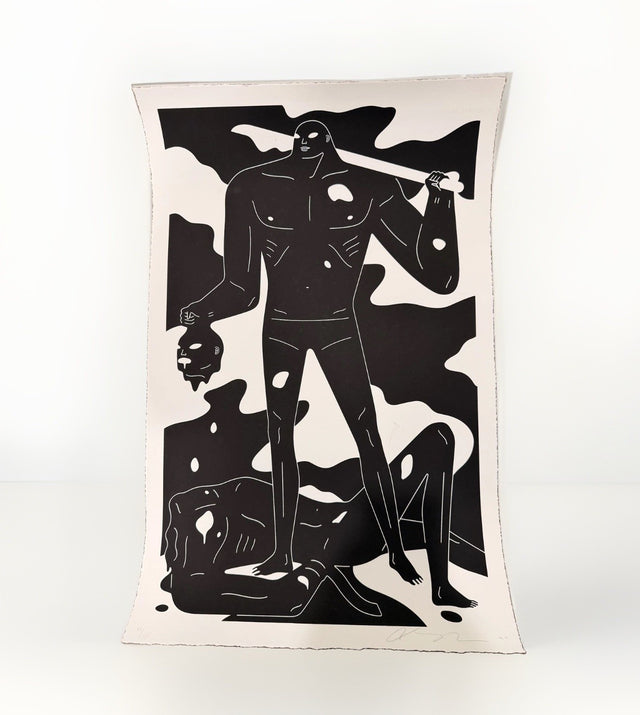
Cleon Peterson A Perfect Trade White Screen Print Signed Numbered /125
$325.00 USD
Browse the collection for current listings.