Working With an Interior Designer to Build an Art Collection
To work with an interior designer to choose art, treat the art as its own line item and its own conversation, not as an afterthought to the furniture. Hire the designer for the room and, when the budget or ambition is serious, bring in an art advisor (or a specialist dealer) for the pieces. Give your designer a written brief on your taste, protect a dedicated art budget the designer cannot repurpose for a sofa, and insist that anything hung on the wall be authenticated and collectible rather than a decorative reproduction. Done this way, you end up with a home that photographs beautifully and holds or grows in value.
Designer vs. Art Advisor: Two Different Jobs
The single most common mistake homeowners make is assuming their interior designer is also their art buyer. Sometimes they are excellent at both. More often, they are two distinct disciplines that happen to meet on your wall.
What an interior designer actually does
An interior designer is responsible for the room as a total system: spatial planning, furniture, lighting, color, materials, and flow. When it comes to art, most designers think first about fit—scale, palette, and where the eye lands. That is a real skill, and it matters enormously. A designer will know that a horizontal piece belongs above the console, that the bedroom wants something quieter, and that the stairwell can take a bold statement because you see it from three floors.
What a designer is generally not trained to evaluate is the art market: which artists are liquid, which editions are authenticated, how provenance affects value, and whether a piece is a smart acquisition or a decorating expense you will never recover.
What an art advisor adds
An art advisor works for the collection, not the room. They source and vet pieces, verify authenticity and provenance, negotiate on your behalf, and think about how a work fits your holdings and your long-term goals. For collectors buying at higher price points—or building something they intend to keep, insure, and eventually pass on or sell—an advisor is the person who keeps you from overpaying or buying something that cannot be resold.
When you need one, both, or neither
| Your situation | Interior designer | Art advisor / specialist dealer |
|---|---|---|
| Furnishing a room and want art that "works" | Yes | Optional |
| Buying authenticated, collectible pieces to hold value | For placement | Yes |
| Spending a meaningful share of budget on a few key works | For placement | Strongly recommended |
| Building a coherent collection over years | For the home | Yes |
| Filling large empty walls quickly on a modest budget | Yes | Not essential |
A good designer will tell you when a project has crossed into advisor territory. If yours resists bringing in outside expertise on a six-figure art spend, treat that as a flag.
Budgeting Art Within a Design Project
Art is the line item that gets raided. The stone came in over budget, the custom sofa took longer, and suddenly the "art allowance" quietly funds the overage. Protect against this from day one.
Carve out a real art budget
Decide, before the project starts, what portion of the total is for art, and ring-fence it. There is no universal percentage—some collectors spend more on a single acquisition than on all their furniture combined—but the discipline is the same regardless of size: name the number, put it in writing, and do not let it become a slush fund for finishes.
Distinguish "wall coverage" from "collection"
Not every wall needs a collectible work, and pretending otherwise is how people overspend on secondary spaces. A useful framework:
- Anchor pieces — the two or three works you genuinely collect: authenticated, provenanced, and chosen to hold or grow in value. These get the real budget and, ideally, an advisor's eye.
- Supporting works — good pieces by emerging or mid-market artists that fill important sightlines without being a major financial commitment.
- Decorative fill — framing, photography, or affordable prints for hallways and utility spaces where a museum-grade acquisition would be wasted.
The mistake is spreading a collection budget thinly across every wall so that nothing is actually a serious acquisition. Concentrate the money where it counts.
Budget the whole cost, not just the sticker
The purchase price is the beginning. Frame every acquisition with the full cost in view:
| Cost line | Why it matters |
|---|---|
| Purchase price | The headline number, and often the smallest surprise. |
| Framing & glazing | Conservation-grade framing protects value; poor framing can damage a work. |
| Shipping & installation | Large or fragile works need specialist handling. |
| Insurance | Collectible pieces belong on a scheduled policy, not lumped into contents. |
| Lighting | Proper picture lighting is part of the presentation, and part of the design budget. |
If you want a fuller view of how acquisitions behave as assets over time, our market and financial insights section is a useful primer before you commit real money.
How to Communicate Your Taste to a Designer
Designers are not mind readers, and "I'll know it when I see it" is the most expensive brief in the business. The clearer you are up front, the fewer costly wrong turns you take.
Build a visual brief, not a mood
Assemble a folder—physical or digital—of works you are drawn to. Include pieces you love, pieces you actively dislike, and a note on why for each. "I love this because of the restraint" and "this feels too chaotic for me" tell a designer far more than a single word like "modern," which means ten different things to ten different people.
Name what you actually respond to
Push past adjectives to specifics. Are you drawn to bold graphic street art, quiet minimalism, photography, or figurative work? Do you want recognizable names on the wall, or do you prefer discovery? Our art index and the pop art collection are useful reference points here—browsing named artists and movements sharpens a vague preference into a workable direction, and gives you and your designer a shared vocabulary.
Separate taste from ego
Be honest about whether you are buying because you love the work or because of what the name signals. Both are legitimate, but they lead to different purchases, and a designer or advisor can only serve you well if they know which game you are playing.
Set the non-negotiables early
Tell the designer what is off the table—subject matter you won't live with, a color you can't stand, a maximum size for a given wall. Constraints are a gift. They narrow the search and prevent the beautiful-but-wrong proposal that wastes everyone's time.
Sourcing Authenticated Pieces, Not Decor-Store Prints
This is where the interior-design world and the collecting world most often part ways—and where homeowners get quietly burned. A designer under deadline may reach for the fastest, cheapest wall solution: an open-edition reproduction from a decor supplier. It fills the space. It also has no resale value and, in the worst cases, is an unauthorized copy of an artist's work.
What "authenticated" means, and why it protects you
An authenticated work comes with a verifiable chain establishing that it is what the seller claims: who made it, when, in what edition, and how it can be verified. That chain is what an insurer, a future buyer, and an auction house will all ask for. Without it, you own a nice-looking object with no market.
Crucially, authentication is not one universal certificate—it is artist- and category-specific. The correct chain for one artist is meaningless for another, and mixing them up is a red flag in itself. A responsible dealer will tell you exactly which applies:
| Artist / category | How authenticity is established |
|---|---|
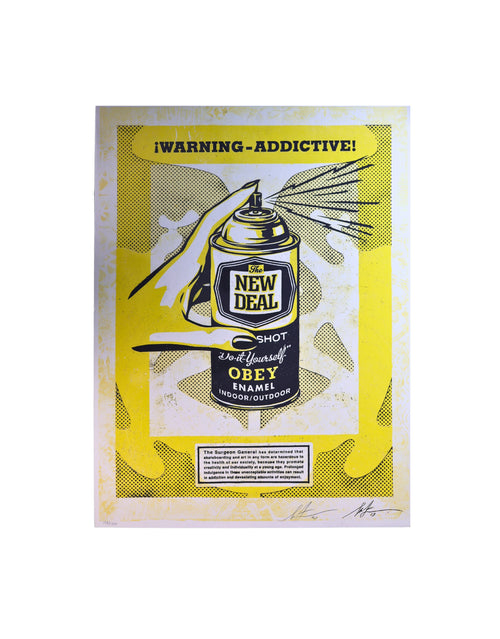
| Shepard Fairey (OBEY) | Provenance-based; typically no separate certificate. Verified through documented purchase history and provenance. |
| Banksy prints | Pest Control is the sole authority; a Pest Control certificate is the standard the market requires. |
| KAWS & BE@RBRICK figures | Verified via a TrueCOA blockchain certificate. |
| DEATH NYC | Accompanied by a certificate of authenticity with a gold seal. |
| Andy Warhol works | Verified through a TrueCOA certificate. |
| Signed music memorabilia | Third-party authentication from Beckett, JSA, or PSA. |
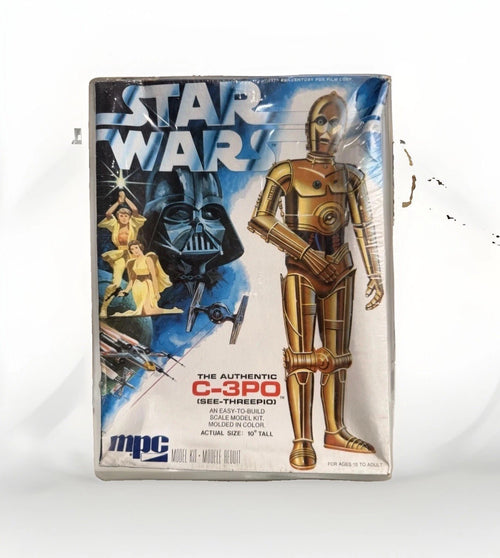
| Space / historical artifacts | Provenance documentation plus review by category specialists. |
You do not need to memorize this. You need a source that leads with it. If a seller cannot tell you precisely how a given piece is authenticated—or waves away the question—walk away.
Give your designer a sourcing rule
Put one line in your agreement: anything intended as a collectible acquisition (your anchor and supporting works) must be sourced from an authenticated dealer or advisor, with documentation, and approved by you before purchase. Decorative fill for back hallways can come from wherever is practical. That single distinction keeps decor-store prints off your important walls.
Where authenticated inventory lives
Specialist dealers exist precisely to solve this. Browsing an authenticated inventory—see the full collection catalog—shows you what "documented and collectible" looks like in practice, and gives your designer a vetted pool to pull from rather than a generic print vendor.
Trade Pricing vs. Retail: How the Money Actually Works
The commercial mechanics of a design project surprise a lot of first-time clients, and misunderstanding them breeds mistrust. Clear this up early.
The trade discount
Many furnishings and decorative goods are available to designers at a trade (wholesale) price below retail. Depending on the arrangement, the designer either passes some of that saving to you or retains a portion as part of how they are compensated. Neither is wrong—what matters is that the arrangement is disclosed and written down.
Where the fine-art market differs
Collectible fine art does not always behave like furniture. Trade discounts on authenticated, market-priced works are typically thinner or absent, because the price reflects a market, not a wholesale markup. Be skeptical of a "designer discount" so large it implies the piece was never worth its stated price to begin with—that is often a sign it was decorative product dressed up as art.
Common ways designers charge, and how art fits
| Fee model | How it works | Watch-out on art |
|---|---|---|
| Cost-plus / markup | You pay trade cost plus an agreed percentage. | Confirm whether the markup applies to art or only furnishings. |
| Flat / project fee | A fixed fee for the scope, regardless of purchases. | Cleanest for art—no incentive to steer you to pricier pieces. |
| Hourly | Billed for time spent. | Art sourcing can be time-intensive; agree a cap. |
| Commission on purchases | A percentage of what you spend. | Creates a conflict on expensive art; insist on transparency. |
The principle is simple: you should always be able to see what a piece cost, what the designer earns on it, and who verified it. Transparency is not rude to ask for—it is the standard.
Balancing Designer Aesthetics With Collectible Value
The tension at the heart of this whole exercise: the piece that perfectly completes the room is not always the piece that holds its value, and vice versa. Managing that tension well is the difference between a decorated house and a home with a collection in it.
Don't let the sofa pick the art
Choosing a work primarily because it matches the throw pillows is how you end up with art you tire of and cannot resell. Palette should be a filter, not the driver. Start from what you genuinely respond to and what is a sound acquisition, then let the designer solve placement, lighting, and framing around it.
Let real pieces anchor, let flexible pieces fill
Give your anchor works the prime, permanent positions and design the room to serve them. Use supporting and decorative pieces in the spots where the design needs to flex—these can be swapped as your taste evolves without disturbing the collection's core.
Buy for the long term, place for now
A serious acquisition should make sense even if you move, redecorate, or eventually sell it. Placement is temporary; provenance is permanent. If a piece only works in this exact room with these exact walls, you are buying decor, not a collection. When in doubt, favor the work that would still be a good decision in five years over the one that merely completes today's scheme.
A note for designers
If you are a designer reading this: partnering with a specialist dealer or advisor makes you look better, not worse. You are freed from vouching for authenticity you can't personally guarantee, your client gets documented pieces that survive scrutiny, and you avoid the reputational risk of hanging an unauthorized reproduction in a published project. Bring collecting expertise to the table early and position art as an investment in the home, not a line to be trimmed. Clients remember the designer who protected their money as much as the one who nailed the palette. Our collector resource hub is a good shared starting point for these conversations, and for clients wanting to go deeper, our authoritative 2026 collector's guide to authenticated contemporary art covers the full framework.
A Practical Workflow to Put This Into Practice
Before you hire
Build your visual brief, decide your total budget, and ring-fence the art portion. Ask any designer you interview how they handle art sourcing and authentication—their answer tells you whether you'll need an advisor alongside them.
During the project
Approve every collectible acquisition individually, with documentation in hand. Keep decorative fill and collectible works in separate buckets. Ask to see cost, markup, and authentication method on every art line.
After installation
Schedule your significant pieces on an insurance policy, keep all certificates and provenance documents together, and add proper picture lighting. For guidance on evaluating and caring for what you buy, the buyer's guides walk through authentication and condition category by category.
Frequently Asked Questions
Do I need both an interior designer and an art advisor?
Not always. For furnishing a room with art that simply "works," a capable designer is usually enough. But once you're spending a meaningful share of your budget on a few key pieces, or building a collection you intend to hold, insure, and eventually sell, an art advisor or specialist dealer protects you from overpaying and from buying works that can't be resold. Many projects use a designer for the room and an advisor for the anchor pieces.
How much of my design budget should go to art?
There's no universal percentage—some collectors spend more on one acquisition than on all their furniture. What matters more than the number is the discipline: decide the amount before the project starts, put it in writing, and ring-fence it so it can't quietly fund a furniture overage. Concentrate that budget on a few real acquisitions rather than spreading it thinly across every wall.
How do I tell my designer what kind of art I like?
Build a visual brief instead of relying on adjectives. Collect images of works you love and works you dislike, and note why for each. Browse named artists and movements to turn a vague preference into specifics—bold graphic street art versus quiet minimalism, for example. Then set your non-negotiables (subject matter, colors, maximum sizes) early so the designer's proposals stay on target.
Why not just use prints from a decor store to fill the walls?
For back hallways and utility spaces, affordable prints are perfectly sensible. The problem is using them on your important walls: open-edition decor reproductions have no resale value, can't be insured as collectibles, and are sometimes unauthorized copies. Reserve authenticated, documented pieces for your anchor and supporting positions, and use decorative fill only where a serious acquisition would be wasted.
How do I know a piece is authentic?
Authentication is artist- and category-specific, not one universal certificate. Shepard Fairey works are verified through provenance; Banksy prints require Pest Control; KAWS and BE@RBRICK figures use a TrueCOA certificate; DEATH NYC comes with a gold-seal certificate; Warhol works are verified via TrueCOA; signed music memorabilia relies on Beckett, JSA, or PSA; and space or historical artifacts need provenance plus specialist review. A trustworthy seller will tell you exactly which chain applies before you buy.
Will a "designer discount" get me a better price on collectible art?
Usually not much. Trade discounts are common on furniture and decorative goods, but authenticated fine art is priced to a market, not a wholesale markup, so genuine discounts on it are typically thin or absent. Be wary of a discount so large it implies the piece was never worth its stated price—that's often a sign it was decorative product dressed up as art. Insist on seeing the price, the markup, and the authentication method on every art line.