The Paper That Was in the Room
There are two pieces of paper that can come with a signed guitar.
One was created at a desk, weeks or months after the signing, by someone who looked at a photograph of the signature and made a judgment call.
The other was created in the same building, on the same night, by someone who watched the pen move.
Is there really any question which one you want?
This is the JSA witnessed authentication debate, and it matters more in music memorabilia than almost any other category. Not because the experts are bad. Because the category is uniquely brutal to authenticate after the fact. Concerts are chaotic. Backstage access is controlled and then immediately denied. The signing environment — the exact lighting, the surface, the pen, the rush — leaves traces that a photograph simply cannot capture.
When you buy music memorabilia, you are buying proximity to a moment. The authentication that matters most is the one that shares that proximity.
Let's break down exactly why.
JSA Basics: Two Tracks, Very Different Weight
James Spence Authentication operates two distinct service tracks that collectors regularly confuse, and that confusion costs money.
The Submitted LOA
A submitted LOA — Letter of Authenticity — is what most people picture when they think "JSA certified." You send an item to JSA. An examiner compares the signature against their reference database. They issue an opinion letter with a certification number and a sticker.
The examiner is working from the end state of a signature. They did not see the beginning. They did not see the pressure change, the pen lift, the moment the signer hesitated or rushed. They are doing comparative analysis against known exemplars, and they are good at it. JSA examiners are trained and experienced. The submitted LOA is a legitimate, widely accepted credential.
But it is still a forensic opinion formed at a distance.
The Witnessed Authentication
A JSA witnessed authentication is categorically different. A certified JSA representative is physically present at the signing event. They observe the signer. They observe the signing act. They certify the item on the spot.
There is no database comparison happening. There is no "does this look like his signature from 2019" analysis. There is a human being in the room saying: I saw this happen.
JSA uses specific terminology for this tier — the witnessed sticker and accompanying documentation carry different language than a standard LOA. When you are evaluating a piece, read the paper. The words matter.
If the documentation doesn't tell you exactly where the signing happened and who witnessed it, what is it actually certifying?
Why Music Memorabilia Is the Hardest Category
Walk through the problem from the other direction for a moment.
A PSA examiner authenticating a vintage baseball card has decades of tournament-signed exemplars, card show signatures, multi-signed sets, manufacturer signings, and controlled charity appearances to cross-reference. The signing environment was often documented. The signature was often witnessed by someone, even informally. The paper trail is deep.
A music signature is different in almost every way.
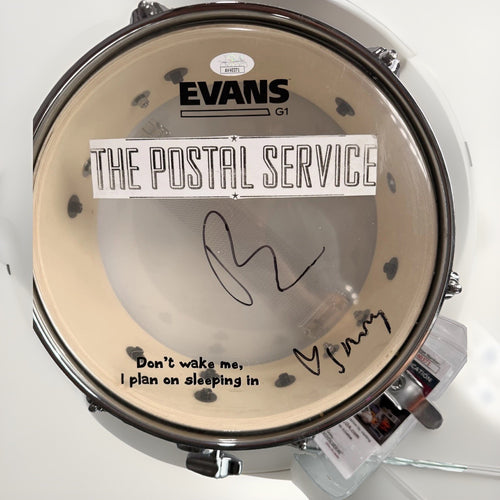
Artists sign in hotel lobbies at 2am. They sign on moving tour buses. They sign on whatever surface is nearest — amplifier cases, album sleeves that have been handled a hundred times, drumheads that have absorbed sweat and vibration. They sign in green rooms with bad lighting after two hours of performing. Their signature changes across a tour, across a decade, across a career. A Rolling Stones signature from a stadium afterparty in one era looks nothing like the same signature from a controlled album signing two decades later.
FBI Operation Bullpen, which ran through the late 1990s and early 2000s, exposed just how deeply forged sports and music memorabilia had penetrated the market. The operation resulted in dozens of convictions and implicated items that had been moving through reputable-seeming channels with paperwork attached. The paperwork looked fine. The signatures were not.
One of the core lessons from Bullpen was that paper generated after the fact — regardless of who issued it — can be fooled when the reference database itself contains contaminated exemplars. A skilled forger who studies real signatures can produce work that defeats comparative analysis at a distance.
A witness defeats that entirely.
You cannot forge an event that a person attended.
What Actually Happens at a JSA-Witnessed Concert Signing
The logistics matter because they directly address the skepticism a sophisticated buyer will bring.
JSA coordinates with promoters, management, and venue contacts to position a certified representative at controlled signing opportunities. These are typically:
- Meet-and-greet signings — structured pre-show or post-show events where ticketed fans bring items for signing. The JSA representative is present throughout, observing each signing and certifying items on the spot.
- Backstage or green room signings — smaller, access-controlled environments where the representative documents the session with greater specificity about items signed.
- Tour kickoff or record-release events — label-coordinated signings where the artist is signing multiple items, often for retail or promotional purposes, with a witness present for the entire session.
The representative certifies each item individually. The witnessed sticker goes on immediately. Documentation is created contemporaneously — not reconstructed later from memory or photographs.
That contemporaneous creation is the thing. It is not a reconstruction. It is a record made in the moment.
Compare that to what happens with a submitted LOA. Weeks pass. The item ships. It arrives at JSA's facility. An examiner photographs it under controlled lighting. They pull comparative exemplars. They form an opinion. They issue a letter.
Both processes can produce valid authentication. Only one of them was there.
The Roger Epperson Standard and Why It Reinforces This Logic
Within Beckett Authentication Services (BAS), the Roger Epperson REAL designation represents the music specialist tier. Epperson is widely regarded as one of the foremost music autograph experts in the world, with particular depth in British rock and classic rock — the Beatles, Stones, Zeppelin, and their contemporaries.
Epperson's reputation rests heavily on his personal witnessing of signatures over decades. His authentication carries weight precisely because a significant portion of his reference database was built from in-person observation, not purely from comparative analysis of copies.
The logic is consistent: direct observation creates a different quality of certainty than forensic comparison.
When a piece carries both a JSA witnessed sticker from a recent concert signing and supporting provenance — photographs of the signing, the meet-and-greet ticket or wristband, even a credit card receipt from the merchandise table that night — you have built a provenance chain that is extraordinarily difficult to attack.
What story does a submitted LOA alone actually tell you about where the item has been?
Provenance as the Multiplier
Authentication is not a single event. It is a chain.
A JSA witnessed authentication from a concert signing is the strongest single link in that chain. But the chain has other links, and sophisticated buyers will look at all of them.
-
The witnessed sticker and documentation
- Verify the certification number against JSA's public lookup
- Confirm the documentation language specifies "witnessed" not just "certified"
- Check that the event location and approximate date are noted
-
Supporting event documentation
- Meet-and-greet ticket stub or wristband from the specific show
- Photographs of the signing if taken by the fan or representative
- Setlist from that night as a date anchor
-
The item itself
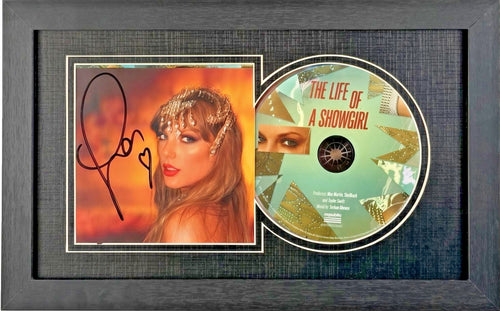
- Does the item make sense for a concert signing context? A backstage pass, an album cover, a drumhead, a guitar — these are plausible concert signing items. A large canvas oil painting is not.
- Is the ink consistent with a live signing environment? Rushed signatures on angled surfaces look different from flat, deliberate signings.
-
Custody from event to sale
- Who held this item between the signing night and today?
- Is the first owner the person who attended the event?
- If it passed through a dealer, when and at what price point?
The witnessed authentication is the anchor. Provenance is what makes the anchor hold.
PSA and Beckett in the Music Context: Complementary, Not Competing
A quick calibration on the three major authenticators in music memorabilia, because buyers sometimes treat them as interchangeable when they are not.
| Authenticator | Music Strength | Witnessed Option | Specialist Tier |
|---|---|---|---|
| JSA | Broad catalog; strong in contemporary artists and tour signings | Yes — event witnessing is a core service | Standard vs. Full LOA vs. Witnessed |
| BAS / Beckett | Deep in vintage and classic rock via Epperson REAL | Yes — Beckett Witnessed program exists | Roger Epperson REAL for music specialists |
| PSA/DNA | Strong crossover in music/sports (signed merch, crossover figures) | Yes — PSA witnessed signings coordinated through their events | PSA certification-verification warnings apply; check lookup |
PSA has issued specific certification-verification warnings about counterfeit PSA stickers and fake certification numbers in the wild. When you are verifying any PSA documentation on a music piece, go to the source. Look the number up. Do not assume the sticker is real because it looks real.
The same verification discipline applies to JSA and Beckett. Every major authenticator's website has a lookup function. Use it every single time.
For high-value music pieces, the strongest position is dual authentication: JSA witnessed plus an independent BAS or PSA opinion on the same item. Not because you distrust the witness, but because sophisticated buyers at the resale stage will want multiple data points, and having them already assembled commands a premium.
The Specific Failure Modes of a Submitted LOA on Music Items
This is where the conversation gets uncomfortable, and where it needs to go.
A submitted LOA can be wrong in several distinct ways that do not apply to a witnessed authentication.
Database Contamination
If an authenticator's reference database includes forged exemplars — either because forgeries were unknowingly accepted early in the database's construction, or because an artist's signature evolved rapidly and the database did not keep pace — then comparative analysis against that database can produce false positives.
Operation Bullpen demonstrated this is not a theoretical risk.
Signature Evolution
Many artists sign fundamentally differently at different life stages. A signature from an early indie signing tour looks nothing like a signature from a major label stadium era. Examiners account for this, but the margin of error grows as the gap between reference exemplar and questioned item widens.
A witness does not have this problem. They are not comparing. They are confirming.
Ghost Signing
Some artists have been known — documented in multiple cases — to use assistants, band members, or road managers to sign items in their name during high-volume signings. A submitted LOA cannot detect ghost signing if the ghost's technique is close enough to the principal's signature to pass comparative analysis.
A JSA witness at the event who sees the artist personally sign each item eliminates this risk for those items.
Photography Artifacts
Some submitted authentications are performed on photographs of items rather than the items themselves. The photograph introduces compression artifacts, color shift, and resolution loss that can obscure pen characteristics — ink pooling, pressure variation, surface interaction — that a direct examination would catch.
When you see a submitted LOA, ask: did the item itself travel to the authenticator, or did a photograph?
Red Flags
Buy with your eyes open. These are the patterns that should make you slow down or walk away entirely.
- The LOA describes itself as "witnessed" but lists no event, venue, or date. A real witnessed authentication is specific. Vague language is a tell.
- The LOA is from a company you cannot find online. There is an entire cottage industry of invented authentication companies. If the company's website is a single page with no address, no staff names, and no lookup function, the paper is decorative.
- The seller presents a "witnessed" authentication but cannot produce meet-and-greet documentation. Concert witnessed signings almost always generate supporting materials. Fans photograph. Wristbands exist. Tickets are kept. The absence of any supporting documentation for a supposedly witnessed event is a serious problem.
- The JSA sticker number does not return a match on JSA's verification site. Stop. Do not proceed.
- The item is "too perfect" for a concert context. Witnessed concert signings produce real-world items: album sleeves with handling wear, guitars with road dings, drumsticks that have been used. A pristine item with a concert witnessed sticker deserves scrutiny about whether the item and the documentation actually belong together.
- The provenance jumps immediately from "signed at a show" to a dealer with no first owner in between. The person who attended the event is the anchor of the provenance chain. If they are invisible, ask why.
- The seller conflates JSA Basic with JSA Full LOA with JSA Witnessed. These are different products with different evidentiary weight. A seller who does not know or will not acknowledge the distinction is either uninformed or being deliberately evasive. Either way, it is a problem.
- The authentication is from a third-party company that is "authorized by" a major house but is not the major house itself. JSA, PSA, and Beckett do not license their names to regional affiliates who do independent authentication. If the paper says anything other than the actual company name, it is not that company's authentication.
Bottom Line
Music memorabilia is a category where the moment of creation is everything.
The signature exists because an artist was in a specific place, in a specific state of mind, holding a specific pen. The authenticity of that signature is best established by someone who shared that moment. A JSA witnessed authentication from a concert event is not just a stronger credential than a submitted LOA — it is a fundamentally different kind of evidence.
A submitted LOA says: this looks like the real thing.
A witnessed authentication says: I was there.
For items that matter — guitars, drumheads, multi-signed band pieces, rare album covers — "I was there" is not just preferable. It is the standard you should hold the market to.
Build your collection around witnessed provenance where you can access it. When you cannot — for vintage pieces, for deceased artists, for historical items where no witness will ever exist — then dual-authenticated submitted LOAs from the top tier houses, combined with every scrap of provenance documentation you can assemble, is the best available substitute.
But when witnessed authentication exists, and you have the choice between a witnessed sticker and a submitted LOA on the same item, there is no real choice.
Buy the paper that was in the room.
FAQ
What exactly is the difference between a JSA witnessed sticker and a JSA Full LOA?
A JSA Full LOA is an extended submitted authentication — the item traveled to JSA, an examiner performed comparative analysis against reference exemplars, and JSA issued a formal letter with detailed findings. It is the most thorough form of JSA's submitted authentication and carries more evidentiary detail than a basic JSA sticker certification.
A JSA witnessed sticker is issued on-site at a signing event by a JSA representative who observed the signing in person. The authentication is contemporaneous — created at the moment of signing — rather than forensic. It does not involve comparative database analysis because the signing was directly observed. The two products address authentication from different angles, and for music memorabilia, the witnessed authentication carries a qualitatively different kind of certainty.
Can I get a JSA witnessed authentication for a vintage piece I already own?
No. Witnessed authentication is by definition contemporaneous. It cannot be applied retroactively. If you own a vintage piece, your options are the submitted authentication tracks at JSA, PSA, Beckett, or a specialist like Roger Epperson through BAS. For vintage music pieces — classic rock era and earlier — Epperson REAL is widely considered the highest-value opinion in the market.
Does JSA witnessed authentication mean the item is guaranteed authentic?
No authentication guarantee exists in the absolute sense. What witnessed authentication means is that the authentication methodology eliminates the specific failure modes associated with after-the-fact comparative analysis: database contamination, signature evolution misreading, photography artifacts, and ghost signing. The direct observation by a credentialed representative is the strongest single authentication event possible for a newly signed item. It is not a guarantee, but it is the ceiling of available certainty.
Is a Beckett witnessed authentication equivalent to a JSA witnessed authentication?
They are functionally equivalent in methodology — both involve a credentialed representative present at the signing event. The difference is primarily in market recognition and specialist depth. BAS carries particular strength in vintage and classic rock through the Epperson REAL designation. JSA has historically had broader reach in contemporary artist tour signings. For a working collector, having either witnessed authentication from either house is a strong position. Having both on the same item is the strongest position.
How do I verify a JSA witnessed authentication I'm considering buying?
Go directly to JSA's certification lookup and enter the sticker number. Do not rely on the seller's word, a photograph of the sticker, or a screenshot. The lookup will confirm whether the certificate number is valid, what item it was issued for, and what authentication tier it represents. If the number is not in the system, do not buy the item. Also look at the documentation language carefully: a genuine witnessed authentication will use specific language about the witnessing and will note the event context.
What music items are most commonly available with JSA witnessed authentication from concert events?
The most common categories are album sleeves and records brought to meet-and-greet signings, guitars and other instruments signed at backstage or green room sessions, drumsticks and drumheads from post-show signings, personal items like photographs and backstage passes signed during access events, and merchandise items — posters, lithographs, tour programs — signed at label-coordinated or meet-and-greet events. Multi-signed band pieces, where all members are present, represent the highest-value category and the strongest use case for witnessed authentication, since the alternative — assembling a multi-member signature through submitted LOAs from different sources — is considerably weaker.
Does witnessed authentication affect resale value?
Meaningfully yes, particularly at higher price points. At the level where sophisticated collectors and institutional buyers participate — gallery-quality instruments, rare band pieces, items from historically significant tours or shows — witnessed authentication is increasingly the baseline expectation rather than a premium feature. Items with strong witnessed provenance tend to move faster and at firmer prices than equivalent items with submitted LOA-only documentation. The market has absorbed the lesson from Operation Bullpen and from subsequent cases: paper generated after the fact is not the same as paper generated in the moment.
What if the artist is no longer alive? Can any authentication be truly reliable?
For deceased artists, witnessed authentication is obviously not available for new items, but the logic still applies in reverse: items with witnessed authentication from when the artist was alive — documented signings with contemporary witnesses — carry a premium over items with only modern comparative analysis. For estates and historical collections, the combination of Roger Epperson REAL (through BAS) for classic rock era artists, dual-authenticated submitted LOAs from JSA and PSA or Beckett, and deep provenance documentation representing the full chain from original owner forward is the strongest achievable position. No single layer is sufficient; the depth of the provenance chain is what distinguishes museum-quality documentation from adequate market documentation.