Mission Hardware Auctions: What Apollo Equipment Actually Reaches the Market
Most collectors who ask about Apollo hardware have no real frame of reference for what "hardware" means in this context.
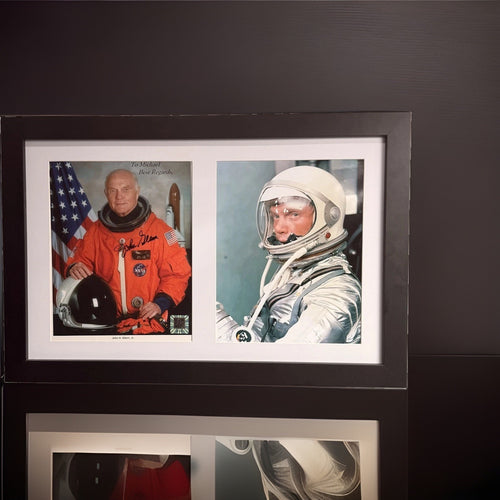
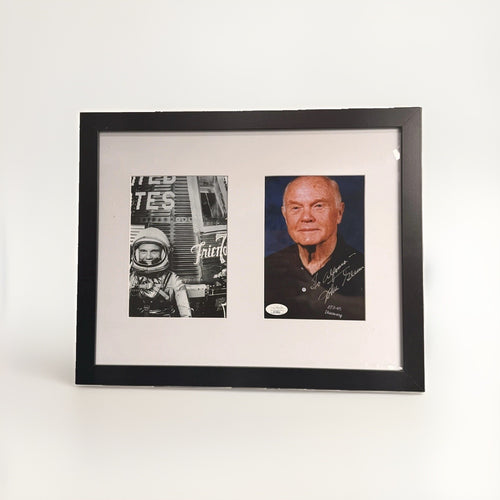
They're thinking about signed photographs. Maybe a flown flag. A Beta cloth patch with a signature on the border.
That's not what we're talking about here.
We're talking about the physical machinery of the lunar program — switches, circuit breakers, tool carriers, pressure suits, filtration components, food pouches that were actually packed into a Command Module. Objects that went to the Moon, or were built to go and stayed behind for a reason, or supported a mission from a control room, or trained the men who walked on another world.
This category is real. It trades at auction. And it is one of the most complicated authentication landscapes in the entire collectibles market.
Here is what you need to understand before you spend serious money in it.
The Three Categories of Apollo Hardware
Not all "mission hardware" is the same. The market segments into three distinct tiers, and confusing them is how collectors overpay or, worse, get taken.
1. Flown Hardware
This is the peak category. Objects that were aboard a spacecraft during an actual mission. Flown to the Moon and back. Flown in lunar orbit. Flown to and from the lunar surface.
The documentation requirements here are extraordinary — or should be. You need a provenance chain that ideally begins with NASA's own transfer or disposal records, passes through whatever crew member or program official acquired the piece, and reaches you with every link accounted for.
In practice, the chain is rarely that clean. Many astronauts brought personal gear home under NASA policies that were inconsistently enforced across the program's history. What one astronaut could legitimately keep, another might not have been permitted to. The legal status of certain flown items was contested for decades, and in some cases still is.
If the documentation isn't airtight, why is the price?
2. Mission-Used (Non-Flown) Hardware
This tier includes components that were manufactured for flight but not used — backup units, training hardware, contractor test specimens, and equipment that was pulled from a specific mission's manifest and replaced. It also includes hardware that was mission-critical but ground-based: Mission Control consoles, launch support equipment, tracking station components.
This material is more abundant than true flown hardware. It is also legitimate. A MOCR (Mission Operations Control Room) console from Houston's Building 30 is a genuine piece of the Apollo program even if it never left Earth. The market prices it accordingly — below flown, but often still substantial.
3. Contractor and Program Hardware
Manufacturing spares, engineering development units, quality-assurance test articles. These originated at North American Rockwell, Grumman, MIT's Instrumentation Laboratory, Hamilton Standard, and dozens of other contractors who built the program.
This tier is the most accessible price-wise and carries the deepest authenticity risk, because chain-of-custody documentation from contractor facilities is frequently non-existent or difficult to verify.
What Actually Reaches Auction — and What Doesn't
The public perception of Apollo hardware as essentially untouchable — all locked in museums or government vaults — is outdated.
Significant hardware has been trading in the secondary market for decades, accelerating markedly in the 2000s and 2010s as the program's anniversary milestones drove cultural attention and private collectors began taking the category seriously.
What You'll See
The major auction houses — RR Auction, Heritage Auctions, Bonhams, and occasionally Sotheby's and Christie's — regularly offer Apollo-era material. Common categories include:
- Data Cards and Checklists: Flown cue cards and mission checklists, often with crew annotations. These are paper artifacts but they are also genuine flown hardware by any reasonable definition. Documentation is usually strong because the chain of custody through the crew is direct.
- Flown Flags: Carried aboard in the Personal Preference Kit (PPK) and distributed by crewmembers afterward. Authentication requires provenance letter from the astronaut or estate, ideally supplemented by third-party specialist certification.
- Pressure Suit Components: Gloves, helmets, suit torso sections. These are high-value, high-authentication-complexity items. NASA transferred some suits to astronauts as personal property; others remained government property and their secondary market presence is a legal gray zone.
- Flown Tools: Hammers, tongs, sample bags (even empty ones), contingency sample return containers. Surface tools that were carried to the Moon are among the most coveted objects in the category.
- Food and Consumables Packaging: Flown food pouches and beverage containers. Deceptively simple objects with complex authentication needs.
- Mechanical Components: Circuit breakers, switches, fasteners, valve assemblies. These appear frequently from contractor and support hardware streams. Authenticity range is wide; buyer scrutiny must be proportional.
- Spacecraft Sections: Command Module panels, instrument displays, hatch components. These are rare, large, and expensive to transport and store. They appear occasionally and generate significant attention.
What You Won't See (Or Shouldn't)
Certain categories are legally restricted or practically impossible to transfer:
- Lunar samples (Moon rocks and soil) remain property of the U.S. government. Full stop. Any offer of lunar material for private sale is either fraudulent or the subject of an active law enforcement investigation. The FBI and NASA's Office of Inspector General have pursued these cases aggressively.
- Nuclear materials used in Radioisotope Thermoelectric Generators (RTGs) powering certain spacecraft and surface experiments.
- Complete spacecraft structures still under NASA or Smithsonian stewardship, though panel sections do surface with legitimate provenance.
If someone is offering you Moon rocks, they're not offering you Moon rocks.
Authentication: The Specialist Framework
The generalist authentication services that dominate sports and entertainment collectibles — PSA, JSA, Beckett — are relevant in the space collectibles market, but their role is more limited and more nuanced than collectors from those categories expect.
PSA/DNA, JSA, and BAS (Beckett Authentication Services) all authenticate signatures on space collectibles. If you have an Apollo-signed photograph or a crew-signed mission flag, these services can certify the autograph component of the piece. That matters. It's not nothing.
But a PSA slab on a signed photograph does not tell you whether a claimed flown artifact was actually flown. That requires a different framework entirely.
The Zarelli Standard
For serious space hardware authentication, the market benchmark is a specialist letter — and the most recognized name operating in this tier is the Zarelli specialist framework. A Zarelli letter addresses provenance, shuttle or Apollo mission manifest cross-reference, physical characteristics consistent with flight hardware, and the overall credibility of the documentation chain.
This kind of specialist analysis is not optional at the high end of the market. It's the difference between a piece that resells with confidence and one that stalls.
What the Major Houses Do
RR Auction has developed the most consistent in-house expertise in the space hardware category over the long term. Their cataloguing tends to be detailed on provenance. Heritage brings broad reach and strong buyer competition. Bonhams has handled significant pieces with rigorous documentation standards, particularly for British and European buyers entering the category.
Even with house expertise, buyers should always request the full provenance documentation package before bidding on significant pieces. A compelling catalog description is marketing. The underlying paperwork is what you're actually buying.
NASA Disposition Records
The most valuable provenance document in this market is a NASA Transfer of Property or disposal record showing that a specific item passed legitimately from government ownership. These records exist in various forms — Property Pass documents, astronaut personal property inventories, NASA surplus disposal certifications.
They are not always available. Their absence doesn't automatically disqualify a piece, but their presence dramatically strengthens it.
When a seller tells you "the documentation was lost" or "NASA didn't keep records on those items," treat that as a yellow flag that demands deeper investigation, not a reasonable excuse to move past the issue.
The Legal Landscape: Why This Category Is Complicated
The law governing ownership of NASA hardware is genuinely unsettled in ways that affect the collectibles market directly.
The National Aeronautics and Space Act and associated federal property regulations made essentially all Apollo hardware the property of the U.S. government. But the practical enforcement of those rules during the Apollo era was inconsistent. Astronauts took personal items. Contractors retained demonstration and test articles. Engineers kept mementos. NASA itself disposed of surplus hardware through processes that weren't always perfectly documented.
The result is that the market contains both entirely legitimate pieces with bulletproof provenance and pieces where ownership is ambiguous — not because they were stolen in any conventional sense, but because the legal status was never definitively resolved.
Several high-profile cases have clarified parts of this landscape. The legal proceedings around lunar samples, around specific astronaut memorabilia, and around hardware that NASA sought to recover from private hands have established that the government's interest in this material is live and actively enforced when it chooses to be.
Are you buying a collectible or buying a legal dispute?
Working with established houses that conduct due diligence on title is not a luxury in this category. It is basic risk management.
The Price Reality: What "Significant" Means Here
We're not going to invent auction results. What we can tell you is the general structure of the market.
Paper artifacts — checklists, data cards, crew-annotated documents — with strong provenance and flown certification have historically performed strongly relative to their size and fragility. They're easy to store, easy to display, and the authentication chain is often cleaner than for mechanical items because the crew connection is direct.
Flown flags and PPK items from lunar missions command premiums over those from Earth-orbital flights. The surface missions — the Apollos that actually landed — sit at the top of the prestige hierarchy.
Mechanical hardware pricing varies enormously by the specificity of the flown claim and the strength of the documentation. A circuit breaker with solid contractor provenance trades very differently from a circuit breaker with a credible flown claim and NASA documentation. The premium for the flown claim, when it's genuine and documented, is substantial.
Complete or near-complete pressure suits are among the highest-value items when they reach the market. The combination of visual impact, direct crew association, and scarcity creates demand that occasionally produces results that surprise even experienced dealers.
The broader point: this is not a category where you can use comparables casually. Each piece's value is a function of its specific documentation, mission association, crew member, and physical condition in ways that make generalization dangerous.
Buying at Auction: The Process
If you're approaching this market seriously, the process before the hammer falls matters as much as the bid itself.
-
Request the full provenance package
- Not the catalog summary — the actual underlying documents
- NASA transfer records, astronaut letters, estate documentation, prior auction records
- Photographs of any provenance labels or markings on the object itself
-
Engage a specialist before bidding on high-value pieces
- A Zarelli specialist letter or equivalent independent review is worth the cost at meaningful price points
- This is particularly important for flown hardware claims and pressure suit components
-
Verify the auction house's title due diligence
- Ask directly whether they've confirmed clear title and how
- Reputable houses have processes; they'll tell you what they are
- Vague answers are informative in their own way
-
Understand what the autograph authentication covers
- A BAS, JSA, or PSA certification on a signed component certifies the signature
- It does not certify the flown status or the provenance of the underlying object
- These are different questions requiring different expertise
-
Check prior appearance history
- Has this piece appeared at auction before? Under what description?
- Have the claims around it shifted between appearances?
- Escalating claims with each sale appearance is a classic warning pattern
-
Factor in ongoing legal risk
- Even a piece you buy in good faith from a reputable house could theoretically attract government interest if its provenance is later called into question
- This risk is real but manageable; clean documentation is your protection
Red Flags
This category has attracted forgery, misrepresentation, and wishful provenance-construction at levels that demand active skepticism.
- Unverifiable "direct from astronaut" claims. This is the most common provenance narrative in the market and also the one most easily fabricated. "I got this from [astronaut name]" without documentation is not provenance. It's a story.
- Missing NASA markings on items that should have them. Flight hardware carried stenciled or stamped identification in most cases. Hardware that lacks any government markings when the category typically carries them deserves hard questions.
- Escalating flown claims. A piece described as "mission-era" in one sale becomes "mission-used" in the next and "flown" in the third. Watch for provenance inflation across appearances.
- Lunar samples or "lunar material" in any form. Not legal. Not negotiable. Report it.
- Generic contractor hardware marketed as flight-specific without supporting documentation. Many Apollo-era components were produced in quantity. The existence of a NASA logo or program markings doesn't establish mission-specific provenance.
- Sellers who cannot or will not produce underlying documentation on request. In a category where documentation is this important, refusal to share it tells you everything.
- Prices that seem low for the claimed provenance tier. Genuine, well-documented flown hardware from lunar missions is expensive. A bargain-priced item claiming premium provenance is a warning, not an opportunity.
- Authentication from non-specialist sources presented as sufficient for flown claims. A generalist autograph authentication service certification does not address the physical authentication of the hardware claim. Don't let one be substituted for the other.
Bottom Line
Apollo hardware is real. It trades at real auction houses for real money with real collectors on both ends of the transaction.
It is also one of the most documentation-intensive categories in the entire collectibles market, operating at the intersection of federal property law, inconsistently applied historical policy, and a provenance chain that is now fifty-plus years long in places.
The collectors who do well here are the ones who respect that complexity rather than looking for shortcuts through it.
Get the documentation. Engage specialists. Use the major houses' expertise as a floor, not a ceiling, on your own due diligence. Understand exactly what tier of hardware you're buying and price your conviction accordingly.
The objects themselves are extraordinary. The history they carry is genuine. The market for them is legitimate.
Just do the work before you bid.
Frequently Asked Questions
Is it actually legal to own Apollo flight hardware?
In many cases, yes. Hardware that was legitimately transferred from NASA ownership — through astronaut personal property allowances, official surplus disposal, contractor retention of non-flight articles, or formal institutional transfers — can be legally owned and traded. The key word is "legitimately." Hardware whose transfer out of government ownership is undocumented or legally questionable sits in a different category. This is why provenance documentation isn't just a collector preference — it's the legal foundation of ownership.
What's the difference between "flown" and "flown hardware" when I see those terms in auction listings?
Technically, anything aboard a spacecraft during a mission is "flown." In practice, auction listings use "flown" to mean the item was in the spacecraft and "flown hardware" or "flight hardware" to mean the item was a functional component of the spacecraft systems. A personal item carried in an astronaut's PPK is flown but not hardware in the engineering sense. A circuit breaker on the Command Module instrument panel is flown hardware. Both categories are legitimate; they command different premiums and require different documentation approaches.
How does the Zarelli specialist letter work in practice?
A Zarelli specialist letter is an expert opinion document, not a government certification. It represents a detailed analysis of the object's physical characteristics, the provenance documentation, any mission manifest cross-referencing available, and the overall credibility of the flown or mission-use claim. It's the space hardware equivalent of a connoisseurship opinion in fine art — valuable because of the expertise and track record behind it, not because it carries regulatory authority. Major auction houses and sophisticated buyers treat it as a significant provenance marker.
Can PSA, JSA, or Beckett authenticate space hardware the same way they handle sports memorabilia?
These services can and do authenticate signatures on space collectibles, and that authentication is genuinely meaningful for the autograph component of a piece. What they cannot do is evaluate the physical provenance of a flown hardware claim. A PSA-certified signature on a mission-flown object tells you the signature is genuine; it doesn't tell you the object was flown. For hardware provenance, you need specialist analysis. Roger Epperson REAL within BAS is the recognized music memorabilia specialist tier; the space equivalent requires space-specific expertise at the Zarelli level.
Why do I see so many Apollo circuit breakers and switches at auction? Are they all legitimate?
Apollo-era switches, circuit breakers, and panel components surface frequently because they were manufactured in quantity for flight units, backup units, training simulators, and contractor test articles. Many of these items left the program through legitimate contractor channels when facilities closed or hardware was disposed of. The legitimate ones are real program artifacts; the problem is that the same physical object type exists across multiple provenance tiers, from genuine flight hardware to contractor test spares, and the documentation — or its absence — is what distinguishes them. Treat any switch or breaker marketed as "flown" with proportional documentary scrutiny.
What should I do if I'm offered lunar rock or soil samples?
Decline and, if the offer is being made commercially, report it to NASA's Office of Inspector General and/or the FBI. Lunar samples are unambiguously the property of the U.S. government. There are no legitimate exceptions available to private collectors. The FBI and NASA OIG have run active enforcement operations in this area and continue to do so. Anyone offering you Moon rocks for purchase is either committing fraud, in possession of stolen government property, or about to introduce you to an undercover federal agent. None of those scenarios ends well for the buyer.
How do I evaluate the provenance chain for a piece with multiple prior auction appearances?
Prior auction appearances are actually useful reference points. Request catalog records from each appearance and compare the description carefully. Consistent, stable descriptions across appearances — same mission claim, same provenance narrative, same documentation cited — are a positive indicator. Escalating claims, shifting mission associations, or newly appearing "documentation" that wasn't mentioned in earlier sales are serious warning signs. The auction house records are public in most cases; doing this research is basic due diligence, not excessive skepticism.
Is mission hardware from Apollo considered a better investment category than signed photographs and standard space memorabilia?
We're careful about investment characterizations, but we can describe the market structure honestly. Well-documented, genuine flown hardware — particularly from the lunar surface missions — occupies the peak scarcity tier in space collectibles. The supply is definitively finite in a way that signed photographs are not, because more photographs can always be signed and more astronauts can sign them. Hardware from missions where the crew no longer survives is beyond any possibility of supply expansion. That scarcity profile is different from the broader memorabilia market. Whether it translates to superior returns depends on documentation quality, condition, and the specific mission association — variables that require individual analysis rather than category-level generalizations.