Updated 2026-07-11
A channel-by-channel guide that separates official SpaceX merchandise, signed memorabilia, and mission-flown artifacts and assigns the right evidence to each.
Updated July 2026 · By Gauntlet Gallery Research Desk
Buy current merchandise from the official SpaceX Store and retain the receipt and packaging. Buy signed or mission-flown material only from a seller or auction house that supplies category-appropriate authentication and object-specific provenance. “Official,” “authenticated,” and “flown” are different claims. To avoid overpaying, compare the exact item’s completed sales, add fees and shipping, and pay a premium only for evidence or service you can identify.
First Decide Which SpaceX Category You Are Buying
SpaceX collecting contains three lanes with different verification standards.
Gauntlet Gallery stocks documented space memorabilia — SpaceX display pieces and astronaut-signed items — each vetted before listing.
Shop Space MemorabiliaFirst-party merchandise includes mission patches, models, apparel, pins, toys, and accessories sold through the official SpaceX Store. Authenticity means the item is a genuine SpaceX retail product. The strongest evidence is a direct order confirmation, original packaging, product code, and a match to the official product page.
Signed memorabilia includes photographs, covers, books, programs, and other objects signed by astronauts, executives, engineers, or mission participants. The SpaceX merchandise receipt does not authenticate the autograph. The signature needs its own witnessed provenance or recognized autograph opinion.
Mission-flown or mission-used material claims physical participation in a flight, test, launch operation, or recovery. It requires records connecting the exact object to the mission. A logo, scorch mark, unusual alloy, or seller story is not a flight record.
A fourth lane—SpaceX-themed decorative art—may be attractive but should not be confused with first-party merchandise or flight artifacts.
Best Source for Current Merchandise: SpaceX Direct
The official store currently lists products including mission patches, Falcon 9 and Dragon models, an IVA-suit figure, Starship accessories, and magnetic building tiles. Inventory and pricing change, so use the live page rather than a cached reseller screenshot.
When buying direct:
- Save the product page as a PDF or screenshot
- Retain the order email and payment record
- Photograph the shipping label and packaging on arrival
- Keep product tags, inserts, internal trays, and bags
- Record the purchase date and product code
- Store the receipt separately from the object
The SpaceX Store FAQ says third-party purchases must be returned to the third-party seller and describes its own return requirements. That matters on the secondary market: SpaceX will not become the reseller’s return desk or authenticate the seller’s used item for you.
Direct retail provenance does not guarantee scarcity or future value. If an item remains in stock at the official price, a secondary-market premium needs a reason—sold-out status, discontinued configuration, superior condition, included historical documentation, or lower landed cost in the buyer’s region.
Where a Specialist Gallery Fits
A specialist seller can add value after the primary sale by inspecting condition, matching the item to a release, preserving provenance, comparing completed sales, insuring shipment, and offering a stated return process. Those services are distinct from manufacturer authentication.
Gauntlet Gallery maintains a space-memorabilia collection that can include SpaceX merchandise alongside signed NASA and Apollo material. Buyers should read the exact product page because authentication appropriate for an astronaut autograph is not the same as documentation appropriate for a SpaceX model.
For first-party merchandise, ask Gauntlet or any specialist dealer for:
- Original SpaceX receipt or documented prior acquisition
- Current photographs of the actual item and packaging
- Official product-page match
- Condition and completeness report
- Explanation of any dealer certificate and what it records
- Completed-sales support for the asking price
- Return, shipping, and insurance terms
A gallery provenance record can document the item’s identity, photographs, and chain through the gallery. It should not be described as if SpaceX issued or endorsed the gallery certificate.
Where Auction Houses Fit for Flown and Signed Material
Specialist auction houses can be appropriate for the rarest SpaceX categories because they publish catalogues, collect consignor evidence, and create permanent transaction records. The catalogue still needs to show the evidence.
RR Auction’s lot for a Crew Dragon Demo-2 flown cover illustrates an evidence-rich category: the lot identifies the mission, object type, and five signers. A buyer should still read the complete lot, terms, authentication statement, and provenance and verify every included certificate.
Before bidding on a “flown” SpaceX object, request:
- Mission name and date
- Flight manifest, crew certification, payload record, or equivalent mission document
- Unique number, photograph, or mark tying the document to the object
- Continuous ownership after the mission
- Export-control, ownership, or deaccession explanation where relevant
- Condition and material description
- Buyer’s premium, tax, shipping, and storage costs
An auction-house attribution is a professional catalogue opinion within that sale. It is not a transferable authentication shortcut for a similar unnumbered object offered later by someone else.
NASA Records Are Context, Not Retail Authentication
NASA and SpaceX are separate organizations, but NASA sources help explain the difference between memorabilia and institutional artifacts. NASA’s Artifact Program preserves and allocates retired mission hardware to eligible institutions. Its artifact-loans and transfers page describes transfers to museums, universities, schools, and other eligible organizations.
NASA’s history FAQ states directly that its office does not assess or verify the authenticity of aerospace memorabilia. Do not cite a general NASA email, logo guideline, or public mission page as an authentication of a privately offered SpaceX object.
Institutional hardware may also remain government or organizational property. For any object claimed to have come from NASA, a contractor, SpaceX, a launch facility, or a recovery operation, ask how private title was lawfully obtained. A good story about an employee’s access is not a transfer document.
NASA’s artifact definition emphasizes relationship to historic flights, programs, technology, and significant people. That is useful valuation context: historical significance comes from documented relationship, not merely aerospace appearance.
Authentication Must Match the Claim
Use a claim-to-evidence matrix:
| Claim | Strong evidence |
|---|---|
| Official retail product | SpaceX order confirmation, official product match, packaging and product code |
| Signed by a named person | Witnessed record or recognized autograph opinion with verifiable number |
| Flown on a named mission | Manifest, crew or mission certification, item-specific flight record, continuous provenance |
| Used at launch or recovery | Contemporaneous operational record and lawful transfer tied to the exact object |
| Limited edition | Manufacturer’s published quantity or numbering system |
| Prototype or employee-only | Company documentation, distribution record, and provenance—not rumor |
Verify autograph certificates on the authenticator’s own site, not through a seller screenshot. The certificate description should match signer and item type. A valid number for a photograph does not authenticate a signed cover.
Third-party authentication is an expert opinion or witnessed record about a signature. It does not authenticate the SpaceX merchandise, mission use, or flight history unless the service explicitly examined and certified that separate claim.
Authenticated Space Pieces in the Gallery Now
In-stock items from our space memorabilia collection, with documentation stated on every listing.

SpaceX Starship Super Heavy Blueprint Metal Display Panel Spacecraft Frame
$59
View This Piece
Buzz Aldrin Signed Apollo 11 NASA Double-Sided Photo JSA Authenticated Display
$397
View This Piece
Eileen Collins — NASA Mask Helmet Autograph, NASA Astronaut
$418.95
View This PieceHow to Avoid Overpaying for Official Merchandise
Start with current SpaceX retail. If the item is available direct, record price, shipping, and delivery time. Then collect completed secondary-market transactions for the exact product—not another mission patch, another scale model, or a similar design.
Your comp table should include:
- Exact product name and code
- Mission or configuration represented
- Sealed, opened complete, or loose
- Box and item condition
- Included receipt and packaging
- Sale date and platform
- Sale price versus asking price
- Buyer’s premium or marketplace fee
- Shipping, tax, and currency
Use the median of like-for-like sales when enough exist. Do not average a $15 patch, a signed cover, and a flown artifact under one “SpaceX collectibles” number.
Paying more can be rational when the seller supplies missing original packaging, direct-purchase documentation, superior condition, an insured returnable transaction, or a genuinely scarce sold-out configuration. Name the service premium. “SpaceX is historic” is not price support.
How to Avoid Overpaying for Signed Material
Separate four values:
- The unsigned object
- The autograph
- Authentication and provenance
- Presentation and transaction service
Compare the same signer, signature format, item, authentication type, inscription, condition, and sale period. A crew-signed flown cover should not set the price for a single signature on a modern photograph.
Check whether the price reported by an auction includes buyer’s premium. Add shipping and tax. If a dealer’s price is higher than auction results, identify whether it includes framing, authentication, return rights, insured delivery, or simply a larger margin.
Avoid unsigned SpaceX merchandise marketed with a celebrity story that cannot be connected to the object. Avoid an autograph certificate that names the signer but not the item. Avoid “guaranteed to pass” language; buy the completed authentication result or make the contract and return process explicit.
Mission-Flown Claims Require a Provenance Chain
“Flown” is a historical fact, not a condition adjective. The chain should answer:
- What was the object before flight?
- Who controlled it?
- Why and where was it carried?
- How was it identified during or after flight?
- Who removed or transferred it?
- How did each later owner acquire it?
Photographs can support the chain when a unique object is identifiable. A generic photograph of hardware on a launch pad cannot authenticate an indistinguishable fragment.
Material analysis may show that an object is made from an aerospace alloy or heat-shield-like substance. It cannot alone prove which vehicle or mission it came from. Provenance and material evidence should reinforce one another.
If the chain has a gap, price it as a gap. Do not use a gallery blockchain record created years later as proof of pre-record history; it can preserve the evidence entered at registration, but it cannot manufacture the missing mission link.
Marketplace and Seller Red Flags
Pause when a listing includes:
- “Official SpaceX” with no SpaceX receipt or product match
- “Flown” supported only by scorch marks or employee story
- NASA paperwork offered as SpaceX authentication
- A certificate from the seller with no evidence file
- Stock photos instead of the actual object
- A mission patch called crew-used because the design is correct
- A signature certificate number that resolves to another item
- “Employee exclusive” with unlimited supply
- A current store item priced far above retail without explanation
- A seller refusing condition, packaging, or return questions
Red flags are reasons to investigate, not automatic proof of fraud. Document the discrepancy and request evidence. Walk away when the seller replaces evidence with urgency.
Questions that distinguish a reseller from a document-led specialist
Ask the same questions in writing:
- What precise category are you selling: merchandise, autograph, or flown artifact?
- Which source proves the product identity or mission relationship?
- Are the photos of the exact item currently in your possession?
- Which facts were independently verified and which came from the consignor?
- Does the certificate cover the autograph, the object, the flight claim, or only the dealer’s record?
- Can I verify the certificate without using your website?
- What condition or functionality remains untested?
- Which completed sales support the asking price?
- What return applies if an item identifier or certificate description does not match?
A strong seller can answer narrowly. “Our experts guarantee everything” is broader but less useful than an invoice, certificate lookup, product match, and item-specific provenance chain.
Price premiums that may be defensible
A premium may pay for original first-party paperwork, a recognized witnessed autograph record, rare complete packaging, superior condition, a mission-specific provenance file, professional cataloguing, insured delivery, or a meaningful return remedy. Record which service you are buying.
Do not pay a provenance premium for a certificate created solely from the same seller story. Do not pay a rarity premium when the manufacturer still lists the product. Do not pay a “flown” premium when no item-specific mission document exists.
Purchase File and Final Checklist
Keep a permanent file containing:
- Official product page or mission record
- Order confirmation and invoice
- Seller listing and messages
- Full condition photographs
- Package labels and identifiers
- Authentication lookup and letter
- Mission-flown provenance documents, if claimed
- Comparable-sales worksheet
- Shipping, insurance, customs, and delivery record
- Return policy captured at purchase
Before payment, confirm the category, exact identity, condition, evidence, landed cost, and remedy if the item differs materially from the listing.
Methodology and disclosure
This guide relies on the official SpaceX Store, NASA artifact and memorabilia policies, an original RR Auction SpaceX lot, and current Gauntlet collection pages. It does not claim that NASA authenticates private memorabilia or that a gallery certificate equals SpaceX approval. Prices and store inventory change; verify live pages. Past sales do not guarantee future value.
Editorial image disclosure: Illustrations on this page were generated with Nano Banana for explanatory use. They are not authentication evidence, provenance records, or reproductions of any specific collectible.
Browse Documented Space Memorabilia
From SpaceX display hardware to astronaut autographs, every listing states exactly what documentation accompanies the piece.
Shop Space MemorabiliaEvery piece ships with its stated documentation — see how our certificates of authenticity work.
Frequently Asked Questions
How do I authenticate a SpaceX collectible?
Authenticate SpaceX and space collectibles through specialist space authentication and documented provenance. Gauntlet Gallery pairs documented provenance with Zarelli Space Authentication for astronaut-signed and flown material, plus a clear ownership history.
Where can I buy authenticated SpaceX collectibles without overpaying?
Use dated completed sales for the same artist, release, format and condition, recording the venue, currency and fees. Asking prices and broad archive totals do not establish a realized sale price or future return.
What documentation should a SpaceX collectible include?
Look for mission or flown documentation, a specialist authentication opinion where applicable, and an unbroken provenance trail — not just a generic certificate.
How is SpaceX memorabilia priced?
Compare like-for-like artifacts or signed objects with documented mission association, provenance, condition and authentication. Distinguish an asking price from a dated completed sale.
Shop Space memorabilia
Explore current pieces available from the gallery.
-
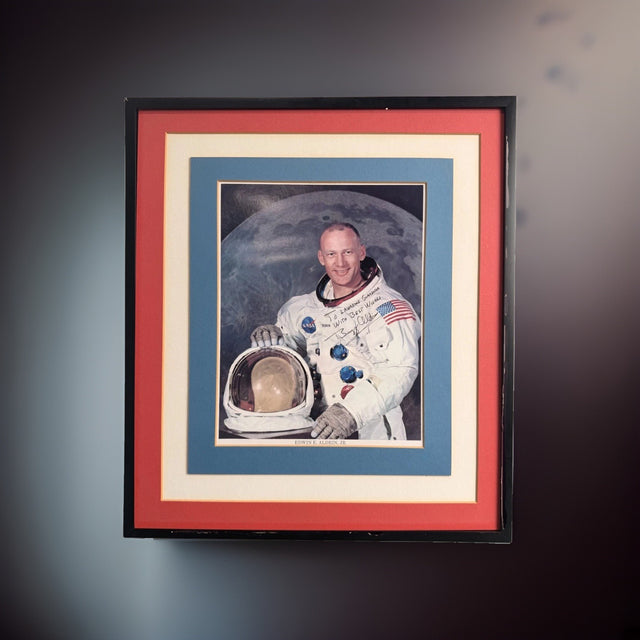
Buzz Aldrin Signed NASA 8x10 Color Photo Personalized Framed JSA LOA
$899.00 USD
-
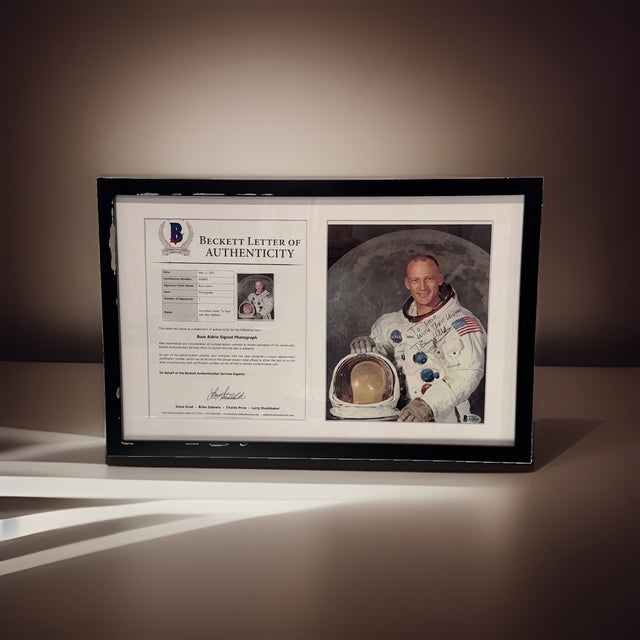
Buzz Aldrin Signed Inscribed Astronaut Photo Framed Beckett LOA A42843
$999.00 USD
-
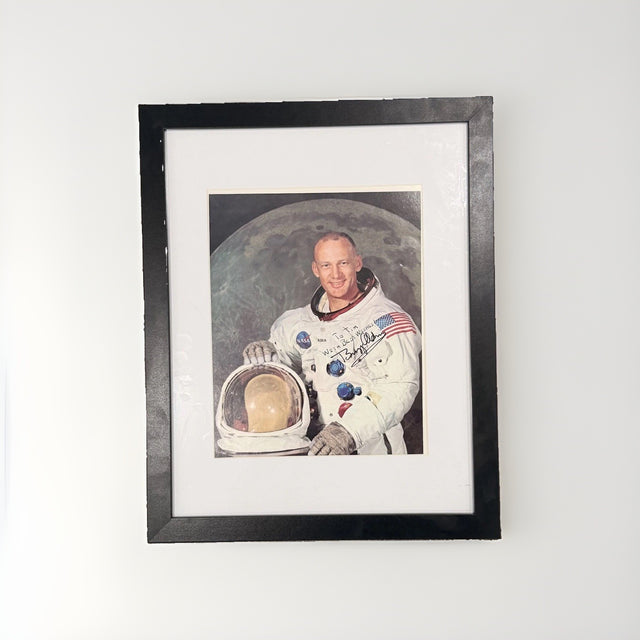
Buzz Aldrin Signed NASA Astronaut Portrait Inscribed To Tim Framed
$850.00 USD
-
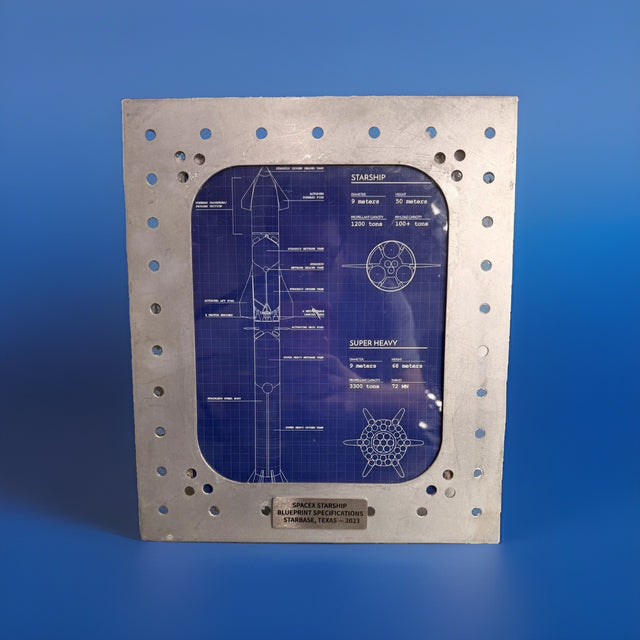
SpaceX Starship Super Heavy Blueprint Metal Display Panel Spacecraft Frame
$59.00 USD
-
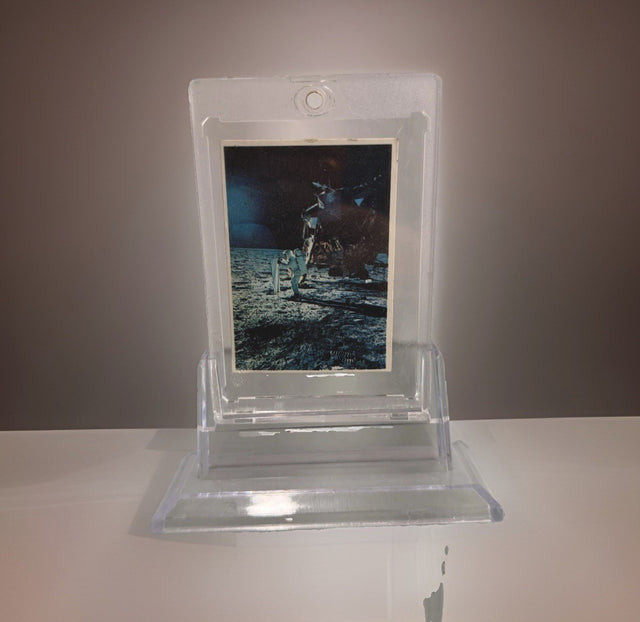
1969 Space Candy Buzz Aldrin Apollo 11 On The Moon Card #19 Taylor-Reed Display
$59.00 USD
-
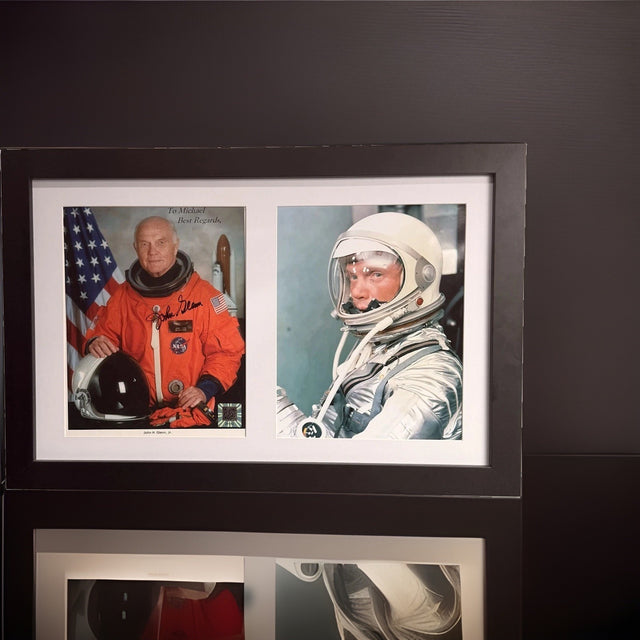
John Glenn Signed Autographed NASA Photo Display JSA Mercury Astronaut Framed
$199.00 USD
Browse the collection for current listings.