Where to Buy Authentic Signed Music Memorabilia (CDs, Vinyl, Guitars) Safely
You can buy authentic signed music memorabilia safely by purchasing from established dealers and auction houses that pair every piece with a third-party authentication opinion from Beckett (BAS), JSA (James Spence Authentication), or PSA/DNA, rather than relying on a seller’s own in-house certificate. The single most important rule is that the certificate of authenticity is only as trustworthy as the independent expert who issued it — so verify the authentication source, confirm the piece’s provenance, and buy from a reputable seller who stands behind the item with a clear return policy. At Gauntlet Gallery, signed music pieces are backed by recognized third-party authentication (Beckett, JSA, or PSA/DNA) so collectors can buy with confidence.
Signed music memorabilia — autographed vinyl records, CD booklets, concert posters, drumheads, and guitars — is one of the most rewarding and most heavily forged corners of the collecting world. This guide explains exactly where to buy authentically, how the leading authentication houses work, why the source of a COA matters more than the certificate itself, and the general red flags that separate a genuine signature from an autopen or forgery.
The short answer: where to buy authentic signed music memorabilia
The safest places to buy authentic signed music memorabilia share three traits: independent authentication, transparent provenance, and a real return guarantee. In practice, that narrows the field to a handful of channels:
- Specialist authenticated dealers — galleries and dealers who authenticate through Beckett, JSA, or PSA/DNA and disclose the chain of custody. This is the most consistent path for collectors who want confidence without becoming autograph experts themselves.
- Established auction houses — reputable houses that specialize in entertainment and music memorabilia, publish provenance, and back their lots with third-party opinions.
- Artist-official channels and charity auctions — items signed at official signings or sold through an artist’s verified foundation or label, where the moment of signing is documented.
- In-person signings you attend — the only situation where you personally witness the signature. Even then, keep your proof (photos, tickets, wristbands) as your own provenance record.
The riskiest channels are unvetted marketplace listings, social-media sellers, and “wholesale” lots of signed items priced far below the market. These aren’t automatically fake — but without an independent COA and provenance, you have no way to prove they are real, and that uncertainty follows the piece forever when you resell.
How third-party autograph authentication works (Beckett, JSA, PSA/DNA)
The autograph hobby is anchored by three independent authentication companies. Their role is to render an expert opinion on whether a signature is genuine — and, critically, they are not the seller, so their opinion carries weight precisely because they have no stake in the sale.
Beckett Authentication Services (BAS)
Beckett Authentication Services, often abbreviated BAS, examines signatures against known exemplars and issues a certification with a matching tamper-evident sticker and a lookup number. Beckett is widely recognized across sports and entertainment autographs.
JSA (James Spence Authentication)
JSA is one of the most established names in autograph authentication, with a long track record in music and entertainment signatures. A JSA letter of authenticity (LOA) or sticker, tied to an online verification database, is a standard credential collectors look for.
PSA/DNA
PSA/DNA, part of the same group as the well-known card grader PSA, authenticates autographs and issues certification with an online verification lookup. Like BAS and JSA, its value comes from independence and a searchable database.
| Authenticator | Common abbreviation | What you receive | How to verify |
|---|---|---|---|
| Beckett Authentication Services | BAS | Certification + tamper-evident sticker with a serial number | Online certificate lookup by number |
| James Spence Authentication | JSA | Letter of authenticity and/or sticker with a serial number | Online certificate lookup by number |
| PSA/DNA | PSA/DNA | Certification with a serial number | Online certificate lookup by number |
A few principles apply to all three. First, the sticker or letter should carry a serial number you can look up in the authenticator’s own database — not just a printed logo. Second, authentication is an opinion from qualified experts, not a lab-certified guarantee, which is why buying from a seller who also stands behind the item matters. Third, a real third-party COA is issued by the authenticator, never by the seller claiming “our own certificate” as a substitute.
Why the source of the COA matters more than the COA itself
A certificate of authenticity is a piece of paper. Its value comes entirely from who issued it and whether that party is independent, reputable, and verifiable. This is the concept that trips up new collectors most often, so it’s worth stating plainly.
- Independent third-party COA (strong): Beckett, JSA, or PSA/DNA — a company whose entire business is authentication and whose opinion can be checked in a public database.
- Reputable dealer or auction-house COA backed by a third party (strong): a seller who authenticates through one of the above and discloses it, then adds their own guarantee on top.
- Seller’s own “house” COA with no third party (weak): a certificate that simply repeats the seller’s claim. It is only as good as the seller’s reputation and proves nothing independently.
- Generic printed COA with no serial or lookup (avoid): mass-produced certificates that accompany many forged items and cannot be verified.
The practical takeaway: a genuine signature paired with a verifiable third-party COA is far more valuable — and far easier to resell — than the same item with only a seller’s word. When you evaluate a listing, always ask “who authenticated this, and can I verify that opinion independently?” before you ask about price.
Provenance: the paper trail that protects your purchase
Provenance is the documented history of an object — where it came from, how it was signed, and who has owned it since. In fine art it is the difference between a masterpiece and a question mark, and in signed music memorabilia it plays the same role alongside authentication. A strong provenance story doesn’t just make a piece more valuable; it makes the entire transaction easier to trust and, later, easier to resell.
Good provenance for a signed music item can include any of the following, and the more of them a piece carries, the stronger its story:
- The signing context. Was it signed at a documented in-person event, a promotional appearance, a private session, or an official charity auction? A known signing moment is the gold standard.
- Photographic or witnessed evidence. Photos of the artist signing the exact item, or a credible witness, add meaningful weight.
- Prior ownership records. A clear chain of custody — who owned the piece before you, and how it changed hands — reduces the odds of a substituted or forged item entering the picture.
- Matching authentication. A third-party COA whose description and serial number correspond exactly to the item in front of you, closing the loop between the paperwork and the physical object.
When provenance is thin, authentication carries more of the burden — which is exactly why buying through a dealer or auction house that documents both is the lowest-stress path. When a seller can’t or won’t explain where a piece came from, that silence is information. It doesn’t automatically mean the item is fake, but it does mean you’re buying uncertainty, and uncertainty is the one thing that never appreciates.
Where to buy vs. riskier sources, side by side
Not every channel is equal. The table below frames the trade-offs so you can match your risk tolerance to where you shop. The safest channels aren’t necessarily the most expensive — they’re the ones that combine independent authentication, disclosed provenance, and a guarantee.
| Channel | Typical authentication | Risk level | Best for |
|---|---|---|---|
| Specialist authenticated dealer | Third-party COA (BAS/JSA/PSA/DNA) plus dealer guarantee | Low | Collectors who want confidence without becoming experts |
| Established auction house | Third-party opinions and published provenance | Low to moderate | Marquee pieces and competitive bidding |
| Official artist / charity channel | Documented signing at source | Low | Buyers who value a known signing moment |
| In-person signing you attend | Your own eyewitness proof | Low (if you keep records) | Hands-on collectors near events |
| General online marketplace | Varies wildly; often seller-only COA | High | Only when a verifiable third-party COA is present |
| Social-media / bulk “wholesale” seller | Usually none verifiable | Very high | Generally avoid |
The pattern is consistent: the further you move from independent authentication and disclosed provenance, the more the burden of proof shifts onto you — and the harder the piece becomes to resell later. If a channel can’t give you a COA you can verify at its source, treat any “deal” there as unproven no matter how appealing the price looks.
Buying by format: vinyl, CDs, posters, and guitars
Different signed formats carry different risks and price ranges. The authentication principles are the same, but what you inspect changes.
Signed vinyl records and album covers
Autographed album jackets are a collector favorite because the artwork gives the signature a beautiful canvas. Value depends heavily on which band members signed, the album’s significance, and condition of the sleeve. Confirm the signature is on the original jacket (not a reprint), that all named signers are present and legible, and that the piece carries a third-party COA. Ranges vary widely by artist and completeness of the signing.
Signed CDs and booklets
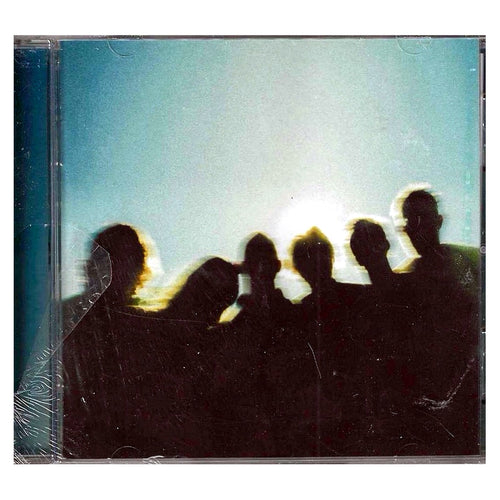
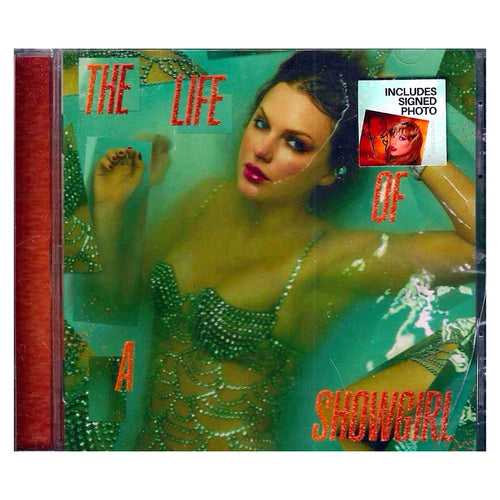
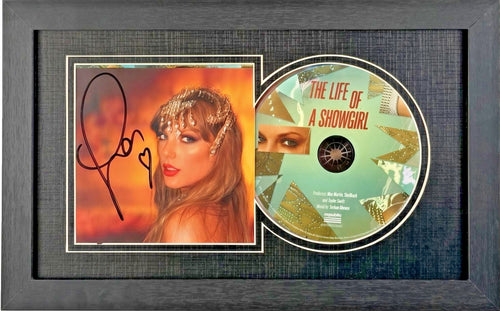
Signed CD booklets and inserts are a more accessible entry point. Because the signing surface is small and glossy, look closely at how the ink sits on the coated stock, and prioritize pieces with verifiable authentication over cheap unsigned-looking “deals.”
Signed concert posters and photos
Posters and photographs can be stunning display pieces. Watch for reproductions of famous signed images — a printed copy of a signature is not an autograph. A genuine in-person signature plus a third-party COA is what you want.
Signed guitars and instruments
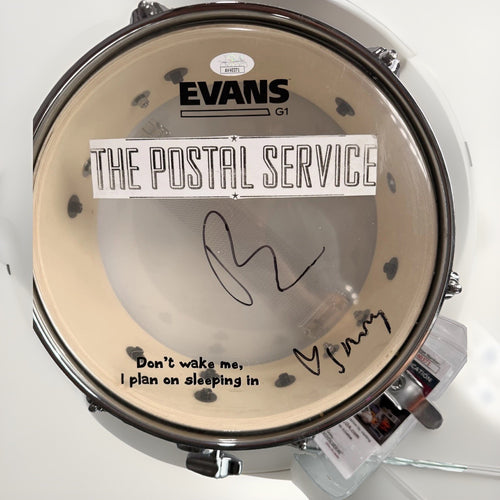
Signed guitars are the trophy tier of music memorabilia and, unsurprisingly, a magnet for forgery. Because the values can be high, third-party authentication and documented provenance are non-negotiable. Inspect where and how the signature sits on the body or pickguard, confirm the instrument type matches the artist’s known gear era where relevant, and insist on a verifiable COA and clear chain of custody.
Red flags: how forgeries and autopens slip through
You don’t need to become a handwriting examiner, but knowing the general warning signs helps you filter out obvious problems before you even ask for authentication. These are broad principles, not artist-specific “tells.”
- No verifiable COA. If the only certificate is the seller’s own paper with no serial number to look up, treat the signature as unproven.
- Price too good to be true. Genuine signed pieces from major artists command real money. Deep discounts on “authentic” items are the oldest bait in the hobby.
- Bulk or repetitive inventory. A seller with dozens of identical signed items from a hard-to-reach artist should raise questions about how they were all obtained.
- Autopen and preprint signatures. Autopens reproduce a signature mechanically, and printed signatures are baked into the artwork. In general terms, watch for signatures that look unusually uniform, show no natural variation in pen pressure, or sit oddly flat — and let a third-party authenticator make the call.
- Vague or missing provenance. “From a private collection” with no further detail isn’t provenance. Documented history — where and when it was signed, prior ownership — strengthens any piece.
- Pressure and secrecy. Rushed sales, refusal to provide authentication details, or unwillingness to accept returns are all reasons to walk away.
A buyer’s checklist before you purchase
- Identify the authenticator. Is it Beckett (BAS), JSA, or PSA/DNA — or just the seller?
- Verify the certificate number. Look it up in the authenticator’s database and confirm it matches the item.
- Check provenance. Ask where and when it was signed and who has owned it.
- Assess condition. Sleeve wear, fading, and ink stability all affect value.
- Confirm the return policy. A confident seller offers a clear guarantee.
- Compare to market. Use market context to sanity-check the asking price rather than trusting a single listing.
For broader market context on how collectibles are priced and how condition and edition transparency drive value, our Financial Insights resource is a useful reference before you commit to a purchase.
How Gauntlet Gallery authenticates signed music memorabilia
Gauntlet Gallery is an authenticated dealer, and our approach to signed music mirrors the standards above: pieces are backed by recognized third-party authentication — Beckett (BAS), JSA, or PSA/DNA — and we disclose provenance so you know what you’re buying and why it’s genuine. We treat the authentication source as the centerpiece of the sale, not an afterthought.
That same philosophy runs across our catalog. For collectors who also follow street art and designer collectibles, our authentication chains are specific to each artist — for example, DEATH NYC pieces arrive with a COA and gold seal, while designer-toy lines like KAWS and BE@RBRICK use TrueCOA verification where applicable. Signed music sits in its own lane, anchored by the Beckett/JSA/PSA/DNA ecosystem. You can explore the full range in our complete collection and learn our standards in the buyer’s guides.
Frequently asked questions
Where can I buy authentic signed music memorabilia?
Buy from established dealers, reputable auction houses, or official artist and charity channels that pair each item with third-party authentication from Beckett (BAS), JSA, or PSA/DNA and disclose provenance. Avoid unvetted marketplace and social-media listings that offer only a seller’s own certificate. Gauntlet Gallery backs its signed music pieces with recognized third-party authentication so you can buy with confidence.
What is the best authentication for autographs?
The three most recognized third-party autograph authenticators are Beckett Authentication Services (BAS), JSA (James Spence Authentication), and PSA/DNA. Each issues a certification with a serial number you can verify in the company’s online database. The key is that they are independent of the seller, which is what gives their opinion value.
Is a certificate of authenticity enough to prove a signature is real?
Only if the certificate comes from a reputable, independent source you can verify. A COA is only as trustworthy as the party that issued it. An independent third-party COA from BAS, JSA, or PSA/DNA with a lookup number is strong; a generic seller-printed certificate with no verifiable serial proves nothing on its own.
How can I spot a fake or autopen signature?
In general terms, be cautious of prices that seem too good to be true, sellers with large repetitive inventories, missing or vague provenance, and signatures that look unusually uniform with no natural pen variation, which can indicate an autopen or a printed reproduction. Rather than judging alone, rely on a verifiable third-party authentication opinion and a reputable seller who guarantees the piece.
Does signed vinyl or a signed guitar hold value better?
Both can hold value well, but it depends on the artist, the significance of the item, condition, and the strength of authentication far more than the format itself. Signed guitars sit at the trophy tier and command higher prices, while signed vinyl and CDs offer more accessible entry points. In every case, a verifiable third-party COA and documented provenance protect resale value.
Buy & authenticate with confidence
Authentic signed music memorabilia is within reach when you follow one discipline: buy from a reputable source that pairs every piece with independent, verifiable authentication and transparent provenance. Start with the standards outlined here, verify every COA at its source, and lean on dealers who put authentication first. Browse authenticated pieces in our full collection, deepen your knowledge in the buyer’s guides, get grounded in market context through Financial Insights, and see how we help collectors buy the right way at The Collector’s Hub.