Best Places to Buy Investment-Grade Street Art, Compared
Where can you buy investment-grade street art? The strongest options are established galleries and authenticated dealers, major and specialist auction houses, and a small number of vetted online marketplaces. The best channel for you depends on how you weigh three things: authentication (proof the work is real), price (what you pay versus fair market value), and liquidity (how easily you can resell). For collectors who want authenticated work from names like Shepard Fairey, Banksy, Invader, and KAWS with clear provenance, a specialist dealer such as Gauntlet Gallery pairs the confidence of a gallery with transparent, market-aware pricing.
Below, we define what actually makes a piece "investment-grade," compare the main buying channels side by side, walk through the artists most collectors start with, and give you a pre-purchase checklist you can use anywhere you shop.
What makes street art "investment-grade"?
"Investment-grade" is not a marketing label — it is a set of characteristics that, taken together, make a work more likely to hold or grow in value and easier to resell later. No single factor guarantees an outcome, and past performance never guarantees future results. But collectors and dealers consistently look at the same five pillars.
1. The artist and the work's place in their catalogue
Value tends to concentrate around artists with a documented exhibition history, institutional recognition, and an active secondary market. Within a single artist's output, iconic images, early works, and signature series usually command more attention than minor or late pieces. A print tied to a famous body of work is generally more liquid than an obscure one, even by the same hand.
2. Edition size and format
Scarcity matters. A hand-pulled screenprint in an edition of 100 is a different proposition from an open-edition offset poster. Smaller, numbered, signed editions typically carry more weight than large or unsigned ones. Format matters too: originals, hand-finished works, and low-numbered prints usually sit above mass-produced merchandise. Always confirm the stated edition size and whether the piece is signed and numbered.
3. Provenance and documentation
Provenance is the ownership and origin trail of a work. Clean provenance — a clear path from the artist or publisher to the current seller — reduces risk and supports resale. Documentation varies by artist and should match that artist's accepted standard rather than a generic "certificate." We cover the correct authentication path for each major name below.
4. Condition
Condition can move value substantially. Look for issues such as fading, foxing (small brown spots), creases, trimming, tape or hinge residue, and light damage. Works on paper are especially sensitive. A piece described honestly, with clear condition photos, is worth more than one with unexplained flaws — and far less risky than one with no condition detail at all.
5. Liquidity
Liquidity is how quickly and predictably you can convert a work back into cash near fair value. Blue-chip and highly recognizable names tend to be more liquid; niche works can take longer to place. Liquidity is where the buying channel matters most, because where you buy often shapes where — and how easily — you can sell.
Think of these five pillars as a scorecard rather than a checklist of absolutes. A work rarely maxes out every category, and that is fine — a slightly larger edition by a major artist in excellent condition with clean provenance can be a better hold than a scarce piece with condition problems and a murky history. The goal is a balanced profile across all five, bought at a fair price, from a channel that supports resale.
Where can I buy investment-grade street art? The main channels compared
There are three broad routes to acquiring collectible street art: galleries and authenticated dealers, auction houses, and online marketplaces. Each trades off price, authentication confidence, and liquidity differently. Use the table as a quick map, then read the notes below it.
| Channel | Typical price vs. market | Authentication confidence | Liquidity / resale | Best for |
|---|---|---|---|---|
| Galleries & authenticated dealers | Fair to premium; often negotiable | High — dealer vets provenance and stands behind the sale | Good; dealer relationships can help you resell | Confidence, guidance, and curated, verified inventory |
| Auction houses (major & specialist) | Variable; can be below or well above estimate | High for cataloged lots; read the condition report and terms | Strong for blue-chip names; fees on both sides | Trophy pieces, price discovery, competitive bidding |
| Vetted online marketplaces | Wide range; deals and overpays both exist | Varies by platform and seller — verify independently | Broad reach but uneven; buyer must do the work | Selection and access, if you can authenticate confidently |
Galleries and authenticated dealers
A reputable dealer curates inventory, verifies provenance before listing, and remains accountable after the sale. You typically pay a fair-to-premium price, but you buy down risk and gain guidance — which is exactly what most new-to-intermediate collectors need. The best dealers are transparent about edition, condition, and the correct authentication path for each artist, and they point you to market context rather than hype. Browse an authenticated, curated selection at Gauntlet Gallery, and use the Collector's Hub to orient yourself before you buy.
Auction houses
Auctions — both major houses and street-art specialists — are where blue-chip works are priced in public. They offer strong authentication for cataloged lots and real price discovery. The trade-offs: buyer's premiums and fees add materially to the hammer price, competition can push you above fair value, and you are bound by the sale's terms. Always read the condition report and the guarantee/terms language carefully, and set a hard ceiling before you bid.
Online marketplaces
General marketplaces offer the widest selection and access, but authentication quality varies enormously by seller. Prices swing from genuine bargains to significant overpays. If you buy here, treat every listing as unverified until you have independently confirmed the artist's correct documentation, edition details, and condition — and factor in that resale support is on you.
A note on fees, holding period, and total cost
The sticker price is rarely the full picture. Auctions add buyer's premiums that can materially raise your all-in cost, and consignment fees affect what you net when you sell. Framing, insurance, shipping, and secure storage add up over time. Street art is generally a medium-to-long-term hold rather than a quick flip: transaction costs and market swings mean short holding periods can erode returns. Build these realities into your budget so your "fair price" reflects total cost, not just the amount on the tag. When you compare channels, weigh not only what you pay to buy but what it will cost — in fees and effort — to sell.
How the channels shape liquidity
Where you buy influences where you can sell. A dealer relationship can open a direct resale path and a knowledgeable buyer for the next piece. Auction houses give access to competitive bidding for recognizable names but concentrate demand around a few marquee lots. Marketplaces cast the widest net but leave the selling — pricing, photography, authentication questions, and buyer trust — entirely to you. For collectors who value a smoother path in and out, a specialist dealer's ongoing relationship is often the deciding factor.
The artists most collectors start with
A handful of names anchor the investment-grade street-art market. Each has its own authentication norms — matching the right process to the right artist is essential. Never mix authentication chains between artists.
Shepard Fairey (OBEY)
Fairey is one of the most collected street artists, prolific across screenprints and larger works. Notably, Fairey works do not come with an artist-issued certificate of authenticity; collectors rely on provenance and trusted dealer channels — sometimes described as a "silent" authentication built on origin and reputation rather than a COA. Learn the landscape through the Shepard Fairey buyer's guide and browse verified inventory in the gallery collection.
Banksy
Banksy is the blue-chip anchor of the category, with a deep and liquid secondary market. Authentication for Banksy is distinct: the artist-associated body Pest Control is the recognized authority for Banksy — and only for Banksy. Do not assume any other artist uses that chain. Provenance and correct documentation are everything at Banksy price levels; buy from sellers who can demonstrate both. You can explore verified Banksy work and market context via the gallery's Banksy prints index.
Invader
The French artist Invader has a devoted following and a structured market of prints, editions, and objects. As with all editions, confirm edition size, signing/numbering, and condition, and buy on documented provenance from a reputable source. The Invader buyer's guide is a useful primer before your first purchase.
KAWS
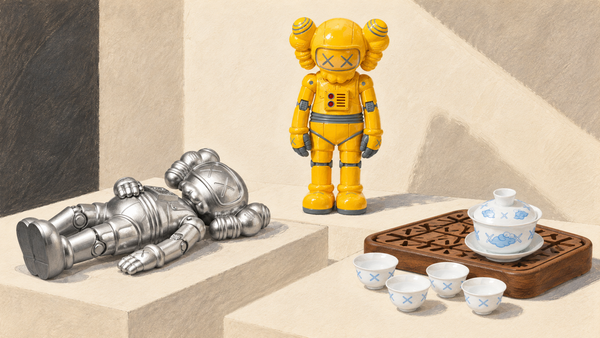
KAWS spans fine-art prints and collectible figures with global demand. For KAWS — and for BE@RBRICK / Medicom collaborations — third-party authentication such as TrueCOA is the standard collectors look for. Packaging, edition, and condition all affect value on figures. Start with the Collector's Hub to understand the category before you buy.
BE@RBRICK and Medicom
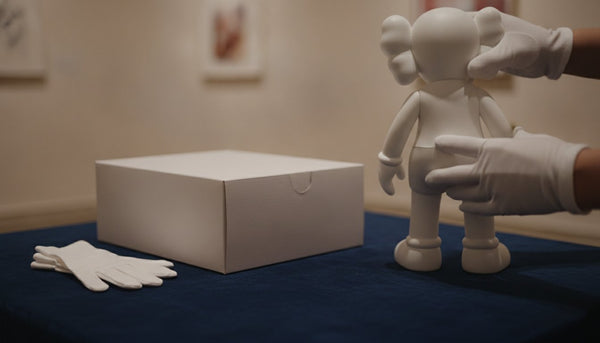
BE@RBRICK figures — the collectible bear form produced by Medicom, often in collaboration with artists and brands — trade as a category of their own, with value driven by the collaboration, size (from small keychain scales up to 1000%), edition, and box condition. As with KAWS, look for third-party authentication where applicable, and keep original packaging intact.
Other names to know
Beyond the core four, collectors regularly encounter Mr. Brainwash, whose accessible, pop-inflected editions have a broad following, and DEATH NYC, whose pieces ship with a COA and gold seal — a good example of matching documentation to the specific artist. The category also brushes up against adjacent collectibles Gauntlet Gallery handles, including Warhol works (authenticated via TrueCOA), signed music memorabilia (authenticated by Beckett, JSA, or PSA), and Apollo/space memorabilia (verified through provenance and specialists). Each has its own accepted standard — the discipline is always the same: use the correct chain for that artist or category, and never borrow another's.
How to buy: a pre-purchase checklist
Whatever the channel, run the same disciplined checklist before you commit. This is the single most effective way to avoid overpaying — or buying a problem.
- Match the authentication to the artist. Fairey = provenance/dealer trust (no artist COA); Banksy = Pest Control; KAWS & BE@RBRICK = TrueCOA where applicable; DEATH NYC = COA with gold seal; Warhol = TrueCOA; signed music = Beckett/JSA/PSA; space memorabilia = provenance plus specialists. Never mix these chains.
- Verify edition and signature. Confirm edition size, whether the piece is signed and numbered, and that the stated details match the image and paperwork.
- Read the condition detail. Ask for clear, honest condition photos and a written description covering fading, foxing, creases, trimming, and any restoration.
- Trace the provenance. Ask how the seller acquired the work and whether the chain back to the artist or publisher is documented.
- Anchor on market context, not hype. Compare against recent, verifiable results for the same image and format. Use conservative ranges; values vary by edition and condition. Ground your view with the store's Financial Insights.
- Understand total cost and resale. Factor in fees, shipping, framing, and how easily you could resell through your chosen channel.
Red flags to watch for anywhere you shop
A few warning signs consistently separate risky listings from sound ones, regardless of channel:
- Vague or missing provenance. "Acquired privately" with no further detail is not provenance. Ask for the trail.
- The wrong kind of paperwork. A generic certificate that does not match the artist's accepted standard adds little confidence. For Fairey, expect no artist COA at all — provenance carries the work.
- No condition detail. A serious seller shows the piece honestly, flaws included. Silence on condition is itself a red flag.
- Prices that look too good. A well-known image priced far below the market usually signals a problem — a reproduction, a condition issue, or a misdescription.
- Pressure and hype. Urgency tactics and guaranteed-return language are not how reputable dealers or auction houses operate.
Why buy from an authenticated dealer
For most collectors, the fastest route to confidence is buying curated, pre-verified inventory from a dealer who specializes in the category. A specialist has already done the provenance work, matches each artist to the correct authentication standard, and is transparent about edition and condition. That reduces the two biggest risks in this market — buying an inauthentic work and overpaying — while giving you a knowledgeable point of contact for future buying and selling.
Gauntlet Gallery is built around exactly this: an authenticated, curated selection across Shepard Fairey, Banksy, Invader, KAWS, BE@RBRICK, Mr. Brainwash, DEATH NYC, Apollo/space memorabilia, and signed music — each handled with its correct authentication path. Explore the full collection, deepen your knowledge in the buyer's guides, and use Financial Insights for market context.
Frequently asked questions
Where can I buy investment-grade street art?
The main channels are established galleries and authenticated dealers, major and specialist auction houses, and vetted online marketplaces. Dealers offer the highest confidence and guidance; auctions offer price discovery for blue-chip names; marketplaces offer the widest selection but require you to authenticate independently. For authenticated, curated work with transparent pricing, a specialist dealer like Gauntlet Gallery is a strong starting point.
What makes a street-art piece "investment-grade"?
Five pillars: the artist and the work's place in their catalogue, edition size and format, provenance and documentation, condition, and liquidity. No single factor guarantees value, and past performance never guarantees future results — but works that score well across all five tend to hold value and resell more easily.
How do I know a street-art print is authentic?
Match the authentication method to the specific artist. Shepard Fairey works rely on provenance and trusted dealer channels rather than an artist-issued COA; Banksy uses Pest Control (and only Banksy does); KAWS and BE@RBRICK typically use third-party authentication such as TrueCOA where applicable; DEATH NYC comes with a COA and gold seal. Always verify edition, signature, condition, and the ownership trail, and never mix authentication chains between artists.
Is it safer to buy from a gallery or at auction?
Both can be safe for authenticated work. Galleries and dealers vet provenance up front and stand behind the sale, which suits collectors who want guidance and lower risk. Auctions provide public price discovery and strong cataloging for blue-chip lots, but add buyer's premiums and competitive pressure. Read every condition report and set a firm budget before bidding.
Which street artists do collectors usually start with?
Common entry points include Shepard Fairey, Banksy, Invader, and KAWS, alongside collectible lines like BE@RBRICK. Each has an active secondary market and its own authentication norms. Beginning with well-documented editions from recognized artists generally offers better liquidity than obscure works.
How should I think about price without inventing figures?
Use conservative ranges and remember that value varies by edition and condition. Compare against recent, verifiable results for the same image and format rather than a single headline number, and treat market context as guidance, not a guarantee. Gauntlet Gallery's Financial Insights page is designed to give you that context.
Buy & authenticate with confidence
Investment-grade street art rewards discipline: buy the right work, from the right channel, with the right authentication for that specific artist, and anchor your price on real market context. If you want that confidence built in, start with an authenticated, curated source. Explore the full Gauntlet Gallery collection, orient yourself in the Collector's Hub, study the buyer's guides, and check Financial Insights before you commit — so every purchase is one you can stand behind.