Before buying a 1000% BE@RBRICK, inspect eight things in this order: the outer box and its factory seals, the figure's surface finish and paint application, every articulation joint for tightness and stress marks, the molded factory markings, the completeness of the original inserts and packaging, the colorway details compared against a verified reference example, the documented provenance trail from the original point of sale, and the asking price measured against recent verified sales of the same release. A 1000% is the largest standard BE@RBRICK format — roughly 70 centimeters tall — and its size magnifies every flaw that would be trivial on a smaller figure. Inspect methodically, document what you see, and buy from a source that can show you its chain of custody.
That is the short answer. The long answer is the rest of this guide, because a 1000% BE@RBRICK purchase sits at the intersection of three separate disciplines: condition assessment, authentication, and market valuation. Get any one of the three wrong and you overpay, or worse, you bring home a piece you cannot confidently resell. Our gallery has examined a great many designer figurines over the years, and the inspection framework below is the same one we apply before any 1000% piece enters our BE@RBRICK collection. It works whether you are buying sealed or displayed, from a dealer, an auction, or a private collector.
Why the 1000% Size Demands a Different Inspection Standard
BE@RBRICK figures, produced by the Japanese company Medicom Toy since 2001, are scaled from a base unit: the 100% figure stands about 7 centimeters tall. A 400% is roughly 28 centimeters, and the 1000% — the flagship format for major artist and brand collaborations — stands around 70 centimeters. That is not a toy on a shelf; it is a floor-standing or pedestal-standing sculptural object with real weight and real surface area.
Size changes the inspection calculus in four concrete ways:
- Surface area amplifies flaws. A hairline scuff that disappears on a 100% figure becomes a visible blemish across the broad, smooth panels of a 1000% torso or head. Gloss colorways show swirl marks; matte colorways show rubs and sheen changes.
- Weight stresses joints and packaging. A 1000% figure is heavy enough that careless handling, shipping, or long-term display in one pose can stress the articulation points and deform box inserts. Damage patterns you never see on small figures are common on large ones.
- Value concentrates risk. The 1000% format carries the flagship releases of most collaborations, and flagship releases carry flagship prices. The absolute cost of a mistake is far higher than on smaller formats, so the diligence bar should rise accordingly.
- Counterfeiters follow value. Wherever collector demand concentrates, unauthorized reproductions follow. The good news is that a methodical inspection combined with provenance documentation resolves the overwhelming majority of questions before money changes hands. Our BE@RBRICK spot-a-fake guide covers that side of the equation in depth.
In other words: everything you would check on a 400% still applies, but at 1000% scale you check it more slowly, under better light, and with the expectation that the piece must justify a serious price.
Know What You Are Buying: The Anatomy of a 1000% BE@RBRICK
An informed inspection starts with knowing what a correct example looks like. Every BE@RBRICK shares the same patented bear-shaped silhouette — rounded head with small ears, barrel torso, articulated arms and legs — rendered in molded plastic. What changes from release to release is the surface treatment: printed graphics, painted details, flocking, plating, translucent resins, or premium materials on special editions. The silhouette is constant; the colorway is the release.
Three implications follow for the buyer:
- The reference example matters more than the figure in front of you. Because the body is standardized, authentication and condition questions almost always come down to how faithfully this example matches verified examples of the same release — print alignment, color values, finish texture, and packaging graphics. Before you inspect anything, pull up the release in a reliable catalog. Our BE@RBRICK index exists precisely for this step.
- Articulation is part of condition. The head, arms, and legs rotate. Joints should move with firm, even resistance. Loose, gritty, or frozen joints tell you about the figure's storage history.
- The packaging is part of the object. For 1000% figures, the large printed carton and its inserts are integral to collectibility and to resale value. A figure without its box is a categorically different purchase from a complete example, and the market prices it that way.
It also helps to know where the 1000% sits in the broader ecosystem. Many of the most sought-after large-format releases are collaborations — with contemporary artists, fashion houses, musicians, and character licensors. Some of the most actively traded crossover pieces sit between the BE@RBRICK world and the wider designer-toy market, which is why serious collectors browse the designer figurine collection and the KAWS collection alongside dedicated BE@RBRICK listings. Collaboration pieces follow the same inspection logic, with extra attention to the collaborator's printed elements, since those are the hardest details to reproduce faithfully.
The Complete Pre-Purchase Inspection Checklist
Work through the following in sequence. If you are buying remotely, request photographs or video covering each item; a seller who cannot or will not provide them is telling you something useful.
1. The Outer Box and Factory Seals
Start outside and work inward. The 1000% carton is a large printed box, and its condition answers questions the figure alone cannot.
- Print quality. The box graphics should be sharp, correctly colored, and consistent with verified examples of the release. Blurry printing, off-register colors, or typographical oddities on the box warrant a much closer look at everything else.
- Structural condition. Check corners for crushing, edges for splitting, and panels for moisture staining or sun fading. A 1000% box is heavy cargo; shipping damage is common and directly affects collector value even when the figure inside is perfect.
- Seals and closures. If the piece is offered as sealed, examine the factory closures carefully. Re-taped or re-glued flaps, mismatched tape, or seals that look disturbed mean you should treat the piece as opened and price it accordingly — and you should ask the seller to open it for joint inspection rather than paying a sealed premium on faith.
- Labels and release identifiers. The box carries the release identification and manufacturer information. Confirm these match the release being advertised. A mismatch between box and figure is a red flag for a married set — a genuine figure in the wrong box, or vice versa.
2. Surface, Paint, and Print on the Figure
Now the figure itself, ideally in bright, indirect light, rotating the piece slowly.
- Finish consistency. Gloss surfaces should show even reflection without swirl marks, hazing, or polish residue. Matte surfaces should show uniform sheen without shiny rub spots at contact points — ears, shoulders, hips, and the backs of arms are the usual suspects.
- Print alignment and edge quality. On printed colorways, graphics should sit exactly where they sit on verified examples, with clean edges. Compare against catalog photography at the panel level, not just at arm's length.
- Color accuracy. Whites are the tell for storage history: prolonged UV exposure yellows pale plastics, and yellowing is effectively irreversible for collector purposes. Compare the front of the figure against less-exposed areas — inner arms, underside of the chin, the back — to spot uneven aging.
- Chips, scratches, and paint loss. Run your eye along every hard edge — ear rims, hand edges, foot bottoms. These wear first. On flocked or specialty-material releases, check for bald spots, matting, or lifting at seams.
- Odor. It sounds trivial, but smoke or mildew absorbed into plastic and packaging is difficult to remediate and materially affects resale. Trust your nose.
3. Joints, Articulation, and Structural Integrity
- Rotate every joint gently. Head, arms, and legs should turn with smooth, even resistance. A joint that flops loose suggests wear or a previous repair; a joint that grinds suggests debris or damage inside.
- Look for stress whitening. Plastic that has been over-flexed shows pale stress marks at the joint lines. Check where limbs meet the torso.
- Check the stance. A 1000% should stand square and stable on a level surface. Leaning or rocking can indicate warped limbs from heat exposure or long-term uneven display.
- Listen. Tilt the figure slowly. Rattling from inside can indicate a broken internal component — something no exterior photo will ever show you, and a strong argument for in-person or video inspection.
4. Factory Markings and Manufacturing Details
Authentic BE@RBRICK figures carry molded manufacturer markings, typically on the body. You are not looking for a secret code — you are looking for consistency: crisp, correctly formed molded text in the same position and style as verified examples of the era and release. Soft, mushy, misspelled, or oddly placed markings are among the most common giveaways on unauthorized copies, because mold-level details are expensive to counterfeit well. Photograph the markings and compare them side by side with a documented example. Our BE@RBRICK buyer's guide walks through this comparison process with a broader framework for first-time large-format buyers.
5. Completeness: Inserts, Accessories, and Paperwork
- Interior packaging. The protective inserts that cradle a 1000% figure are part of the complete package. Missing, crushed, or substituted inserts reduce completeness and make safe future shipping much harder.
- Release-specific extras. Some releases include additional printed material or accessories. Check the specific release's documentation for what "complete" means — this is another place a good index page earns its keep.
- Original purchase paperwork. Receipts, order confirmations, or retailer packing slips from the original sale are gold for provenance. They are not required for authenticity, but their presence strengthens the piece's documented history and its resale story.
Sealed Versus Opened: An Honest Comparison
Buyers agonize over this more than any other question, so here is the trade-off laid out plainly.
| Factor | Sealed example | Opened / displayed example |
|---|---|---|
| Figure condition | Unknown — cannot be visually verified without opening | Fully inspectable: surface, joints, markings, completeness |
| Market premium | Typically commands a premium for untouched status | Priced on demonstrated condition; graded by the market on flaws |
| Authentication basis | Rests heavily on packaging, seals, and provenance | Rests on the figure itself plus packaging and provenance |
| Risk profile | Condition risk transferred to you; seal integrity is everything | What you see is what you get, if you inspect properly |
| Best suited for | Buyers prioritizing long-term hold and untouched status, purchasing from a source with a verifiable chain of custody | Buyers who want to display the piece and want certainty about exactly what they own |
There is no universally correct answer, but there is a universally correct principle: never pay a sealed premium without proportionally stronger provenance. A sealed box from an unknown seller with no purchase history is the single riskiest configuration in this market, because you are paying more for the one condition you cannot verify. A sealed piece from a source that documents its chain of custody — original receipt, dealer records, or an authentication certificate tied to the specific piece — is a different proposition entirely. For a KAWS or BE@RBRICK purchase, check the individual listing for release-specific packaging, production marks, condition and provenance. Manufacturer NFC is relevant only on releases that include it; a certificate alone does not establish authenticity.
Condition Factors and How the Market Weighs Them
Not all flaws are equal. The table below reflects how condition issues generally rank in the eyes of experienced large-format collectors — use it to structure negotiation, not to excuse defects.
| Condition issue | Typical market impact | Can it be remediated? |
|---|---|---|
| Yellowing or UV fade | Severe — affects the whole piece and signals poor storage | Effectively no, for collector purposes |
| Cracks, chips, or repairs | Severe — structural issues cap value regardless of rarity | Repairs rarely restore collector value |
| Missing box or inserts | Significant — piece trades in a lower tier | No; replacement packaging does not equal original |
| Loose or worn joints | Moderate — matters more on a display-scale piece | Generally no |
| Light surface rubs or shelf wear | Minor to moderate depending on visibility and colorway | Sometimes cosmetically, with expert care |
| Box corner and edge wear | Minor for displayed pieces; larger for sealed premiums | No, but it can be priced in fairly |
When a seller discloses a flaw, that is a point in their favor — transparency correlates strongly with legitimacy. When you discover an undisclosed flaw during inspection, treat it as both a price issue and a credibility issue.
Provenance: The Inspection Layer Most Buyers Skip
The physical piece is only half the purchase. The other half is its history, and on a flagship-format piece the history deserves the same scrutiny as the paint.
A strong provenance trail for a 1000% BE@RBRICK looks like some combination of the following:
- Original point-of-sale documentation — a receipt, order confirmation, or packing slip from an authorized retailer or the original release channel.
- A coherent ownership story. Who bought it, when, and how did it reach the current seller? The story does not need to be elaborate; it needs to be consistent and checkable.
- Dealer documentation. Established dealers maintain acquisition records and stand behind what they sell. At our gallery, documented provenance is a condition of acquisition, not an afterthought — pieces we cannot trace do not enter inventory.
- Independent certification tied to the specific piece. The point of a piece-specific certificate is that it cannot be casually transferred to a different figure the way a generic paper certificate can.
One caution in the other direction: a certificate is only as credible as its issuer. Generic, unverifiable "COAs" printed by unknown parties are abundant in the figurine market and carry essentially no evidentiary weight. When a certificate is offered, ask who issued it, whether it identifies this specific piece, and whether it can be independently verified. The authentication FAQ covers how to evaluate certificates and documentation claims across categories.
Pricing Diligence: Comparing Against Verified Sales
Condition and authenticity establish what the piece is; comparable sales establish what it is worth. Do not skip this step, and do not substitute asking prices for it — listings tell you what sellers hope for, while completed sales tell you what buyers actually paid.
The discipline is simple to describe and rarely practiced:
- Identify the exact release. Same collaboration, same size, same colorway, same edition context. "A 1000% of that artist" is not a comparable; the specific release is.
- Find recent completed sales of that exact release in comparable condition and completeness. Recency matters — designer-toy markets move, and a sale from several years ago describes a different market.
- Adjust for condition and completeness using the factors in the tables above. A complete, unfaded example and a boxless, yellowed one are not the same asset.
- Weigh sealed status only when it is provable. As discussed, the sealed premium rides on verifiable chain of custody.
This is where a large dataset earns its keep. You do not need our database to apply the method — but you do need real completed-sale data from more than one venue before you commit to a flagship-format purchase. For a structured overview of how large-format figurine values behave over time, see our BE@RBRICK price guide and the market context work on our financial insights hub . Compare the same BE@RBRICK release, size and collaboration using dated completed sales, including packaging, condition and provenance. A format-wide growth rate does not value an individual figure.
Red Flags and Green Flags at a Glance
Walk away, or slow way down, when you see:
- Box printing that is blurry, off-color, or inconsistent with verified examples
- Soft, misformed, or misplaced molded markings on the figure
- A "sealed" box with disturbed, re-taped, or mismatched closures
- A seller who refuses detailed photos, video, or in-person inspection
- No provenance at all on a high-value piece, combined with a price meaningfully below recent verified sales — a discount that looks like a gift is usually an invoice for a lesson
- Pressure tactics: countdowns, "another buyer waiting," or resistance to routine questions
- A generic certificate from an issuer you cannot verify, offered as the primary proof of authenticity
Proceed with confidence when you see:
- Sharp, correct packaging and figure details that match your reference example point for point
- Full disclosure of flaws before you ask
- Original purchase paperwork or a coherent, checkable ownership history
- Piece-specific, independently verifiable certification
- A seller who welcomes inspection and answers release-specific questions accurately
- Pricing that aligns with recent completed sales rather than wishful listings
After the Purchase: Protecting What You Just Inspected
The inspection mindset should not end at the sale. Three habits protect both the piece and its future resale value:
- Control light and climate. Keep the figure out of direct sunlight and away from heat sources. UV yellowing and heat warping are the two condition killers you can fully prevent with placement alone. Stable, moderate humidity protects both plastic and packaging.
- Keep everything. Box, inserts, paperwork, and your own purchase records. Store the carton flat, dry, and off concrete floors. The complete package you insisted on buying is the complete package you will one day sell.
- Document your ownership. Photograph the piece and its markings at acquisition, keep your receipt, and file any certificate details. You are now the next link in the provenance chain — make yourself a strong one. Our collector glossary defines the documentation terms worth knowing if you are building a serious collection.
Handled this way, a 1000% BE@RBRICK is one of the more resilient objects in contemporary collecting: stable material, standardized format, deep collector base, and a liquid resale market for well-documented examples.
The 60-Second Buying Checklist
Print this, or keep it on your phone. Before money moves, confirm every line:
- Exact release identified and matched against a reliable catalog reference
- Box graphics, structure, and labels inspected and consistent with the release
- Seals verified intact, or piece treated and priced as opened
- Surface checked in good light: finish, print alignment, color, whites for yellowing
- Edges and contact points checked for chips, rubs, and paint loss
- All joints rotated: smooth, firm, no stress whitening, no internal rattle
- Molded factory markings photographed and compared to a verified example
- Inserts, accessories, and paperwork confirmed complete for the release
- Provenance trail reviewed: origin, ownership history, any certification verified with its issuer
- Price checked against recent completed sales of the same release in similar condition
- Seller behavior assessed: transparent, unhurried, welcomes inspection
- Shipping plan confirmed for a large, heavy carton — insured, double-boxed, condition documented before dispatch
Twelve lines, and every one of them exists because a buyer somewhere skipped it. If a piece passes all twelve, you are buying with the same rigor a professional dealer applies.
Frequently Asked Questions
Is it safer to buy a sealed or an opened 1000% BE@RBRICK?
Neither is inherently safer; they carry different risks. An opened example lets you verify condition directly, while a sealed example trades condition certainty for untouched status and rests almost entirely on packaging integrity and provenance. Pay a sealed premium only when the chain of custody is documented and verifiable.
How do I verify authenticity before buying?
Compare the specific example — box graphics, figure details, finish, and molded markings — against verified examples of the same release, then weigh the provenance. Piece-specific certification from a verifiable issuer adds a further layer. No single check is decisive; the combination is.
Does a 1000% BE@RBRICK come with a certificate from the manufacturer?
Most standard releases do not include an individual certificate of authenticity from the manufacturer, which is why packaging, factory markings, and provenance carry so much weight.
What is the most damaging condition issue to watch for?
Yellowing from UV exposure, because it affects the entire piece, signals poor long-term storage, and cannot be meaningfully reversed for collector purposes. Cracks and repairs are equally serious. Both should reset your price expectations regardless of how rare the release is.
How should a 1000% BE@RBRICK be shipped?
In its original inserts and carton, double-boxed with cushioning between the boxes, fully insured, with photo documentation of condition and packing before dispatch. Given the size and weight of the format, shipping is a genuine condition risk — agree on packing standards with the seller before payment, not after.
How do I know whether the asking price is fair?
Compare it against recent completed sales of the exact same release in similar condition and completeness — not against other asking prices. Adjust for flaws, missing packaging, and provable sealed status. If you cannot find enough recent verified sales to form a view, that uncertainty itself should factor into your offer.
Shop BE@RBRICK
Explore current pieces available from the gallery.
-
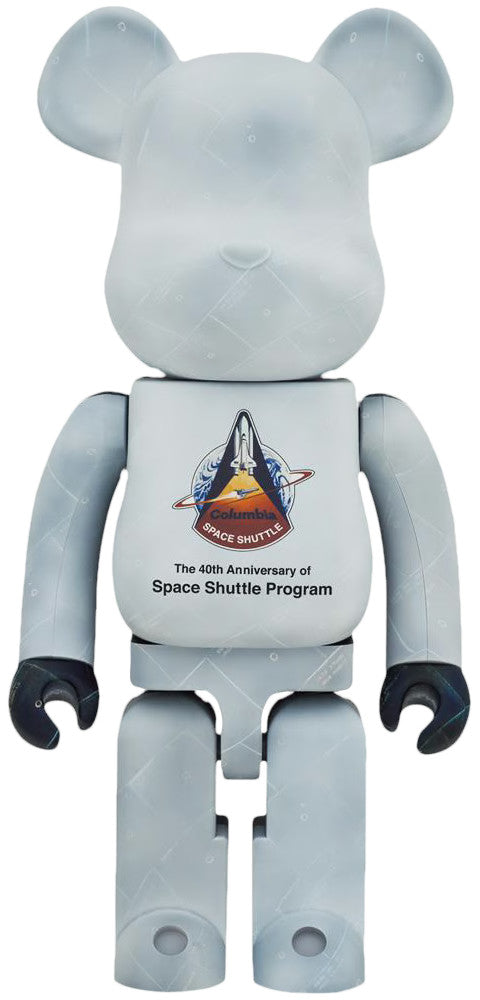
BE@RBRICK NASA Space Shuttle 40th Anniversary 1000% Medicom Toy Bearbrick
$600.00 USD
-
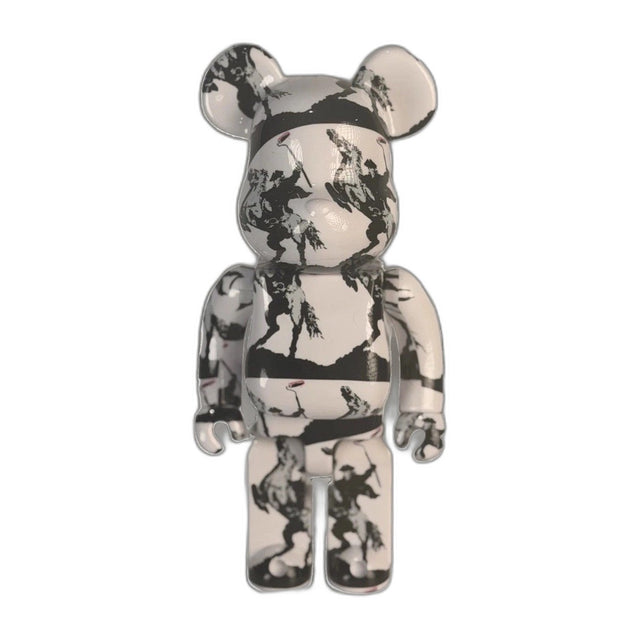
BE@RBRICK Brandalism Sync Banksy Medicom Toy Art Figure du-al.io Authenticated
$199.00 USD
-
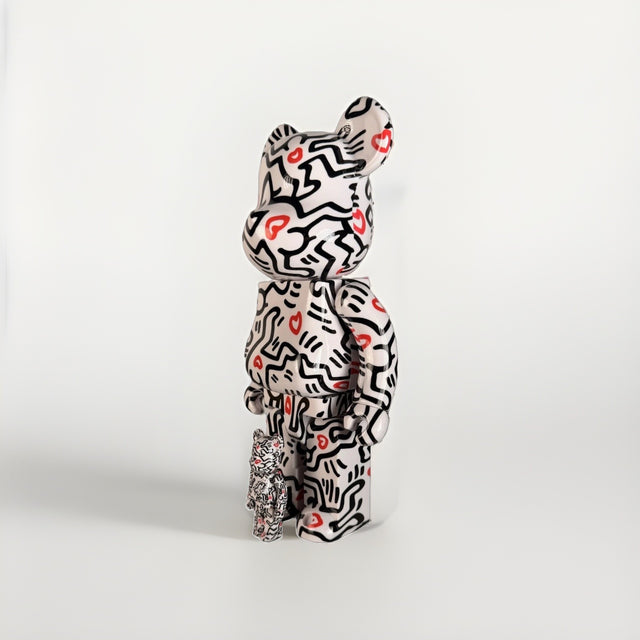
BE@RBRICK Keith Haring 400% + 100% Set Medicom Toy Bearbrick Foundation Art New
$199.00 USD
-
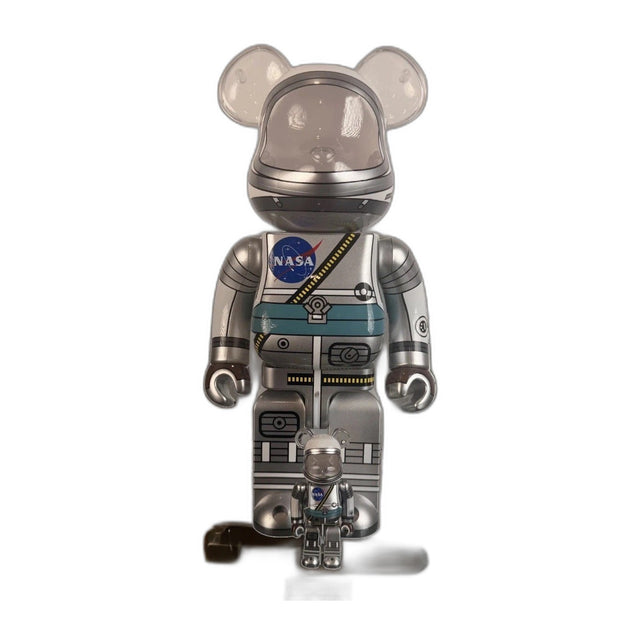
Bearbrick BE@RBRICK Mercury Astronaut 400% 100% Set NASA Medicom Toy Sealed New
$225.00 USD
-
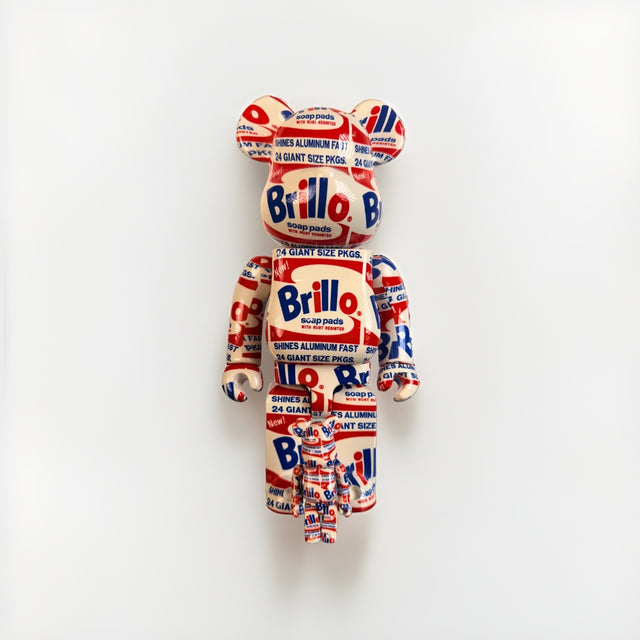
Bearbrick BE@RBRICK Andy Warhol Brillo 400% 100% Set Original 2020 Medicom New
$275.00 USD
Browse the collection for current listings.