One point matters above all: this is a licensed Medicom Toy collectible carrying Warhol's Brillo imagery, not an original Warhol artwork, so you are verifying the authenticity of the product and its provenance, not an artist attribution. Get those five checks right and you can buy with genuine confidence. For a KAWS or BE@RBRICK purchase, check the individual listing for release-specific packaging, production marks, condition and provenance. Manufacturer NFC is relevant only on releases that include it; a certificate alone does not establish authenticity.
That is the short version. The rest of this guide unpacks each check in detail — what to look at, what questions to ask, and how a disciplined collector separates a clean, verifiable example from one that deserves a pass. We wrote it the way we evaluate pieces for our own BE@RBRICK collection: methodically, positively, and with documentation at the center of every decision.
First, understand what you are actually buying
The Andy Warhol Brillo BE@RBRICK sits at the intersection of two collecting worlds, and understanding that intersection is the foundation for every other check.
On one side is Andy Warhol. In 1964, Warhol exhibited his now-famous Brillo Boxes — plywood sculptures silkscreened to replicate the commercial Brillo soap pad carton, itself designed by the commercial artist James Harvey. The work became one of the defining statements of Pop Art: an everyday supermarket graphic elevated, through repetition and recontextualization, into fine art. The red, white, and blue Brillo graphic is one of the most recognizable images in twentieth-century art history.
On the other side is Medicom Toy, the Japanese company that has produced the BE@RBRICK — a collectible bear-shaped figure issued in standardized size classes — since the early 2000s. Medicom collaborates with artists, estates, brands, and rights holders to dress the same bear silhouette in an enormous range of licensed artwork. The Warhol Brillo BE@RBRICK is one of these collaborations: a Medicom product carrying Warhol's Brillo imagery under official license from the rights holders of Warhol's work.
This distinction has a practical consequence that trips up newer collectors. Warhol attribution questions — "is this really by Warhol?" — do not apply here the way they would to a print or painting. The Andy Warhol Art Authentication Board, which once ruled on attribution questions for Warhol artworks, dissolved in 2012, and no board authenticates Warhol works today. None of that machinery is relevant to a Brillo BE@RBRICK, because the figure was never touched by Warhol's hand; he passed away in 1987, long before the BE@RBRICK existed. What you are authenticating is the product: is this a genuine Medicom Toy release, in the stated size and condition, with a provenance you can verify? That reframing makes the whole process simpler and more objective — and it is exactly the kind of verification modern tools handle well.
If you are newer to the category, our BE@RBRICK buyer's guide covers the platform's history, size system, and collaboration landscape in depth. Consider this article the focused, Brillo-specific companion to it.
Check 1: The packaging
With designer collectibles, the box is not an accessory — it is part of the collectible. Serious BE@RBRICK collectors treat packaging condition as a core component of value, and packaging is also your first and best physical evidence of authenticity.
What to look for
- Original, sealed factory packaging. The strongest position for a collector is a figure still sealed in its original Medicom packaging with the factory finishing intact. A sealed example preserves both the figure's condition and the evidentiary value of the box itself. Once a box has been opened, you are relying more heavily on the other checks in this guide — which is fine, but you should know which situation you are in and price accordingly.
- Print quality on the box. Genuine Medicom packaging is produced to a high commercial standard: sharp type, accurate color, clean registration, and consistent finishing. Examine the box graphics under good light and compare them with verified examples of the same release. Blurry printing, off-register colors, flimsy card stock, or typographic oddities are reasons to slow down and ask more questions.
- Correct box for the correct release. The Brillo design has appeared in more than one Medicom production run and in more than one size class, and each release ships in its own specific packaging. Confirm that the box in front of you matches the specific release the seller is describing — size class, release run, and set configuration should all line up with the release documentation. Our BE@RBRICK index exists precisely to help collectors match a figure to its documented release.
- Condition of the box itself. Crushed corners, sun-fading, moisture damage, tape pulls, and price-sticker residue all matter to resale value even when the figure inside is perfect. A collector-grade example keeps both figure and box in strong condition.
- Signs of resealing. A box that appears to have been opened and re-closed is not automatically a problem — but it changes the conversation. If the packaging shows evidence of being disturbed, ask the seller directly when and why it was opened, and weigh their answer alongside the provenance evidence.
Sealed original packaging with intact factory finishing is one of the pillars of how our gallery documents BE@RBRICK pieces, and it should be one of yours too. When a listing does not photograph the box thoroughly — all six faces, corners, and seals — request those photos before going further. A confident seller provides them without hesitation.
Check 2: The figure
If the figure is displayed or the box has been opened, the object itself gives you a second layer of physical evidence. You do not need to be a forensic expert to make good use of it; you need good light, patience, and verified reference images.
Proportions and size class
BE@RBRICKs are produced in standardized size classes, expressed as percentages of the base figure. The 100% figure stands roughly seven centimeters tall; a 400% is approximately four times that scale, and a 1000% is the large display piece standing around seventy centimeters. These proportions are consistent across genuine production. Measure the figure and confirm it matches its stated size class. A figure that is noticeably off-scale, oddly proportioned, or visibly asymmetrical does not match how Medicom manufactures.
Graphics and finish
- Print sharpness. The Brillo design is typography-heavy — bold lettering and hard-edged color fields wrapped around a curved figure. That makes it a demanding print job, and genuine examples handle it cleanly. Look for crisp edges on the lettering, accurate and saturated color, and consistent alignment of the graphic across body sections.
- Surface quality. Genuine figures show even, consistent surface finishing. Rough seams, excess flashing at the joints, bubbling, or patchy gloss are quality signals worth taking seriously.
- Articulation. BE@RBRICKs articulate at the head, arms, wrists, and waist. Joints on a genuine figure move with a consistent, deliberate tension — neither loose and rattly nor stiff to the point of stress. Handle gently; you are inspecting, not stress-testing.
- Factory markings. Genuine figures carry molded and printed production markings, including copyright and manufacturer information. Rather than memorizing specifics, compare the markings on the figure in hand against a verified example of the same release — placement, typeface, and content should match. Our guide to spotting a fake BE@RBRICK walks through this comparison process step by step.
One helpful mindset shift: you are not hunting for a single "gotcha" detail. You are building a picture from many small observations. Genuine examples are consistent across every one of these dimensions, because they come off a tightly controlled production line. Problems tend to show up as a cluster of small inconsistencies rather than one dramatic flaw.
Check 3: The seller and the provenance
Physical inspection tells you about the object. Provenance tells you about its history — and in the designer collectible market, history is where most of the risk actually lives. The good news is that provenance is also where a careful buyer gains the most protection.
Questions every seller should be able to answer
- Where did this piece come from? A retail purchase, a documented secondary-market acquisition from an identifiable source, or an established collection are all strong answers. "I got it from a guy" is not.
- What documentation comes with it? Original purchase receipts, order confirmations, prior sale records, and authentication certificates all add weight. Each document is a link in the chain of ownership, and each link makes the piece easier to resell later — provenance you can hand to the next buyer is provenance that pays for itself.
- Which exact release is this? The seller should identify the release run, size class, and configuration without hedging, and those details should match the box, the figure, and the documentation.
- What is the condition history? Has the figure been displayed or stored sealed? In what environment? Sunlight and heat matter to vinyl and to printed packaging alike.
- What is the return and dispute policy? Established dealers stand behind what they sell. A seller who offers no recourse whatsoever is asking you to carry all the risk at full price.
None of these questions is adversarial. Reputable sellers answer them happily, because the answers are their sales pitch. As a dealer, we consider a well-documented piece easier to sell, not harder — the documentation does the persuading for us. When you encounter a seller who treats basic provenance questions as an imposition, that reaction is itself information.
For a broader framework on evaluating sellers across every category we cover, the Collector's Hub gathers our full library of buying resources in one place.
Check 4: Authentication documentation
Modern designer collectibles increasingly come with modern authentication infrastructure, and this is an area where the category has genuinely improved for buyers over the last several years.
When the piece changes hands, the record travels with it. This is the kind of documentation chain that turns a collectible from "trust me" into "check for yourself."
Whoever you buy from, apply the same standard in principle:
- Prefer verifiable documentation over assertions. A certificate you can independently check beats a verbal assurance every time.
- Documentation should be tied to the specific piece. A certificate that could describe any example of the release is weaker than one bound to the individual object in front of you.
- Understand what each document actually certifies. A receipt proves a transaction. A certificate of authenticity proves the issuer's assessment. A blockchain record proves the documentation has not been altered since issuance. Together they form a chain; individually each covers only its own link.
- Keep everything. Every document you receive at purchase becomes part of the piece's provenance file. Store it as carefully as the figure itself.
And to return to the Warhol point one final time, because it matters for documentation specifically: no certificate for this product should claim to authenticate a Warhol artwork, and you should read any such claim as a misunderstanding of what the object is. The Warhol Authentication Board dissolved in 2012 and, in any case, never had anything to do with licensed merchandise. Legitimate documentation for a Brillo BE@RBRICK certifies a genuine Medicom Toy product and its ownership history — nothing more, and nothing less is needed. Our authentication FAQ covers how these documentation layers work across categories, and the collector's glossary defines the terminology if any of it is new to you.
Check 5: The price
The final check is the one most buyers do first and least rigorously: is the price right?
The mistake is benchmarking against asking prices. Asking prices tell you what sellers hope; only completed, verified sales tell you what the market pays. Warhol is a blue-chip name and the Brillo graphic is iconic, which means listings for this figure can carry significant optimism built into the number. The discipline that protects you is simple: compare the offer against recent verified sales of the same release, in the same size class, in comparable condition, with comparable documentation.
Condition and completeness drive real spreads within the same release. A sealed example with original packaging and a documented chain of ownership occupies a different tier from an opened, undocumented display piece — treat them as different products when comparing prices, because the market does.
This is where our gallery's infrastructure does the heavy lifting. You can see how we apply that data in our BE@RBRICK price guide , and our Financial Insights hub tracks how the broader market for these categories has behaved over time. Whatever you ultimately pay, pay it because verified comparable sales support it. Compare the same BE@RBRICK release, size and collaboration using dated completed sales, including packaging, condition and provenance. A format-wide growth rate does not value an individual figure.
How the size classes compare
Because the Brillo design has appeared across size classes, it helps to understand how the classes differ as collecting propositions. The percentages refer to scale relative to the base figure.
| Size class | Approximate height | Typical role in a collection | Key checks to emphasize |
|---|---|---|---|
| 100% | ~7 cm | Entry point; often issued alongside a 400% as a set | Set completeness, box condition, matching the exact release |
| 400% | ~28 cm | The collector's standard — substantial display presence, broad market | Print sharpness across the larger graphic, joint condition, sealed vs. opened status |
| 1000% | ~70 cm | Statement display piece; the flagship format for major designs | Shipping and storage history, surface condition, full provenance file |
Where a release was issued as a 100% and 400% set, completeness matters: a set split from its companion figure is a diminished proposition compared with the intact pairing. Confirm exactly what configuration the release documentation specifies and what the seller is actually offering. When in doubt, the index is your reference; matching the offered piece to a documented release is the single fastest way to catch a mismatched or misdescribed listing.
Reading the market context
A few structural observations help you evaluate any Warhol Brillo BE@RBRICK offer with clearer eyes.
Warhol collaborations sit in the licensed-art tier of the BE@RBRICK market. Medicom's artist and estate collaborations — Warhol among the most prominent — occupy a different lane from fashion-brand or character tie-ins. They appeal simultaneously to figure collectors and to Pop Art collectors who want the imagery without print-market prices, which broadens the demand base. If the Warhol angle is what draws you, it is worth exploring the wider Pop Art collection to see how licensed objects, prints, and multiples relate to one another as collecting entry points.
Iconic graphics tend to lead their category. Within any artist's BE@RBRICK output, the most recognizable images generally sustain the deepest collector interest over time. The Brillo graphic is arguably the single most famous image associated with Warhol's sculpture — a genuine advantage for long-term collectibility, and also the reason the design attracts more counterfeiting attention than obscure releases do. Popularity cuts both ways; your checks matter more here, not less.
Multiple production runs mean release-level precision matters. When a design returns in a later run, the market often treats the runs distinctly. Neither is "wrong" to buy — but you should know which one you are buying, and the price should reflect the specific release, not a blended average. This is another argument for insisting the seller identify the release precisely and for verifying that identification yourself.
The designer figure market rewards documentation more every year. As the category matures, the spread between documented and undocumented examples has become a persistent feature of the market. Buying well-documented pieces is not just safer — it positions your collection on the right side of that spread.
Caring for the piece after you buy
The checks do not end at purchase; they continue as stewardship. A Brillo BE@RBRICK bought well deserves to be kept well, and future value depends on it.
- Light. Keep the figure — and especially the printed box — out of direct sunlight. UV exposure fades printed graphics on vinyl and card alike, and fading is irreversible.
- Temperature and humidity. Stable, moderate conditions protect both the vinyl and the packaging. Avoid attics, garages, and exterior walls with big temperature swings.
- Display. A closed display case earns its cost: dust abrasion and handling are the everyday enemies of surface finish. For larger figures, ensure the display surface is genuinely stable.
- The box. Store it flat, dry, and protected even while the figure is displayed. Collectors who discard or damage packaging routinely regret it at resale time.
- The paper trail. Keep certificates, receipts, and correspondence together in a dedicated file — physical, digital, or both. When you eventually sell, that file transfers with the piece and does real work in the sale.
Treat every piece you buy as a piece you will one day sell, even if you never intend to. That mindset is what separates a collection from an accumulation, and it costs almost nothing to maintain from day one.
How we handle it at Gauntlet Gallery
Everything in this guide reflects how our own gallery operates, so it is fair to state that approach plainly. Provenance materials — receipts, prior records, condition notes — are preserved and transferred to the buyer. We publish our standards openly in our buyer's guides because informed buyers are better buyers, wherever they ultimately purchase.
We built this process because the designer collectible market deserves the same rigor as the print market, and because the tools now exist to deliver it. If you are comparing a piece of ours against one elsewhere, run both through the five checks in this guide — that comparison is one we are always happy to be part of. And if figures are becoming a serious lane for you, our full figurines collection spans the artists and platforms where we apply this same standard.
The pre-purchase checklist
Here is the whole guide compressed into the checklist to run before money moves:
- Identify the exact release. Design, size class, production run, set configuration — confirmed against release documentation, not the seller's memory.
- Inspect the packaging. Original Medicom box, correct for the release, factory finishing intact, condition photographed from all sides. Note sealed versus opened status explicitly.
- Inspect the figure (if visible). Correct scale for the size class, crisp graphics, clean surfaces, consistent joints, factory markings that match verified examples.
- Interrogate the provenance. Source story, receipts and records, condition history, and a seller who answers questions readily.
- Demand real documentation.
- Verify the price. Compare against recent verified sales of the same release in comparable condition, not against asking prices.
- Confirm the terms. Return policy, dispute recourse, and insured shipping appropriate to the piece's size and value.
- Plan the stewardship. Where it will live, how it will be protected, and where the provenance file will be kept.
Eight steps, none of them difficult, and together they convert an intimidating purchase into a well-managed one. The collectors who follow a checklist like this do not just avoid problems — they consistently end up owning the examples the market values most.
Frequently asked questions
Is an Andy Warhol Brillo BE@RBRICK an original Warhol artwork?
No. It is a Medicom Toy collectible carrying Warhol's Brillo imagery under official license from the rights holders of his work. Warhol died in 1987, decades before the BE@RBRICK platform existed. Authentication for this piece means verifying a genuine Medicom product and its provenance — not an artist attribution. Notably, the Warhol Authentication Board dissolved in 2012 and no board authenticates Warhol works today, but that machinery was never relevant to licensed merchandise in the first place.
Does the box really matter that much?
Yes. In the designer collectible market, original packaging is part of the collectible: it carries evidentiary weight for authenticity, and its condition materially affects value. Sealed examples with intact factory finishing occupy the strongest market position. If the box has been opened or damaged, the piece can still be well worth owning — but the price should reflect it, and the other checks in this guide carry more weight.
How can I verify which release I am being offered?
Match the piece against documented release information: the design, size class, production run, and set configuration should all agree across the box, the figure, and the seller's description. Our BE@RBRICK index exists to support exactly this comparison. A mismatch between what is claimed and what is documented is the fastest, most objective red flag available to a buyer.
What documentation should come with the piece?
Ideally: original purchase records, any prior sale documentation, and piece-specific, independently verifiable certification. Whatever the source, prefer documentation you can check yourself over assurances you are asked to take on faith.
How do I know if the price is fair?
Benchmark against recent verified sales of the same release, in the same size class and comparable condition — never against asking prices, which reflect hope rather than the market. Condition, completeness, and documentation create real price tiers within a single release.
Should I buy sealed or opened?
Both are legitimate, and the right answer depends on your goals. Sealed examples maximize condition certainty and market position but keep the figure hidden. Opened examples let you display the piece and inspect it directly, at some cost to the premium sealed status carries. What matters is that the status is disclosed accurately and the price reflects it — a fairly priced opened example beats an overpriced sealed one.
Shop BE@RBRICK
Explore current pieces available from the gallery.
-
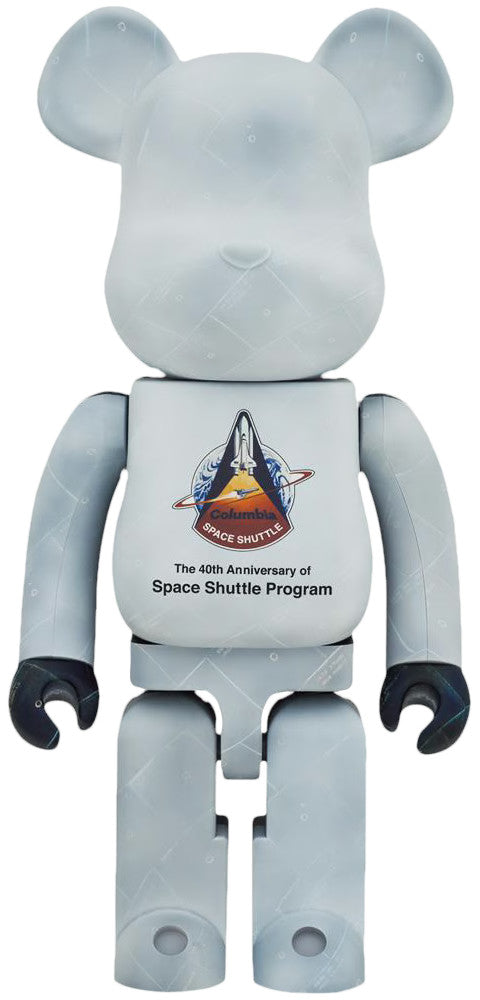
BE@RBRICK NASA Space Shuttle 40th Anniversary 1000% Medicom Toy Bearbrick
$600.00 USD
-
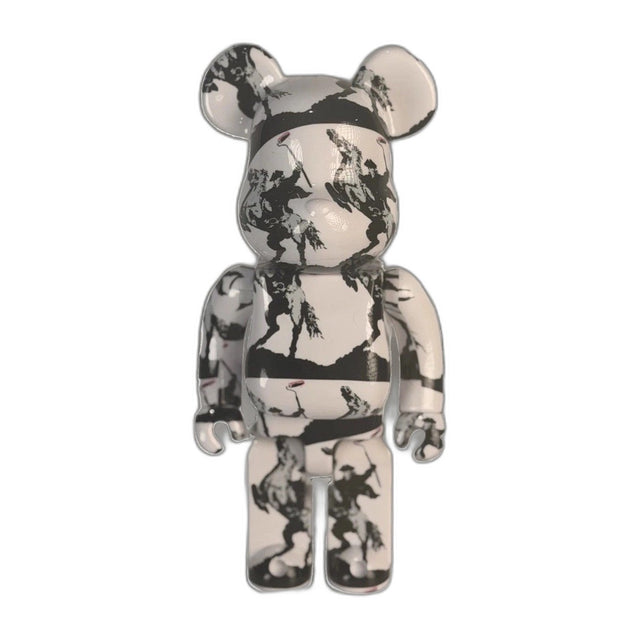
BE@RBRICK Brandalism Sync Banksy Medicom Toy Art Figure du-al.io Authenticated
$199.00 USD
-
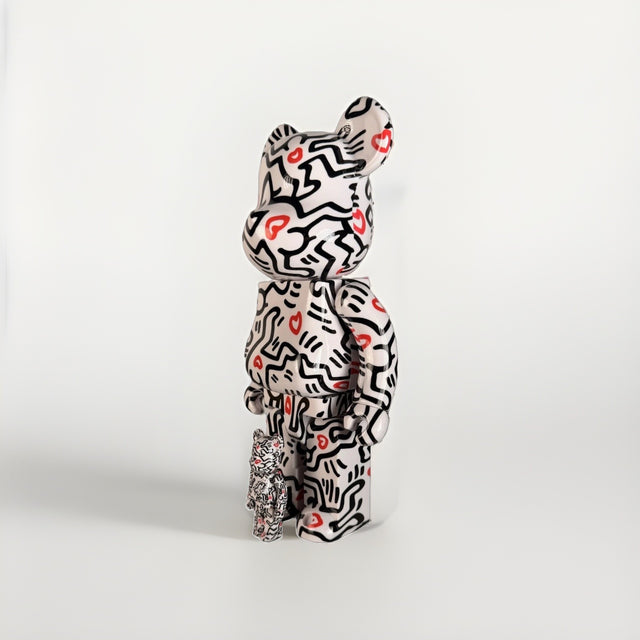
BE@RBRICK Keith Haring 400% + 100% Set Medicom Toy Bearbrick Foundation Art New
$199.00 USD
-
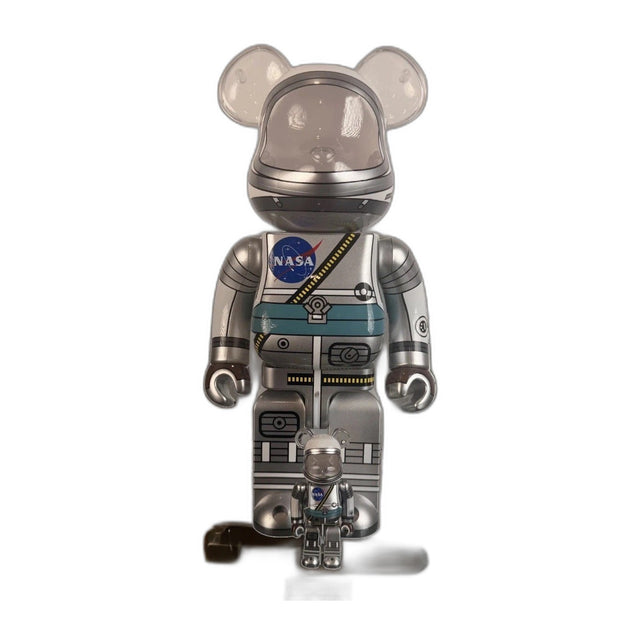
Bearbrick BE@RBRICK Mercury Astronaut 400% 100% Set NASA Medicom Toy Sealed New
$225.00 USD
-
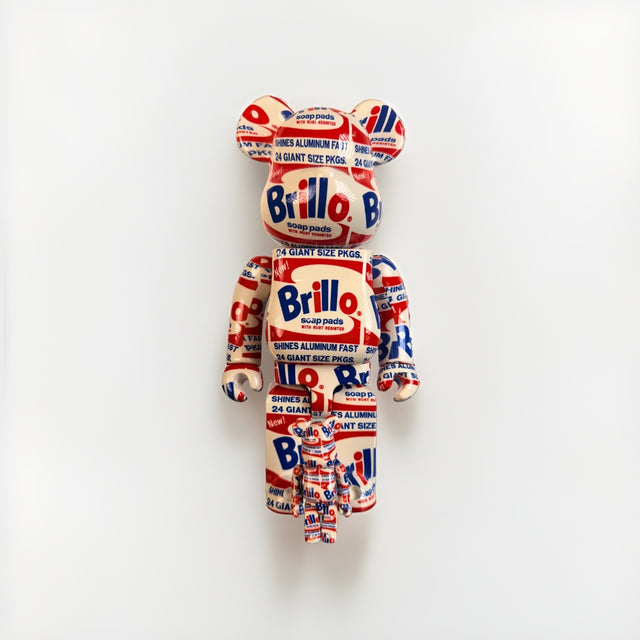
Bearbrick BE@RBRICK Andy Warhol Brillo 400% 100% Set Original 2020 Medicom New
$275.00 USD
Browse the collection for current listings.