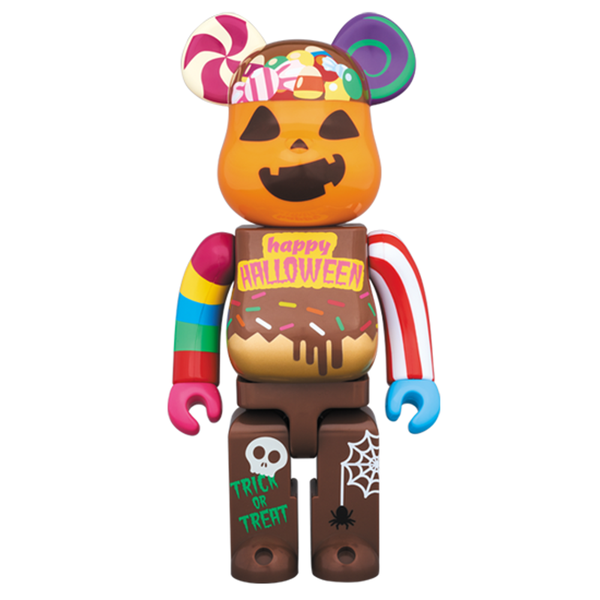
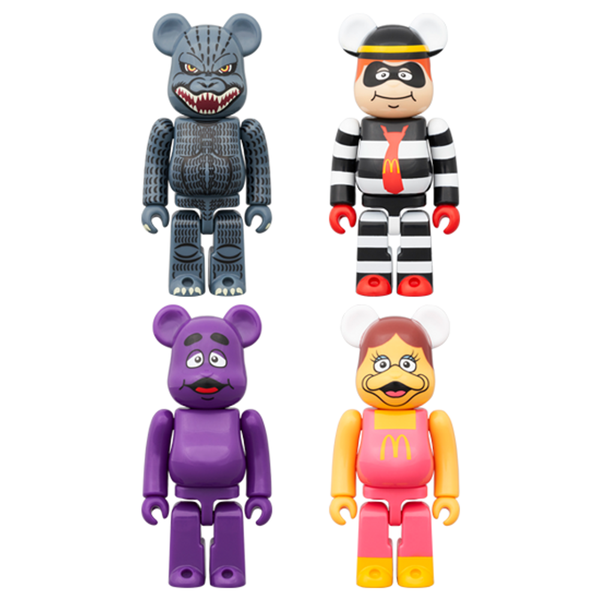
The difference between vinyl, chrome, wood, crystal, and porcelain BE@RBRICKs comes down to material, maker, and market position. Vinyl (PVC/ABS plastic) is the standard BE@RBRICK medium — the material Medicom Toy uses for the vast majority of releases, from blind-box series figures to large-format collaboration pieces. Chrome BE@RBRICKs are vinyl figures finished with a mirror-like metallic plating rather than a different substrate. Wood, crystal, and porcelain BE@RBRICKs, by contrast, are genuinely different objects: they are produced from luxury materials, often in partnership with specialist workshops, in smaller quantities, at higher price points, and with far more demanding care requirements. In short: vinyl is the canvas of the BE@RBRICK world, chrome is a premium finish on that canvas, and wood, crystal, and porcelain are the fine-art editions of the format.
That one-paragraph answer will get you through a conversation at a gallery opening. But if you are deciding where to put real money — or trying to understand why two bears with the identical silhouette can occupy completely different tiers of the collecting market — the details matter enormously. In this guide, we break down each material family: how it is made, how it looks and ages, what it signals about rarity, how to authenticate it, and how to care for it. Compare the same BE@RBRICK release, size and collaboration using dated completed sales, including packaging, condition and provenance. A format-wide growth rate does not value an individual figure.
One Silhouette, Five Very Different Objects
Every BE@RBRICK shares the same DNA: a bear-shaped figure with nine points of articulation — head, arms, wrists, waist, and legs — produced by the Japanese company Medicom Toy since the early 2000s. The genius of the platform is that the shape never changes. What changes is everything else: the surface graphics, the collaborating artist or brand, the size (expressed as a percentage of the original roughly 7 cm figure — 100%, 400%, and 1000% being the most collected formats), and, crucially for this article, the material.
Material is one of the clearest signals Medicom sends about where a release sits in its hierarchy. A standard vinyl bear in a blind-box series is designed to be accessible and fun. A wooden bear made in partnership with a heritage furniture maker, or a crystal bear produced with a luxury glassworks, is designed to be a decorative art object — priced, marketed, and collected accordingly. Understanding the material tiers is therefore one of the fastest ways to understand the BE@RBRICK market as a whole. If you are new to the category, our BE@RBRICK buyer's guide covers the fundamentals of sizes, series, and rarity before you dive into material distinctions.
Vinyl BE@RBRICKs: The Standard and the Backbone
When collectors say "BE@RBRICK" without qualification, they almost always mean the vinyl figure. Technically, these bears are made from a combination of plastics — commonly described as PVC and ABS — injection-molded into the familiar body parts, assembled with articulated joints, and then decorated with printed, painted, or flocked surface designs.
How vinyl bears are made and finished
The standard production process gives Medicom enormous flexibility. Surface treatments on vinyl bears include:
- Printed graphics — artwork applied over the molded body, the most common treatment across artist and brand collaborations.
- Painted and matte finishes — solid color programs, gradients, and specialty coatings.
- Flocked surfaces — a velvety fiber coating applied over the body, popular in fashion collaborations.
- Clear and translucent bodies — tinted or water-clear plastic that shows the internal joint structure.
- Glow-in-the-dark and thermally reactive materials — novelty treatments that appear across many series.
All of these remain "vinyl BE@RBRICKs" in market terms — the substrate is plastic, whatever the surface does.
Why vinyl dominates the market
Vinyl is where the liquidity is. The overwhelming majority of BE@RBRICK transactions we see in our comparable-sales database involve vinyl figures, which means pricing on vinyl bears is comparatively transparent: for well-known releases there are usually enough verified sales to establish a meaningful range. Vinyl is also where the iconic collaborations live — the artist series, fashion-house partnerships, band tributes, and character licenses that define the platform's cultural reach. Browse our BE@RBRICK collection and you will see this diversity firsthand.
From a collecting standpoint, vinyl's strengths are accessibility, variety, and durability under normal display conditions. Its weaknesses are the flip side of its ubiquity: standard blind-box figures are produced in large quantities, so scarcity — and therefore long-term collectibility — depends on the specific release, the size format, and the strength of the collaboration rather than on the material itself. A 1000% vinyl bear from a landmark artist collaboration can be a serious blue-chip object; a common 100% series figure is an entry point. Material tells you the medium; the release tells you the tier.
Chrome BE@RBRICKs: A Finish, Not a Substrate
Here is the distinction that trips up more new collectors than any other: a chrome BE@RBRICK is not made of metal. It is a standard plastic figure finished with a metallic plating process that deposits an ultra-thin reflective layer onto the molded body, producing that liquid-mirror look in silver, gold, and other metallic tones.
What chrome plating means in practice
The chromed finish is visually spectacular — arguably no other treatment photographs as dramatically — but it comes with specific ownership realities:
- It shows handling. Fingerprints are immediately visible on a mirror finish, and every collector learns quickly to handle chromed bears with gloves or a microfiber cloth.
- The plating is a surface layer. Because the reflective coat sits on top of the plastic, it can scuff, scratch, or wear at friction points — especially around the articulated joints if the figure is posed repeatedly. Collectors of chromed bears generally choose a pose once and leave it.
- Condition grading is less forgiving. A small mark that would disappear on a printed vinyl bear is glaring on chrome. In our experience, the gap in realized prices between pristine and visibly handled examples is wider for chromed finishes than for almost any other vinyl treatment.
Where chrome sits in the hierarchy
Chromed bears occupy a middle position: they are premium versions of vinyl releases rather than a separate luxury category. Many appear as rare chase figures within blind-box series or as special editions within larger collaboration programs, which gives them scarcity value on top of their visual appeal. But because the underlying object is still an assembled plastic figure, chrome bears trade within the broader vinyl market rather than in the rarefied space occupied by wood, crystal, and porcelain. For a sense of how specific chromed releases have traded, our BE@RBRICK price guide is the right starting point — and as always, we recommend comparing recent verified sales rather than relying on asking prices.
Wooden BE@RBRICKs: Craftsmanship You Can Feel
Wooden BE@RBRICKs are where the platform crosses from toy production into furniture-grade craftsmanship. The most celebrated wooden bears come from Medicom's long-running partnership with Karimoku, the storied Japanese furniture manufacturer, whose workshop produces BE@RBRICK bodies from carefully selected hardwoods using the same joinery-level precision applied to fine furniture.
What makes wood different
- Every piece is genuinely unique. Wood grain varies from blank to blank, so no two wooden bears are identical even within the same edition. Collectors prize particularly handsome grain patterns, and this individuality is a large part of the appeal.
- The construction is real woodworking. Bodies are shaped, finished, and assembled from solid wood — some editions even use parquet-style compositions assembled from multiple wood pieces. The weight, warmth, and tactility are unmistakable next to a plastic figure.
- Editions are small. Woodworking does not scale like injection molding. Wooden bears are produced in limited quantities, and many sell out at release through lottery or allocation systems.
- Wood is a living material. It responds to humidity and temperature, can fade under direct sunlight, and can develop checks or movement in harsh environments. A wooden bear wants stable, museum-like display conditions.
Collecting wooden bears
In the secondary market, wooden BE@RBRICKs behave more like design objects than toys. Demand comes not only from figure collectors but from design and interiors collectors who may own no other BE@RBRICK at all. That crossover demand, combined with small edition counts, generally places wooden bears well above their vinyl counterparts in the market hierarchy — though, as with everything in this category, the specific collaboration and size format drive the outcome. See our financial insights hub for how we approach market data across categories.
Crystal BE@RBRICKs: The Luxury Object
Crystal BE@RBRICKs represent the platform's most direct engagement with the luxury-goods world. Here it is important to distinguish two very different things that both get called "crystal" in listings:
- Solid crystal bears — figures actually made of crystal glass, produced in collaboration with luxury crystal houses. The Medicom partnership with Baccarat, the famed French crystal manufacturer, is the best-known example: these are heavy, hand-finished crystal objects made in a glassworks, not a toy factory.
- Crystal-embellished bears — standard vinyl figures whose surfaces are decorated with applied crystal elements. These are dazzling, labor-intensive pieces, but the underlying object is still a vinyl bear.
The distinction matters for value, fragility, and authentication alike, and any serious listing should make clear which type is being offered.
Ownership realities of crystal
- Fragility is absolute. A solid crystal bear is glass. It does not bounce, it chips, and restoration of chips or cracks is difficult and always value-affecting. Original packaging — typically presentation-grade boxing rather than a toy box — is essential both for protection and for resale.
- Articulation is limited or symbolic. Unlike vinyl bears, crystal editions are generally not meant to be posed. They are sculpture.
- Provenance expectations are higher. Buyers of luxury-material bears expect the full paper trail: original receipt or order documentation where available, complete packaging, and any certificates issued with the piece. This is standard practice in the crystal and fine-glass world, and it carries over fully to crystal BE@RBRICKs.
Crystal editions are produced in small quantities and marketed through luxury channels, and they trade accordingly. They are also, in our experience, the material family where condition and completeness weigh most heavily on realized prices — a pristine, fully documented example and a bare figure with a chip are almost different assets.
Porcelain and Ceramic BE@RBRICKs: Heritage Craft Meets Designer Toy
Porcelain BE@RBRICKs bring one of the world's oldest craft traditions to the platform. Medicom has partnered with traditional Japanese porcelain studios and kilns to produce bears that are slip-cast, glazed, and fired using techniques refined over centuries — some decorated with classical motifs and glaze work that would be at home on heritage tableware.
What defines the porcelain family
- Hand production at every stage. Casting, glazing, and kiln firing involve handwork, and glaze behavior in the kiln introduces natural variation. Like wooden bears, porcelain editions have an element of uniqueness piece to piece.
- Weight and surface unlike anything else. Porcelain bears have a cool, dense, glassy-smooth presence. The glazed surface can carry painted decoration of extraordinary fineness — detail that printing on vinyl simply cannot match.
- Fragility comparable to crystal. Porcelain chips and cracks, and hairline damage can be subtle — always inspect (or request photos of) ears, feet, and edges under raking light. Fired-on decoration, however, is essentially permanent and will not fade the way printed vinyl graphics can.
- Small editions through craft channels. Kiln capacity constrains production. Porcelain bears are released in limited numbers and often sell through art and craft-oriented channels rather than toy retail.
Porcelain editions appeal strongly to collectors who value the intersection of contemporary pop design and traditional craftsmanship — a distinctly Japanese cultural statement that gives these bears an audience beyond the figure-collecting world. As with wood and crystal, that crossover demand supports their position in the upper tier of the material hierarchy.
Side-by-Side: The Five Materials Compared
| Attribute | Vinyl (PVC/ABS) | Chrome | Wood | Crystal | Porcelain |
|---|---|---|---|---|---|
| What it actually is | Injection-molded plastic | Plastic body with metallic plated finish | Solid hardwood, furniture-grade construction | Crystal glass (or crystal-embellished vinyl) | Slip-cast, glazed, kiln-fired porcelain |
| Typical production scale | Large; the platform's standard | Smaller; often chase or special editions | Small, craft-limited editions | Small luxury editions | Small, kiln-limited editions |
| Articulation | Full nine-point articulation | Full, but posing risks plating wear | Varies; treat as display object | Minimal to none; sculpture | Minimal to none; sculpture |
| Durability | High under normal display | Finish vulnerable to scuffs and fingerprints | Sensitive to humidity, light, impacts | Fragile; chips are value-critical | Fragile; hairlines and chips value-critical |
| Uniqueness per piece | Uniform within edition | Uniform within edition | Unique grain on every piece | Hand-finishing variation | Glaze and handwork variation |
| Market tier | Entry to blue-chip, release-dependent | Premium within the vinyl market | Upper tier; design-collector crossover | Luxury tier | Upper tier; craft-collector crossover |
| Care priority | Dust, UV protection | No bare-hand contact; fixed pose | Stable humidity, no direct sun | Secure mounting, original packaging | Careful handling, edge inspection |
How Material Shapes Value — and How to Read the Market
It would be convenient if the material hierarchy translated directly into a price hierarchy, but the market is subtler than that. Material is one input among several, and the experienced collector weighs them together:
- The collaboration outranks the material. The name on the box, the cultural moment it captures, and the strength of demand for that artist's broader market all matter enormously.
- Size format multiplies everything. Across all materials, larger formats — particularly 1000% in vinyl and the large formats in craft materials — command disproportionate attention because they function as statement objects in a room.
- Scarcity must be real, not implied. Luxury materials usually mean small editions, but always verify what is actually documented about a release rather than assuming. When edition information is unclear, check the release documentation and compare recent verified sales rather than trusting a listing's claims.
- Condition sensitivity scales with material. The more premium the material, the more mercilessly the market punishes flaws. A scuff on chrome, a chip on crystal, a hairline on porcelain, a check in wood — each hits realized prices harder than equivalent wear on standard vinyl.
This is exactly where a comparable-sales discipline earns its keep. Before buying or selling in any of these material families, anchor yourself in recent verified sales for the specific release, size, and condition tier. Our price guide hub collects our category-by-category pricing resources, and the BE@RBRICK index is our reference catalog for identifying specific releases.
Authentication Across the Material Families
Counterfeiting pressure in the BE@RBRICK market concentrates where the volume is — which means vinyl bears, especially the most hyped collaborations, see the most reproduction activity. Luxury-material bears are harder to fake convincingly (a counterfeiter cannot cheaply imitate furniture-grade woodwork or kiln-fired porcelain), but their higher values mean the stakes per transaction are greater, and misrepresentation — a crystal-embellished vinyl bear sold as solid crystal, an undisclosed repair on porcelain — is its own form of deception.
The constructive answer is the same across all five materials: buy documented pieces from accountable sources.
- Packaging tells a story. Authentic releases come in material-appropriate packaging — standard printed boxes for vinyl, presentation-grade boxing for luxury materials. Sealed original packaging with intact factory holograms is the strongest single physical indicator for figures in our category, and packaging completeness meaningfully affects value across every material tier. Our guide to spotting fake BE@RBRICKs walks through packaging and figure inspection points in detail.
- Build quality is hard to counterfeit. Crisp mold lines, tight and smooth joints, correctly weighted parts, precise printing registration on vinyl; genuine grain and joinery on wood; true optical clarity on crystal; fine glaze work on porcelain. Handle enough authentic pieces and the fakes announce themselves.
- Documentation completes the picture. Combined with documented provenance (original receipts, prior sale records), this gives a future buyer everything they need to trust the object without taking anyone's word for it. For a KAWS or BE@RBRICK purchase, check the individual listing for release-specific packaging, production marks, condition and provenance. Manufacturer NFC is relevant only on releases that include it; a certificate alone does not establish authenticity.
Whatever the material, the principle holds: authentication is not about fear, it is about confidence. A properly documented bear is simply a more liquid, more valuable, and more enjoyable thing to own. For broader grounding, our authentication FAQ answers the questions we hear most from new collectors.
Care, Display, and Records: Protecting Each Material
Long-term value in this category is substantially a function of stewardship. Each material asks something different of its owner:
Vinyl and chrome
- Display away from direct sunlight — UV exposure is the primary enemy of printed graphics and can discolor plastics over years.
- Dust with a soft, dry cloth or air blower; avoid solvents and household cleaners entirely.
- For chrome, adopt a no-bare-hands rule and settle on a pose rather than re-articulating the figure.
- Keep boxes, inserts, and any paperwork — completeness is a durable component of value.
Wood
- Aim for stable indoor humidity and temperature; avoid radiators, vents, and exterior-wall windowsills.
- No direct sun — wood tones shift with light exposure.
- Dust dry; never apply oils, polishes, or cleaning products unless the maker's care guidance specifically calls for them.
Crystal and porcelain
- Display on stable, low-traffic surfaces; consider museum gel or secure mounts in earthquake-prone areas.
- Handle over padded surfaces, with two hands, never by the head or limbs.
- Retain all presentation packaging — for these materials it is both the safest storage and a significant part of the collectible.
- Inspect periodically under strong light for hairlines; early detection matters for insurance documentation.
Finally, keep records like a professional. A simple file per piece — purchase receipt, photos at acquisition, certificate details, and any condition notes — costs minutes and pays for itself the day you sell, insure, or bequeath the collection. Documented provenance is a habit, and the collectors who build it early are the ones whose pieces trade at the top of their condition tier. Our Collector's Hub gathers our resources on building and managing a collection over time.
Buying Checklist: Choosing Across the Material Tiers
Before you commit to a piece in any of the five material families, run through this list:
- Identify the exact release. Artist or brand, series, size format, and material — confirm all four against reference documentation before comparing prices.
- Confirm what the material actually is. Especially for "chrome" (a finish on plastic) and "crystal" (solid crystal versus crystal-embellished vinyl). Ask the seller to state it explicitly.
- Verify scarcity from documentation, not listings. If edition information is not documented, treat scarcity claims with appropriate skepticism.
- Inspect condition against the material's weak points. Joint wear and print quality on vinyl; plating scuffs on chrome; grain checks and fading on wood; chips on crystal; hairlines and glaze flaws on porcelain.
- Demand completeness. Original packaging, inserts, and certificates. For luxury materials, presentation packaging is close to non-negotiable.
- Anchor price in verified comparables. Compare recent confirmed sales for the same release, size, and condition — not asking prices.
- Buy from accountable sources. Sellers who document authentication and provenance, and who stand behind what they sell.
- Match the piece to your display reality. A wooden or porcelain bear in a sunny, humid room, or a crystal bear on a wobbly shelf, is a loss waiting to happen. Buy what you can steward well.
If you are earlier in your journey, our full library of buyer's guides covers every category we deal in, and the designer figurine collection shows the current authenticated inventory in our gallery.
Frequently Asked Questions
Are chrome BE@RBRICKs made of metal?
No. Chrome BE@RBRICKs are standard plastic figures finished with a thin metallic plating that creates the mirror effect. That is why the finish can scuff or show fingerprints — it is a surface layer over vinyl, not solid metal. Handle them with gloves and avoid repeated re-posing.
Which BE@RBRICK material is the most valuable?
There is no single answer — the collaboration, size format, scarcity, and condition of a specific release matter as much as its material. As a general pattern, wood, crystal, and porcelain editions sit in the upper market tiers because of small craft-limited editions and crossover demand from design collectors, while vinyl spans everything from entry-level to blue-chip. Always check recent verified comparable sales for the exact release.
Are wooden BE@RBRICKs all identical within an edition?
No — and that is much of their appeal. Because wood grain varies naturally from blank to blank, every wooden bear is visually unique even within the same edition. Collectors often prize examples with particularly attractive grain patterns.
What is the difference between a solid crystal BE@RBRICK and a crystal-embellished one?
A solid crystal bear is actually made of crystal glass, produced with a luxury crystal manufacturer — a heavy, fragile sculpture. A crystal-embellished bear is a standard vinyl figure decorated with applied crystal elements. They are very different objects with very different values, so insist that any listing states clearly which it is.
How fragile are porcelain BE@RBRICKs?
Comparable to fine ceramics generally: they chip and crack if knocked, and hairline damage can be subtle. Inspect ears, feet, and edges under strong light, handle over padded surfaces, and keep the presentation packaging for storage. The upside is that fired-on decoration is essentially permanent and will not fade like printed graphics can.
How do I authenticate a BE@RBRICK in any material?
Combine physical inspection — packaging quality, factory hologram, mold and joint precision, material-appropriate build quality — with documentation.
Do luxury-material BE@RBRICKs get counterfeited?
Far less often than popular vinyl releases, because furniture-grade woodwork, crystal, and kiln-fired porcelain are genuinely hard to imitate. The bigger risk with luxury materials is misrepresentation — undisclosed damage or repairs, or embellished vinyl sold as solid crystal — which is why documentation and accountable sellers matter most at the top of the market.
Shop BE@RBRICK
Explore current pieces available from the gallery.
-
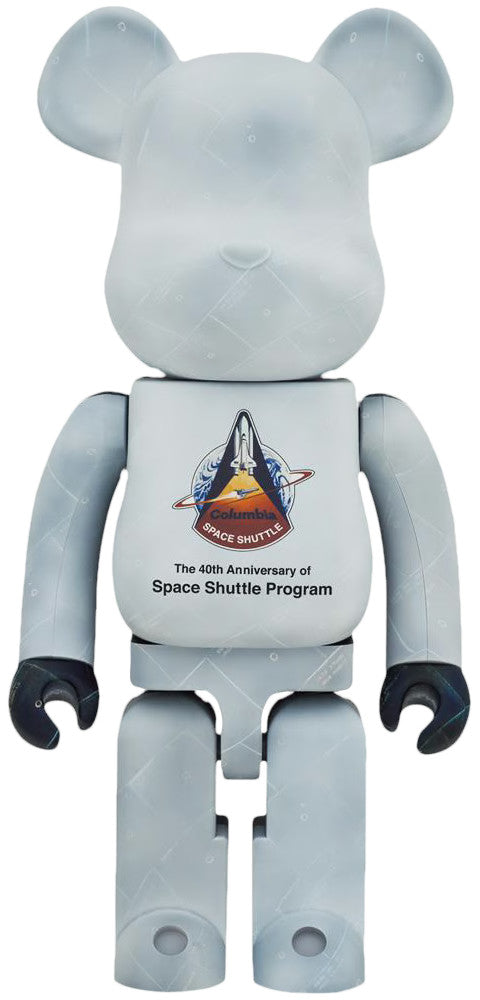
BE@RBRICK NASA Space Shuttle 40th Anniversary 1000% Medicom Toy Bearbrick
$600.00 USD
-
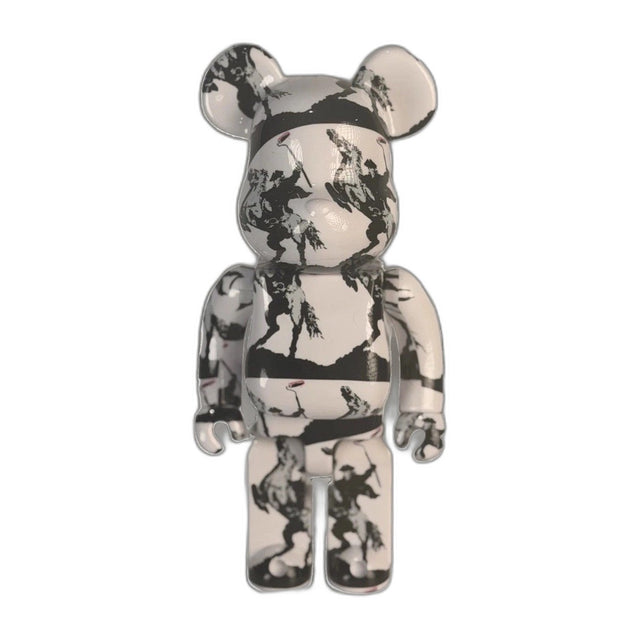
BE@RBRICK Brandalism Sync Banksy Medicom Toy Art Figure du-al.io Authenticated
$199.00 USD
-
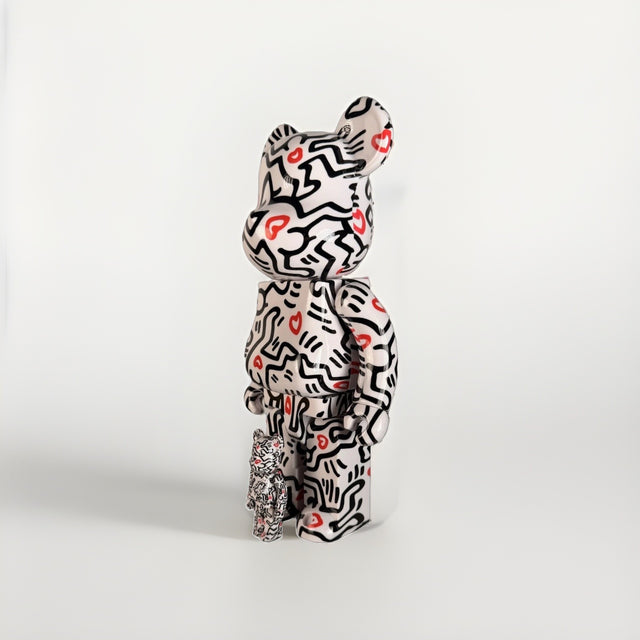
BE@RBRICK Keith Haring 400% + 100% Set Medicom Toy Bearbrick Foundation Art New
$199.00 USD
-
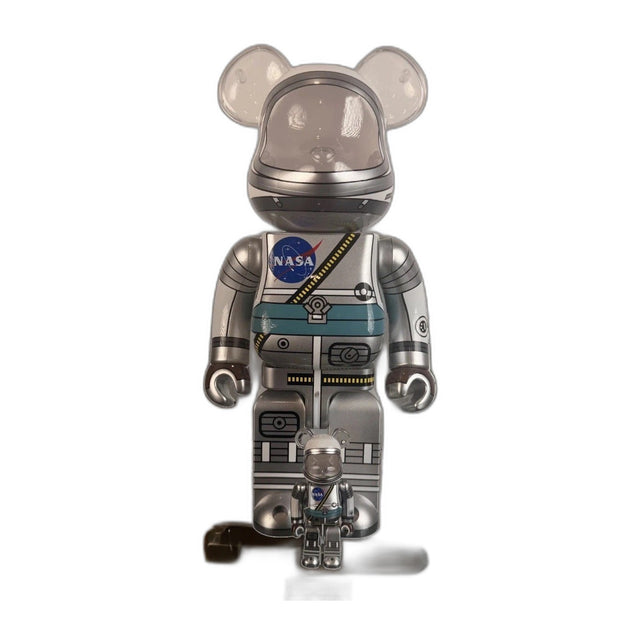
Bearbrick BE@RBRICK Mercury Astronaut 400% 100% Set NASA Medicom Toy Sealed New
$225.00 USD
-
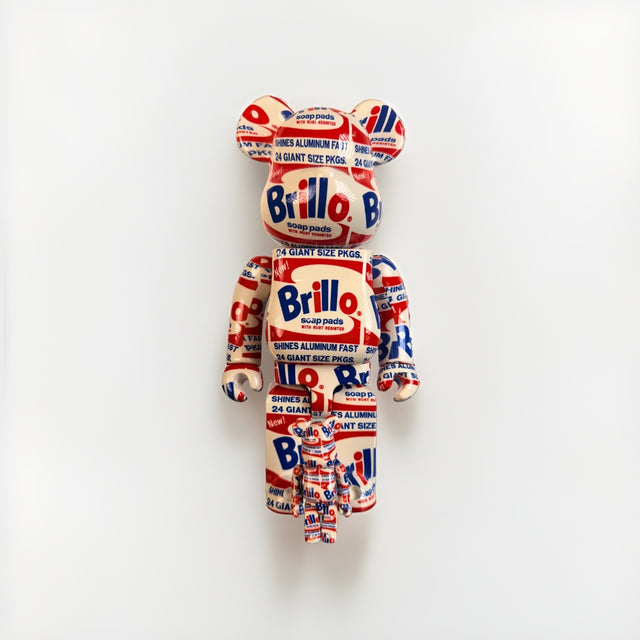
Bearbrick BE@RBRICK Andy Warhol Brillo 400% 100% Set Original 2020 Medicom New
$275.00 USD
Browse the collection for current listings.