

Featured image: AI-generated interior concept using product reference photography. Scale, setting, framing, and placement are illustrative.
The sculptural power of a signed guitar in residential interiors
Integrating a signed guitar into a residential interior presents a unique design challenge and opportunity. Unlike two-dimensional art or static sculptures, a guitar carries an inherent narrative and a distinct, dynamic form. It's a functional instrument transformed into a display object, laden with personal resonance for the collector. The decision to feature a signed guitar, whether an electric model like the Post Malone Signed Electric Guitar or an acoustic piece such as the Taylor Swift Signed Acoustic Guitar, moves beyond mere memorabilia display. It becomes a focal point, a conversation starter, and a tangible connection to musical culture. The designer's role is to elevate this object from a fan's trophy to a sophisticated element within a curated space, balancing its intrinsic value with its aesthetic contribution. This involves careful consideration of its physical presence, the context of its display, and the practicalities of its long-term preservation.
The form factor of a guitar, with its flowing lines, varied materials, and often glossy finish, makes it inherently sculptural. It demands attention, not just for its autograph, but for its shape and craftsmanship. Whether a room leans contemporary, eclectic, or even traditionally modern, a well-placed signed guitar can introduce an unexpected layer of texture and interest. The challenge lies in ensuring it complements the existing design language without overwhelming it, or conversely, appearing as an afterthought.
Understanding the distinct forms: electric versus acoustic
The choice between an electric and an acoustic guitar for display profoundly impacts the aesthetic and spatial considerations. While both are guitars, their forms, materials, and visual weights are distinct. An electric guitar, like the Post Malone signed model, typically features a solid body, often with a more angular or carved silhouette. The one pictured, with its natural finish body and rosewood fingerboard, showcases a beautiful wood grain, contrasted by a gold pearloid pickguard that adds a layer of intricate pattern and reflectivity. Its thinner body depth means it can often sit closer to a wall or within a shallower display case, making it suitable for tighter spaces or where a less bulky presence is desired. The various pickups, knobs, and switches on an electric guitar introduce a mechanical, engineered aesthetic, often appealing to industrial or contemporary design schemes, providing a distinct visual texture.
In contrast, an acoustic guitar, such as the Taylor Swift signed dreadnought, possesses a deeper, more resonant body. Its curves are often softer, more organic, and its larger volume commands more physical space. The Taylor Swift guitar, featuring custom artwork and a photo on its body, adds further visual complexity and narrative specific to the artist. Acoustic guitars, with their exposed soundholes and often intricate rosette details, evoke a more traditional, handcrafted feel. They lend themselves well to spaces that embrace natural materials, warmth, and a slightly more rustic or bohemian sensibility. The greater depth of an acoustic guitar means it requires more clearance, both from the wall if mounted, or within a display case, to prevent it from feeling cramped or protruding awkwardly into walkways. Understanding these fundamental differences is crucial for selecting the right instrument to align with a room's existing design philosophy and spatial constraints, ensuring it enhances the space rather than competing with it.
The critical role of a protective display case
Displaying a signed guitar, particularly one of significant value or sentiment, necessitates robust protection. A custom-built display case is not merely an aesthetic choice; it is a critical preservation strategy. The primary purpose of such a case is to shield the instrument from physical damage, dust, and environmental fluctuations. An open display, while offering immediate visual access, exposes the guitar to accidental bumps, airborne particulates that can settle on the finish and strings, and the inevitable accumulation of dust in intricate areas. Fingerprints, cleaning attempts, and even static electricity can also gradually degrade the instrument's appearance and the autograph itself, diminishing its long-term appeal and condition.
A well-designed display case offers several layers of protection. Firstly, it creates a physical barrier against impacts, whether from playful pets, children, or everyday activities within the home. Secondly, it helps moderate the micro-environment around the guitar. While it won't entirely control humidity or temperature in a large room, a sealed case can buffer against rapid changes, which are particularly damaging to natural materials like wood. Wood expands and contracts with humidity fluctuations, potentially leading to cracks or warping over time. Thirdly, a case significantly reduces dust accumulation, simplifying maintenance and preserving the pristine appearance of the instrument. The material of the case itself is also important. Opt for museum-grade acrylic or glass with UV-filtering properties to mitigate the harmful effects of ultraviolet light, which can cause fading to the autograph and the guitar's finish over extended periods. Even in indirect light, UV exposure is a long-term risk. The internal mounting system within the case should cradle the guitar securely without putting undue stress on any single point, mimicking the support provided by a quality instrument stand or wall hanger. This attention to detail ensures the guitar remains a stunning and protected design element for years to come, preserving its aesthetic and material integrity.
Structural support and secure mounting considerations
Once the decision is made to display a signed guitar, the method of structural support and mounting becomes paramount. This isn't just about aesthetics; it's about the safety of the object and the integrity of the wall or surface it's attached to. For a wall-mounted display, specialized guitar hangers are essential. These are designed to support the instrument securely by the headstock, often using padded yokes that prevent damage to the finish. It's crucial to select hangers rated for the weight of a full-size guitar and to ensure they are anchored directly into wall studs, not just drywall. Confirm the weight of the actual instrument and its proposed case before specifying supports; generic guitar weights are insufficient for an installation decision. While these individual weights might seem modest, a poorly anchored mount risks catastrophic failure over time, potentially damaging both the guitar and the surrounding interior.
For guitars displayed within a case, the internal mounting mechanism must be equally robust. The instrument should be held firmly but gently, preventing any movement that could cause abrasion or stress to its surfaces. Some cases feature custom-cut foam inserts, while others use adjustable, padded supports that cradle the body and neck. The case itself, if wall-mounted, must also be securely attached to structural elements. For larger, heavier cases, especially those with glass fronts, it might be necessary to reinforce the wall or use multiple attachment points to ensure stability. Floor-standing cases require a stable, level base to prevent tipping and ensure the guitar remains upright and secure. The goal is to create a display that is both visually appealing and structurally sound, ensuring the guitar remains static and protected. This is a task that often requires the expertise of a professional installer who can assess wall composition, locate studs, and use appropriate hardware, providing peace of mind that the valuable object is safely presented and integrated into the home's architecture.
Access, light, and environmental safeguards for display
Thoughtful consideration of access, lighting, and environmental factors is crucial for the long-term preservation and enjoyment of a signed guitar display. While a display case provides significant protection, it doesn't negate the need for careful placement. Direct sunlight, even through a UV-filtering case, should be avoided. Sunlight contains both UV and infrared radiation, which can cause cumulative damage, leading to fading of the autograph, discoloration of the finish, and even warping of the wood over many years. Position the display on an interior wall or in a location where natural light is indirect and diffused. If artificial lighting is used, opt for LED fixtures that emit minimal heat and no UV radiation. Spotlighting can dramatically highlight the guitar's form and details, but ensure the light source is far enough away to prevent any heat buildup within the case or on the instrument's surface.
Environmental stability is also paramount. Guitars, particularly those made primarily of wood, are sensitive to fluctuations in temperature and humidity. Avoid placing the display near heat sources like radiators, fireplaces, or air conditioning vents, which can create localized hot or cold spots and rapid changes in moisture levels. Ideally, the room where the guitar is displayed should maintain a relatively stable temperature and humidity year-round. While a sealed case offers some buffer, extreme conditions in the room will still impact the instrument over time. For particularly valuable pieces, a small, passive humidity pack might be considered within a sealed case, but this requires careful monitoring and replacement. Access for occasional, gentle cleaning of the case exterior and, if necessary, the guitar itself (with expert guidance on appropriate materials for the autograph) should also be factored into the design. While the guitar is a display piece, ensuring its long-term integrity means treating it as a sensitive object with specific environmental needs, not just a decorative item.
Hypothetical Project: The Musician's Retreat Living Room
Consider a hypothetical project: a client, an avid music enthusiast and collector, is renovating their primary living room, which features large windows facing west. The goal is to create a sophisticated yet comfortable space that subtly showcases their passion for music, with a focus on a signed guitar as a central art piece. The room measures 20 feet by 15 feet, with 9-foot ceilings. The existing palette leans towards warm neutrals, with natural wood floors and a mix of leather and upholstered furniture. The client owns both the Post Malone Signed Electric Guitar and the Taylor Swift Signed Acoustic Guitar, and wants to feature one prominently, integrating it seamlessly into the room's refined aesthetic.
Given the western exposure, placing either guitar directly on the wall opposite the windows is out of the question due to direct afternoon sun. Instead, we propose an interior wall, perhaps adjacent to a built-in bookshelf or a media console, as the primary display location. For this room, the Post Malone electric guitar is chosen for its more contemporary aesthetic, which aligns with the clean lines of the planned built-ins. Its natural-finish body and distinctive pickguard will provide a visual counterpoint to the darker wood of the shelving, adding a modern yet organic element.
A custom, wall-mounted display case will be designed, approximately 45 inches tall, 18 inches wide, and 6 inches deep (planning assumptions for case dimensions, not product dimensions), constructed from solid walnut to match the shelving, with a UV-filtering acrylic front panel. The case will be recessed slightly into the wall for a flush, integrated look, minimizing its projection into the room. Inside, a subtly lit, padded cradle will securely hold the guitar by the neck, with additional support points for the body, ensuring no stress on the pickguard where the signature resides. LED strip lighting, integrated into the top of the case, will provide a soft, even illumination without heat, enhancing the guitar's details. The case will be sealed to help maintain a stable micro-environment, protecting it from dust and humidity fluctuations. This approach transforms the guitar from a simple hang-on-the-wall item into an intentional, integrated architectural feature, protected from light and dust, and serving as a sophisticated focal point for the entire living area. The Taylor Swift acoustic, with its deeper body and distinct artwork, would be reserved for a different project, perhaps a more eclectic study or a music room where its larger presence and specific aesthetic could be more fully appreciated.
Distinguishing a signed instrument from a signed pickguard
An important distinction for both aesthetic and authentication purposes is whether an autograph is on the instrument's body or on a removable component like a pickguard. The Post Malone Signed Electric Guitar features the artist's signature on its gold pearloid pickguard. The Taylor Swift Signed Acoustic Guitar, conversely, has the signature directly on the body of the instrument. This difference has implications for display, preservation, and even the perceived permanence of the autograph, influencing how a designer approaches its presentation.
A signature on the pickguard can be less susceptible to damage from handling the main body of the guitar. The pickguard itself is often a durable plastic or acrylic material, sometimes with a clear protective layer, which can offer a relatively stable surface for an autograph. However, pickguards are technically removable components. While this does not diminish the authenticity or value of a signed piece, a designer should be aware that the signature is on an accessory, not the primary wood surface of the instrument. Visually, a signature on a pickguard can sometimes appear smaller or more confined, depending on the pickguard's shape and material. The gold pearloid on the Post Malone guitar provides a textured, reflective background, making the signature an integral part of that visual detail, but also a distinct element on a separate surface.
A signature directly on the body of the guitar, as seen on the Taylor Swift acoustic, often feels more intrinsically connected to the instrument itself. It is usually placed on a prominent, flat area of the guitar's top, making it highly visible and a direct interaction with the instrument's primary surface. This direct placement can make the autograph feel more impactful and integral to the guitar's identity as a collectible. However, it also means the signature is directly exposed to the guitar's finish and the elements. Any wear or damage to the body's finish in that area directly impacts the autograph. For this reason, extra care in display and protection is crucial for body-signed instruments. Both approaches are valid for signed guitars, but understanding the specific location of the autograph informs decisions about framing, lighting, and long-term care, ensuring the signature remains a clear and cherished part of the display, and that its unique characteristics are highlighted appropriately within the design.
The collaboration with a professional installer and conservator
Ultimately, the successful integration and long-term preservation of a signed guitar as a serious interior design object relies heavily on professional expertise. While a designer can envision the aesthetic, specify the general parameters of a display case, and guide the overall placement, the precise execution requires specialists. The handover to a professional installer is a critical step. An experienced installer will conduct a thorough site assessment, determining the structural integrity of walls, identifying stud locations, and advising on the most secure mounting hardware. They understand the nuances of weight distribution, load-bearing capacities, and the proper techniques for anchoring display cases or wall hangers without damaging the existing finishes. Their expertise ensures that the guitar, whether in a case or on an open mount, is not only visually striking but also safely and stably presented, mitigating any risk of accidental falls or damage.
Beyond installation, a conservator can offer invaluable advice, particularly for highly valuable or fragile signed instruments. While a designer focuses on aesthetics and general protection, a conservator's expertise lies in the long-term material science of preservation. They can assess the specific materials of the guitar, the medium of the autograph, and the existing environmental conditions to recommend precise humidity and temperature ranges. They might suggest specific types of UV-filtering materials for the display case that offer superior protection or advise on the safest methods for any future cleaning or handling. For a signature directly on a guitar's body, a conservator can provide guidance on whether a clear protective coating is advisable (and if so, what type) or if it's best left untouched, relying solely on the case for protection. This collaborative approach, combining the designer's vision with the installer's precision and the conservator's scientific knowledge, ensures that a signed guitar transitions from a cherished collectible into a truly enduring and impeccably presented design element within a luxury interior. It treats a signed instrument as a physical object that needs support and as a personal image with a deliberate place in the room.
The enduring appeal and practical next steps
A signed guitar, thoughtfully integrated into a residential space, transcends its identity as mere memorabilia. It becomes a resonant object, a focal point that speaks to a client's passions, enriches the room's narrative, and offers a unique sculptural presence. The choice between an electric or acoustic model, the design of its protective display, and the precise execution of its installation all contribute to its success as a serious design element. Whether it's the sleek, contemporary lines of an electric guitar or the warm, organic curves of an acoustic, each instrument brings its own character and visual weight, demanding a tailored approach to its presentation that complements the existing interior design.
The practicalities of preservation, shielding from light, dust, and environmental fluctuations, are not obstacles to design but rather integral components of a sophisticated display strategy. A well-designed protective case can reduce dust and accidental contact. UV-filtering glazing addresses one part of the light-exposure risk; it cannot guarantee an unchanged autograph or finish. Furthermore, understanding the distinction between a signature on a pickguard versus the guitar body guides specific protective measures, ensuring the integrity of the autograph itself. The final step in realizing such a display involves a collaborative effort: the designer's vision, the installer's precision, and a conservator's expertise in material preservation. This multi-disciplinary approach ensures that the guitar is not only stunningly presented but also safeguarded against the passage of time, preserving its story and aesthetic for future generations.
Ultimately, a signed guitar offers a rare blend of cultural significance, artistic craftsmanship, and personal connection. It's a statement piece that invites conversation, reflection, and appreciation for both music and design. For designers seeking to infuse a space with character, history, and a touch of the unexpected, a carefully curated and professionally displayed signed guitar is an unparalleled choice. It elevates a room, transforming it from a mere collection of furnishings into a curated experience. Consider the narrative power and visual drama a piece like the Post Malone Electric Guitar or the Taylor Swift Acoustic Guitar could bring to your next project. We encourage you to explore the unique selection of signed guitars available, confirming their final framed dimensions, current availability, and condition before specifying, to find the perfect piece that resonates with your design vision and your client's passion. An object with such a rich story deserves a display that matches its significance, making it a truly enduring design statement.
Shop Music memorabilia
Explore current pieces available from the gallery.
-
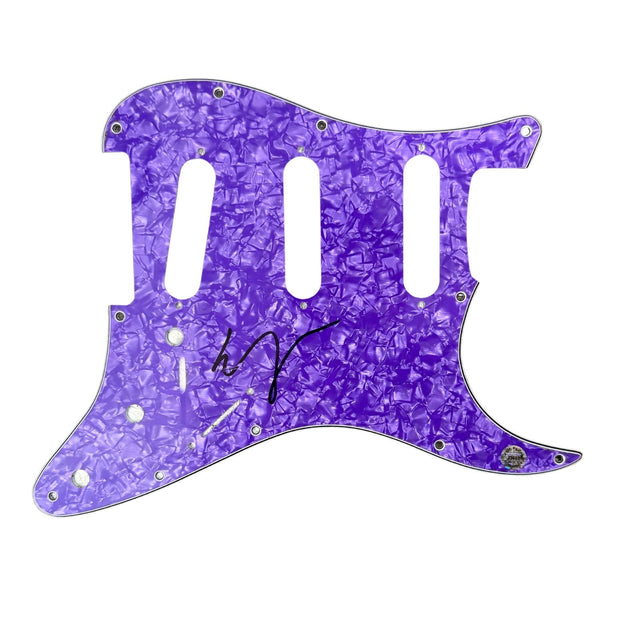
Vampire Weekend Ezra Koenig Signed Guitar Pickguard Autograph Hologram COA
$100.00 USD
-

Twenty One Pilots Signed Clancy CD Framed Display Tyler Joseph Josh Dun Auto
$199.00 USD
-

Twenty One Pilots Clancy Signed CD Tyler Joseph Josh Dun Sealed Unopened 2024
$189.00 USD
-

Twenty One Pilots Clancy Signed CD Sealed Tyler Joseph Josh Dun Silver Autograph
$189.00 USD
-
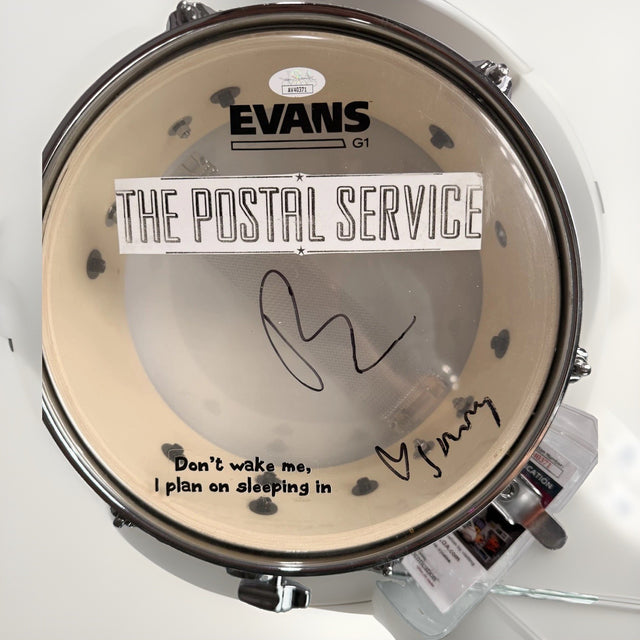
The Postal Service Dual Signed Evans M-80 Drumhead JSA A40371
$499.00 USD
-

The Head and the Heart Band Signed Framed 'aperture' CD COVER ALBUM
$65.00 USD
Browse the collection for current listings.