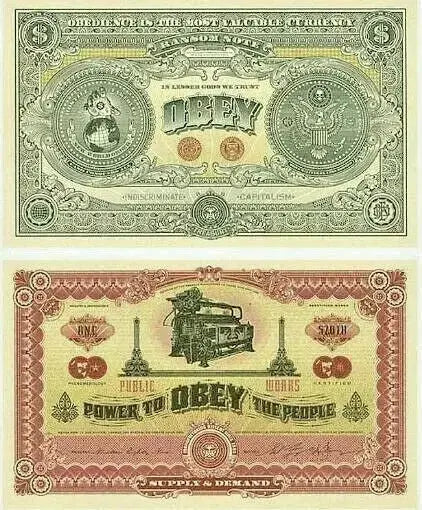
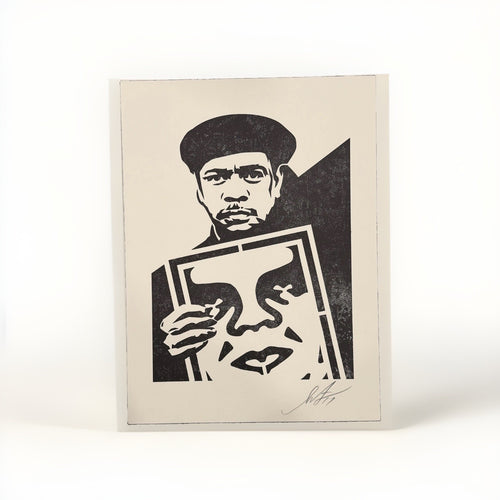
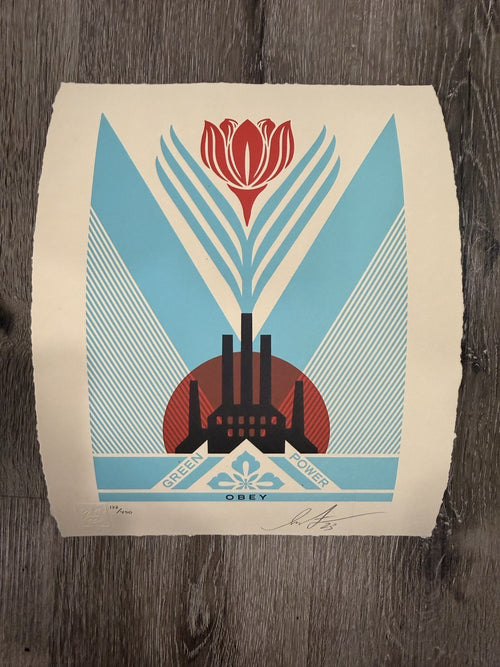
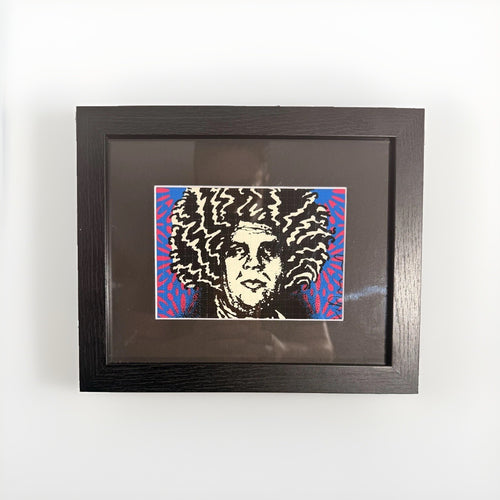
Shepard Fairey's OBEY Giant iconography prints are works that feature the distinctive visual language of the OBEY Giant campaign, characterized by repeated motifs like the Andre the Giant face, the star icon, and the prominent "OBEY" text. These elements are central to Fairey's artistic and activist message, serving as a powerful, pervasive commentary on propaganda, power, and perception. Understanding these recurring motifs, their variations, and the market dynamics surrounding them is crucial for any collector.
The Genesis of OBEY Iconography: From Sticker to Global Phenomenon
The origins of Shepard Fairey's OBEY iconography trace back to a simple sticker created in 1989 while he was a student at the Rhode Island School of Design. What began as an in-joke among skateboarding friends, featuring a crudely rendered image of Andre the Giant with the accompanying text "Andre the Giant Has a Posse," quickly evolved into an unsolicited street art campaign. Fairey’s intention was to provoke a response, to make people question their surroundings and the imagery they consume daily. This initial sticker campaign soon morphed into the more universally recognized "OBEY Giant" phenomenon, adopting the iconic stylized face and the commanding "OBEY" directive.
The shift from "Andre the Giant Has a Posse" to "OBEY Giant" was a deliberate artistic decision, aimed at creating a more ambiguous and impactful message. By removing the specific reference to Andre the Giant and replacing it with the imperative "OBEY," Fairey transformed the image into a commentary on the nature of propaganda and the subtle ways in which authority figures and media influence public thought. The core elements – the stylized face, the bold star, and the "OBEY" text – became a visual shorthand for this critical examination, allowing the message to transcend language barriers and resonate with a global audience. These foundational elements are the bedrock of the OBEY iconography category within the Gauntlet Gallery Shepard Fairey Print & Fine-Art Index, which documents 2,623 OBEY Giant works across numerous themes.
Deconstructing the OBEY Visual Language: Motifs and Their Meanings
Shepard Fairey's OBEY iconography is rich with recurring visual motifs, each contributing to a layered narrative that challenges societal norms and political structures. The deliberate repetition and subtle variations of these elements across his body of work are key to their impact and collectibility. Understanding these nuances is essential for appreciating the depth of Fairey's artistic practice.
The most prominent motif is undoubtedly the Andre the Giant face, which has undergone numerous stylistic transformations. Initially a rough, photocopied image, it evolved into a more refined, graphic representation. Variants include the distressed face, often seen with a weathered texture; the clean, outlined face, which presents a starker, more direct image; and versions integrated into more complex compositions, sometimes partially obscured or recontextualized. Each iteration serves to either emphasize the raw, street art origins or to adapt the image for a more polished, fine art presentation.
Another cornerstone is the star icon, frequently appearing with a stylized "OBEY" text or a clenched fist within its center. The star itself is a potent symbol, often associated with national flags, military insignia, or revolutionary movements, lending itself perfectly to Fairey's exploration of power and dissent. The "OBEY" text, rendered in various fonts and placements, always serves as a direct, confrontational command, forcing viewers to consider who or what they are being asked to obey. Other recurring elements within the OBEY iconography category might include specific propaganda-style patterns, the distinctive red and black color palette, and the use of bold, graphic lines that evoke vintage political posters.
Key OBEY Iconography Elements and Variations
| Iconographic Element | Common Variations | Typical Context/Meaning |
|---|---|---|
| Andre the Giant Face | Distressed, Clean Outline, Silhouetted, Integrated into patterns | Ubiquitous presence, questioning authority, propaganda |
| OBEY Star | Solid, Outlined, With "OBEY" text, With Fist, Exploding | Symbol of power, rebellion, revolutionary ideals, branding |
| "OBEY" Text | Various fonts, Bold sans-serif, Stenciled, Hand-drawn | Direct command, critique of consumerism, call to awareness |
| Color Palette | Red, Black, Cream/White; occasional blues, golds | High contrast, propaganda aesthetic, striking visual impact |
| Propaganda Patterns | Floral, Geometric, Repeating motifs, Sunbursts | Background elements, adding texture and historical reference |
Familiarity vs. Scarcity in OBEY Iconography Prints
One of the most critical distinctions for collectors of Shepard Fairey's OBEY iconography prints is understanding that visual familiarity does not equate to scarcity. The OBEY Giant image is undeniably pervasive, appearing on countless stickers, murals, and merchandise worldwide. This ubiquity is a testament to Fairey's success in embedding his message into the public consciousness. However, when it comes to collectible fine art prints, the widespread recognition of an image does not automatically translate to a high market value or inherent rarity across all related works.
The market value and scarcity of an OBEY iconography print are determined by several factors that go beyond the mere presence of the iconic face or text. These factors include:
- Edition Size: Prints released in smaller, limited editions are generally more scarce and command higher prices than those from larger runs.
- Release Method: Prints released through specific galleries, special collaborations, or as rare artist proofs can hold greater value than general releases.
- Age and Historical Significance: Earlier works, particularly those from pivotal moments in Fairey's career, often carry a premium due to their historical importance.
- Specific Variants: Unique colorways, hand-embellished editions, or prints with distinct design variations can be significantly rarer than standard versions.
- Condition: The physical state of a print — its preservation, lack of damage, and overall integrity — plays a crucial role in its market desirability.
"The paradox of collecting OBEY iconography lies in discerning true rarity amidst widespread recognition. A powerful image may be seen everywhere, but a specific print featuring that image can be exceptionally scarce."
Collectors must look beyond the immediate visual impact and delve into the specifics of each print's release and characteristics. A print featuring the classic OBEY Giant face might be highly recognizable, but its specific edition size, the year it was released, and its condition are the true determinants of its scarcity and potential market value. It is always advisable to review sold comparables and consult reputable resources to understand the specific market dynamics of any particular print.
Authenticating Your OBEY Iconography Print
Given the popularity and extensive output of Shepard Fairey's work, proper authentication is paramount for any collector. Acquiring an OBEY iconography print requires diligent research and verification to ensure its legitimacy. Unlike some artists, Shepard Fairey does not issue Certificates of Authenticity (COAs) for his prints, and a signature alone, while often present, does not constitute full authentication. Instead, a comprehensive approach based on a coherent provenance chain, release documentation, and physical inspection is essential.
The first pillar of authentication is a **coherent provenance chain**. This refers to the documented history of ownership of the print, tracing it back to its original acquisition from a reputable source, such as a gallery, publisher, or directly from the artist's studio. Records of previous sales, exhibition history, and clear ownership transfers all contribute to a strong provenance. Collectors should always request and retain any available documentation related to a print's history.
Secondly, **release documentation** provides crucial evidence. This includes original receipts from the gallery or publisher, release announcements, or any official records pertaining to the print's initial offering. These documents often confirm the edition size, release date, and other pertinent details that verify the print's authenticity and place within Fairey's oeuvre. Without such documentation, verifying the legitimacy of a print can become significantly more challenging.
Finally, **physical inspection** by an experienced professional is vital. This involves examining the print's paper type, printing technique (e.g., screenprint, offset lithograph), the quality of the impression, and the characteristics of any signature or numbering. For example, understanding the specific paper stocks Fairey commonly uses, the typical registration of his screenprints, and the nuances of his signature can help distinguish genuine works from forgeries. Collectors are encouraged to consult resources like the Gauntlet Gallery guide on spotting fake Shepard Fairey prints for detailed insights into what to look for during physical inspection.
Frequently Asked Questions About OBEY Iconography Prints
What makes a particular OBEY iconography print more valuable than another?
The value of an OBEY iconography print is influenced by several factors beyond its visual recognition. These include its rarity (smaller edition sizes), historical significance (earlier works or those tied to major campaigns), unique variations (specific colorways, hand-embellishments, or artist proofs), the overall condition of the print, and current market demand. A print that combines a compelling image with a limited edition and excellent provenance will generally command a higher value.
How can I identify different variations of the OBEY Giant face or star motif?
Identifying variations requires close observation and familiarity with Fairey's extensive body of work. Pay attention to subtle design changes, such as the texture of the face (distressed vs. clean), the specific elements within the star (e.g., "OBEY" text, a fist, or a different symbol), and the overall color palette. The Gauntlet Gallery Shepard Fairey Print & Fine-Art Index is an invaluable resource for cataloging and distinguishing these numerous variants, offering a structured way to explore the artist's evolving iconography.
Is a print featuring the classic OBEY Giant face always a good investment?
While prints featuring the classic OBEY Giant face are highly recognizable and often sought after, visual familiarity alone does not guarantee a good investment. The investment potential depends heavily on the specific print's rarity, edition size, condition, and the broader art market trends. It is crucial to conduct thorough research, understand the particular print's attributes, and review sold comparables rather than relying solely on the iconic nature of the image. A cautious approach, informed by market data, is always recommended.
Explore the Legacy: Your Guide to OBEY Iconography
The OBEY iconography of Shepard Fairey represents a powerful and enduring legacy in contemporary art. From the humble origins of a sticker to a globally recognized symbol of critical thought, these prints offer collectors a direct connection to one of the most influential artists of our time. Understanding the nuances of these works – their motifs, variations, and the crucial distinction between visual familiarity and market scarcity – is fundamental to building a thoughtful and valuable collection. We invite you to delve deeper into this fascinating world. Explore the comprehensive Gauntlet Gallery Shepard Fairey Print & Fine-Art Index to gain unparalleled insight into the breadth of his work. Discover available pieces and expand your knowledge by visiting our curated Shepard Fairey collection today.