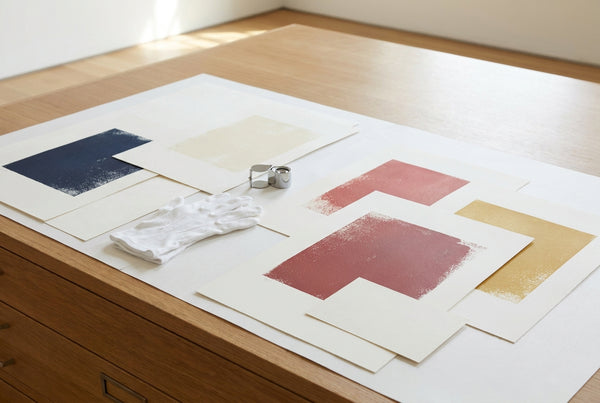
Shepard Fairey Master Index Dossier 04: 2023–2022 Release Cohort
Cohort scope
This dossier studies a defined cohort of 18 Shepard Fairey releases selected from the Gauntlet Gallery master index, spanning 2023 through 2022. The cohort begins with Swan Song and concludes with Obey More in the index sequence. It is designed as comparative research rather than as a set of isolated product summaries. The aim is to see how editions, media, publishers, and available public-sale evidence relate across a manageable group of releases.
The cohort contains 17 Screen Print, 1 Letterpress. Recorded publishers include Obey Giant (13), Subliminal Projects (2), Obey Clothing (1), Lisa Project NYC (1), Station 16 (1). The index associates 608 cleaned public-sale observations with these entries in aggregate. That number is not a cohort valuation and should not be used as one. It simply describes the quantity of recorded transaction evidence currently available under the index methodology.
Why a cohort reading is useful
Fairey’s output is expansive enough that a single title can seem self-explanatory when viewed alone. In practice, a work becomes more intelligible when set beside other releases from a similar period or adjacent catalog sequence. A cohort can reveal a changing balance among screenprints, letterpress works, giclée editions, collaborations, music subjects, political graphics, and publisher relationships. It can also show where the market record is thick enough for comparison and where the available evidence remains too sparse for confident conclusions.
This report retains a necessary distinction between edition-level facts and individual objects. The master index provides a title, year, edition designation, stated edition size, medium, publisher, and observed sales data where available. An actual offered work requires separate inspection: images of the front and reverse, signature or edition notation when applicable, corners, margins, condition, framing, documentation, and seller history. The index organizes questions; it does not answer every question about a specific sheet.
How to read the release dossiers
Each entry below follows the master-index record. It does not invent a visual description or an authentication conclusion that the data cannot support. Instead, it identifies the indexed fields, explains why medium and edition language matter, and frames the recorded market evidence as a comparison tool rather than a guarantee. This methodology is deliberately conservative. In a category where listing titles and edition claims can drift, clarity about what is known is more useful than a more dramatic but unsupported narrative.
Swan Song
The master index records Swan Song as a 2023 release: First Edition, stated edition size 550, medium Screen Print, published by Obey Clothing. This combination of fields establishes the entry’s edition-level identity. It does not establish the condition, completeness, or authenticity of any individual example offered for sale. The first task for a collector is to make sure that a listing’s title, medium, edition language, and publisher information genuinely correspond to this indexed record rather than merely resembling it.
The title itself belongs to the wider field of Fairey’s public-facing image practice, where language, symbolism, portraiture, and graphic design can function simultaneously. The master index is deliberately cautious here: it records the work name but does not attempt to turn an index title into a complete visual description. That restraint matters. A collector should consult high-quality images and primary release information before making a thematic interpretation. What can be said from the record is that Swan Song forms part of the 2023 release roster, and its medium and publisher place it within the production ecology tracked for that year.
Screenprint collectors should assess ink surface, paper character, margins, and handling carefully. The stated edition size of 550 is a supply descriptor, not a ranking system. It can help frame comparisons, but it does not determine desirability, condition, or eventual resale outcomes. A collector comparing examples should ask whether the works are genuinely the same edition, whether the notation is complete, whether any Artist’s Proof or variant language is involved, and whether the listing photographs support the claims being made. A smaller number is not a substitute for a clear object record.
The master index contains 32 cleaned public-sale observations for this entry. Its reported median is $129.50, with an observed low-to-high range of $95.00 to $625.00. These figures should be read as a set of past observations, not a valuation. The range may incorporate object-level differences, different sale dates, weak or strong documentation, framing, venue, and catalogue accuracy. Where the count is modest, each sale carries more weight and deserves closer scrutiny. Where the count is larger, it improves the available reference set but still does not remove the need to compare like with like. Asking prices are not included in the logic of this paragraph; completed transactions and listing claims are different kinds of evidence.
For an individual example of Swan Song, build a small research file before committing. Save the listing text, request full front and reverse photographs, inspect the signature and edition area if present, and document the corners and any condition issues. Retain invoices, certificates, and seller messages together. If framed, ask whether the work is floated, hinged, or mounted; ask about glazing, visible margins, and whether the frame is part of the purchase. This object file is a practical form of provenance. It does not manufacture certainty, but it preserves the evidence a collector actually has.
Within the 2023 yearbook, Swan Song is useful as a reminder that a release roster is not a shopping list. The index helps define the field of comparison, while the collector’s work is to decide which image, process, condition state, and documentation standard genuinely fit a collection. The strongest acquisition logic combines visual conviction with clear records and a realistic view of total cost, including shipping, framing, conservation, and the possibility of holding the work for a long time.
No More Bias
The master index records No More Bias as a 2023 release: First Edition, stated edition size 600, medium Screen Print, published by Obey Giant. This combination of fields establishes the entry’s edition-level identity. It does not establish the condition, completeness, or authenticity of any individual example offered for sale. The first task for a collector is to make sure that a listing’s title, medium, edition language, and publisher information genuinely correspond to this indexed record rather than merely resembling it.
The title itself belongs to the wider field of Fairey’s public-facing image practice, where language, symbolism, portraiture, and graphic design can function simultaneously. The master index is deliberately cautious here: it records the work name but does not attempt to turn an index title into a complete visual description. That restraint matters. A collector should consult high-quality images and primary release information before making a thematic interpretation. What can be said from the record is that No More Bias forms part of the 2023 release roster, and its medium and publisher place it within the production ecology tracked for that year.
Screenprint collectors should assess ink surface, paper character, margins, and handling carefully. The stated edition size of 600 is a supply descriptor, not a ranking system. It can help frame comparisons, but it does not determine desirability, condition, or eventual resale outcomes. A collector comparing examples should ask whether the works are genuinely the same edition, whether the notation is complete, whether any Artist’s Proof or variant language is involved, and whether the listing photographs support the claims being made. A smaller number is not a substitute for a clear object record.
The master index contains 15 cleaned public-sale observations for this entry. Its reported median is $194.99, with an observed low-to-high range of $95.00 to $525.00. These figures should be read as a set of past observations, not a valuation. The range may incorporate object-level differences, different sale dates, weak or strong documentation, framing, venue, and catalogue accuracy. Where the count is modest, each sale carries more weight and deserves closer scrutiny. Where the count is larger, it improves the available reference set but still does not remove the need to compare like with like. Asking prices are not included in the logic of this paragraph; completed transactions and listing claims are different kinds of evidence.
For an individual example of No More Bias, build a small research file before committing. Save the listing text, request full front and reverse photographs, inspect the signature and edition area if present, and document the corners and any condition issues. Retain invoices, certificates, and seller messages together. If framed, ask whether the work is floated, hinged, or mounted; ask about glazing, visible margins, and whether the frame is part of the purchase. This object file is a practical form of provenance. It does not manufacture certainty, but it preserves the evidence a collector actually has.
Within the 2023 yearbook, No More Bias is useful as a reminder that a release roster is not a shopping list. The index helps define the field of comparison, while the collector’s work is to decide which image, process, condition state, and documentation standard genuinely fit a collection. The strongest acquisition logic combines visual conviction with clear records and a realistic view of total cost, including shipping, framing, conservation, and the possibility of holding the work for a long time.
New Clear Power
The master index records New Clear Power as a 2022 release: First Edition, stated edition size 350, medium Screen Print, published by Obey Giant. This combination of fields establishes the entry’s edition-level identity. It does not establish the condition, completeness, or authenticity of any individual example offered for sale. The first task for a collector is to make sure that a listing’s title, medium, edition language, and publisher information genuinely correspond to this indexed record rather than merely resembling it.
The title itself belongs to the wider field of Fairey’s public-facing image practice, where language, symbolism, portraiture, and graphic design can function simultaneously. The master index is deliberately cautious here: it records the work name but does not attempt to turn an index title into a complete visual description. That restraint matters. A collector should consult high-quality images and primary release information before making a thematic interpretation. What can be said from the record is that New Clear Power forms part of the 2022 release roster, and its medium and publisher place it within the production ecology tracked for that year.
Screenprint collectors should assess ink surface, paper character, margins, and handling carefully. The stated edition size of 350 is a supply descriptor, not a ranking system. It can help frame comparisons, but it does not determine desirability, condition, or eventual resale outcomes. A collector comparing examples should ask whether the works are genuinely the same edition, whether the notation is complete, whether any Artist’s Proof or variant language is involved, and whether the listing photographs support the claims being made. A smaller number is not a substitute for a clear object record.
The master index contains 59 cleaned public-sale observations for this entry. Its reported median is $225.00, with an observed low-to-high range of $103.99 to $5,200.00. These figures should be read as a set of past observations, not a valuation. The range may incorporate object-level differences, different sale dates, weak or strong documentation, framing, venue, and catalogue accuracy. Where the count is modest, each sale carries more weight and deserves closer scrutiny. Where the count is larger, it improves the available reference set but still does not remove the need to compare like with like. Asking prices are not included in the logic of this paragraph; completed transactions and listing claims are different kinds of evidence.
For an individual example of New Clear Power, build a small research file before committing. Save the listing text, request full front and reverse photographs, inspect the signature and edition area if present, and document the corners and any condition issues. Retain invoices, certificates, and seller messages together. If framed, ask whether the work is floated, hinged, or mounted; ask about glazing, visible margins, and whether the frame is part of the purchase. This object file is a practical form of provenance. It does not manufacture certainty, but it preserves the evidence a collector actually has.
Within the 2022 yearbook, New Clear Power is useful as a reminder that a release roster is not a shopping list. The index helps define the field of comparison, while the collector’s work is to decide which image, process, condition state, and documentation standard genuinely fit a collection. The strongest acquisition logic combines visual conviction with clear records and a realistic view of total cost, including shipping, framing, conservation, and the possibility of holding the work for a long time.
Parks For Everyone
The master index records Parks For Everyone as a 2022 release: First Edition, stated edition size 500, medium Screen Print, published by Obey Giant. This combination of fields establishes the entry’s edition-level identity. It does not establish the condition, completeness, or authenticity of any individual example offered for sale. The first task for a collector is to make sure that a listing’s title, medium, edition language, and publisher information genuinely correspond to this indexed record rather than merely resembling it.
The title itself belongs to the wider field of Fairey’s public-facing image practice, where language, symbolism, portraiture, and graphic design can function simultaneously. The master index is deliberately cautious here: it records the work name but does not attempt to turn an index title into a complete visual description. That restraint matters. A collector should consult high-quality images and primary release information before making a thematic interpretation. What can be said from the record is that Parks For Everyone forms part of the 2022 release roster, and its medium and publisher place it within the production ecology tracked for that year.
Screenprint collectors should assess ink surface, paper character, margins, and handling carefully. The stated edition size of 500 is a supply descriptor, not a ranking system. It can help frame comparisons, but it does not determine desirability, condition, or eventual resale outcomes. A collector comparing examples should ask whether the works are genuinely the same edition, whether the notation is complete, whether any Artist’s Proof or variant language is involved, and whether the listing photographs support the claims being made. A smaller number is not a substitute for a clear object record.
The master index contains 67 cleaned public-sale observations for this entry. Its reported median is $117.00, with an observed low-to-high range of $90.00 to $359.00. These figures should be read as a set of past observations, not a valuation. The range may incorporate object-level differences, different sale dates, weak or strong documentation, framing, venue, and catalogue accuracy. Where the count is modest, each sale carries more weight and deserves closer scrutiny. Where the count is larger, it improves the available reference set but still does not remove the need to compare like with like. Asking prices are not included in the logic of this paragraph; completed transactions and listing claims are different kinds of evidence.
For an individual example of Parks For Everyone, build a small research file before committing. Save the listing text, request full front and reverse photographs, inspect the signature and edition area if present, and document the corners and any condition issues. Retain invoices, certificates, and seller messages together. If framed, ask whether the work is floated, hinged, or mounted; ask about glazing, visible margins, and whether the frame is part of the purchase. This object file is a practical form of provenance. It does not manufacture certainty, but it preserves the evidence a collector actually has.
Within the 2022 yearbook, Parks For Everyone is useful as a reminder that a release roster is not a shopping list. The index helps define the field of comparison, while the collector’s work is to decide which image, process, condition state, and documentation standard genuinely fit a collection. The strongest acquisition logic combines visual conviction with clear records and a realistic view of total cost, including shipping, framing, conservation, and the possibility of holding the work for a long time.
Blondie On Bowery
The master index records Blondie On Bowery as a 2022 release: First Edition, stated edition size 199, medium Screen Print, published by Lisa Project NYC. This combination of fields establishes the entry’s edition-level identity. It does not establish the condition, completeness, or authenticity of any individual example offered for sale. The first task for a collector is to make sure that a listing’s title, medium, edition language, and publisher information genuinely correspond to this indexed record rather than merely resembling it.
The title itself belongs to the wider field of Fairey’s public-facing image practice, where language, symbolism, portraiture, and graphic design can function simultaneously. The master index is deliberately cautious here: it records the work name but does not attempt to turn an index title into a complete visual description. That restraint matters. A collector should consult high-quality images and primary release information before making a thematic interpretation. What can be said from the record is that Blondie On Bowery forms part of the 2022 release roster, and its medium and publisher place it within the production ecology tracked for that year.
Screenprint collectors should assess ink surface, paper character, margins, and handling carefully. The stated edition size of 199 is a supply descriptor, not a ranking system. It can help frame comparisons, but it does not determine desirability, condition, or eventual resale outcomes. A collector comparing examples should ask whether the works are genuinely the same edition, whether the notation is complete, whether any Artist’s Proof or variant language is involved, and whether the listing photographs support the claims being made. A smaller number is not a substitute for a clear object record.
The master index contains 5 cleaned public-sale observations for this entry. Its reported median is $707.40, with an observed low-to-high range of $327.50 to $1,400.00. These figures should be read as a set of past observations, not a valuation. The range may incorporate object-level differences, different sale dates, weak or strong documentation, framing, venue, and catalogue accuracy. Where the count is modest, each sale carries more weight and deserves closer scrutiny. Where the count is larger, it improves the available reference set but still does not remove the need to compare like with like. Asking prices are not included in the logic of this paragraph; completed transactions and listing claims are different kinds of evidence.
For an individual example of Blondie On Bowery, build a small research file before committing. Save the listing text, request full front and reverse photographs, inspect the signature and edition area if present, and document the corners and any condition issues. Retain invoices, certificates, and seller messages together. If framed, ask whether the work is floated, hinged, or mounted; ask about glazing, visible margins, and whether the frame is part of the purchase. This object file is a practical form of provenance. It does not manufacture certainty, but it preserves the evidence a collector actually has.
Within the 2022 yearbook, Blondie On Bowery is useful as a reminder that a release roster is not a shopping list. The index helps define the field of comparison, while the collector’s work is to decide which image, process, condition state, and documentation standard genuinely fit a collection. The strongest acquisition logic combines visual conviction with clear records and a realistic view of total cost, including shipping, framing, conservation, and the possibility of holding the work for a long time.
Modular
The master index records Modular as a 2022 release: First Edition, stated edition size 500, medium Screen Print, published by Subliminal Projects. This combination of fields establishes the entry’s edition-level identity. It does not establish the condition, completeness, or authenticity of any individual example offered for sale. The first task for a collector is to make sure that a listing’s title, medium, edition language, and publisher information genuinely correspond to this indexed record rather than merely resembling it.
The title itself belongs to the wider field of Fairey’s public-facing image practice, where language, symbolism, portraiture, and graphic design can function simultaneously. The master index is deliberately cautious here: it records the work name but does not attempt to turn an index title into a complete visual description. That restraint matters. A collector should consult high-quality images and primary release information before making a thematic interpretation. What can be said from the record is that Modular forms part of the 2022 release roster, and its medium and publisher place it within the production ecology tracked for that year.
Screenprint collectors should assess ink surface, paper character, margins, and handling carefully. The stated edition size of 500 is a supply descriptor, not a ranking system. It can help frame comparisons, but it does not determine desirability, condition, or eventual resale outcomes. A collector comparing examples should ask whether the works are genuinely the same edition, whether the notation is complete, whether any Artist’s Proof or variant language is involved, and whether the listing photographs support the claims being made. A smaller number is not a substitute for a clear object record.
The master index contains 57 cleaned public-sale observations for this entry. Its reported median is $339.00, with an observed low-to-high range of $180.00 to $625.00. These figures should be read as a set of past observations, not a valuation. The range may incorporate object-level differences, different sale dates, weak or strong documentation, framing, venue, and catalogue accuracy. Where the count is modest, each sale carries more weight and deserves closer scrutiny. Where the count is larger, it improves the available reference set but still does not remove the need to compare like with like. Asking prices are not included in the logic of this paragraph; completed transactions and listing claims are different kinds of evidence.
For an individual example of Modular, build a small research file before committing. Save the listing text, request full front and reverse photographs, inspect the signature and edition area if present, and document the corners and any condition issues. Retain invoices, certificates, and seller messages together. If framed, ask whether the work is floated, hinged, or mounted; ask about glazing, visible margins, and whether the frame is part of the purchase. This object file is a practical form of provenance. It does not manufacture certainty, but it preserves the evidence a collector actually has.
Within the 2022 yearbook, Modular is useful as a reminder that a release roster is not a shopping list. The index helps define the field of comparison, while the collector’s work is to decide which image, process, condition state, and documentation standard genuinely fit a collection. The strongest acquisition logic combines visual conviction with clear records and a realistic view of total cost, including shipping, framing, conservation, and the possibility of holding the work for a long time.
Birdsong Project
The master index records Birdsong Project as a 2022 release: First Edition, stated edition size 450, medium Screen Print, published by Obey Giant. This combination of fields establishes the entry’s edition-level identity. It does not establish the condition, completeness, or authenticity of any individual example offered for sale. The first task for a collector is to make sure that a listing’s title, medium, edition language, and publisher information genuinely correspond to this indexed record rather than merely resembling it.
The title itself belongs to the wider field of Fairey’s public-facing image practice, where language, symbolism, portraiture, and graphic design can function simultaneously. The master index is deliberately cautious here: it records the work name but does not attempt to turn an index title into a complete visual description. That restraint matters. A collector should consult high-quality images and primary release information before making a thematic interpretation. What can be said from the record is that Birdsong Project forms part of the 2022 release roster, and its medium and publisher place it within the production ecology tracked for that year.
Screenprint collectors should assess ink surface, paper character, margins, and handling carefully. The stated edition size of 450 is a supply descriptor, not a ranking system. It can help frame comparisons, but it does not determine desirability, condition, or eventual resale outcomes. A collector comparing examples should ask whether the works are genuinely the same edition, whether the notation is complete, whether any Artist’s Proof or variant language is involved, and whether the listing photographs support the claims being made. A smaller number is not a substitute for a clear object record.
The master index contains 29 cleaned public-sale observations for this entry. Its reported median is $139.99, with an observed low-to-high range of $99.00 to $300.00. These figures should be read as a set of past observations, not a valuation. The range may incorporate object-level differences, different sale dates, weak or strong documentation, framing, venue, and catalogue accuracy. Where the count is modest, each sale carries more weight and deserves closer scrutiny. Where the count is larger, it improves the available reference set but still does not remove the need to compare like with like. Asking prices are not included in the logic of this paragraph; completed transactions and listing claims are different kinds of evidence.
For an individual example of Birdsong Project, build a small research file before committing. Save the listing text, request full front and reverse photographs, inspect the signature and edition area if present, and document the corners and any condition issues. Retain invoices, certificates, and seller messages together. If framed, ask whether the work is floated, hinged, or mounted; ask about glazing, visible margins, and whether the frame is part of the purchase. This object file is a practical form of provenance. It does not manufacture certainty, but it preserves the evidence a collector actually has.
Within the 2022 yearbook, Birdsong Project is useful as a reminder that a release roster is not a shopping list. The index helps define the field of comparison, while the collector’s work is to decide which image, process, condition state, and documentation standard genuinely fit a collection. The strongest acquisition logic combines visual conviction with clear records and a realistic view of total cost, including shipping, framing, conservation, and the possibility of holding the work for a long time.
Icarus Pride
The master index records Icarus Pride as a 2022 release: First Edition, stated edition size 500, medium Screen Print, published by Obey Giant. This combination of fields establishes the entry’s edition-level identity. It does not establish the condition, completeness, or authenticity of any individual example offered for sale. The first task for a collector is to make sure that a listing’s title, medium, edition language, and publisher information genuinely correspond to this indexed record rather than merely resembling it.
The title itself belongs to the wider field of Fairey’s public-facing image practice, where language, symbolism, portraiture, and graphic design can function simultaneously. The master index is deliberately cautious here: it records the work name but does not attempt to turn an index title into a complete visual description. That restraint matters. A collector should consult high-quality images and primary release information before making a thematic interpretation. What can be said from the record is that Icarus Pride forms part of the 2022 release roster, and its medium and publisher place it within the production ecology tracked for that year.
Screenprint collectors should assess ink surface, paper character, margins, and handling carefully. The stated edition size of 500 is a supply descriptor, not a ranking system. It can help frame comparisons, but it does not determine desirability, condition, or eventual resale outcomes. A collector comparing examples should ask whether the works are genuinely the same edition, whether the notation is complete, whether any Artist’s Proof or variant language is involved, and whether the listing photographs support the claims being made. A smaller number is not a substitute for a clear object record.
The master index contains 16 cleaned public-sale observations for this entry. Its reported median is $237.50, with an observed low-to-high range of $95.00 to $599.99. These figures should be read as a set of past observations, not a valuation. The range may incorporate object-level differences, different sale dates, weak or strong documentation, framing, venue, and catalogue accuracy. Where the count is modest, each sale carries more weight and deserves closer scrutiny. Where the count is larger, it improves the available reference set but still does not remove the need to compare like with like. Asking prices are not included in the logic of this paragraph; completed transactions and listing claims are different kinds of evidence.
For an individual example of Icarus Pride, build a small research file before committing. Save the listing text, request full front and reverse photographs, inspect the signature and edition area if present, and document the corners and any condition issues. Retain invoices, certificates, and seller messages together. If framed, ask whether the work is floated, hinged, or mounted; ask about glazing, visible margins, and whether the frame is part of the purchase. This object file is a practical form of provenance. It does not manufacture certainty, but it preserves the evidence a collector actually has.
Within the 2022 yearbook, Icarus Pride is useful as a reminder that a release roster is not a shopping list. The index helps define the field of comparison, while the collector’s work is to decide which image, process, condition state, and documentation standard genuinely fit a collection. The strongest acquisition logic combines visual conviction with clear records and a realistic view of total cost, including shipping, framing, conservation, and the possibility of holding the work for a long time.
Desmond Tutu
The master index records Desmond Tutu as a 2022 release: First Edition, stated edition size 550, medium Screen Print, published by Obey Giant. This combination of fields establishes the entry’s edition-level identity. It does not establish the condition, completeness, or authenticity of any individual example offered for sale. The first task for a collector is to make sure that a listing’s title, medium, edition language, and publisher information genuinely correspond to this indexed record rather than merely resembling it.
The title itself belongs to the wider field of Fairey’s public-facing image practice, where language, symbolism, portraiture, and graphic design can function simultaneously. The master index is deliberately cautious here: it records the work name but does not attempt to turn an index title into a complete visual description. That restraint matters. A collector should consult high-quality images and primary release information before making a thematic interpretation. What can be said from the record is that Desmond Tutu forms part of the 2022 release roster, and its medium and publisher place it within the production ecology tracked for that year.
Screenprint collectors should assess ink surface, paper character, margins, and handling carefully. The stated edition size of 550 is a supply descriptor, not a ranking system. It can help frame comparisons, but it does not determine desirability, condition, or eventual resale outcomes. A collector comparing examples should ask whether the works are genuinely the same edition, whether the notation is complete, whether any Artist’s Proof or variant language is involved, and whether the listing photographs support the claims being made. A smaller number is not a substitute for a clear object record.
The master index contains 28 cleaned public-sale observations for this entry. Its reported median is $136.97, with an observed low-to-high range of $93.00 to $350.00. These figures should be read as a set of past observations, not a valuation. The range may incorporate object-level differences, different sale dates, weak or strong documentation, framing, venue, and catalogue accuracy. Where the count is modest, each sale carries more weight and deserves closer scrutiny. Where the count is larger, it improves the available reference set but still does not remove the need to compare like with like. Asking prices are not included in the logic of this paragraph; completed transactions and listing claims are different kinds of evidence.
For an individual example of Desmond Tutu, build a small research file before committing. Save the listing text, request full front and reverse photographs, inspect the signature and edition area if present, and document the corners and any condition issues. Retain invoices, certificates, and seller messages together. If framed, ask whether the work is floated, hinged, or mounted; ask about glazing, visible margins, and whether the frame is part of the purchase. This object file is a practical form of provenance. It does not manufacture certainty, but it preserves the evidence a collector actually has.
Within the 2022 yearbook, Desmond Tutu is useful as a reminder that a release roster is not a shopping list. The index helps define the field of comparison, while the collector’s work is to decide which image, process, condition state, and documentation standard genuinely fit a collection. The strongest acquisition logic combines visual conviction with clear records and a realistic view of total cost, including shipping, framing, conservation, and the possibility of holding the work for a long time.
No Bees No Honey
The master index records No Bees No Honey as a 2022 release: First Edition, stated edition size 325, medium Screen Print, published by Obey Giant. This combination of fields establishes the entry’s edition-level identity. It does not establish the condition, completeness, or authenticity of any individual example offered for sale. The first task for a collector is to make sure that a listing’s title, medium, edition language, and publisher information genuinely correspond to this indexed record rather than merely resembling it.
The title itself belongs to the wider field of Fairey’s public-facing image practice, where language, symbolism, portraiture, and graphic design can function simultaneously. The master index is deliberately cautious here: it records the work name but does not attempt to turn an index title into a complete visual description. That restraint matters. A collector should consult high-quality images and primary release information before making a thematic interpretation. What can be said from the record is that No Bees No Honey forms part of the 2022 release roster, and its medium and publisher place it within the production ecology tracked for that year.
Screenprint collectors should assess ink surface, paper character, margins, and handling carefully. The stated edition size of 325 is a supply descriptor, not a ranking system. It can help frame comparisons, but it does not determine desirability, condition, or eventual resale outcomes. A collector comparing examples should ask whether the works are genuinely the same edition, whether the notation is complete, whether any Artist’s Proof or variant language is involved, and whether the listing photographs support the claims being made. A smaller number is not a substitute for a clear object record.
The master index contains 56 cleaned public-sale observations for this entry. Its reported median is $147.97, with an observed low-to-high range of $92.00 to $399.00. These figures should be read as a set of past observations, not a valuation. The range may incorporate object-level differences, different sale dates, weak or strong documentation, framing, venue, and catalogue accuracy. Where the count is modest, each sale carries more weight and deserves closer scrutiny. Where the count is larger, it improves the available reference set but still does not remove the need to compare like with like. Asking prices are not included in the logic of this paragraph; completed transactions and listing claims are different kinds of evidence.
For an individual example of No Bees No Honey, build a small research file before committing. Save the listing text, request full front and reverse photographs, inspect the signature and edition area if present, and document the corners and any condition issues. Retain invoices, certificates, and seller messages together. If framed, ask whether the work is floated, hinged, or mounted; ask about glazing, visible margins, and whether the frame is part of the purchase. This object file is a practical form of provenance. It does not manufacture certainty, but it preserves the evidence a collector actually has.
Within the 2022 yearbook, No Bees No Honey is useful as a reminder that a release roster is not a shopping list. The index helps define the field of comparison, while the collector’s work is to decide which image, process, condition state, and documentation standard genuinely fit a collection. The strongest acquisition logic combines visual conviction with clear records and a realistic view of total cost, including shipping, framing, conservation, and the possibility of holding the work for a long time.
Lotus Ornament Target
The master index records Lotus Ornament Target as a 2022 release: First Edition, stated edition size 450, medium Screen Print, published by Obey Giant. This combination of fields establishes the entry’s edition-level identity. It does not establish the condition, completeness, or authenticity of any individual example offered for sale. The first task for a collector is to make sure that a listing’s title, medium, edition language, and publisher information genuinely correspond to this indexed record rather than merely resembling it.
The title itself belongs to the wider field of Fairey’s public-facing image practice, where language, symbolism, portraiture, and graphic design can function simultaneously. The master index is deliberately cautious here: it records the work name but does not attempt to turn an index title into a complete visual description. That restraint matters. A collector should consult high-quality images and primary release information before making a thematic interpretation. What can be said from the record is that Lotus Ornament Target forms part of the 2022 release roster, and its medium and publisher place it within the production ecology tracked for that year.
Screenprint collectors should assess ink surface, paper character, margins, and handling carefully. The stated edition size of 450 is a supply descriptor, not a ranking system. It can help frame comparisons, but it does not determine desirability, condition, or eventual resale outcomes. A collector comparing examples should ask whether the works are genuinely the same edition, whether the notation is complete, whether any Artist’s Proof or variant language is involved, and whether the listing photographs support the claims being made. A smaller number is not a substitute for a clear object record.
The master index contains 11 cleaned public-sale observations for this entry. Its reported median is $199.00, with an observed low-to-high range of $125.00 to $450.00. These figures should be read as a set of past observations, not a valuation. The range may incorporate object-level differences, different sale dates, weak or strong documentation, framing, venue, and catalogue accuracy. Where the count is modest, each sale carries more weight and deserves closer scrutiny. Where the count is larger, it improves the available reference set but still does not remove the need to compare like with like. Asking prices are not included in the logic of this paragraph; completed transactions and listing claims are different kinds of evidence.
For an individual example of Lotus Ornament Target, build a small research file before committing. Save the listing text, request full front and reverse photographs, inspect the signature and edition area if present, and document the corners and any condition issues. Retain invoices, certificates, and seller messages together. If framed, ask whether the work is floated, hinged, or mounted; ask about glazing, visible margins, and whether the frame is part of the purchase. This object file is a practical form of provenance. It does not manufacture certainty, but it preserves the evidence a collector actually has.
Within the 2022 yearbook, Lotus Ornament Target is useful as a reminder that a release roster is not a shopping list. The index helps define the field of comparison, while the collector’s work is to decide which image, process, condition state, and documentation standard genuinely fit a collection. The strongest acquisition logic combines visual conviction with clear records and a realistic view of total cost, including shipping, framing, conservation, and the possibility of holding the work for a long time.
While Supplies Last
The master index records While Supplies Last as a 2022 release: First Edition, stated edition size 500, medium Screen Print, published by Obey Giant. This combination of fields establishes the entry’s edition-level identity. It does not establish the condition, completeness, or authenticity of any individual example offered for sale. The first task for a collector is to make sure that a listing’s title, medium, edition language, and publisher information genuinely correspond to this indexed record rather than merely resembling it.
The title itself belongs to the wider field of Fairey’s public-facing image practice, where language, symbolism, portraiture, and graphic design can function simultaneously. The master index is deliberately cautious here: it records the work name but does not attempt to turn an index title into a complete visual description. That restraint matters. A collector should consult high-quality images and primary release information before making a thematic interpretation. What can be said from the record is that While Supplies Last forms part of the 2022 release roster, and its medium and publisher place it within the production ecology tracked for that year.
Screenprint collectors should assess ink surface, paper character, margins, and handling carefully. The stated edition size of 500 is a supply descriptor, not a ranking system. It can help frame comparisons, but it does not determine desirability, condition, or eventual resale outcomes. A collector comparing examples should ask whether the works are genuinely the same edition, whether the notation is complete, whether any Artist’s Proof or variant language is involved, and whether the listing photographs support the claims being made. A smaller number is not a substitute for a clear object record.
The master index contains 36 cleaned public-sale observations for this entry. Its reported median is $117.50, with an observed low-to-high range of $99.99 to $950.00. These figures should be read as a set of past observations, not a valuation. The range may incorporate object-level differences, different sale dates, weak or strong documentation, framing, venue, and catalogue accuracy. Where the count is modest, each sale carries more weight and deserves closer scrutiny. Where the count is larger, it improves the available reference set but still does not remove the need to compare like with like. Asking prices are not included in the logic of this paragraph; completed transactions and listing claims are different kinds of evidence.
For an individual example of While Supplies Last, build a small research file before committing. Save the listing text, request full front and reverse photographs, inspect the signature and edition area if present, and document the corners and any condition issues. Retain invoices, certificates, and seller messages together. If framed, ask whether the work is floated, hinged, or mounted; ask about glazing, visible margins, and whether the frame is part of the purchase. This object file is a practical form of provenance. It does not manufacture certainty, but it preserves the evidence a collector actually has.
Within the 2022 yearbook, While Supplies Last is useful as a reminder that a release roster is not a shopping list. The index helps define the field of comparison, while the collector’s work is to decide which image, process, condition state, and documentation standard genuinely fit a collection. The strongest acquisition logic combines visual conviction with clear records and a realistic view of total cost, including shipping, framing, conservation, and the possibility of holding the work for a long time.
Cultivate Harmony
The master index records Cultivate Harmony as a 2022 release: First Edition, stated edition size 500, medium Screen Print, published by Obey Giant. This combination of fields establishes the entry’s edition-level identity. It does not establish the condition, completeness, or authenticity of any individual example offered for sale. The first task for a collector is to make sure that a listing’s title, medium, edition language, and publisher information genuinely correspond to this indexed record rather than merely resembling it.
The title itself belongs to the wider field of Fairey’s public-facing image practice, where language, symbolism, portraiture, and graphic design can function simultaneously. The master index is deliberately cautious here: it records the work name but does not attempt to turn an index title into a complete visual description. That restraint matters. A collector should consult high-quality images and primary release information before making a thematic interpretation. What can be said from the record is that Cultivate Harmony forms part of the 2022 release roster, and its medium and publisher place it within the production ecology tracked for that year.
Screenprint collectors should assess ink surface, paper character, margins, and handling carefully. The stated edition size of 500 is a supply descriptor, not a ranking system. It can help frame comparisons, but it does not determine desirability, condition, or eventual resale outcomes. A collector comparing examples should ask whether the works are genuinely the same edition, whether the notation is complete, whether any Artist’s Proof or variant language is involved, and whether the listing photographs support the claims being made. A smaller number is not a substitute for a clear object record.
The master index contains 46 cleaned public-sale observations for this entry. Its reported median is $127.50, with an observed low-to-high range of $90.00 to $420.00. These figures should be read as a set of past observations, not a valuation. The range may incorporate object-level differences, different sale dates, weak or strong documentation, framing, venue, and catalogue accuracy. Where the count is modest, each sale carries more weight and deserves closer scrutiny. Where the count is larger, it improves the available reference set but still does not remove the need to compare like with like. Asking prices are not included in the logic of this paragraph; completed transactions and listing claims are different kinds of evidence.
For an individual example of Cultivate Harmony, build a small research file before committing. Save the listing text, request full front and reverse photographs, inspect the signature and edition area if present, and document the corners and any condition issues. Retain invoices, certificates, and seller messages together. If framed, ask whether the work is floated, hinged, or mounted; ask about glazing, visible margins, and whether the frame is part of the purchase. This object file is a practical form of provenance. It does not manufacture certainty, but it preserves the evidence a collector actually has.
Within the 2022 yearbook, Cultivate Harmony is useful as a reminder that a release roster is not a shopping list. The index helps define the field of comparison, while the collector’s work is to decide which image, process, condition state, and documentation standard genuinely fit a collection. The strongest acquisition logic combines visual conviction with clear records and a realistic view of total cost, including shipping, framing, conservation, and the possibility of holding the work for a long time.
Obey Radiant Lotus
The master index records Obey Radiant Lotus as a 2022 release: First Edition, stated edition size 550, medium Screen Print, published by Obey Giant. This combination of fields establishes the entry’s edition-level identity. It does not establish the condition, completeness, or authenticity of any individual example offered for sale. The first task for a collector is to make sure that a listing’s title, medium, edition language, and publisher information genuinely correspond to this indexed record rather than merely resembling it.
The title itself belongs to the wider field of Fairey’s public-facing image practice, where language, symbolism, portraiture, and graphic design can function simultaneously. The master index is deliberately cautious here: it records the work name but does not attempt to turn an index title into a complete visual description. That restraint matters. A collector should consult high-quality images and primary release information before making a thematic interpretation. What can be said from the record is that Obey Radiant Lotus forms part of the 2022 release roster, and its medium and publisher place it within the production ecology tracked for that year.
Screenprint collectors should assess ink surface, paper character, margins, and handling carefully. The stated edition size of 550 is a supply descriptor, not a ranking system. It can help frame comparisons, but it does not determine desirability, condition, or eventual resale outcomes. A collector comparing examples should ask whether the works are genuinely the same edition, whether the notation is complete, whether any Artist’s Proof or variant language is involved, and whether the listing photographs support the claims being made. A smaller number is not a substitute for a clear object record.
The master index contains 24 cleaned public-sale observations for this entry. Its reported median is $147.00, with an observed low-to-high range of $90.00 to $225.00. These figures should be read as a set of past observations, not a valuation. The range may incorporate object-level differences, different sale dates, weak or strong documentation, framing, venue, and catalogue accuracy. Where the count is modest, each sale carries more weight and deserves closer scrutiny. Where the count is larger, it improves the available reference set but still does not remove the need to compare like with like. Asking prices are not included in the logic of this paragraph; completed transactions and listing claims are different kinds of evidence.
For an individual example of Obey Radiant Lotus, build a small research file before committing. Save the listing text, request full front and reverse photographs, inspect the signature and edition area if present, and document the corners and any condition issues. Retain invoices, certificates, and seller messages together. If framed, ask whether the work is floated, hinged, or mounted; ask about glazing, visible margins, and whether the frame is part of the purchase. This object file is a practical form of provenance. It does not manufacture certainty, but it preserves the evidence a collector actually has.
Within the 2022 yearbook, Obey Radiant Lotus is useful as a reminder that a release roster is not a shopping list. The index helps define the field of comparison, while the collector’s work is to decide which image, process, condition state, and documentation standard genuinely fit a collection. The strongest acquisition logic combines visual conviction with clear records and a realistic view of total cost, including shipping, framing, conservation, and the possibility of holding the work for a long time.
Rise Above Rose Geometric
The master index records Rise Above Rose Geometric as a 2022 release: First Edition, stated edition size 550, medium Screen Print, published by Obey Giant. This combination of fields establishes the entry’s edition-level identity. It does not establish the condition, completeness, or authenticity of any individual example offered for sale. The first task for a collector is to make sure that a listing’s title, medium, edition language, and publisher information genuinely correspond to this indexed record rather than merely resembling it.
The title itself belongs to the wider field of Fairey’s public-facing image practice, where language, symbolism, portraiture, and graphic design can function simultaneously. The master index is deliberately cautious here: it records the work name but does not attempt to turn an index title into a complete visual description. That restraint matters. A collector should consult high-quality images and primary release information before making a thematic interpretation. What can be said from the record is that Rise Above Rose Geometric forms part of the 2022 release roster, and its medium and publisher place it within the production ecology tracked for that year.
Screenprint collectors should assess ink surface, paper character, margins, and handling carefully. The stated edition size of 550 is a supply descriptor, not a ranking system. It can help frame comparisons, but it does not determine desirability, condition, or eventual resale outcomes. A collector comparing examples should ask whether the works are genuinely the same edition, whether the notation is complete, whether any Artist’s Proof or variant language is involved, and whether the listing photographs support the claims being made. A smaller number is not a substitute for a clear object record.
The master index contains 41 cleaned public-sale observations for this entry. Its reported median is $114.99, with an observed low-to-high range of $90.00 to $950.00. These figures should be read as a set of past observations, not a valuation. The range may incorporate object-level differences, different sale dates, weak or strong documentation, framing, venue, and catalogue accuracy. Where the count is modest, each sale carries more weight and deserves closer scrutiny. Where the count is larger, it improves the available reference set but still does not remove the need to compare like with like. Asking prices are not included in the logic of this paragraph; completed transactions and listing claims are different kinds of evidence.
For an individual example of Rise Above Rose Geometric, build a small research file before committing. Save the listing text, request full front and reverse photographs, inspect the signature and edition area if present, and document the corners and any condition issues. Retain invoices, certificates, and seller messages together. If framed, ask whether the work is floated, hinged, or mounted; ask about glazing, visible margins, and whether the frame is part of the purchase. This object file is a practical form of provenance. It does not manufacture certainty, but it preserves the evidence a collector actually has.
Within the 2022 yearbook, Rise Above Rose Geometric is useful as a reminder that a release roster is not a shopping list. The index helps define the field of comparison, while the collector’s work is to decide which image, process, condition state, and documentation standard genuinely fit a collection. The strongest acquisition logic combines visual conviction with clear records and a realistic view of total cost, including shipping, framing, conservation, and the possibility of holding the work for a long time.
Paix Et Justice Mural
The master index records Paix Et Justice Mural as a 2022 release: First Edition, stated edition size 500, medium Screen Print, published by Station 16. This combination of fields establishes the entry’s edition-level identity. It does not establish the condition, completeness, or authenticity of any individual example offered for sale. The first task for a collector is to make sure that a listing’s title, medium, edition language, and publisher information genuinely correspond to this indexed record rather than merely resembling it.
The title itself belongs to the wider field of Fairey’s public-facing image practice, where language, symbolism, portraiture, and graphic design can function simultaneously. The master index is deliberately cautious here: it records the work name but does not attempt to turn an index title into a complete visual description. That restraint matters. A collector should consult high-quality images and primary release information before making a thematic interpretation. What can be said from the record is that Paix Et Justice Mural forms part of the 2022 release roster, and its medium and publisher place it within the production ecology tracked for that year.
Screenprint collectors should assess ink surface, paper character, margins, and handling carefully. The stated edition size of 500 is a supply descriptor, not a ranking system. It can help frame comparisons, but it does not determine desirability, condition, or eventual resale outcomes. A collector comparing examples should ask whether the works are genuinely the same edition, whether the notation is complete, whether any Artist’s Proof or variant language is involved, and whether the listing photographs support the claims being made. A smaller number is not a substitute for a clear object record.
The master index contains 19 cleaned public-sale observations for this entry. Its reported median is $149.95, with an observed low-to-high range of $93.01 to $398.98. These figures should be read as a set of past observations, not a valuation. The range may incorporate object-level differences, different sale dates, weak or strong documentation, framing, venue, and catalogue accuracy. Where the count is modest, each sale carries more weight and deserves closer scrutiny. Where the count is larger, it improves the available reference set but still does not remove the need to compare like with like. Asking prices are not included in the logic of this paragraph; completed transactions and listing claims are different kinds of evidence.
For an individual example of Paix Et Justice Mural, build a small research file before committing. Save the listing text, request full front and reverse photographs, inspect the signature and edition area if present, and document the corners and any condition issues. Retain invoices, certificates, and seller messages together. If framed, ask whether the work is floated, hinged, or mounted; ask about glazing, visible margins, and whether the frame is part of the purchase. This object file is a practical form of provenance. It does not manufacture certainty, but it preserves the evidence a collector actually has.
Within the 2022 yearbook, Paix Et Justice Mural is useful as a reminder that a release roster is not a shopping list. The index helps define the field of comparison, while the collector’s work is to decide which image, process, condition state, and documentation standard genuinely fit a collection. The strongest acquisition logic combines visual conviction with clear records and a realistic view of total cost, including shipping, framing, conservation, and the possibility of holding the work for a long time.
The Big Sur Coast
The master index records The Big Sur Coast as a 2022 release: First Edition, stated edition size 600, medium Screen Print, published by Obey Giant. This combination of fields establishes the entry’s edition-level identity. It does not establish the condition, completeness, or authenticity of any individual example offered for sale. The first task for a collector is to make sure that a listing’s title, medium, edition language, and publisher information genuinely correspond to this indexed record rather than merely resembling it.
The title itself belongs to the wider field of Fairey’s public-facing image practice, where language, symbolism, portraiture, and graphic design can function simultaneously. The master index is deliberately cautious here: it records the work name but does not attempt to turn an index title into a complete visual description. That restraint matters. A collector should consult high-quality images and primary release information before making a thematic interpretation. What can be said from the record is that The Big Sur Coast forms part of the 2022 release roster, and its medium and publisher place it within the production ecology tracked for that year.
Screenprint collectors should assess ink surface, paper character, margins, and handling carefully. The stated edition size of 600 is a supply descriptor, not a ranking system. It can help frame comparisons, but it does not determine desirability, condition, or eventual resale outcomes. A collector comparing examples should ask whether the works are genuinely the same edition, whether the notation is complete, whether any Artist’s Proof or variant language is involved, and whether the listing photographs support the claims being made. A smaller number is not a substitute for a clear object record.
The master index contains 62 cleaned public-sale observations for this entry. Its reported median is $249.99, with an observed low-to-high range of $100.00 to $599.99. These figures should be read as a set of past observations, not a valuation. The range may incorporate object-level differences, different sale dates, weak or strong documentation, framing, venue, and catalogue accuracy. Where the count is modest, each sale carries more weight and deserves closer scrutiny. Where the count is larger, it improves the available reference set but still does not remove the need to compare like with like. Asking prices are not included in the logic of this paragraph; completed transactions and listing claims are different kinds of evidence.
For an individual example of The Big Sur Coast, build a small research file before committing. Save the listing text, request full front and reverse photographs, inspect the signature and edition area if present, and document the corners and any condition issues. Retain invoices, certificates, and seller messages together. If framed, ask whether the work is floated, hinged, or mounted; ask about glazing, visible margins, and whether the frame is part of the purchase. This object file is a practical form of provenance. It does not manufacture certainty, but it preserves the evidence a collector actually has.
Within the 2022 yearbook, The Big Sur Coast is useful as a reminder that a release roster is not a shopping list. The index helps define the field of comparison, while the collector’s work is to decide which image, process, condition state, and documentation standard genuinely fit a collection. The strongest acquisition logic combines visual conviction with clear records and a realistic view of total cost, including shipping, framing, conservation, and the possibility of holding the work for a long time.
Obey More
The master index records Obey More as a 2022 release: First Edition, stated edition size 150, medium Letterpress, published by Subliminal Projects. This combination of fields establishes the entry’s edition-level identity. It does not establish the condition, completeness, or authenticity of any individual example offered for sale. The first task for a collector is to make sure that a listing’s title, medium, edition language, and publisher information genuinely correspond to this indexed record rather than merely resembling it.
The title itself belongs to the wider field of Fairey’s public-facing image practice, where language, symbolism, portraiture, and graphic design can function simultaneously. The master index is deliberately cautious here: it records the work name but does not attempt to turn an index title into a complete visual description. That restraint matters. A collector should consult high-quality images and primary release information before making a thematic interpretation. What can be said from the record is that Obey More forms part of the 2022 release roster, and its medium and publisher place it within the production ecology tracked for that year.
Letterpress calls for attention to paper character and the quality of the physical impression. The stated edition size of 150 is a supply descriptor, not a ranking system. It can help frame comparisons, but it does not determine desirability, condition, or eventual resale outcomes. A collector comparing examples should ask whether the works are genuinely the same edition, whether the notation is complete, whether any Artist’s Proof or variant language is involved, and whether the listing photographs support the claims being made. A smaller number is not a substitute for a clear object record.
The master index contains 5 cleaned public-sale observations for this entry. Its reported median is $495.00, with an observed low-to-high range of $160.00 to $655.22. These figures should be read as a set of past observations, not a valuation. The range may incorporate object-level differences, different sale dates, weak or strong documentation, framing, venue, and catalogue accuracy. Where the count is modest, each sale carries more weight and deserves closer scrutiny. Where the count is larger, it improves the available reference set but still does not remove the need to compare like with like. Asking prices are not included in the logic of this paragraph; completed transactions and listing claims are different kinds of evidence.
For an individual example of Obey More, build a small research file before committing. Save the listing text, request full front and reverse photographs, inspect the signature and edition area if present, and document the corners and any condition issues. Retain invoices, certificates, and seller messages together. If framed, ask whether the work is floated, hinged, or mounted; ask about glazing, visible margins, and whether the frame is part of the purchase. This object file is a practical form of provenance. It does not manufacture certainty, but it preserves the evidence a collector actually has.
Within the 2022 yearbook, Obey More is useful as a reminder that a release roster is not a shopping list. The index helps define the field of comparison, while the collector’s work is to decide which image, process, condition state, and documentation standard genuinely fit a collection. The strongest acquisition logic combines visual conviction with clear records and a realistic view of total cost, including shipping, framing, conservation, and the possibility of holding the work for a long time.
Research appendix: making a durable annual record
The 2004 roster should be treated as an invitation to compare records, not as a final authority over an object. Indexing is a disciplined form of reduction: it turns a complicated work into fields that can be compared across a large corpus. Title, year, edition designation, edition size, medium, publisher, and observed sales are enormously useful fields, but none of them describes the complete life of an individual sheet. The release record establishes a research hypothesis. The object, images, paperwork, and chain of custody either support that hypothesis or complicate it.
This distinction is especially valuable for print collecting because the edition is both a group and a set of individual objects. Two impressions can share a title, date, and numbered edition while having very different visual presence because of paper handling, corner condition, prior framing, light exposure, ink surface, or a missing document. The annual index cannot adjudicate those differences. It can help a collector recognize that they matter, build a list of questions before purchase, and preserve an answer after purchase.
When using comparable sales, record more than the number. Save the sale date, venue, title language, edition notation, whether the object was signed or numbered, the visible condition, and whether a frame or certificate was included. Then ask whether the offered work matches those conditions closely enough to make the comparison informative. A low result may reflect damage or uncertainty; a high result may reflect presentation, provenance, timing, or an unusually motivated buyer. The most honest conclusion is often a range of possibilities rather than a single target price.
The same caution applies to publisher and medium. A publisher credit helps distinguish a release context, and a stated process tells a collector what object-level details to inspect. Neither field is a quality guarantee. A screenprint, letterpress, lithograph, or other process should be described correctly and evaluated according to its material realities. If the listing evidence is incomplete, the appropriate response is to ask for better documentation or to price uncertainty into the decision—not to fill gaps with assumptions.
For records management, keep a single folder for each acquisition. Include the original listing, an invoice, the seller correspondence, full arrival photographs, condition notes, any certificate, and a framing record. Photograph the front, reverse, signature or edition area, and corners before the work is framed or moved. If the work is insured, add the policy record. These small steps make a collection legible to its future self. They also allow a collector to describe an object accurately without relying on memory years later.
Finally, collect with a point of view. An annual release roster can encourage completism, but completeness is not the only coherent strategy. A collection may be organized around political graphics, music-related work, ornamental imagery, a particular print process, a publisher relationship, or simply the works that remain visually compelling over time. The purpose of research is not to eliminate taste. It is to give taste a stronger factual foundation and to make the eventual choice clearer, more defensible, and easier to live with.
Dossier 04: collector conclusions
The value of a comparative cohort is not that it ranks the releases automatically. It gives a collector a structured field of view. The entries may share a period or catalog proximity while differing sharply in process, stated edition size, publisher, subject, and market visibility. Those differences should lead to better questions, not to a simplistic hierarchy.
For any offered example, begin with the exact index record and then build an object file: preserve the listing, request clear front and reverse photographs, inspect edition and signature information where relevant, note condition, and save invoices and correspondence. Compare completed sales only after accounting for meaningful differences in medium, edition, condition, documentation, framing, timing, and venue. The most durable collection is built around works that are visually persuasive and administratively legible.
Continue research through the Shepard Fairey collection, the buyer’s guide, the authentication checklist, and the price guide. This dossier is an index-led research aid, not an appraisal or forecast.