Rotating & Refreshing Your Art Display Through the Seasons
To rotate and refresh the art in your home, treat your collection like a museum treats its permanent collection: display a fraction of it at any one time, swap pieces on a regular calendar (quarterly is the sweet spot for most homes), and store the works that are “resting” flat, cool, dark, and dry. A modest collection of eight to twelve framed pieces is enough to give every room two or three distinct looks a year. Along the way, rotation does something beyond aesthetics: it limits each work’s cumulative light exposure, which is the single most important thing you can do to protect a print or work on paper over a lifetime of ownership.
Below is a complete, practical system — why rotation matters, how to build a rotation from a small collection, seasonal and mood-based swap ideas, safe handling and archival storage, easy hanging hardware that makes swaps painless, and a ready-to-use rotation calendar you can adapt to your own walls.
Why Rotate Your Art At All?
Most people hang their art once and leave it in place for years. It is the path of least resistance, but it quietly works against both your enjoyment and the longevity of the work. Rotation solves for both.
Fresh eyes on familiar walls
The human brain habituates fast. A piece you loved on day one becomes visual wallpaper by month six — you literally stop seeing it. Moving art from room to room, or resting it for a season and bringing it back, restores that first-encounter feeling without spending a dollar. A print that felt tired in the living room can look completely new above the bed. Rotation is the cheapest way to make a home feel redecorated.
Light exposure is cumulative and irreversible
The most important conservation reason to rotate is light. Works on paper — screen prints, lithographs, giclée prints, photographs — are sensitive to both ultraviolet and visible light. Light damage is cumulative: every hour a piece spends on a sunlit wall adds to a lifetime dose that can fade pigments, yellow paper, and weaken fibers. Crucially, this damage is permanent. There is no restoration that fully reverses light-faded ink.
Rotation is a form of dosage control. A print that hangs three months a year instead of twelve receives roughly a quarter of the annual light load, and the rest of the year it rests in the dark. Museums operate on exactly this principle, which is why their most light-sensitive works on paper are shown for limited periods and then rested for long stretches. You are running the same playbook at home.
It keeps the whole collection in play
If you own more than you can hang, rotation is the only way everything gets seen. Pieces that would otherwise live permanently in a closet earn their moment on the wall. This matters even more for authenticated, collectible works: a piece you rotate and re-frame every few years is a piece you inspect, re-appreciate, and keep good records on — all of which supports its long-term care and value.
Building a Rotation From a Modest Collection
You do not need a vault of a hundred works to run a rotation. You need a small, deliberate core and a simple system for moving it around.
The 60/40 rule: display less than you own
Aim to have roughly 60 percent of your framed collection on the walls at any given time and 40 percent resting. If you own ten framed pieces, hang six and rest four. That resting group becomes your “bench” for the next swap. If everything you own is on the wall, you have a decoration, not a rotation — the first step is often simply to take a few pieces down and give yourself room to play.
Anchors and rotators
Divide your collection into two roles:
- Anchors — one or two larger, defining pieces per room that stay put most of the year. These set the tone and give the room stability.
- Rotators — smaller and mid-size works that move in and out around the anchors on your calendar.
This mirrors how a gallery hangs a show: a few hero works hold the space while supporting pieces change the conversation around them. It also means you are only physically moving the smaller, lighter works most of the time, which keeps swaps quick and low-risk.
Group by size, palette, and frame
Rotation is dramatically easier when your rotators are somewhat interchangeable. If several works share a frame style and outer dimension, they can occupy the same hook or rail position with no re-measuring and no new wall holes. Many collectors standardize on one or two frame profiles and a couple of common sizes for exactly this reason. When you buy new work, having it framed to match your existing rotation stock pays off every single swap.
Start where the collection already lives
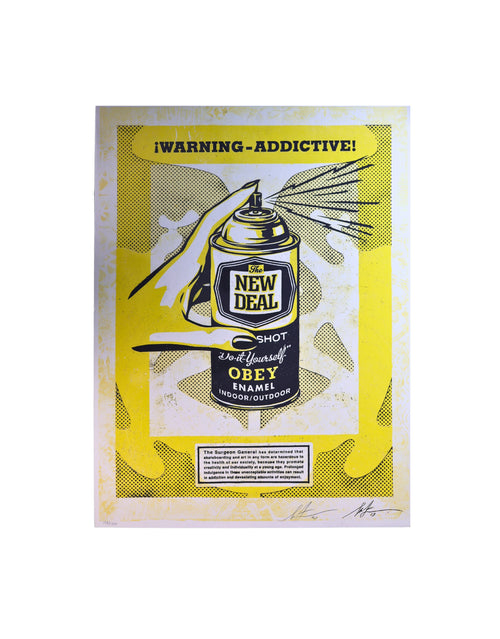
If you want to see the full range of pieces available to build out a rotation — sizes, palettes, and framing that play well together — browsing an organized art index or the full catalog is a good way to spot the small and mid-size rotators that fill in around your anchors. A cohesive category like pop art is especially rotation-friendly, because the bold, graphic palette gives you high-impact swaps that still feel like they belong to one collection.
Seasonal and Mood-Based Swaps
The reason to hang rotation on the seasons is simple: the seasons already change the light, the mood, and the way you use your rooms. Aligning your art to that rhythm makes swaps feel natural rather than arbitrary, and gives you an automatic reminder four times a year.
Reading the season, not decorating for it
This is not about literal holiday imagery. It is about matching the emotional temperature of a piece to the season:
- Spring — lighter, brighter, higher-key works; more white space; airy compositions that echo longer days.
- Summer — bold color and high contrast; graphic, energetic pieces that hold up against strong natural light.
- Autumn — warmer palettes, richer tones, more texture; work that reads well in lower, golden afternoon light.
- Winter — quieter, moodier, more intimate pieces; deeper contrast and cozier scale for the months you spend more time indoors.
Mood-based swaps beyond the calendar
Seasons are a convenient default, but the same system flexes to life events. Refresh the entryway before hosting. Move a calmer piece into a new home office. Bring an energetic work into a room that has started to feel flat. The rotation calendar is the backbone; mood-based swaps are the improvisation on top of it.
Light drives the schedule as much as taste
Let your sunniest walls do double duty as your rotation engine. A wall that gets direct afternoon sun is the worst place to leave any one work permanently, so make it a rotating position by design — the piece there changes every season, which naturally caps its light exposure. Conversely, a dim interior wall is a safe long-term home for a favorite anchor. In other words, plan rotation around where the light actually falls, not just around the calendar.
Safe Handling: Getting Works On and Off the Wall
Every swap is a moment of risk — the times a work is most likely to be dropped, dinged, or smudged are when it is in transit between wall and storage. A few disciplines make handling routine and safe.
Prep the space first
Clear a large, clean, padded surface before you touch anything on the wall — a bed with a clean sheet or a table with a soft blanket works well. Have your storage materials open and ready so a work is never set down on a bare hard surface, and never leaned unprotected against furniture where it can slip.
Clean hands, two hands, framed edges
- Handle framed works with clean, dry hands or nitrile/cotton gloves — skin oils transfer to glazing and, worse, to any exposed paper.
- Always carry with two hands, supporting the bottom edge and one side, never by the top of the frame or by the wire alone.
- Carry one piece at a time, held vertically and close to your body. Never stack framed works face-to-face without a rigid barrier between them.
- Keep fingers off the glazing and never touch the surface of an unframed print — handle unframed works only by the extreme edges, or ideally leave them in their mat/sleeve.
Inspect on the way down
Every swap is a free condition check. As a piece comes off the wall, take ten seconds to look at the glazing, the frame corners, and any visible edges of the work for new marks, dust intrusion, or moisture. Catching a problem early — a loosening frame joint, condensation behind glass — is far cheaper than discovering it years later. For a deeper treatment of framing choices, glazing, and long-term protection, see our companion guide on how to store, frame, and insure fine art prints.
Storing the Works That Are Resting
Rotation only protects your art if the “off” half of the collection is stored properly. Storage is where most avoidable damage actually happens — not on the wall.
The four enemies: light, humidity, heat, and contact
Good storage is defined by what it keeps out. Store resting works somewhere dark (no light dose while resting), stable in humidity (roughly 40–55% relative humidity is a widely used target for paper), cool and temperature-stable, and free from direct contact with anything acidic or abrasive. Avoid the two worst rooms in most homes: attics (heat and temperature swings) and basements/garages (damp and flood risk). An interior closet on a living floor is usually the best home you already have.
Framed vs. unframed storage
- Framed works can be stored upright, standing on a padded surface, separated by rigid dividers (foam board or corrugated boards) so frames never touch each other’s corners or glazing. Keep them off the floor and away from exterior walls.
- Unframed works on paper are best stored flat in an archival flat file or acid-free box, interleaved with acid-free/buffered tissue or glassine, one work per folder. Flat storage supports the whole sheet and prevents the curling and cracking that rolling can cause. If a large work must be rolled, roll it loosely, image-side out, around a wide-diameter acid-free tube — but flat is always preferable.
Use archival materials, not ordinary supplies
The words to look for are acid-free, lignin-free, and archival. Ordinary cardboard, kraft paper, and standard tape are acidic and will burn and stain paper over time. Never let regular tape, sticky notes, or rubber bands touch a work. Interleaving tissue, buffered boxes, and archival corners are inexpensive insurance for pieces you intend to keep for decades.
Label and log every resting piece
Keep a simple inventory — a note on each storage folder and a running list (a spreadsheet is plenty) recording what each work is, where it is stored, when it last hung, and its condition at that time. This makes the next rotation effortless and doubles as the ownership record that supports insurance and authenticity documentation. For authenticated pieces, store any certificates and provenance paperwork with the work’s file — the same acid-free environment protects those documents too.
Hanging Systems That Make Rotation Effortless
The single biggest reason people don’t rotate is that re-hanging is annoying: new holes, spirit levels, patching, painting. The fix is to invest once in hardware that turns a swap into a two-minute job.
Picture rails and cable systems
A picture rail — a track mounted near the ceiling or in a horizontal band — carries adjustable cables and hooks that let you hang, slide, and re-position works with zero new wall holes. This is the professional gallery solution, and it is transformative for a rotating collection: you change the art constantly while the walls stay pristine. It is the ideal system for that high-turnover, sunlit wall you designated as a rotation position.
Standardized hooks and a consistent hang line
If a full rail isn’t practical, the next best thing is consistency. Pick a standard hanging height — the common gallery convention places the work’s center at roughly 57–60 inches from the floor, eye level for most viewers — and standardize your frames’ hanging hardware (same D-rings or wire position) so any rotator drops onto the same hook at the same height. When your rotators share dimensions and hardware, swapping becomes truly plug-and-play: one hook, one measurement, forever.
Right-size the hardware
Match the hook and anchor to the weight of the frame and your wall type, and favor two hanging points over one — two hooks keep a frame level and halve the load on each point, which matters for glazed works that carry real weight. For heavier pieces, anchor into a stud or use a rated wall anchor. Solid, correctly rated hardware is not the place to economize; a dropped frame can destroy both the work and the glazing.
A Practical Rotation Calendar
Here is a simple four-season framework you can adopt as-is or adapt. It assumes a modest collection with a few anchors and a bench of rotators, and it folds the conservation tasks (inspection, storage checks) into the same rhythm so nothing gets forgotten.
| Season / Timing | Display Focus | Swap & Care Task | Storage Check |
|---|---|---|---|
| Spring (Mar–May) | Lighter, brighter, higher-key works; more open compositions | Rotate the sunniest wall; inspect each piece coming down; dust glazing | Confirm closet humidity is stable after winter heating |
| Summer (Jun–Aug) | Bold color, high contrast, graphic energy | Move light-sensitive works off the brightest walls for the high-sun months | Watch for humidity spikes; ensure resting works aren’t near AC condensation |
| Autumn (Sep–Nov) | Warmer palettes, richer tones, more texture | Bring back rested favorites; refresh entry/host areas before the holidays | Re-interleave any works handled during the swap; update your log |
| Winter (Dec–Feb) | Quieter, moodier, more intimate pieces; cozier scale | Full condition pass on the whole collection; check frame joints and wires | Verify heating hasn’t dropped humidity too low; keep works off exterior walls |
| Annually | Whole collection | Reconcile inventory; confirm every piece has hung and rested at least once | Review certificates/provenance files; confirm insurance values are current |
The quarterly cadence is a starting point, not a mandate. Homes with strong direct sun may rotate their brightest walls more often; a low-light collection can comfortably run on a twice-a-year rhythm. The point is to have a schedule, so rotation and care actually happen instead of being perpetually deferred.
How Rotation Protects the Life — and Value — of Authenticated Work
For collectors of authenticated, limited pieces, rotation is not just decor management; it is stewardship. A disciplined rotation directly serves long-term value in three ways.
Condition is preserved
Because each work spends less time under light and more time in controlled storage, its physical condition — the crispness of the ink, the whiteness of the paper, the integrity of the sheet — is better preserved over decades. Condition is one of the most significant drivers of a work’s desirability and value on the secondary market, and it is almost entirely within your control.
Records stay current
The inventory-and-inspection habit that rotation builds means you always know what you own, where it is, and what condition it is in. Paired with proper documentation, that recordkeeping is exactly what supports insurance and resale later. Authentication practices differ by artist and should never be mixed — a Shepard Fairey work is authenticated through provenance and its own documentation, KAWS and BE@RBRICK figures through their issued certification, DEATH NYC works by their certificate and seal, and so on — but in every case, keeping each work’s paperwork organized alongside the piece is part of responsible ownership. To go deeper on protecting value over time, our overview of the market and financial context for collecting is a useful companion, and the collector resource hub gathers the practical guides in one place.
You actually enjoy what you own
The quieter benefit, and arguably the most important: rotation keeps you engaged with your collection. Works that are seen, handled thoughtfully, and cared for on a schedule are works you genuinely live with rather than forget. That ongoing relationship — the pleasure of a wall that changes with the seasons and a collection that stays in beautiful condition — is the entire point of owning art in the first place.
Frequently asked questions
How often should I rotate the art in my home?
For most homes, a quarterly (seasonal) rotation is the sweet spot — it aligns naturally with changing light and mood and gives you four built-in reminders a year. Walls that receive strong direct sun benefit from more frequent swaps to limit light exposure, while a low-light collection can run comfortably on a twice-a-year rhythm. The key is to commit to a consistent schedule so rotation and care actually happen.
Does rotating art really help protect it?
Yes. Light damage to works on paper is cumulative and permanent, so reducing the time any single piece spends on the wall — especially on bright walls — meaningfully lowers its lifetime light dose. The months a work spends resting in dark, stable storage are months it isn’t fading. This is the same dosage-control principle museums use for their most light-sensitive works on paper.
How should I store framed and unframed pieces that aren’t on display?
Store resting works somewhere dark, cool, and humidity-stable (around 40–55% relative humidity is a common target), avoiding attics, basements, and garages. Store framed works upright with rigid dividers between them so nothing touches; store unframed works on paper flat in an acid-free box or flat file, interleaved with acid-free tissue or glassine, one work per folder. Always use archival, acid-free, lignin-free materials — never ordinary cardboard or tape.
What hanging system makes rotating art easiest?
A picture-rail or cable system is the gold standard: it lets you hang, slide, and reposition works with no new wall holes, so you can rotate constantly while keeping walls pristine. If a rail isn’t practical, standardize your setup instead — use a consistent hang height (work centered around 57–60 inches from the floor) and matching hanging hardware on frames of the same size, so any rotator drops onto the same hook in seconds.
How many pieces do I need to run a rotation?
Fewer than you’d think. A collection of roughly eight to twelve framed works is enough to give most homes two or three distinct looks a year. Aim to display around 60 percent of what you own at any time and rest the other 40 percent as your bench for the next swap. Choosing a few anchor pieces that stay put and a set of interchangeable rotators makes the system easy to sustain.
Does careful rotation and storage affect an artwork’s long-term value?
It can, indirectly but importantly. Condition is a major driver of a collectible work’s desirability, and rotation plus proper storage preserves condition by limiting light exposure and environmental stress. The inventory and inspection habits that come with a rotation routine also keep your ownership records and authentication paperwork current — both of which support insurance and any future resale. Just remember that authentication standards differ by artist and should never be mixed.