The Provenance Lines Nobody Teaches You to Read

You open a Sotheby's catalog. The lot looks right. The estimate looks right. You glance at the provenance block and think: fine, there's a history, someone owned it, moving on.
That's the wrong move.
Provenance lines in a major auction catalog are not decorative. They are a compressed record of ownership, exhibition, publication, and — crucially — everything the house is choosing not to say. Learning to read them is a skill. It takes repetition, some knowledge of the market, and a willingness to sit with ambiguity rather than skip past it.
This piece walks you through the structure of a Sotheby's provenance block, what each layer means, what the notation conventions signal, and how a single parenthetical can be the difference between a clean piece and a complicated one.
Nothing here is theoretical. This is working knowledge for anyone writing checks at auction.
Why Provenance Exists at All
Start with first principles.
Provenance is the documented history of ownership for a work of art. It exists for two reasons that matter to buyers: authenticity and title.
Authenticity first. A work that has been publicly exhibited, published in a catalogue raisonné, and passed through reputable hands is harder to fake than one that appears from nowhere. The provenance record is part of the authentication argument. Not the whole argument — never the whole argument — but a meaningful part of it.
Title second. Clean title means the seller has the legal right to sell you the object. Gaps in provenance, especially during specific historical windows, can signal ownership disputes, looted art claims, or seizure histories that could follow the work long after you've hung it on your wall.
How often do buyers skip this entirely?
More often than the market wants to admit.
The Anatomy of a Sotheby's Provenance Block

A standard Sotheby's provenance entry runs in reverse chronological order, from most recent owner back toward the artist. Each line typically contains some combination of:
- A collector or institution name (sometimes anonymized)
- A city or country of location
- A date or date range
- How the work passed hands (acquired from, gifted to, purchased at, by descent)
- A sale reference if a prior auction was involved
Below that, a separate "Exhibited" section lists shows and the dates the work appeared. Below that, "Literature" cites publications. These three blocks together — provenance, exhibited, literature — form the public record the house is presenting on behalf of the consignor.
The house does not guarantee any of it. That language lives in the catalog's front matter, which almost no one reads.
Reverse Chronology: Why It Matters
The reverse order is not arbitrary. It means the line directly underneath the consignor is the person who sold to the current owner. That transition — from line one to line two — is where you start.
Was the transfer clean? Was it a private sale, a prior auction, a bequest? Does the date make sense given what else you know about the work's history?
A gap between line one and line two is the first thing I look for. Even a small one.
Decoding the Language
"By Descent"
This means the work passed within a family, typically through inheritance. It is common and legitimate. It is also, on its own, not verifiable by the auction house. "By descent" means someone told them it was inherited. The documentation behind that claim varies enormously.
When "by descent" appears at the beginning of the provenance chain — meaning it's the oldest known history — that is a conversation you want to have with the specialist before bidding.
"Private Collection"
This is the catalog's polite way of saying the consignor has requested anonymity, or that an intermediate owner is not identified by name. It is extremely common. It is not inherently suspicious. Collectors have legitimate reasons for privacy.
But "Private Collection, Europe" covering a date range that includes the 1930s and 1940s is a different matter entirely. More on that below.
"Acquired Directly from the Artist"
High-value provenance. It compresses the chain to its shortest possible form. A work that went from artist's studio to one collector and then to this sale is, in terms of title integrity, as clean as it gets.
The question becomes whether that claim is documented. A letter, a receipt, a photograph of the collector with the artist — these are the materials that sit behind the line. The catalog won't tell you if they exist. The specialist will.
"Sale, [House], [City], [Date], Lot [Number]"
A prior auction reference is one of the cleaner provenance entries you can encounter. Auction records are public. You can look up the catalog, verify the lot, confirm the description matched, and see the estimate and result in many cases.
Prior auction appearances also mean the work passed through another house's due diligence at that time. That's not a guarantee, but it's a meaningful data point.
Parentheticals and Bracketed Dates
This is where fluency pays off.
A date in parentheses — for example, "(acquired 1987)" — signals that the date is approximate or based on documentation that is not fully confirmed. A date range like "circa 1960s" signals the same uncertainty at the origin point of the chain.
Brackets around a name typically indicate the house has identified the owner through research but that the owner did not self-identify in the documentation. In other words, the house is doing interpretive work, not transcribing a receipt.
Do you know who did that interpretation, and what they used to do it?
The 1933–1945 Window: The Rule You Cannot Ignore
There is one date range that any serious buyer must understand before reading a provenance block on European works: 1933 to 1945.
This is the Nazi era. During this period, hundreds of thousands of works were looted, forced-sold, or seized from Jewish collectors, institutions, and dealers across occupied Europe. The Washington Principles on Nazi-Confiscated Art (1998) established that works with gaps or transfers during this period require enhanced scrutiny. Many major museums and institutions have research offices dedicated to this.
Sotheby's, Christie's, and other major houses maintain provenance research departments that screen lots against databases including the Art Loss Register, the Commission for Looted Art in Europe databases, and national databases from Germany, Austria, the Netherlands, and elsewhere.
But the databases are incomplete. The research is not exhaustive. And the catalog entry does not tell you how deep the screening went.
If a lot shows a European provenance with a gap between approximately 1933 and 1945 — or worse, a transfer within that window to a German or Austrian entity — request the provenance research file from the specialist. A reputable house will provide it. If they won't, that is information.
Buyers who have acquired works with disputed Nazi-era provenance have faced decades of litigation, restitution claims, and in some cases, forced returns with no compensation. This is not a theoretical risk. It has happened at the highest levels of the market.
What Sotheby's Is and Isn't Telling You

Sotheby's is a marketplace. They represent the consignor. Their conditions of business — again, front matter, almost no one reads it — make clear that provenance information is provided as received and that the house does not warrant its completeness or accuracy.
This is not a criticism. It is the structure of the business. But it means the provenance block in the catalog is the consignor's representation, filtered through the specialist's editorial choices about what to include, how to describe it, and what to leave out.
Three things Sotheby's will not do in a catalog:
- Identify gaps they couldn't fill — a gap is simply absent, not flagged
- Editorialize negatively about intermediate owners
- Disclose the full provenance file or the due diligence methodology
None of this makes the house dishonest. It makes the catalog a starting point, not a conclusion.
The "Sold to Benefit" Footnote
Occasionally a lot carries a footnote indicating proceeds benefit a named institution or charitable cause. This is relevant to provenance only insofar as it sometimes explains an unusual consignor situation: an estate, a foundation, or an institution deaccessioning. These are generally clean provenance situations, but they come with their own complications — deaccession policies, donor restrictions, and institutional reputational considerations can all affect a lot's legal standing.
The "Property of a European Noble Family" Framing
A category worth its own paragraph.
This language appears regularly and serves a function beyond anonymity. It signals social pedigree in a way that "Private Collection" does not. It implies a multigenerational ownership history with the kind of estate and documentation that aristocratic families historically maintained.
Sometimes that's accurate. Sometimes it's catalog styling. The specialist is the right person to ask whether the noble family claim comes with verifiable genealogical documentation or is simply the consignor's preferred framing.
Exhibition History as Provenance Corroboration
The "Exhibited" section is underused by most buyers as a provenance tool.
An exhibition record does three things:
- Dates the work at a known location at a known time. If a work was in a museum show in 1972, it was physically present at that institution. That's verifiable through the institution's records and catalogs.
- Establishes a prior authentication moment. Curators who include works in museum shows are, implicitly, making a judgment about authenticity. This is especially relevant for works where the authentication infrastructure is thin.
- Creates a paper trail that's harder to fabricate. Museum loan records, installation photographs, catalog essays — these exist independently of the consignor's documentation.
A long, well-documented exhibition history at reputable institutions is among the strongest provenance corroborations available. A work that has never been publicly exhibited and appears at auction for the first time with a provenance chain that consists entirely of "Private Collection" entries warrants more scrutiny, not less.
Cross-Checking Literature Citations
The "Literature" section functions similarly. If a work is illustrated in a catalogue raisonné, it means a scholar — at some point in time, with whatever access they had — examined the work and included it in the definitive scholarly record for that artist.
Catalogue raisonné entries are not permanent. They can be revised, disputed, or amended. But inclusion is still meaningful.
The check here is simple: find the catalogue raisonné entry. Does the description, dimensions, and medium match the lot? Does the provenance listed in the raisonné match the provenance listed in the catalog? Discrepancies between these two records deserve an explanation.
Reading a Real-World Provenance Structure
Let's walk through a hypothetical provenance block — composite, not from any specific lot — to show the reading methodology in practice.
| Line | Entry | What to Notice |
|---|---|---|
| 1 | Private Collection, New York (acquired 2003) | Current consignor, approximate acquisition date. Who did they buy from? |
| 2 | Sale, Christie's New York, May 2003, Lot 42 | Clean. Verifiable. Check the Christie's archive for matching description. |
| 3 | Leo Castelli Gallery, New York | Strong. Castelli represented major postwar artists. Dates would help. |
| 4 | Private Collection, Switzerland (circa 1960s–1990s) | A thirty-year gap with no transfer information. This needs unpacking. |
| 5 | Acquired directly from the artist, circa 1959 | Ideal origin. Is it documented? |
The Castelli gallery entry is strong. That's a known, reputable dealer with historical records. Lines 2 through 3 form a clean chain from 2003 back to the gallery.
The problem is line 4. "Private Collection, Switzerland, circa 1960s–1990s" covers roughly thirty years with no named owner, no transfer mechanism, and a date range so broad it's nearly useless as documentation. How did the work get from Castelli to Switzerland? When exactly? And who in Switzerland held it?
This is not necessarily a problem. Swiss private collections are legitimate. But it's a gap that needs a conversation with the specialist, not a shrug.
Red Flags

Commit these to memory before you open a catalog paddle in hand.
- Provenance begins with "Private Collection" and ends there. No named prior owners, no gallery, no exhibition, no auction history. The entire documented history is a vague anonymity.
- A gap covering 1933–1945 for any European work. Not a red flag that kills a deal, but a mandatory research trigger. No exceptions.
- Dates that don't sequence logically. If line 3 is dated after line 2 in a reverse-chronological block, someone made an error — or something has been reorganized to obscure a transfer.
- Provenance that contradicts the catalogue raisonné entry. Different dimensions, different medium, different ownership history cited in the scholarly record versus the catalog.
- "By descent" at the origin with no supporting documentation. Families lose paperwork. Families also fabricate it. The claim alone is not the record.
- Exhibition history that doesn't match known institutional records. An exhibition reference that can't be confirmed through the institution, or that the institution's archives don't support, is a significant concern.
- A lot that has appeared at multiple auction houses in a short period. Flipping is legal. But a work that has been at three houses in five years with escalating estimates and minimal sale success may indicate a provenance or attribution problem that the market keeps recognizing.
- Specialist reluctance to share the provenance research file. On significant lots, a reputable house will provide supplementary provenance documentation on request. Reluctance to do so is information about the file.
Asking the Right Questions Before Bidding
You have rights as a prospective buyer that most people don't exercise. Before any significant auction commitment, make contact with the department specialist. That's what they're there for.
The questions that matter:
-
Can you share the full provenance documentation on file?
- Receipts, correspondence, prior sale invoices, exhibition loan records
- Ask specifically about the gap periods you've identified
-
Has this work been screened against the Art Loss Register?
- Major houses do this as a matter of course. Confirm it happened for this specific lot.
- Ask when the search was conducted — databases update
-
Is there a condition report, and does it reference any prior restoration or structural work?
- Relevant to authenticity, not just value — significant restoration can sometimes indicate a work assembled or altered to match documentation
-
Who catalogued this lot, and have they published on this artist?
- Specialist expertise is not uniform. A house's Impressionist department and their contemporary department have different knowledge bases.
-
Is there any outstanding claim or inquiry on this lot?
- Houses are not required to disclose pending inquiries, but asking directly creates a record of the question
The Online Catalog Era: What Changes and What Doesn't
Sotheby's and the other major houses have moved substantial inventory to online-only sales with abbreviated catalog entries. The provenance blocks in these listings are often compressed, sometimes severely.
That compression does not mean the documentation is thin. It means the format didn't accommodate full disclosure. The underlying specialist file may be identical to what would accompany a marquee evening sale entry.
May be.
How much due diligence gets applied to a lot estimated in the low five figures versus one estimated in the millions?
The honest answer is that resources follow value. Lower-estimate lots in online sales receive less intensive provenance research than marquee lots. That's not a scandal. It's resource allocation. But it means the buyer carries more of the research burden on those lots, not less.
The Art Loss Register screening typically happens across all lots regardless of estimate, because the legal exposure from a looted work is not proportional to its sale price. But the depth of the provenance file — the effort to fill gaps, to name anonymous collections, to verify exhibition records — scales with the value of the work.
Know which tier you're buying in.
Bottom Line
A Sotheby's catalog is not a guarantee document. It's a presentation document.
The provenance block is the house's best-effort summary of what the consignor provided, filtered through editorial choices made under time and space constraints. Gaps are not flagged. Uncertainties are smoothed into conventions like "circa" and "Private Collection." The research file that sits behind the catalog entry is more detailed, sometimes significantly so, and it's available to serious buyers who ask.
Read every line in sequence. Date-check every transfer. Cross-reference the literature citations. Flag the 1933–1945 window without exception. Call the specialist before you bid on anything that matters to you financially or legally.
The collectors who get burned at auction are not primarily the ones who paid too much. They're the ones who didn't read the documentation they were given.
You have the documentation. Read it properly.
FAQ
What does it mean when a provenance line says "thence by descent to the present owner"?
"Thence by descent" means the work passed through inheritance within the same family line from the last named owner to whoever is consigning now. It's common in estate situations. The concern is whether that inheritance chain is documented — probate records, estate inventories, family correspondence — or whether it's a verbal family history that the house has accepted without verification. Ask for the documentation. It should exist if the claim is clean.
If a work appeared at Christie's or Phillips before, does that mean provenance was already vetted?
Partially. A prior auction appearance means the work went through that house's due diligence at that time. The Art Loss Register was presumably checked. The consignor's documentation was reviewed by a specialist. But "at that time" is the operative phrase. Claims can emerge after a sale. Database entries can be added years later. A prior clean auction record is a positive data point, not a permanent clearance.
What is the Art Loss Register and how does it work?
The Art Loss Register is the world's largest private database of stolen, looted, and missing art. Major auction houses screen lots against it as standard practice before any sale. A match triggers a hold and an investigation. The database is searchable by claimants, dealers, and institutions for a fee, and it is updated continuously. It is comprehensive but not complete — works can be looted without a claim ever being registered, especially in conflict regions or where the original owners have no surviving heirs with knowledge of the loss.
Can I request the provenance research file from Sotheby's before bidding?
Yes. For significant lots, the department specialist can share supplementary provenance documentation on request. This is standard practice at major houses for serious prospective buyers. You may need to register as a bidder or express a concrete interest to access it, but the request itself is legitimate and expected. If you encounter resistance on a high-value lot, that resistance is worth noting.
How do catalogue raisonné entries interact with auction provenance blocks?
A catalogue raisonné is the definitive scholarly record of an artist's work, compiled by a recognized expert or institution. When a lot is listed as appearing in a catalogue raisonné, the auction catalog's provenance should broadly align with the raisonné's ownership history. Discrepancies — in dimensions, medium, or ownership chain — between the two records need explanation. The raisonné entry predates the catalog by however long the publication has existed, so divergence can indicate either a catalog error or a more serious documentation inconsistency worth investigating.
What happens if I buy a work at auction and a restitution claim emerges afterward?
This is the scenario buyers don't want to think about and must. If a valid restitution claim is established post-sale, the outcome depends on jurisdiction, the nature of the claim, and the sale conditions. In some jurisdictions, a good-faith buyer at auction has certain protections. In others, title can be challenged regardless of buyer intent. Major houses carry some insurance coverage and have internal processes for post-sale claims, but the conditions of business limit their liability significantly. Independent title insurance for high-value acquisitions is available and worth considering on works with any provenance ambiguity.
Does a thin provenance block mean the work is less valuable?
Not necessarily less valuable in terms of intrinsic quality, but almost certainly more difficult to resell at the level you paid for it. The secondary market prices liquidity, and liquidity requires documentation that future buyers and their advisors can accept. A work with a compressed or anonymous provenance history may trade at a discount because the next buyer faces the same questions you do — amplified by one more transaction. Strong provenance creates compounding value over time. Weak provenance creates compounding friction.
Are there independent researchers who can do provenance verification outside the auction house?
Yes, and using one on significant purchases is not an insult to the house — it's standard practice among serious collectors. Art law firms with provenance research practices, independent provenance researchers affiliated with the Association for Research into Crimes against Art (ARCA), and specialist consultants with specific regional or period expertise are all available for hire. For works with any World War II —era European provenance complexity, the Commission for Looted Art in Europe offers research services as well. The cost of independent verification is trivial relative to the value of what you're buying and the legal exposure of getting it wrong.
Available at Gauntlet Gallery
Explore current pieces available from the gallery.
-

1963 Farquhar Earth in Space Transparent Celestial Globe 16" Compass VTG
$699.00 USD
-

1967 Beatles Richard Avedon STERN Original Posters Set of 4 Linen Backed Copy
$999.00 USD
-
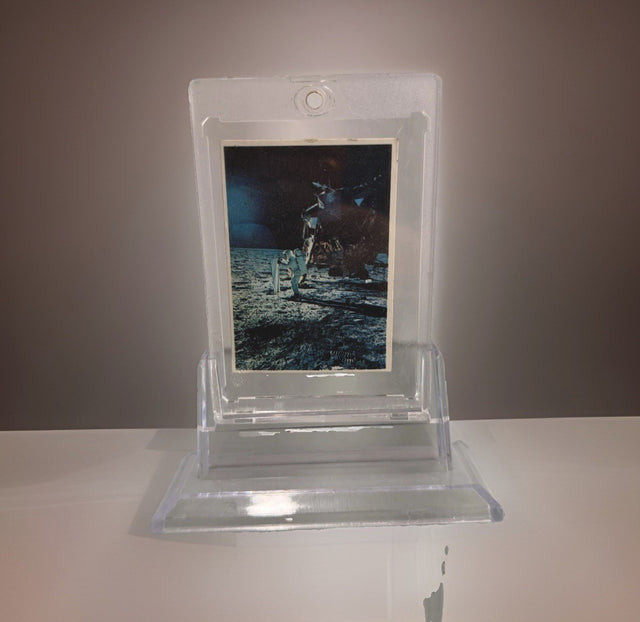
1969 Space Candy Buzz Aldrin Apollo 11 On The Moon Card #19 Taylor-Reed Display
$59.00 USD
-

1980 Polo Player Green Pink Chalk Pastel Bears Andy Warhol Signature AS-IS
$399.00 USD
-

After Andy Warhol Moon Landing Line Drawing 5/50 w/ Astronaut Autographs As-Is
$175.00 USD
-

After John Lennon "I Do" Framed Print, Marked A/P Unverified
$99.00 USD


Browse the collection for current listings.