The Box Is the Investment

You found the piece you want. The colorway is right, the series is right, the seller seems legitimate. But there are two listings side by side — one sealed, one displayed — and the price gap between them is significant. Thirty percent. Sometimes fifty.
You're wondering if the box really matters that much.
It does. And this article is going to tell you exactly why, how to verify what you're actually buying, and what separates a sealed BE@RBRICK that holds value from one that slowly erodes it.
This isn't a conversation about toys. It's a conversation about asset preservation.
How BE@RBRICK Became a Condition-Sensitive Market
Medicom Toy didn't design BE@RBRICK to be a financial instrument. They designed it to be a collectible figure released in controlled quantities through carefully managed drop channels — brand collaborations, lottery systems, regional exclusives, Medicom's own online store.
The secondary market did the rest.
As certain editions crossed from collectible into genuine alternative asset territory — think the Warhol 1000%, the KAWS 1000% editions, the Daft Punk helmets — buyers started applying the same logic they apply to watches, wine, and sneakers. Condition documentation matters. Original packaging matters. Provenance chain matters.
The sealed box premium is the market's way of pricing in certainty.
A displayed piece introduces variables. Has the surface been touched, cleaned, or exposed to UV? Has a joint been stressed? Is the figure in the exact factory configuration? The answer to all of those with a sealed piece is simply: we don't know, and we don't need to know, because the factory sealed it and nobody has been inside since.
That certainty has a price. Right now, across the most liquid BE@RBRICK categories, that price is roughly 30 to 50 percent above equivalent displayed examples in verified excellent condition.
What "Sealed" Actually Means in Practice

This is where the first serious misconception lives. Collectors new to the category assume "sealed" is binary. Either the box is sealed or it isn't.
It's not binary. There's a spectrum.
Factory Sealed
This is the gold standard. The box left Medicom's production facility with the original heat shrink or tape intact, passed through the distribution chain, and arrived at the current owner without ever being opened. No one has touched the figure. No one has verified the contents except through the sealed exterior.
This is the condition that commands the full premium.
Resealed
This is the problem category. A piece is opened, inspected or displayed briefly, then resealed by the seller using aftermarket shrink wrap or tape that approximates the original. The visual difference can be subtle. The value difference is not subtle at all.
A resealed BE@RBRICK is, for premium investment purposes, a displayed BE@RBRICK with a packaging problem on top of it.
Sealed with Box Wear
Factory sealed, never opened, but the outer box has taken shelf damage — corner dents, moisture exposure, fading. The figure inside may be pristine. But in condition-graded markets, the box is part of the piece. Heavy box wear reduces the premium. Slight box wear on older editions is often acceptable and expected.
Knowing where on this spectrum your target piece lives is the first job of due diligence.
The Authentication Stack for Sealed BE@RBRICKs
This is the part most buyers skip, and it's the most important part of the conversation.
For older releases — pieces from before Medicom's authentication infrastructure caught up with secondary market demand — the authentication framework relies on three pillars:
-
Original packaging integrity
- Examine the hologram placement and spec against known legitimate releases for that specific series
- Check the Medicom release record for the edition number, colorway, and release channel
- Verify box printing quality, font weight, and barcode format against authenticated references
-
Hologram verification
- Medicom has used holographic security elements on official releases for years; counterfeit holograms exist but rarely survive close inspection under magnification
- The angle-shift on legitimate Medicom holograms is consistent; fakes often show flat or inconsistent color shift
- Cross-reference the hologram position against the specific release documentation, because placement varies by series
-
Provenance chain
- Direct-from-drop purchase with receipt is the cleanest provenance you can have
- Authorized retailer invoice is the next tier
- Chain of custody documentation through known collectors or galleries with verifiable transaction history
- Auction house sale records from established secondary market platforms
For the select current releases where Medicom's du-al.io NFC pairing is deployed, the framework extends:
-
Medicom digital record (du-al.io)
- Medicom's du-al.io system provides a digital record that pairs to the specific piece
- Verify the digital record against the physical piece's NFC chip before purchase, not after
-
NFC chip pairing
- The NFC chip included with qualifying releases pairs to Medicom's digital record and to the specific figure
- A working NFC chip that returns a matched result is confirmation; a chip that doesn't scan, or that returns a mismatch, is a hard stop
- This is non-negotiable due diligence on any NFC-enabled release
The reason sealed pieces command a premium in authentication terms, beyond just condition, is that they present a cleaner verification surface. The factory packaging, hologram, and release documentation haven't been disrupted by human handling. You're authenticating the piece in its original state, which is simpler and more reliable than authenticating a piece that's been removed, handled, and potentially repackaged.
Why the Premium Holds Under Market Pressure

Secondary markets under stress tend to compress premiums. Luxury goods, art, watches — in a downturn, the gap between excellent condition and perfect condition often narrows because buyers get more price-sensitive.
BE@RBRICK sealed premiums have shown notable resilience through recent secondary market corrections, and there are structural reasons for that.
Supply Is Fixed and Declining
Medicom doesn't restock. When an edition sells out through official channels, the total universe of sealed examples is fixed at whatever made it through the distribution chain without being opened. Every time a collector breaks a seal to display a piece, they remove one unit from the sealed supply permanently.
The sealed supply of any given edition can only decrease over time. It cannot increase.
This supply dynamic is built differently than most collectibles. A sealed first-edition book or a sealed vintage sneaker still exists in theoretical abundance if enough people kept theirs sealed. With BE@RBRICK, the combination of relatively short print runs and a collector base that actively displays pieces creates a situation where sealed examples become genuinely scarcer as years pass.
Condition Grading Is Becoming Formalized
The broader collectibles market has moved aggressively toward third-party condition grading over the past decade. PSA's grading infrastructure, which expanded well beyond trading cards into figures and memorabilia, is one example. The formalization of condition documentation creates price tiers that are harder to compress because the grade itself becomes a tradeable attribute.
As BE@RBRICK grading becomes more standardized within authenticated resale channels, the sealed premium gets encoded into market infrastructure rather than just collector preference. That makes it stickier.
Crossover Buyer Profile
The collector base for high-value BE@RBRICKs now includes buyers who came through fine art, through luxury watches, through sneaker investment. These buyers carry conditioning from those markets. In watches, an unworn reference with original bracelet and box commands a substantial premium over an excellent-condition worn piece. In art multiples, a sealed mint print commands more than an excellent unframed version.
These buyers apply the same logic when they enter BE@RBRICK. They're not learning a new valuation framework; they're applying the one they already have. That cross-market conditioning reinforces the premium rather than arbitraging it away.
The 100% vs 400% vs 1000% Premium Differential
Not all BE@RBRICK scales are equal from an investment standpoint, and the sealed premium doesn't apply uniformly across sizes.
100% Format
At the 100% scale, the sealed premium exists but is relatively modest in absolute dollar terms because the base price is lower. The percentage premium can still be significant, but the liquidity in this tier is thinner. You're often buying and selling within a more specialized collector base rather than the broader secondary market.
400% Format
The 400% is where the sealed premium starts to become meaningful in real money terms. This is the most liquid BE@RBRICK format in secondary market trading, partly because the 400% is the most visible display piece and partly because many major collaborations release at 400% and 1000% together in sets. A sealed 400% from a significant collaboration — verified provenance, intact packaging, authenticated against release records — is a genuinely tradeable asset in a recognizable way.
1000% Format
This is where the sealed premium is most consequential in absolute value terms. The 1000% is already trading at a price point where condition differentials represent real money. A 30 to 50 percent sealed premium on a piece with a five-figure secondary market price is a five-figure decision. Due diligence scales accordingly.
The 400/1000 set combination is particularly interesting from a preservation standpoint. If you break the seal on the 400% to display it while keeping the 1000% sealed, you have created a split-condition set. The market generally discounts split-condition sets relative to fully sealed pairs. This is a decision worth thinking through before you touch the shrink wrap.
Storage, Environment, and Long-Term Preservation

Buying sealed is only the beginning. Keeping a piece in investment-grade condition over years requires deliberate storage practice. This is operational, not philosophical.
Temperature and Humidity
Medicom's production materials — the ABS plastic of the figure and the cardboard and plastic of the packaging — are sensitive to environment over time. Heat causes plastic to off-gas and potentially warp. Humidity causes cardboard to soften, swell, and ultimately degrade.
Climate-controlled storage in the range most fine art and wine storage targets is appropriate for long-hold sealed pieces. This isn't overcautious; it's applying the same logic you'd apply to any condition-sensitive asset you intend to sell in five or ten years.
UV Exposure
Cardboard boxes fade. Certain colorways on BE@RBRICK packaging are particularly UV-sensitive. A piece kept in a well-lit display case for years will show packaging color shift that a dark-stored piece will not. This matters for condition grades and for buyer perception.
If the piece is sealed and held for future sale, it should not be in a display case. It should be in UV-resistant storage.
Physical Protection
The outer packaging needs physical protection from pressure, impacts, and stacking. Purpose-built acrylic display cases or archival storage boxes sized appropriately for the 400% or 1000% format provide the physical isolation you need. This is standard practice in the high-value sneaker space and is increasingly common among serious BE@RBRICK collectors.
The Resealing Problem in the Current Market
It needs to be said plainly: resealing is a known and active problem in the secondary BE@RBRICK market.
The market for sealed pieces at premium prices creates a direct financial incentive for bad actors to open pieces, verify or swap contents, and reseal with aftermarket shrink wrap. This happens. It is not theoretical.
The practical countermeasures are not complicated but they require attention:
- Know what legitimate factory shrink looks like on the specific edition you're buying. The texture, tightness, and seam placement differ from aftermarket reseals.
- Examine the tape seals or shrink seams under good lighting at multiple angles before completing any transaction.
- On NFC-enabled releases, verify the chip reads correctly through the sealed packaging before purchase. A legitimate sealed piece will return a valid NFC read without opening the box.
- Buy through channels with verifiable provenance chains and return policies. The willingness of a seller to support authentication due diligence before purchase is itself a signal.
- If you're purchasing at a price point where a reseal would represent significant financial harm, consider third-party inspection before finalizing.
The FBI's Operation Bullpen — which ran through the late 1990s and early 2000s and targeted memorabilia fraud at scale — established a template that the broader collectibles authentication industry has built on. The core lesson: where premiums exist, fraud will follow, and the only systematic countermeasure is verification infrastructure and buyer education. The BE@RBRICK market is not exempt from this dynamic.
Red Flags
Before you commit to a sealed BE@RBRICK at premium pricing, these are the warning signs that should stop the transaction:
- Shrink wrap seam inconsistency. The seam placement or texture doesn't match documented examples from the same release. This is the most common resealing tell.
- Hologram anomalies. The hologram position doesn't match the release documentation, or the color shift under angle change is flat or inconsistent. Counterfeit holograms exist; examine carefully.
- NFC mismatch or failure on chip-enabled releases. If the chip doesn't read or returns a result that doesn't match the stated edition and digital record, stop. Do not proceed.
- Provenance gap. The seller can't account for where the piece has been between the original drop and the current sale. "I got it from a friend" is not provenance documentation.
- Price significantly below market sealed comparables. A sealed piece priced 20 percent below what comparable verified sealed examples are trading at is either damaged, resealed, counterfeit, or there's a problem with the story. Steep discounts on sealed pieces deserve more scrutiny, not less.
- Seller resistance to pre-purchase authentication. A legitimate seller of a high-value sealed piece has no reason to resist NFC verification or documentation review before the transaction closes. Resistance is a red flag.
- Box wear inconsistent with claimed age. A piece claimed to be factory sealed since a release ten years ago should show age-appropriate box wear. A ten-year-old box in suspiciously perfect condition, or a recently-released piece in suspiciously deteriorated condition, both warrant explanation.
- Missing release documentation. For significant editions, the purchase receipt, original retailer documentation, or lottery confirmation can and should be part of the provenance file. Its absence isn't disqualifying, but its absence combined with any other flag on this list is.
Bottom Line
The sealed box premium on BE@RBRICKs is not irrational collector sentiment. It's the market pricing in verification certainty, supply scarcity, and condition documentation in a format where all three are genuinely difficult to replicate once the seal is broken.
At 30 to 50 percent above displayed equivalents, the premium reflects what the market has concluded: an authenticated, factory-sealed example from a significant edition is a categorically different asset than the same piece out of its box, regardless of how carefully it was displayed.
If you're buying sealed, do the verification work. Understand the authentication stack — du-al.io NFC pairing on the releases that include it, hologram and release record and provenance for everything else. Examine the packaging with the skepticism the market warrants. Store correctly if you're holding long.
And if you're on the other side of that decision — thinking about breaking a seal on a significant piece to display it — understand that you're making an irreversible choice that the secondary market will price accordingly when the time comes to sell.
The box is the investment. Treat it that way.
Frequently Asked Questions
Does the sealed premium apply to every BE@RBRICK release, or only certain editions?
Not every release carries a meaningful sealed premium in secondary market terms. The premium is most pronounced on significant collaboration editions with strong collector demand, limited print runs, and active secondary market liquidity — particularly at the 400% and 1000% scale. Mass-market or widely distributed editions with lower secondary market multiples may show a smaller or negligible sealed premium simply because demand at premium pricing doesn't exist at scale for those pieces. Know your specific edition's secondary market position before assuming the premium applies.
How do I verify a sealed BE@RBRICK is actually factory sealed and not resealed?
Start with the shrink wrap or tape seal itself. Factory shrink wrap has a consistent texture, tightness, and seam placement that is documented for specific releases. Aftermarket reseals often show seam inconsistencies, different plastic gauge, or application marks. For NFC-enabled releases, scan the chip through the sealed packaging — a legitimate factory-sealed piece will return a valid NFC read without opening the box. Cross-reference the hologram against authenticated release documentation. If you're purchasing at a significant price point, request third-party inspection or purchase through a channel that provides pre-sale authentication.
What is Medicom's NFC authentication and why does it matter for sealed BE@RBRICKs?
Medicom's du-al.io system is an NFC-based digital authentication deployed on qualifying BE@RBRICK releases. It pairs to the specific figure via an NFC chip, creating a verifiable digital identity for the piece. For sealed purchases, it provides a layer of authentication verification that doesn't require opening the box — you verify the NFC chip reads correctly and matches the digital record before purchase. NFC pairing is not present on all BE@RBRICK releases; older pieces rely on packaging integrity, hologram verification, and provenance documentation instead.
If the box is damaged but the piece inside is sealed, does that reduce the value?
Yes, in most cases, though the degree of reduction depends on the severity of the damage and the specific edition. BE@RBRICK's secondary market prices the outer box as part of the piece, not just as incidental packaging. Heavy box damage — crushed corners, moisture warping, significant fading — reduces the premium meaningfully. Minor shelf wear on older releases is often acceptable and expected given the age of the piece. For current releases where pristine packaging is still achievable, any box damage is more penalized. If you're buying a damaged-box sealed piece at a discount relative to clean sealed examples, verify that the discount is proportionate to the damage and that the seal itself is intact and verifiable.
Should I open a sealed BE@RBRICK to authenticate the figure inside before buying?
Generally, no — opening the piece to authenticate defeats the purpose of buying sealed and permanently removes the sealed premium. The correct approach is to authenticate through non-invasive means: NFC chip verification on chip-enabled releases, hologram examination, packaging integrity assessment, and provenance documentation review. If a seller is requiring you to open the piece to authenticate it, that's a problem with the transaction, not a normal due diligence step. The only scenario where opening makes sense is if you intend to display the piece and the sealed premium is therefore irrelevant to your purchase decision.
How should I store a sealed BE@RBRICK for long-term value preservation?
Climate-controlled storage with stable temperature and controlled humidity is the baseline. Avoid UV exposure — the box will fade under direct or indirect sunlight over time, which affects both aesthetics and condition grading. Use purpose-built acrylic cases or archival storage boxes sized for the specific format to provide physical protection from pressure and impact. Keep the piece away from potential sources of moisture, pests, or chemical exposure. These are the same principles applied to condition-sensitive assets across fine art, wine, and watches — the logic translates directly.
Do sealed BE@RBRICK sets (400% and 1000% together) carry a higher premium than individual sealed pieces?
Yes, in most cases. Complete sets in matched sealed condition carry a premium over individual sealed pieces because they represent the complete original release configuration. The set premium exists on top of the sealed premium. Conversely, split-condition sets — where one piece is sealed and the other is displayed or missing — are generally discounted relative to both fully sealed sets and individual sealed pieces in their respective size categories. This is a meaningful consideration if you're thinking about breaking the seal on one piece from a set while keeping the other sealed; you may be reducing the value of the sealed piece in addition to reducing the value of the piece you opened.
Are there categories of BE@RBRICK where the sealed premium is smaller or less reliable as an investment thesis?
Yes. Random-blind box series and lower-tier collaboration releases often show compressed or negligible sealed premiums because the demand at premium pricing simply isn't there. The sealed premium is strongest where secondary market demand is strong, print runs are genuinely limited, and the collaboration partner carries cultural weight that sustains collector interest over time. Artist collaborations with proven secondary market histories, major brand crossovers with documented auction performance, and Medicom's own flagship releases tend to be where the sealed premium is most reliable. Chasing the sealed premium thesis on editions that lack underlying demand is not a sound strategy — you're paying a premium for certainty on a piece the market may not value highly in either condition.
Shop BE@RBRICK
Explore current pieces available from the gallery.
-
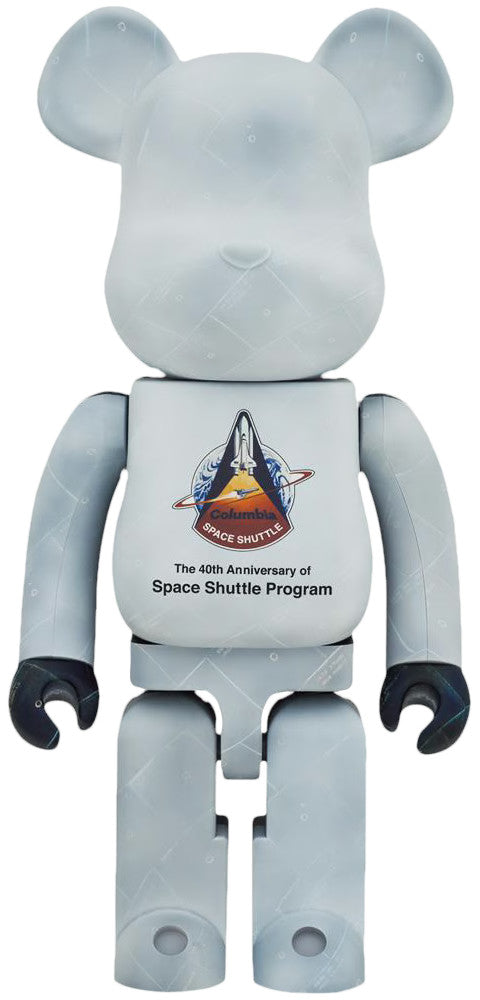
BE@RBRICK NASA Space Shuttle 40th Anniversary 1000% Medicom Toy Bearbrick
$600.00 USD
-
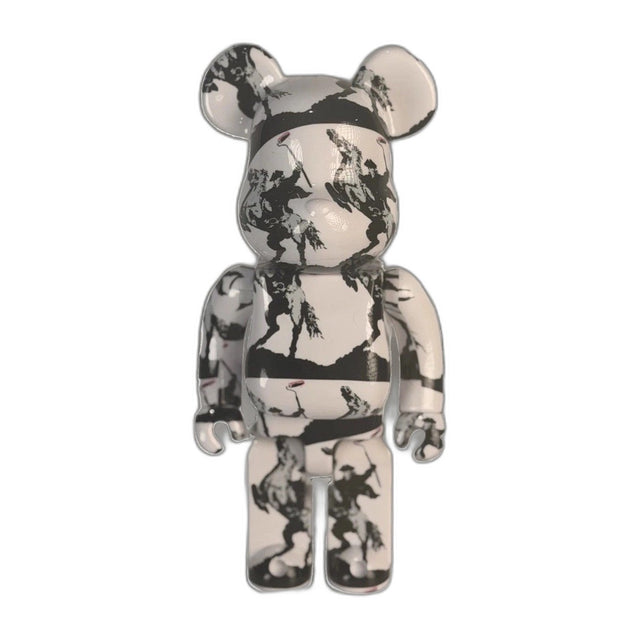
BE@RBRICK Brandalism Sync Banksy Medicom Toy Art Figure du-al.io Authenticated
$199.00 USD
-
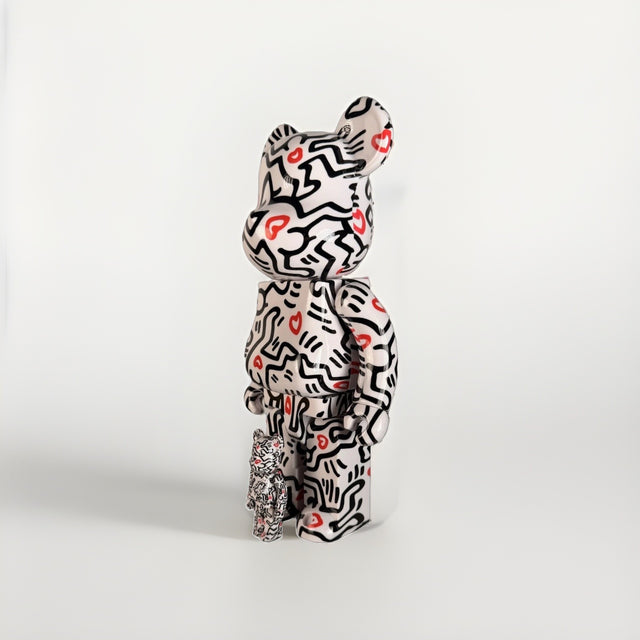
BE@RBRICK Keith Haring 400% + 100% Set Medicom Toy Bearbrick Foundation Art New
$199.00 USD
-
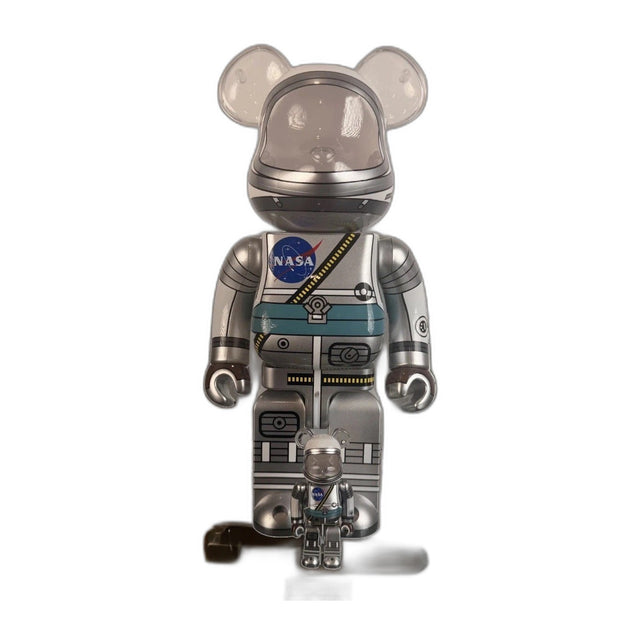
Bearbrick BE@RBRICK Mercury Astronaut 400% 100% Set NASA Medicom Toy Sealed New
$225.00 USD
-
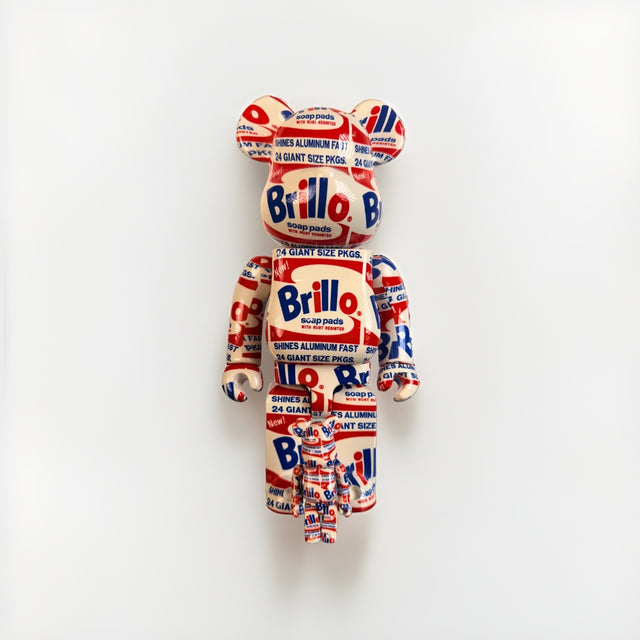
Bearbrick BE@RBRICK Andy Warhol Brillo 400% 100% Set Original 2020 Medicom New
$275.00 USD
Browse the collection for current listings.